
Thanksgiving Decor on a Budget

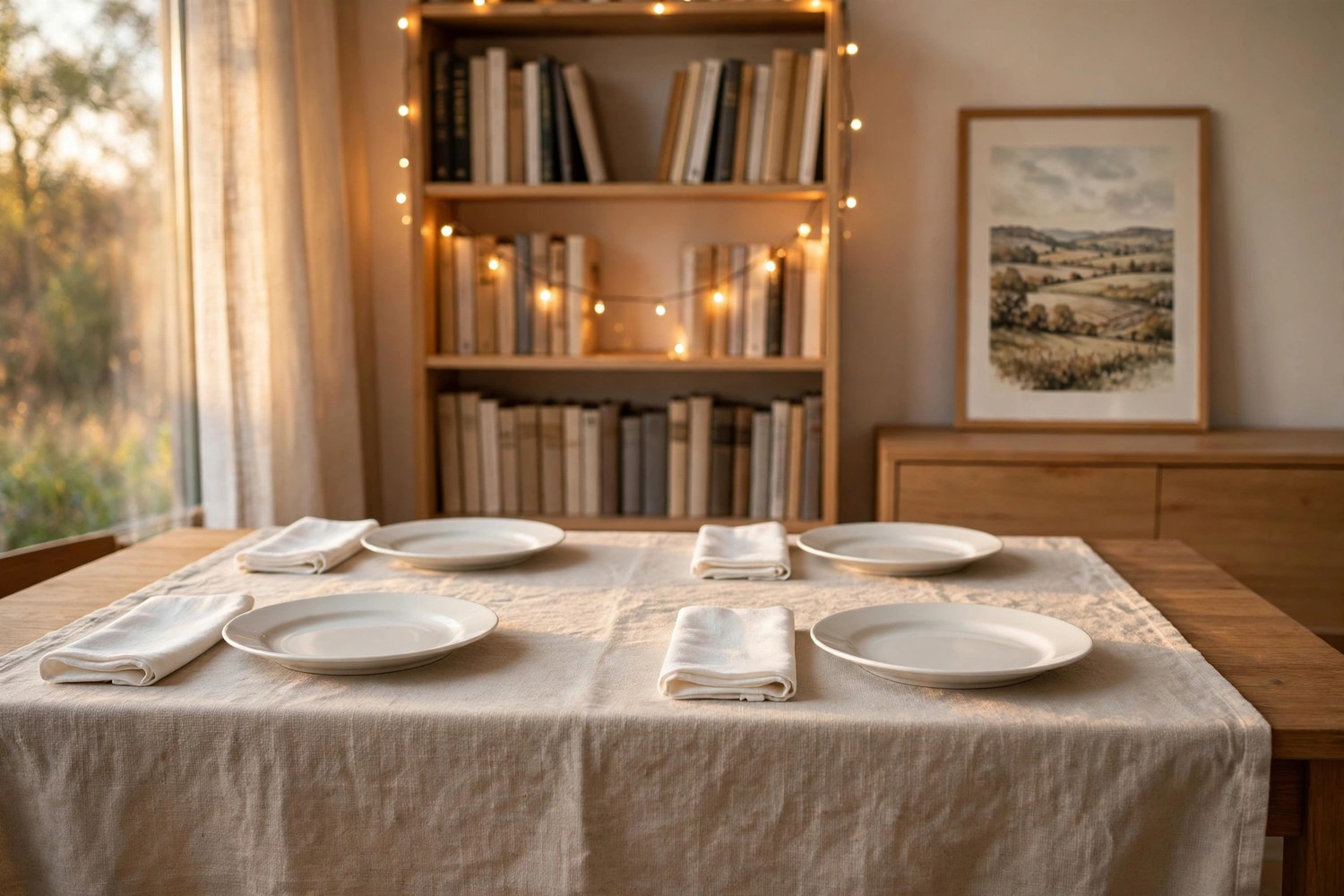
Most Thanksgiving decorating advice hands you a longer shopping list. This guide does the opposite. If you are searching for thanksgiving decor on a budget, the honest answer is that the system matters more than the stuff: one total number for the whole house, a free-first pass through what you already own, a few inexpensive workhorses bought on purpose, and the discipline to spend what is left in one place instead of scattering it across twelve. The twelve ideas below are that system, step by step. Follow them in order and a warm, finished-looking Thanksgiving home is realistic at $25, comfortable at $50, and genuinely generous at $100. If your main event is the table itself, these Thanksgiving tablescape ideas on a budget go deep on place settings and centerpieces; this article covers the whole-house plan around it.
Key Takeaways
- Pick one total budget for the whole house first, then divide it by room in the order guests actually see your home.
- Audit your cupboards, closets, and yard before spending anything. Most homes already hold half a Thanksgiving.
- Buy workhorses, not decorations: a canvas drop cloth, flour-sack towels, and string lights you may already own do the heavy lifting.
- Timing is a tactic. After-Halloween clearance and the day after Thanksgiving are the two cheapest shopping days of the season.
- Concentrate leftover money on one hero moment. One strong focal point reads as intentional; twelve small purchases read as clutter.
1. Set One Total Budget and Decorate in the Order Guests See Your Home
Before any list, pick one number: the most you will spend on Thanksgiving decor this year, for the entire house. Write it down. A single total stops the slow leak of five dollars here and nine dollars there that somehow becomes eighty by Thanksgiving week.
Then divide the number by room, in guest order: entry first, then the dining table, then the living room where people linger, then small touches like the bathroom last. Guests form their impression in the first thirty seconds, so the entry and table deserve the largest shares, and rooms nobody enters deserve none at all.
| Total budget | Entry | Dining table | Living room | Kids’ table + extras |
|---|---|---|---|---|
| $25 | $5 | $12 | $5 | $3 |
| $50 | $8 | $25 | $10 | $7 |
| $100 | $15 | $50 | $20 | $15 |
These are planning allocations, not price promises: what each share buys depends on the free-first audit in the next step, which is why the audit always comes before the shopping.

Tip: Keep the budget and the room shares on one note in your phone. Every possible purchase gets checked against its room’s remaining share, not against a vague feeling that it is probably fine.
2. Run a Free-First Audit Before You Spend Anything
The cheapest decor is the decor you already own but have mentally filed under something else. Before shopping, walk three zones with a laundry basket and collect candidates: kitchen cupboards for serveware, trays, pitchers, and anything in warm metal or clear glass; linen closets for solid-color textiles, table linens, and spare frames; and the yard or garage for baskets, lanterns, and natural material you can gather the week of the holiday.
Set everything on the dining table and sort it into piles by room, using the guest order from step one. Most people find a serving piece that works as a centerpiece base, more candle holders than they remembered, and at least one textile in a fall color. Whatever the audit produces is free, and it defines your real shopping list: only the gaps.
This is a method, not a scavenger hunt for specific objects. The point is the order of operations: inventory first, list second, store last.
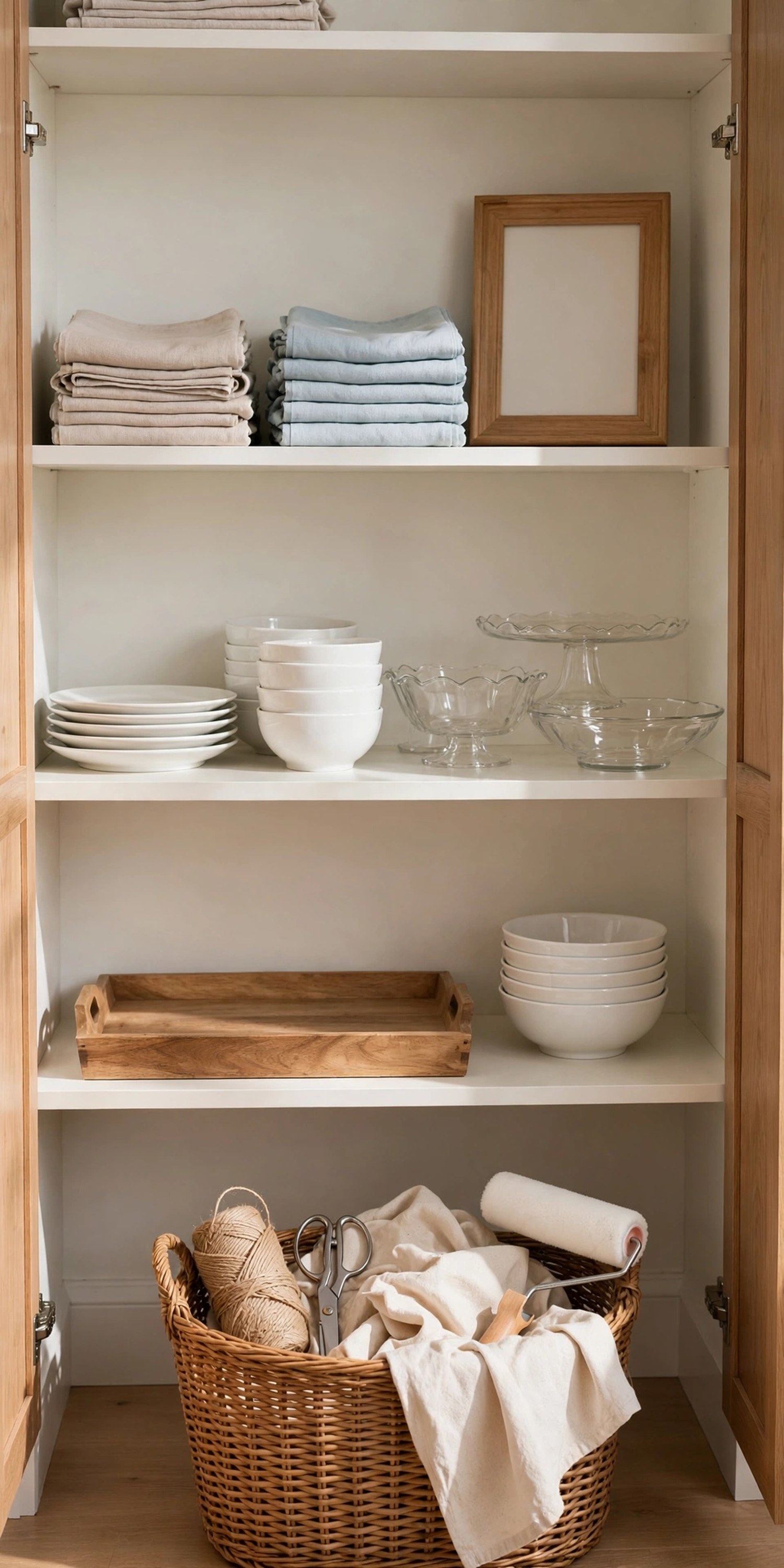
Tip: Photograph each room’s pile before you put anything away. If a planned purchase duplicates something in a photo, the photo wins and the purchase comes off the list.
3. Dress the Table with a Canvas Drop Cloth
Here is the best-value purchase in this whole guide. A plain cotton canvas drop cloth from the paint aisle has the matte, slightly rumpled look of natural linen, drapes like real fabric, and costs a fraction of a holiday tablecloth. A 6 by 9 foot, 9-ounce canvas drop cloth at Harbor Freight is listed at $10.99, washable and reusable, with hemmed edges that need no sewing. One cloth covers most dining tables with a generous drop, and a larger size can be cut down and the spare fabric folded into a runner.
Preparation matters more than the purchase. Wash and dry the cloth before you measure or cut anything: canvas shrinks noticeably on its first wash, and a cloth cut before washing can come up short. Then iron it once, lay it on the table, and let the natural texture do the work. The neutral oatmeal color sits under every palette, which is why the same cloth returns for Christmas and everyday dinners.
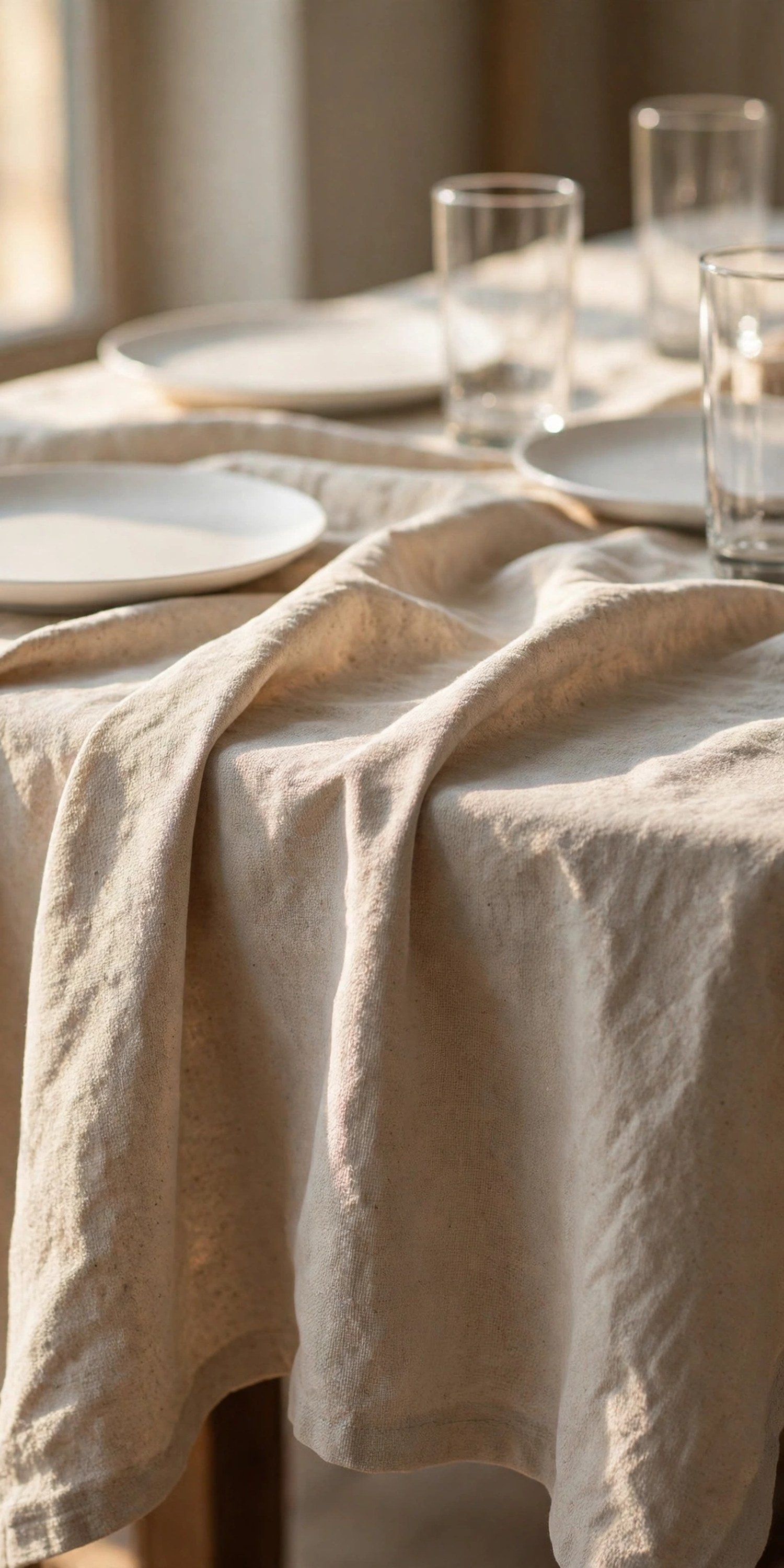
Tip: Choose the heavier 9 or 10 ounce canvas if you have a choice. It drapes in soft folds instead of stiff corners and reads as linen from two feet away.
4. Fold Flour-Sack Towels into Cloth Napkins
Cloth napkins make a budget table feel deliberate, and the cheapest good ones are not sold as napkins at all. Flour-sack towels are thin, flat-woven cotton, generously sized at roughly 28 to 30 inches square, and sold in multi-packs: Walmart’s Mainstays 10-pack is listed at about $11, roughly a dollar a towel, and Target’s Room Essentials 6-pack is listed at $6.75. Folded in quarters or rolled beside the plate, one towel per guest covers a table of eight for less than the cost of a single linen napkin set.
Wash them first to soften the weave and remove the sizing, then iron lightly. The plain white takes any table in a classic direction; if you want color, these are the towels home crafters dye and stamp, because the flat weave takes both well. After the holiday they go back to kitchen duty, so unlike themed napkins, the money is never spent on a single day.
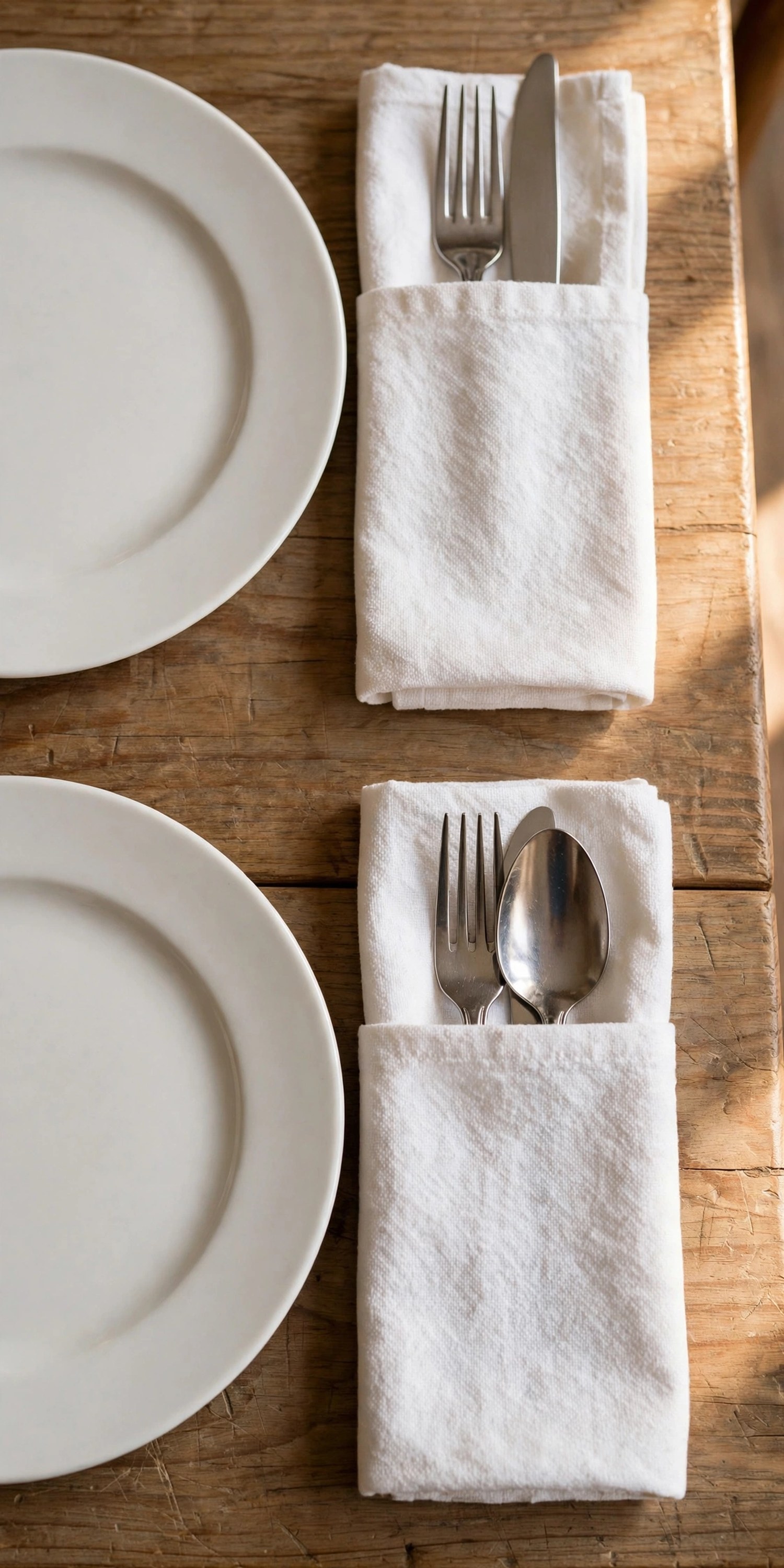
Tip: A simple rectangle fold shows off the towel’s soft edge best. Fold in half, then in half again, and tuck the flatware into the pocket the folds create.
5. Borrow the Glow from String Lights You Already Own
Warm light is doing half the decorating work in every beautiful Thanksgiving photo, and most homes already own the cheapest source of it: the warm-white string lights bought for Christmas. There is no rule that they wait for December. Brought out three weeks early, a single strand turns ordinary shelves festive for exactly zero dollars, which keeps this purchase off your budget entirely.
Keep the placement architectural rather than decorative: run the strand along the top of a bookcase, across a kitchen shelf edge, or around an interior window frame, letting the light outline the room. Because the wire is doing the styling, the shelves themselves can stay almost bare. Use warm-white bulbs only, since cool-white light reads as office, not hearth, and check the strand over before hanging, replacing any dead section rather than working around it.
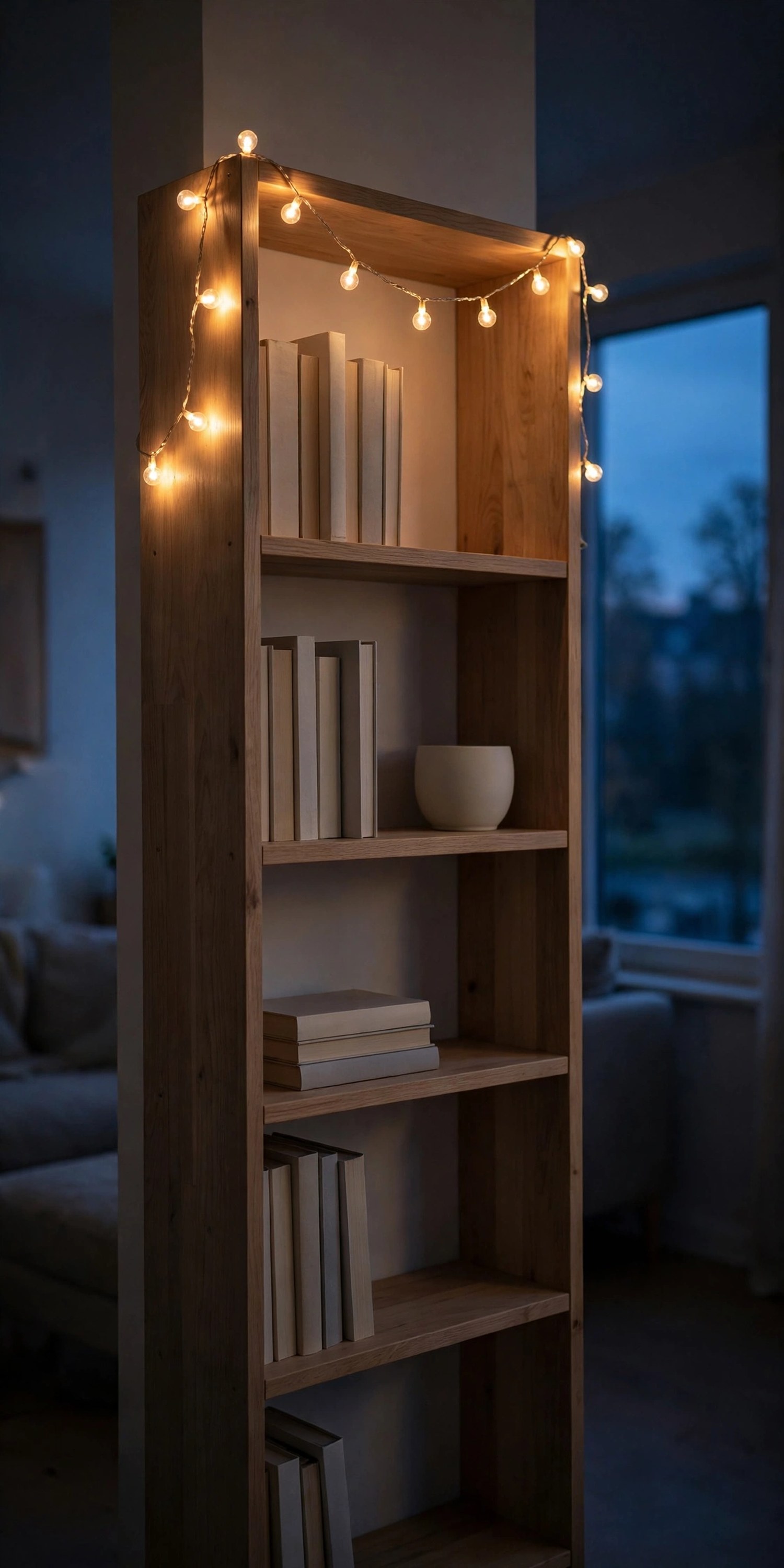
Tip: Put the strand on a simple plug-in timer set for late afternoon. The room glows when guests arrive without anyone remembering to switch it on.
6. Swap Free Printable Art into Frames You Already Own
Your walls and shelves already have frames; what they need in November is seasonal art inside them, and that art can be free. Decor and printable sites offer large libraries of free fall artwork, including free vintage-style fall art prints in ready-to-print sizes like 5 by 7 and 8 by 10 inches, sized to drop into standard frames with no resizing. Print on heavyweight matte paper or cardstock, which keeps the colors rich and stops the sheet curling behind the glass.
Swap two or three frames, not the whole house. The highest-value spots are the entry, where a harvest print announces the season in the first minute, and one living room shelf. Choose prints in the palette your rooms already use so the swap reads as a refresh rather than a theme park. When December comes, the fall prints slide into a folder and the frames take holiday art or your originals again. For styling the entry those prints land in, these fall Thanksgiving decor ideas show whole-room arrangements to borrow proportions from.

Tip: Print at the highest quality setting and let each sheet dry fully before framing. A print sealed behind glass while the ink is still damp can stick and tear when you swap it out.
7. Trade and Borrow Decor with a Friend or Neighbor
Every host owns decor they are tired of and decor they wish they had. A swap connects the two piles for free. Suggest it plainly to a friend or neighbor who also hosts: each of you brings a small box of seasonal pieces you have used for a year or two, and you trade for the season. Budget guides list swapping decorations with a friend or neighbor as a standard way to decorate for less, because novelty is most of what a new purchase buys, and a trade delivers novelty at no cost.
Keep it simple and kind. Trade for the season with a return date agreed up front, photograph each other’s pieces as they change hands so nothing is disputed later, and skip anything fragile or sentimental on both sides. Serving pieces, extra candle holders, wreaths, and table linens travel best. One good swap can cover your entire living room share of the budget, which frees that money for the hero moment in step eleven.
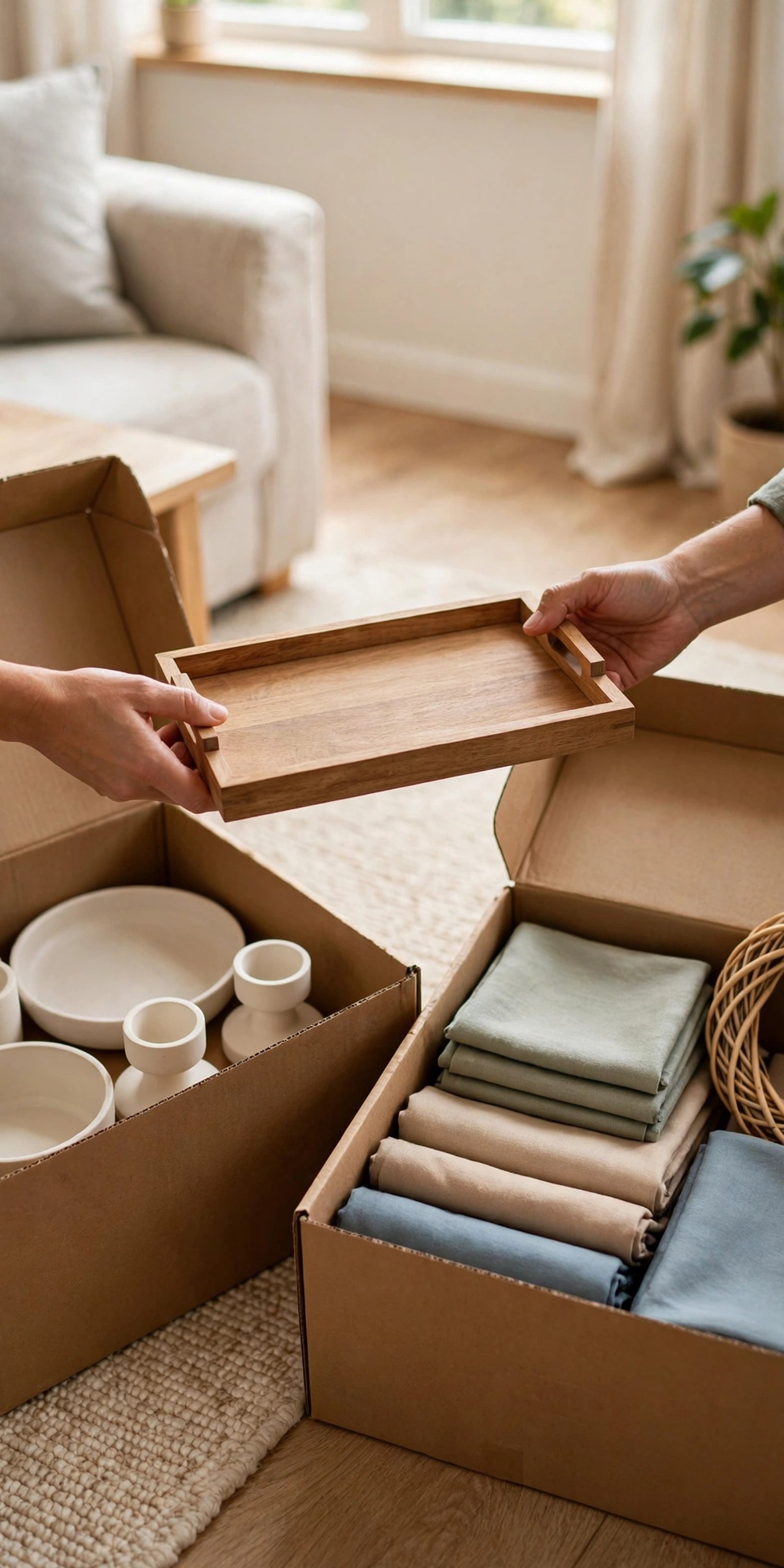
Tip: Propose the swap in October, not Thanksgiving week. Early trades get first pick of each other’s boxes, and there is time to plan around what you receive.
8. Shop the After-Halloween Clearance for Neutral Fall Pieces
The calendar gives budget decorators one gift every year: Halloween ends on October 31, and retailers need that shelf space for Christmas immediately. Clearance coverage of the seasonal cycle reports that Halloween markdowns typically begin November 1 at around 50 percent off at major retailers like Target, deepening within days, and that fall decor that is not Halloween-specific, like plain pumpkins, wreaths, and harvest tableware, tends to linger longer on the clearance shelves.
Shop that window with a filter: neutral, natural, and un-themed only. Cream and white pumpkins, plain candle holders, unprinted linens, and bare wreath forms all read as Thanksgiving once the spiders and skeletons are gone, while anything with a jack-o’-lantern face stays Halloween forever. Because Thanksgiving is still weeks away at that point, this is the one clearance where the pieces serve the current holiday, not just next year’s.
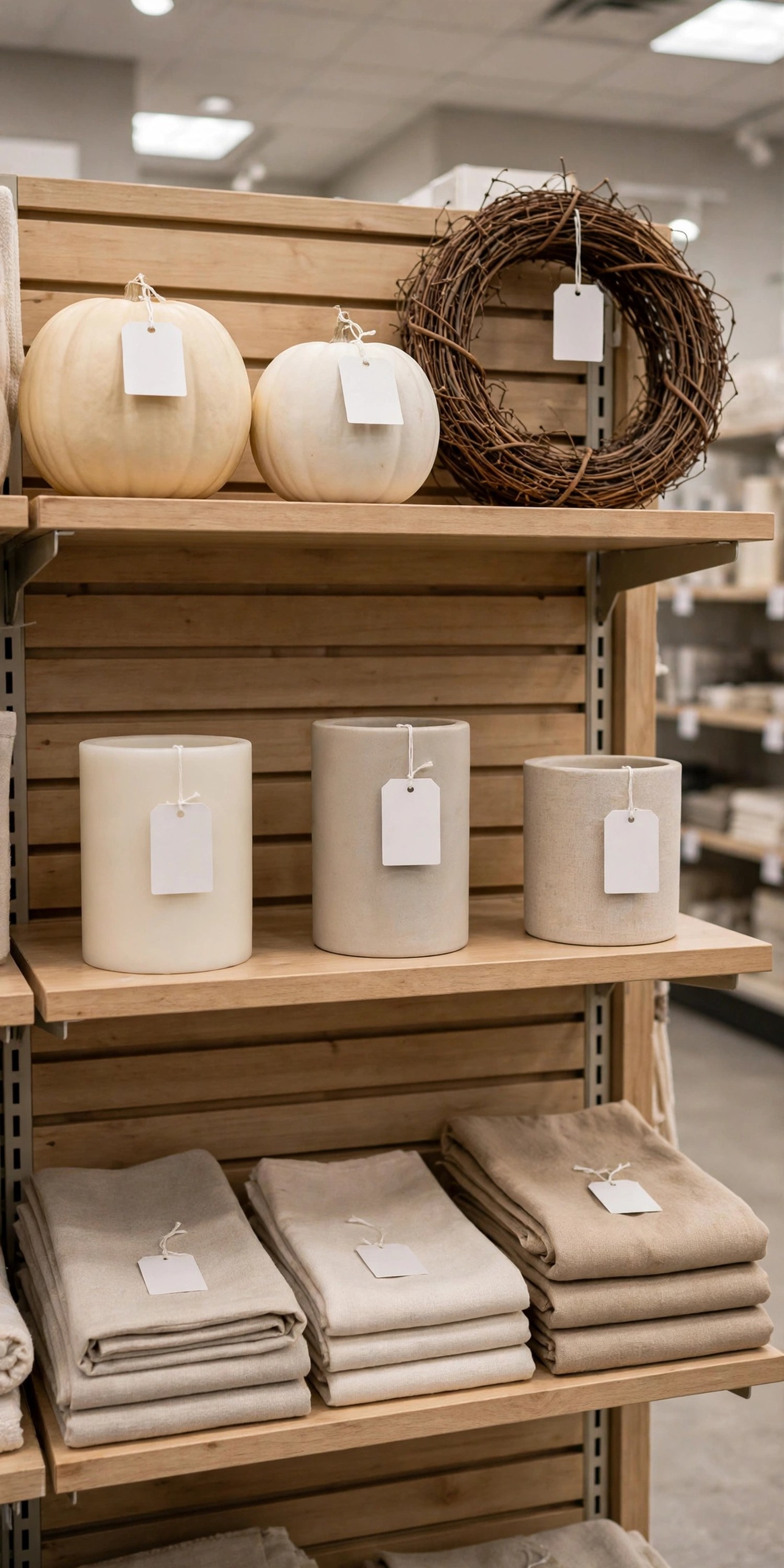
Tip: Go in the first few days of November for choice, accepting the first markdown. Waiting for the deepest discount usually means choosing from what nobody wanted.
9. Let a Stovetop Simmer Pot Do the Decorating You Can Smell
Guests register scent before they register styling, and a simmer pot makes the whole house smell like Thanksgiving for the price of ingredients that were headed for the compost. Save apple peels and cores and orange peels as you cook during the holiday week. Add them to a pot of water with a cinnamon stick or two and a few whole cloves, bring it just to a simmer, and lower the heat to the gentlest bubble.
The method is forgiving: simmer-pot recipes across cooking sites use the same base of fruit peels, cinnamon, and cloves in water, topped up as it evaporates. Two safety rules are not optional. Top the water up whenever it drops, checking roughly every hour, and never leave a simmering pot unattended or let it boil dry. A small slow cooker on low does the same job with less watching. Start the pot an hour before guests arrive; by the time coats come off, the entry smells like pie is already in the oven.

Tip: Refrigerate the strained mixture overnight and simmer it again the next day. Most mixes hold their scent for two to three days of reheating before they need replacing.
10. Build the Kids’ Table Around Printed Coloring Placemats
The kids’ table is where budgets usually leak on themed paper goods, and it is the easiest table in the house to decorate for the cost of printer ink. Free printable Thanksgiving placemats are widely available as downloadable PDFs, typically four activity designs with coloring sections, word searches, and thankful-for prompts, printed at home on ordinary letter paper or cardstock. Set one at each place with a shared cup of crayons in the middle of the table and the placemats are simultaneously the decor, the place setting, and the entertainment.
Print a few extras, because the first placemat is usually finished before the turkey is carved. Heavier paper or cardstock survives gravy better than copy paper, and a finished placemat rolled with a ribbon makes a keepsake parents actually keep. The whole table typically costs under three dollars in paper and ink, which is why it earns the smallest share in the budget table and still looks generous. Download a set of free printable Thanksgiving placemats for kids and print them the weekend before, not on the day.
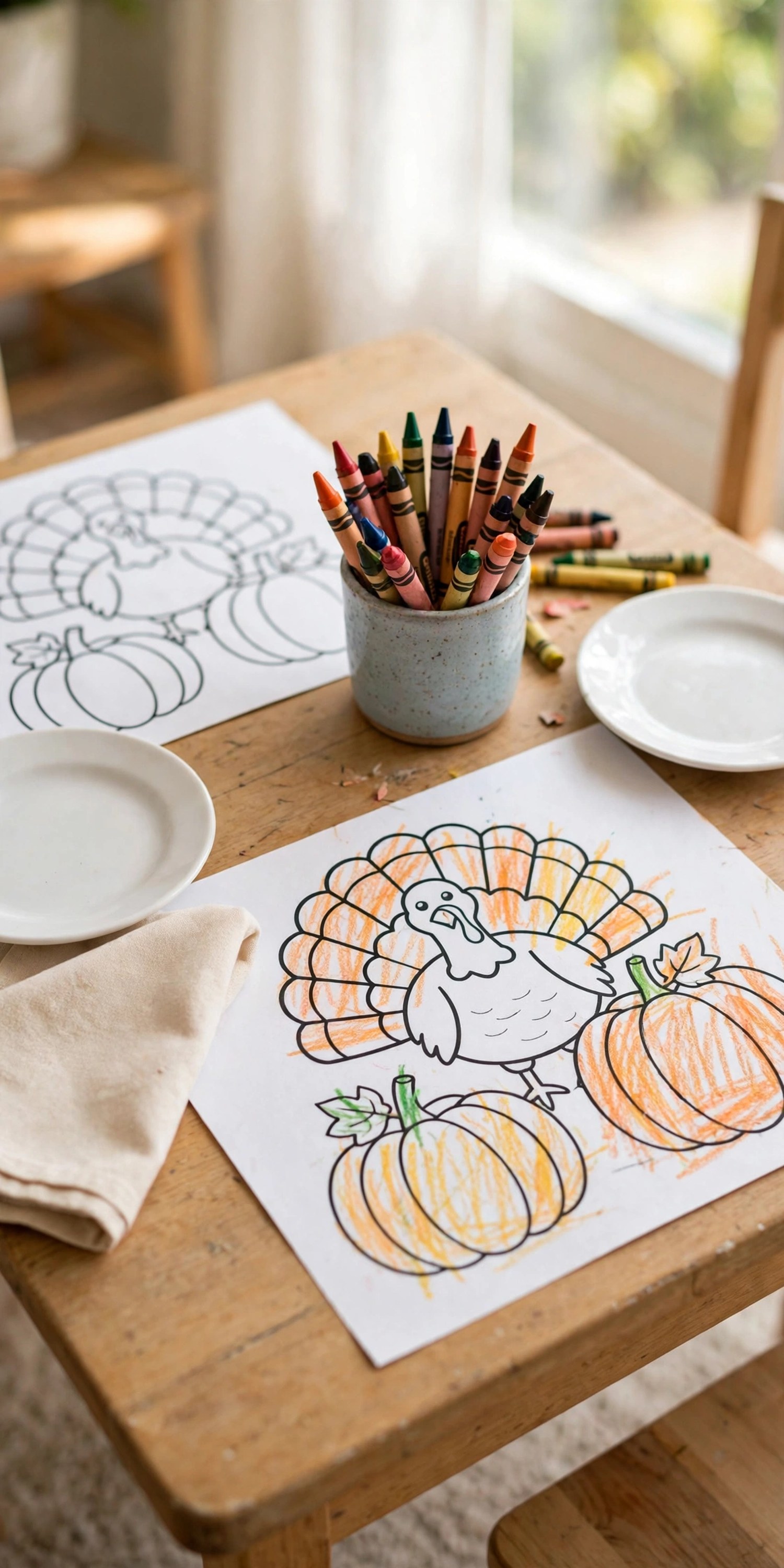
Tip: Write each child’s name at the top of their placemat before setting the table. It settles the where-do-I-sit negotiations instantly and makes the sheet feel personal.
11. Spend What Is Left on One Hero Moment
After the workhorses, the swaps, and the clearance finds, most budgets have something left, and this is where discipline pays. Put the remainder into one hero moment: a single generous focal point in the room where guests spend the most time. That might be one abundant centerpiece arrangement on the dining table or one well-lit, layered display where everyone gathers. One strong moment reads as a designed home; the same money split into twelve small novelties reads as a sale aisle.
Choose the hero by sightline. Stand in your front doorway and look at where your eye lands first at the end of the longest view: that surface gets the money. Everything else in the room stays quiet and simple, which is precisely what makes the hero register. This concentration principle is also why the budget table in step one gives the dining table the largest share at every tier: the plan was always building toward one moment that carries the house.
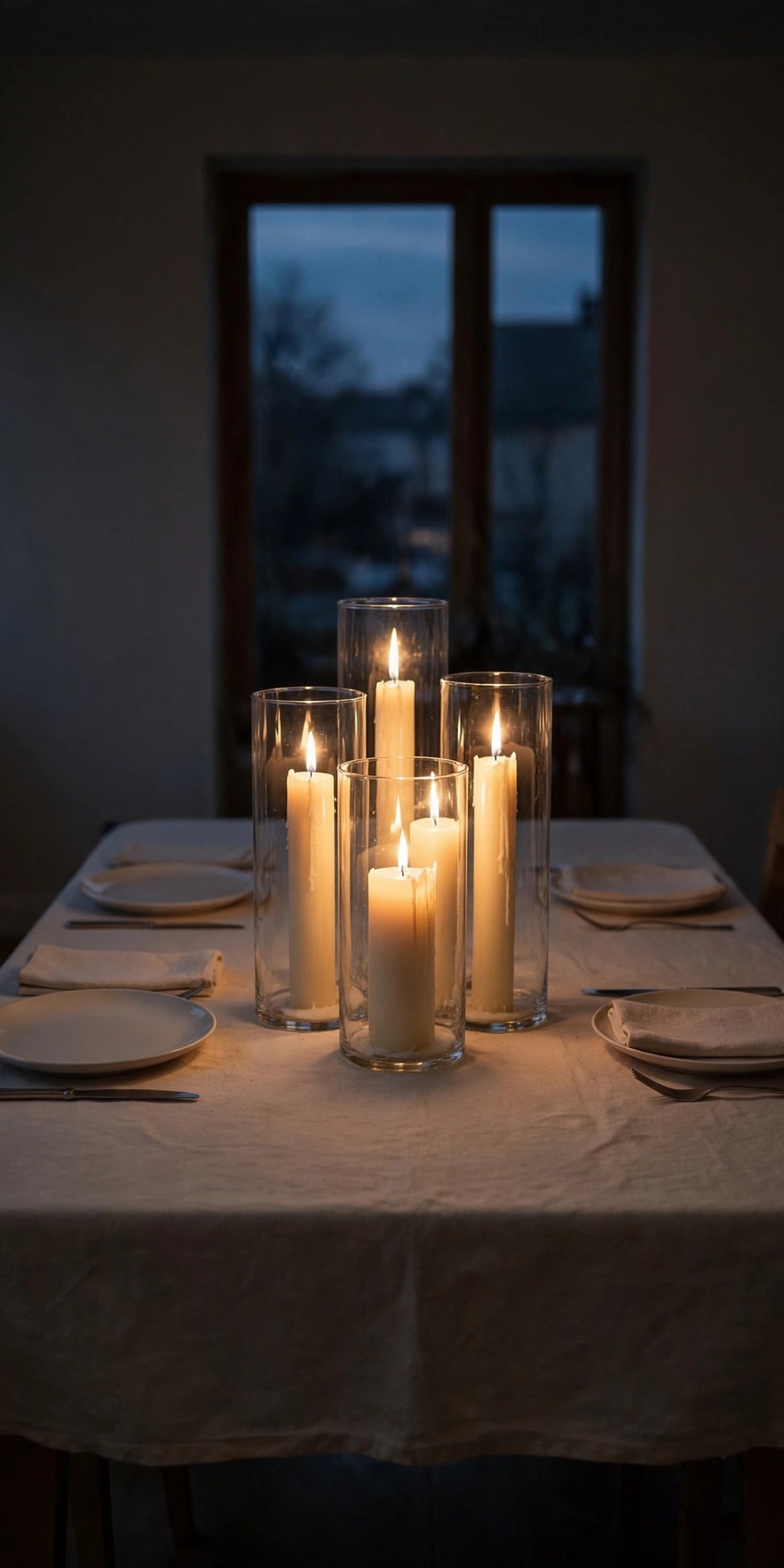
Tip: Decide the hero before the final shopping trip and write down what it needs. A hero bought by list stays a hero; a hero bought by wandering becomes three medium moments.
12. Photograph, Pack, and Stock Up the Day After for Next Year
The last step happens after the holiday, and it is the one that makes next year’s budget smaller than this year’s. While your styling is still up, photograph each room. Those photos are next November’s setup instructions and shopping list in one: they show exactly what worked and what you already own, which prevents the classic duplicate purchase of a thing sitting in your own storage bin.
Then shop once, briefly, in the days right after Thanksgiving. Seasonal clearance follows the same pattern after every holiday: markdowns typically start around 50 percent off and deepen over the following week or so while selection lasts. Buy only durable, un-themed staples your photos prove you lacked: plain linens, candle holders, a wreath form, storage bins. Pack them with this year’s pieces in one labeled bin per room. Next year’s audit, step two of this system, starts with opening those bins, and for many households the day-after run is the last decor money they spend for a very long time. Round out the front of the house next year using these front door fall decor ideas as your checklist.
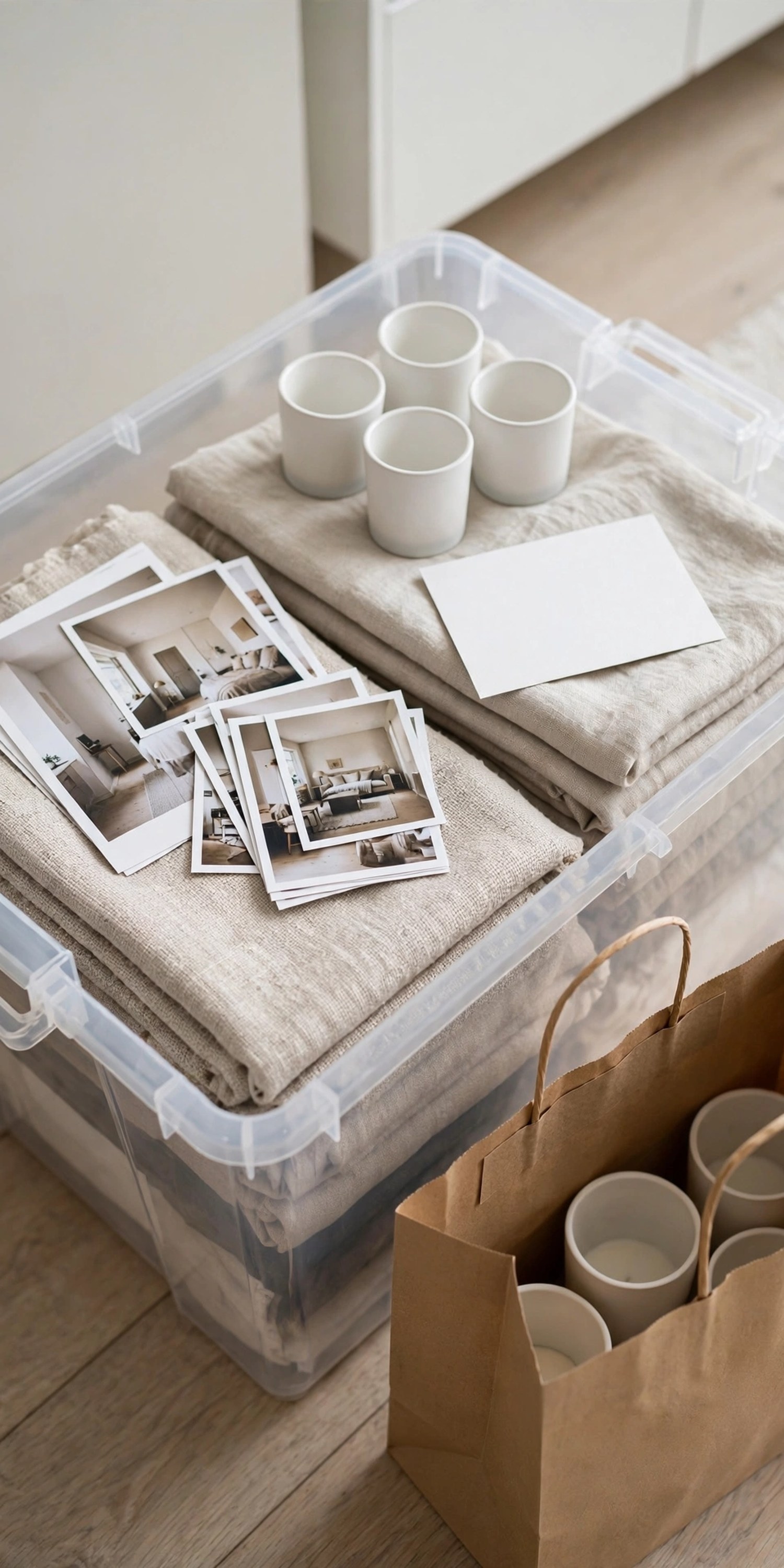
Tip: Tape your room photos and a one-line inventory to the inside lid of each bin. Next year you will know what is in the bin, and how it should look set up, before you lift a single piece out.
Frequently Asked Questions
What is a realistic total budget for Thanksgiving decor?
For most homes, $25 to $100 covers the whole house when the order is free first, workhorses second, one hero last. The $25 tier leans almost entirely on the audit, string lights, printables, and a drop cloth. The $100 tier adds clearance finds and a stronger hero moment. Food, tableware you will keep for years, and anything bought after Halloween at full price sit outside these tiers.
How do I decorate for Thanksgiving when my budget is basically zero?
Run the system with no shopping steps: the free-first audit, Christmas string lights brought out early, free printable art in your own frames, a decor swap with a neighbor, and a simmer pot from cooking scraps. Those five moves alone change the entry, the walls, the light, and the scent of the house, which is most of what guests notice.
Where should the money go first if I can only buy one thing?
The canvas drop cloth. It is the one purchase that changes the largest surface in the most photographed room, it costs around the price of a pizza, and it keeps working at every holiday after Thanksgiving. Napkins from flour-sack towels are the second buy, for the same reason: maximum settings covered per dollar.
When is the cheapest time to buy Thanksgiving decor?
Twice a year. In early November, after-Halloween clearance discounts the neutral fall pieces that carry straight into Thanksgiving. From the day after Thanksgiving onward, seasonal clearance discounts everything left, which is the stock-up window for next year. Full price in mid-November is the most expensive moment of the season.
How do I make a small budget look intentional instead of sparse?
Concentrate. Decorate fewer surfaces completely rather than every surface slightly: a finished entry, a set table, and one hero moment look designed, while the same objects scattered thinly across six rooms look unfinished. Repeating one color and one texture, like natural canvas, across rooms also makes separate cheap pieces read as one plan.
Final Thoughts
A budget Thanksgiving is not a smaller version of an expensive one. It is a different order of operations: one number, an honest audit, workhorse purchases, good timing, and a single moment where the remaining money is allowed to shine. Run the twelve steps in order this year and the system starts compounding, because next year begins with labeled bins, room photos, and a house you have already decorated once. The welcome your guests feel was never in the price tag. It is in the light at the door, a table that looks considered, and a home that smells like something wonderful is about to happen.