13 Vintage Halloween Decor Ideas That Never Go Out of Style

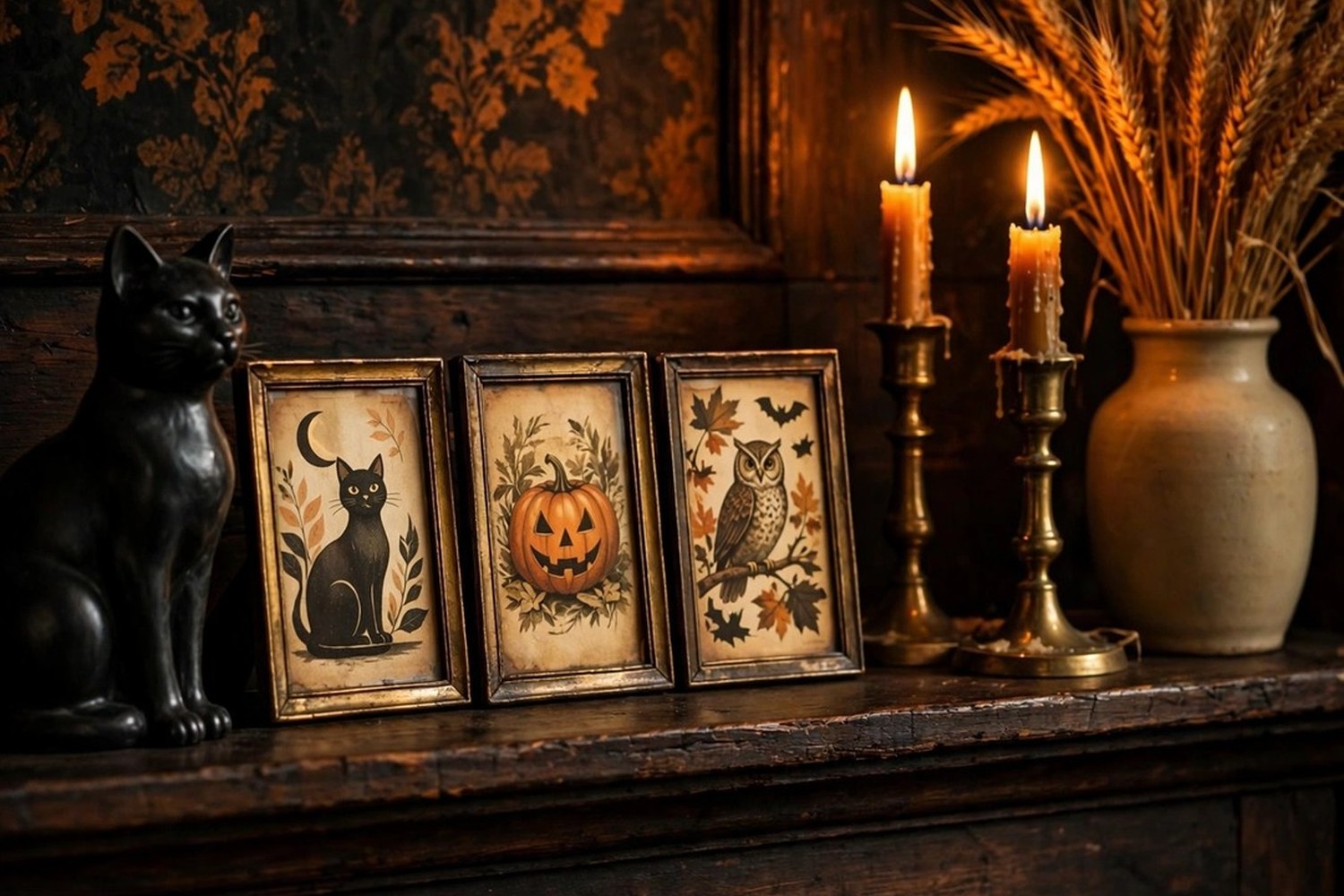
There is a reason vintage Halloween decorations never really leave us. Long before inflatable ghosts and plastic skeletons took over front yards, Halloween was a holiday of paper die-cuts, candlelit lanterns, and party games printed in little orange booklets. The look was handcrafted, a little eerie, and full of character, and it is just as charming on a mantel today as it was a hundred years ago.
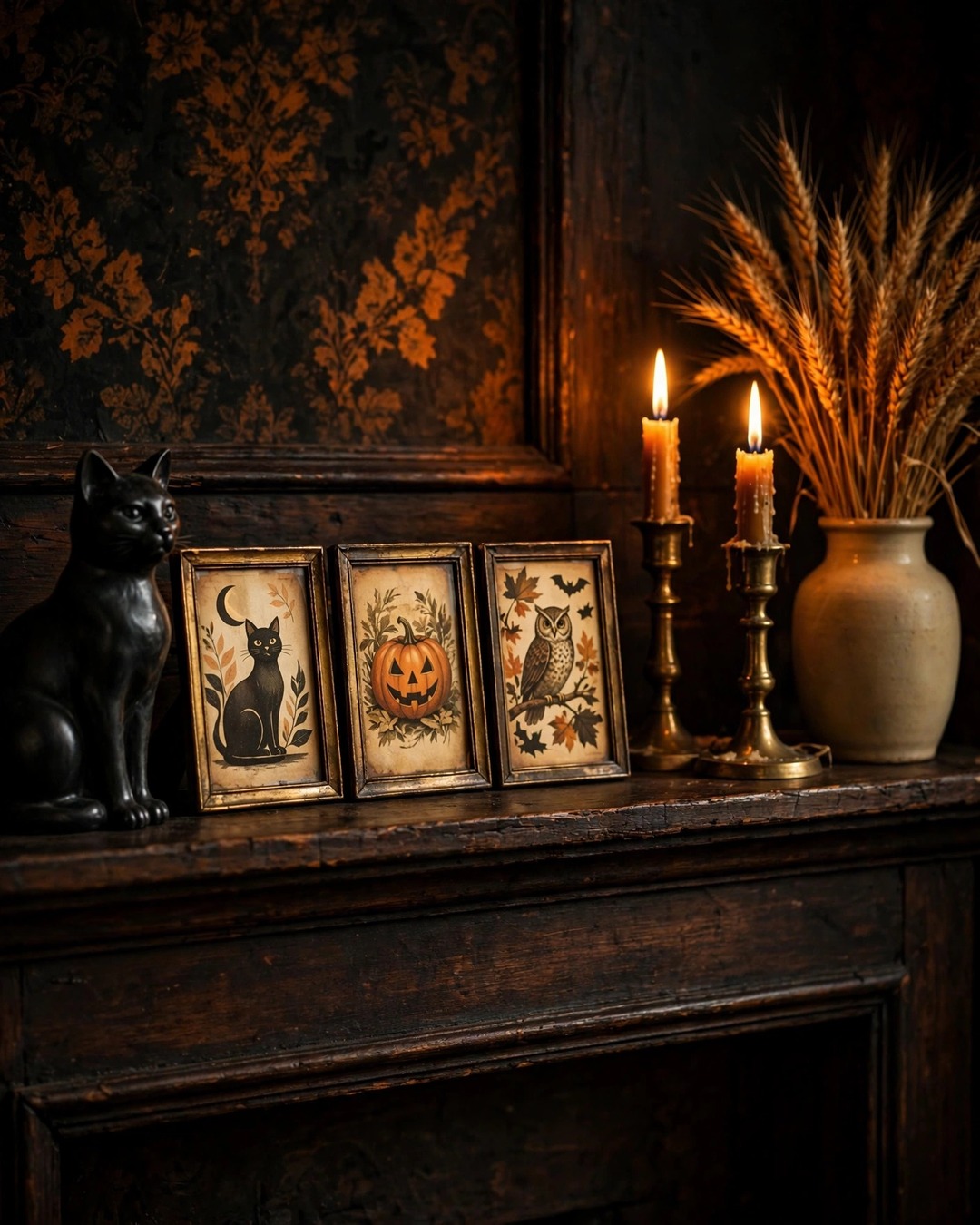
The best part is that you do not need a collector’s budget to get the look. Between thrift stores, flea markets, and faithful reproductions, building a vintage Halloween display is easier than ever. These 13 vintage Halloween decor ideas mix authentic antiques with clever reproductions, so you can create a home that feels like a beautifully aged Halloween postcard.
What Makes Halloween Decor Truly “Vintage”?
When collectors talk about vintage Halloween, they usually mean pieces from the “golden age” of Halloween manufacturing, roughly the 1910s through the mid-1930s. This was the era of the Beistle Company and Dennison Manufacturing, the two American firms that defined the holiday’s visual language with paper die-cuts, honeycomb centerpieces, and party booklets like Dennison’s famous Bogie Books, published from 1909 into the mid-1930s. The Beistle Company, founded in 1900, started making paper Halloween decorations in 1920 and went on to produce over a thousand Halloween designs. Many of the decorations seen in American classrooms for decades came from Beistle, and the company is still family-owned today, the oldest continuing manufacturer of party goods in the United States.
Between the world wars, many decorations sold in the U.S. were imported from Germany: papier-mâché figures, candy containers, and lanterns with faces far more ghoulish than their American counterparts. Tin noisemakers from makers like Chein, Kirchhof, and T. Cohn were party staples, and they survive in large numbers because they were sturdy enough to be reused year after year. Knowing a little of this history helps you spot the real thing, and helps reproductions look convincing, because you will know which details matter.
Visually, vintage Halloween has a signature palette: burnt orange, deep black, sepia, and antique cream, never neon. Motifs repeat across the decades: black cats with arched backs, wide-eyed owls, grinning jack-o’-lanterns, witches on broomsticks, and crescent moons. If your display sticks to those colors and characters, it will read “vintage” even when every piece is new. For a broader look at how these pieces fit into autumn decorating as a whole, see our easy fall decor ideas.
1. Frame Vintage Halloween Postcards
Antique Halloween postcards from the early 1900s are among the most beautiful seasonal ephemera ever printed. Originals show embossed pumpkins, witches silhouetted against the moon, and black cats in rich lithographed color, and genuine postmarked cards are genuine collectibles. High-quality reproductions, though, capture the artwork faithfully for a few dollars.
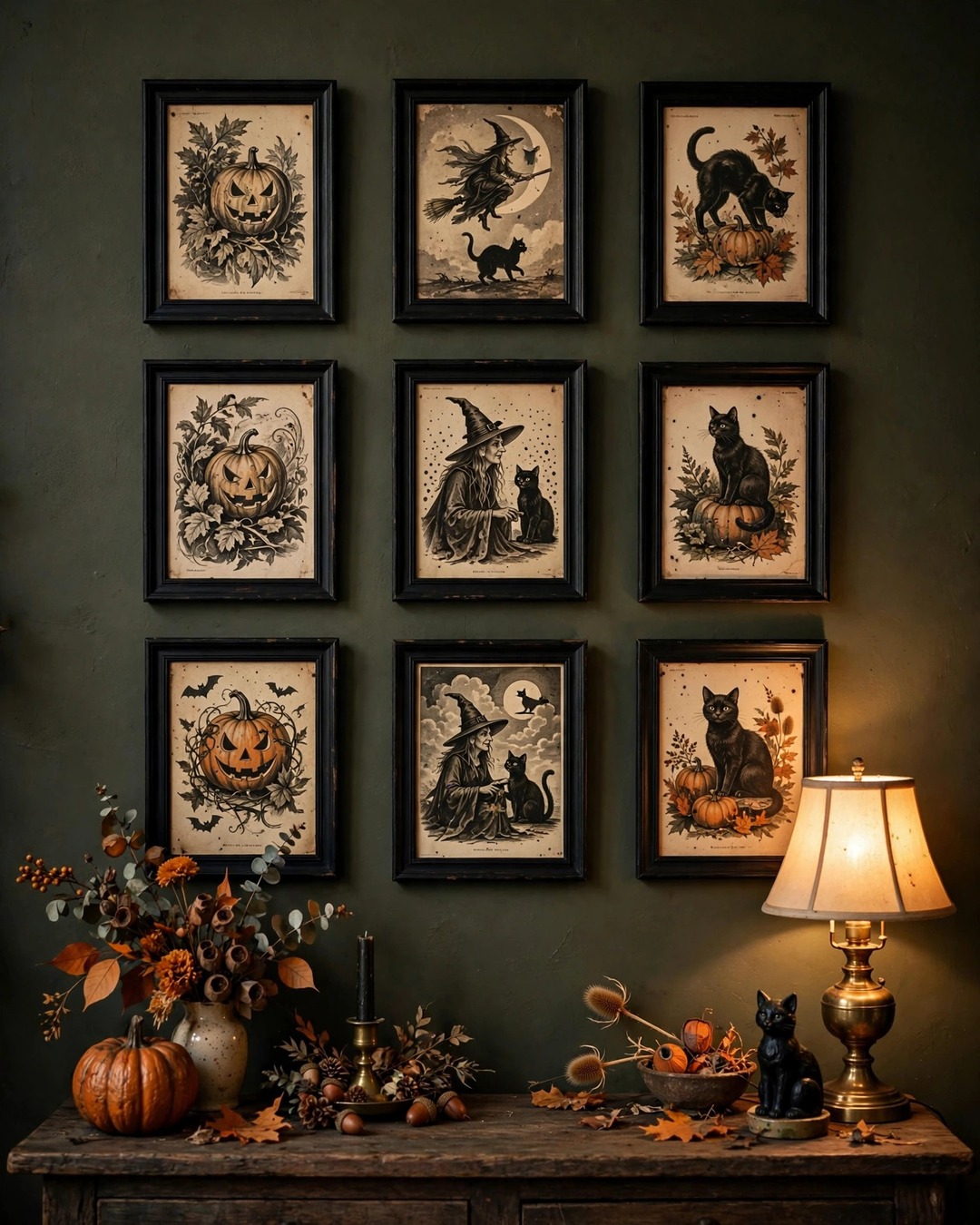
Display them the way you would art: in small mismatched frames grouped on a wall, propped against books on a shelf, or lined up along a mantel. A row of five or six postcards in simple black frames makes a gallery wall that looks curated rather than crafty. If you frame originals, keep them out of direct sunlight so the century-old inks do not fade.
2. Hang Beistle-Style Paper Die-Cuts
Nothing says vintage Halloween faster than paper die-cuts, the flat printed bats, cats, witches, and pumpkins that decorated parties and classrooms for generations. Original Beistle die-cuts are collector’s items now, but the company still makes classic designs, and reproduction die-cuts in the early-20th-century style are easy to find.
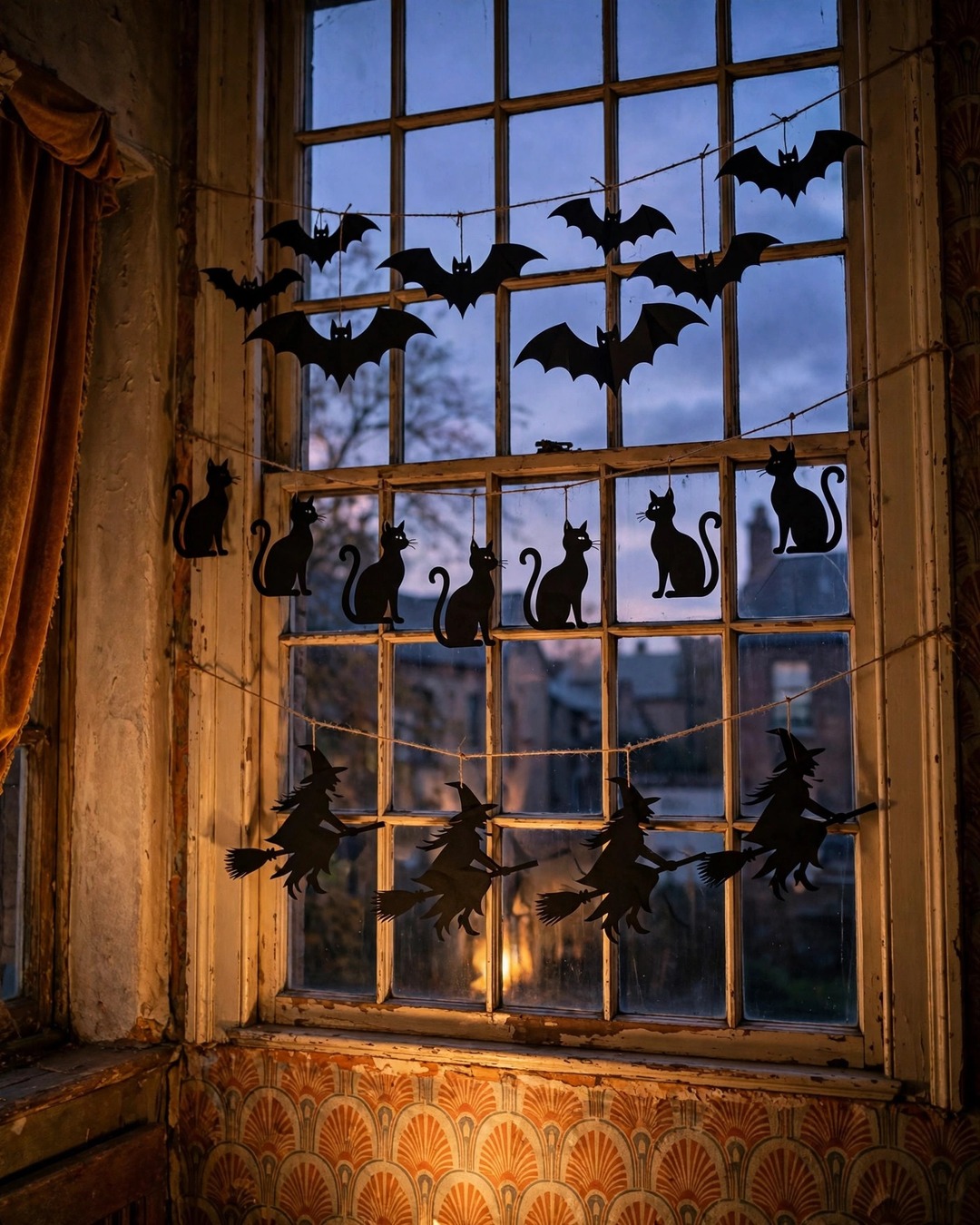
Hang them from a length of twine strung across a window or mantel, spacing them a few inches apart so they can turn gently in the air. Layer two strands at different heights for depth. Because they are light and store flat, die-cuts are the lowest-commitment way to test the vintage look, and they photograph beautifully against a dark wall.
3. Style Apothecary Jars as Potion Bottles
Glass apothecary jars were essential equipment in 19th-century pharmacies, which makes them a natural fit for a vintage Halloween display. Fill them with candy corn, dried beans, faux potion ingredients, or battery-operated tea lights, and label a few with aged paper tags reading things like “Bat Wings” or “Witch Hazel.”
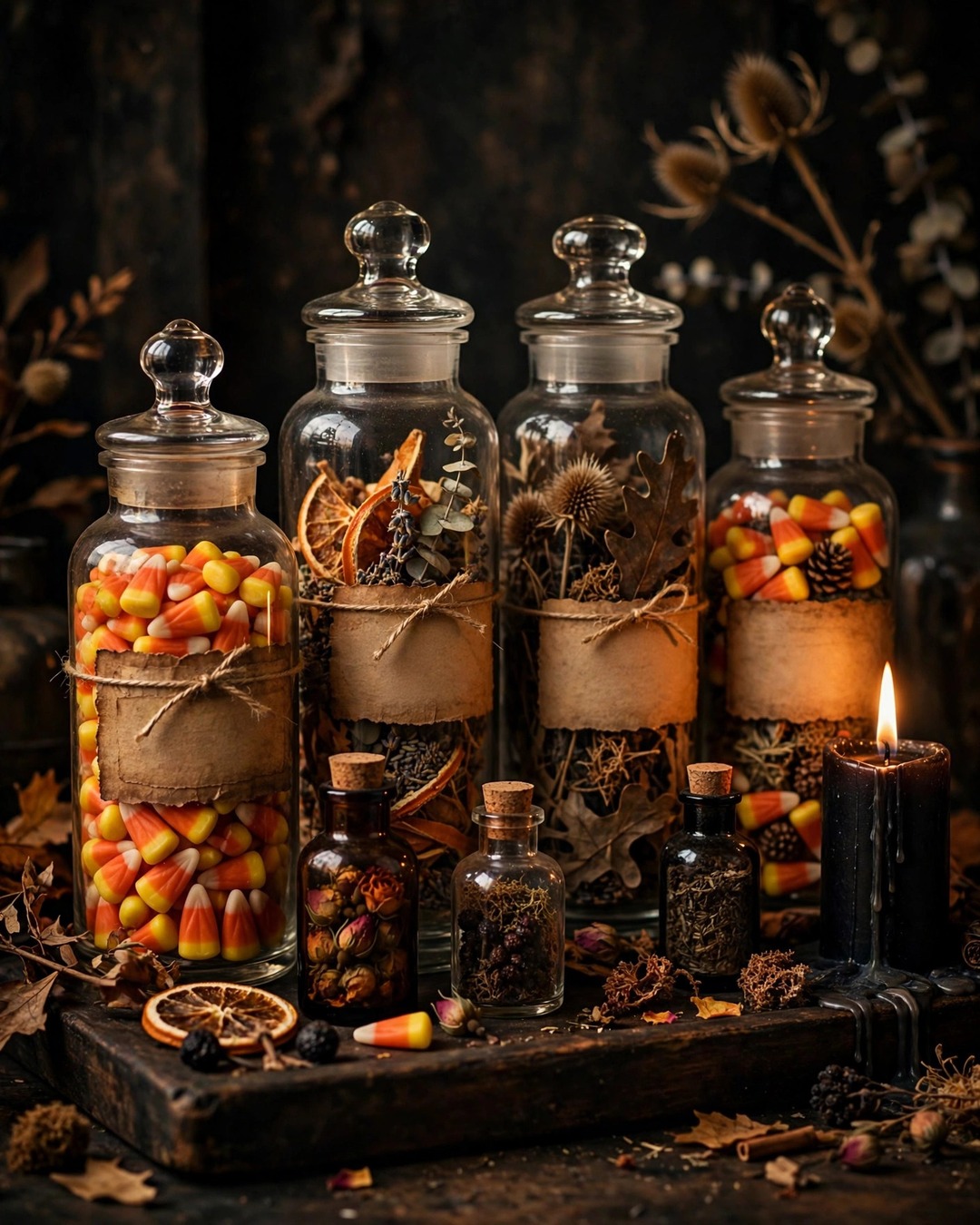
Group jars in odd numbers on a tray or cake stand, mixing tall and short shapes. To age new labels, brush them lightly with cold tea and let them dry, the paper takes on a convincing sepia tone. A set of three jars on an entryway table gives guests something to lean in and inspect, which is exactly what a good vignette should do.
4. Light Up Tin Jack-o’-Lanterns
Before plastic took over, jack-o’-lanterns were often made of tin, punched with simple grinning faces and lit from within by a candle. Vintage tin lanterns are sturdier and, to many eyes, creepier than their plastic descendants, with a folk-art quality that mass production never quite recaptured.
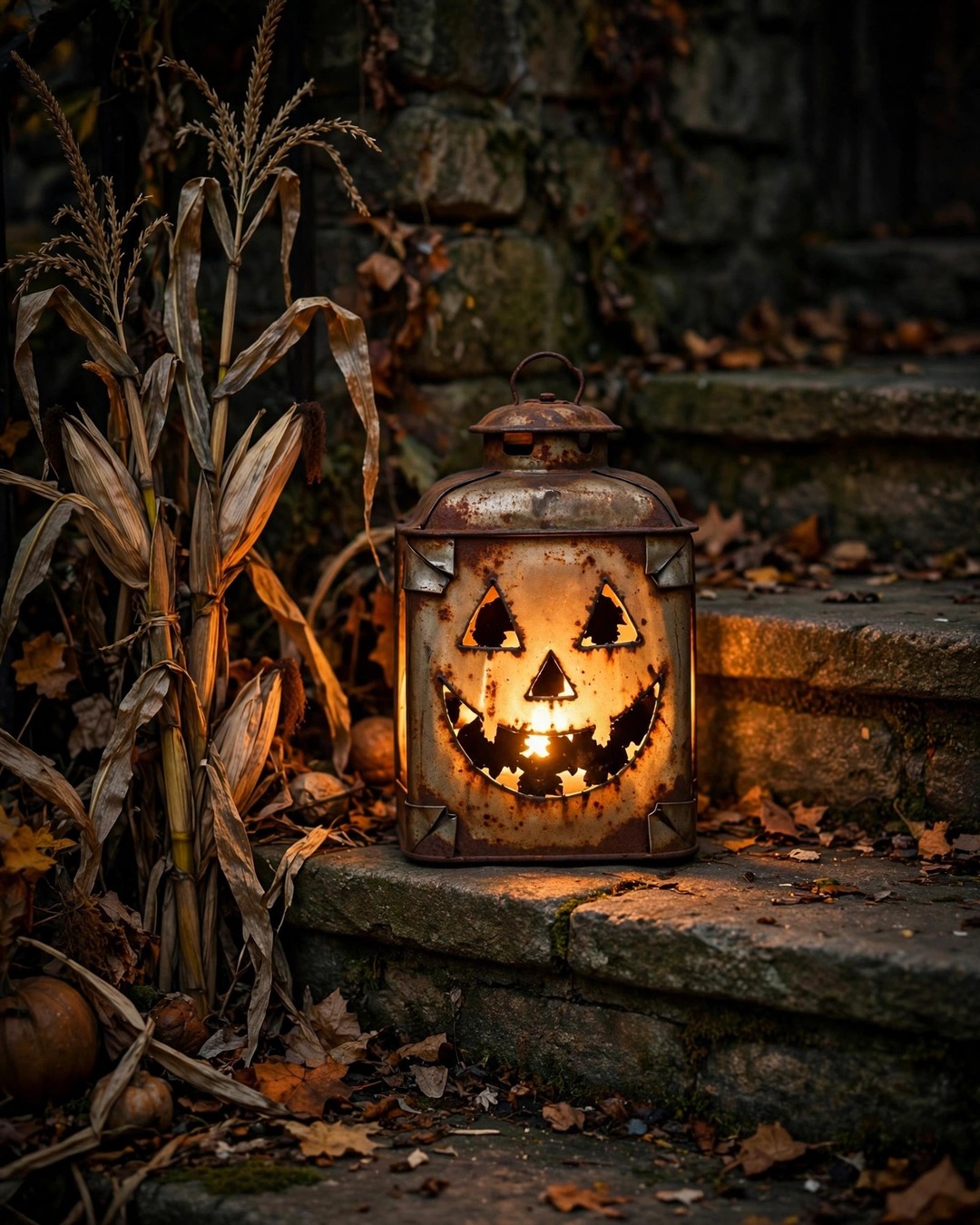
Place a tin jack-o’-lantern on a porch step or windowsill with a flickering LED candle inside (never a real flame in an antique). The punched holes throw patterned light across nearby surfaces, which looks far more atmospheric than a bulb. If you are styling a porch this year, pair it with the ideas in our Halloween porch decor ideas for a complete entrance.
5. Display Papier-Mâché Figures
Some of the most characterful vintage Halloween pieces are German papier-mâché figures from the 1920s and early 1930s, candy containers shaped like witches, pumpkins, and cats, many made in small workshops and hand-decorated. Their faces are wonderfully ghoulish in a way modern decorations rarely attempt.
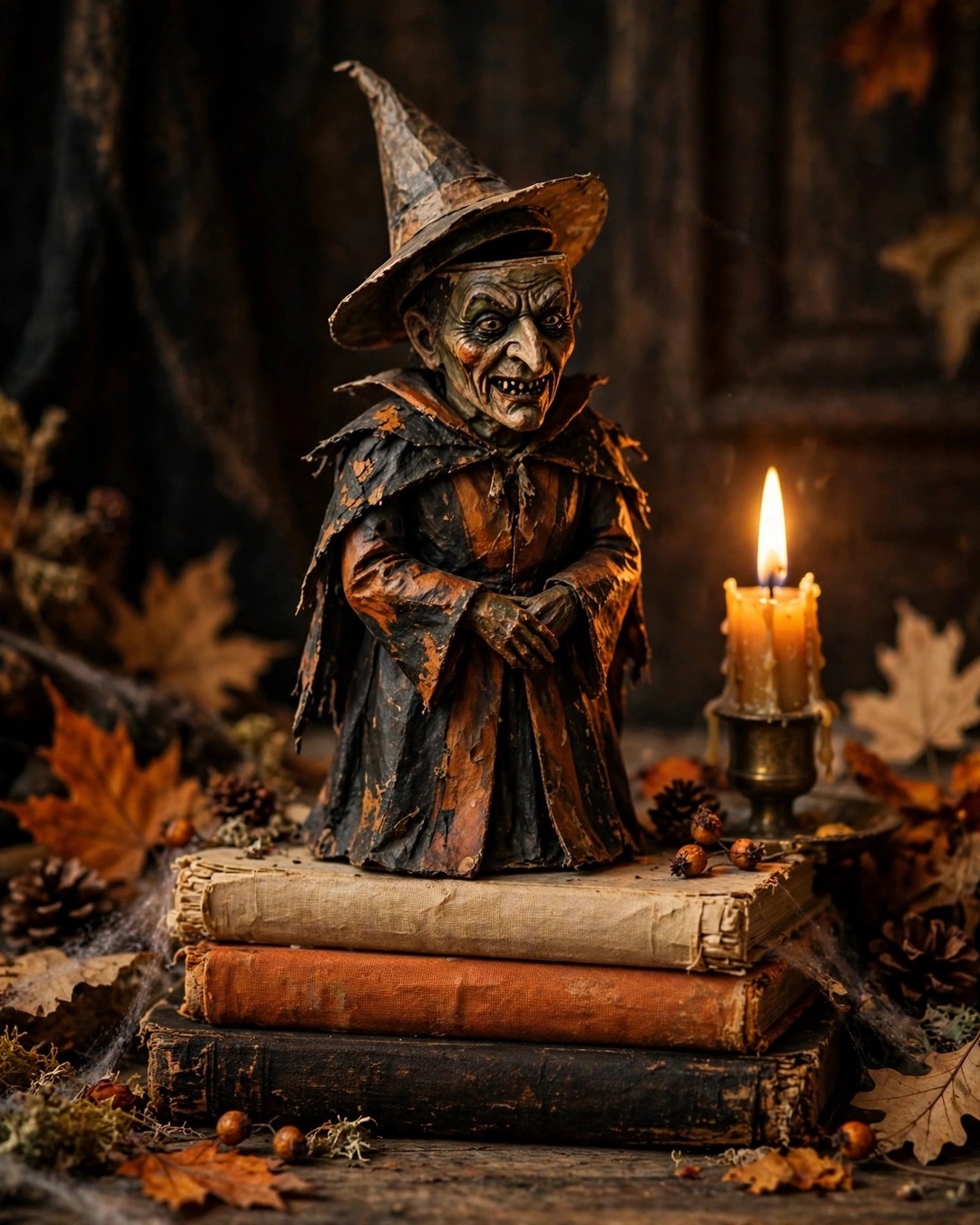
Originals are fragile and priced accordingly, so most decorators use reproductions for display and save hunting originals for the collection shelf. Either way, give these figures pride of place: one striking papier-mâché witch on a stack of old books beats a shelf crowded with small items. Keep them indoors and away from moisture, since papier-mâché and damp do not mix.
6. Place a Vintage-Style Black Cat
The black cat, arched back, wide eyes, tail curled, is one of the most recognizable vintage Halloween symbols. Ceramic and chalkware cats in this style were made by the thousands in the mid-20th century, and originals still turn up at thrift stores and estate sales for very little money.
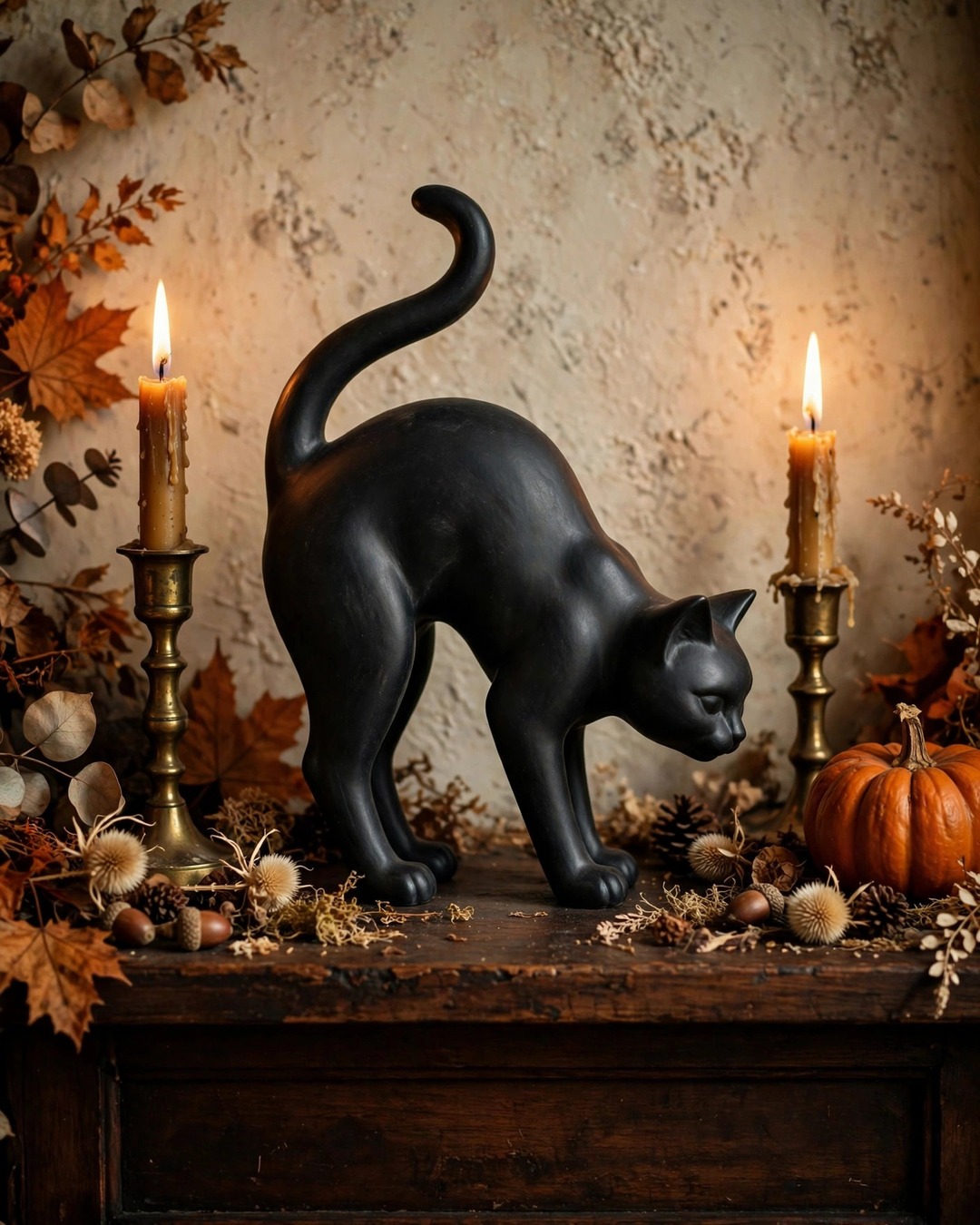
Choose one with a matte or slightly rough finish rather than a glossy modern glaze; the softer surface reads older. Perch it on a mantel, a stack of vintage books, or beside the front door like a tiny guardian. One cat is a motif, three is a collection, so stop at one or two unless you are deliberately building a clowder.
7. Drape Crepe Paper Garlands
Dennison, the paper-goods giant behind the Bogie Books, built its Halloween empire on crepe paper, streamers, garlands, and party decorations in black and orange. A crepe paper garland twisted along a mantel or doorway is one of the cheapest decorations on this list and one of the most authentically vintage.
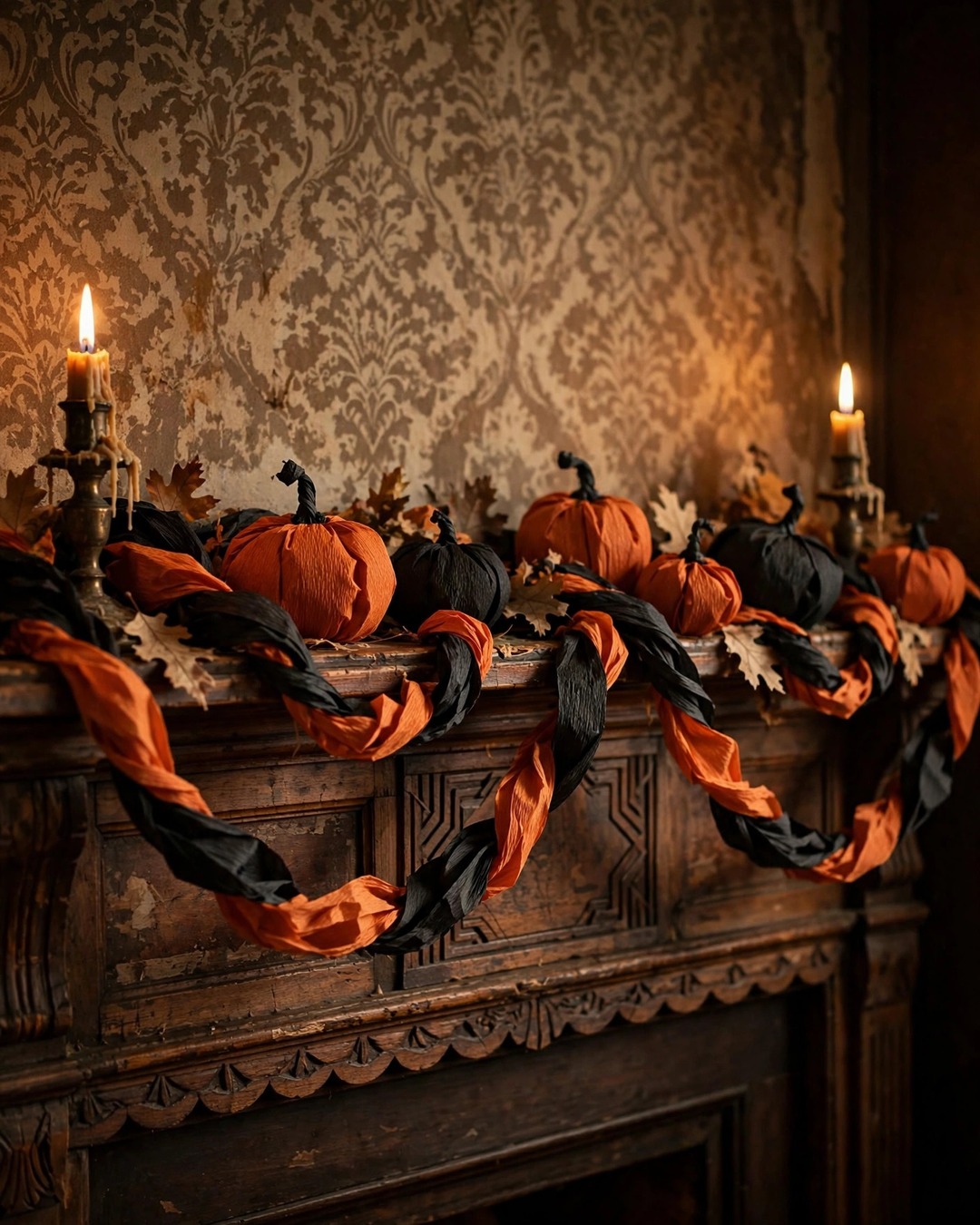
Twist two colors together (black and orange, or orange and cream) and swag the garland loosely rather than pulling it taut; the soft drapes are the whole point. Crepe paper fades in sunlight, so save this treatment for indoor spots. When the season ends, it composts, a rare guilt-free decoration.
8. Switch to Warm Amber Lighting
Vintage Halloween was lit by candlelight and early incandescent bulbs, which means the authentic glow is warm amber, around 2200K, not the cool white of modern LEDs. Swapping the bulbs in your display lamps for amber ones is a small change with an outsized effect on mood.
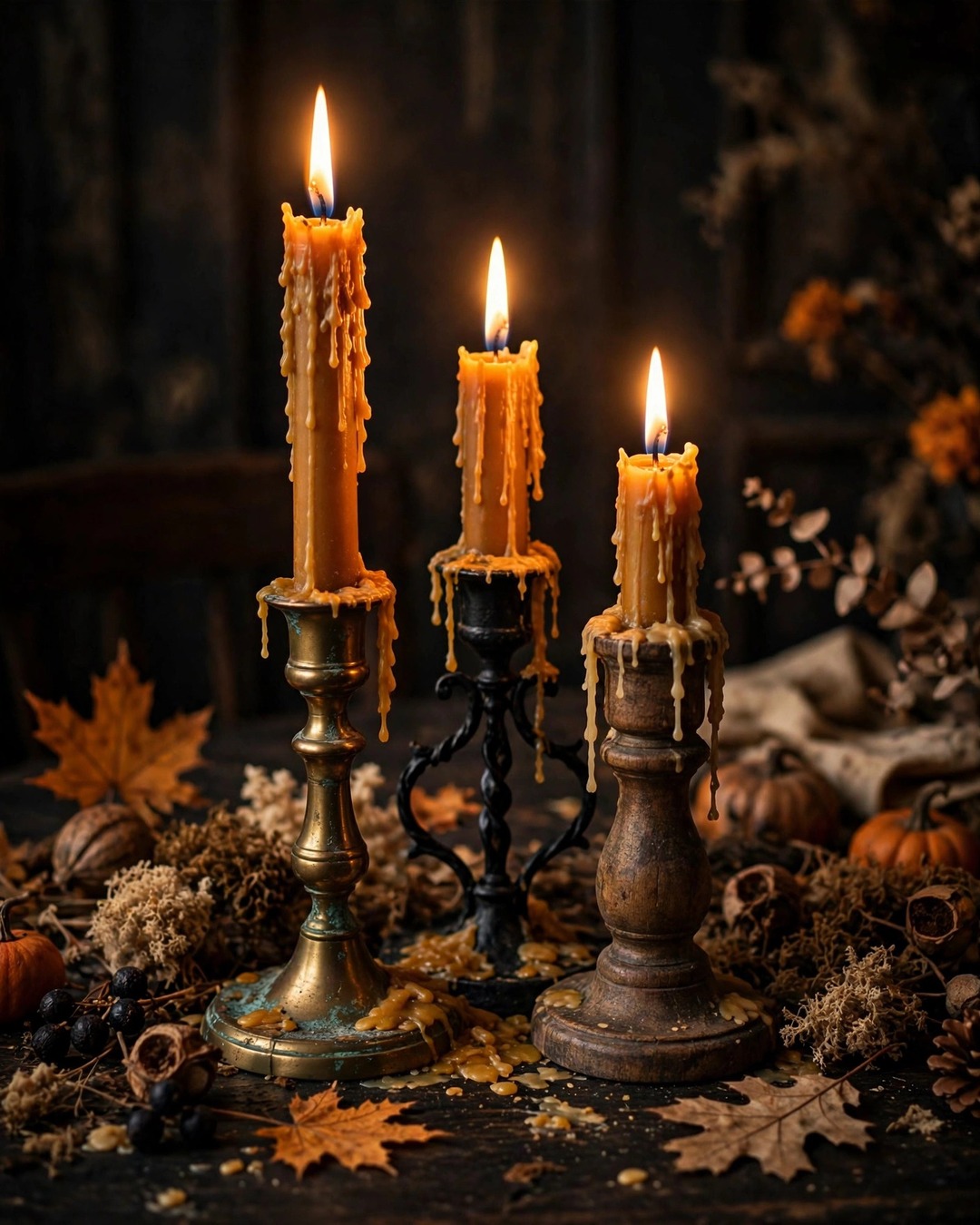
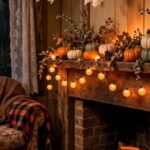
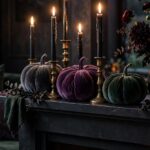
Cluster candlesticks of varying heights on a mantel or dining table, mixing brass, black, and wood. Add a few LED taper candles for the flicker without the fire risk, and let a strand of amber fairy lights wander through the arrangement. Everything vintage looks better in warm light, so this one upgrade flatters your entire display. The history of how these lighting traditions evolved is a fun rabbit hole, this brief history of Halloween decorations covers the shift from candlelit parties to modern displays.
9. Create a Haunted Portrait Gallery
Nothing transforms a hallway like a wall of stern-faced “ancestors.” Print sepia-toned portraits, public-domain Victorian photographs are easy to find, and hang them in ornate thrifted frames. The effect is instantly gothic, and it costs little more than printing and frames.
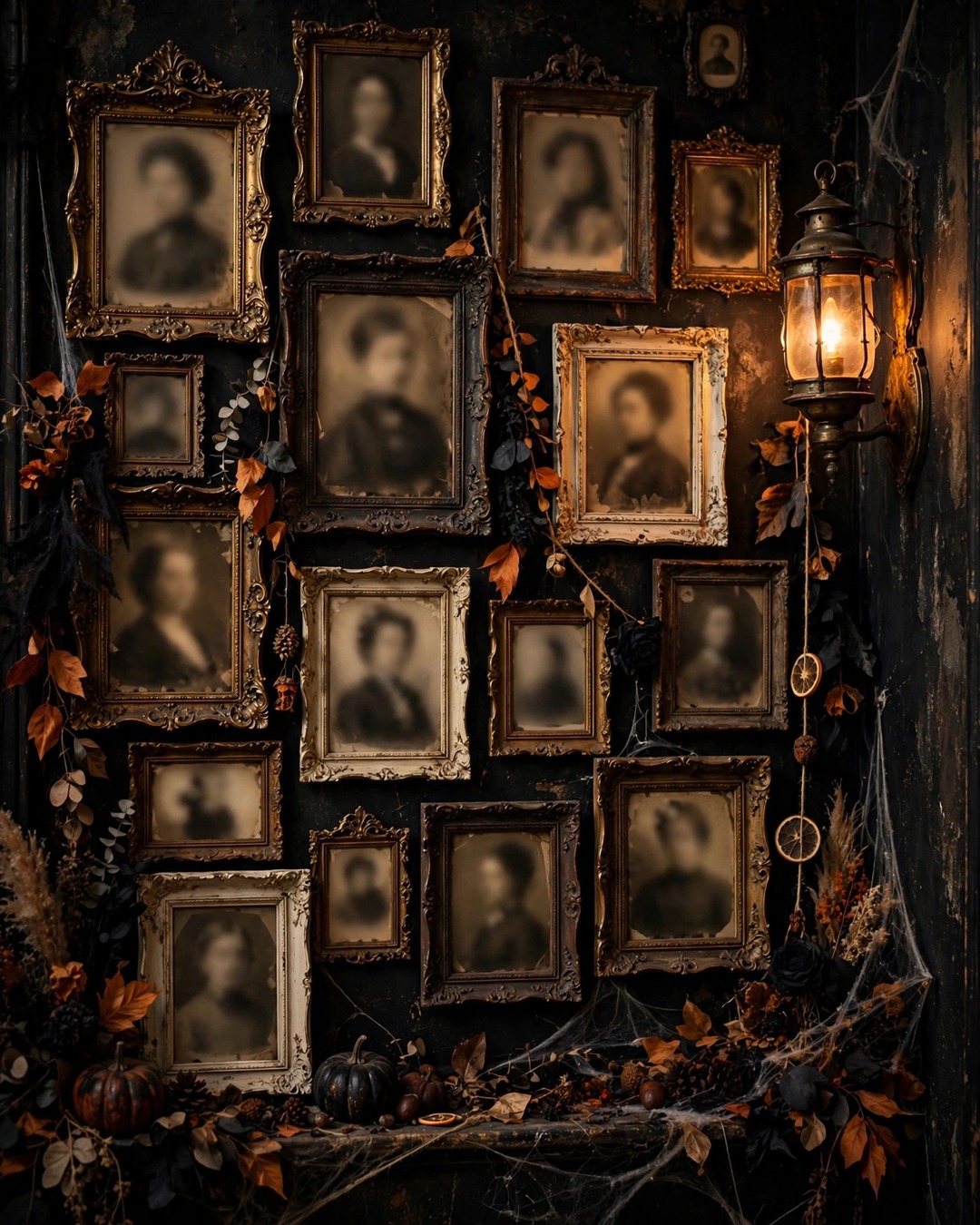
For extra credit, add small brass label plates with invented names and dates beneath a few frames. Keep the frames mismatched but the mats consistent (all cream, for example) so the wall looks collected rather than chaotic. A narrow hallway or the wall above a staircase is the ideal spot, since guests pass close enough to study the faces.
10. Set Out Tin Noisemakers and Party Favors
Tin noisemakers, ratchets, clangers, and tambourines printed with witches and pumpkins, are among the easiest authentic vintage pieces to find, precisely because they were built to be reused. Makers like Chein and Kirchhof produced them by the thousand in the 1920s and 30s, and they survive at flea markets in surprising numbers.
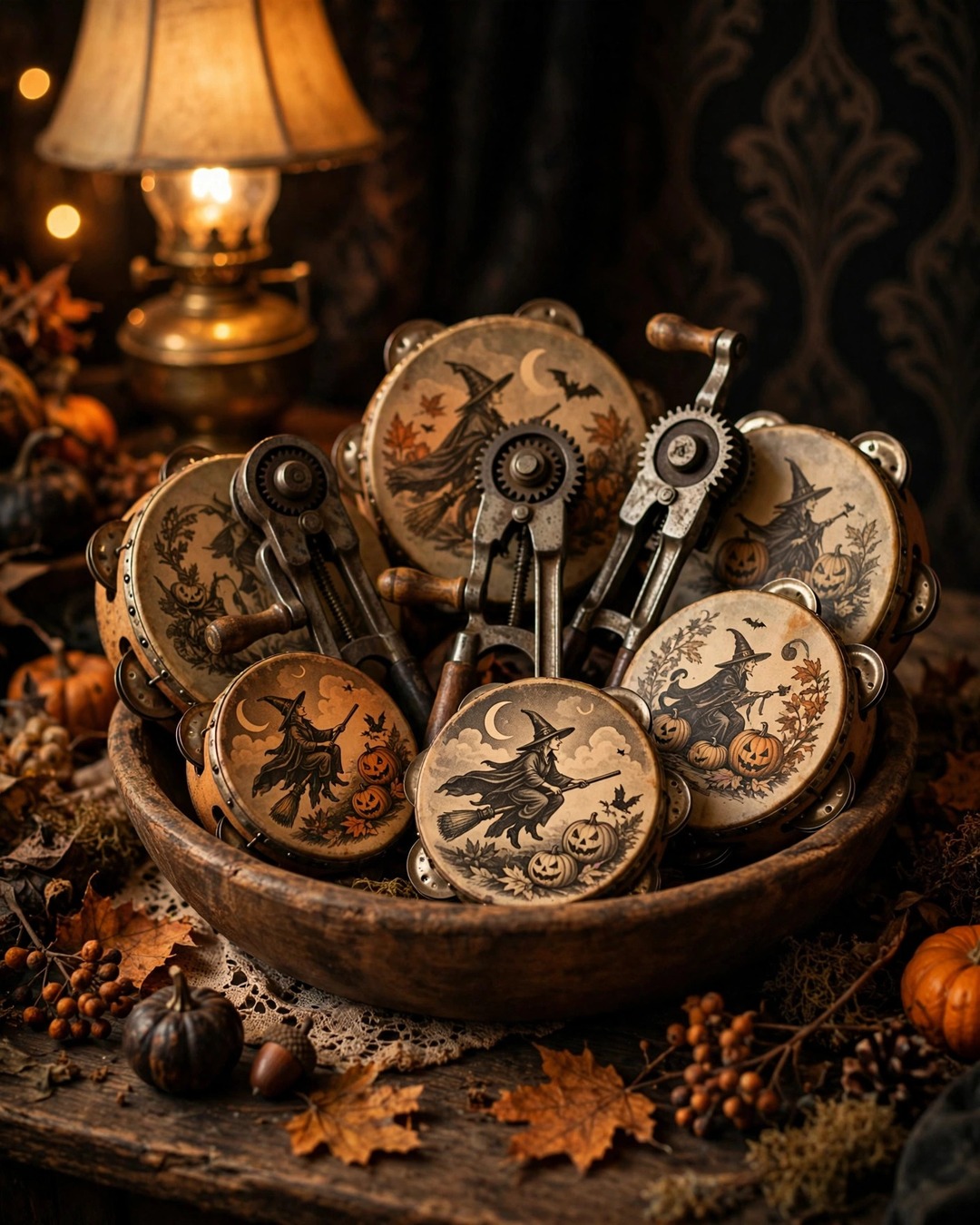
Bowl them casually on a coffee table or sideboard the way you would display any collection: the lithographed graphics are the decoration. Early examples often have sculpted wooden handles, a detail that helps date them. They also make wonderful party favors if you are hosting, guests get a real piece of Halloween history to take home.
11. Arrange Mercury Glass Pumpkins
Mercury glass, with its mottled silvered finish, was a Victorian-era technique that reads as instantly antique. Mercury glass pumpkins in amber, silver, and smoky black bring that aged shimmer to a Halloween display without a single plastic pumpkin in sight.
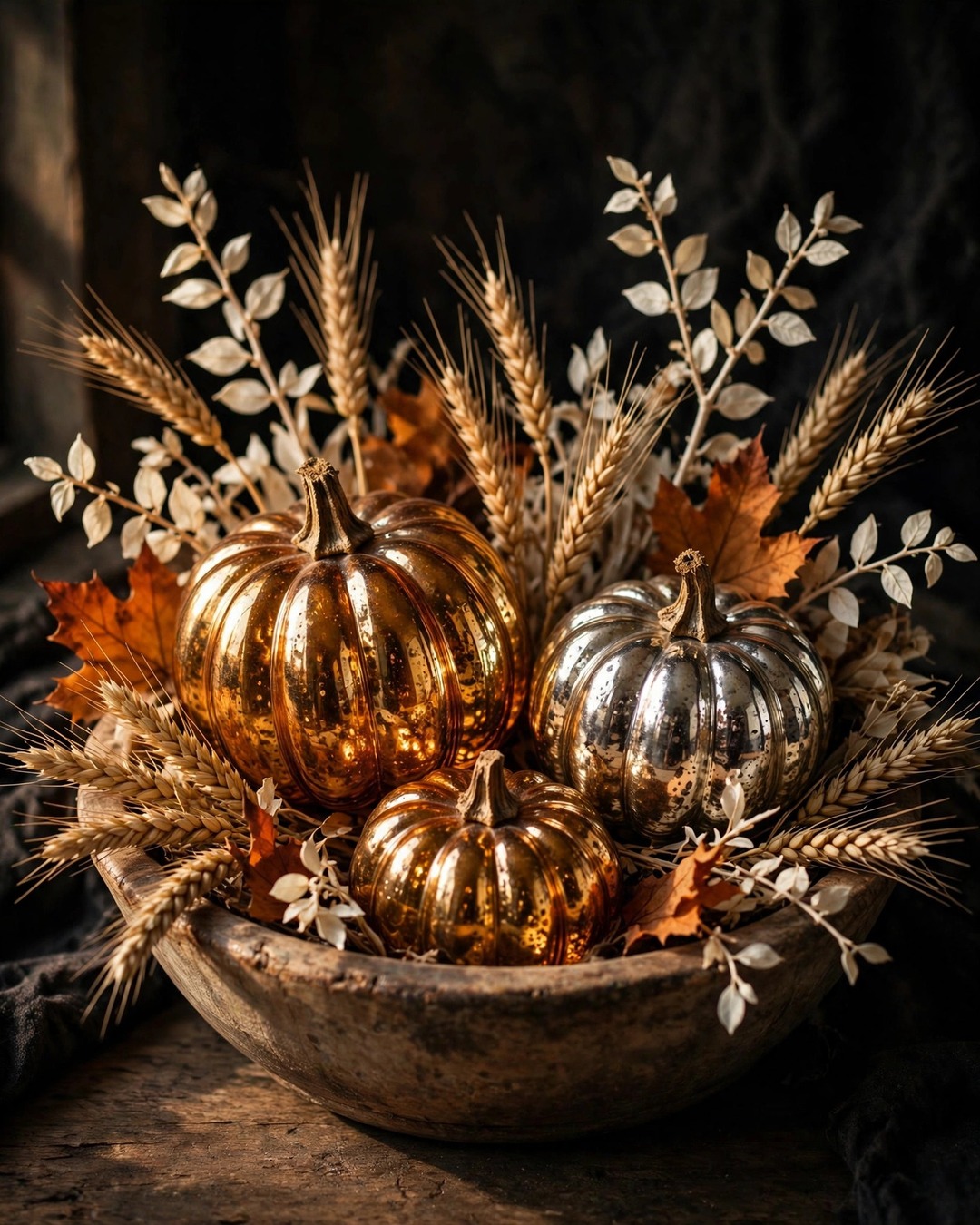
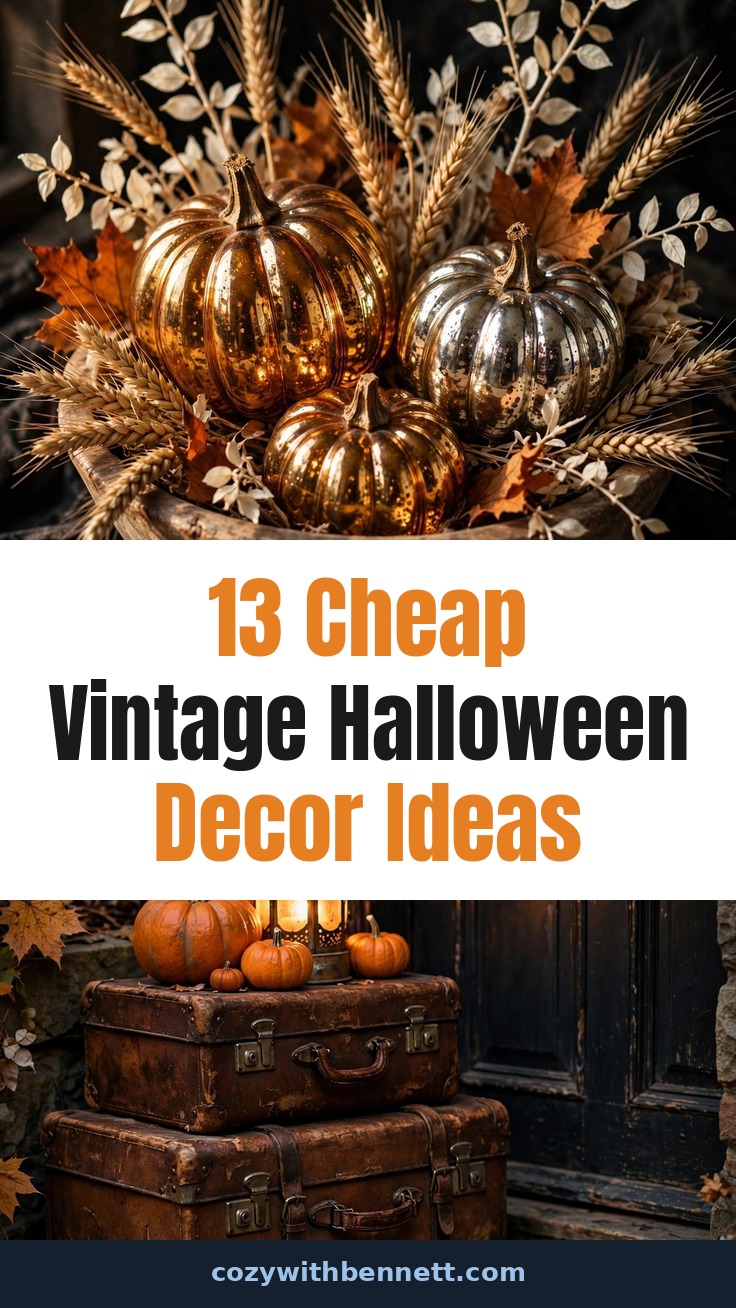
Cluster them with dried florals, bleached ruscus, dried wheat, or preserved eucalyptus, in a low dough bowl or on a stack of vintage books. The combination of reflective glass and matte dried botanicals is what makes the arrangement feel expensive. A runner of cheesecloth underneath adds texture and keeps the glass from sliding on smooth surfaces.
12. Stack Vintage Suitcases as Risers
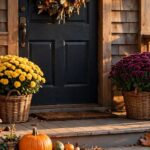
Old suitcases, hatboxes, and wooden crates are the vintage decorator’s secret weapon: they add height to a display while contributing their own patina. A stack of two or three worn suitcases beside the front door, topped with pumpkins and a lantern, looks like a still life, and it costs whatever the flea market charges.
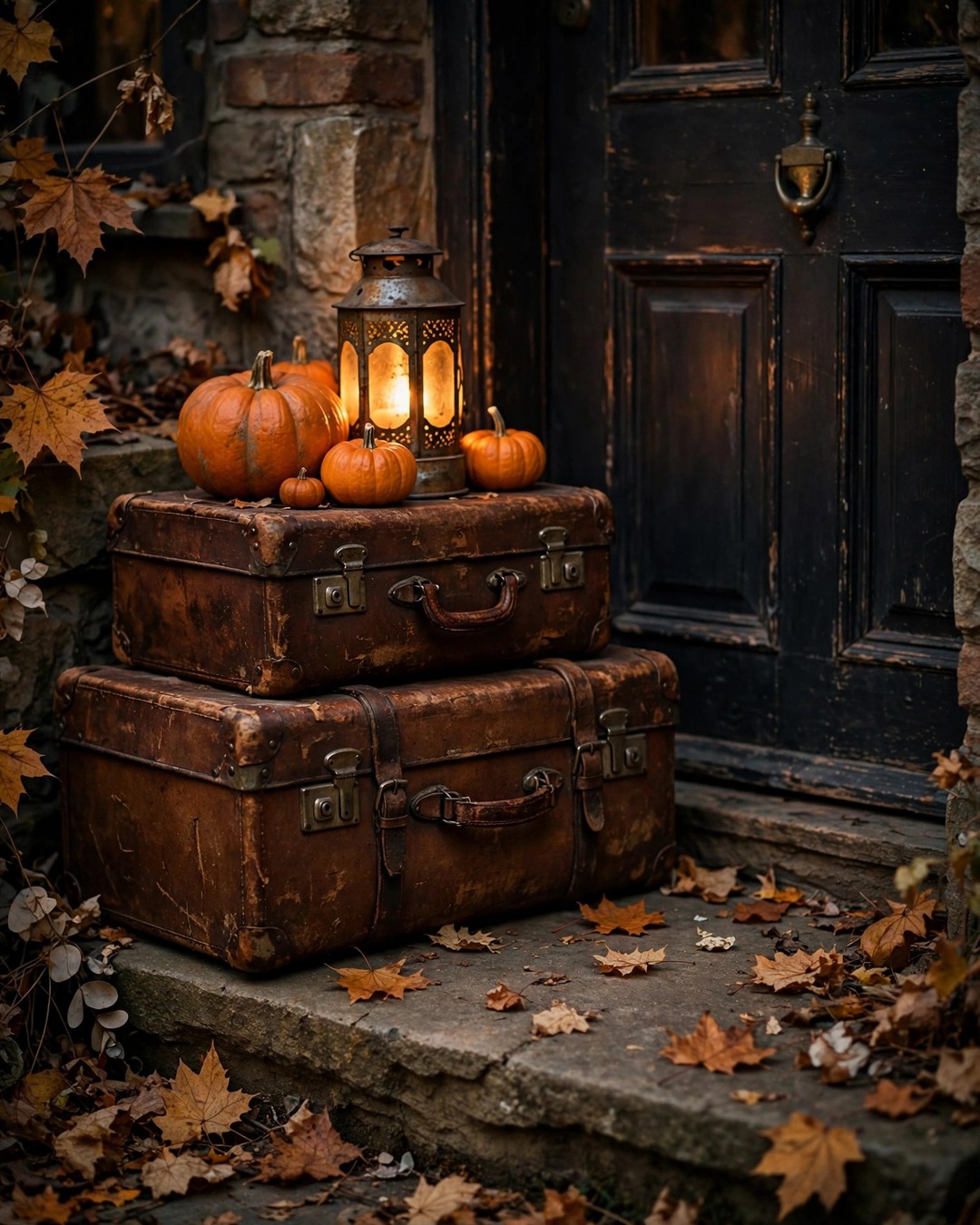
Use the interiors too. An open suitcase lined with a piece of dark fabric becomes a shadow box for smaller treasures: postcards, a black cat figurine, a string of amber lights. This trick works indoors as well, a suitcase stack in an entryway styled with thrifted finds ties the whole vintage story together. If you enjoy the hunt, our thrift store decor guide is full of strategies for finding pieces like these.
13. Hang a Wreath on an Antique Mirror
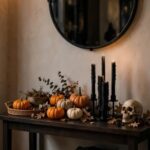
A wreath hung on an old mirror doubles its impact, the reflection adds depth and a faint ghostliness that suits the season. Build the wreath from dried and faux materials in the vintage palette: black dried flowers, bleached pods, small faux pumpkins, and a tattered ribbon in burnt orange.
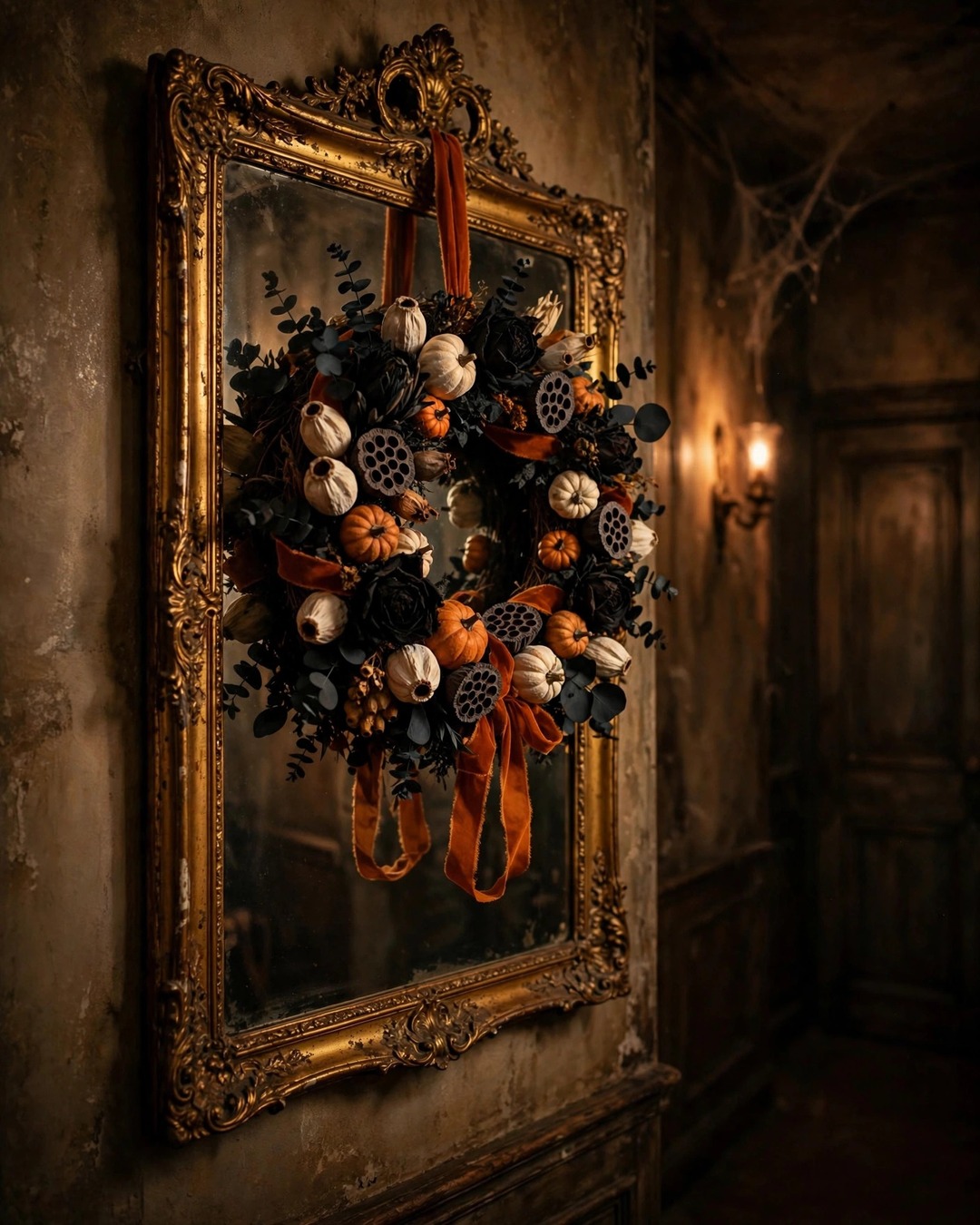
Hang it from a wide grosgrain ribbon looped over the top of the mirror rather than a nail, so the antique frame stays undamaged. In a dim hallway lit by amber light, the doubled wreath looks genuinely haunting. It is a strong closing note for the display, and a technique you can reuse every autumn with different dried materials.
Where to Find Vintage Halloween Decor
The hunt is half the fun, and knowing where to look saves both money and disappointment. Thrift stores and estate sales are the best sources for mid-century chalkware, tin toys, and frames, go early, go often, and check the Halloween aisle year-round, because good pieces surface in July as easily as October. Flea markets and antique malls reward patience: this is where the pre-war paper ephemera and German papier-mâché tend to appear.
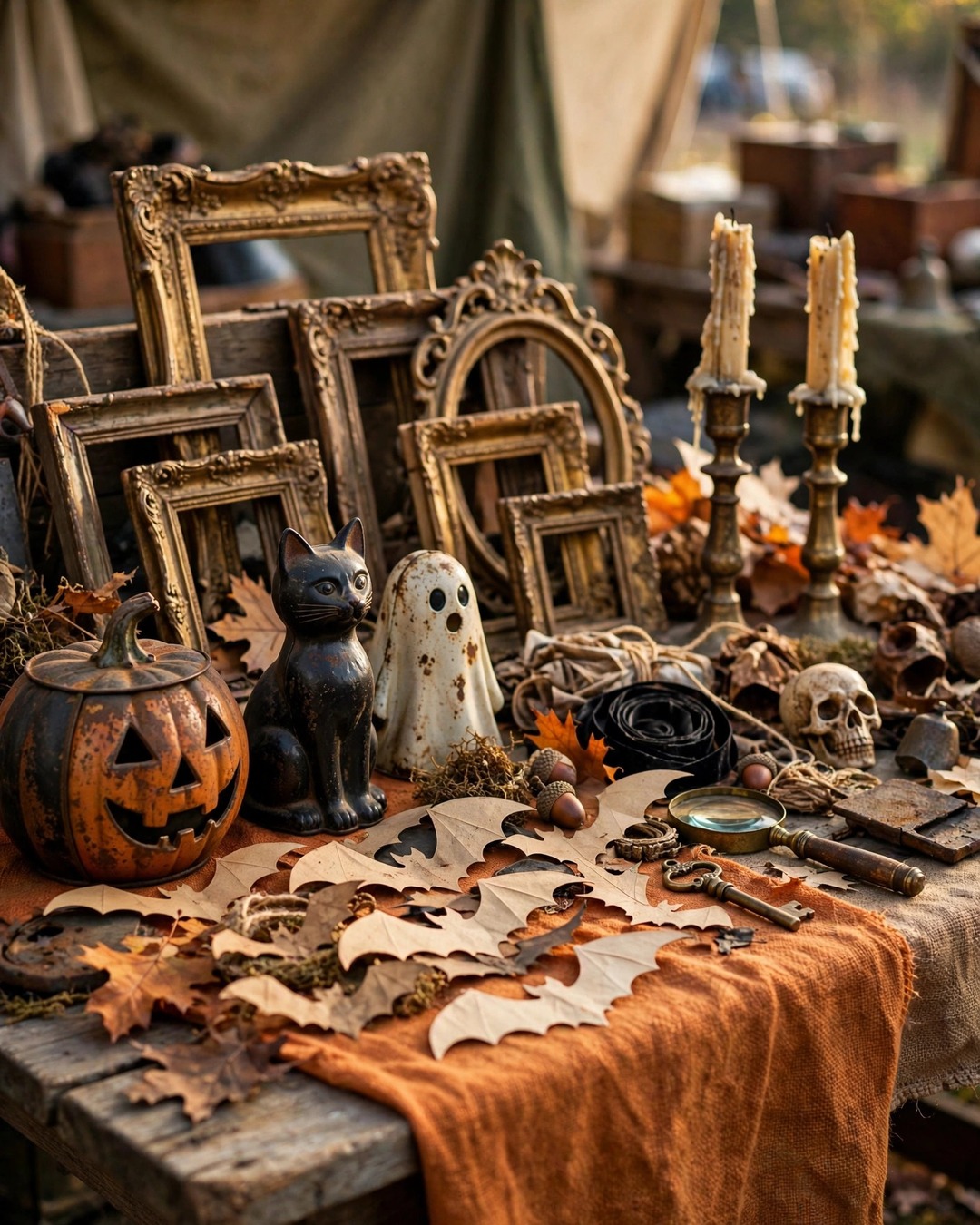
Online, Etsy is the deepest well for both originals and reproductions, search for specific makers like Beistle or Dennison to filter past the generic. eBay’s sold listings are useful for calibrating prices before you buy. And when an original is too fragile or too dear, reproductions fill the gap honestly: companies still make Beistle’s classic honeycomb centerpieces and die-cuts, so your mantel can carry the real visual language of the 1920s without risking a century-old artifact. For inspiration on styling secondhand finds once you bring them home, browse our thrifted entryway makeover, many of the same principles apply.
Styling Tips for a Convincing Vintage Look
A few principles separate a convincing vintage display from a pile of old-looking stuff. First, commit to the palette: burnt orange, black, sepia, and cream, with metallics limited to aged brass and tarnished silver. One neon-orange plastic pumpkin will undo the work of ten authentic pieces, so edit ruthlessly.
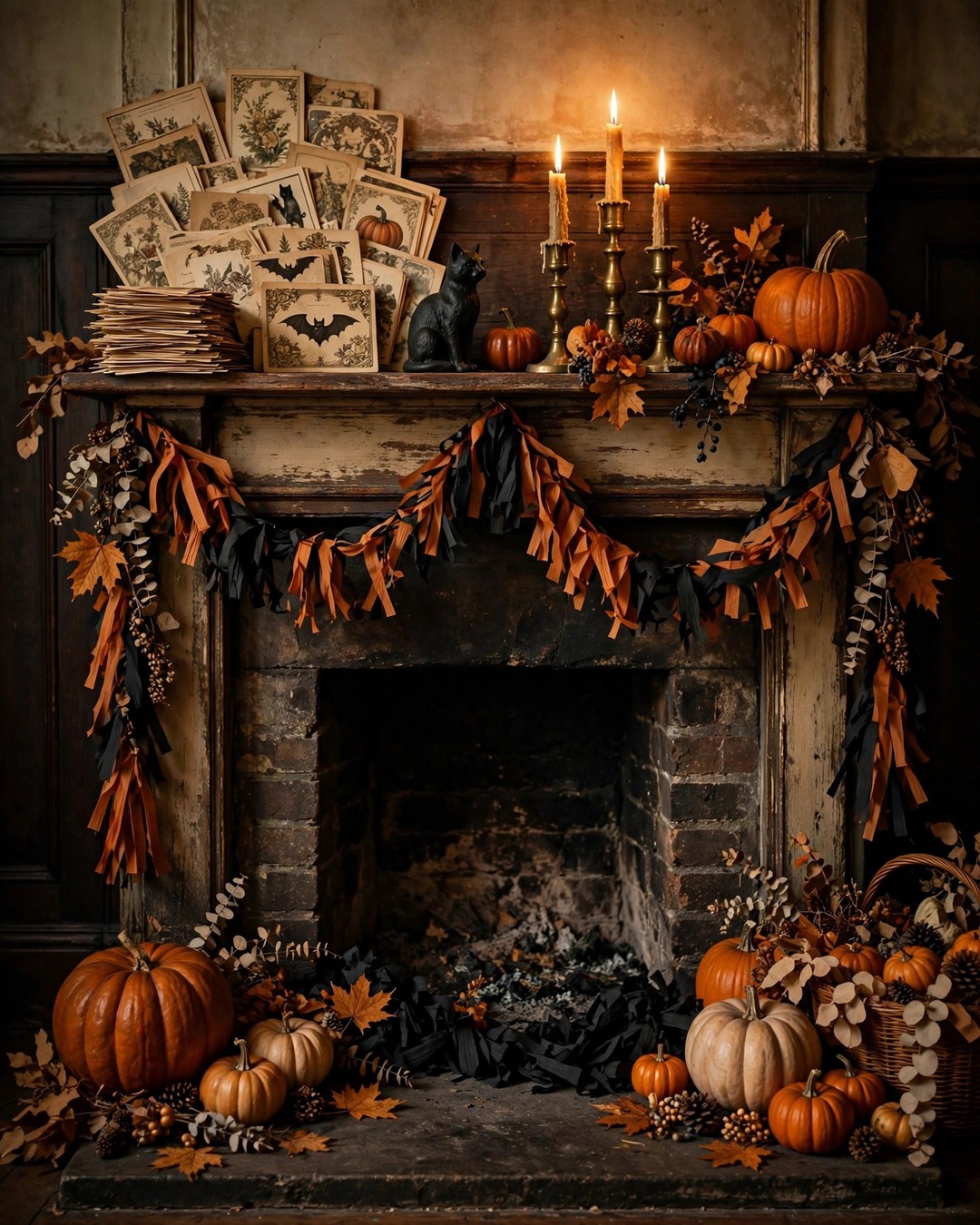
Second, mix heights and textures. Pair reflective surfaces (mercury glass, mirrors) with matte ones (dried florals, paper, wood), and vary the elevation of objects with books, crates, and cake stands. Third, light it warm, amber bulbs and candlelight do more for the vintage illusion than any single object. Finally, leave breathing room. Victorian and early-20th-century displays were often dense, but a modern eye reads a little negative space as intentional and curated.
Frequently Asked Questions
What years count as vintage Halloween decor?
Collectors generally consider the “golden age” to be the 1910s through the mid-1930s, the era of Beistle and Dennison paper decorations and German papier-mâché imports. Mid-century pieces from the 1940s-1960s (chalkware, tin litho) are also collected as vintage, while mass-produced plastic from the 1970s onward is usually just called retro.
How can I tell if a Halloween decoration is actually old?
Age clues include lithographed (not digital) printing, simple cardboard construction, wooden handles on noisemakers, and a general rule collectors swear by: the scarier the imagery, the older the piece. Early-20th-century Halloween was aimed at adults throwing parties, so genuinely old pieces often look darker and more sinister than modern cute versions. When in doubt, research the maker, most Beistle pieces are unmarked, which is exactly why reproductions fool people.
Where is the best place to buy vintage Halloween decorations?
Thrift stores and estate sales for affordable mid-century finds; flea markets and antique malls for pre-war ephemera; Etsy and eBay for specific makers and rare pieces. Always check eBay’s sold listings first to learn the going rate, Halloween collectibles are, as one antiques columnist put it, second only to Christmas as a holiday collectible, and scarcity drives prices. This collector’s guide to vintage Halloween is a good primer on what to look for and what to pay.
Are reproductions worth buying?
Yes, honestly labeled reproductions are the practical backbone of most vintage-style displays. They give you the authentic 1920s visual language (die-cuts, honeycomb tissue, crepe garlands) at a fraction of the price, and you will not grieve if a paper bat gets rained on. Reserve your budget for one or two genuine statement pieces and fill in with reproductions.
How do I decorate for vintage Halloween on a budget?
Start with paper: die-cuts, crepe garlands, and printed postcards deliver the most vintage impact per dollar. Then hit thrift stores for frames, candlesticks, and chalkware. Amber bulbs (a few dollars each) transform the lighting of your whole display. You can build a convincing mantel for under $30 if the paper goods do the heavy lifting.
How should I store vintage paper decorations?
Flat, dry, and dark. Store die-cuts and postcards between sheets of acid-free tissue in a rigid portfolio or shallow box, away from attics (heat) and basements (moisture). Paper decorations are the most light-sensitive items in a vintage collection, a single sunny October in a window can fade inks that survived a century.
The Bottom Line
Vintage Halloween decor endures because it was designed by people who took the holiday seriously as an aesthetic, rich color, handcrafted detail, and just the right amount of menace. Whether you frame a five-dollar reproduction postcard or splurge on a genuine Beistle die-cut, the formula is the same: commit to the palette, light it warm, and let a few storied objects do the talking. Your home will feel less like a seasonal aisle and more like a memory, which, a century ago, was rather the point. For more on the era that started it all, the history of the Beistle Company is well worth a read.