9 Thrift Store Decor Guide: What to Buy and What to Skip

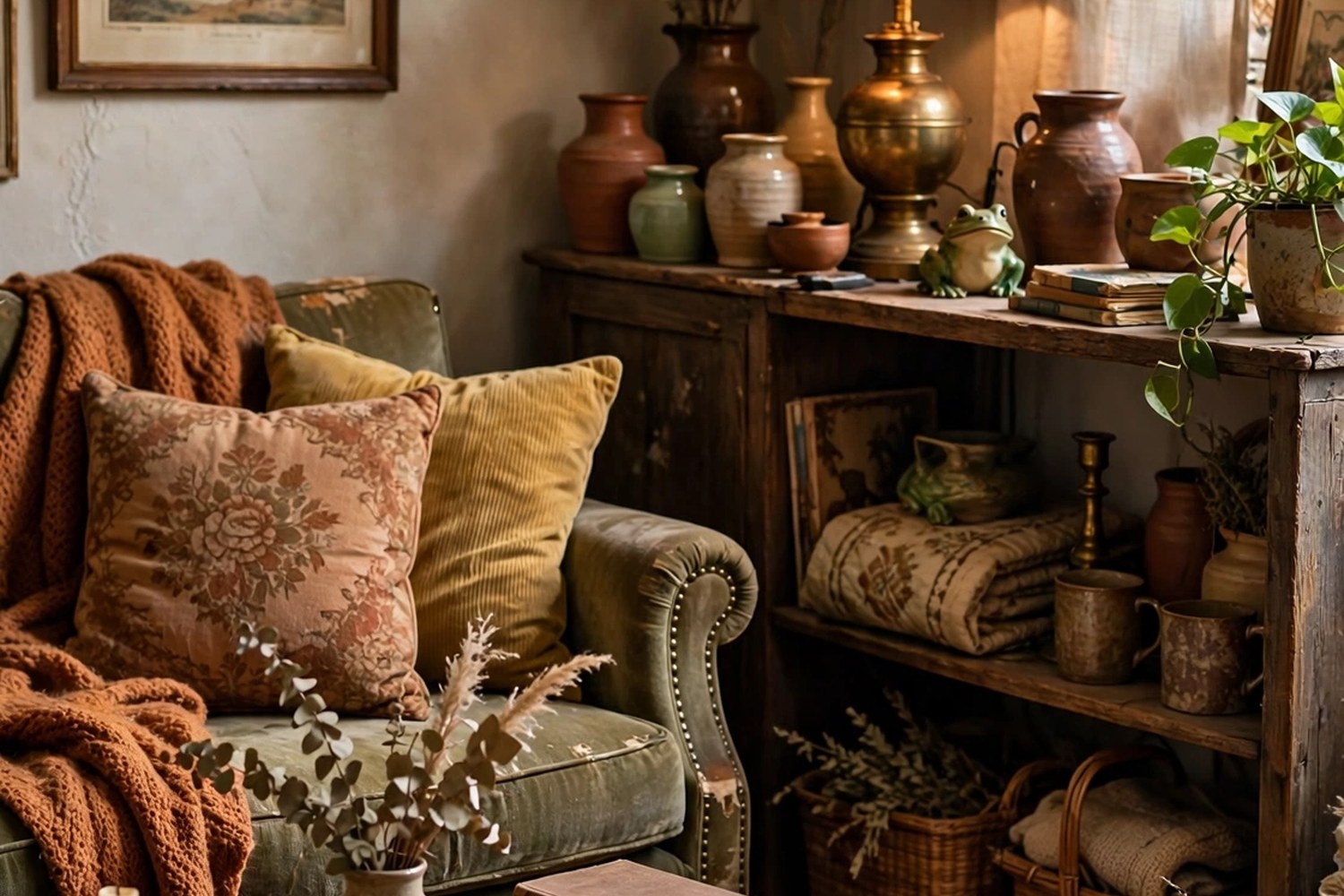
Some of my favorite things in my home came from secondhand shelves. There’s a particular thrill to spotting something with real character — a heavy brass lamp, a frame with actual wood grain — and carrying it home for a few dollars. Thrifted pieces keep a home from looking like a catalog: they add the wobble, the patina, the story.
But here’s the honest part: not everything in a thrift store is a treasure. I’ve learned the slow way which finds are worth the money and which ones become clutter — or worse, projects that sit unfinished in a corner for a year. A bad thrift buy isn’t a bargain. It’s just cheap stuff taking up space. So this is my friendly field guide: 9 ideas on what I always look for, what I walk right past, and the quick checks that tell the difference.
For the full makeover version of thrift hunting, my thrifted entryway makeover under $50 shows the whole process in action.
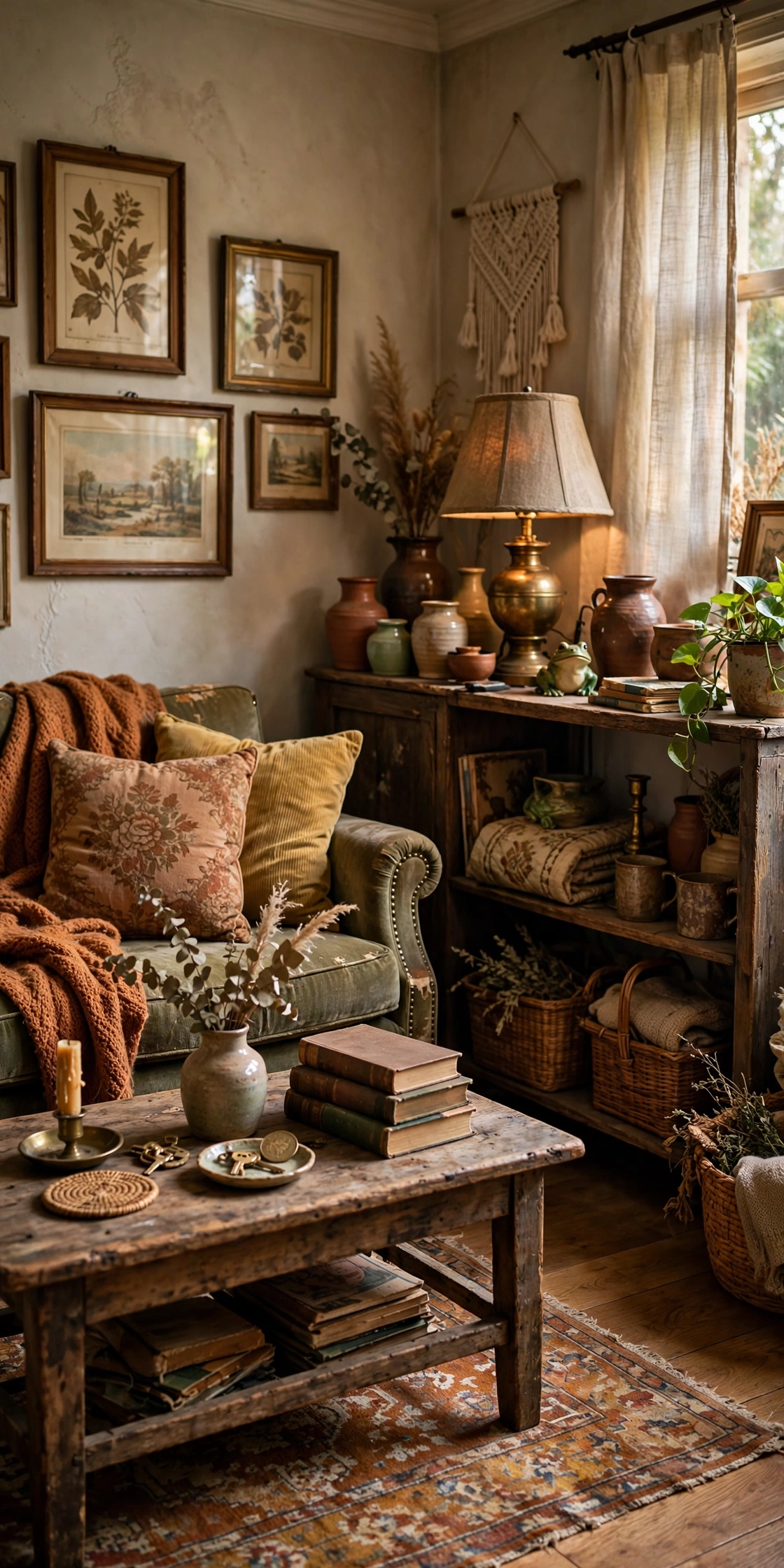
1. Buy: Picture Frames and Wall Art
Frames are my number one thrift buy, every time. A solid wood frame with real glass costs a fraction of what a new one does, and older frames often have nicer details than anything made today. Ignore the sad print inside — you’re buying the frame. Pop in your own photo or a print, and nobody will ever know its history.
Check that the corners are tight and the glass isn’t cracked. If the finish is dated, a quick coat of spray paint makes any frame look new. I’ve built entire gallery walls this way for less than the cost of two new frames. My gallery wall guide is basically a love letter to thrifted frames.
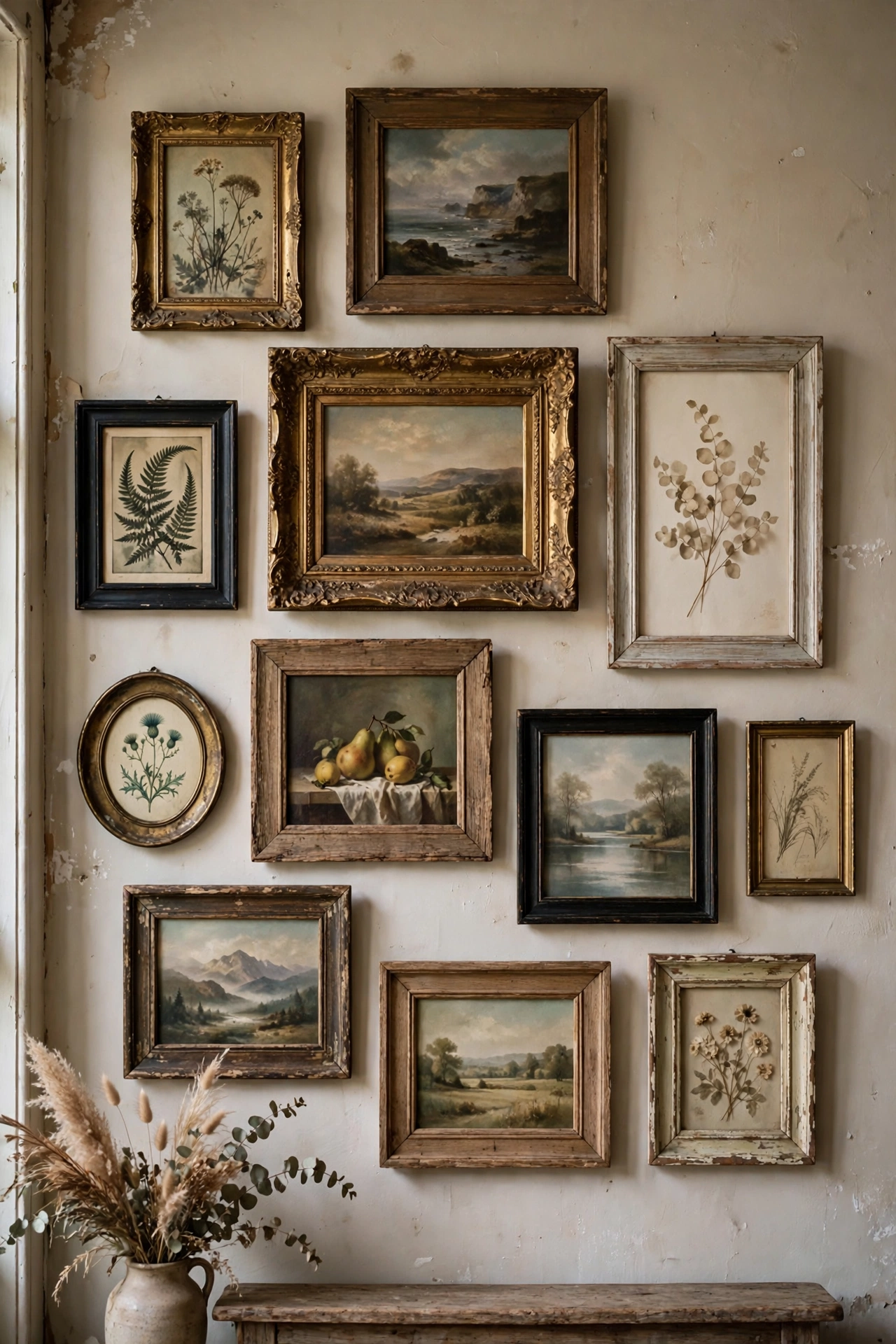
Tip: Buy frames in odd sizes too — an 8×10 mat inside an 11×14 frame looks custom and costs pennies. Keep a box of spare mats in standard sizes. Parade’s roundup of thrift store finds that look expensive has more designer-approved picks.
2. Buy: Baskets of Every Kind
Wicker, rattan, seagrass — I never pass a good basket. Baskets are the hardest-working decor item there is: they hide clutter, hold plants, corral blankets, and organize shelves, all while looking warm and intentional. A sturdy basket that costs a few dollars secondhand does the job of a much pricier storage box.
Give it a quick inspection: squeeze the sides to check the weave is tight, look for broken spokes, and give it a sniff — musty baskets are hard to rescue. A little dust is fine; a quick wipe and a day in the sun fixes most of them.
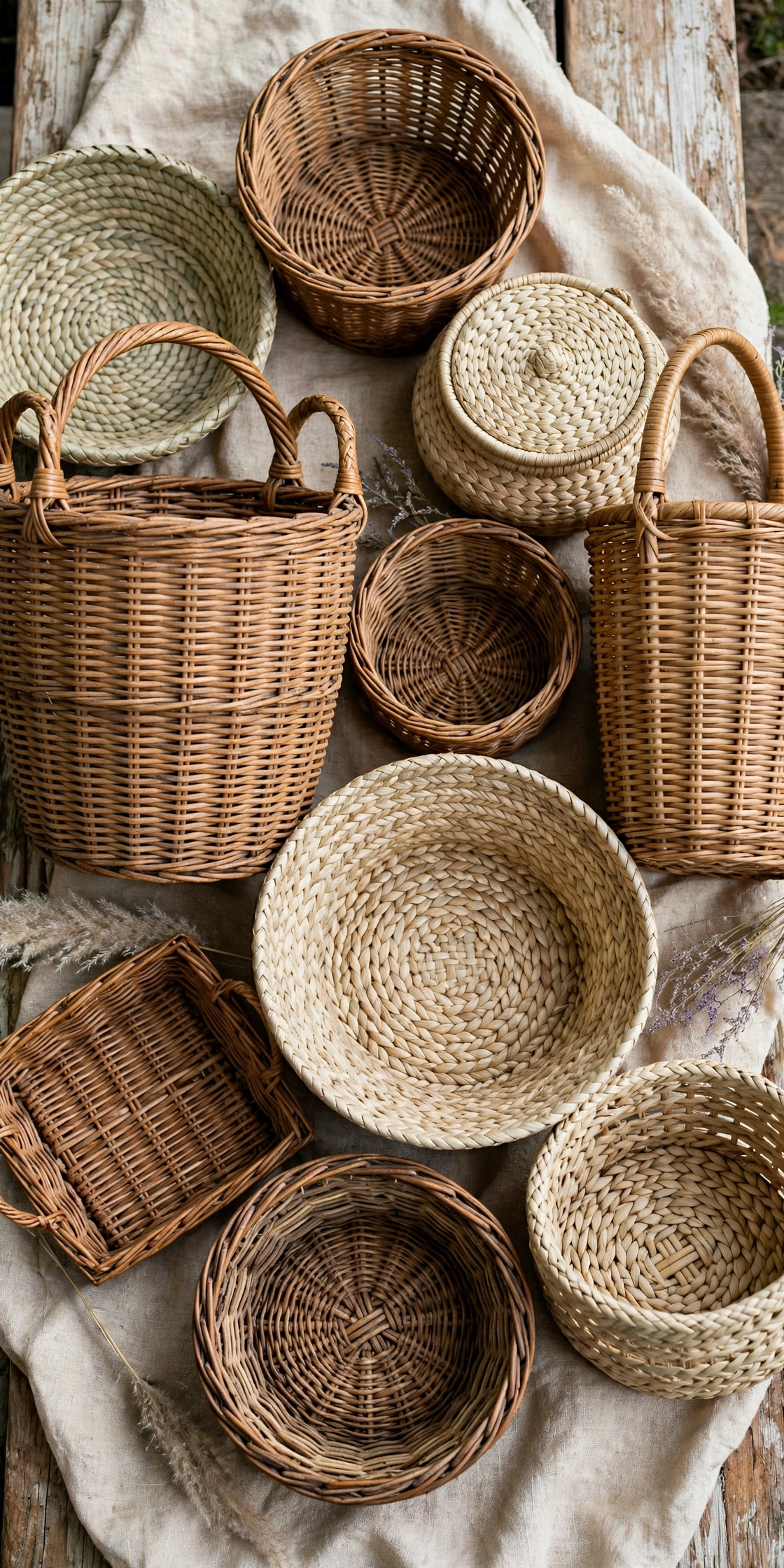
Tip: Line a basket with a cloth napkin or tea towel before using it for bread, fruit, or anything you eat from. It looks charming and keeps crumbs out of the weave.
3. Buy: Solid Wood Furniture
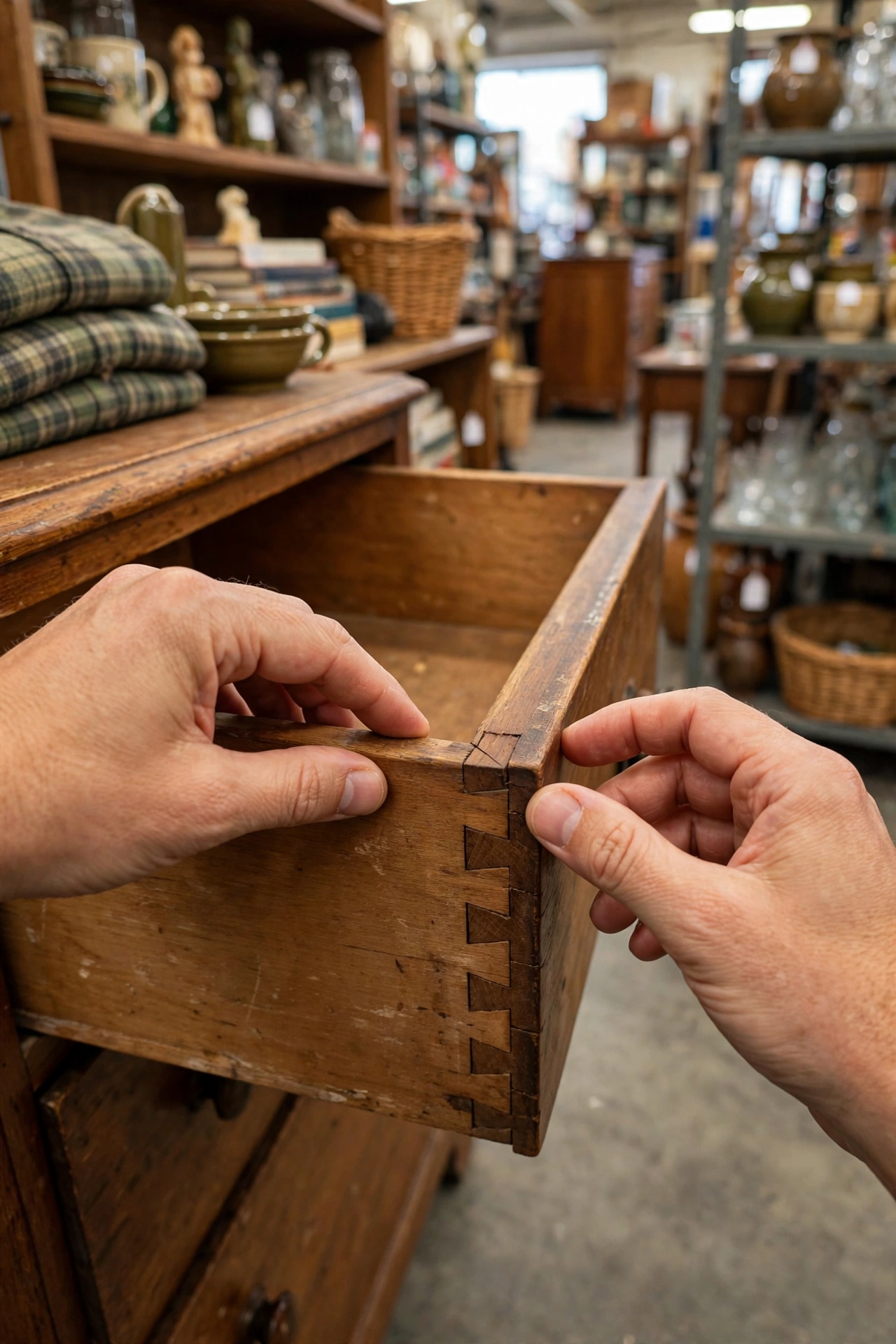
This is where thrift stores really shine. Solid wood dressers, side tables, and chairs were built to outlive us, at a small fraction of new prices. Do the lift test: if it’s surprisingly heavy, that’s a good sign. Look for dovetail joints in the drawers and real wood grain on the sides and back, not just the front.
Scratches and dull finishes are fine — a little wood oil or a weekend refinish handles them. Avoid wobble you can’t fix, warped tops, and the puffy swelling that means particle board got wet. A sturdy, boring wood piece beats a flashy damaged one every time.
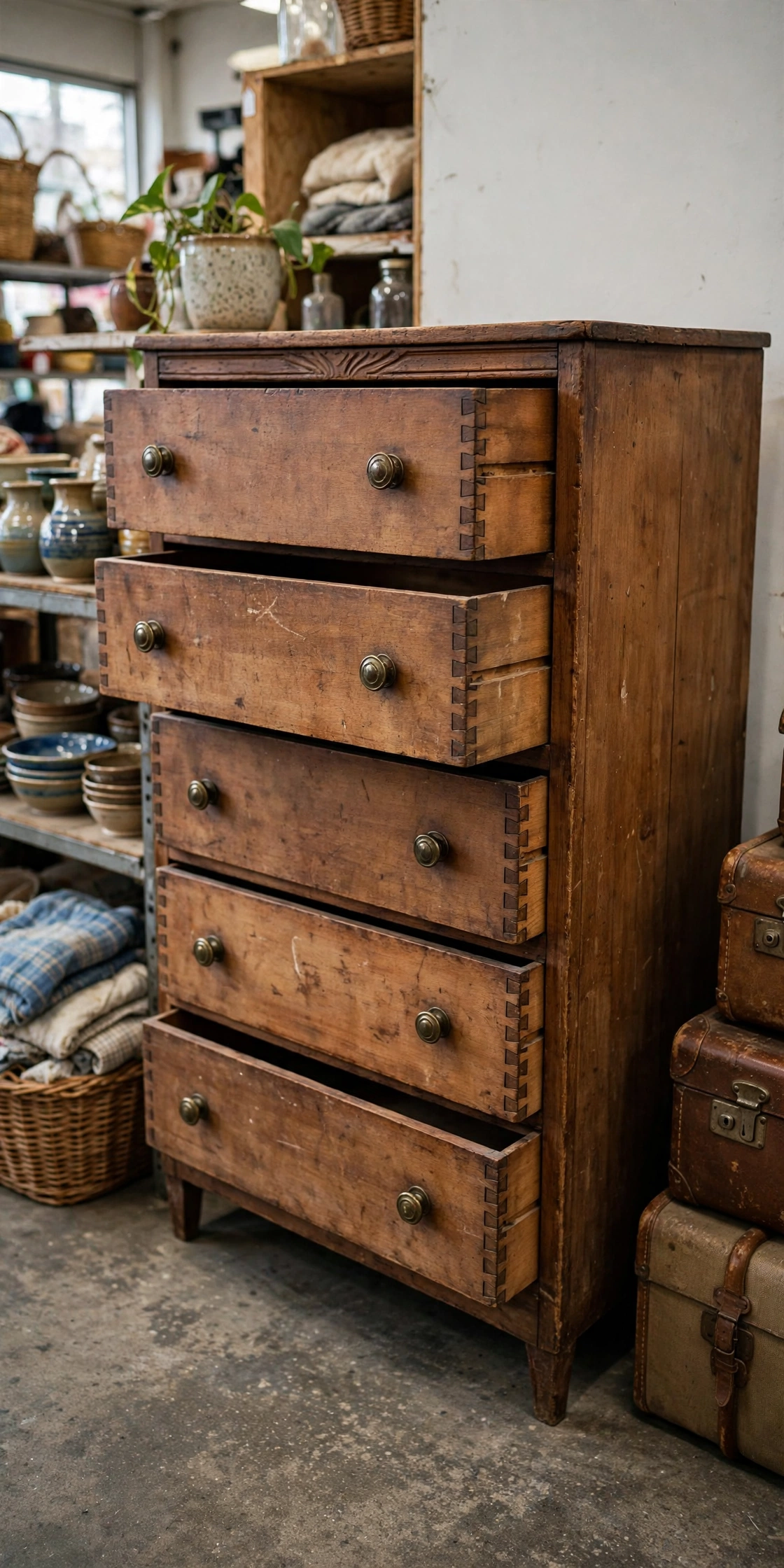
Tip: Open every drawer and look at the joinery. Dovetail joints mean real craftsmanship worth refinishing; stapled particle board means walk away.
4. Buy: Ceramics, Glass, and Vases
Vases, planters, bowls, and pitchers are thrift store gold. They’re small and cheap — often just a dollar or two — and one interesting vessel on a shelf can change the whole look of it. I look for pleasing shapes and weight rather than perfect condition; a little crazing in old pottery is character, not damage.
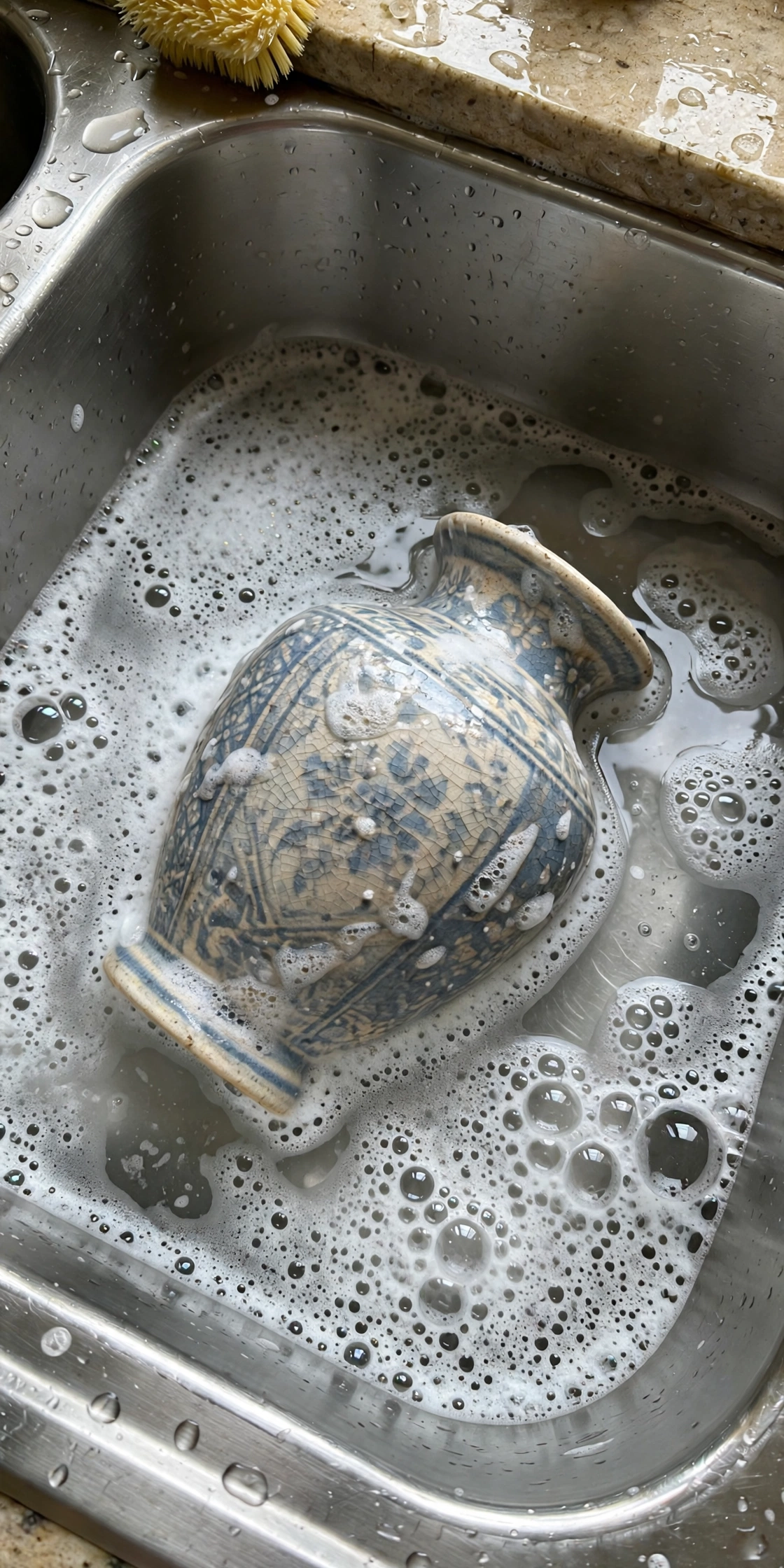
Run your finger around rims and bases to check for chips, and hold glass up to the light. Skip anything with a crack that goes all the way through. And wash everything thoroughly before it earns a spot in your home — a hot soapy soak handles decades of thrift store dust.
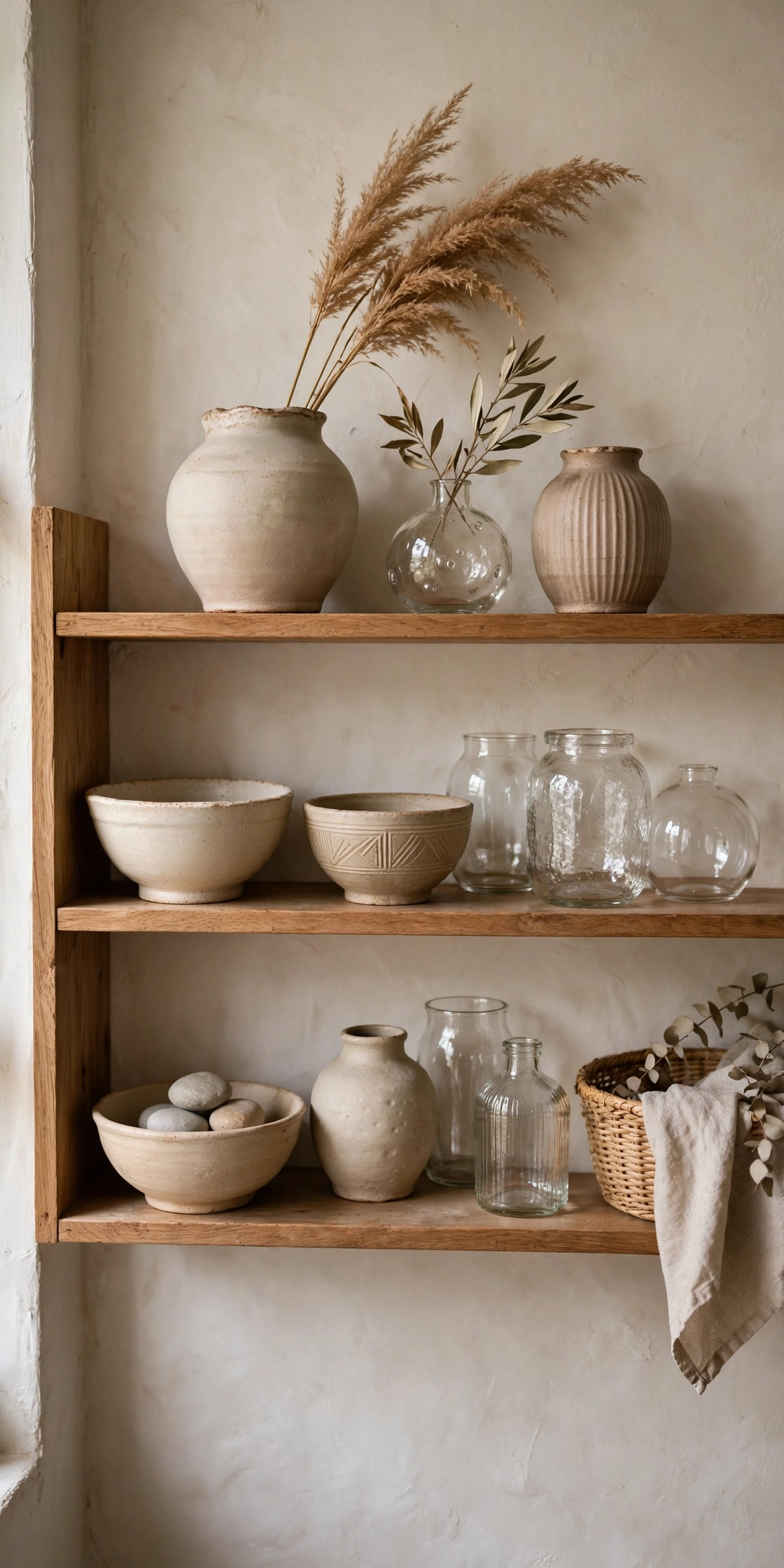
Tip: Group thrifted vessels in odd numbers by height — tall, medium, short. Three vessels that cost $5 total can look like a curated collection.
5. Buy: Lamps and Lighting
Lamps are one of the easiest thrift wins because the fixable parts are cheap. A dated lamp with good bones — a heavy base, a shape you like — becomes new again with a fresh shade and a warm bulb. Check that the base is stable, the socket isn’t cracked, and the cord has no fraying.
If the cord looks sketchy, pass — a rewire usually costs more than the lamp did. Plug it in at the store if there’s an outlet nearby; you’d be surprised how many people skip this. A working vintage-style lamp for a few dollars, glowing warmly in a dark corner, is one of the coziest upgrades there is.
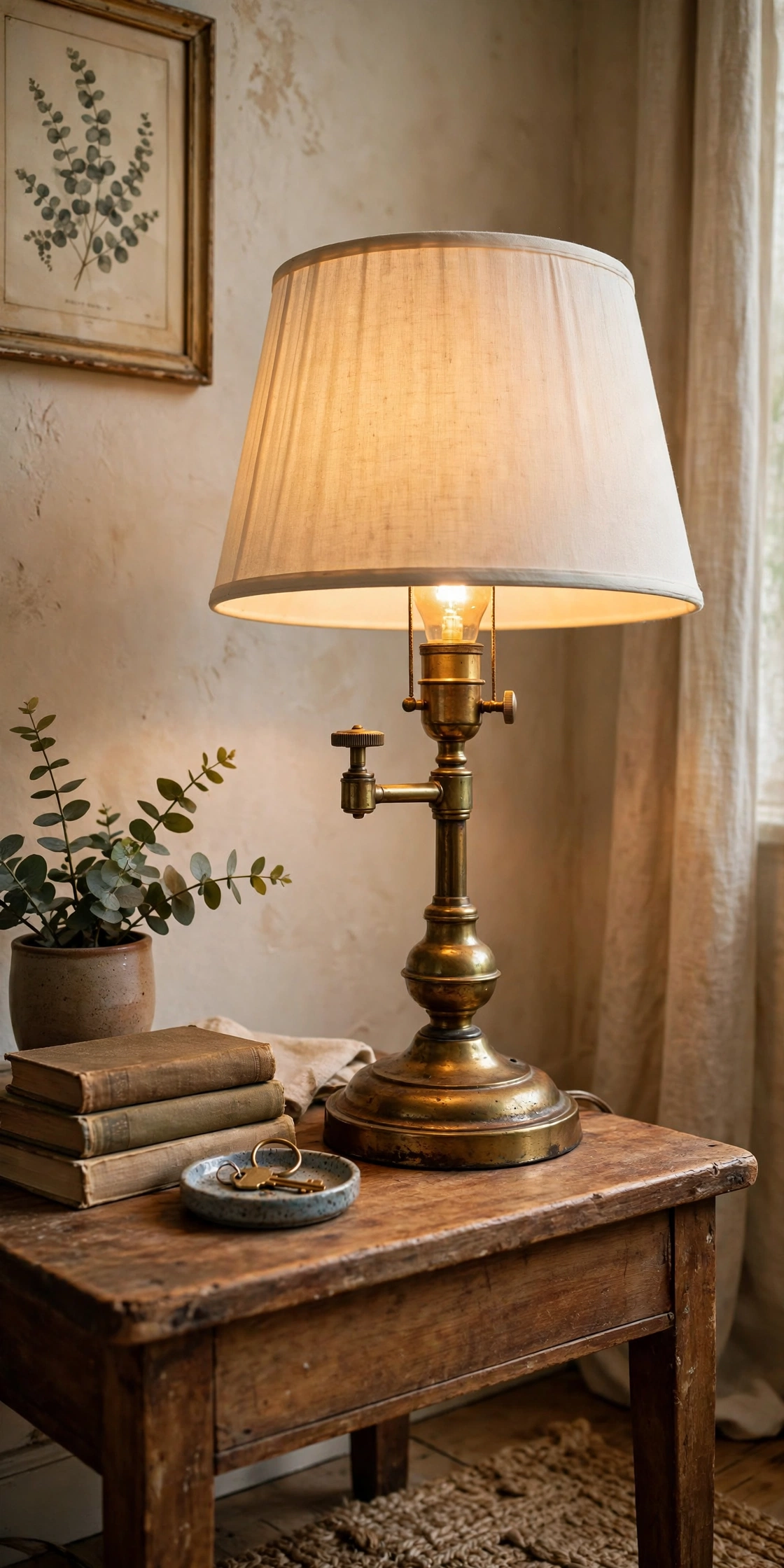
Tip: A new shade transforms any lamp instantly. Measure the old shade (top, bottom, height) and bring the numbers — shades are the one part worth buying new.
6. Skip: Upholstered Pieces
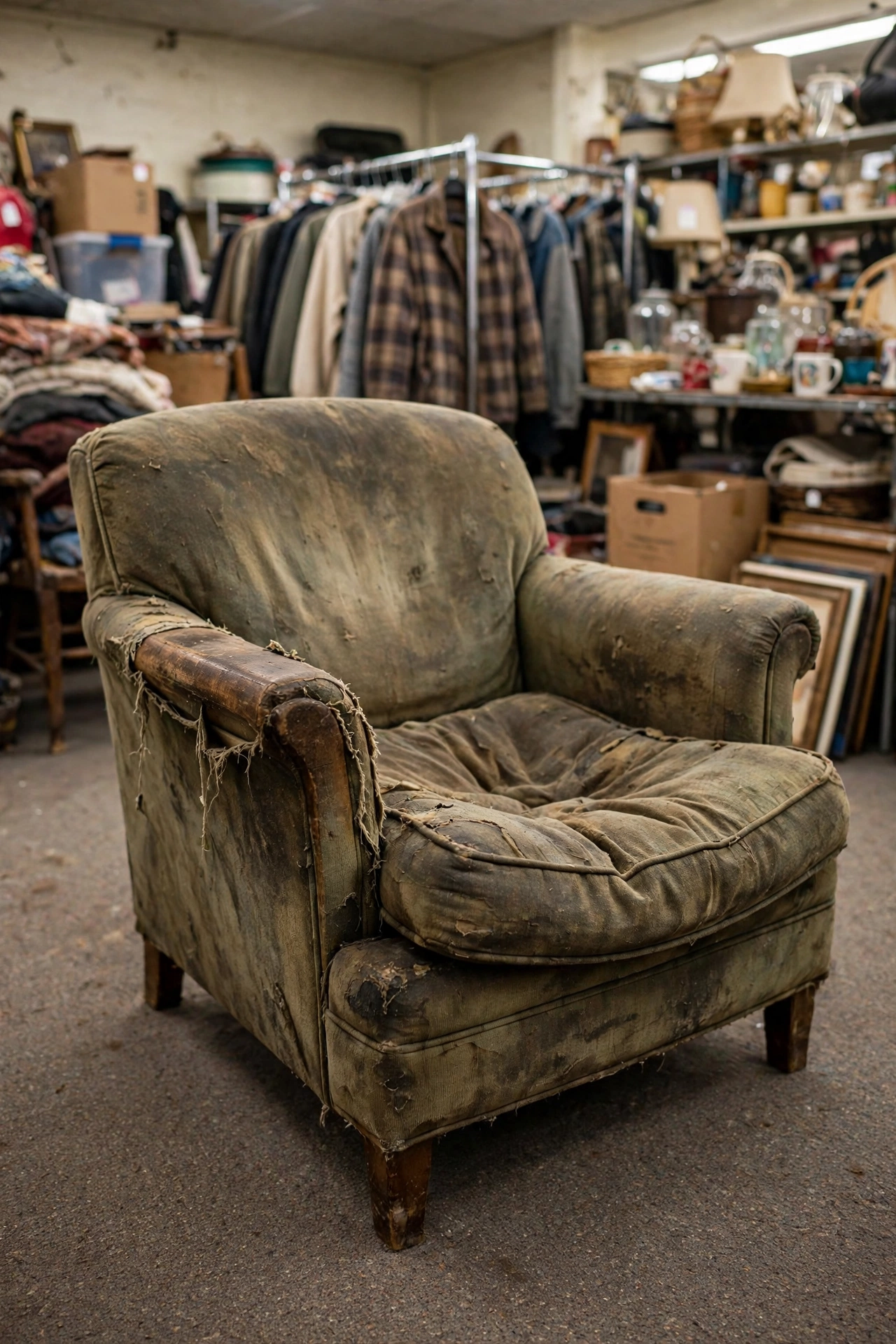
Here’s where I pump the brakes. Used sofas, armchairs, and upholstered headboards are a gamble I usually don’t take. You can’t see inside the cushions, deep cleaning rarely reaches all of it, and reupholstery costs far more than buying new.
The exception: a piece with truly great bones — a solid hardwood frame and quality springs — that you genuinely plan to reupholster. But be honest about whether that project will actually happen. If the answer is “someday,” walk away.
Tip: Flip the piece and check the underside. A hardwood frame with intact webbing or springs is reupholster-worthy; a sagging particle-board base is not.
7. Skip: Damaged, Warped, or Musty Anything
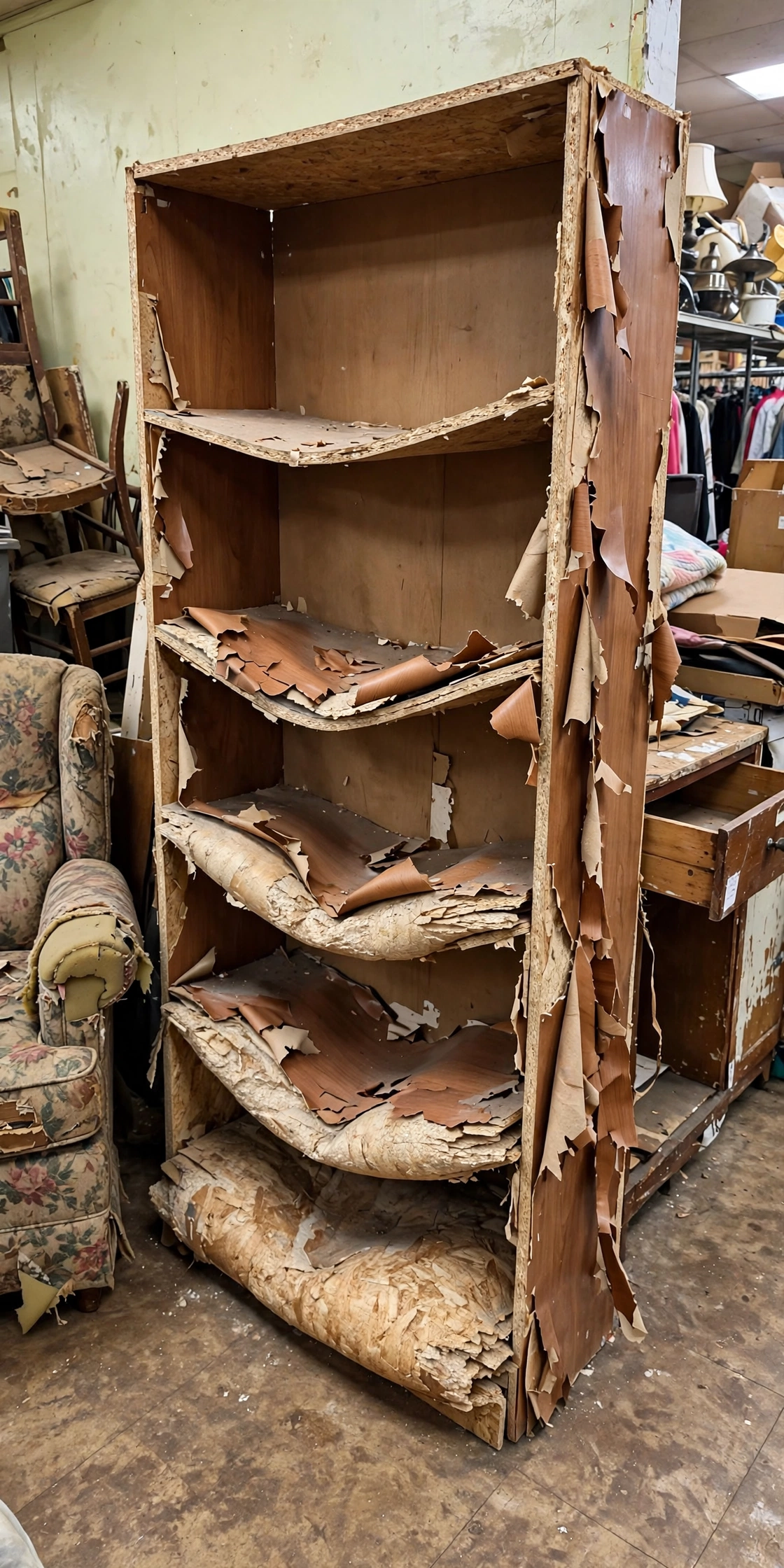
Some damage is character; some damage is just damage. Warped shelves, swollen particle board, peeling veneer, drawers that will never slide right again — these are not projects, they are disappointments. If a piece needs more repair than you can do in a weekend with basic tools, it’s not a bargain at any price.
And trust your nose. A deep musty smell in wood or fabric is incredibly hard to remove, and it will travel to the room you put the piece in. A quick sniff test at the store saves you from hauling a problem home.
Tip: Set a personal “weekend rule” before you shop: if the fix takes longer than one weekend with tools you own, it’s not a buy. Rules beat willpower in the furniture aisle.
8. Spot Quality in 30 Seconds
You don’t need to be an expert to thrift well — just a quick routine. Pick it up: real wood, brass, and stone are heavy. Wiggle it: joints should feel tight, not rattly. Look underneath and inside: finished backs, smooth drawers, and maker’s marks are signs someone cared when it was made.
For anything with a mechanism — drawers, doors, lamp switches — test it in the store. Open, close, flip, plug in. Thirty seconds of checking beats an hour of regret at home. Over time this becomes automatic, and you’ll reach past the junk straight to the good stuff.
Tip: Practice the 30-second check on pieces you don’t even want. The routine becomes muscle memory, and soon you’ll spot quality from across the aisle.
9. Clean Every Find Before It Comes Inside
I have one firm rule: nothing secondhand goes straight into a room. Hard surfaces get wiped down with warm soapy water; wood gets a gentle cleaner and then wood oil if it looks thirsty. Fabric items get a good vacuuming and a day in fresh air and sunlight, which works wonders on stale smells.
For ceramics and glass, a hot soak with a little vinegar handles mineral buildup and old dust. Give wooden pieces a close look in the crevices before they join your furniture. It takes twenty minutes, and it’s the difference between “thrifted” and “loved.” For the rest of the house on the same budget spirit, my room refresh ideas under $50 keep every corner fresh.
Tip: Keep a “thrift cleaning kit” by the door: soapy water spray, microfiber cloths, wood oil. Cleaning finds the same day keeps the backlog at zero.
What Should You Grab First?
| Find | Verdict | Best for |
|---|---|---|
| Picture frames | Always buy | Gallery walls for pennies |
| Baskets | Always buy | Hidden storage everywhere |
| Solid wood furniture | Buy if sturdy | Heirloom pieces, cheap |
| Ceramics and vases | Buy | Shelf styling for $1–2 |
| Lamps | Buy if wiring is safe | Cozy corners, new shade |
| Upholstered pieces | Skip (usually) | Hidden problems, costly fixes |
| Warped/musty items | Always skip | Not worth any price |
Frequently Asked Questions
What are the best things to buy at a thrift store for home decor?
Picture frames, baskets, solid wood furniture, ceramics and vases, and lamps with safe wiring. These are cheap secondhand, easy to clean or refresh, and add character no catalog can sell.
What should I never buy secondhand?
Usually upholstered pieces — you can’t see inside the cushions and reupholstery costs more than buying new. Also skip anything warped, swollen, peeling, or deeply musty; some damage is just damage.
How do I check quality quickly at a thrift store?
The 30-second routine: pick it up (real materials are heavy), wiggle it (joints should be tight), look underneath and inside (finished backs, smooth drawers, maker’s marks), and test every mechanism.
How do I clean thrifted decor before bringing it inside?
Hard surfaces: warm soapy water. Wood: gentle cleaner plus wood oil if thirsty. Fabric: vacuum and a day in sunlight. Ceramics and glass: hot soak with a little vinegar. Twenty minutes total.
When is the best time to go thrifting for home decor?
Weekday mornings usually have the freshest stock, since donations get processed overnight. The start of a new season is also prime, when other people donate last season’s decor. Go often; the best finds reward regulars.
Can I negotiate prices at thrift stores?
At many stores, yes, especially on furniture with a visible flaw or when buying several items. Ask politely if there is any flexibility, and watch for color-tag discount days. A friendly question costs nothing.
Final Thoughts
That is the whole game: buy the bones, skip the problems, and clean everything. Thrifting rewards patience more than luck — go in with a short list of what you actually need, check every piece like you mean it, and leave the maybes on the shelf. The best finds feel less like shopping and more like treasure hunting, and your home ends up with a kind of character that no store shelf can sell you. For more treasure-hunting inspiration, these 20 best thrifted finds show what is possible.