
11 Farmhouse Thanksgiving Decor Ideas

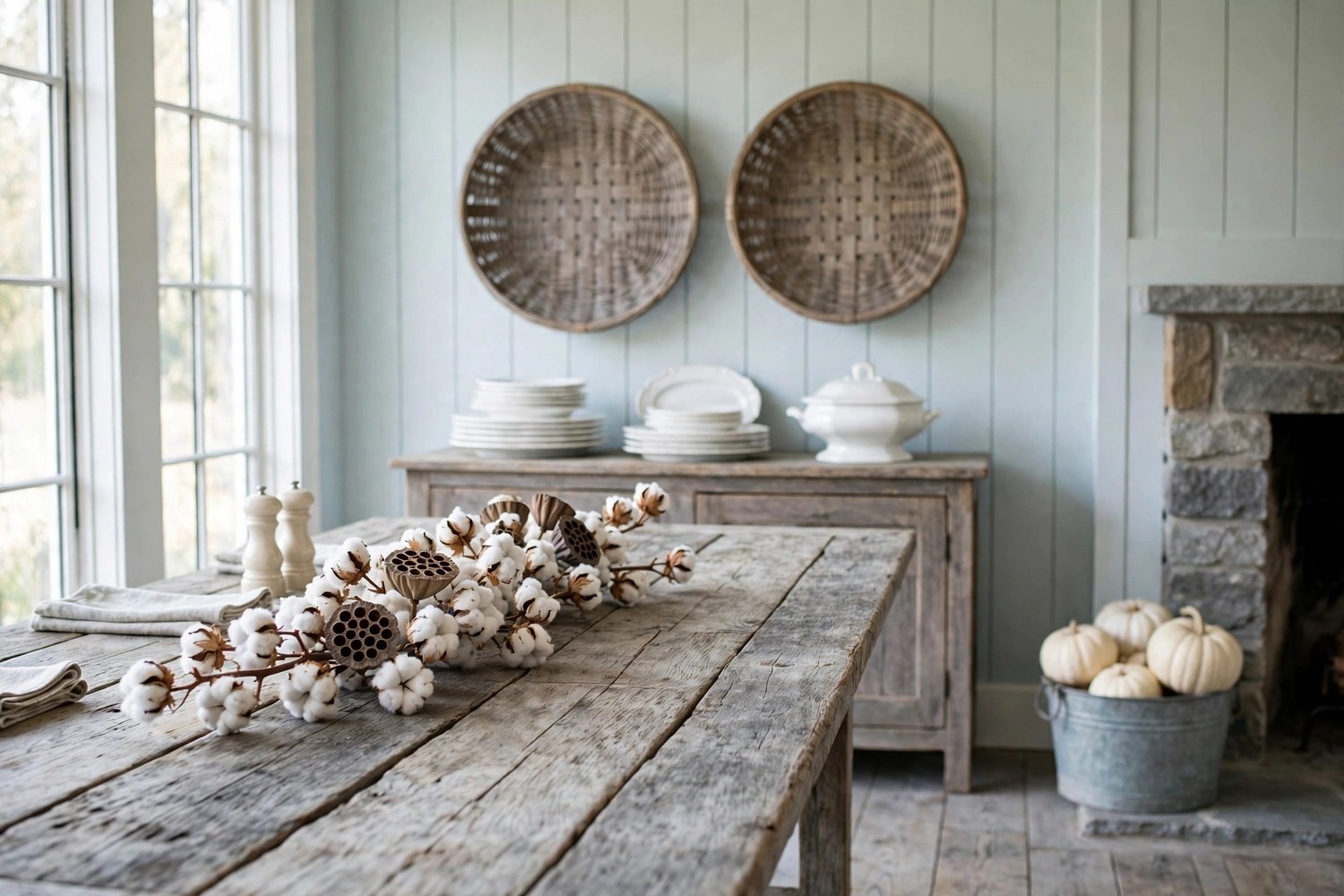
Farmhouse style has a greatest-hits problem at Thanksgiving. Burlap runners, wheat bundles, mason jars, and plaid everything are so well loved that they have decorated half the holiday tables in America, and probably half the articles on this site too. If you are searching for farmhouse thanksgiving decor that still feels fresh, the answer is to dig deeper into the farmhouse toolkit: the galvanized metal, white ironstone, tobacco baskets, stoneware crocks, and grain-sack stripes that real farm kitchens actually used. The eleven ideas below are built on those pieces, in a softened palette of white, cream, weathered wood, and pale blue that HGTV’s 2026 palette guide is calling the fresh direction for the holiday. For a general tour of the season, these fall Thanksgiving decor ideas cover the whole house; this article is the farmhouse layer, object by object.
Key Takeaways
- Build farmhouse Thanksgiving from the working pieces, not the costume kit: galvanized buckets, enamelware, ironstone, tobacco baskets, crocks, and grain-sack cloth.
- A softened palette of white, cream, weathered gray wood, and pale blue or blush accents makes farmhouse feel current instead of copied.
- Every idea here is anchored to one real farmhouse object, most of them thrifted, borrowed, or already in the kitchen.
- Dried and faux materials do the heavy lifting, so most of the look can be built days ahead and nothing wilts before guests arrive.
- Height and texture matter more than quantity: one riser, one knit, one stripe, repeated calmly from room to room.
1. Fill Galvanized Buckets with Pale Pumpkins
Galvanized metal planters are one of the defining farmhouse materials in 2026 trend coverage, and a bucket is the easiest place to start. Set one large galvanized bucket or tub beside the hearth or entry bench and fill it with pale pumpkins: whites, creams, and the dusty blue-gray heirlooms that carry the softened palette. The matte gray metal against pale pumpkin skin is the whole effect, quiet, textured, and unmistakably farmhouse without a single orange jack-o’-lantern note.
Fill the bucket’s base with crumpled paper or an overturned bowl so the pumpkins sit high at the rim instead of sinking inside, and leave the pumpkins whole. Uncarved pumpkins keep for weeks indoors, so a bucket styled in early November still looks right on Thanksgiving Day. Tuck two or three cotton stems down one side for a vertical accent, and stop there: the restraint is what separates a farmhouse grouping from a pumpkin pile.

Tip: Rinse and dry thrifted buckets before bringing them in. Galvanized metal was made for outdoor farm work, and a quick wash removes barn dust while keeping every dent that makes it look real.
2. Lay a Waterless Dried Runner Down the Bare Wood Table
The farmhouse table does not need another cloth runner. Lay the dried arrangement directly on the wood instead: cotton stems placed stem-to-stem down the center, dried lotus pods set at intervals, and a few smokebush plumes for softness at the ends. Current dried-flower guidance loves this construction because it is waterless: build it days ahead, and nothing wilts, leaks, or needs a vase of water balanced between the serving dishes.
Keep the line low and broken rather than a solid hedge, so guests can see and talk across it and platters can land inside the gaps. The palette does the styling: ivory cotton bolls, tan pods, and dusky plumes against bare wood read as harvest without wheat, which the rest of this site has already celebrated plenty. If your table is not wood, a plain linen cloth in oatmeal is the honest substitute, kept bare of pattern so the dried pieces stay in charge.

Tip: Shake dried stems outdoors before bringing them in. Cotton and smokebush shed loose seeds and fluff, and thirty seconds outside saves a table full of specks.
3. Hang Tobacco Baskets as a Wall Gallery
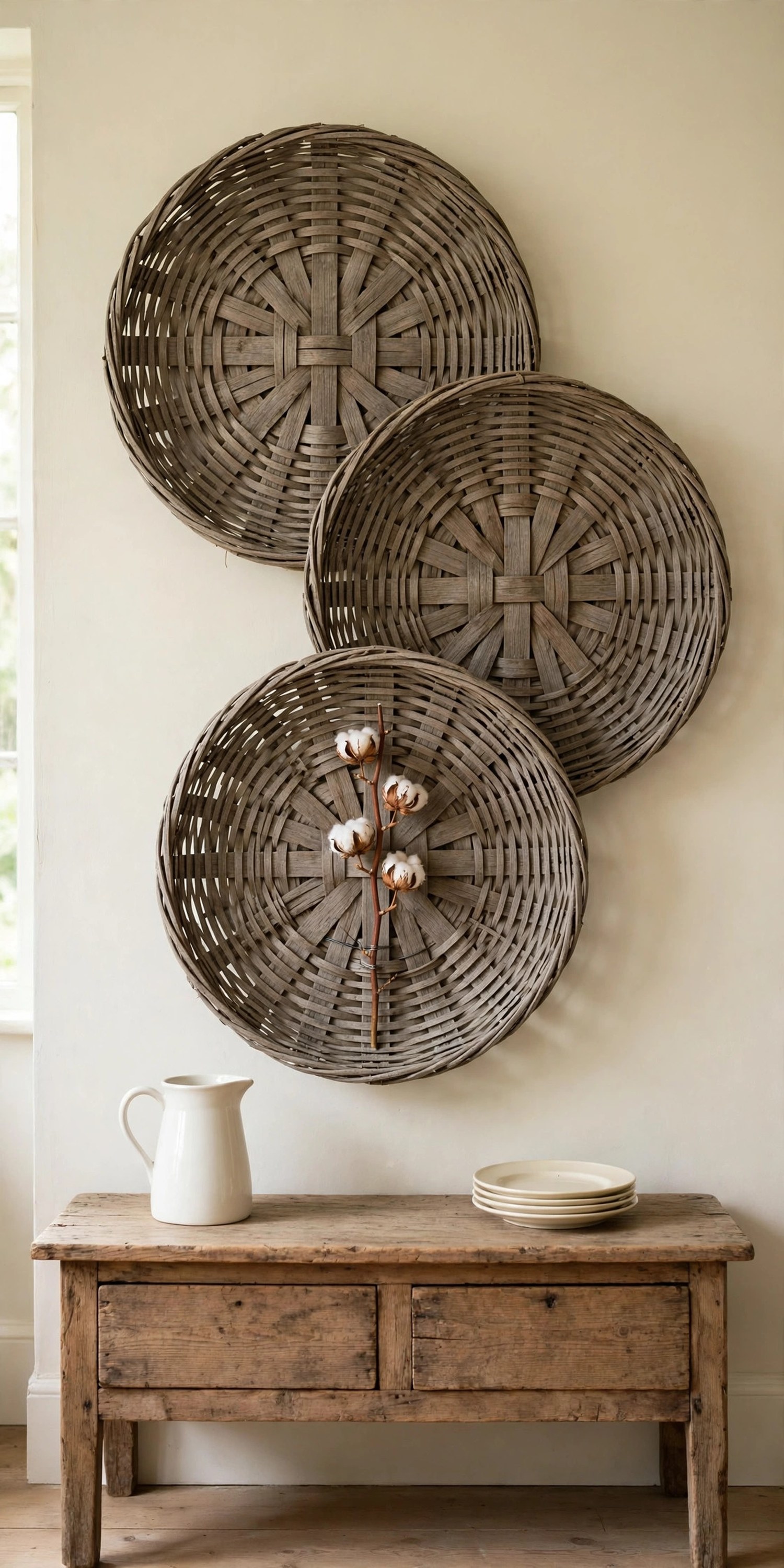
Tobacco baskets are genuine farm artifacts: large, flat baskets of woven oak strips, roughly forty inches square, once used to display cured tobacco leaves at auction warehouses in Kentucky and North Carolina. That working history is exactly why they carry a farmhouse wall better than any reproduction sign. Hang two or three above a sideboard or along a dining-room wall, overlapped slightly, and let the weathered weave be the art.
Genuine vintage baskets are collectible now and priced like it in antique shops, while faithful reproductions hang lighter and cost less; either reads the same from across the room. Because the real ones are big and rigid, hang them from sturdy picture hooks or nails set into studs, not adhesive strips. A single cotton stem wired to the center of one basket is enough seasonal dressing; the gallery’s job is texture and scale, and it keeps working on the wall long after Thanksgiving ends.
Tip: Dust aged basket weave with a soft brush rather than water. Old oak strips can be brittle, and dry dusting keeps the patina that makes a vintage basket valuable.
4. Style a Vintage Scale with Mini Pumpkins
A cast-iron balance scale or an old spring scale is the farmhouse object guests always stop to look at, and Thanksgiving gives it a job. Set the scale on the sideboard or buffet, line its pan or tray with a folded linen napkin, and pile on mini pumpkins in white and pale orange. The napkin protects both the pumpkins and the scale’s patina from rust transfer, and its stripe or plain weave ties the vignette into the room’s textiles.
Scales turn up at estate sales, antique malls, and farm auctions, often cheaper than decorative reproductions because sellers price them as tools, not decor. Check that the piece sits stable and level before styling it, and keep the load light: a handful of minis, not a pyramid. Beside it, leave breathing room. A scale is a one-object story, and crowding it with jars and candles turns a character piece into clutter.

Tip: Photograph the scale’s dial or beam before you buy. Working needles and readable faces are what separate a charming antique from a broken one, and they show up clearly in listing photos.
5. Put White Pumpkins Under a Clear Glass Cloche
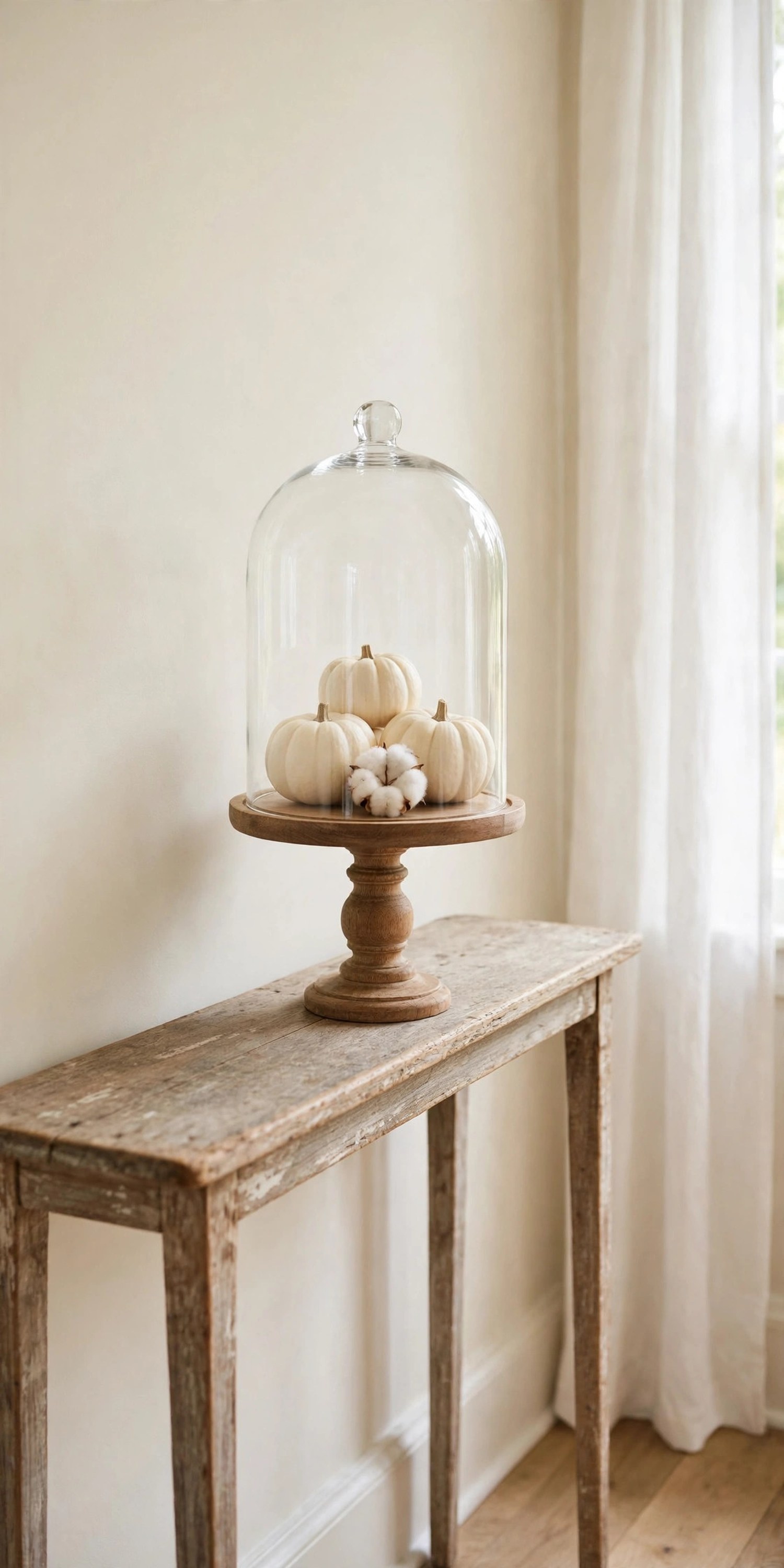
A glass cloche on a wooden pedestal turns three mini pumpkins into the display case moment farmhouse rooms usually borrow from boutiques. Set a turned-wood pedestal or a chunky wooden cake stand on the entry console or sideboard, arrange two or three white mini pumpkins with a single cotton boll on it, and lower a clear glass cloche over the top. The glass does the elevating; everything inside stays simple, matte, and pale.
Clear glass matters here. Amber and tinted cloches are having their own moment, but clear glass keeps the softened palette clean and lets the piece blend with whatever the pedestal holds at Christmas. One practical note decides the contents: real pumpkins sealed under glass can sweat and fog the dome, so under a cloche is the one place in this list where good faux minis earn their keep. Nobody can tell through glass, and the display never needs checking.
Tip: Wipe the inside of the cloche with a dry microfiber cloth before lowering it. Fingerprints and dust sealed under glass catch every bit of light in the room.
6. Serve from an Ironstone Stack
Ironstone is the farmhouse collector’s backbone: a hard white earthenware first patented in Staffordshire, England, in 1813 by Charles Mason, and exported to American farmhouses in stacks because it was cheap, bright, and very difficult to break. Thanksgiving is its natural holiday. Build the buffet around it: a tureen holding the rolls or standing empty as a centerpiece, platters under the serving dishes, a pitcher or two for water, all of it white on white.
The charm is in the mismatch. Ironstone from different makers and decades shares the same creamy white, so thrifted pieces collected one at a time still read as a set, and the warm colors of the food do all the decorating against it. For the place settings themselves, these Thanksgiving tablescape ideas on a budget go deeper; the ironstone’s job here is the serving layer. One care note: antique pieces are happiest holding dry and wrapped foods, so let modern ironstone-look pieces handle anything wet, acidic, or reheated.

Tip: Turn pieces over when you shop. Maker’s marks stamped on the base are how you tell sturdy nineteenth-century ironstone from thin modern imitations, and marked pieces hold their value.
7. Stand Dried Hydrangeas in a Stoneware Crock
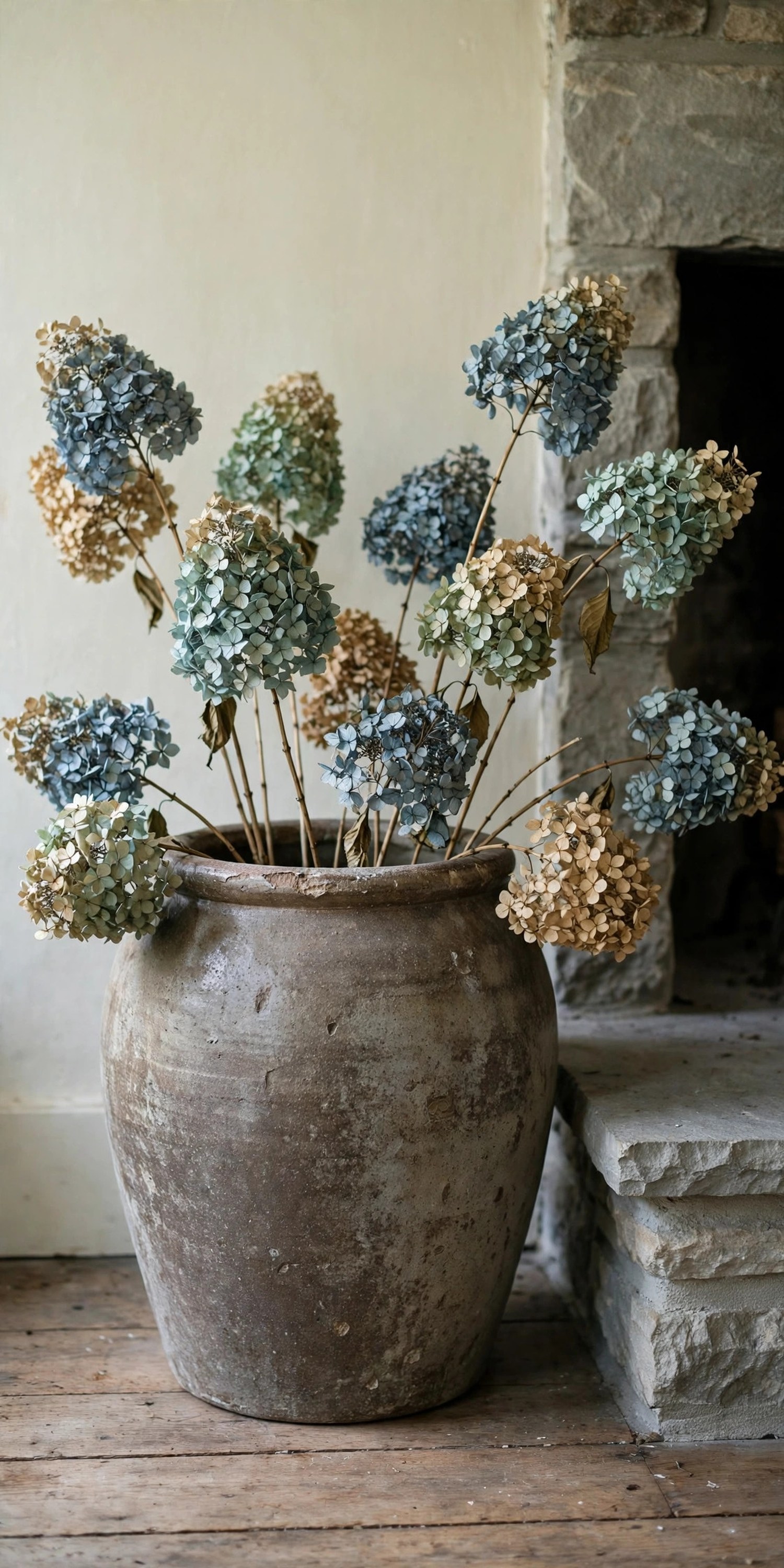
Every farmhouse kitchen once kept a stoneware crock working: pickles, utensils, flour, whatever needed a heavy, cool container. As decor, a big crock earns its floor space beside the hearth or a reading chair, filled with dried hydrangea heads in the faded blues, celadon, and parchment tones they dry into. HGTV’s palette editors single out exactly those antique hydrangea shades for the farmhouse table, because they carry color without a drop of orange.
Dried hydrangeas are the rare dried flower that reads soft instead of twiggy, and a crock’s weight keeps tall stems steady where a vase would tip. Use stems of uneven heights, odd numbers, and let a few heads nod over the rim. Place the arrangement where it will not be brushed past daily: dried petals are fragile, and a quiet corner keeps the arrangement intact from the first styling straight through the holiday.
Tip: Keep dried hydrangeas out of direct sunlight. Sun fades the blue and green tints that make them special, and a shaded corner holds the color for seasons instead of weeks.
8. Give Everything Height with Distressed Wood Risers
Half of farmhouse styling is carpentry: putting things on wood. A distressed wood riser, a footed board, a thick cutting board with worn edges, lifts the cloche, the scale, a stack of ironstone, or the dessert plate out of the flat line of the buffet and into a display. Distressed wood accents are the other half of the 2026 warm-heritage farmhouse pairing, and risers are where they work hardest, because height is what separates a styled surface from a storage surface.
One riser per surface is the rule. Put the tallest object in the room on it and let everything else stay low, or the buffet starts to look like shelving. Hunt risers where the distress is real: thrift-store cutting boards, salvage-yard offcuts, and farm-sale benches beat artificially aged reproductions, and a minute with sandpaper on any sharp edge plus felt pads underneath makes a found board furniture-safe. This is also the budget idea in disguise, since a single good riser re-styles objects you already own.

Tip: Test a found board with a hard wobble before styling it. A riser that rocks under a glass cloche is a shelf board, not a riser, and should be demoted before it drops something.
9. Let Grain-Sack Stripes Carry the Textiles
Before farmhouse had a marketing department, it had grain sacks: handwoven hemp and linen bags that European farm families marked with their own woven stripe designs, usually blue or red, and often a monogram, so their sacks could be identified at the mill. That stripe is the most honest pattern in farmhouse style, and Thanksgiving is its moment: grain-sack stripe napkins at each setting, a pillow cover or two on the bench or dining chairs, ticking stripe where a second pattern is needed.
The blue stripe is also the palette’s best friend, echoing the pale blue pumpkins and hydrangeas across the room so table, wall, and sofa quietly agree. It is a pairing current stylists keep returning to; HGTV’s own 2026 porch dresses a swing in ticking-stripe pillows and a grain-sack cushion. Genuine antique sacks deserve gentle handling, so save them for pillows and the runner, and let reproduction grain-sack fabric, sold by the yard, take the gravy risk as napkins.

Tip: Wash reproduction grain-sack fabric before cutting napkins. Like all linen-look cloth it shrinks a little on the first wash, and pre-washed napkins keep their size and fold crisply.
10. Hang a Linen Apron by the Kitchen Door
The smallest idea on this list may be the most farmhouse of all: a plain linen or cross-back apron hanging on a hook beside the kitchen door. Working farmhouses kept aprons on hooks because they were tools, worn daily and hung within reach, and that one honest object tells guests the kitchen is a place where real cooking happens. For Thanksgiving it does double duty, because the hook is exactly where the host’s apron should live on the day itself.
Choose an apron with the same language as the rest of the house: natural linen, a grain-sack stripe down the pocket, or worn ticking, in the softened palette. Hang the hook at shoulder height on the kitchen side of the doorway, where it reads as a vignette from the dining room and as equipment from the stove. A sprig of cotton tucked in the pocket is the only styling it needs, and using the apron all day, flour dust and all, makes the decor more convincing, not less.

Tip: If the apron is a thrifted vintage piece, check its ties and pocket seams before the holiday. Aprons fail at their straps, and Thanksgiving morning is the wrong time to find out.
11. Drape a Chunky Knit Throw for the After-Dinner Sofa
Thanksgiving ends in the living room, and the farmhouse living room runs on texture, not ornaments. One chunky knit throw in cream or oatmeal, draped over the sofa arm or folded on a ladder-back chair, is the whole seasonal statement the room needs. The oversized stitches echo the woven tobacco baskets and grain-sack cloth across the house, and the pale color keeps the soft palette unbroken from entry to sofa.
One knit, well placed, is the discipline. Two or three chunky throws and the room starts to read as a yarn shop, while a single generous drape says the house is ready for people to sink in after pie. Because it earns its place by being used, a knit throw is also the friendliest idea here for a small home: it is decor that stores itself on the furniture. Fold it once, lengthwise, and let the fold hang long; chunky knits show best with their full weight on display.
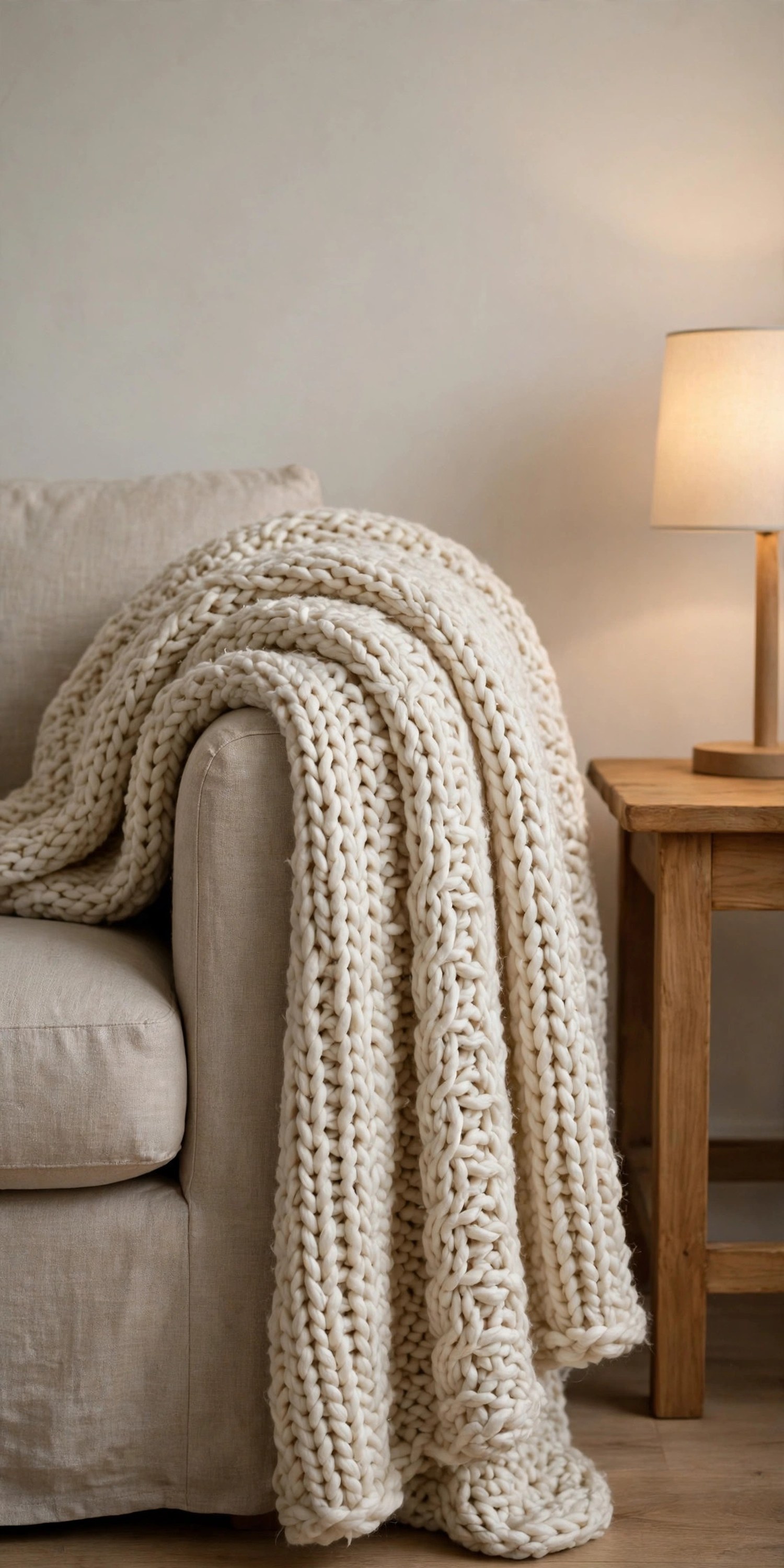
Tip: Keep chunky knits away from the dining room. Loose stitches catch on chair backs, serving dishes, and jewelry, and the throw will do its best work where people are sitting still.
| Farmhouse marker | Best spot | Where to hunt | Pair it with |
|---|---|---|---|
| Galvanized bucket or tub | Entry or hearth | Farm-supply stores, flea markets | Pale pumpkins, cotton stems |
| Tobacco baskets | Dining-room wall | Estate sales, antique malls, online vintage sellers | A single cotton stem |
| Vintage scale | Sideboard or buffet | Estate sales, farm auctions | Mini pumpkins on a linen napkin |
| Ironstone | Buffet and table | Thrift stores, estate sales | Warm serving food, plain linen |
| Stoneware crock | Hearth or quiet corner | Antique malls, flea markets | Dried hydrangeas |
| Glass cloche and wood pedestal | Console or sideboard | Home stores, thrift stores | White faux mini pumpkins |
| Grain-sack and ticking fabric | Table and seating | Fabric shops, vintage textile sellers | Blue-stripe everything, sparingly |
Frequently Asked Questions
What is the difference between farmhouse and rustic decor?
Rustic is about roughness: raw wood, rugged textures, a cabin honesty about materials. Farmhouse is rustic’s tidier descendant, built from the working objects of a farm home, painted wood, white earthenware, galvanized metal, woven textiles, kept clean, pale, and orderly. A tobacco basket is farmhouse; a stack of firewood is rustic. Most Thanksgiving rooms mix the two, but leaning farmhouse keeps the holiday feeling fresh rather than lodge-like.
How can I do farmhouse Thanksgiving decor on a budget?
Shop the farmhouse list where it is cheap: thrift stores and estate sales price ironstone, crocks, scales, and cutting boards as used kitchenware, not as decor, and one riser or bucket re-styles everything you already own. Dried and faux pieces cost once and return every year. For the pieces that genuinely are cheaper new, these Dollar Tree Thanksgiving decor ideas cover the dollar-store end of the farmhouse look.
Can farmhouse Thanksgiving decor work in a small apartment?
Yes, and farmhouse suits small spaces better than most styles because its pieces work for a living. The apron on its hook takes no floor space, the tobacco baskets decorate a wall instead of a surface, and the chunky knit throw is decor that stores itself on the sofa. Choose three markers instead of eleven, keep the pale palette, and let each piece be useful as well as pretty.
What colors work for farmhouse Thanksgiving besides orange and brown?
White, cream, and weathered gray are the farmhouse base, and 2026 styling adds soft color on top: pale blue and blush are the pairing HGTV’s current palette guide builds a whole farmhouse table around, with white, blue, and gilded pumpkins. Dusty blue dried hydrangeas and blue grain-sack stripes carry the same palette through a room, so the soft colors feel like a plan rather than an accident.
Where do you find tobacco baskets and vintage scales?
Estate sales and antique malls in farming regions are the most reliable sources, with online vintage marketplaces filling the gaps at higher prices. Genuine tobacco baskets are collectible antiques now, so expect reproductions to be the budget route; they hang lighter, too. Scales are usually priced as old tools rather than decor, which makes them one of the better farmhouse bargains when you find one with a working needle.
How do I keep farmhouse decor from looking cluttered?
Give each surface one story. A scale alone, a cloche alone, a crock alone each read as a decision; three farmhouse objects competing on one sideboard read as a collection problem. Repeating the same pale palette and the same few materials, metal, white earthenware, woven cloth, lets separate rooms feel connected, so the house can hold eleven ideas without any single room holding more than two or three.
Final Thoughts
Farmhouse Thanksgiving does not need another burlap runner. It needs the real working pieces, a galvanized bucket, a chipped ironstone tureen, a basket that once carried a crop to market, styled calmly in a pale palette and left to do what they have always done: hold things, serve things, and make a house feel kept. Start with whichever marker you already own, add one thrifted piece this year, and let the collection build the way farmhouse always has, one useful object at a time. If your hands itch to make a few pieces yourself, these DIY Thanksgiving decorations are the handmade companion to this list. Thanksgiving 2026 falls on Thursday, November 26: plenty of time to hunt down a scale.