10 Ways to Refresh Any Room for Under $50


Every few months, I get the itch. A room that used to feel cozy suddenly feels tired. The couch is fine, the walls are fine, but the space has gone flat. For years, my answer was saving up for big changes I could not afford. These days I know better. A room rarely needs replacing. It needs re-seeing.
Here is what happens: your eyes adjust to your own home. The things that would charm a guest — the afternoon light, the shape of that old chair — become invisible, while the little annoyances start shouting. Small, cheap changes break that visual autopilot and give your brain something new to notice.
Every idea below costs less than $50, and several cost nothing at all. Do one on a Saturday morning, or work through the list over a month. My advice: pick the two or three that made you think “oh, I could do that” and start there. For more small-space tricks, my small bedroom ideas that make it feel bigger work on the same shoestring.
1. Rearrange the Furniture You Already Own
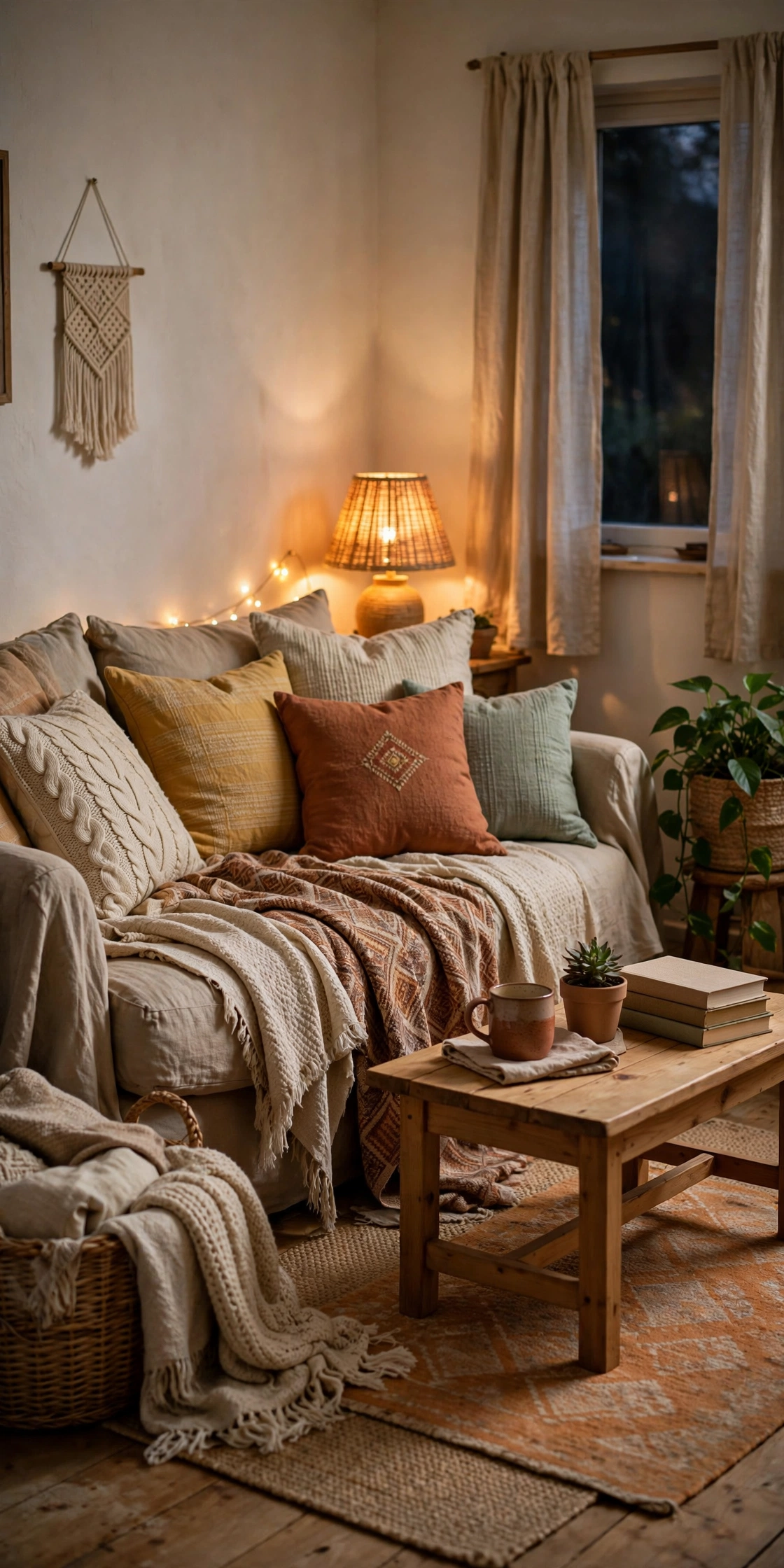
The most powerful refresh costs exactly zero dollars: move things around. I try this before I buy anything — pull the sofa off the wall, swap the armchair and the plant, turn the rug 90 degrees. A new layout changes how light and movement flow, and your brain reads it as a new room.
Start with the biggest piece and give it a new home — even a small shift counts. Then take a photo from the doorway; the camera shows you things your eyes miss. If it feels wrong, move it back. You have lost nothing.

Tip: Vacuum and wipe the floor where furniture used to sit before you move it back. You’ll clean spots you haven’t seen in years, and the room feels doubly new.
2. Swap in New Throw Pillow Covers
If rearranging is the free refresh, pillow covers are the cheapest one. A tired couch wakes up instantly with two or three covers in a new color or texture. Buy covers only — your current inserts are fine — and a pair usually runs under $20.
My formula: keep your solid base pillows, then add one patterned and one textured cover. Stash the old covers in a closet; swapping them back in six months will feel like a whole new set.
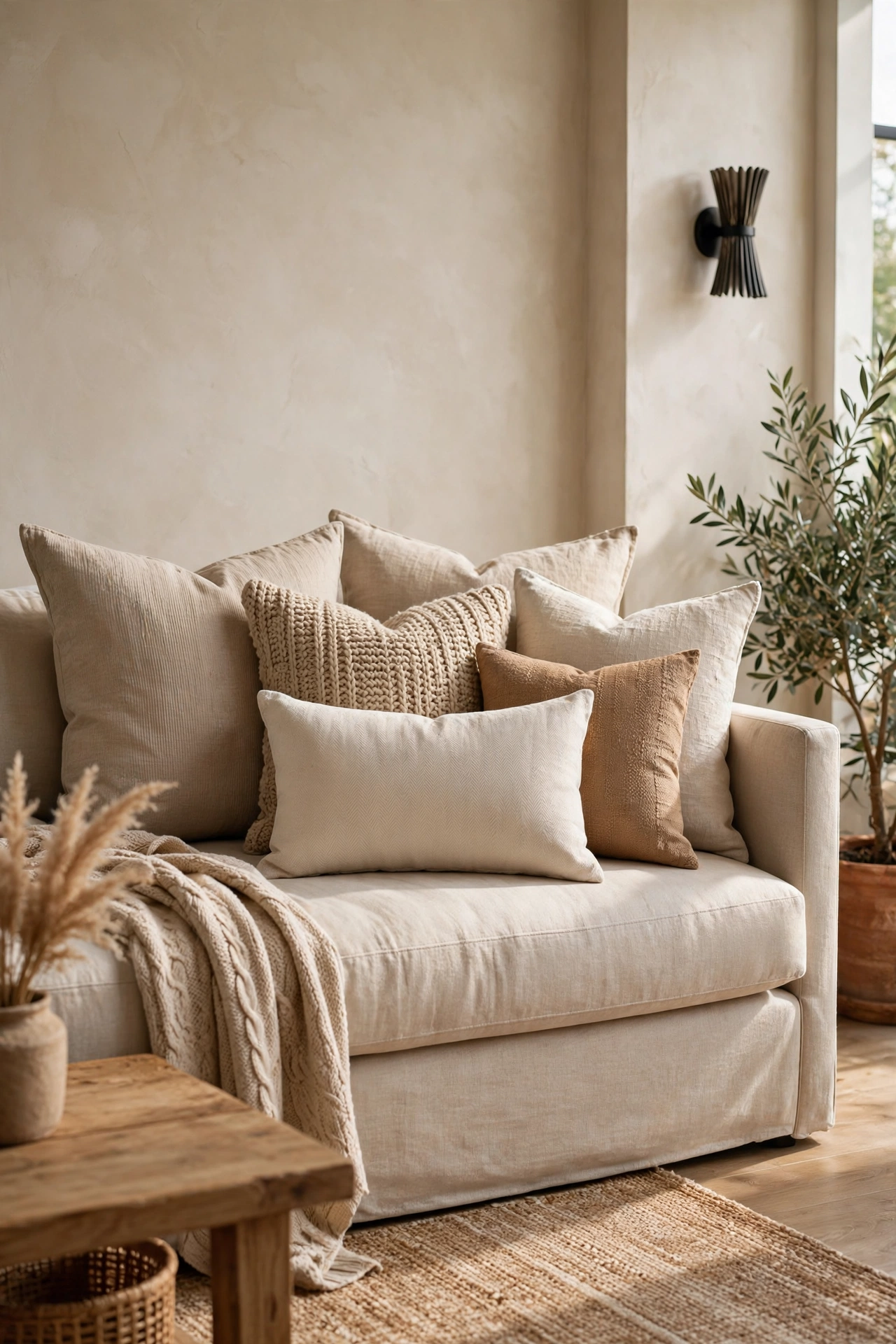
Tip: Check the zipper placement before buying — hidden side zippers look cleaner than back zippers. And wash new covers first; they almost always shrink slightly. Thrift stores are a great source for pillow covers and textiles; our thrift store decor guide shows what to buy and what to skip.
3. Touch Up the Paint — or Paint One Small Thing
Walls get scuffed and dingy in the spots you touch most: around light switches, behind doors, along the baseboards. A small jar of touch-up paint in your existing color erases years of wear in an afternoon — and you may already own it.
Feeling bolder? Paint one small thing instead of a whole wall: a side table, a picture frame, the inside of a bookshelf. A sample pot costs just a few dollars, and one small painted object can pull a whole room together.
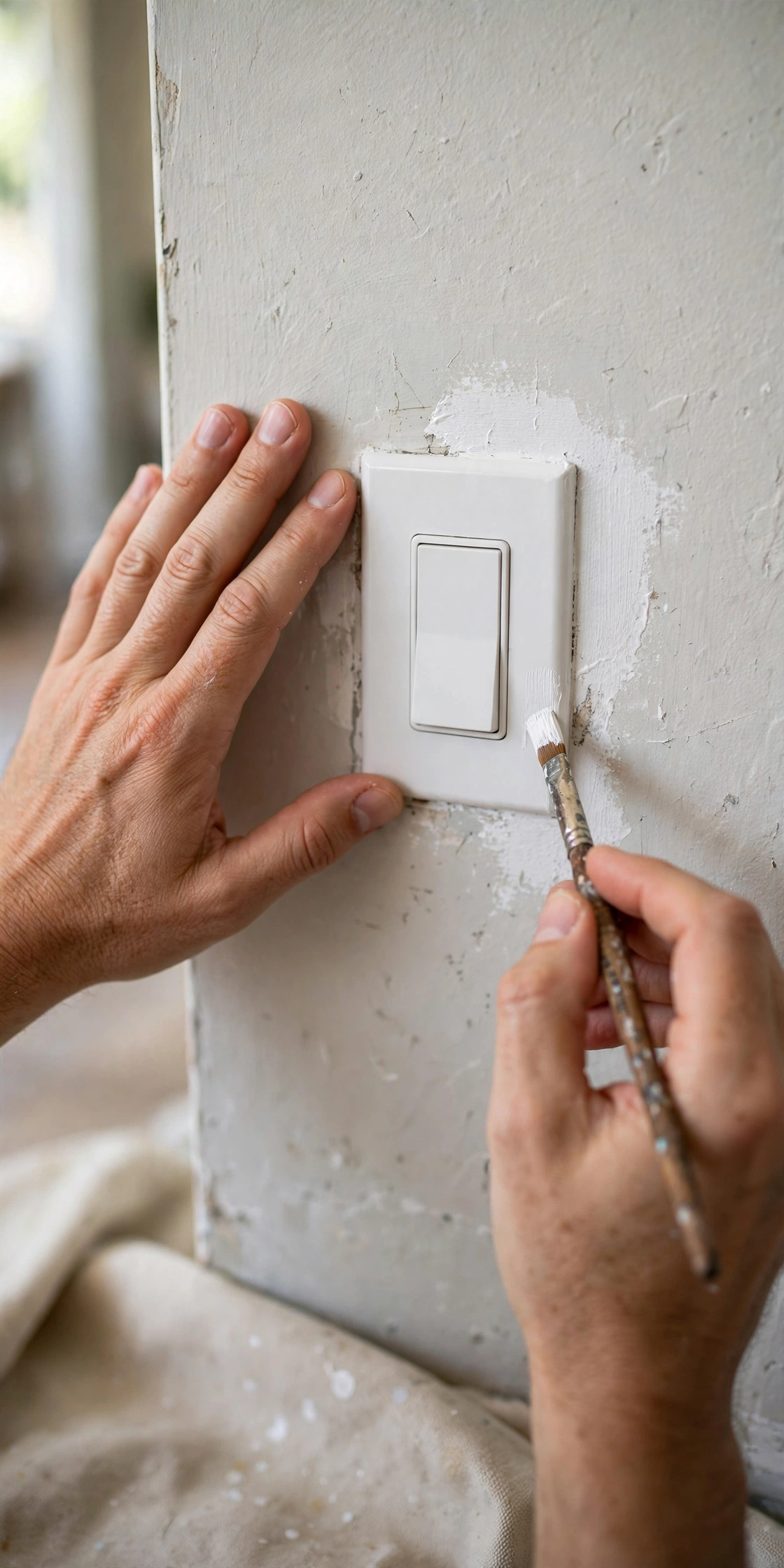
Tip: Feather the edges of touch-ups with a dry brush so they blend — thick paint blobs catch the light and announce themselves from across the room.
4. Change the Lighting, Not the Lamp
Lighting is the mood of a room, and one of the cheapest things to change. Swap harsh cool-white bulbs for warm white, around 2700K, and watch the room soften. Then move a lamp into the darkest corner.
A new lampshade changes a lamp completely, and basic shades are inexpensive. Or drape a string of warm fairy lights along a bookshelf or inside a glass jar. A room with three small pools of warm light feels entirely different from one lit by a single overhead bulb.
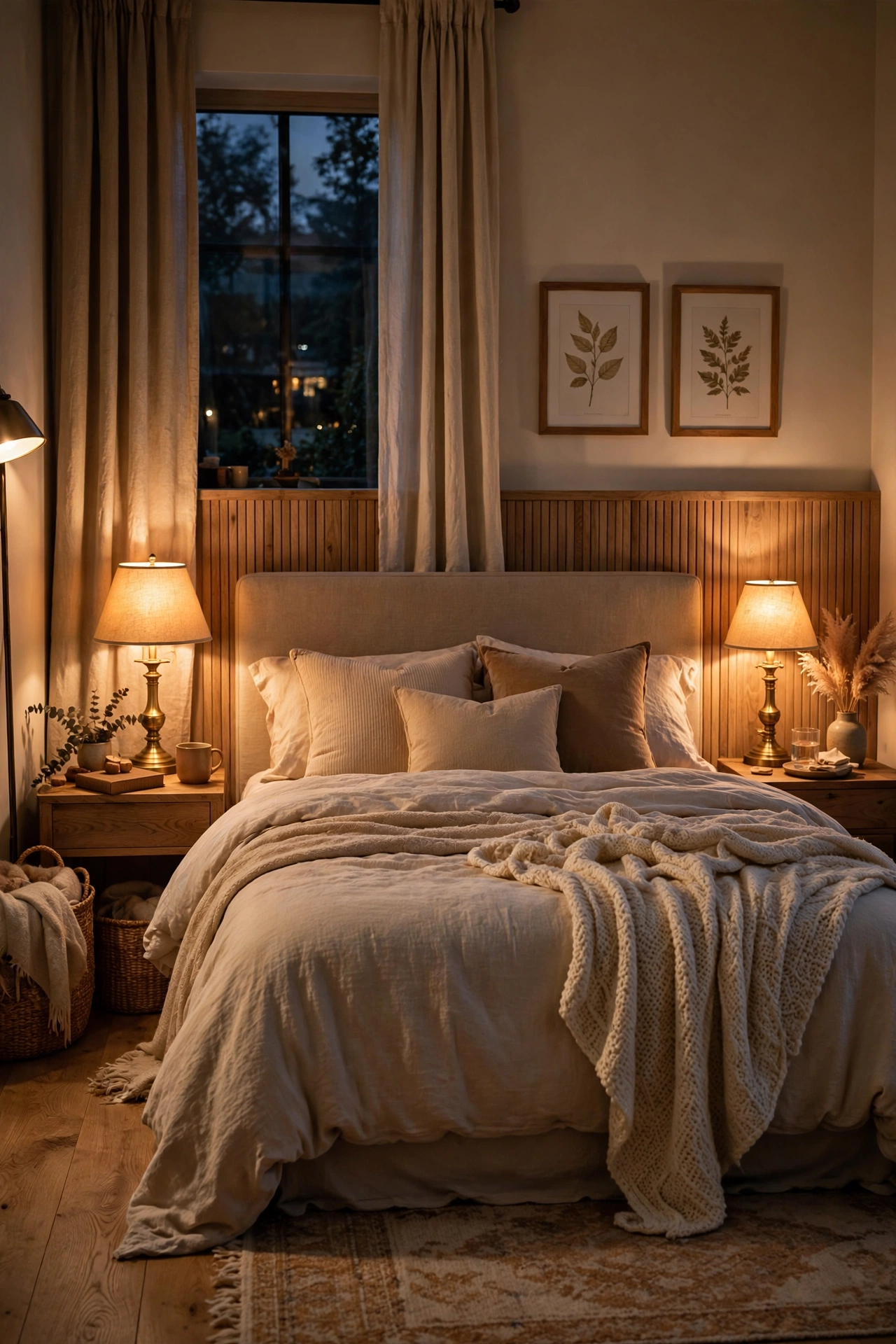
Tip: Match the bulb color temperature across the room — mixing one cool-white bulb with warm ones is the most common reason a room still feels “off” after relighting. Southern Living asked designers for their favorite budget-friendly ways to update a room, and lighting topped the list.
5. Declutter One Surface at a Time
Nothing makes a room feel new like less stuff in it. Not a full marathon — just one surface: the coffee table, the dresser top, the counter. Take everything off, wipe it down, and put back only what you use or genuinely love.
My rule: if I have not touched it in a month and it is not beautiful, it goes — to another room, a donation box, or the trash. Clearing one surface takes fifteen minutes. Do a different surface each weekend and the whole room transforms.
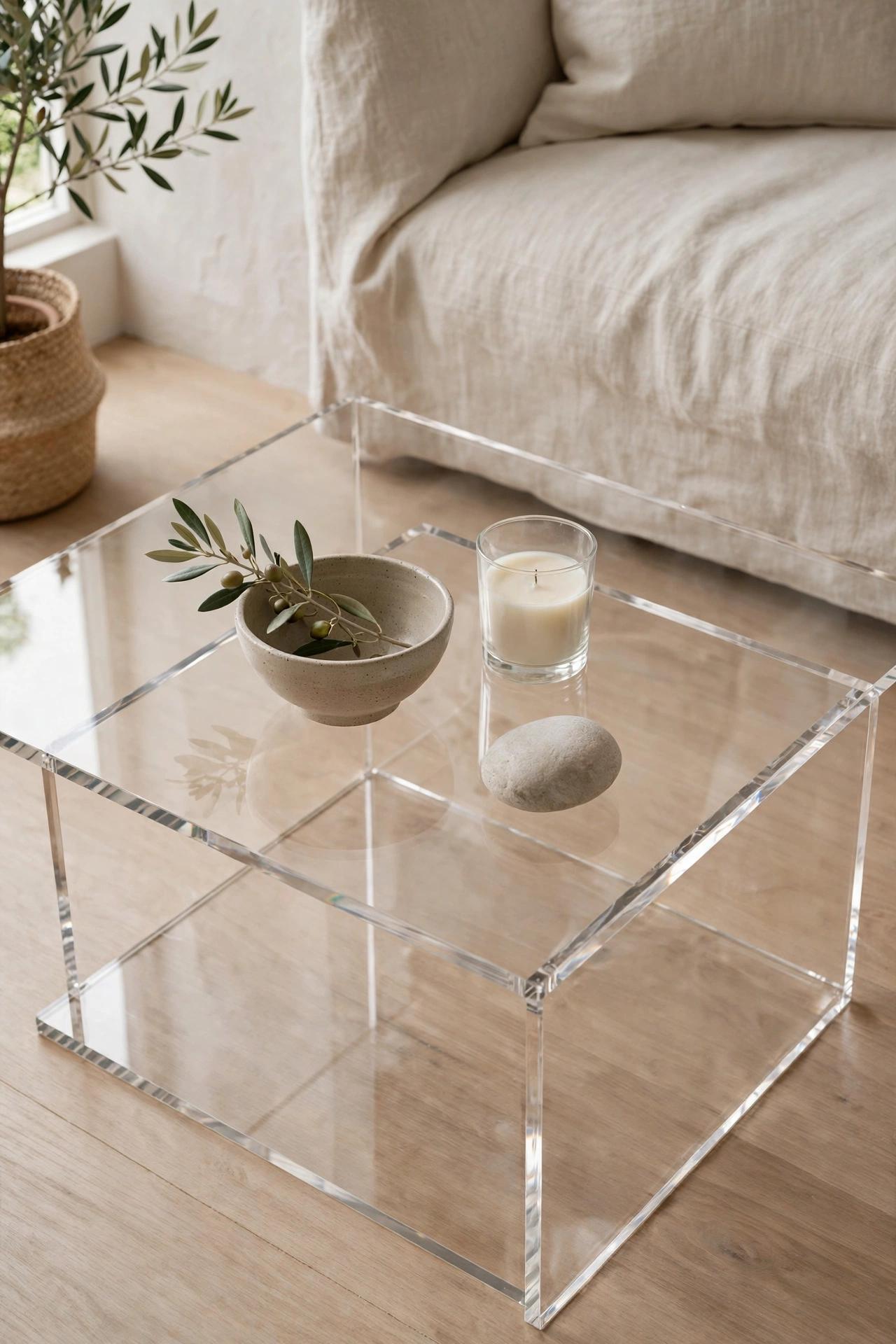
Tip: Photograph the surface before you start. If you hesitate about an item, the photo shows whether it was actually adding anything — usually it wasn’t.
6. Hang Art You Already Own — Just Hang It Better
Most of us own more art than we have on the walls: prints from old calendars, pages from a favorite book, kids’ drawings, photos still in a drawer. Frame them simply and hang them. Even a plain dark frame from the craft store makes almost anything look intentional.
Also check what is already hanging: art hung too high is one of the most common mistakes I see. The center should sit around 57 inches from the floor, roughly eye level — lowering a frame by six inches costs nothing. Group small pieces into a gallery: three small frames close together read as one confident statement.

Tip: Trace frames onto paper, tape the paper to the wall, and live with the layout for a day before hammering a single nail. Free, and it saves your walls.
7. Add Something Living
A room without anything alive in it feels like a waiting room. It does not have to be a big plant: a pothos cutting in a jar of water, a small herb pot on the sill, or a few branches from the yard in a vase. Green goes with everything.
If plants and you have a complicated history, be honest and go faux — one good-looking faux stem beats a crispy real plant every time. Or try grocery store flowers, split across two or three small jars and scattered around the room. For a few dollars, nothing says “this room is cared for” quite like it.

Tip: A cutting from the yard costs nothing and looks incredible — snip a few branches with interesting shapes, strip the lower leaves, and refresh the water weekly.
8. Layer in One Soft Textile
Rooms feel cold when every surface is hard. One soft layer — a throw over the sofa arm, a runner on the table, a small rug beside the bed — adds the warmth your eye is looking for. Shop your own home first: a pretty scarf becomes a table runner, a guest-room quilt becomes a sofa throw.
If you do buy, make it count: one textile in a texture you can feel — chunky knit, waffle weave, something with fringe. Texture reads as luxury even when the price tag does not. Keep it washable, or you will never use it.
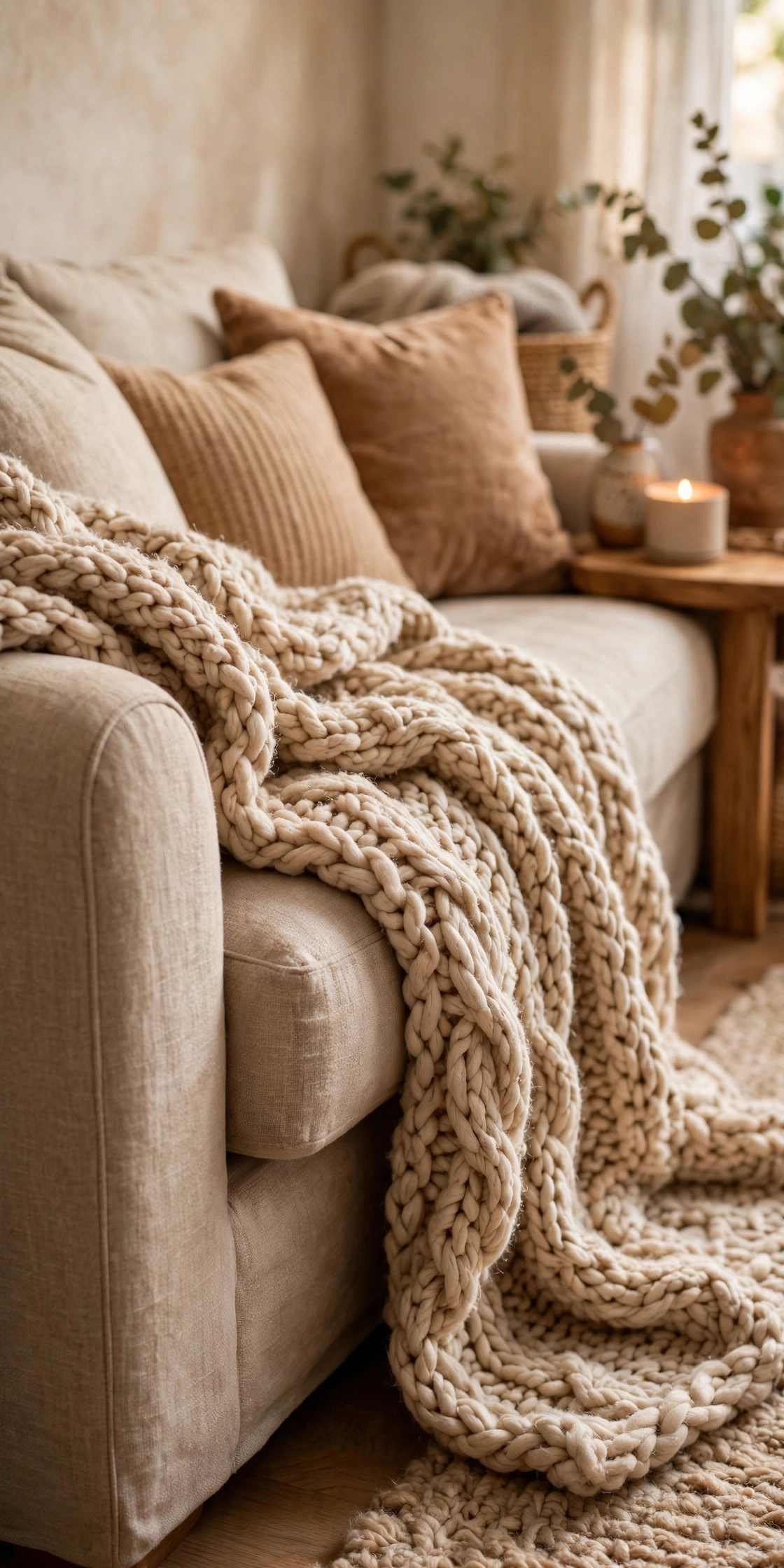
Tip: Drape throws off-center and slightly rumpled, never folded into a perfect rectangle. Perfect folds read as a furniture store; a casual drape reads as a home.
9. Style Your Shelves Like You Mean It
Open shelves collect random objects until they look like a storage unit. The fix is the shop-your-home edit: take everything off, then put back about half, grouped in odd numbers. Threes and fives please the eye more than pairs.
Vary the heights — a stack of books becomes a riser for a small vase — and leave some empty space, so objects look chosen instead of stored. Tuck the rest in a closet; in six months, a whole “new” collection is waiting. My open shelf ideas show the same method in kitchens.
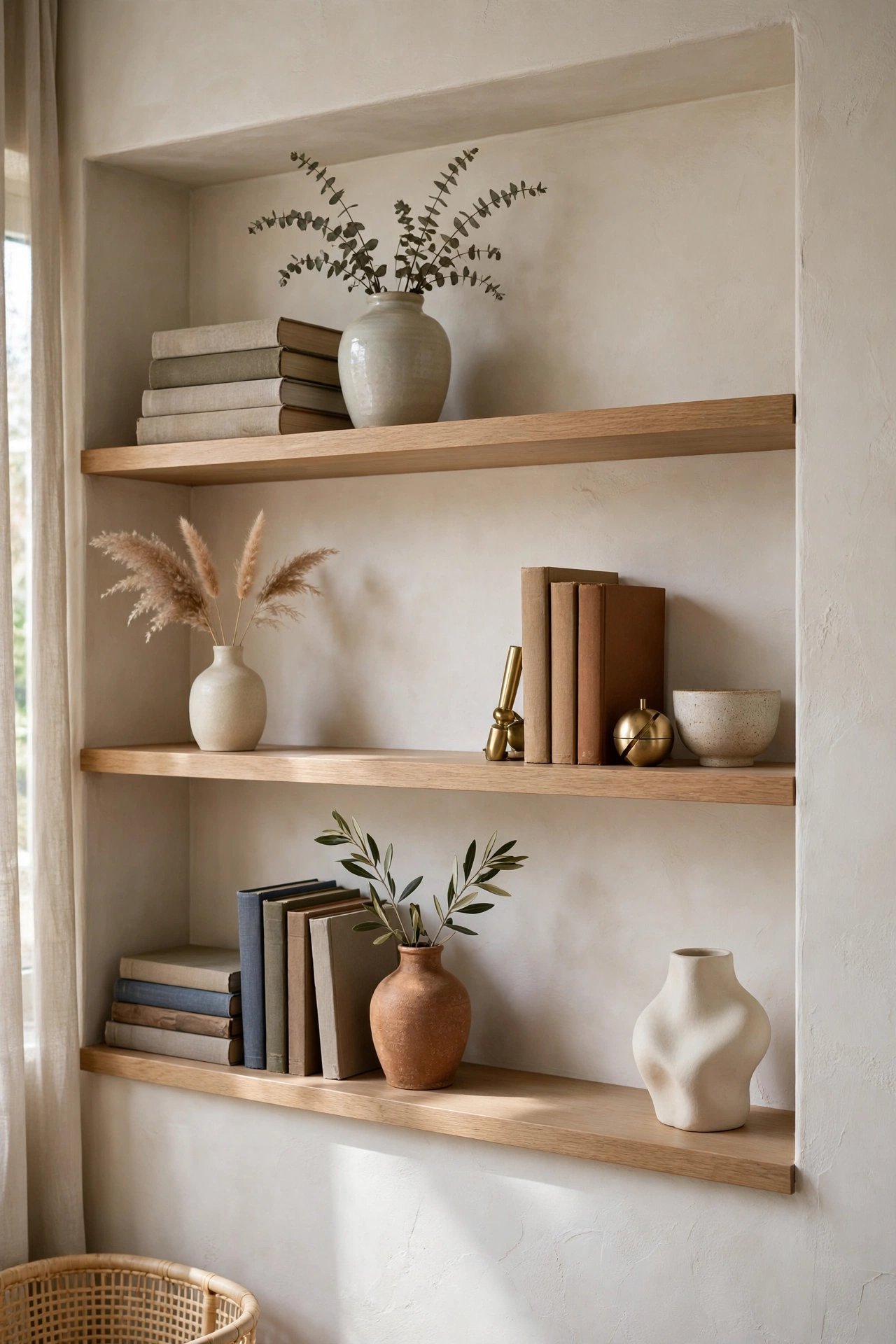
Tip: Step back to the doorway after styling. Shelves that look perfect from two feet away often look cluttered from across the room — the doorway is the real view.
10. Deep Clean the Parts You Never Clean
The least glamorous item here, and possibly the most effective: wash the windows inside and out, wipe the baseboards, vacuum under the furniture, dust the light fixtures. Removing grime is like turning up the brightness on the whole room.
I save this for last on purpose: once the room is rearranged, re-pillowed, and re-lit, a deep clean makes all of it shine. Put on a podcast, work top to bottom, then stand in the doorway. A truly clean room feels new in a way no purchase can copy.

Tip: Clean top to bottom, always — light fixtures and high shelves first, floors last. Otherwise dust from above lands on everything you just cleaned.
What Should You Try First?
| Refresh | Cost | Time |
|---|---|---|
| Rearrange furniture | Free | One morning |
| New pillow covers | Under $20 | 20 minutes |
| Touch-up paint | Free–$5 | One afternoon |
| Warmer lighting | Under $20 | 30 minutes |
| Declutter one surface | Free | 15 minutes |
| Rehang existing art | Free | One hour |
| Add something living | Free–$10 | 20 minutes |
| One soft textile | Under $25 | 10 minutes |
| Restyle shelves | Free | One hour |
| Deep clean | Free | Half a day |
Frequently Asked Questions
How can I refresh a room for under $50?
Rearrange the furniture (free), swap pillow covers (under $20), switch to warm bulbs (under $20), add one plant or a soft textile (under $25), and deep clean what you already own (free). Each one changes how the room feels for less than a dinner out.
What is the cheapest way to make a room look new?
Move the furniture. A new layout changes how light and movement flow through the room, and your brain reads it as a completely new space — for zero dollars.
How do I make a room feel cozy on a budget?
Warm light and soft texture do almost all the work. Swap cool bulbs for warm white around 2700K, drape one chunky throw over the sofa arm, and add something living. Three small warm changes beat one expensive purchase.
What room refresh should I do first?
Start with the free moves: declutter every surface, rearrange the furniture, and deep clean. Most rooms feel dramatically different after that alone, and it costs nothing. Then spend your budget on the one thing the room still needs, usually lighting, textiles, or paint.
How often should I refresh a room?
Whenever it starts feeling flat, which for most homes is every few months or with the seasons. A small seasonal refresh, textiles in fall, lighter layers in spring, keeps every room feeling intentional without ever needing a big overhaul.
What is the biggest budget-refresh mistake?
Buying new decor before trying the free moves. Rearrange, declutter, and deep clean first; most rooms feel new after that alone. Money spent after the free refresh goes much further because you know exactly what the room still needs.
Final Thoughts
That is the whole philosophy: refresh, don’t replace. A moved sofa, a new pillow cover, a wiped baseboard — none is dramatic alone, but together they give you a room that feels loved again, for less than a dinner out. Pick two favorites and do one this weekend. Realtor.com’s inexpensive ways to transform a room has more three-hour projects. For proof of what $50 can do in one space, our thrifted entryway makeover under $50 shows the whole process.