
13 Fall Bedding Ideas


Your bed works harder in fall than any other piece of furniture you own. It is where you land after cold evenings, where Sunday mornings stretch longer, where a good book and a hot drink do their best work. The right fall bedding turns that everyday spot into the warmest corner of your home. Here is one concrete trick to start with tonight: buy your duvet insert one size larger than your cover (a king insert inside a queen cover). The extra fill puffs the cover full with no flat corners, and the bed instantly looks professionally styled. From there, think in textures you can feel with your eyes closed: brushed flannel, nubby knits, washed linen, soft velvet. Check out the ideas ahead and pick three to try this weekend for an instant seasonal reset.
Key Takeaways
- Fall bedding is about adding weight and texture, not just color: one extra layer changes how the whole bed feels.
- Size your duvet insert one size up from the cover for instant loft with no flat corners.
- Stick to a simple palette of three warm tones and repeat them across sheets, duvet, and throws.
- Mix at least three textures (knit, flannel, velvet, wool, or linen) so the bed looks layered instead of flat.
- Match duvet warmth to how you sleep: hot sleepers stay near 400 fill power, cold sleepers go 600 and up.
1. Start With a Chunky Knit Throw
If you change nothing else, change this. A chunky knit throw folded across the foot of the bed is the single fastest fall signal in a bedroom. The thick cables catch light and shadow, which is exactly what makes a bed look cozy in photos and in person. Drape it loosely rather than folding it into a perfect rectangle. A little mess reads as inviting. For the best drape, fold the throw in half lengthwise first, then lay it across the foot at a slight angle instead of squared with the mattress. The diagonal line makes the bed look styled rather than simply covered.
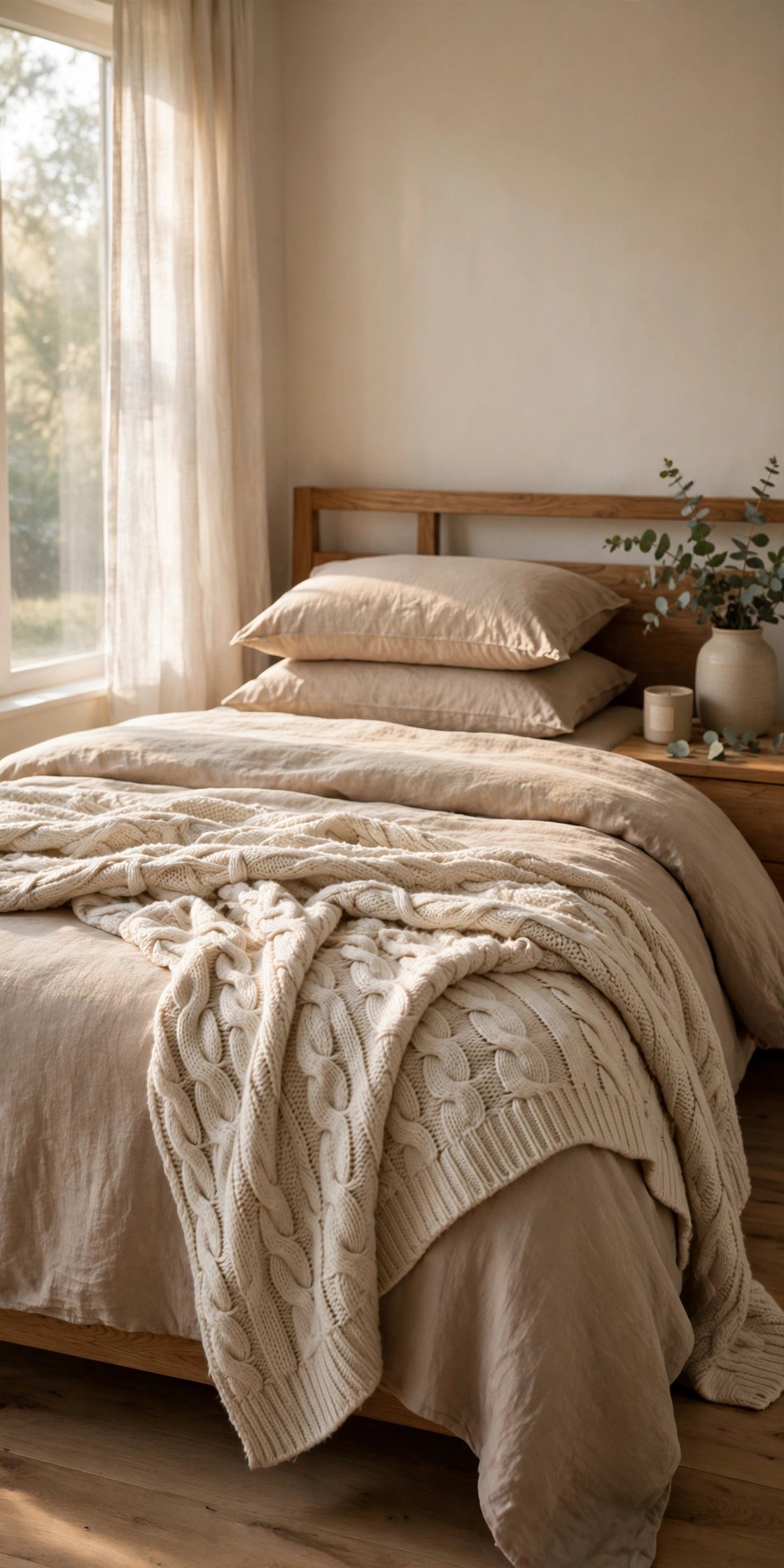
Tip: Choose a throw in cream, oatmeal, or warm gray so it works with whatever duvet color you already own. It also hides a multitude of wrinkled-duvet sins and pulls the whole bed together in seconds.
2. Switch to Flannel Sheets
Cotton percale feels crisp in July and chilly in October. Flannel sheets are brushed on both sides, which traps warm air against your skin from the first minute you climb in. No more doing the cold-sheet dance. Wash them before the first use to soften the nap, and skip fabric softener, which coats the fibers and dulls that brushed feel over time. Good flannel is measured by weight: look for sheets around 170 GSM or about 5 ounces per square yard. Lighter flannel pills faster and feels thin by February, while heavier weaves stay smooth for years. If you sleep warm, try flannel only on the fitted sheet and keep a cotton flat sheet on top for balance.
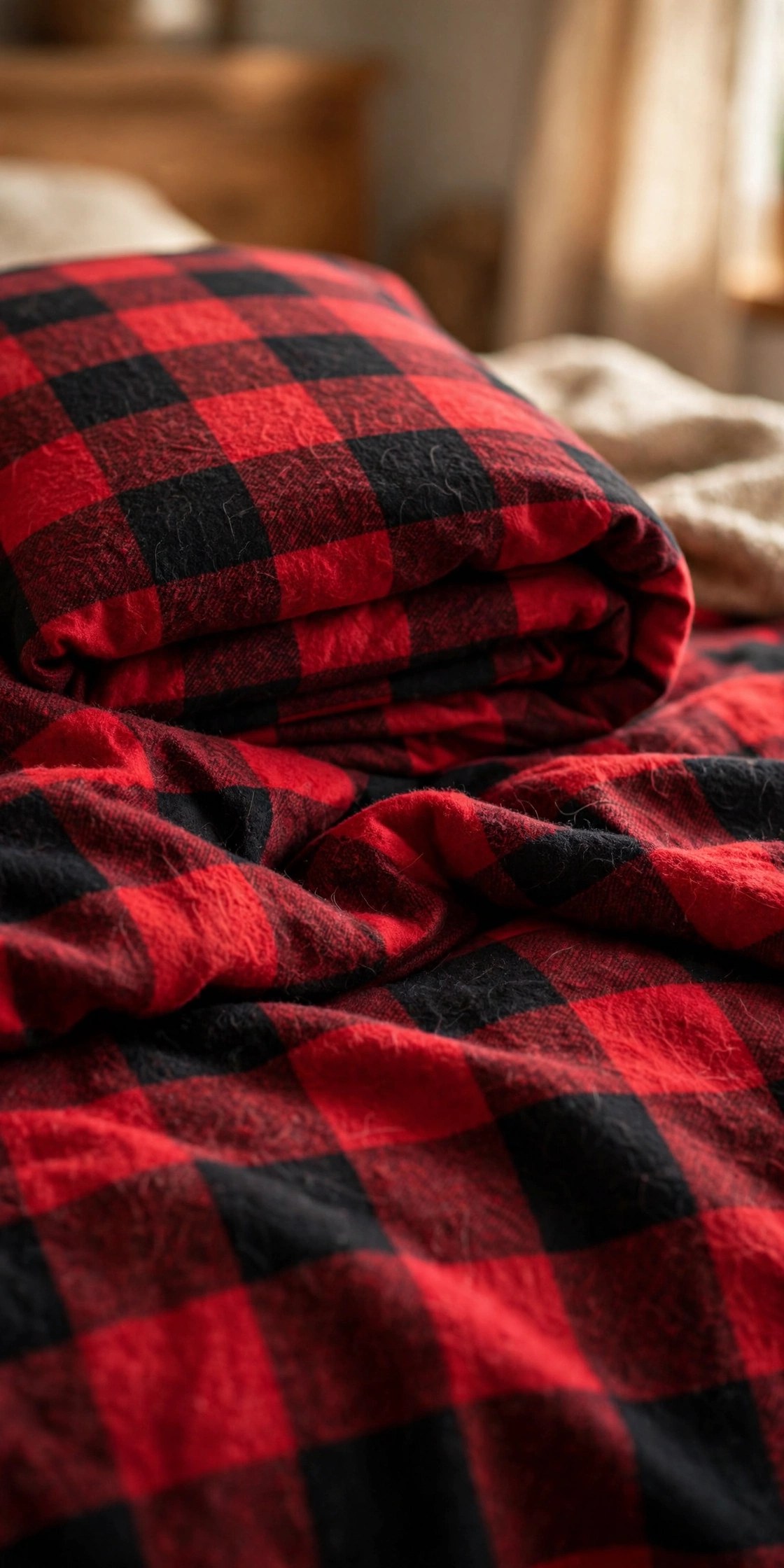
Tip: A classic red-and-black buffalo plaid flannel set is the fall shortcut, but a muted windowpane plaid looks more grown-up.
3. Add a Quilted Coverlet
A quilted coverlet is the layer between your sheets and your duvet that does the visual heavy lifting. It adds stitching texture, a finished edge at the turn-down, and just enough extra warmth for those in-between October nights. Fold it into thirds at the foot of the bed during the day, then pull it up at night when the temperature drops.
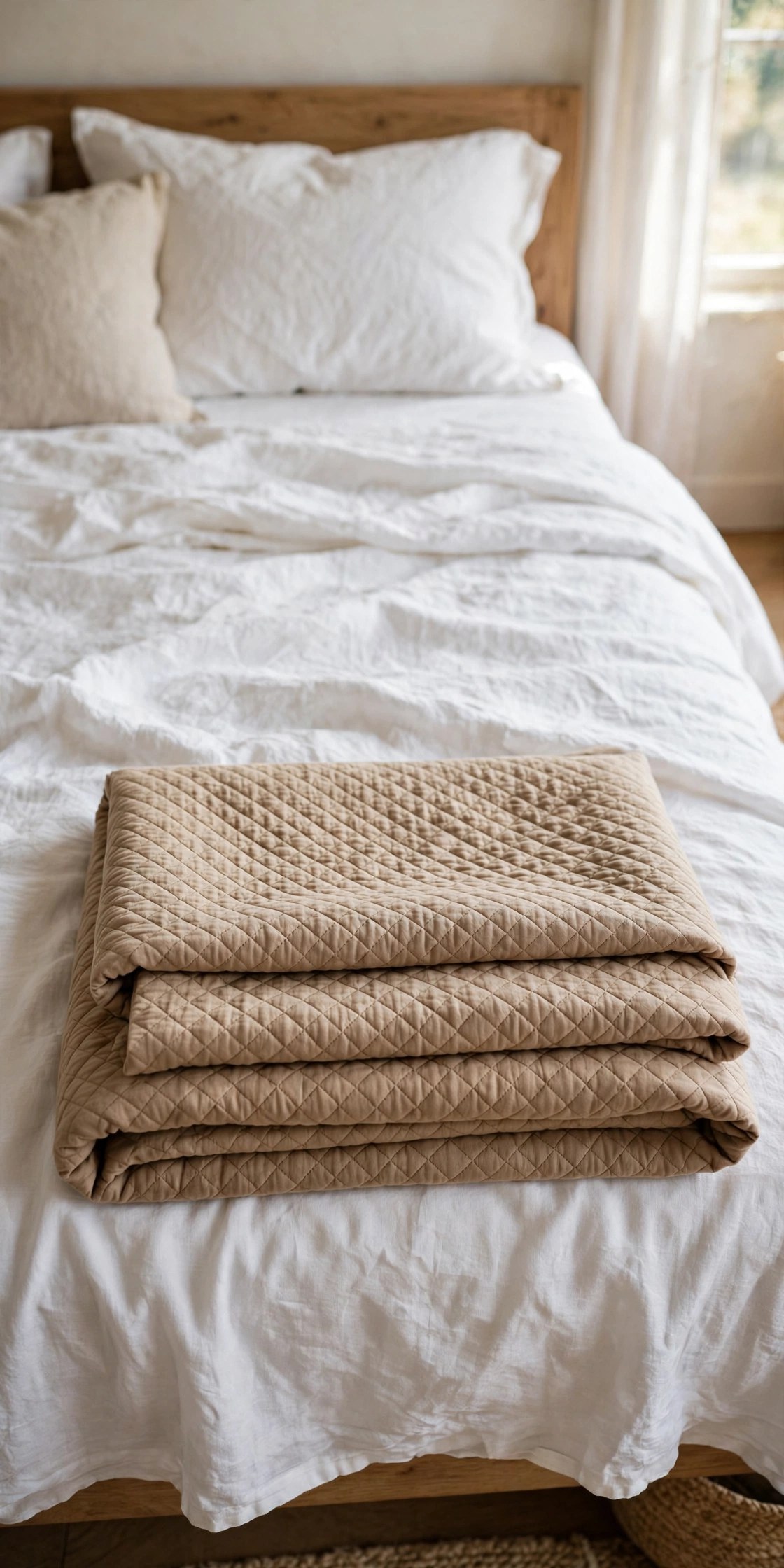
Tip: Pick a coverlet with a small-scale stitch pattern; large quilting motifs can fight with patterned sheets.
Fall bedding is about weight you can feel. If the bed feels the same in October as it did in August, add one more layer.

4. Mix Plaid With Solids
Pattern mixing is what separates a styled bed from a matched set. The rule is simple: one plaid plus two solids. Let the plaid live on the sheets or one pillow pair, then keep the duvet and remaining pillows solid in colors pulled from the plaid. This keeps the bed interesting without looking busy, and it is almost impossible to get wrong.
| Fabric | Best For | Fall Vibe | Care |
|---|---|---|---|
| Flannel | Sheets | Cozy cabin | Machine wash warm |
| Washed linen | Duvet covers | Relaxed European | Machine wash cold |
| Velvet | Pillows, throws | Rich and moody | Spot clean most |
| Cotton sateen | Sheets, shams | Polished classic | Machine wash warm |
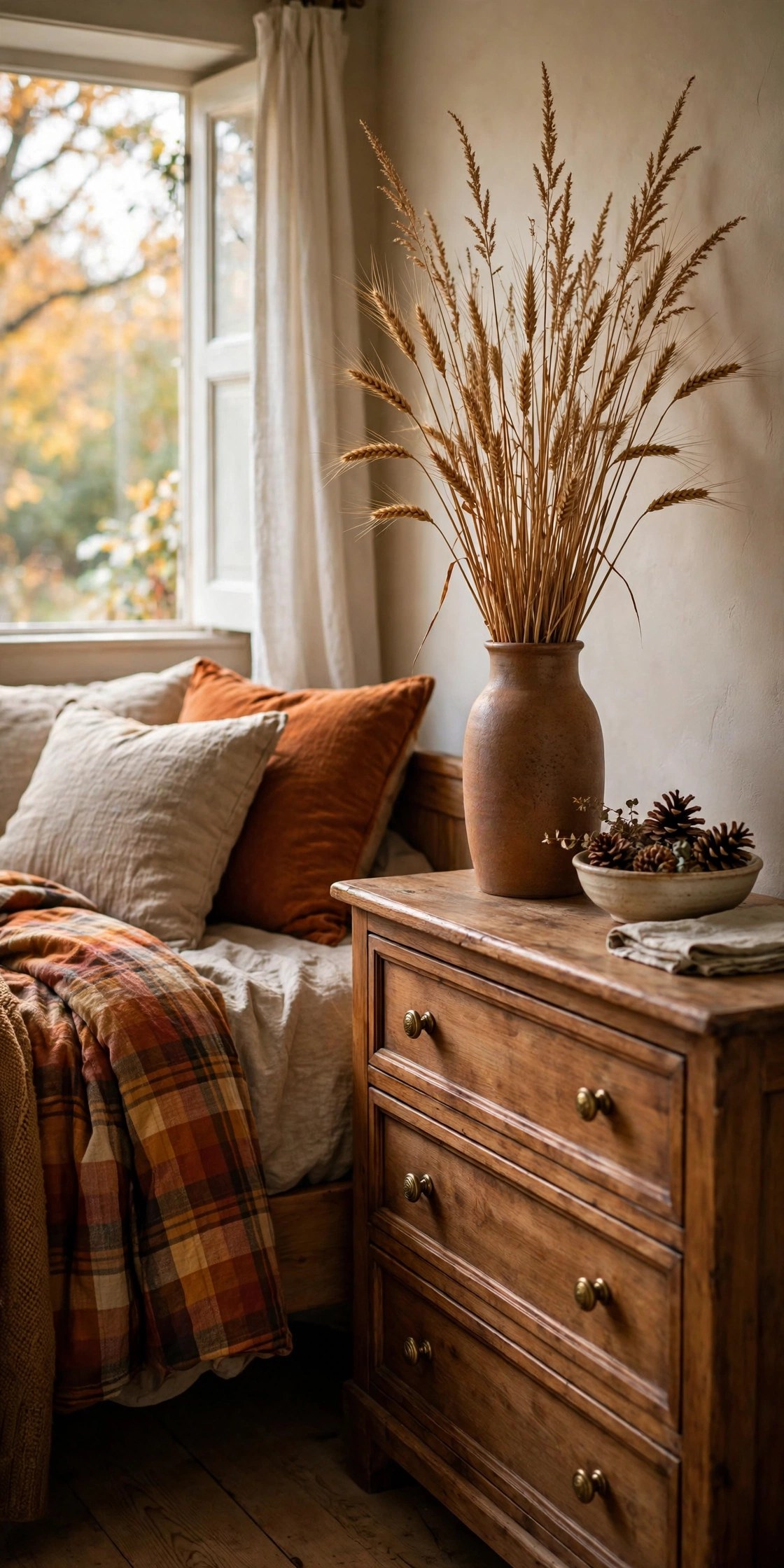
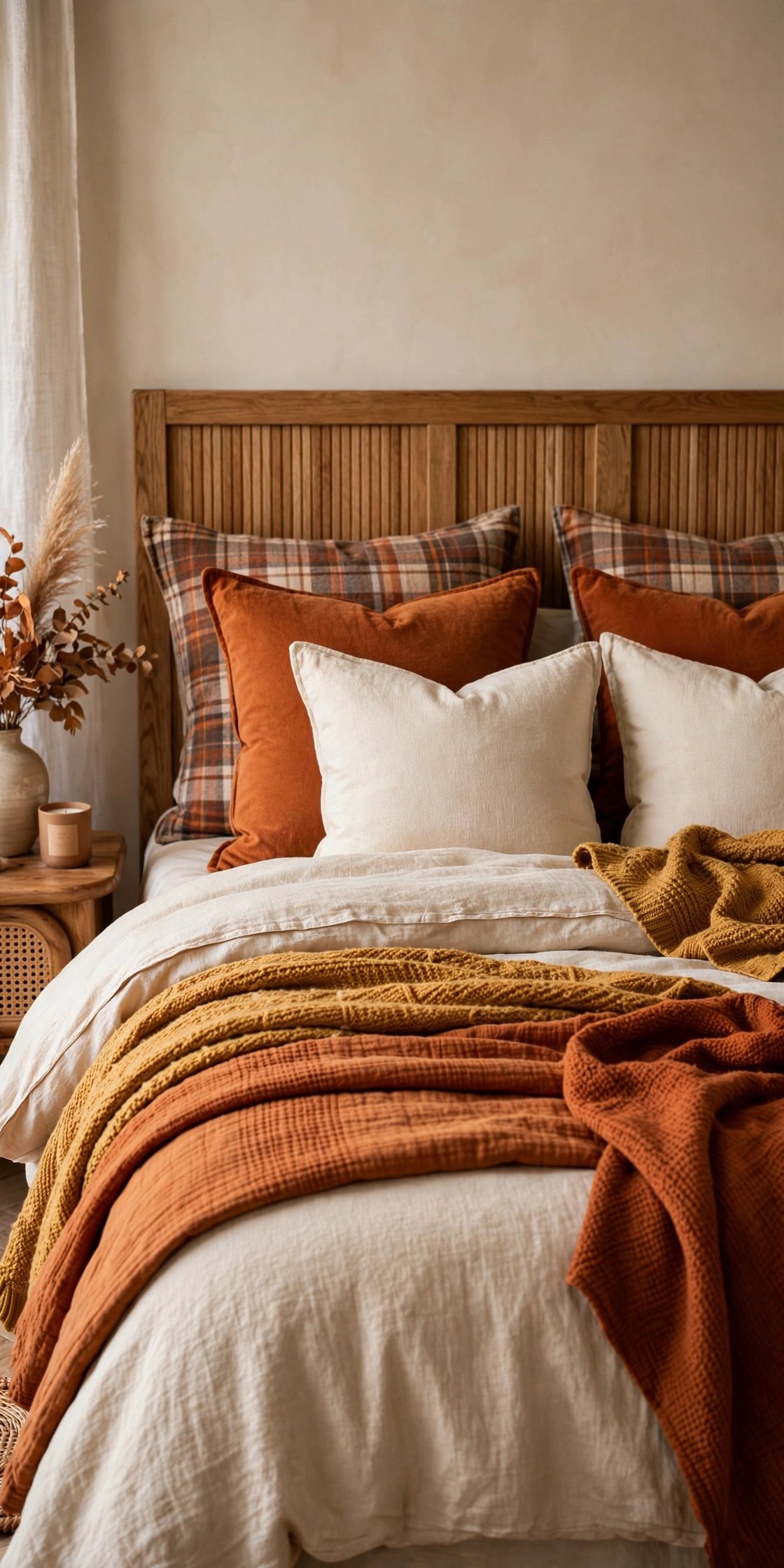
Tip: If your plaid has four colors, your solids should match the two quietest ones, not the loudest.
5. Go Rust With a Terracotta Duvet Cover
Color does more work than any other single change. A terracotta duvet cover reads as fall instantly, the way a green cover reads as spring. Rust, burnt orange, and clay tones glow in lamplight and flatter every skin tone in morning light. If a full rust duvet feels like a lot, start with rust pillow shams and see how the room responds for a week. The reason terracotta works so well in bedrooms is that it sits opposite blue-green on the color wheel, so it calms down cool wall colors like sage or slate instead of fighting them. In a white or cream room it adds the warmth the walls lack, and in a dark room it keeps the bed from disappearing into shadow.
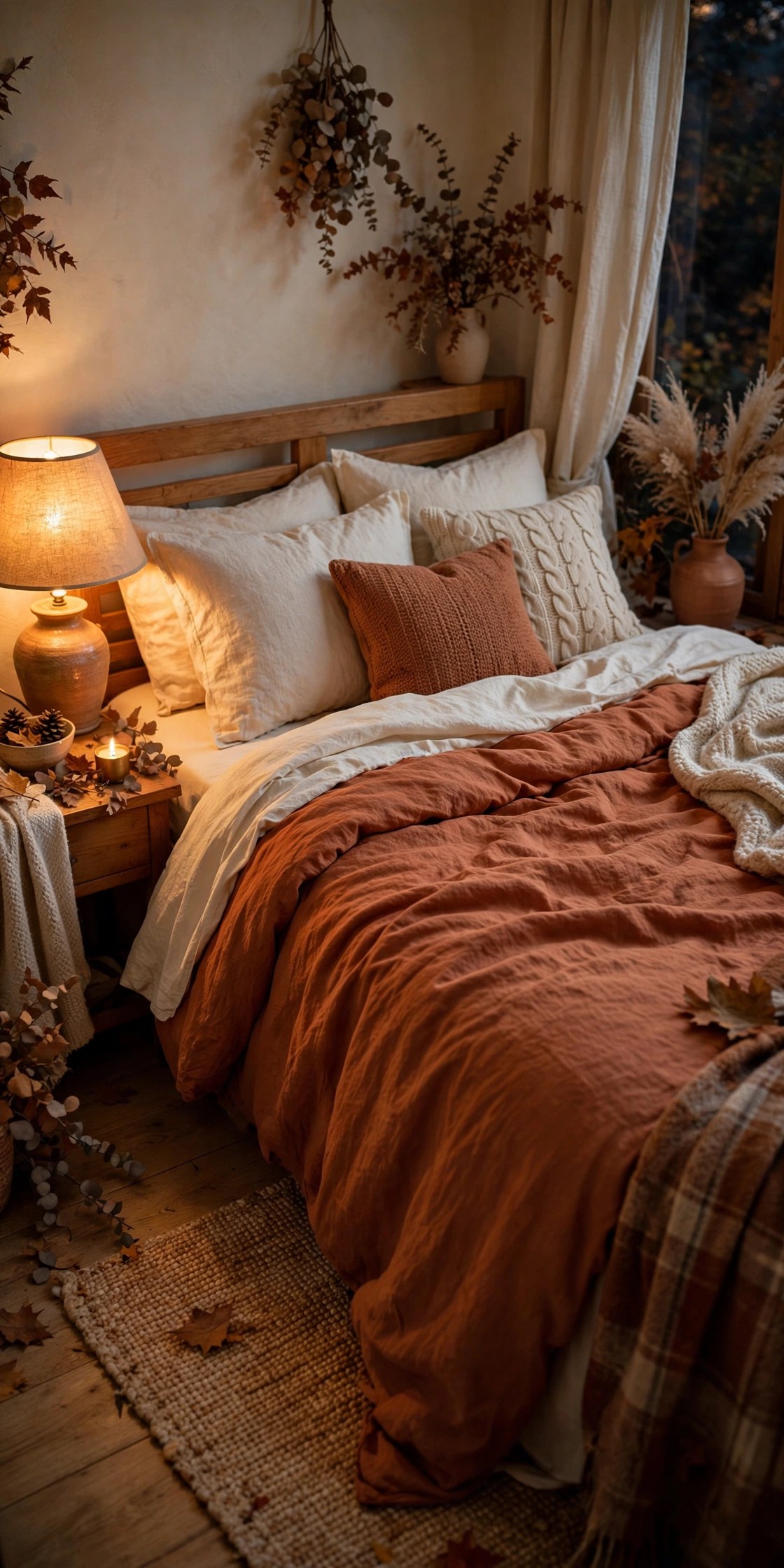
Tip: Pair terracotta with cream sheets and a walnut-brown throw to keep it earthy instead of loud.
6. Drape Faux Fur at the Foot
Faux fur is pure theater, and the foot of the bed is its stage. A single faux fur throw, tossed rather than placed, adds the one texture nothing else in the room has. It catches the eye from the doorway and makes the whole bed look expensive. Keep the rest of the bedding matte so the fur stays the star; too many shiny or nubby textures competing will flatten the effect.

Tip: Ivory faux fur is the safest choice; brown faux fur can read dated against the wrong palette.
Two duvets beat one blanket every time. No more midnight tug-of-war.
7. Try the Scandinavian Sleep Method
Couples, this one ends arguments. The Scandinavian sleep method means each person gets their own duvet on a shared bed, usually two twin or twin-XL duvets side by side on a king, or two full/queen duvets on a California king. Nobody steals covers, and each sleeper picks their own warmth level. Top both duvets with one shared coverlet or throw so the bed still looks like one bed by day. The method started in Scandinavia, where cold nights made blanket-hogging a genuine sleep problem, and it has spread because it works for more than couples: anyone who shares a bed with a restless sleeper or a human furnace sleeps better with their own duvet. Matching covers keep the look unified if the two-duvet split bothers you visually.
- Measure your mattress width and divide by two for each duvet’s width.
- Choose each duvet’s weight for its sleeper (see the weight guide below).
- Finish with a single textured throw across the foot to visually join them.
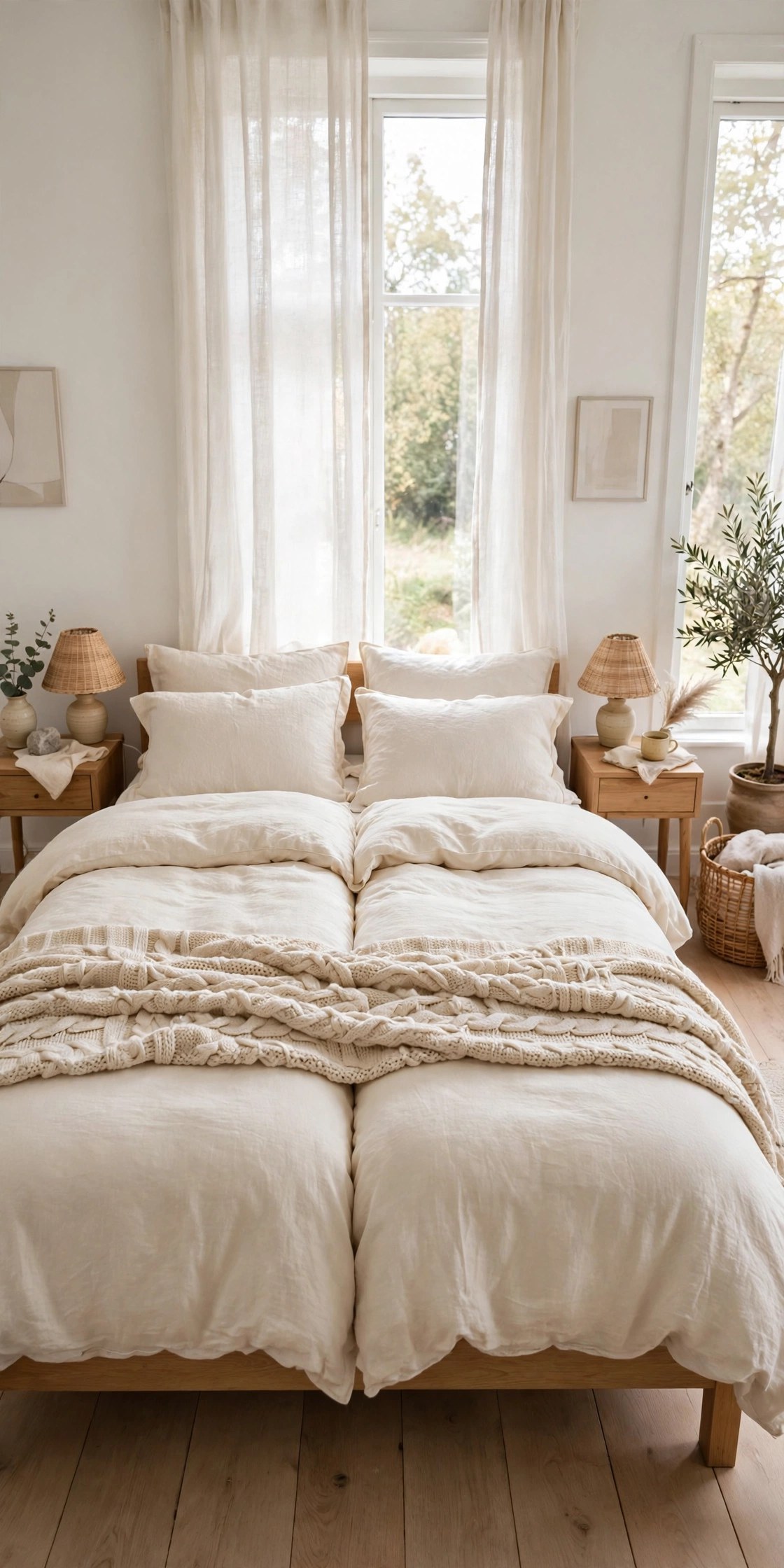
Tip: This method also solves the hot-sleeper/cold-sleeper mismatch better than any single bedding purchase.
8. Prop Up Amber Euro Shams
Euro shams (the big 26-inch square pillows) are the backdrop of a styled bed. Amber euro shams in a solid or subtle texture give you that golden fall glow behind everything else. Stand them upright against the headboard, slightly tilted, and let the sleeping pillows lean in front. Two euros are enough for a queen; a king can carry three.
| Bed Size | Back Row | Front Row | Finisher |
|---|---|---|---|
| Twin / Full | 2 euro shams | 2 sleeping pillows | 1 lumbar |
| Queen | 2 euro shams | 2 sleeping pillows | 1 lumbar + 1 small square |
| King | 3 euro shams | 2 sleeping pillows | 1 lumbar + 2 small squares |
The classic designer move is arranging pillows back to front, largest to smallest, which The Spruce’s pillow guide confirms as the pro approach for beds. For more ways to style the whole room around the bed, browse these fall bedroom decor ideas.
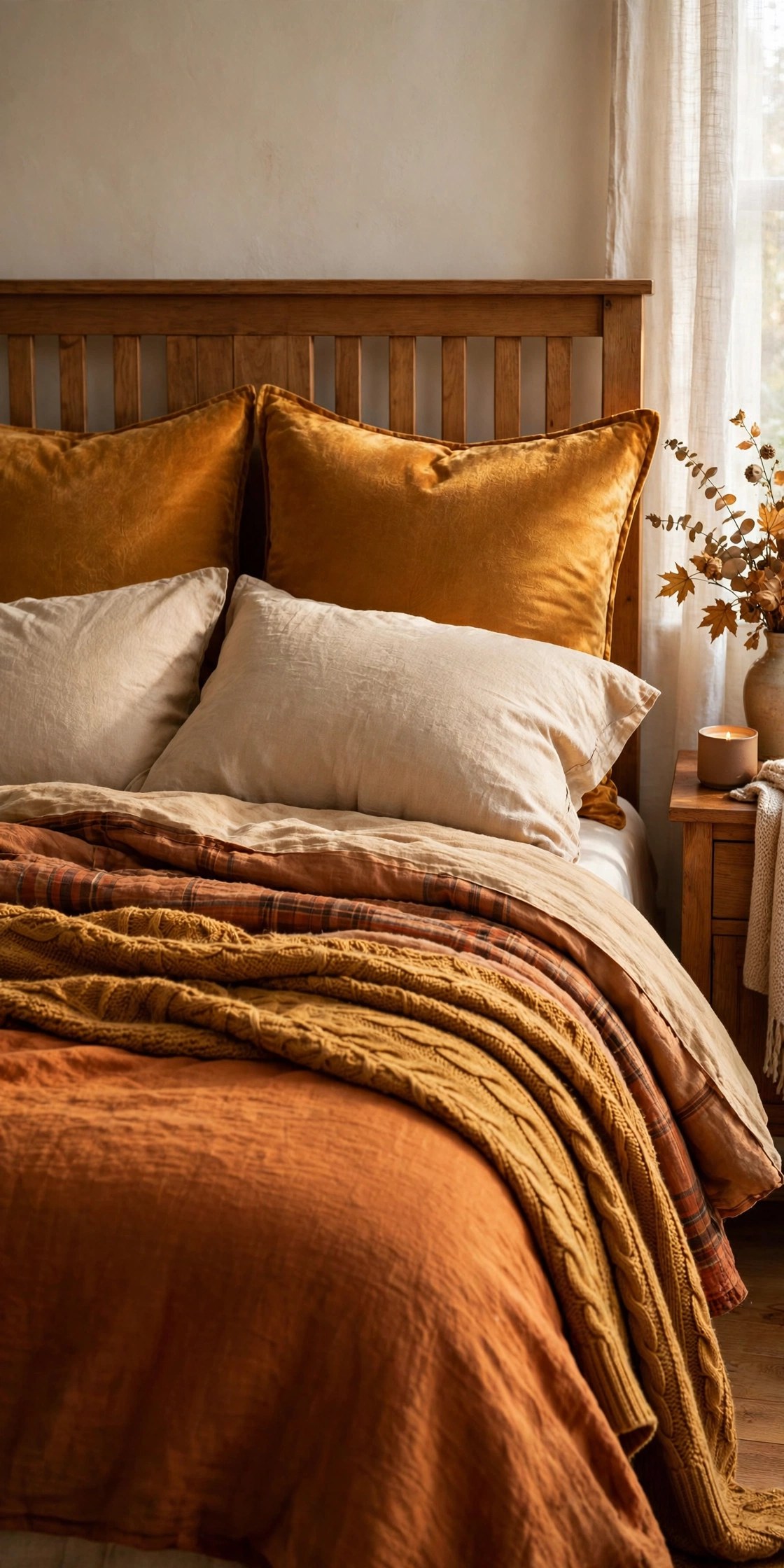
Tip: Karate-chop the top of each sham (a firm press down the middle) for that lived-in designer dent.
9. Fold a Wool Blanket Across the Middle
A wool blanket folded in thirds and laid across the middle of the bed does two jobs: it adds a bold horizontal band of color or pattern, and it is the layer you actually reach for during a mid-afternoon nap. Wool regulates temperature, so it warms you without overheating, which makes it the hardest-working blanket you can own. Look for one with a striped end or whipstitched edge for character. Pure new wool is the warmest and longest-lasting, but a wool blend is softer against bare skin and usually machine washable, which matters for a blanket that gets daily use.

Tip: Fold the blanket so its finished edge faces the foot of the bed; it photographs better and stays put.
The fastest fall update costs nothing. Refold what you own and move the warmest layer to the top.

10. Keep It Calm With Oatmeal Linen
Not every fall bed needs to shout. Oatmeal linen in a washed, lived-in finish gives you warmth through texture rather than color. The natural slubs and wrinkles of linen catch light beautifully, and the neutral tone lets your throws and pillows do the seasonal talking. Linen also gets softer with every wash, so it is one of the few bedding buys that improves with age. It is naturally temperature-regulating too, which makes it a smart pick if you run warm but still want that cozy fall look. The trick is committing to the wrinkles: pull the cover straight from the dryer, put it on the bed slightly damp, and let it finish drying in place for a perfectly relaxed drape.
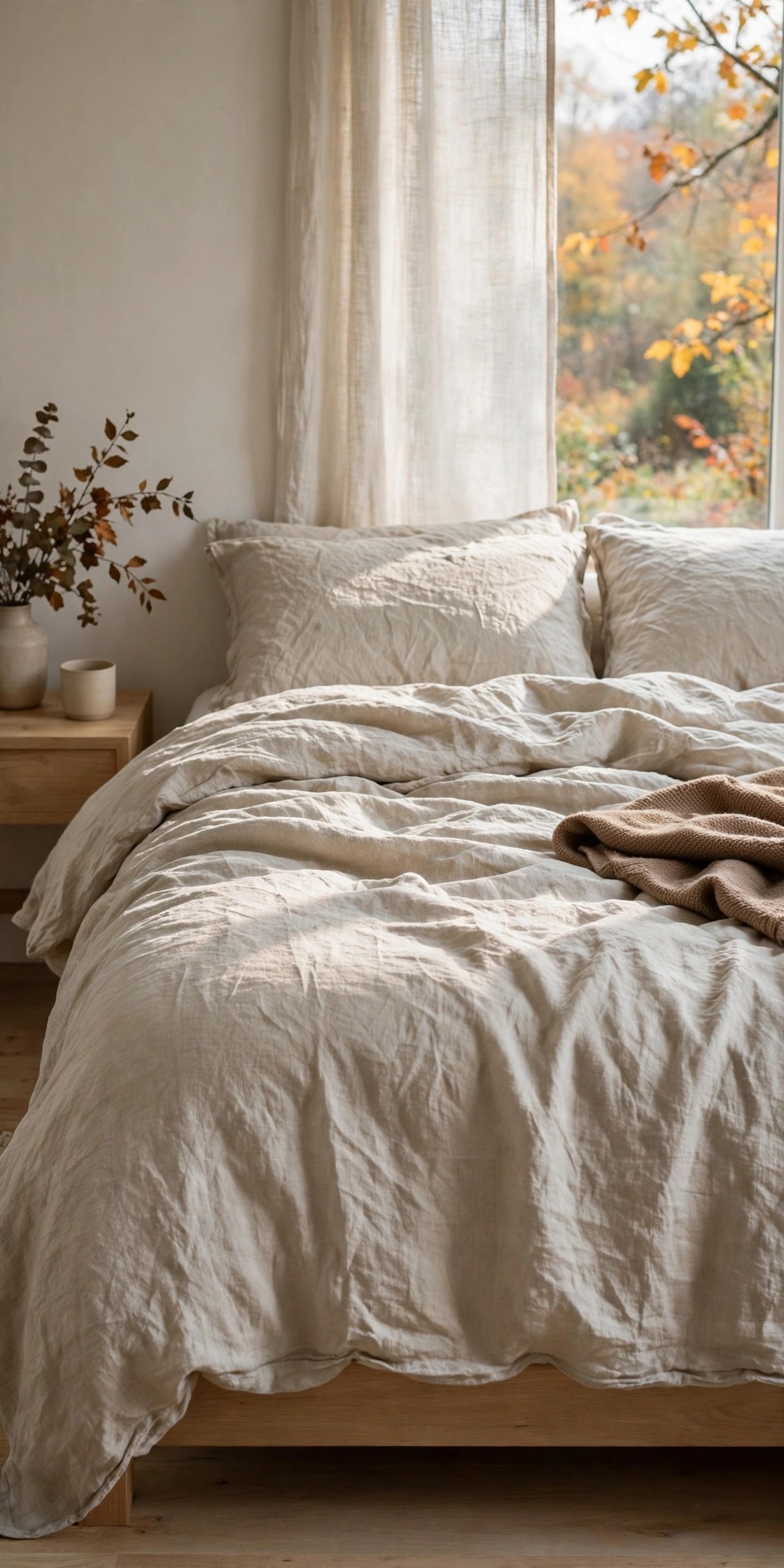
Tip: Wash linen in cold water and line-dry when you can; high heat breaks the fibers down faster.
11. Size Up Your Duvet Insert for Fall
Here is the stylist secret from the intro, with the numbers behind it. A one-size-up duvet insert (king insert in a queen cover) fills every corner of the cover, so the bed looks plump instead of deflated. For warmth, match the fill to how you sleep: Sleep Foundation’s duvet guide notes down fill around 400 works for lightweight summer warmth, 400 to 600 suits year-round use, and 600-plus brings real winter coziness. In tog terms, that is roughly 4.5 tog for summer and 10.5 to 13.5 tog for deep winter.
| If You Sleep… | Fill Power / Tog | Pick This |
|---|---|---|
| Hot | ~400 fill / 4.5 tog | Lightweight down or down alternative |
| Average | 400–600 fill / 7.5–10.5 tog | All-season medium weight |
| Cold | 600+ fill / 10.5–13.5 tog | Heavyweight winter duvet |
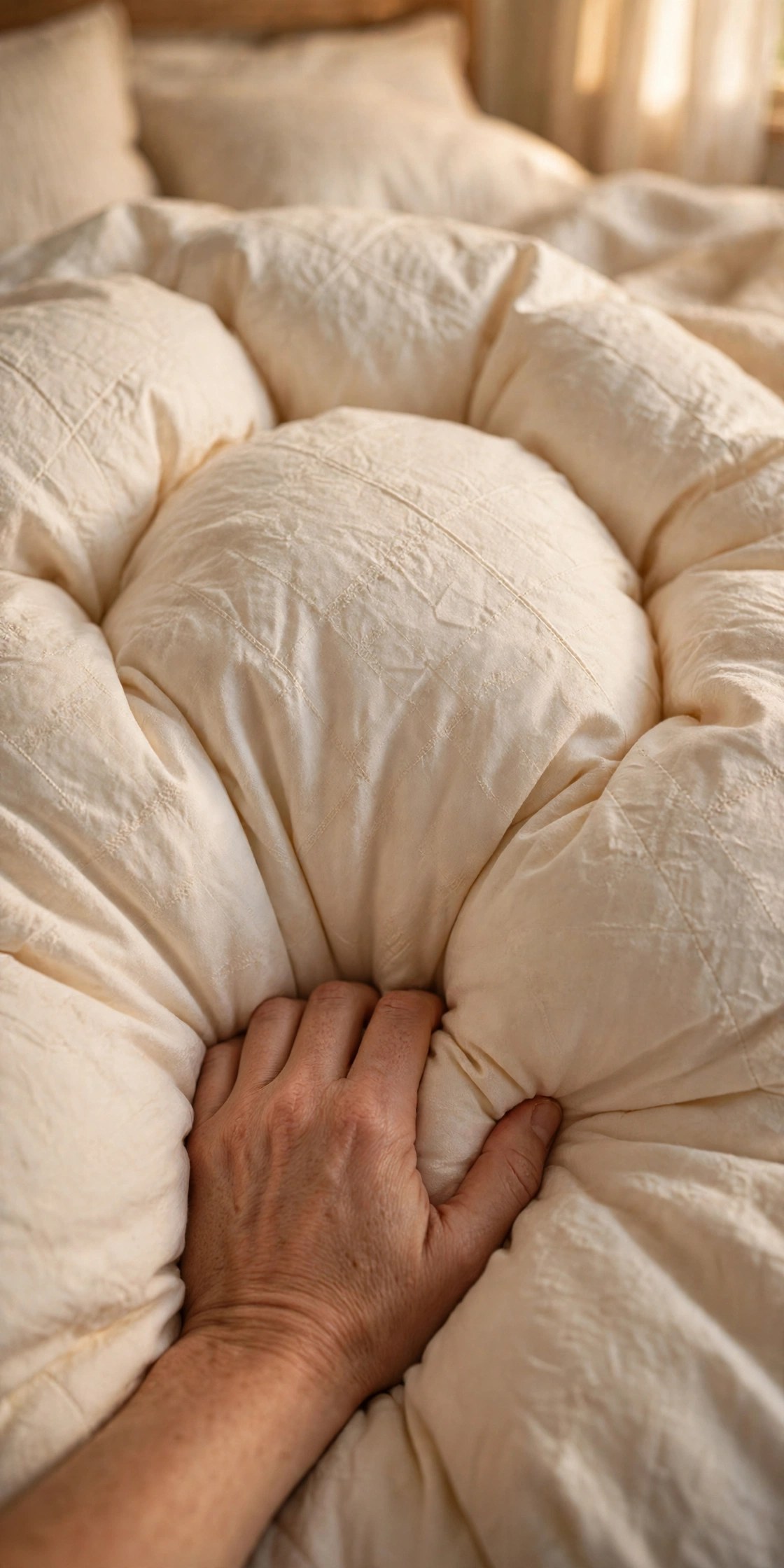
Tip: If you are between weights, choose the lighter duvet and add a wool blanket; it is easier to add a layer than to cool down.
12. Add One Velvet Lumbar Pillow
A single velvet lumbar pillow is the jewelry of the bed. The long, low shape breaks up the wall of square pillows, and velvet’s sheen shifts color as the light changes through the day. One is enough; two starts to look like a sofa. Place it centered in front of your sleeping pillows, and pick a tone deeper than your duvet so it anchors the whole arrangement. Velvet reads formal, so it also rescues casual bedding: a ten-dollar-looking cotton duvet suddenly looks deliberate with one good velvet pillow in front of it. Keep it out of direct sun if you can, since strong light fades the pile unevenly over time.
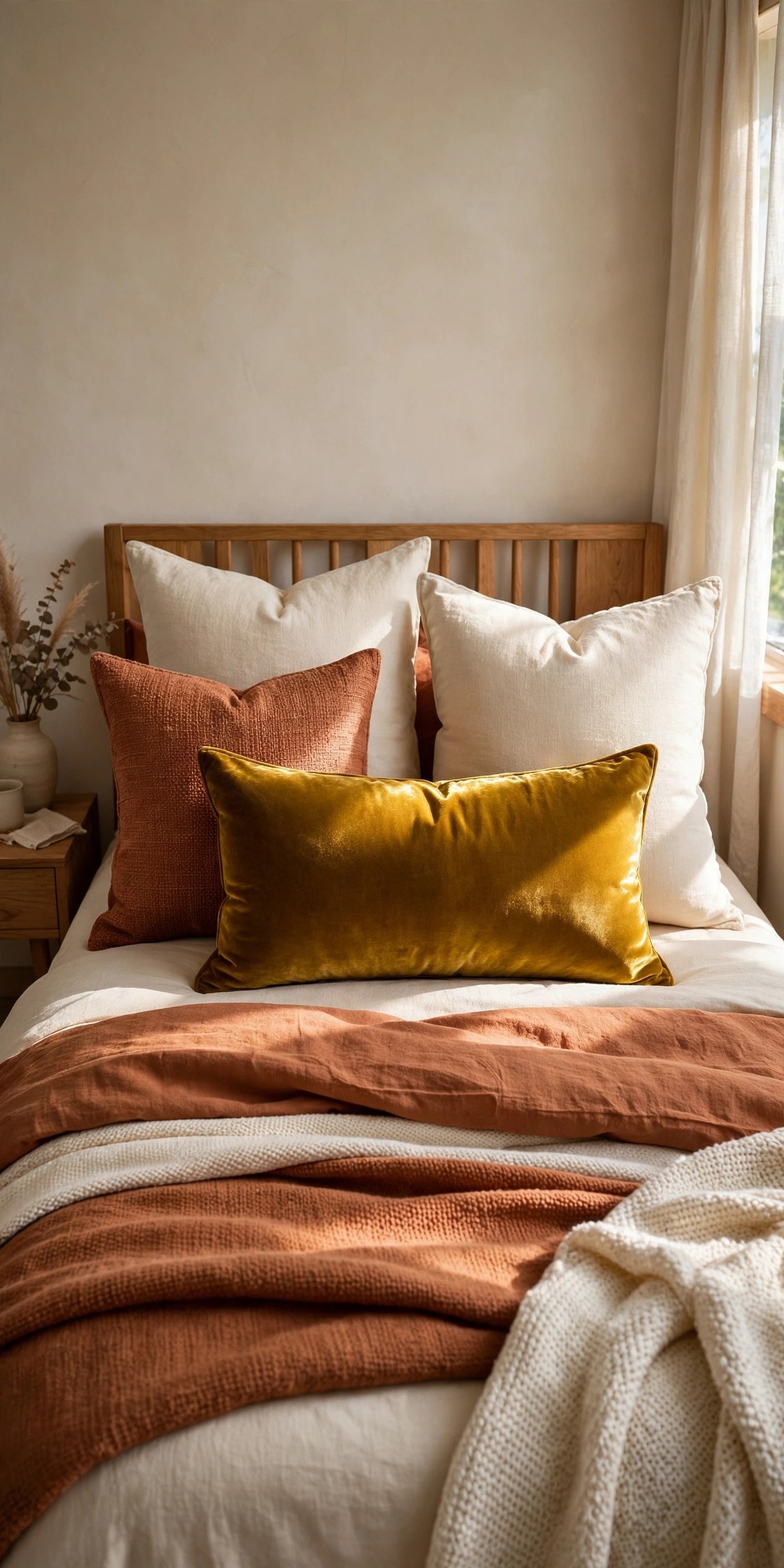
Tip: Mustard velvet against rust bedding, or forest velvet against oatmeal linen, are the two pairings that never miss.
A bed should look like an invitation, not a display. If you cannot picture napping in it, keep layering.
13. Try the 3-2-1 Bed Formula
When in doubt, count. The 3-2-1 bed formula keeps any bed balanced: three top layers (flat sheet, duvet, throw), two rows of pillows (sleeping pillows behind, decorative in front), one statement textile (the piece with the boldest pattern or texture). Memorize it once and you can style any bed in any season by swapping which pieces fill the slots. For fall, make the “one” a plaid wool blanket or a rust lumbar pillow.
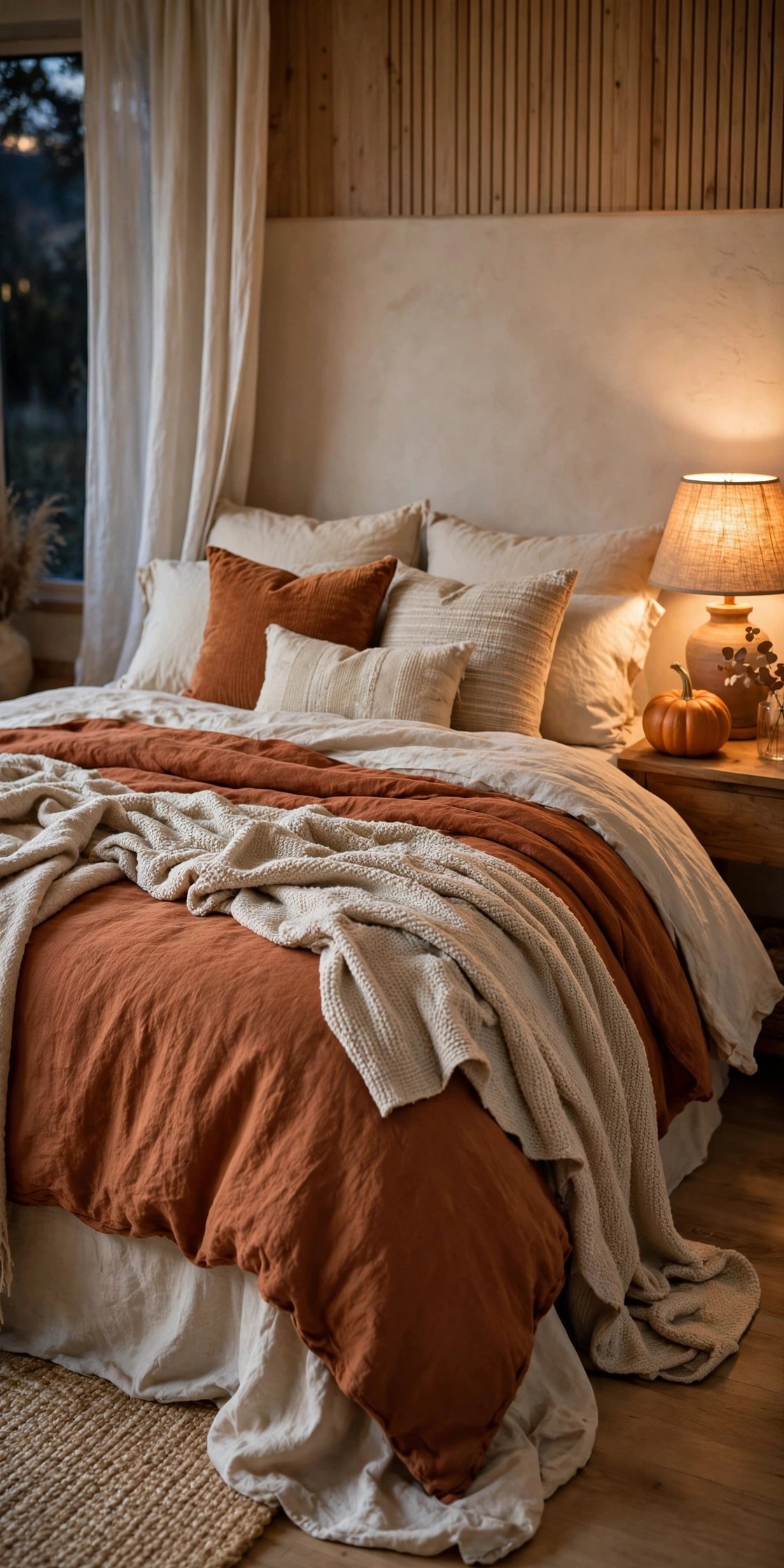
Tip: Photograph your bed after styling it once; the photo reveals lumps and gaps your eyes miss in person.
If this has you rethinking the whole room, these cozy bedroom ideas for better sleep pair better rest with the same warm styling.
How many layers should a fall bed have?
Three to four top layers is the sweet spot: a flat sheet, a duvet or comforter, and one or two throws or blankets. Fewer looks summery; more starts to feel fussy and traps too much heat for most sleepers.
What is the warmest bedding fabric for fall?
Flannel is the warmest common sheet fabric because its brushed surface traps air. For top layers, wool blankets and high-fill-power down duvets (600+) deliver the most warmth for their weight.
What tog duvet is best for autumn?
A 7.5 to 10.5 tog duvet suits most autumn bedrooms. Go 4.5 tog if you sleep hot, and 10.5 to 13.5 tog if your room runs cold or you are buying for deep winter.
How do I layer bedding without it looking messy?
Stick to three colors, repeat each color at least twice, and fold every layer with a visible finished edge. The 3-2-1 formula above keeps the structure while the layers add the coziness.
Can I do fall bedding on a budget?
Yes. One throw and one set of flannel sheets transform a bed for less than a full bedding set. Thrift stores are also full of wool blankets that need nothing but a wash. For small rooms, these small bedroom ideas show how to keep a layered bed from overwhelming the space.
When should I switch to fall bedding?
When nighttime temperatures start dipping below about 65°F (18°C) consistently, usually late September to mid-October in most regions. Your sleep tells you before the calendar does: if you are reaching for an extra blanket, it is time.
How do I store summer bedding so it stays fresh?
Wash everything before storing, then pack sheets and light quilts in breathable cotton storage bags rather than plastic bins, which trap moisture. Toss in a cedar block or lavender sachet to keep them smelling clean, and store the bags somewhere cool and dry. Your fall bedding will thank you in April when the summer set comes back out crisp and ready.
Fall bedding is the rare update that pays you back every single night. Start with the duvet trick, add one throw you love, and let the layers build from there. Your future self, climbing into a warm bed on a cold evening, says thank you. When the bedroom feels done, carry the same cozy palette into the living room with these fall living room decor ideas.