
8 Small Bedroom Ideas That Make It Feel Bigger


There is a special frustration that comes with a small bedroom. Every time you walk in, the walls feel like they are quietly closing in: the bed barely fits, the dresser blocks the closet door, and there is never anywhere to put anything. I’ve lived with a truly tiny bedroom, the kind where you shuffle sideways between the bed and the wall. And I can tell you from experience: a small bedroom doesn’t have to feel small.
The room won’t get any bigger, but the way it feels can change completely. It comes down to light, color, and furniture that earns its place. Here are 8 tricks I swear by — each one simple, most of them free or close to it. Start with the two or three that jump out at you, and watch what happens.
For a full calm-bedroom makeover using these same principles, my calm and cozy bedroom tour shows every corner in detail.
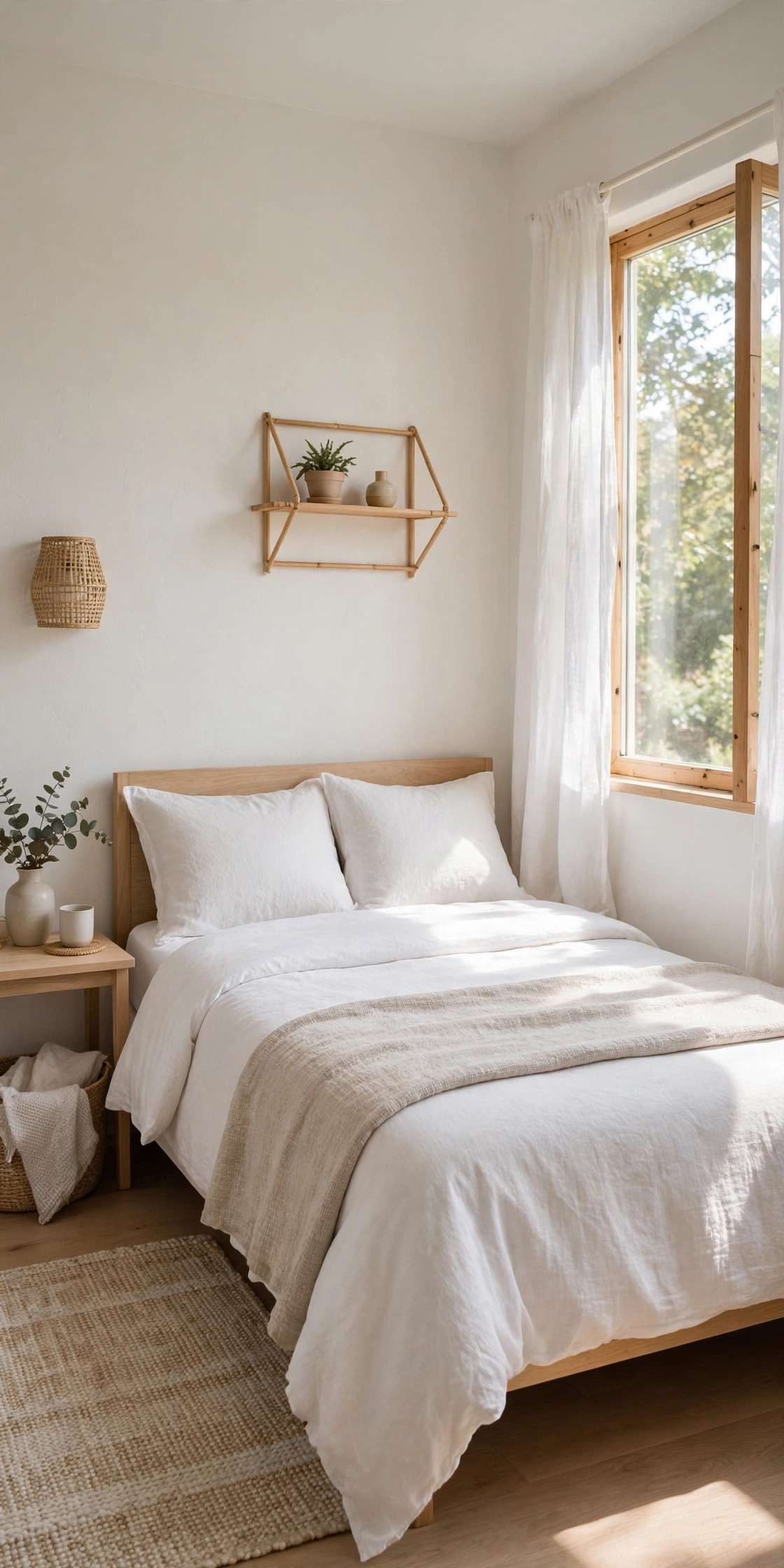
1. Paint It Light (and Don’t Forget the Ceiling)
This is the single biggest change you can make. Dark walls absorb light and pull the room inward; light walls reflect it back and push the room outward. You don’t have to go stark white — soft warm whites, pale greys, blush, and light sage all work beautifully. Keep the color light and slightly warm so the room feels airy, not clinical.
A white ceiling makes it feel higher, and a higher ceiling makes the whole room feel bigger. If your ceiling matches the walls, painting it white is a weekend project with an outsized payoff — and paint the trim a shade brighter than the walls for edges that feel crisp instead of blurry.
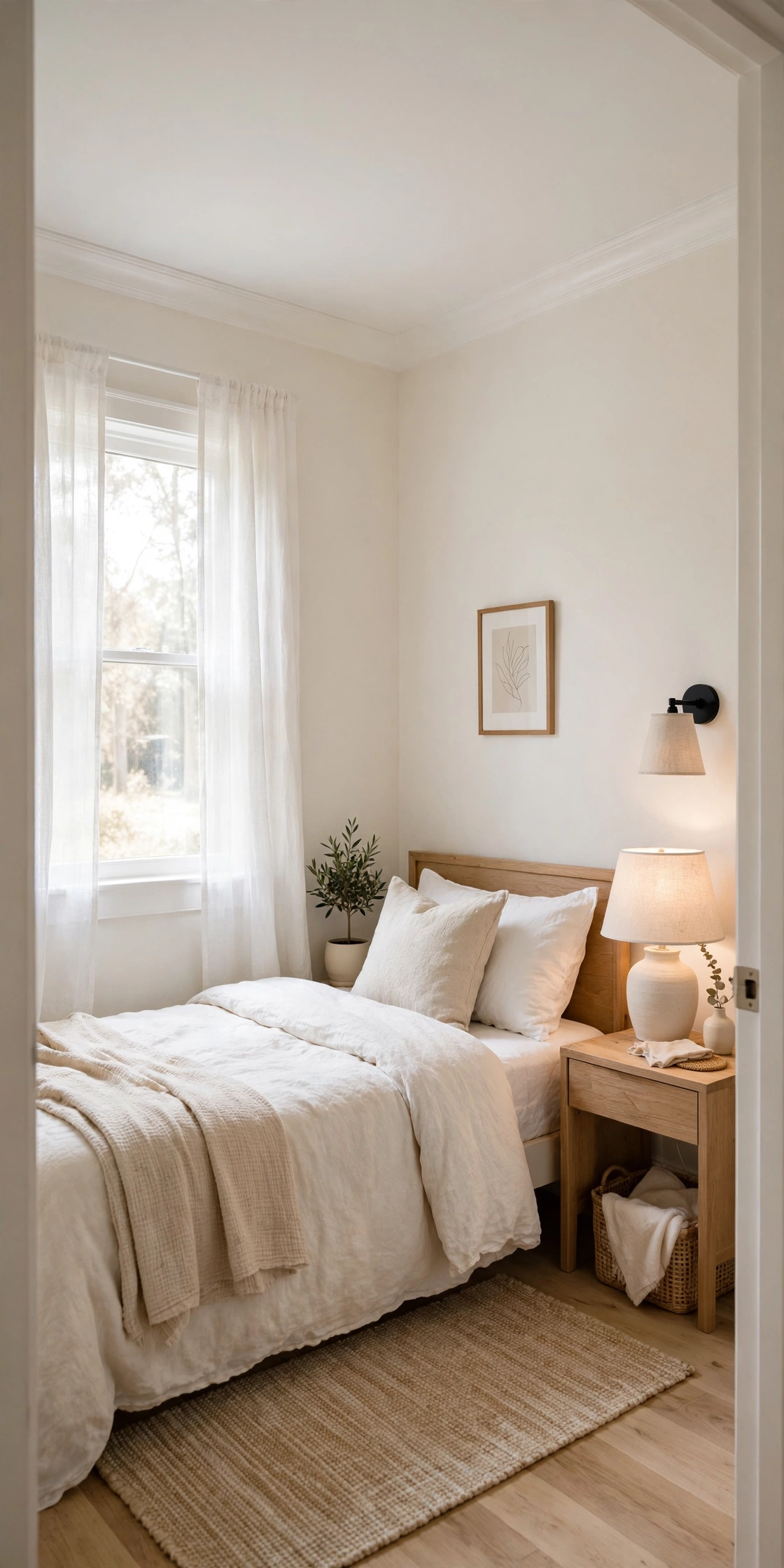
Tip: Test paint on a large board and move it around the room for a full day. Colors shift dramatically between morning light and evening lamps — the board test prevents expensive regret.
2. Put a Mirror Where It Counts
A mirror is the oldest small-room trick in the book because it genuinely works. It bounces light around and creates the illusion of depth — your brain reads the reflection as more space. But placement matters more than size. The best spot is opposite or beside a window, so it catches natural light and throws it deeper into the room.
A full-length mirror leaning against the wall doubles as a getting-ready station; short on floor space, hang one on the back of the door. Just avoid placing one where it catches your eye from the bed at night.
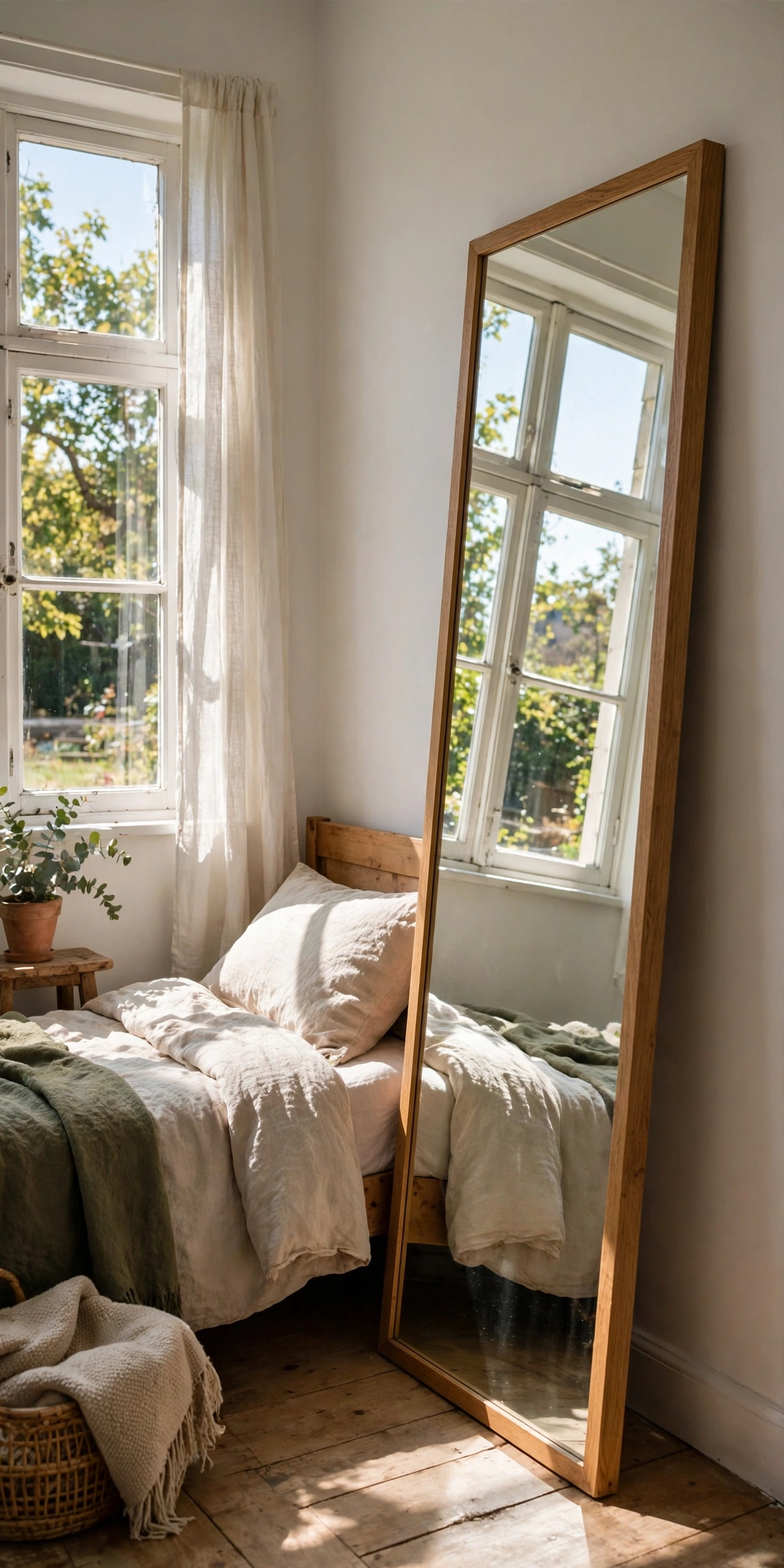
Tip: Angle a leaning mirror slightly so it reflects the window, not the bed. Light bouncing is the goal; a mirror aimed at a dark corner does nothing. The Spruce’s designer’s tips for a small bedroom cover mirror placement and more.
3. Use the Space Under the Bed
Look under your bed right now. If that space is empty or holds dust and one lost sock, you’re wasting the biggest hidden storage zone in the room. A bed takes up a huge amount of floor area — the least it can do is hold your stuff.
Low, flat bins slide underneath for out-of-season clothes, extra bedding, or shoes. A bed frame with built-in drawers can replace a dresser entirely, and risers lift a standard frame a few inches for bins. My rule: under the bed is for things you need but not daily.
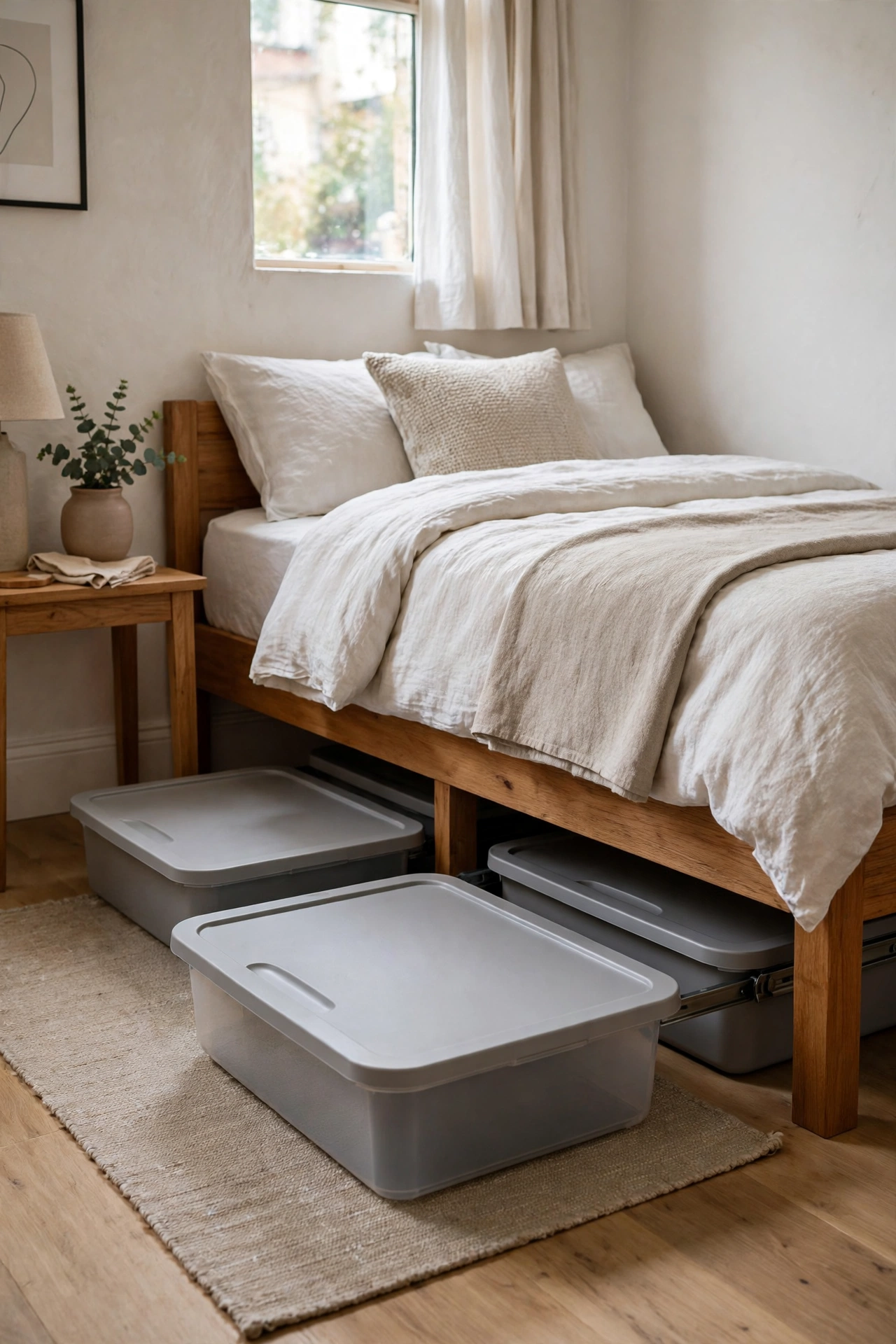
Tip: Measure your under-bed clearance before buying bins — most frames give 6 to 8 inches. Bins with lids keep dust out and stack neatly.
4. Choose Furniture That Fits the Scale
This was my hardest lesson, because I kept squeezing full-size furniture into a not-full-size room. A bulky dresser with heavy framing eats visual space even when it technically fits. In a small bedroom, every piece should look like it belongs there.
Swap a wide dresser for a tall, narrow one — same storage, half the footprint. Choose a nightstand just big enough for a lamp and a book, or a small wall-mounted shelf instead. Favor pieces with legs: seeing floor underneath tricks your eye into reading more space. And if the armchair in the corner has become a laundry pile with arms, it is not earning its place.

Tip: Trace each furniture piece’s footprint on newspaper and lay the cutouts on the floor. If the paper layout feels tight, the real furniture will feel worse.
5. Go Vertical: Use Your Walls
When floor space is gone, the walls are still free real estate. I think of wall space as the second floor of a small bedroom — it holds just as much as the ground floor if you let it. Floating shelves above or beside the bed replace a nightstand. Hooks on the back of the door hold robes, bags, and tomorrow’s outfit without touching the floor.
A tall bookshelf in a corner draws the eye upward, making the ceiling feel higher. One rule: keep it tidy — cluttered shelves at eye level make a room feel busy; a few well-chosen items make it feel open.
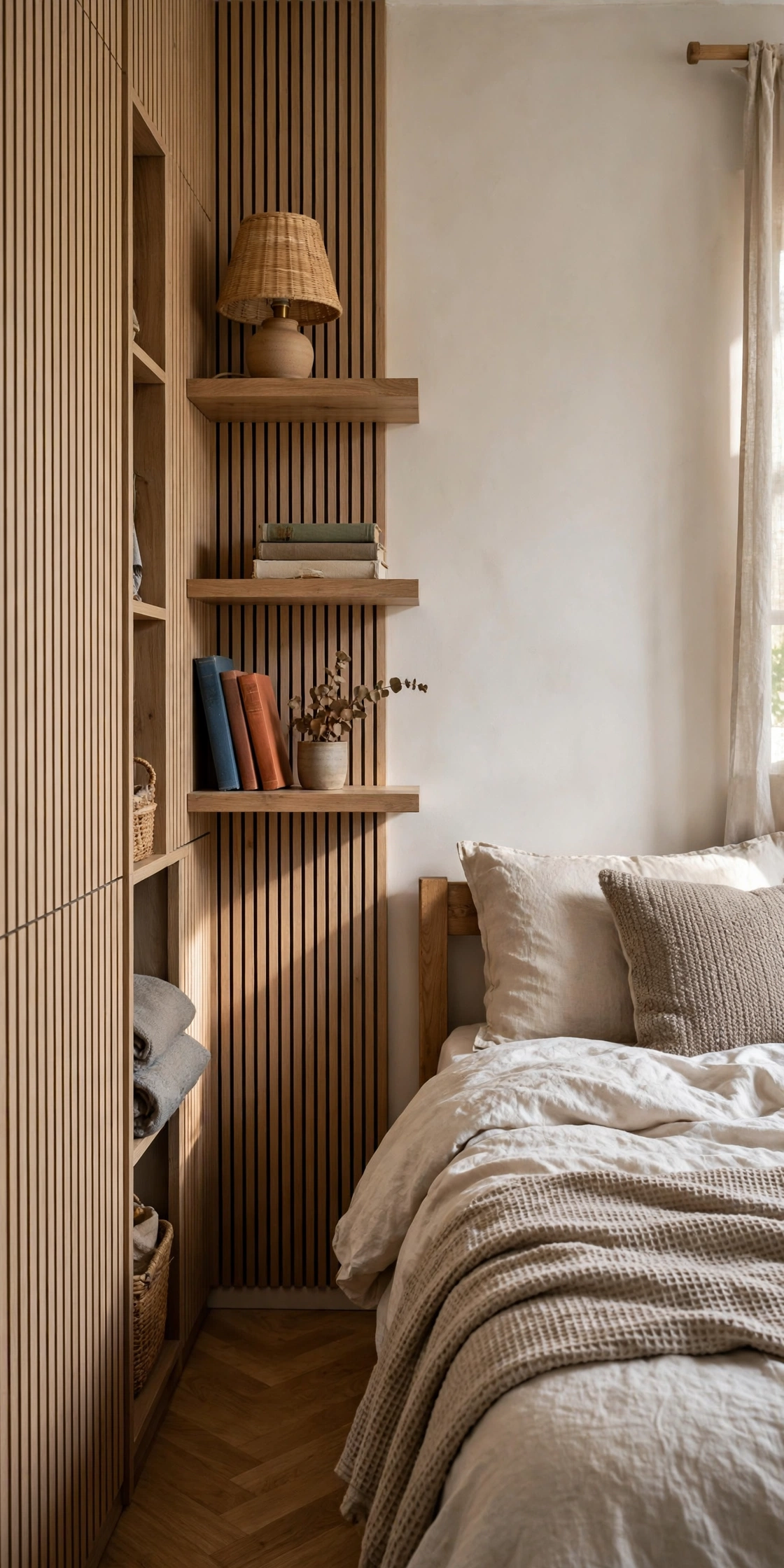
Tip: Limit open shelves to three to five items each. Shelves are display space in a small room, not overflow storage — overflow goes behind doors.
6. Keep Bedding Simple
The bed is the biggest thing in the room, so whatever it wears sets the tone for everything. Busy patterns, dark colors, and a mountain of throw pillows make the bed look — and feel — enormous. And an enormous bed makes a small room feel tiny. Stick to solids or subtle patterns in light or mid tones.
White or cream bedding blends with light walls and makes the bed feel less dominant. A textured throw or single lumbar pillow adds warmth without clutter. A smooth, tailored bed looks calmer and smaller than a rumpled one — I’ve tested both, and the difference is real.
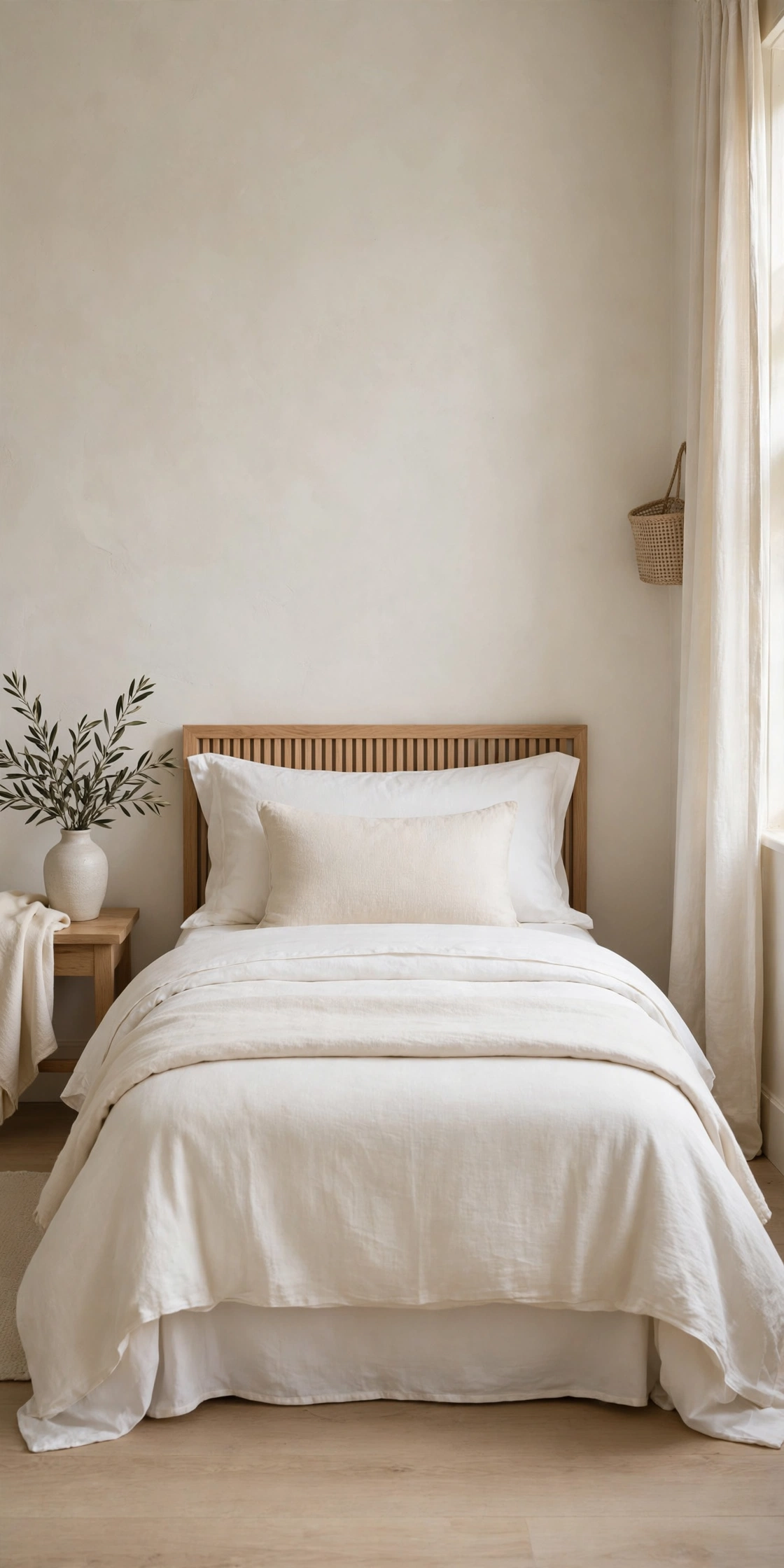
Tip: Match your bedding to your wall color family. When the bed visually merges with the walls, the room’s edges blur outward.
7. Layer Your Lighting
One harsh overhead light flattens a small bedroom and makes it feel like a box. Layered light — a few small sources at different heights — creates pockets of warmth that make the room feel deeper and more interesting. You need little: a bedside lamp or wall sconce for reading, something soft low or in a corner to wash the walls with warm light, the overhead only when needed.
Warm-white bulbs (around 2700K) feel cozy, not clinical. And keep the window as uncovered as you comfortably can — a light-filtering blind or sheer gives privacy without stealing the daylight.

Tip: A plug-in wall sconce beside the bed frees the nightstand entirely — one less piece of furniture crowding the room.
8. Keep the Floor Visible
Here’s the trick that ties everything together: the more floor you can see, the bigger the room feels. Every square inch of visible floor tells your brain the room is larger than it is. So clear the floor. Shoes go in the closet or under the bed, not in a pile by the door. Laundry goes in a hamper with a lid, not on the famous chair. Cords get tucked behind furniture.
Choose a rug big enough that the bed sits on it with plenty showing around the edges — a generous rug unifies, a tiny one chops the room up. Leave about two feet of clear path between bed and wall. For more rest-first styling, my bedroom ideas for better sleep build on the same calm foundation.
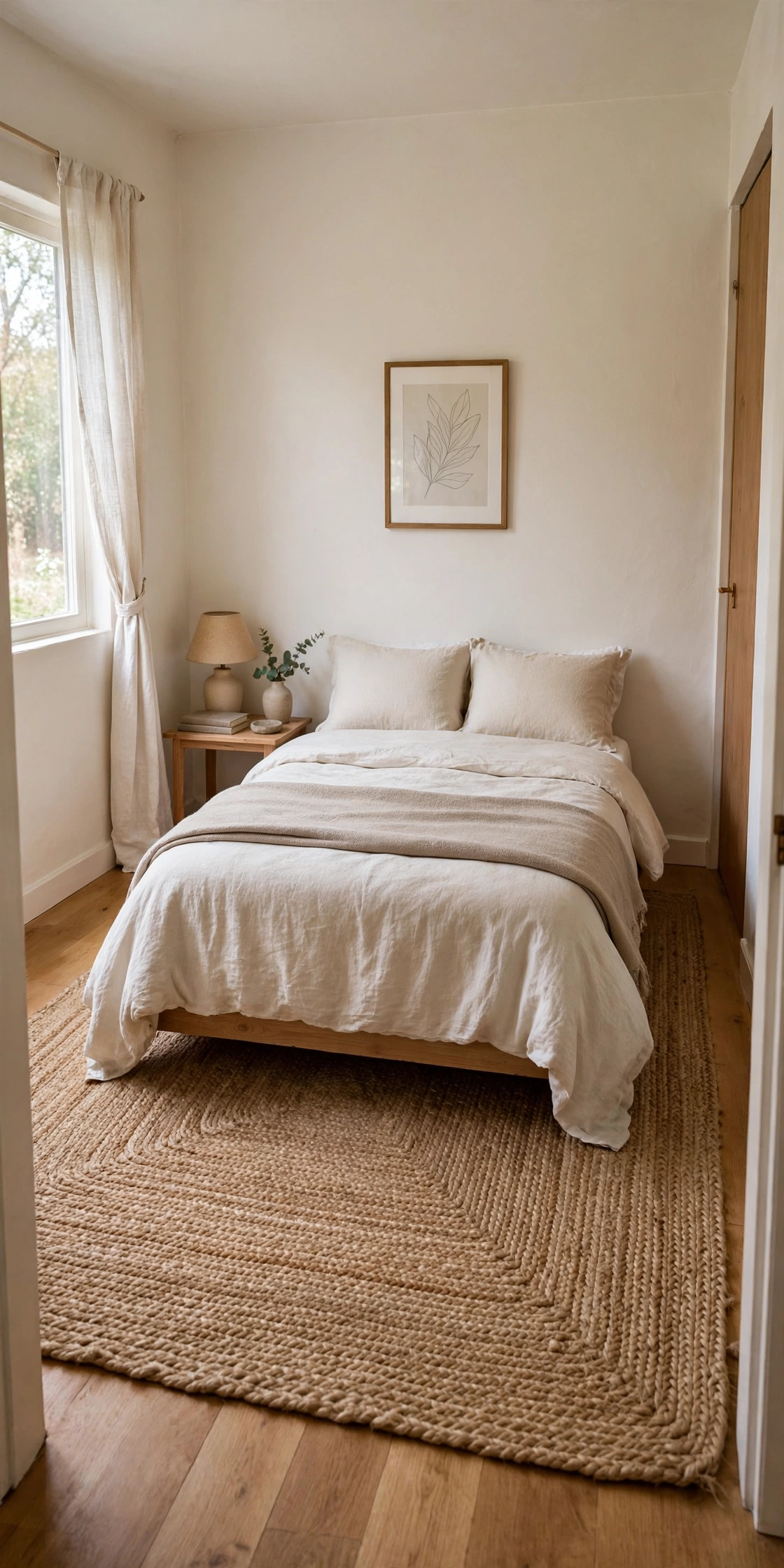
Tip: Do a nightly 5-minute floor reset: shoes away, laundry in the hamper, cords tucked. A clear floor every morning keeps the room feeling bigger permanently.
Which Trick Makes the Biggest Difference?
| Trick | Cost | Best for |
|---|---|---|
| Light paint + white ceiling | ~$40 | Single biggest change |
| Mirror opposite window | ~$50 | Doubled light and depth |
| Under-bed storage bins | ~$25 | Hidden clutter |
| Scale-right furniture | Varies | Visual breathing room |
| Simple light bedding | ~$60 | Smaller-feeling bed |
| Clear visible floor | Free | Instant spaciousness |
Frequently Asked Questions
What color should I paint a small bedroom?
Light and slightly warm: soft warm whites, pale greys, blush, or light sage. Light walls reflect light outward; dark walls pull the room inward. Paint the ceiling white and the trim a shade brighter than the walls.
Where should a mirror go in a small bedroom?
Opposite or beside a window, so it catches natural light and throws it deeper into the room. A full-length leaning mirror doubles as a getting-ready station; short on floor space, use the back of the door.
How do I store things in a tiny bedroom?
Under the bed (low flat bins or built-in drawers), up the walls (floating shelves, door hooks, tall narrow bookcase), and behind closed doors. Under-bed is for things you need but not daily.
What size rug for a small bedroom?
Big enough that the bed sits on it with plenty showing around the edges — a generous rug unifies the room, while a tiny one chops it up. Leave about two feet of clear path between bed and wall.
Should I skip a headboard in a small bedroom?
Not necessarily. A slim, low headboard or a wall-mounted upholstered panel adds polish without eating visual space. Skip tall, bulky headboards that chop the wall in half; low and simple keeps the room feeling open.
How do I fit a workspace into a small bedroom?
Use a wall-mounted fold-down desk or a slim console in a corner, and keep it visually quiet with closed storage for supplies. If you can work elsewhere, keep work out of the bedroom entirely; the room will feel calmer and bigger for it.
Final Thoughts
That’s the whole philosophy: a small bedroom feels bigger when light can move, furniture fits, and the floor is clear. Pick the two or three ideas that feel easiest and start this weekend — I promise you’ll walk in on Sunday evening and wonder why the room suddenly feels like it grew. And when the room feels right, keeping it that way is the easy part: my room refresh ideas under $50 keep every small space fresh. For the cozy side of small bedrooms, these cozy bedroom ideas add warmth without clutter.