
10 Cozy Dining Corner Ideas for Slow Mornings


There is a kind of corner, about the size of a door, that can quietly become the favorite place in the whole house. Morning coffee, the news, a friend who drops by unexpectedly. It is not a dining room. It is barely even a nook.
A small dining corner is not a compromise for people who cannot fit a “real” dining set. It is better. Intimate, efficient, and it invites the slow mornings we all say we want.
Here are 10 ideas to create one, from finding the corner to protecting your slow mornings. Start with idea #1 today: walk your home and find the dead space. And if the corner sits in the kitchen, my small kitchen open shelf ideas make the whole room work harder around it.

1. Find Your Corner
You need less space than you think. A comfortable two-person dining corner needs roughly 4×4 feet, about the size of a small rug. Look for dead space: the kitchen corner by the window, the end of a hallway, an awkward alcove, even a wide landing. The best corners have two things: a wall to tuck against (it makes the spot feel sheltered and safe) and natural light (mornings live or die by light).
My corner was the kitchen’s dead end by the east-facing window. Before the makeover it held a trash can and a mop. Now it holds my mornings. Measure your spot before you buy anything and write the numbers on your phone, because “I think it’ll fit” is how furniture ends up living in hallways.
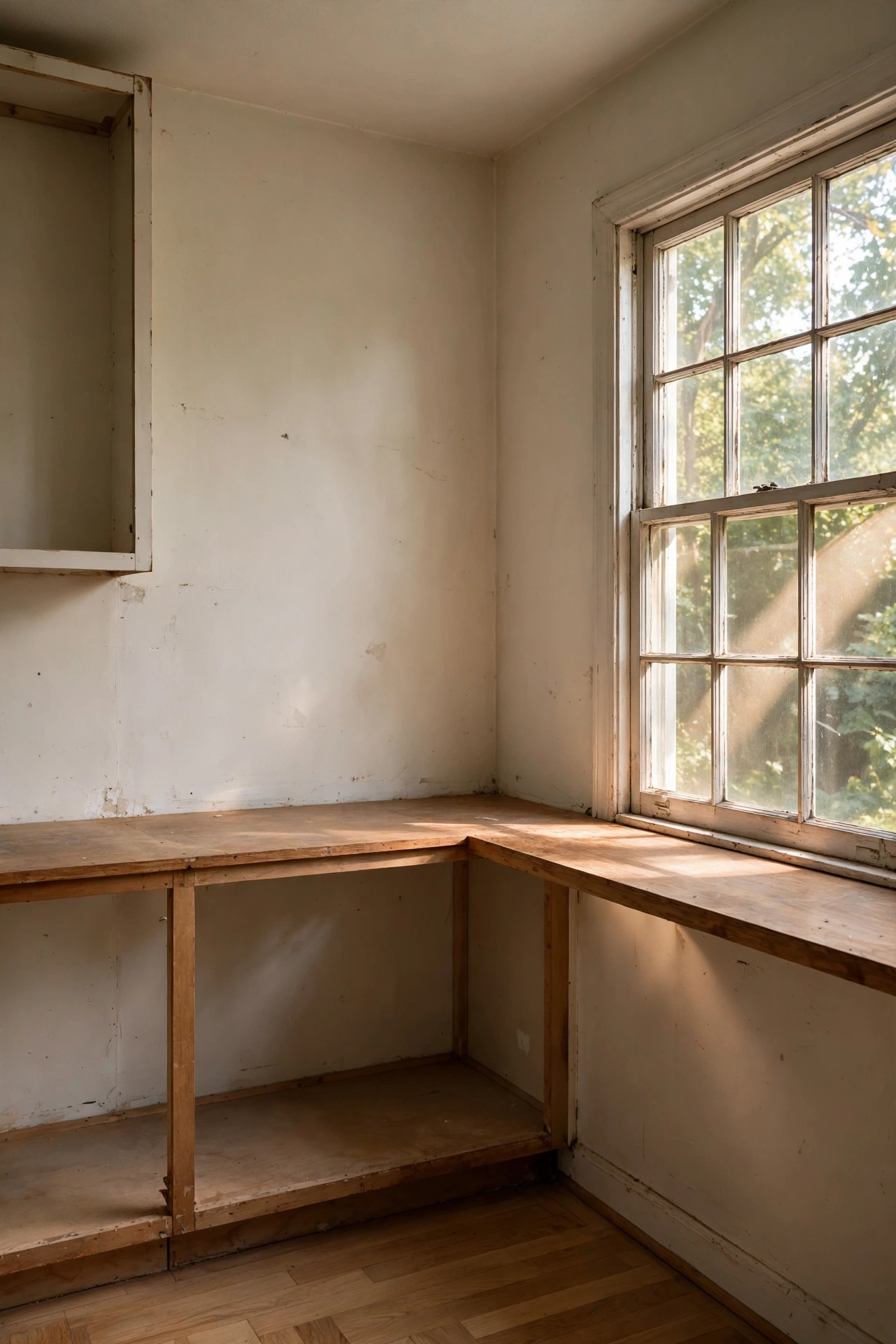
Tip: East-facing windows are the jackpot for a morning corner, but any natural light works. If your only dead space is dark, that’s fine too. A warm pendant and a mirror to bounce light can fake morning glow surprisingly well.
2. Choose a Round Table
For a small dining corner, a round table beats square or rectangular almost every time. No sharp corners to bruise your hips in tight space, no “head of the table” hierarchy, and everyone can actually see and talk to each other. A 30-inch round seats two comfortably and squeezes three in a pinch; a 36-inch round seats three to four.
Go secondhand: a bistro set ($40-80), a round pedestal table ($50-100, and the single center leg means more legroom), or a drop-leaf table ($30-60) if your corner is truly tiny. I found a 30-inch round oak pedestal table for $55, sanded out the water rings in an afternoon, sealed it with mineral oil, and it now looks like a $300 table.
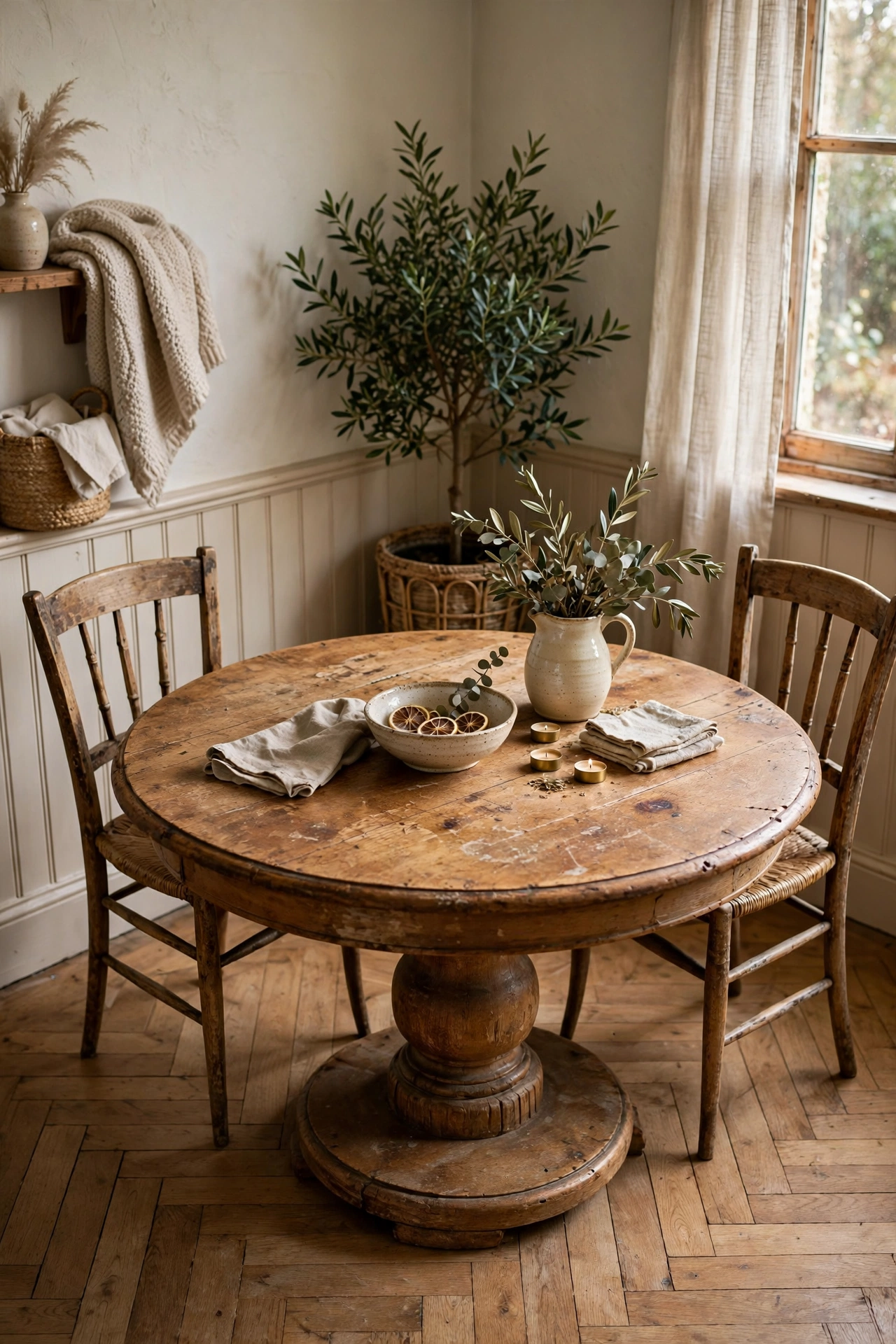
Tip: Check the wobble before you buy secondhand, or plan on felt pads. And match the table height to your seating: standard dining height is 29-30 inches. If you’re pairing with a bench you already own, measure both first.
3. Settle the Bench vs. Chairs Debate
For a corner against a wall, a bench wins. It slides completely under the table when you’re done, saving floor space, and seats people flexibly: two adults, or one adult and two kids squished happily. A backless bench against the wall with cushions is the classic breakfast-nook look for a reason.
But chairs have their place. If anyone in your household has back issues, chairs with backs are kinder. My setup is the hybrid that works for most people: a simple wooden bench ($35 secondhand) along the wall side, and one comfortable chair with a back on the outer side. Best of both worlds, and the chair pulls away when extra seating is needed elsewhere.

Tip: If your corner isn’t against a wall on the seating side, skip the bench and use two chairs. Benches need a wall behind them for back support (or a pile of throw pillows, which is idea #4).
4. Cushion Everything
The non-negotiable: cushions. A bare wooden bench is charming for about four minutes. Get a bench pad at least 2 inches thick, I found one for $22, or make one from a $10 foam cut-to-size piece wrapped in an $8 pillowcase-style cover. Add one or two throw pillows against the wall for back support ($12 each).
Suddenly the bench is the seat everyone fights over. Comfort is what turns “eating breakfast” into “lingering over breakfast,” and lingering is the entire point of a slow-morning corner.

Tip: Choose washable covers. Morning corners meet coffee, jam, and buttery toast daily. A $8 pillowcase-style cover you can throw in the wash beats a fancy dry-clean-only cushion every time.
5. Hang the Light Low
Here’s the truth about cozy: it’s mostly lighting. A dining corner with a harsh ceiling light feels like a cafeteria. The same corner with a warm pendant feels like a café in Paris. If you do one “fancy” thing, make it the light.
The dream is a pendant hung low over the table, about 28-32 inches above the tabletop. Low light pools on the table, makes faces glow, and visually defines the corner as its own little room. A rattan or paper pendant shade is $25-45, and a plug-in pendant kit ($15-20) means no electrician: the cord runs up the wall on small hooks and plugs into an outlet. That’s exactly what I did, in 20 minutes.

Tip: Put the pendant on a $10 dimmer plug and use a warm 2700K bulb. Dim for slow Sunday mornings, bright for weekday “I need to see my toast” mornings. It’s a small luxury you’ll use every single day.
6. Build a Coffee Station
A dining corner earns its “slow mornings” title with a dedicated coffee or tea station. Mine is a $15 thrifted wooden tray on the windowsill holding my French press, two mugs, a small jar of coffee, and a tiny vase. Everything for the morning ritual in one grab-able spot, no cabinet-diving while half awake.
The formula: your actual brewer (French press $20-30, pour-over $15-25, whatever you use at 7 am, don’t buy aspirational gear), two mugs you genuinely love holding, a small tray or basket ($8-15) to corral it all, an extras jar for sugar or tea ($3), and one living thing like a succulent or eucalyptus sprig ($5). Total: roughly $30-50, much of it things you already own.
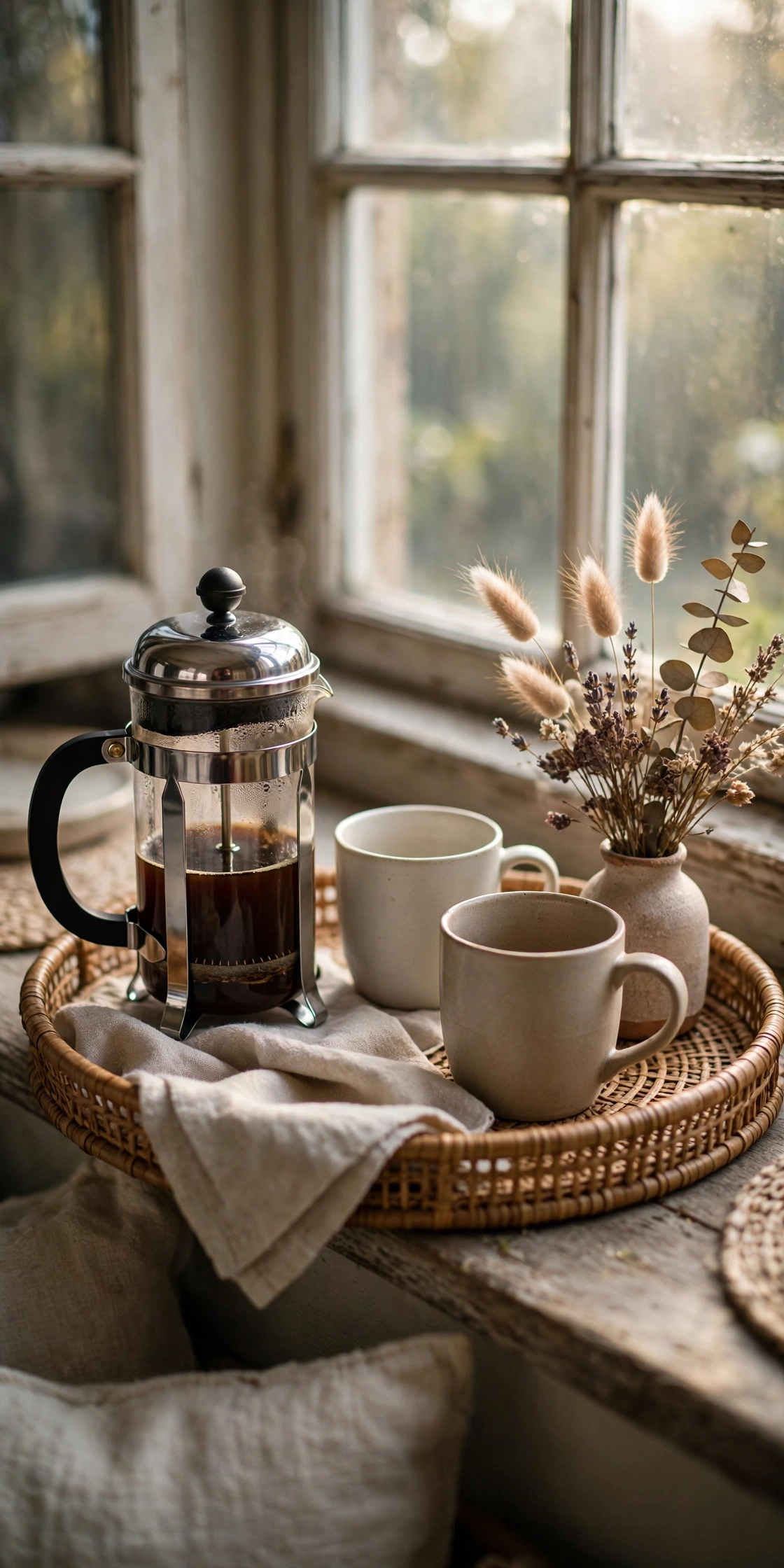
Tip: Retire the chipped freebie mugs to the back of the cabinet. Drinking from a mug you love is a $0 upgrade that makes the ritual feel intentional instead of accidental.
7. Lay a Rug to Define the Zone
A small rug under the table does two jobs: it visually declares “this corner is its own room,” and it keeps feet warm on cold floors. A 4×6 foot flat-weave ($30-40) is the sweet spot for a two-person corner.
Make sure it’s big enough that chair and bench legs stay on it when pushed back. A rug that’s too small, with legs half on and half off, looks more chaotic than no rug at all. Flat-weave is the practical pick: easy to clean, thin enough that chairs slide easily, and it doesn’t trap crumbs the way deep pile does.
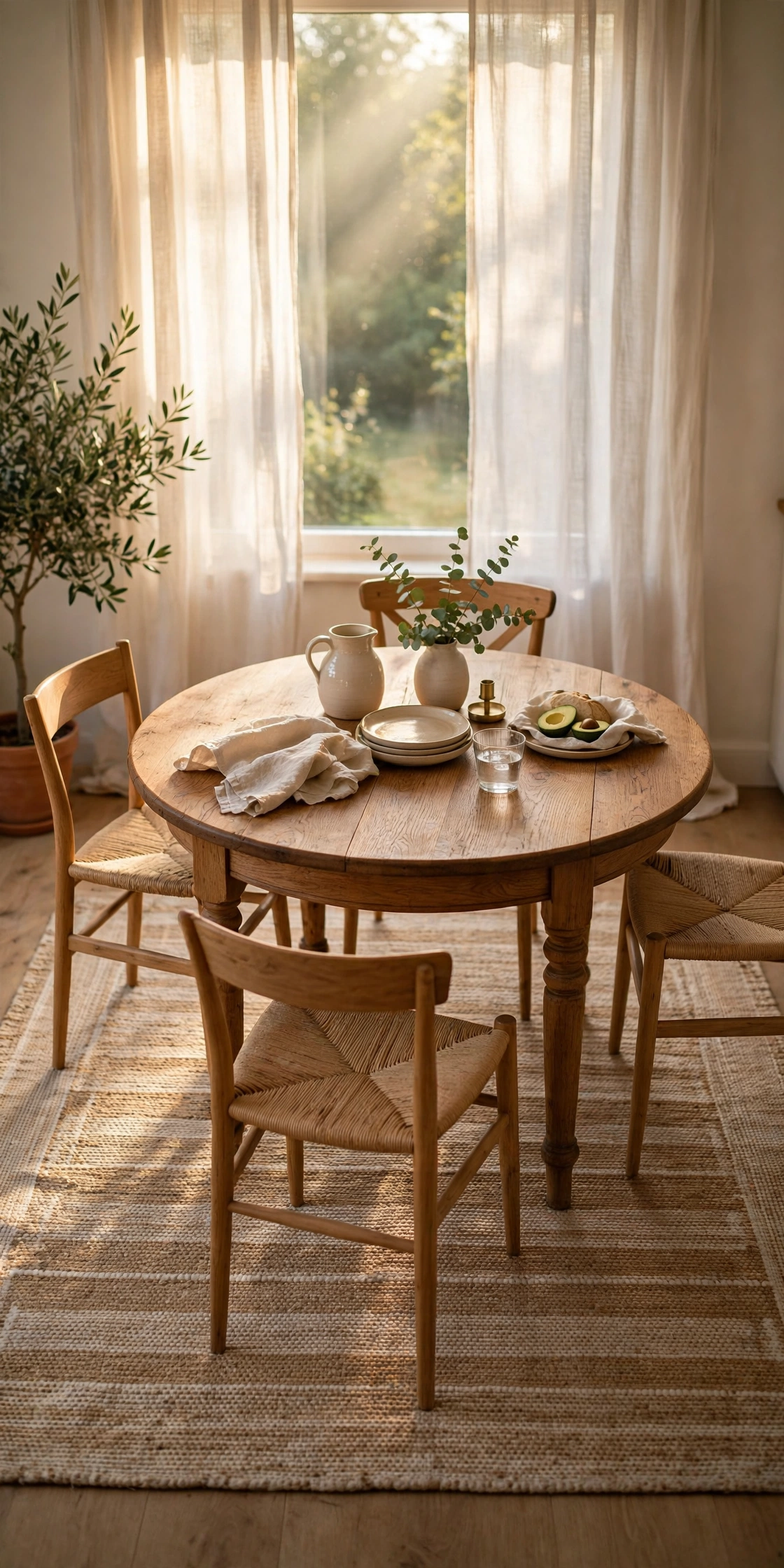
Tip: If your corner is in the kitchen, choose a washable or outdoor-rated rug. Breakfast zones meet spills. A rug you can hose off or throw in the machine removes all anxiety from the equation.
8. Add Morning-Friendly Details
The big pieces make the corner work; the small details make it yours. A throw blanket on the bench for chilly mornings ($20). A tiny “morning basket” holding a notebook, a pen, and your current book, so you never have to get up once you’re settled. Sheer linen-look curtains ($20) that soften the light without blocking it. One framed print or a hanging plant for morning eyes to land on. A small footstool or pouf ($15-25) under the table, because “lounging over breakfast” beats “eating breakfast.”
None of these cost much. Together they’re the difference between “a table by the window” and the place you actually want to be at 7 am.
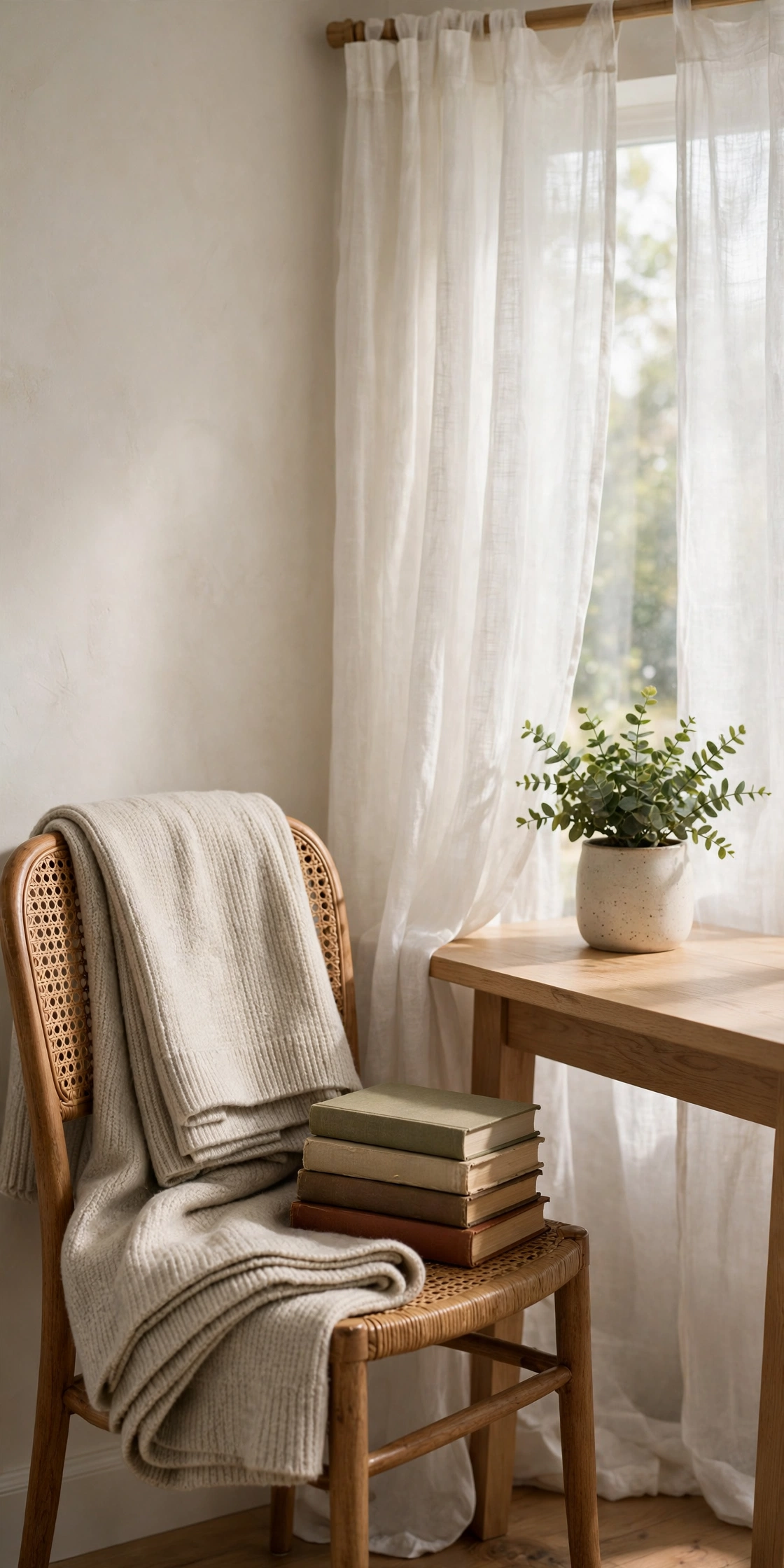
Tip: Add details slowly, one per week. A corner that’s styled over time feels collected and personal. A corner decorated in one shopping trip feels like a showroom, and you’ll enjoy the slow build more.
9. Know the Real Numbers
Let’s talk honest money, because “cozy” shouldn’t mean “expensive.” My actual spend: secondhand round pedestal table $55, secondhand bench $35, one secondhand chair $20, bench pad plus two throw pillows $46, plug-in rattan pendant plus warm bulb $40, 4×6 rug $35, throw blanket $20, coffee station tray plus jar plus bud vase $25, sheer curtain $20, sandpaper, mineral oil and hardware $14. Total: $310.
I’ll be honest: I first estimated $180, but that was the furniture alone. The full finished corner was $310, still far less than a basic new dining set, and every piece was chosen, not just bought. If you already own a small table or chairs, you could easily land under $150 for the cozy-making layers.

Tip: Hunt the big pieces secondhand first, like I show in my thrift store guide. Table, bench, and chair are where the savings live. Buy the soft layers (cushions, rug, throw) new so everything feels fresh against the vintage bones.
10. Protect Your Slow Mornings
Here’s the part nobody writes about: the corner only works if you actually use it slowly. My rules, learned the hard way: no laptop at the corner table before 9 am (that’s what desks are for), phone stays on silent in another room during coffee, and at least one morning a week is a “long morning,” no rushing, second cup allowed, book or journal only.
It sounds precious, I know. But because the corner is small and dedicated, sitting there signals to my brain that this is pause time. I don’t scroll, there’s nothing to scroll toward. I just sit, drink coffee, watch the light move across the table, and let the day start gently.

Tip: Start with one long morning a week, not seven. Saturday is the natural pick. A ritual you keep once a week beats an ambitious daily rule you abandon by Wednesday.
Which Idea Should You Start With?
Build in this order for the biggest payoff per dollar:
| Project | Difficulty | Best for |
|---|---|---|
| Find and measure your corner | Easy | Everyone, free, do first |
| Secondhand round table | Easy | Biggest single change |
| Bench + cushions | Easy | Comfort that invites lingering |
| Low warm pendant light | Easy | Instant café atmosphere |
| Coffee station tray | Easy | Morning ritual lovers |
| Rug + soft details | Easy | Finishing the cozy layers |
Frequently Asked Questions
How much space do I really need?
About 4×4 feet for two people around a 30-inch round table. Measure your spot and write it on your phone before shopping. Tight corners can work with a drop-leaf table that folds slim when not in use.
Round or square table for a small corner?
Round, almost every time. No sharp corners in tight space, no head-of-the-table hierarchy, and better conversation. A 30-inch round seats two comfortably; 36-inch seats three to four.
Can I do this as a renter?
Yes. A plug-in pendant needs no electrician, nothing here requires drilling into walls except maybe a curtain rod (use a tension rod instead). The whole corner can move with you. More renter tricks in my renter-friendly tour.
What if my corner has no natural light?
A warm pendant plus a mirror to bounce lighlike, and add a small plant that
How low should I hang the pendant over the table?
Hang the bottom of the shade 28 to 32 inches above the tabletop. Lower than that and tall guests see the bulb; higher and the light floats disconnected from the table. Always measure from the tabletop, not the floor.
What if my dining corner is not in the kitchen?
The same rules work anywhere: a wall to tuck against, a light source, and a rug to define the zone. Hallway ends, wide landings, and living room corners all make good slow-morning spots. Natural light helps, but a warm pendant and a mirror can fake morning glow well.
Final Thoughts
Find your corner, the dead space by the window, the end of the kitchen nobody uses. Measure it, hunt down a round table secondhand, add a bench with real cushions, hang a warm light low, and set up your coffee tray. Give it one weekend and $200-300, and you’ll have something no renovation can buy: a place where mornings slow down on purpose. I’ll be over here in my corner with my second cup, cheering you on. And when the rest of the house needs the same budget magic, my room refresh ideas under $50 keep it going. Houzz’s 19 ways to create a cozy breakfast nook round out the inspiration. Southern Living’s breakfast nook ideas have more bench-and-table combinations to steal.