Top 9 Studio Apartment Decor Tips That Actually Work

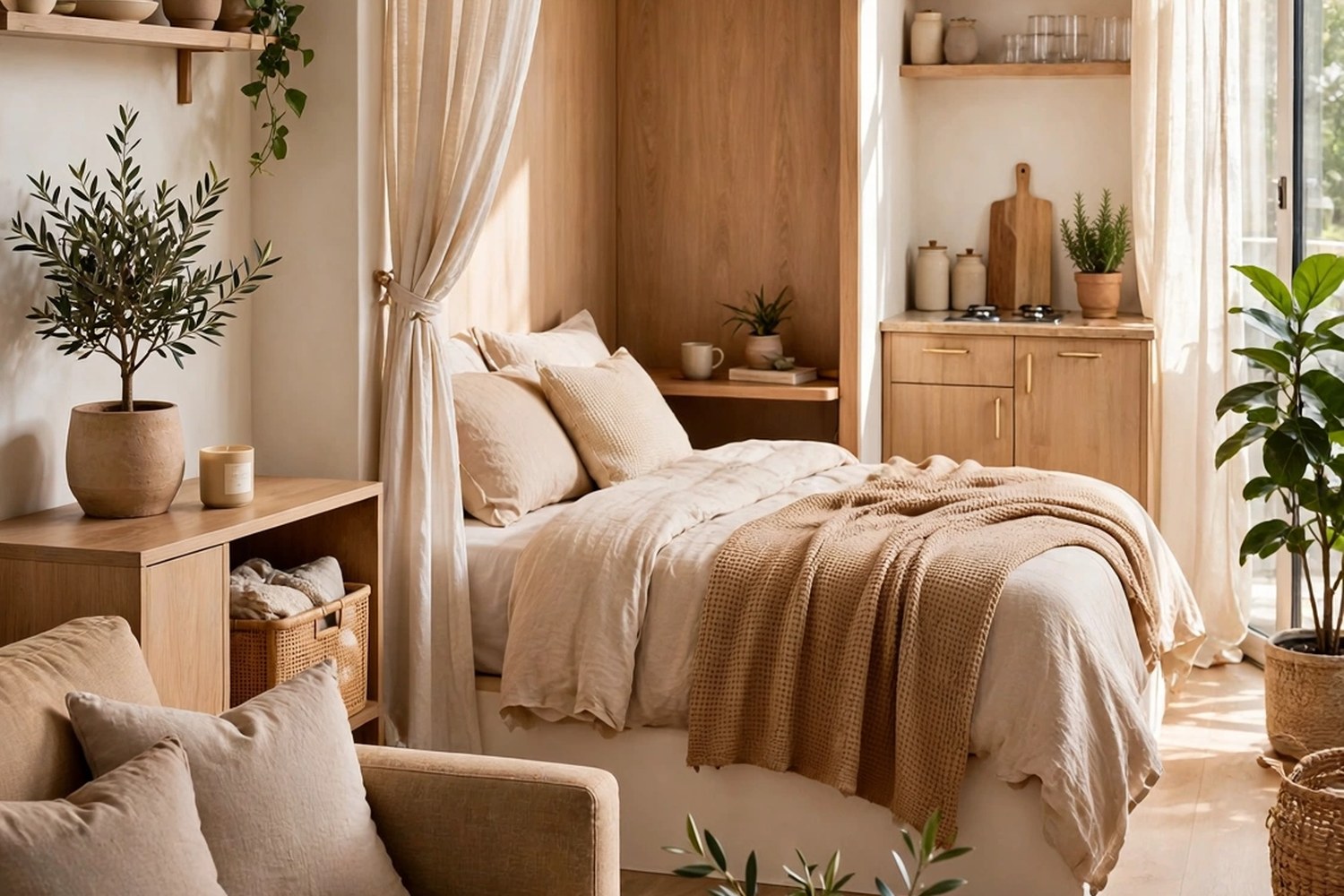
A studio apartment asks one room to do the work of four: bedroom, living room, office, and dining room, all sharing the same four walls. It sounds like a compromise, but with the right moves it becomes the most efficient home you will ever live in. The secret is not more square footage. It is clarity: clear zones, furniture that earns its keep, and one calm look that ties everything together.
These are my 9 best tips for making one open room live well. They are practical, renter-friendly, and none of them requires knocking down a wall. Start with the rugs and the color story, then build from there.
If your studio bedroom corner needs extra attention, my cozy bedroom ideas for better sleep work even without walls.
1. Zone the Room With Rugs
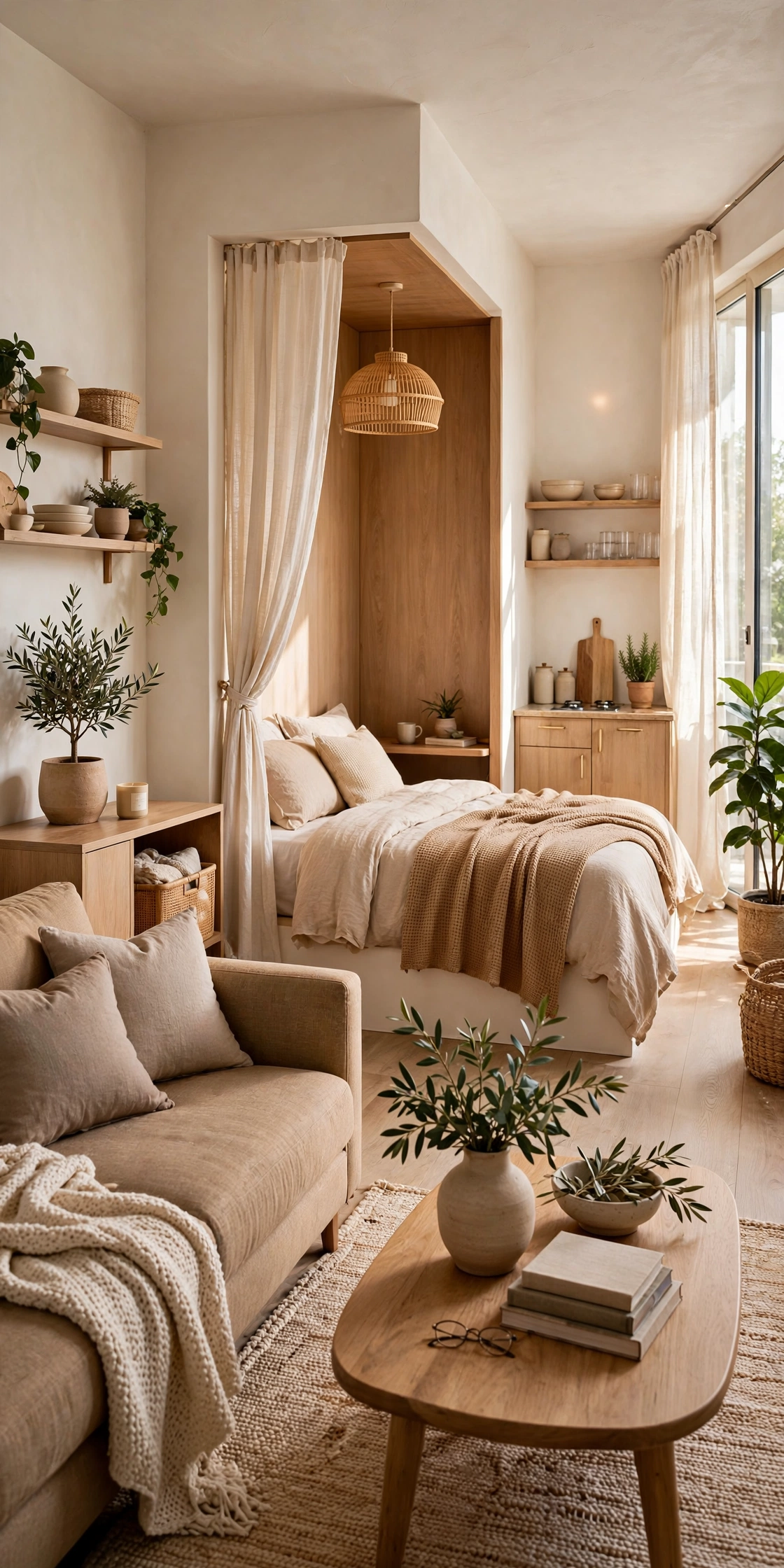
If you only do one thing from this list, make it this one. In a studio, rugs are your walls. A rug under the bed area says “this is the bedroom.” A different rug under the sofa and coffee table says “this is the living room.” Your brain reads each rug as its own little room, and suddenly the studio stops feeling like one big blur.
Each rug should be big enough to anchor its zone — the front legs of the sofa on the living room rug, the bed well inside the bedroom rug. Leave a little bare floor between rugs so the zones read as separate, and keep them in the same color family so the room still flows.

Tip: Buy the bedroom-zone rug first and the living-zone rug second, but choose both in the same shopping trip. Rugs bought months apart never quite match. Apartment Therapy’s studio apartment ideas show more real layouts with the same zoning tricks.
2. Let Furniture Do the Dividing
You don’t need a wall to separate sleeping from living. Turn the sofa so its back faces the bed for an instant divider between “day” and “night.” A bookshelf placed perpendicular to the wall works the same way — with bonus storage. Open-backed shelving is ideal because it divides without blocking light.
A folding screen or a tall plant can soften the boundary too. The goal isn’t to wall the bed off — it’s to feel like you arrive somewhere different when you move from one zone to another.
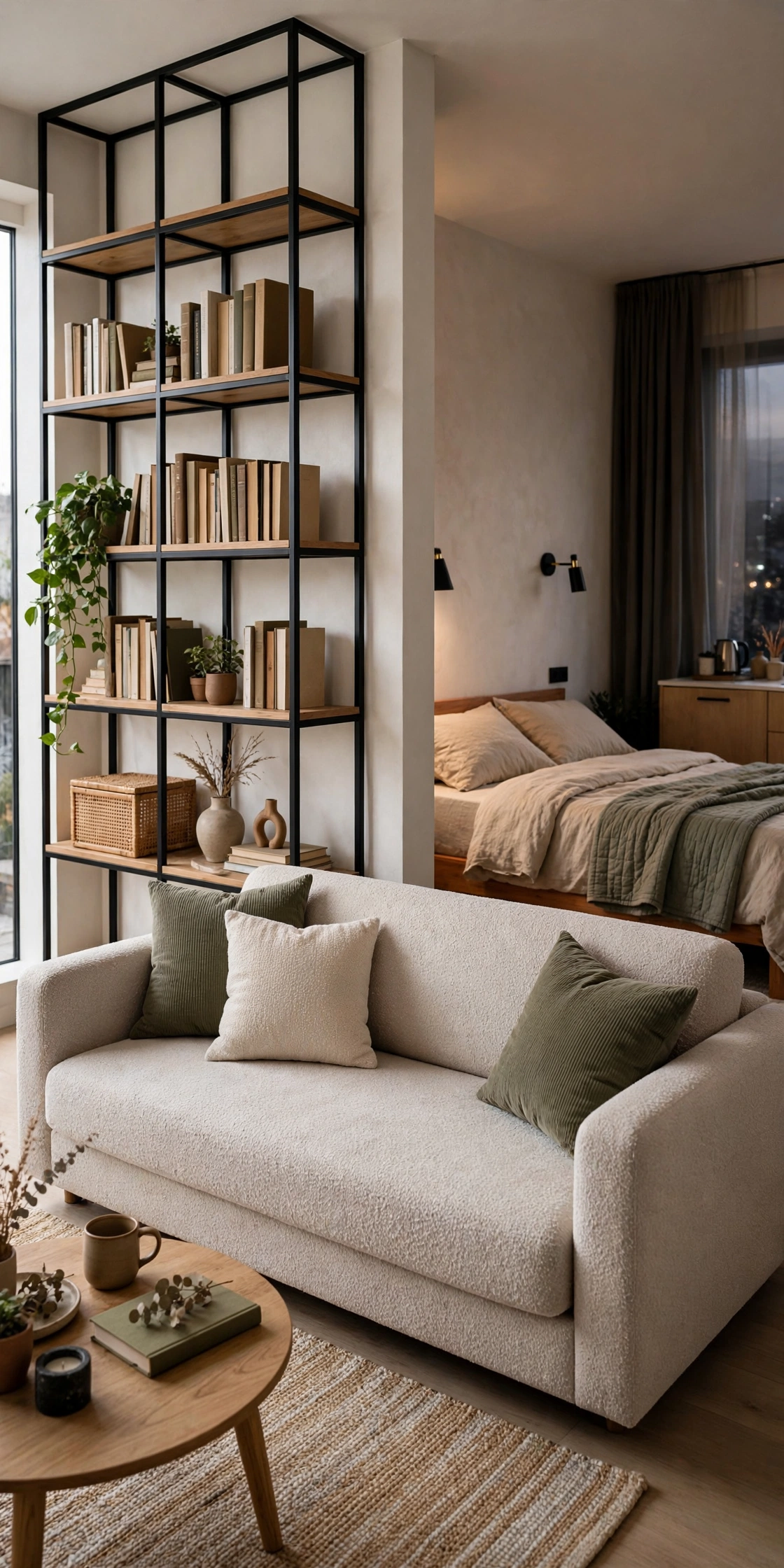
Tip: Keep dividers below eye level where possible. A sofa back or low bookshelf divides the space while letting light and air flow over it.
3. Choose Furniture That Multitasks
In a studio, every piece should have at least two jobs. A sofa bed handles seating by day and sleeping by night. A storage ottoman is a footrest, a coffee table, and blanket storage. A drop-leaf table is a desk on weekdays and a dining table when friends visit. Before you buy anything, ask what else it can do.
Multifunctional pieces replace two or three separate ones — less furniture overall, more open floor. And in a studio, open floor is the most valuable thing you own.
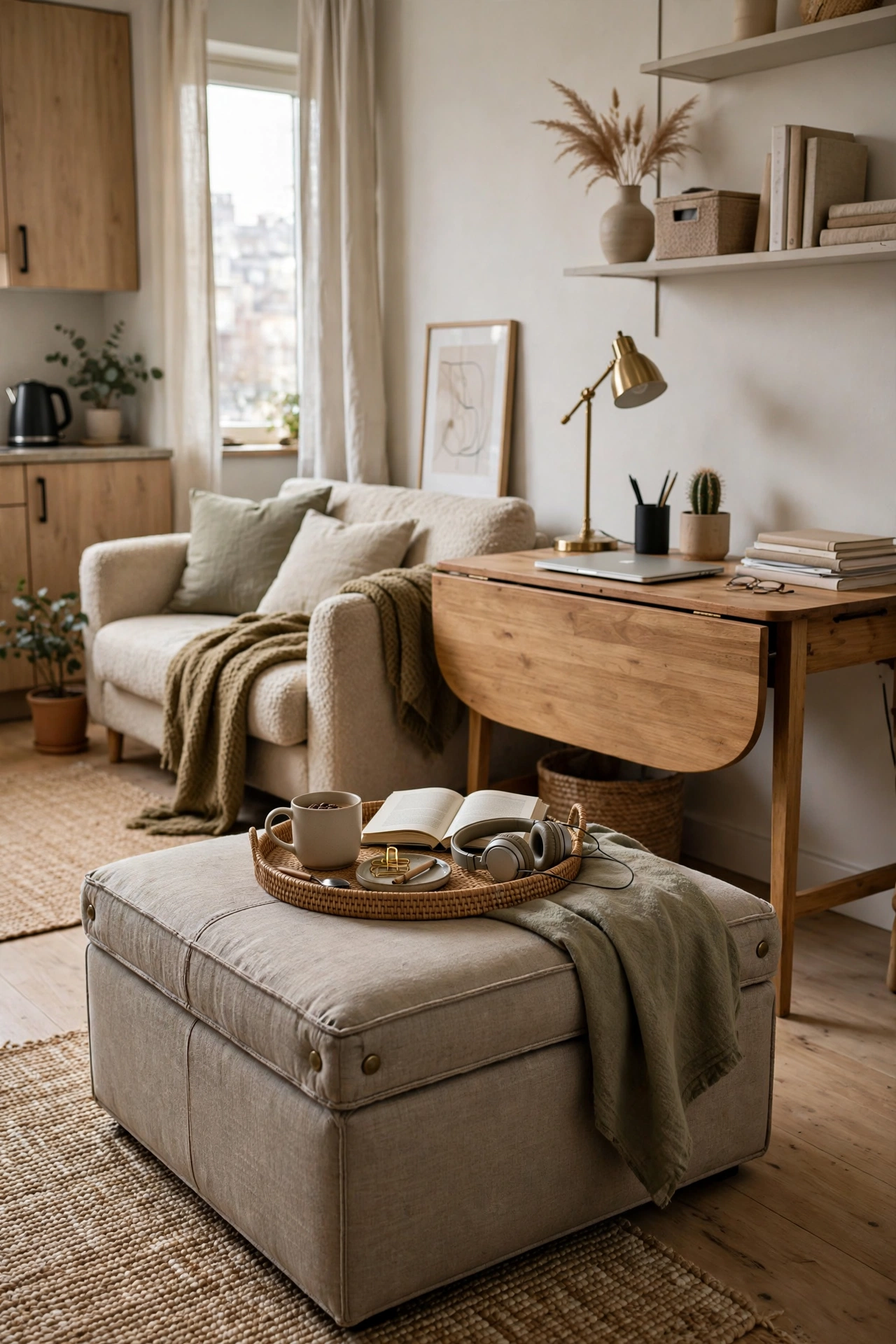
Tip: Audit every piece once a year: if it only does one job, it’s a candidate for replacement. Studios punish single-purpose furniture.
4. Keep One Cohesive Color Story
Here’s the thing about open-plan living: you see everything at once. If the bedding is navy, the sofa is rust, the towels are lime green, and the curtains are floral, your eye never rests and the room feels chaotic and smaller. Pick one calm base — warm white, soft grey, or a light neutral — for the walls, big furniture, and bedding. Then add two accent colors and repeat them in every zone.
A terracotta throw on the sofa, a terracotta cushion on the bed, a terracotta pot on the desk: that repetition makes the room feel like one intentional home instead of four random corners — and it costs nothing.

Tip: When shopping, carry a small fabric swatch of your accent color. Matching by memory in a store is how chaos sneaks back in.
5. Hide Your Storage
In a studio there is nowhere to hide the ugly stuff — except behind closed doors, which is exactly the point. Open shelves of mismatched clutter make a studio feel messy no matter how tidy you are. Closed storage — cabinets, lidded baskets, boxes on shelves — keeps the visual noise down.
Go vertical: tall wardrobes, shelves up to the ceiling, the tops of cabinets for rarely used things. Under-bed storage handles out-of-season clothes. Be ruthless about what earns space — everything you own is on display in some way, so own less and store it behind doors.

Tip: If you can see it from the front door, it should be behind a door or in a basket. The sightline rule keeps visual noise at zero.
6. Make the Bed Disappear (Visually)
The bed is usually the biggest piece of furniture in a studio, and it’s always visible. A rumpled bed with clashing bedding makes the whole place feel like a bedroom; a neatly made bed in your color story makes it feel like a living space that happens to have a bed in it. Make the bed every morning — in a studio, this one habit changes everything.
Choose bedding that matches your room’s palette, and consider a daybed-style setup with cushions along the wall so it reads as a sofa by day. Tuck the bed into the farthest corner so it’s not the first thing you see when you walk in.

Tip: A throw blanket folded across the foot of the bed is the fastest visual trick: it breaks up the “bed” rectangle and adds your accent color in one move.
7. Light Each Zone Separately
One overhead light makes a studio feel like a single flat box. Separate lighting for each zone makes it feel like several rooms — and lets each zone do its job. Bright light at the desk says “work.” A warm lamp by the sofa says “relax.” A soft bedside light says “wind down.” No rewiring needed: floor lamps, table lamps, and plug-in sconces do the job and are renter-friendly.
Use warm-white bulbs (around 2700K) in the living and sleeping zones, something brighter at the desk. Light just the zone you’re using — dinner under the warm living-room lamp while the desk sits dark genuinely makes the workday feel over.
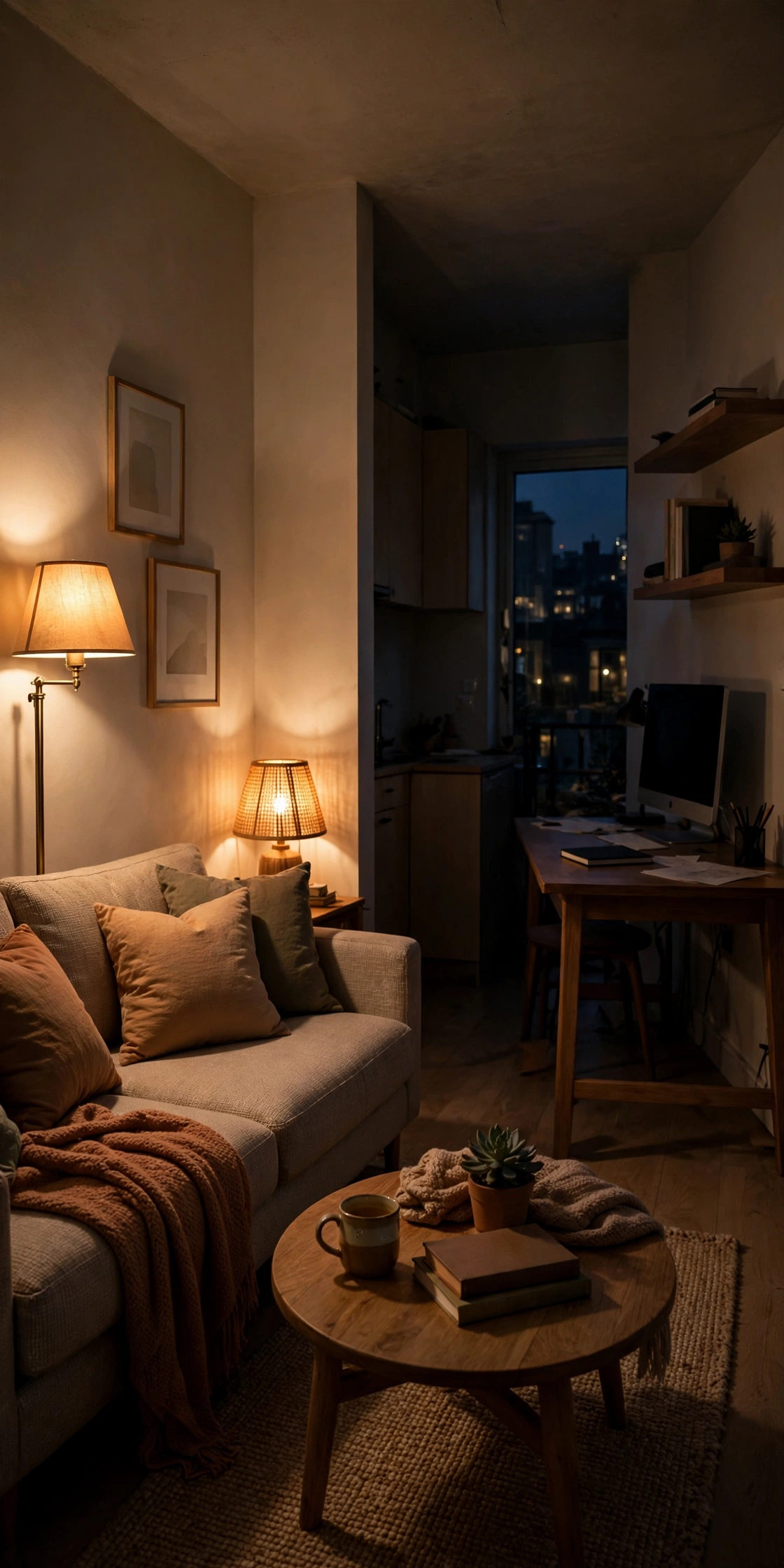
Tip: Put each zone’s lamps on its own plug-in switch or smart plug. One tap changes the room’s “mode” without walking lamp to lamp.
8. Use Mirrors and Vertical Lines
Studios benefit from every classic small-space trick, and mirrors are at the top of the list. A large mirror opposite the window doubles your natural light and creates the illusion of depth that makes one room feel like more. A mirror near the entry also gives you that last check before heading out.
Floor-to-ceiling curtains hung high and wide make windows — and ceilings — feel taller. Tall, narrow art or a tall plant draws the eye up. Keep furniture low and horizontal so the vertical elements have room to breathe.
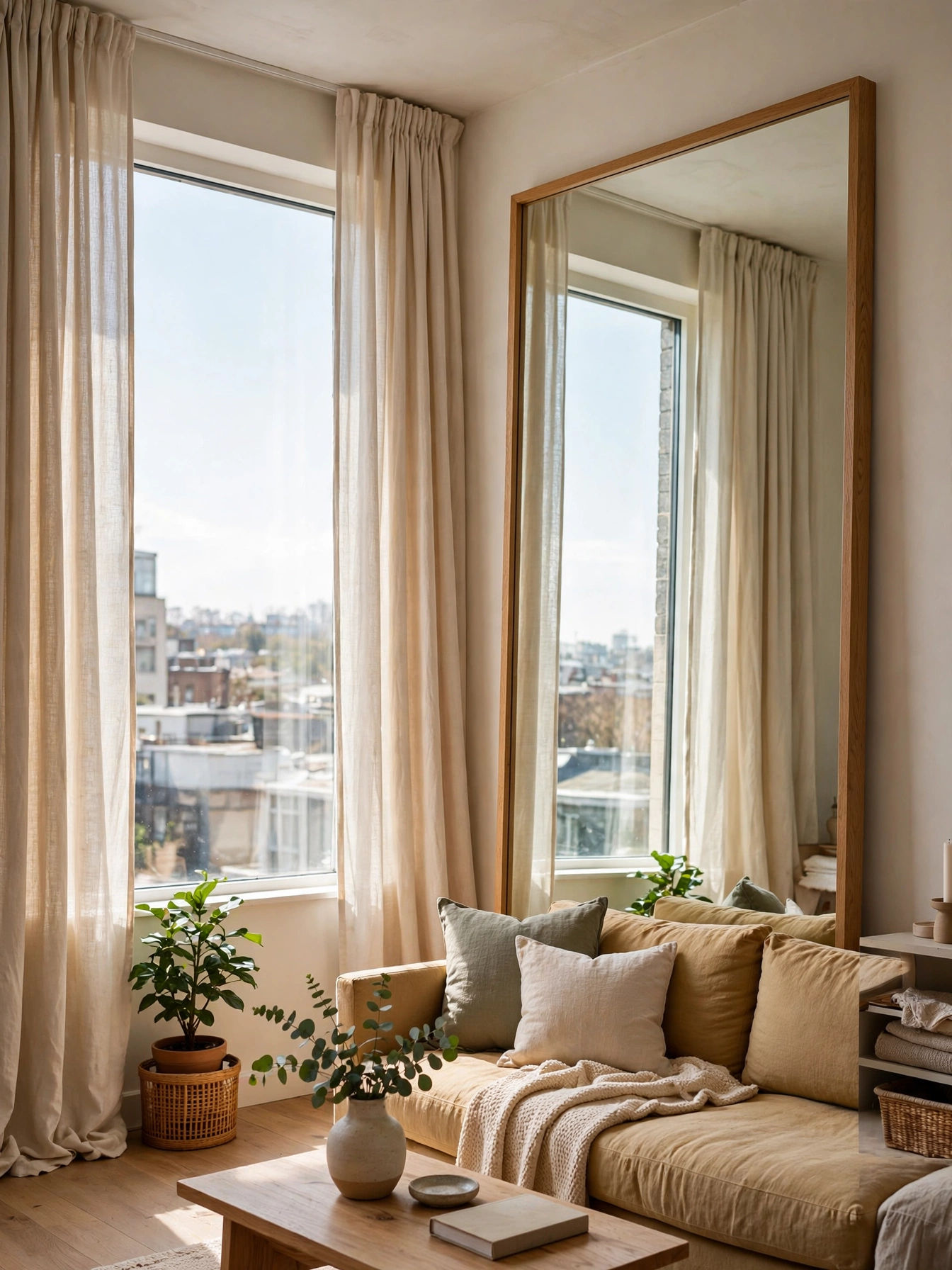
Tip: Hang curtains as close to the ceiling as possible and 6 inches wider than the window on each side. High and wide is what sells the height illusion.
9. Keep the Visual Flow Open
A studio lives or dies on sightlines. If you can stand at the front door and see a clear path to the window, the apartment feels open and generous. If your view is blocked by the back of a tall dresser, it feels cramped no matter how well you decorated. Keep the tallest pieces against walls, not in the middle of sightlines.
Leave pathways two to three feet wide, and choose pieces with legs so you see floor underneath. Edit constantly: one new item on a surface is visible from everywhere, so every addition should earn its place. My small bedroom ideas apply the same sightline rules to the sleeping zone.
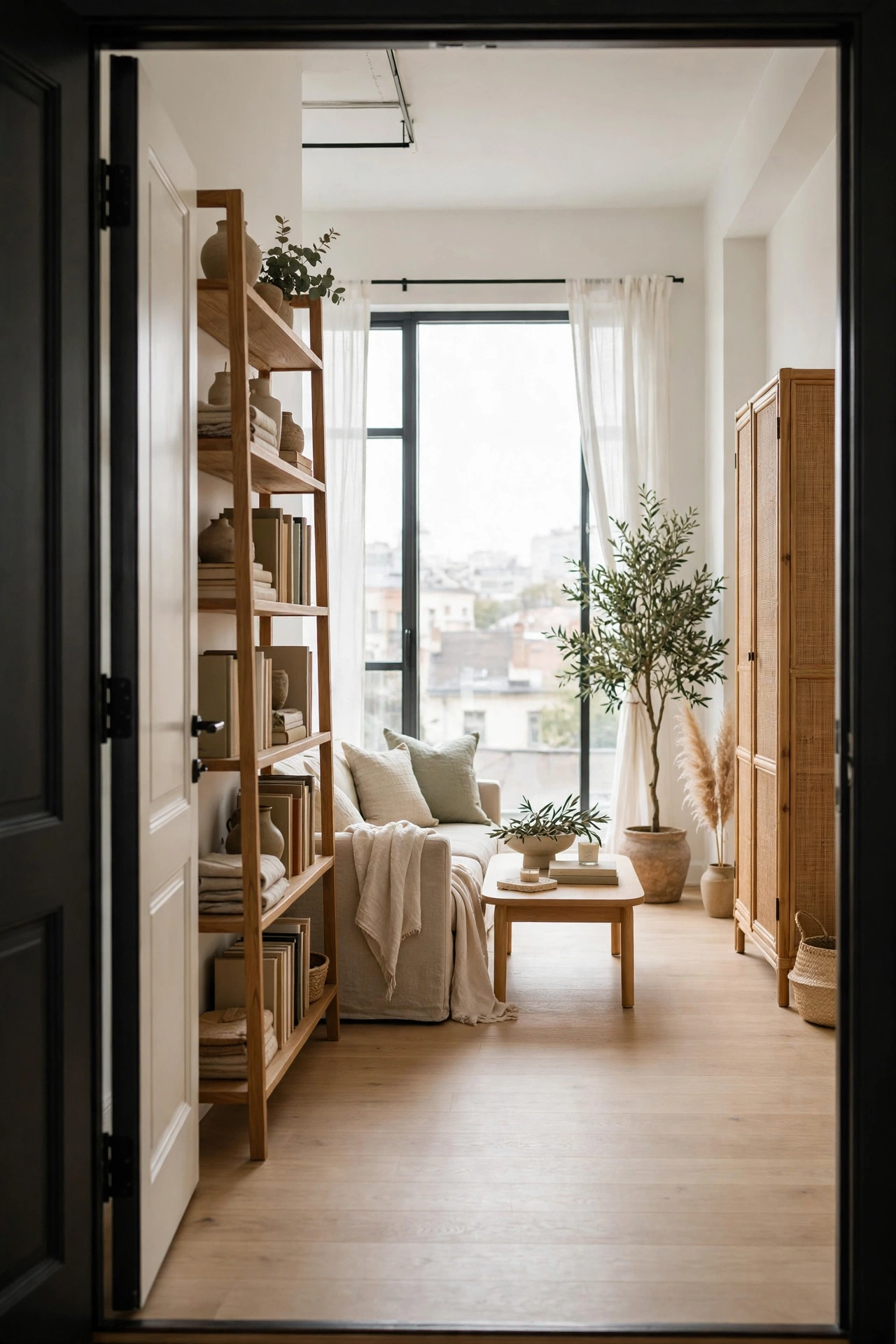
Tip: Photograph the room from the front door once a month. The camera shows blocked sightlines your daily eyes have learned to ignore.
Which Tip Should You Start With?
| Tip | Effort | Best for |
|---|---|---|
| Zone with rugs | Low | Instant separate “rooms” |
| One color story | Low | Calm, costs nothing |
| Make the bed daily | Low | Biggest habit payoff |
| Multitask furniture | Medium | More open floor |
| Hidden storage | Medium | Zero visual noise |
| Zone lighting | Low | Workday actually ends |
Frequently Asked Questions
How do I separate the bed from the living area in a studio?
Turn the sofa so its back faces the bed, or place an open-backed bookshelf perpendicular to the wall. Rugs under each zone reinforce the division. You’re creating an arrival feeling between zones, not a wall.
What colors work best in a studio apartment?
One calm base (warm white, soft grey, light neutral) for walls, big furniture, and bedding, plus two accent colors repeated in every zone. Seeing everything at once means clashing palettes feel chaotic fast.
Should I get a sofa bed for a studio?
If seating space is tight, yes — it’s seating by day and sleeping by night, replacing two pieces with one. If you have room for a real bed, a daybed-style setup with cushions reads as a sofa by day and sleeps better at night.
How do I make a studio feel bigger?
Clear sightlines from door to window, a large mirror opposite the window, curtains hung high and wide, furniture with visible legs, and one cohesive color story. Open floor and light do more than square footage.
How do I work from home in a studio without it taking over?
Give work a defined zone with its own light, and create an end-of-day ritual: close the laptop, turn off the desk lamp, and switch on the living-zone lamp. When the work light goes off, the workday is visibly over.
Where do guests sleep in a studio apartment?
A sofa bed or a good air mattress on the living-zone rug works well. Store the guest bedding in the ottoman or under the bed so setup takes five minutes. One comfortable overnight setup beats a cramped permanent guest corner.
Final Thoughts
That’s the real secret of studio living: zones instead of walls, furniture with two jobs, one color story, hidden storage, a bed that behaves, layered lighting, mirrors, and open sightlines. You don’t need a bigger apartment — you need a clearer one. Start with the rugs and the color story, and build from there. For the rest of your small spaces, my room refresh ideas under $50 keep every zone fresh on a budget. For proof of what 350 square feet can do, this tiny NYC studio tour is full of smart ideas.