
Small Christmas Tree Decor Ideas

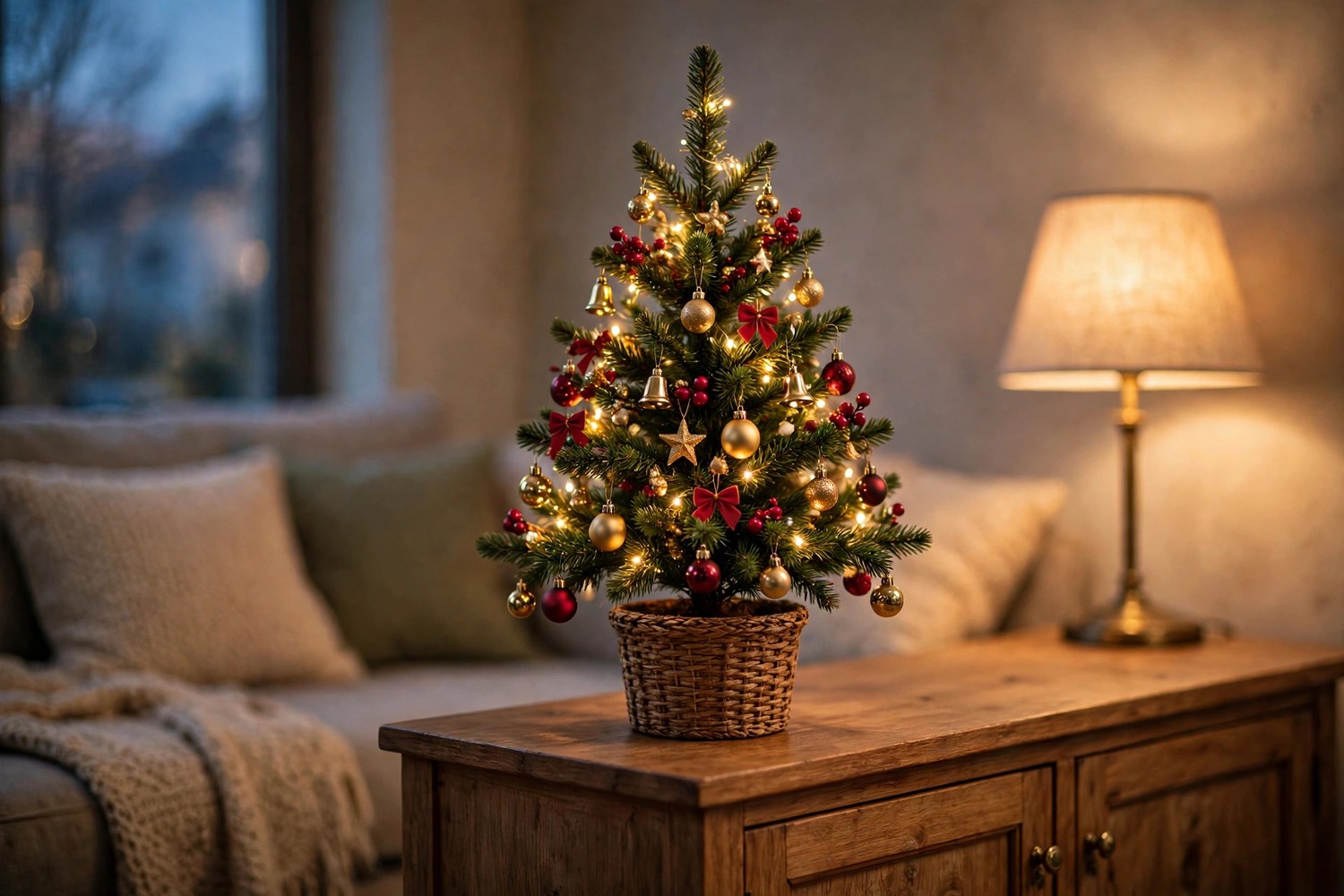
A small Christmas tree has a different decorating problem than a big one. The branches are thinner, the silhouette is narrower, and every oversized ornament or bulky light strand shows. But decorated at the right scale, a tabletop tree, a mini tree, or a slim pencil tree can carry as much Christmas as a seven-footer, and it can go where a big tree never reaches: the kitchen counter, the nightstand, the desk, the entryway console. The 15 ideas below are all built for trees in the 2 to 4 foot range, plus slim floor trees, and each one works in miniature terms — smaller ornaments, finer lights, lighter toppers, and bases that suit a tabletop. If you prefer the whole house in a calmer direction, these simple Christmas decor ideas pair beautifully with a small-tree approach.
Key Takeaways
- Scale is the whole game: mini ornaments, fine-wire fairy lights, and small toppers keep a small tree in proportion instead of swamping it.
- Fluffing and shaping the branches before decorating is what makes a small artificial tree look full rather than sparse.
- The container is part of the decor on a tabletop tree — a basket, crock, or bucket replaces the stand and finishes the look.
- Small trees belong on surfaces: dining tables, kitchen counters, nightstands, desks, and consoles all gain a tree without losing floor space.
- One repeated shape or one miniature theme gives a small tree a tailored, deliberate finish with very few ornaments.
First, Pick the Right Size of Small Tree
“Small” covers a few different trees, and the right one depends on where it will live. Tabletop trees run 2 to 4 feet tall and sit on a table, cabinet, stool, or crate. Mini and bottlebrush trees are under 2 feet, made for shelves, counters, and nightstands. If you want height without the footprint, a pencil tree is only about 20 to 30 inches wide compared with 50 inches or more for a standard tree, and a slim tree lands in between at about 30 to 40 inches wide. Whatever the height, leave 6 to 12 inches between the top of the tree (topper included) and the ceiling or the underside of the shelf above it.
| Small tree type | Typical size | Best spots |
|---|---|---|
| Mini / bottlebrush | Under 2 ft tall | Shelves, counters, nightstands, mantels |
| Tabletop tree | 2–4 ft tall | Dining table, console, sideboard, desk |
| Pencil tree | Full height, 20–30 in wide | Corners, entryways, gaps between furniture |
| Slim tree | Full height, 30–40 in wide | Small living rooms that want a floor tree |
1. Start with Scale: Mini Ornaments That Fit the Tree
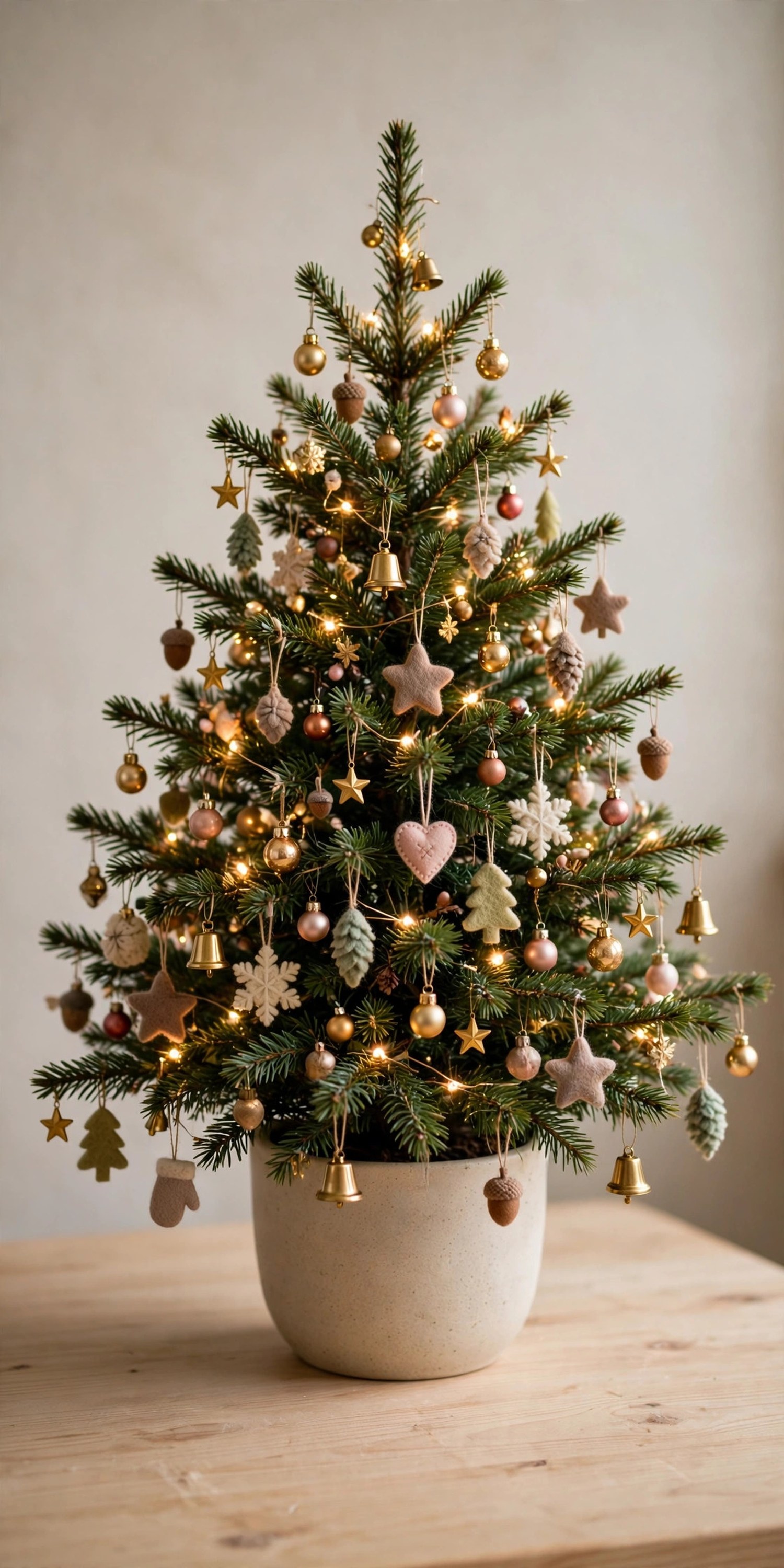
Every small-tree decision starts with proportion. Standard ornaments that look modest on a seven-foot tree can dwarf a three-footer, bending thin branches and hiding the tree’s shape entirely. Mini ornaments — small baubles, tiny stars, little bells, and lightweight felt or wood pieces — sit on small branches without weighing them down, and the tree itself stays visible underneath them.
Build a small collection rather than a big one. A tabletop tree needs far fewer ornaments than a floor tree, so this is the one place where a single quality set of minis covers the whole tree. Mix finishes within the small scale, a few glossy, a few matte, a few glittered, so the tree reads with depth instead of flatness.
Tip: Hold an ornament against the branch before buying a set. If it is wider than the branch tier it will hang on, it is too big for that tree, however pretty it is.
2. Swap Bulky Light Strands for Fairy Lights on Fine Wire
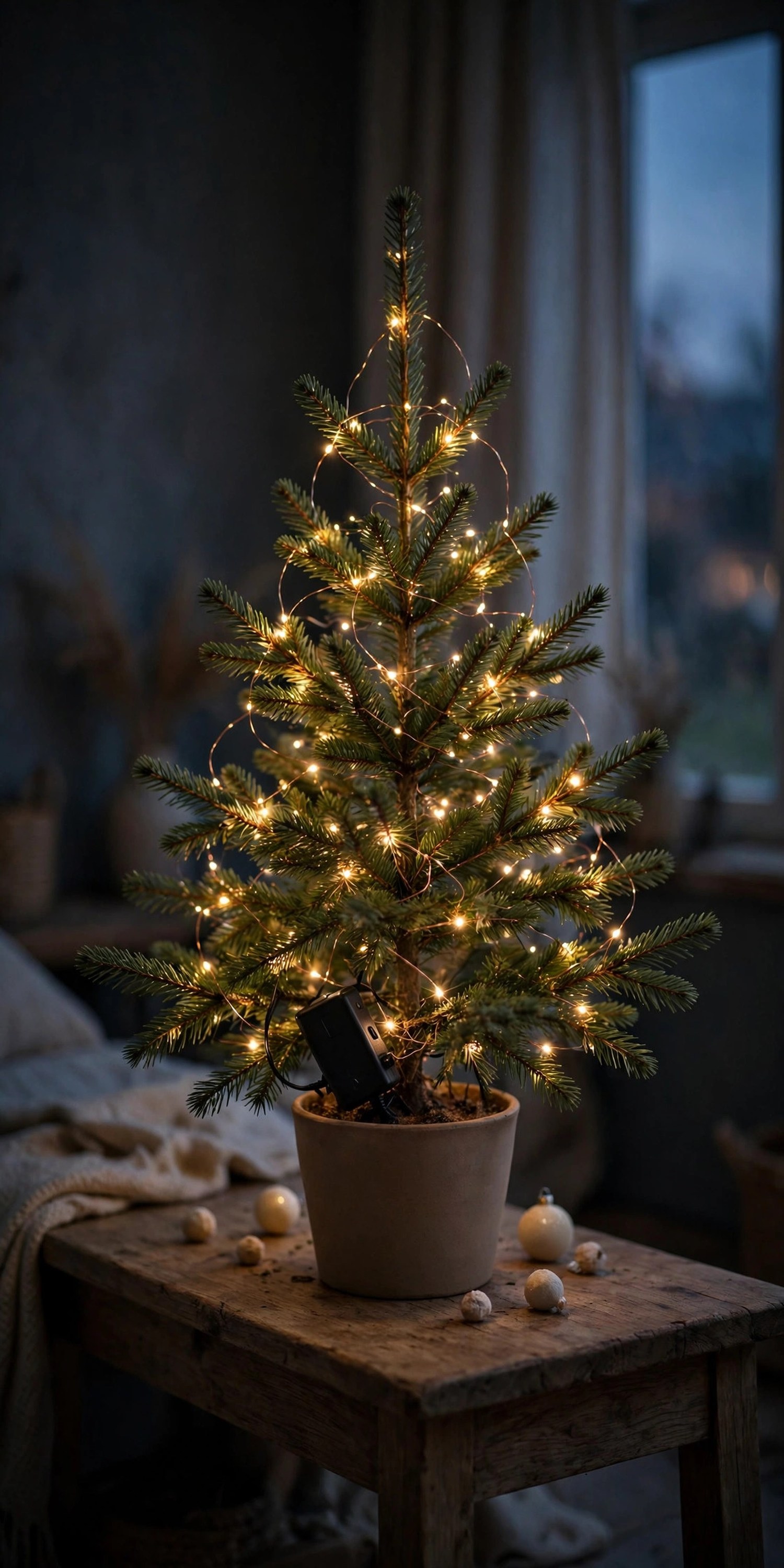
Full-size light strands are built for full-size trees: thick cords, chunky sockets, and bulbs spaced for deep branches. On a small tree, the cord becomes the most visible thing on it. Fairy lights — tiny LED bulbs on a fine, flexible wire — were made for this job. The wire nearly disappears into the branches, the bulbs sit at tree scale, and the glow looks like it comes from inside the tree.
Battery-operated sets are the practical choice for tabletops, because a tree on a console, shelf, or kitchen counter rarely sits near an outlet. No cord to hide, no extension lead across the room, and a set with a timer turns itself on at dusk and off at bedtime. Wind the wire in a loose spiral from top to bottom, tucking it just under the branch tips so the bulbs peek out rather than sitting on top.
Tip: One short strand is usually enough for a tree under 3 feet. Add a second only if the first leaves a dark patch; small trees go from glowing to glary very fast.
3. Fluff Every Branch Before a Single Ornament Goes On
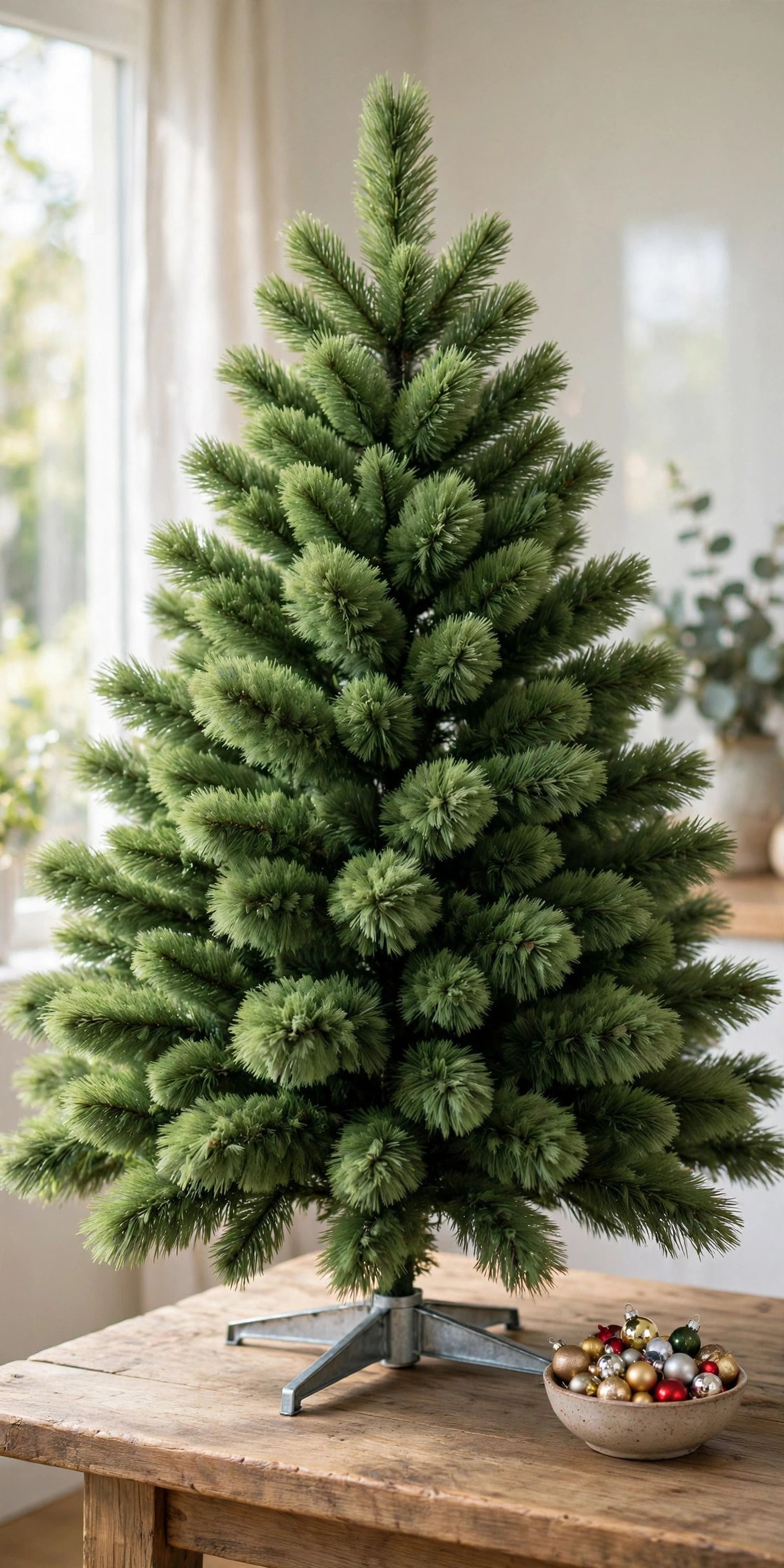
Most small artificial trees look sparse for one fixable reason: they come out of the box compressed, and the branches never get shaped. Fluffing is the unglamorous step that makes every other idea in this list work. Pull each branch outward, then separate the individual tips, fanning them up, down, and sideways so the tree gains width and the gaps between branches close.
Work from the bottom up and from the trunk outward, and turn the tree as you go so one side does not get all the attention. On a small tree this takes minutes. A well-fluffed tabletop tree also needs noticeably fewer ornaments than a neglected one, because the fullness comes from the branches instead of the decorations.
Tip: Fluff with the lights already on the tree if it is pre-lit, or add fairy lights right after shaping. Bare patches are much easier to spot when the tree is glowing.
4. Set a Tabletop Tree in a Basket, Crock, or Bucket
A tabletop tree rarely needs its plastic stand, and it almost never looks good in it. Dropping the tree into a container — a woven basket, a stoneware crock, a galvanized bucket, a wooden crate — hides the stand, adds the weight a lightweight tree needs to stay put, and turns the base into part of the decoration. The container effectively becomes the tree skirt at small scale.
Match the container to the room rather than to a theme: a crock suits a kitchen counter, a basket suits a console or sideboard, a simple ceramic pot suits a desk or nightstand. If the tree wobbles, nestle the stand inside the container and pack the gap with crumpled paper or fabric before arranging the top edge. The tree should sit straight and stay straight when a branch gets brushed.
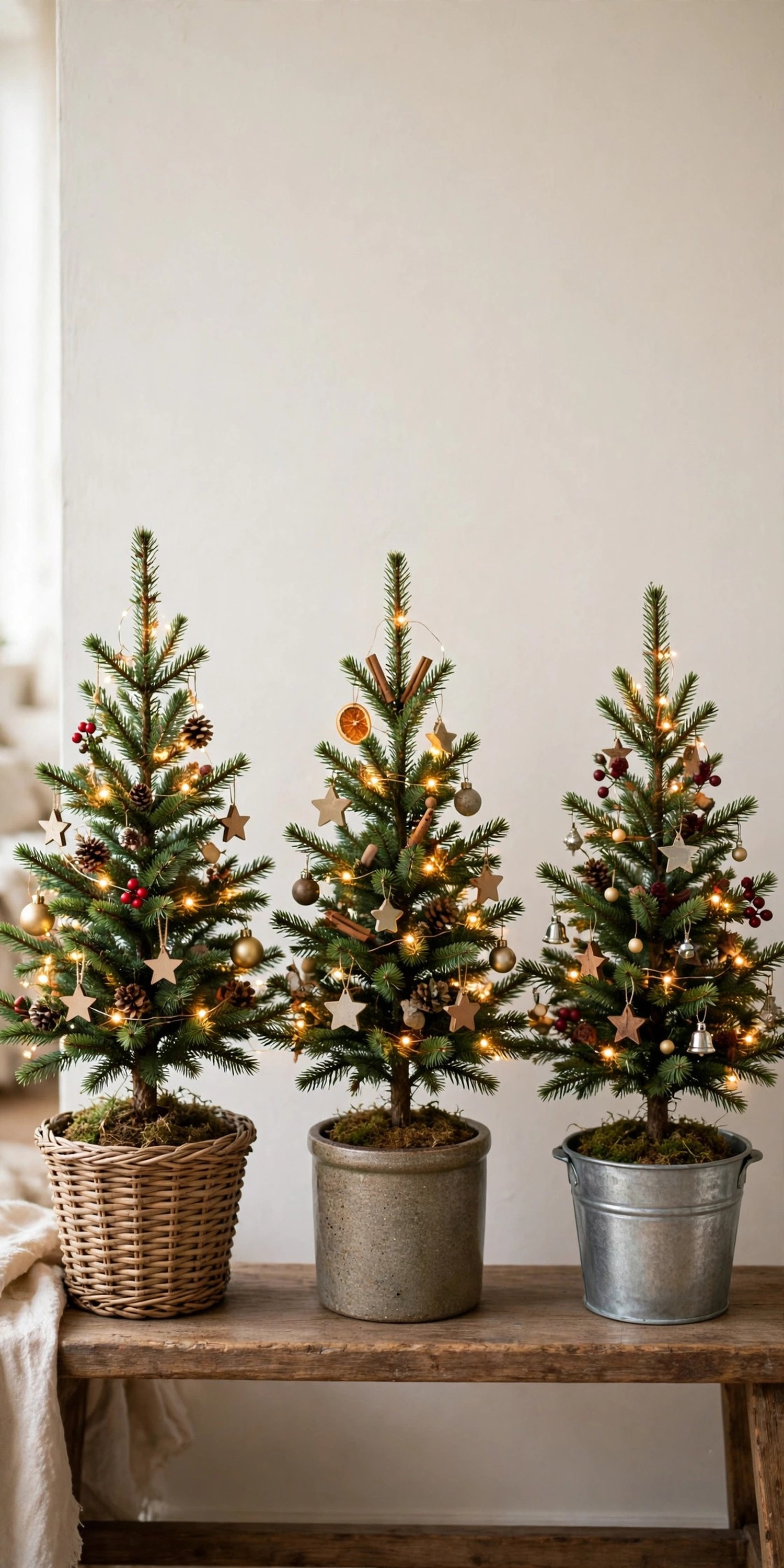
Tip: Choose a container with some heft, or add a few stones in the bottom. Tabletop trees are top-heavy once decorated, and a weighted base prevents the slow lean that ends in a crash.
5. Top It Small: Mini Stars and Single-Ornament Toppers
A standard topper overwhelms a small tree twice over: it is too heavy for the top branch and too large for the silhouette, so the tree looks like it is wearing someone else’s hat. Small trees want small toppers — a mini star, a single small bow, a tiny angel or bird, or one special ornament wired to the top branch so it reads as the crown of the tree.
Keep the topper’s visual weight in line with the ornaments below it. If the tree carries mini baubles, a topper roughly twice their size is plenty of statement. Lightweight is non-negotiable: the top leader branch of a small tree is the thinnest one on it, and a heavy topper will bend it into a droop within days.

Tip: A clip-on ornament makes an ideal small-tree topper. Clip it to the leader branch instead of balancing it on top, and it stays straight all season.
6. Cluster Three Mini Trees into a Tabletop Forest
One mini tree on a sideboard can look like an afterthought. Three of them, at staggered heights, look like a decision. A cluster of small trees — on a tray, a sideboard, a mantel, or down the middle of a dining table — creates the woodland effect a single small tree cannot, and it uses the trees many homes already own in mismatched ones and twos.
Vary the heights clearly, not slightly: a 3-foot tree, a 2-foot tree, and a bottlebrush tree read as a forest, while three near-identical trees read as a shop display. Unify the group with one shared element — the same fairy-light tone, matching containers, or one ornament color repeated across all three — and decorate lightly.
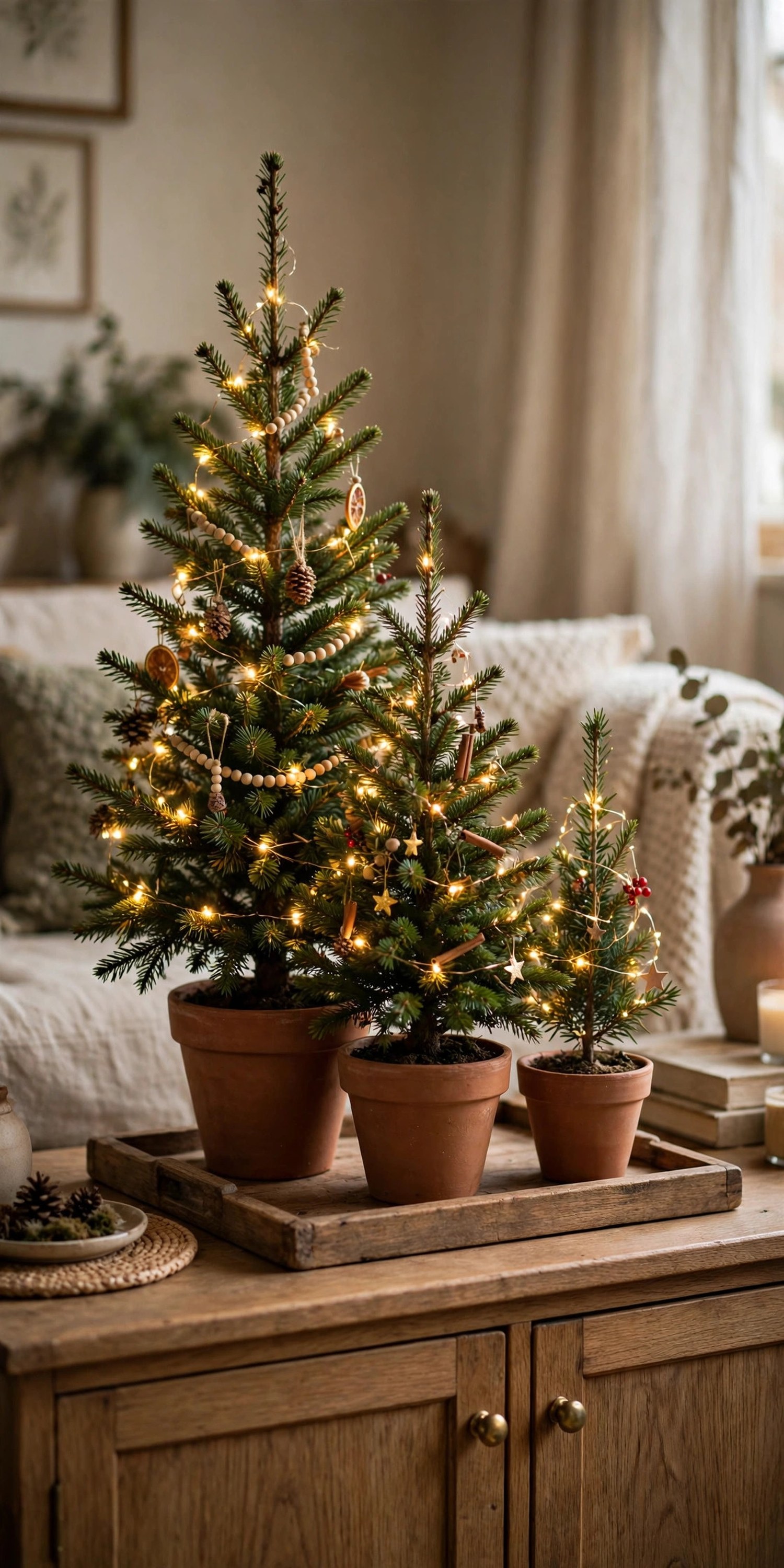
Tip: Odd numbers arrange themselves. A cluster of three (or five, on a long sideboard) settles into a natural triangle that pairs of trees never quite achieve.
7. Choose a Slim Pencil Tree for a Corner or Entryway
When the floor tree is the problem — not the desire for one — a pencil tree is the answer. At roughly 20 to 30 inches wide, it delivers full height and a real tree silhouette in the footprint of a floor lamp, which makes it the one floor tree that fits a corner, a landing, or an entryway without swallowing the walkway.
Decorate it in small-tree terms even though it is tall: lightweight mini ornaments that will not pull its narrow branches out of line, fairy or slim-strand lights wound vertically, and a small topper. If your entryway is the tight spot, the styling ideas in these small entryway ideas will help the tree share the space with the everyday drop zone instead of fighting it.
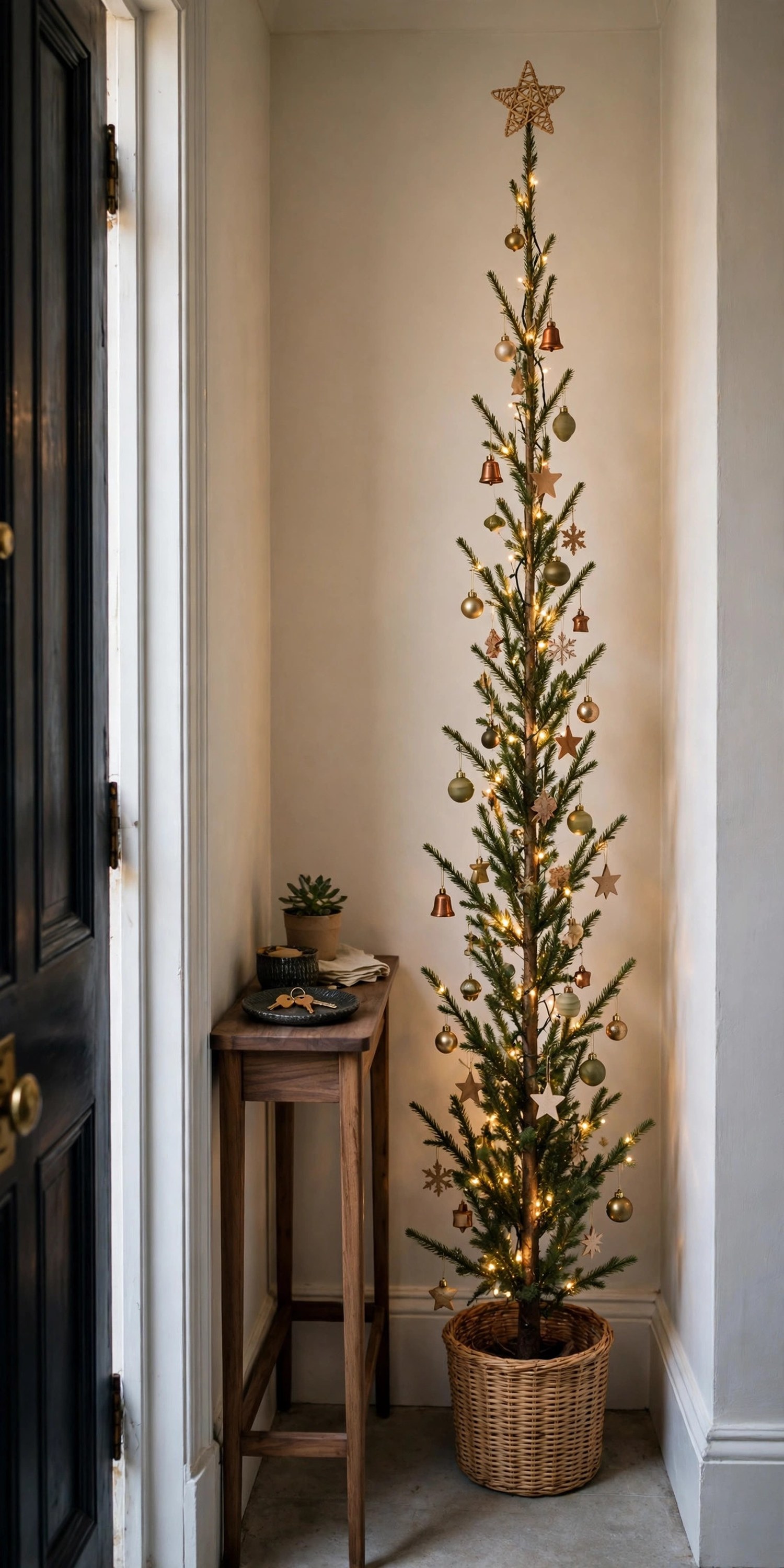
Tip: Measure the corner’s width, not just its height, before buying. A pencil tree that fits on paper still needs its branches fluffed outward, which adds a couple of inches all round.
8. Make a Small Tree the Dining Table Centerpiece
A 2 to 3 foot tree in the middle of the dining table does the job of a centerpiece, a runner, and a conversation piece at once. It is tall enough to feel festive and narrow enough that guests can still see each other over the plates — provided the total height, tree plus container, keeps the top of the tree near or below eye level for seated guests.
Set the tree in a low, wide container rather than a tall pot, and decorate it like table decor, not like a floor tree: mini ornaments, a strand of battery fairy lights (no cord trailing across the table), and nothing that sheds glitter onto the food. A small tree also lifts the whole table setting, so the rest of the table can stay simple — plain linens and everyday dishes look dressed up next to a glowing tree.
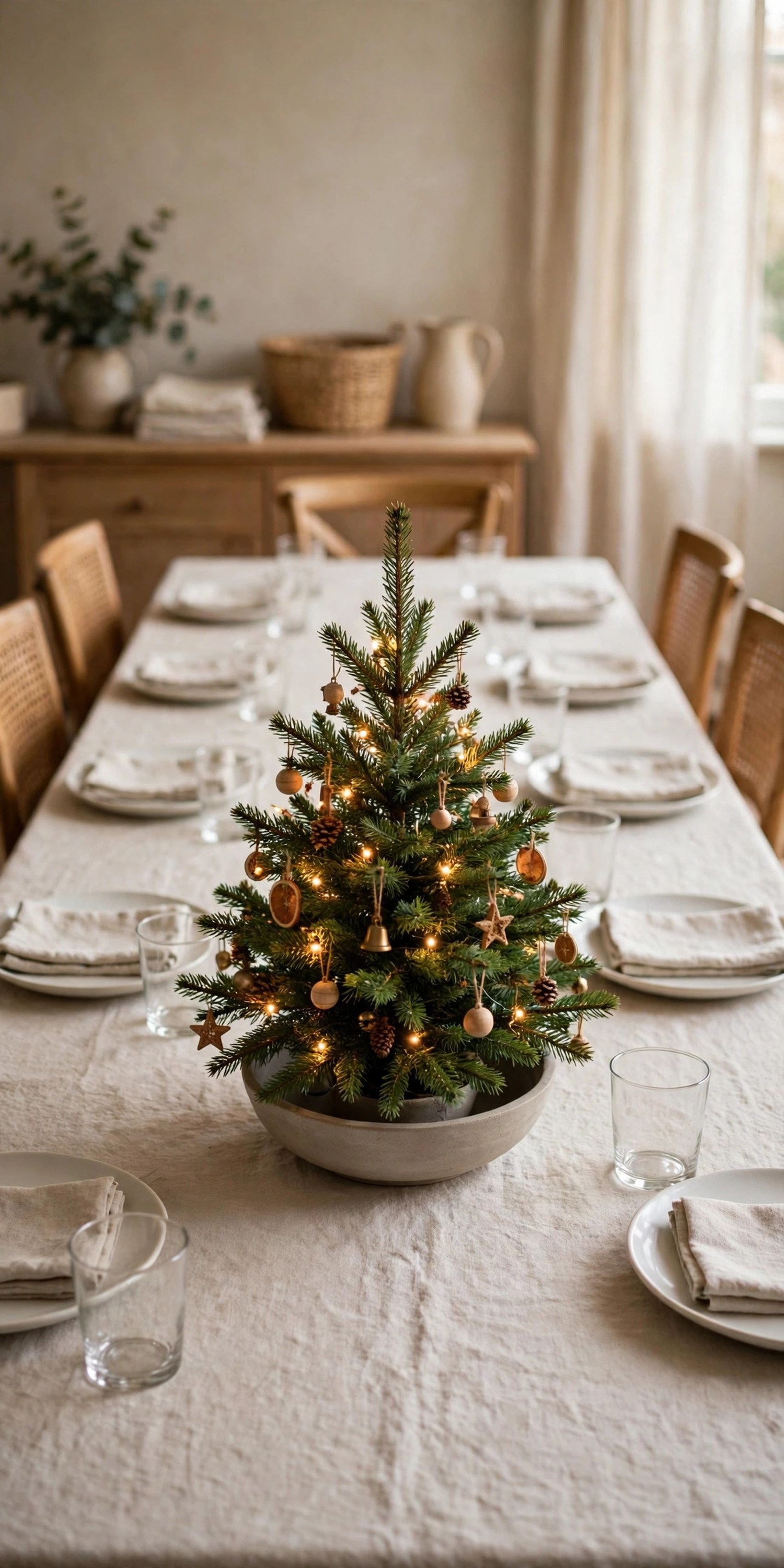
Tip: Sit in a dining chair before the guests arrive and check the sightline. If the tree blocks the face across from you, swap the tall pot for a shallow bowl or tray and win back the inches.
9. Put a Mini Tree to Work on the Kitchen Counter
The kitchen is where December actually happens, and it is usually the last room to get a tree. A mini tree on the counter — in a crock, beside the stove-side canisters, or on the windowsill above the sink — puts Christmas where the cooking, baking, and coffee-making happen, and it costs about a square foot of counter.
Decorate a kitchen tree with small, wipeable, food-adjacent ornaments: miniature wooden utensils, tiny cookie cutters, small wood or felt pieces, and mini baubles in the kitchen’s own colors. Keep it well away from the stove and any open flame, and choose battery lights so the cord stays out of the work zone entirely. Avoid anything fragile or glitter-shedding near food prep surfaces.
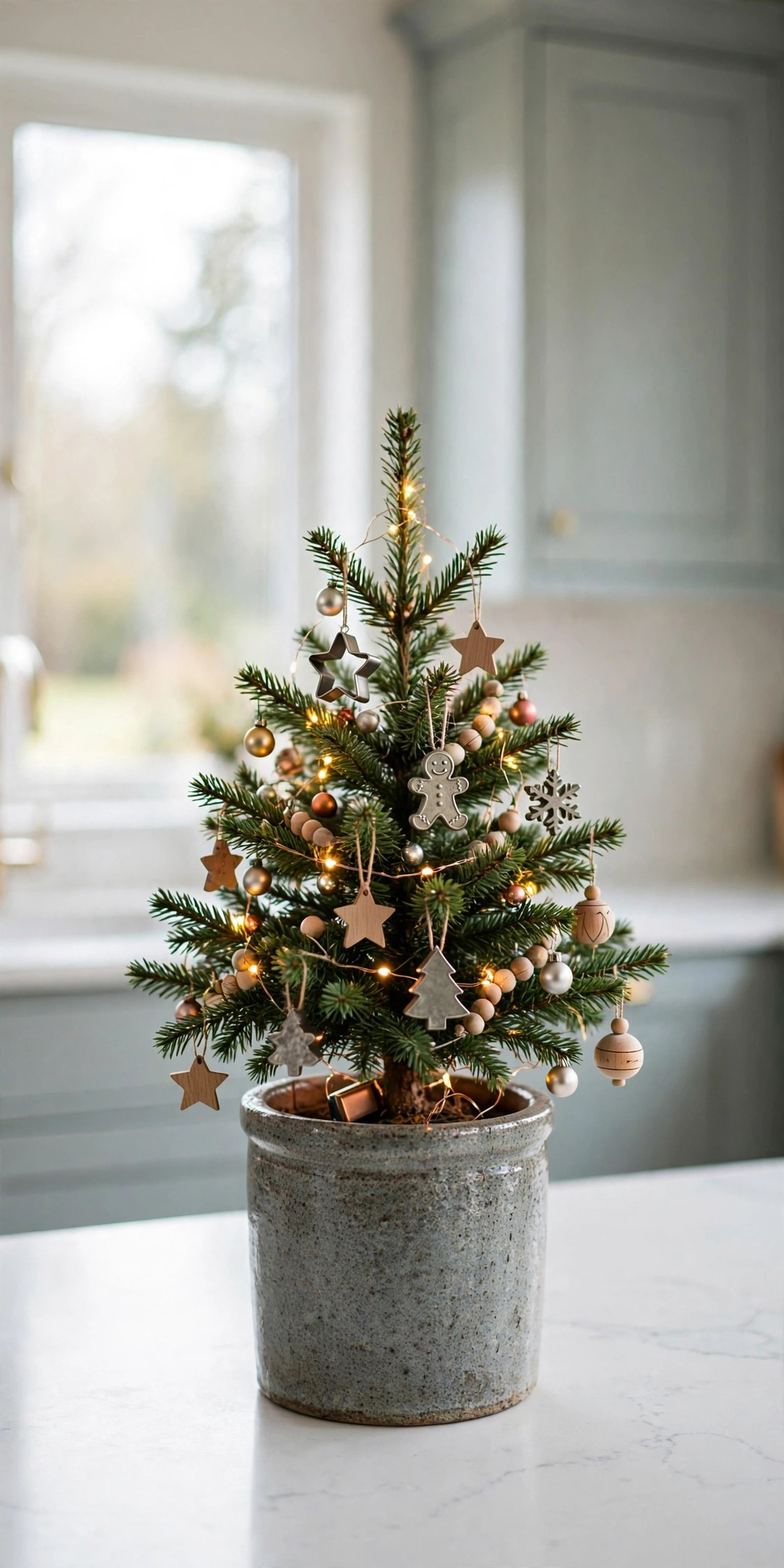
Tip: A living rosemary or small potted evergreen tree suits a kitchen especially well, since it earns its counter space with scent as well as looks. Keep it watered and give it the brightest spot you have.
10. Style a Soft-Glow Tree on the Nightstand
A small tree on a nightstand or bedroom dresser changes how the whole room feels at night. This is the tree nobody else needs to see, so it can be the softest version: warm fairy lights, a handful of quiet ornaments in creams and soft metallics, and nothing that twinkles, flashes, or plays music.
Keep the scale tabletop-small — 2 to 3 feet on a dresser, under 2 feet on a nightstand — and let the tree replace, not join, the usual surface clutter for the season. A timer on the lights matters most here: set them to fade off an hour after you usually sleep, and the tree becomes part of winding down rather than a glow you have to get up and switch off.

Tip: Choose warm-white lights only for a bedroom tree. Cool or blue-toned light reads as daylight to a tired brain and makes the whole display feel chilly instead of cozy.
11. Add a Tiny Desk Tree to a Home Office
A tiny tree on a desk — a bottlebrush tree, a mini potted pine, or a 12-inch tabletop tree in the corner of the work surface — brings the season into the room where weekdays happen, without asking for a decorating project. Desk trees work best kept almost minimal: lights if it is near an outlet or on battery, and a few small ornaments at most.
Give it a defined footprint, like a small tray or the top of a storage box, so it reads as a display instead of desk clutter competing with the keyboard. A desk tree is also the natural home for one or two playful ornaments — the novelty pieces that do not fit the main tree’s palette can live happily at the desk, where they get seen all day.
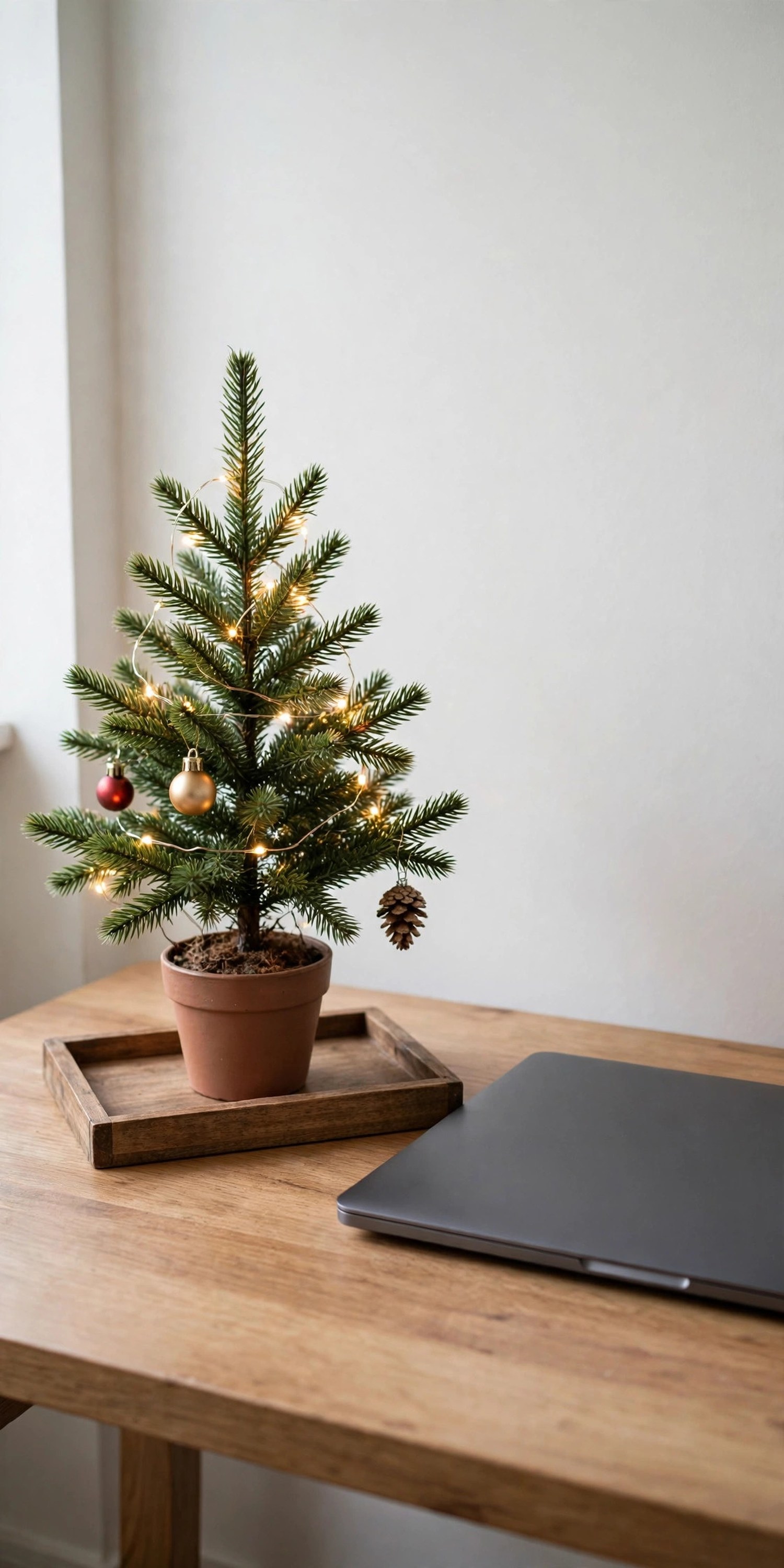
Tip: Keep a desk tree out of the monitor’s sightline and away from paper piles if it is a real potted tree that needs watering. One spilled watering can is all it takes to end the experiment.
12. Let a Woodland Mini Tree Go Nearly Bare
Some small trees look best with almost nothing on them. An airy, open-branched mini — a small faux pine with spaced tiers, or a little tree with a naturally sparse shape — can carry just a strand of fairy lights, a few wooden bead accents, and a couple of paper stars, and read as calm woodland rather than unfinished.
The trick is commitment: nearly bare only works when the tree’s own shape is the decoration, so choose a tree with good bones and a container you love, then stop early. Add ornaments one at a time and step back after each; the moment the tree starts to look decorated rather than dressed, you have gone one piece too far. This is the small tree for hallways and quiet corners where a busy display would feel like noise.
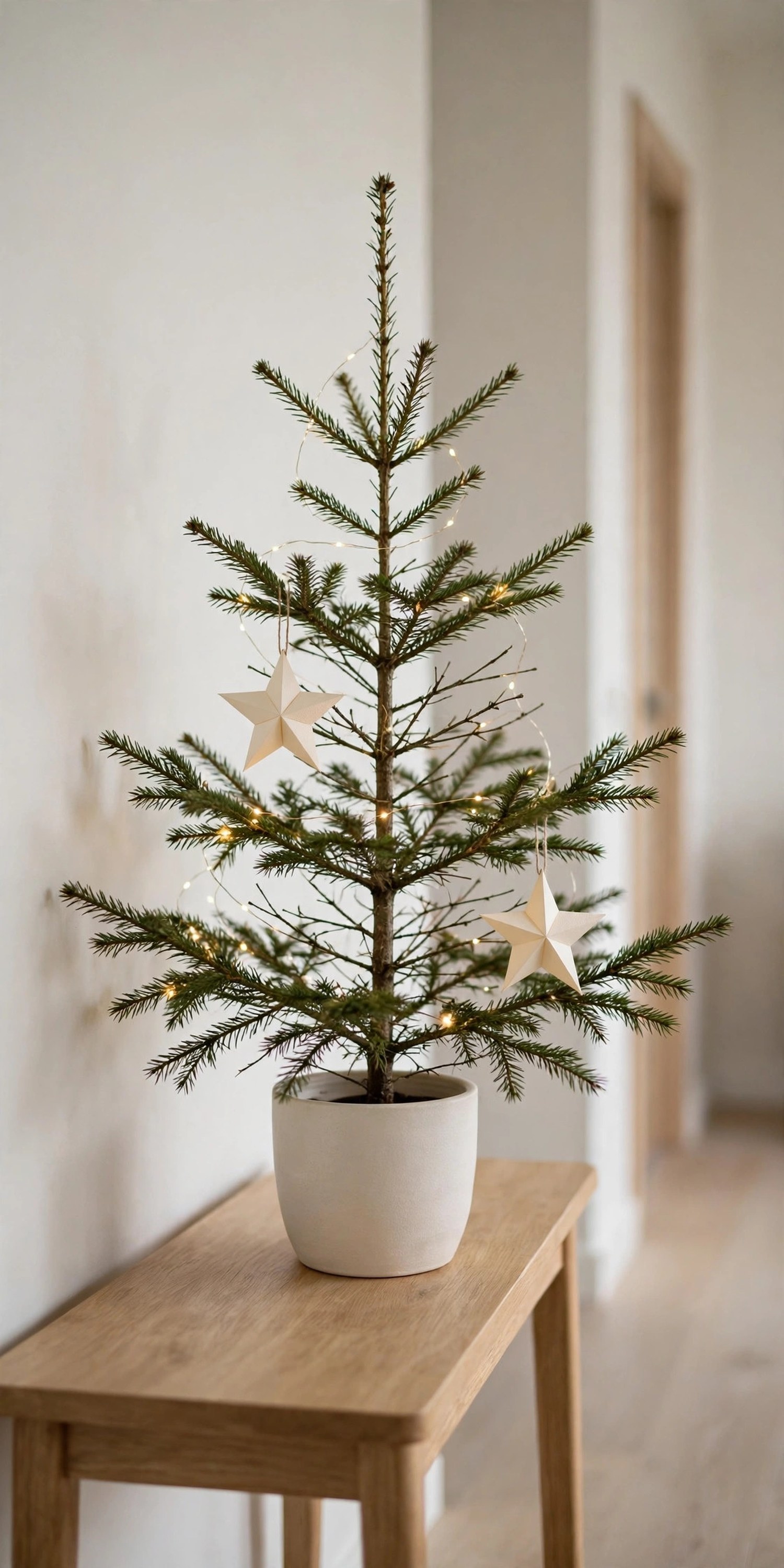
Tip: If a nearly bare tree feels too plain by day, lean on the lights. Warm fairy lights woven deep into the branches give it a finished glow after dark, when small trees get most of their attention.
13. Raise a Short Tree on a Stool, Crate, or Plant Stand
A 3-foot tree on the floor disappears behind the sofa arm. The same tree on a stool, a wooden crate, or a plant stand gains a foot of presence, reaches toward eye level, and suddenly reads as the room’s tree instead of a decoration on the floor. Raising a short tree is the cheapest way to make a small tree feel significant.
Stability comes first: the stand must be wider than the tree’s container and completely wobble-free, and the tree belongs out of walkways and away from anywhere it can be knocked by a passing hip or a pet. Style the base of the stand with a couple of wrapped gifts or leave it clean — the height is doing the work, and the display does not need dressing up to justify itself.
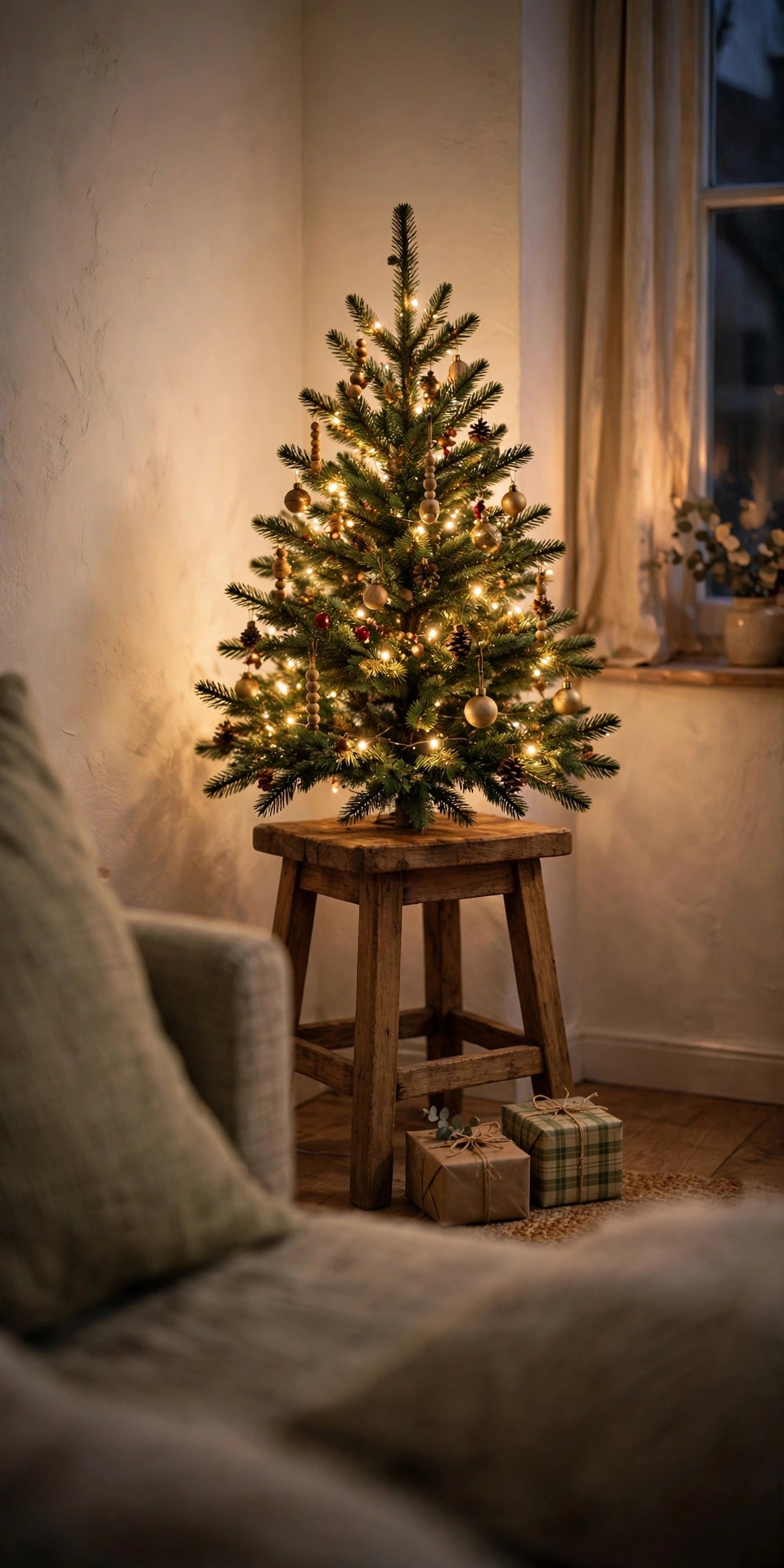
Tip: Count the raised height before decorating: stool plus tree plus topper should still leave comfortable clearance below the ceiling, and the tree’s middle — its widest, prettiest part — should land near seated eye level.
14. Pick One Miniature Theme and Commit to It
A small tree holds so few ornaments that a theme, which can feel like a big production on a floor tree, becomes easy: one small motif collection covers the whole tree. A woodland mini with tiny felt animals and mini pinecones. A sweets mini with small candy-shaped ornaments and peppermint discs. A coastal mini with tiny shells, starfish, and driftwood-toned baubles.
The discipline is in the editing, not the buying. Everything on the tree should belong to the motif or act as quiet filler in one neutral finish, and the ornaments that do not fit — however lovely — go on a different tree or in a bowl on the table. A themed mini also solves the second-tree problem: it gives bedrooms, kitchens, and kids’ rooms a tree with its own personality instead of a smaller copy of the living room’s.
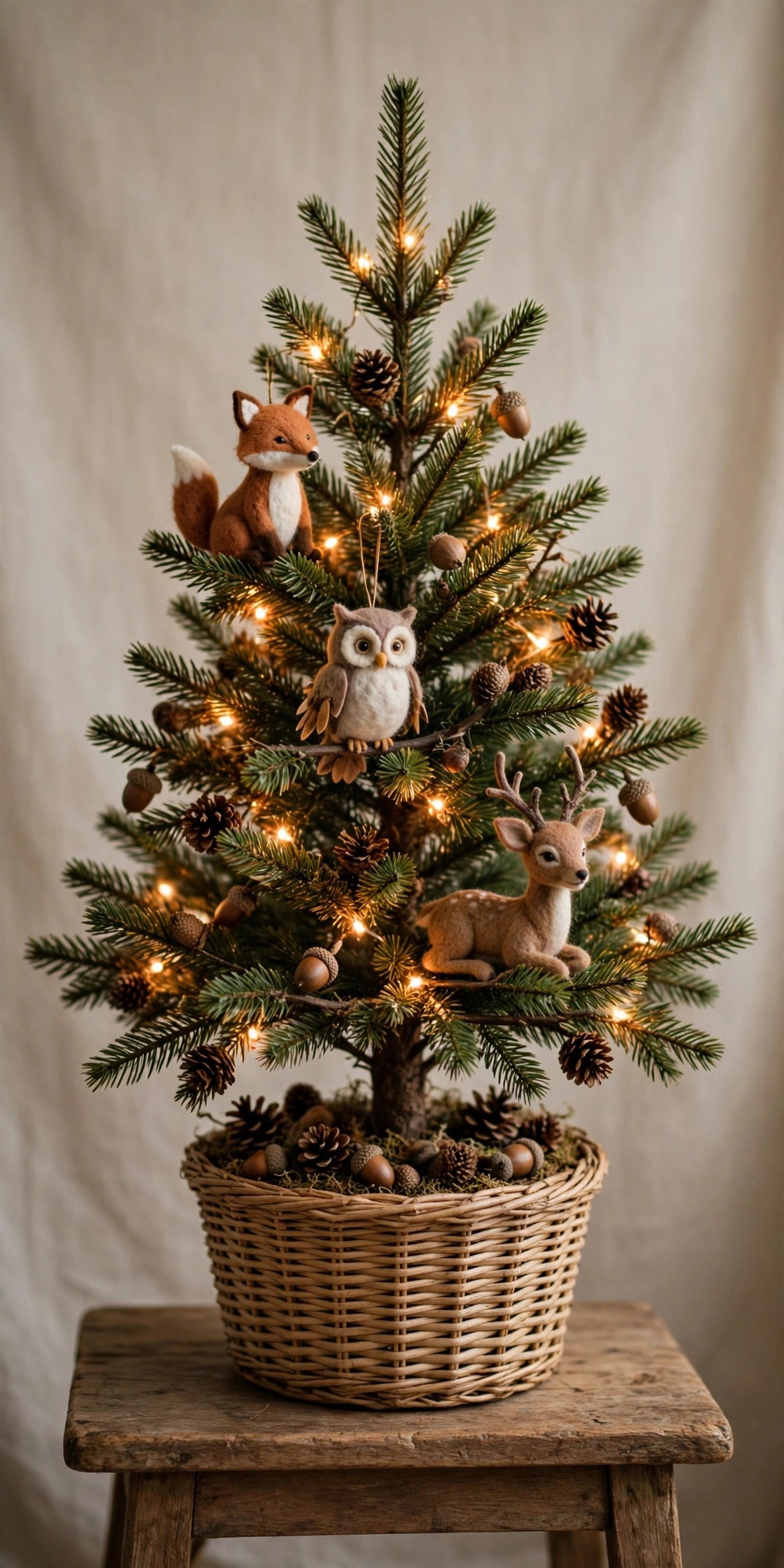
Tip: Theme the tree to its room, not to the house. A kitchen tree in tiny utensils and a bedroom tree in soft woodland pieces feel collected on purpose, each in the right place.
15. Repeat One Ornament Shape for a Tailored Finish
The fastest route to a designer-looking small tree is repetition: one ornament shape, repeated across the whole tree. All mini stars. All tiny bells. All small round baubles in mixed finishes. On a big tree, repetition can read as a bulk buy; on a small tree, where the eye takes in the whole silhouette at once, it reads as intention.
Keep the shape constant and let the finish vary — matte, glossy, and glittered versions of the same shape give the tree texture without breaking the pattern. Because a small tree needs so few ornaments, a single set of one shape, or two small sets, is genuinely all it takes. It is also the easiest small tree to recreate next year and the easiest to top up if a piece breaks.

Tip: Space the repeated shape in a rough spiral from top to bottom. An even, deliberate distribution is what separates “tailored” from “ran out of ornaments.”
Frequently Asked Questions
How many ornaments does a small Christmas tree need?
Fewer than feels safe — that is the honest answer. A small tree shows every ornament, so start with a modest number of mini ornaments, step back, and add a few at a time until the tree looks balanced with green still showing between pieces. If branches are bending or the tree’s shape has disappeared under decorations, it is over-dressed; take pieces off rather than rearranging them.
How do I make a small Christmas tree look fuller?
Fluff first. Balsam Hill’s guide to decorating small trees puts it plainly: fluff the foliage before anything else, then use small, lightweight ornaments and trim so the branches carry the display instead of sagging under it. Shaping each tip outward closes most of the gaps, and coordinating decor at the base draws the eye to the whole display. The full guide is at Balsam Hill’s small Christmas tree decorating guide.
Can I put a small Christmas tree on a table?
Yes — tabletop trees from 2 to 4 feet are made for tables, consoles, cabinets, and sideboards. Set the tree on a flat, stable surface that can handle its weight, ideally in a container with some heft, and keep it back from the table’s edge. Battery-operated lights keep cords off the table and out of the way of plates, laptops, and elbows.
Is a real or artificial small tree better?
Artificial small trees are narrower, store compactly, drop no needles, and come pre-lit — the easier choice for desks, shelves, and counters. A real small tree brings scent nothing faux can match; choose a naturally narrow one, have a fresh cut made on the trunk, and get it into water within a few hours. Either way, keep real greenery away from heat vents, radiators, and fireplaces.
How do I keep a small real tree fresh?
The same routine as a full-size tree, in miniature: fresh cut at the base, straight into water, and a daily water check, because a fresh tree can drink a surprising amount in its first days. Plain water is all it needs. The University of Illinois Extension tree care guide covers the full routine for real trees of any size.
Final Thoughts
A small tree is not a compromise version of Christmas; it is a different tool. It goes where the big tree cannot — the counter, the nightstand, the desk, the middle of the dinner table — and asks for less of everything: fewer ornaments, shorter light strands, minutes instead of an afternoon. Decorate it at its own scale, give it a container and a topper that fit, and let one clear idea carry each little tree.