
Small Dining Room, Big Charm: 8 Ideas From the Tour

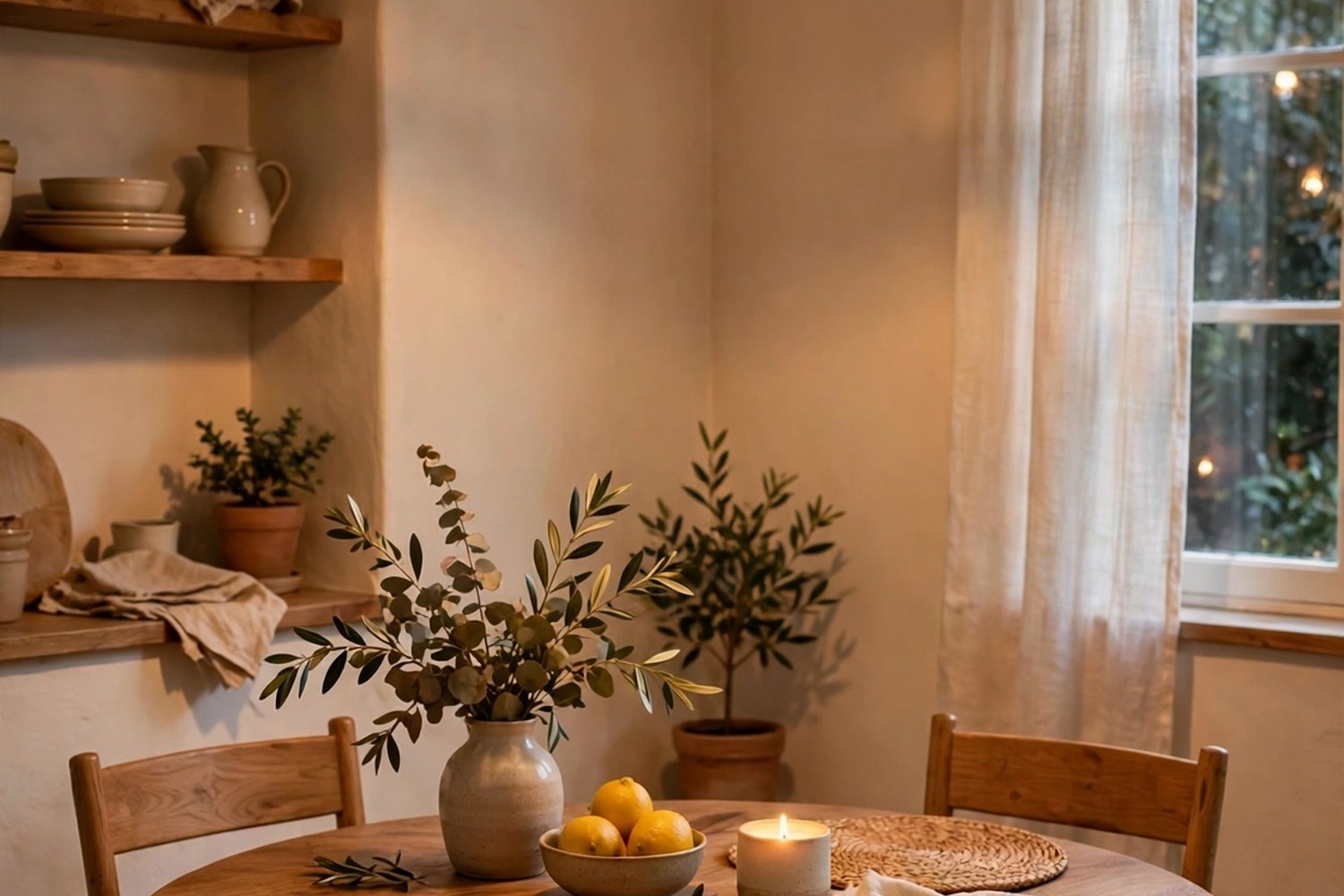
A small dining room is not a limitation. It is an invitation to be intentional. Ninety square feet can seat six comfortably and make you smile every time you walk past, with the right table math, the right light, and storage that works hard.
This is the full tour distilled into 8 ideas: the table-sizing math that prevents buying the wrong table twice, the pendant light that makes the whole room glow, the storage tricks that fit a surprising amount of dishes into 90 square feet, and the lesson most people learn the hard way.
For more small-space dining inspiration, my cozy dining corner ideas show another corner done right.
1. Get the Table Math Right
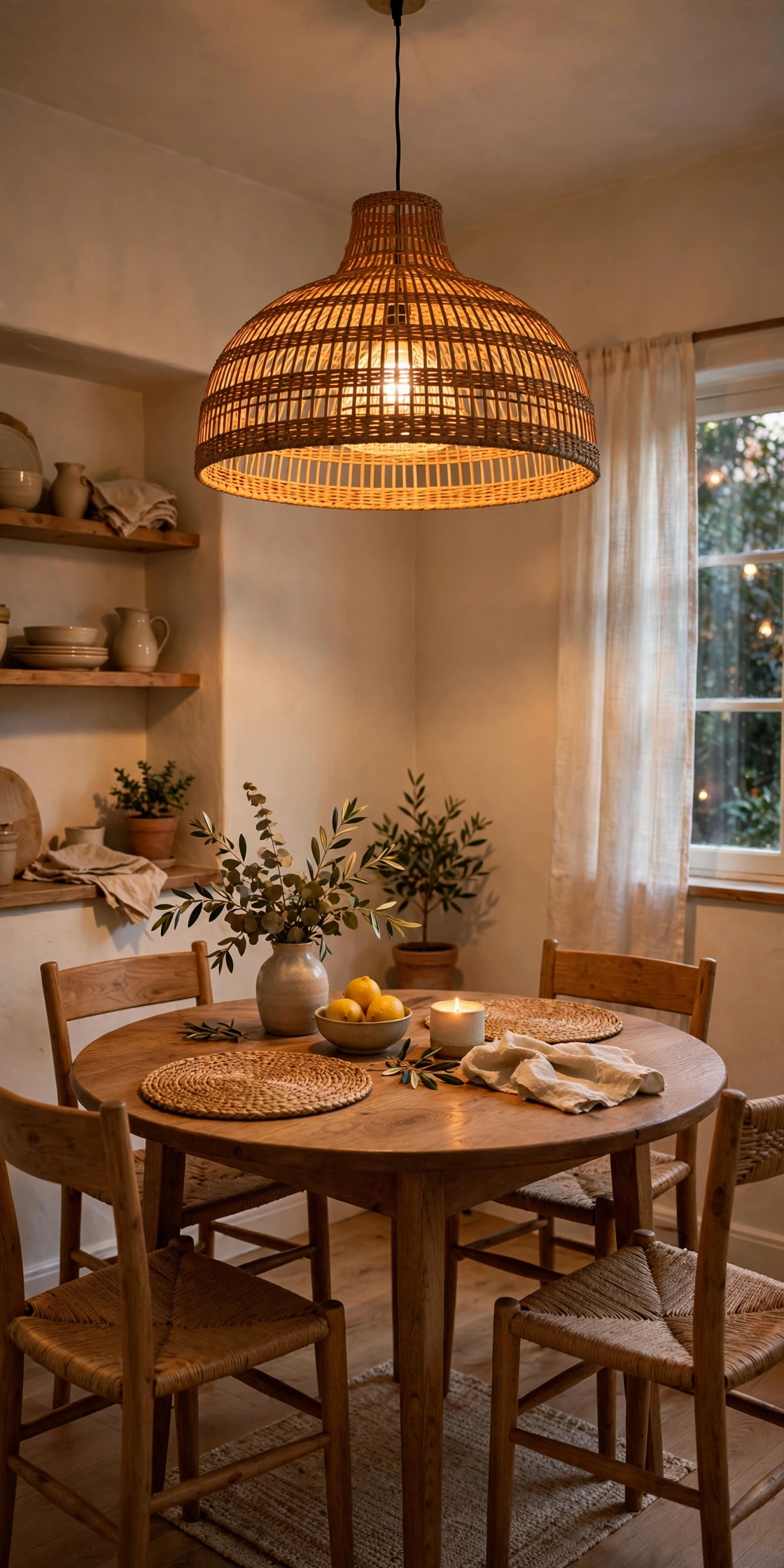
Everything starts with the table, because the table determines everything else. A dining table needs 36 inches of clearance on every side for chairs and walkways. In a 9-by-10-foot room (108 by 120 inches), that leaves a table zone of roughly 36 by 48 inches. That sounds tiny, but a round table changes the game. A 42-inch round pedestal table seats more people per inch than a rectangle because there are no corners wasting space, and a pedestal base means no legs bumping knees.
Ours seats four daily and six when needed. I bought it secondhand for $180, sanded the scratched top, and applied two coats of matte polyurethane over a weekend — about $15 in supplies, and it looks like a $600 table. Buying new, expect $300 to $500 for a decent 42-inch round pedestal. Either way, do the 36-inch clearance math first. Five minutes that saves the most expensive mistake in dining room decorating.

Tip: Measure your room and tape the table footprint on the floor with painter’s tape before you buy. Walking around the taped rectangle for a day tells you more than any dimension chart. HGTV’s small dining room ideas show more space-maximizing layouts.
2. Seat Six With a Bench
The table seats six because of the bench. One side has a backless bench instead of chairs, and it’s the single best space decision in this room. A bench slides completely under the table when not in use, freeing about 18 inches of floor. Two adults fit comfortably on a 48-inch bench, and kids practically stack on it — we’ve had eight around this table at Thanksgiving and nobody felt exiled.
Ours is a simple solid-wood design for $95, tucked under the table on the window side to keep the doorway walkway clear. The other side has two secondhand chairs ($70 each, reupholstered in wipeable linen-look fabric), and two more lightweight chairs come in from the living room when we host. Daily life is four seats; hosting mode is six. The extra chairs live in a closet, not in the room.
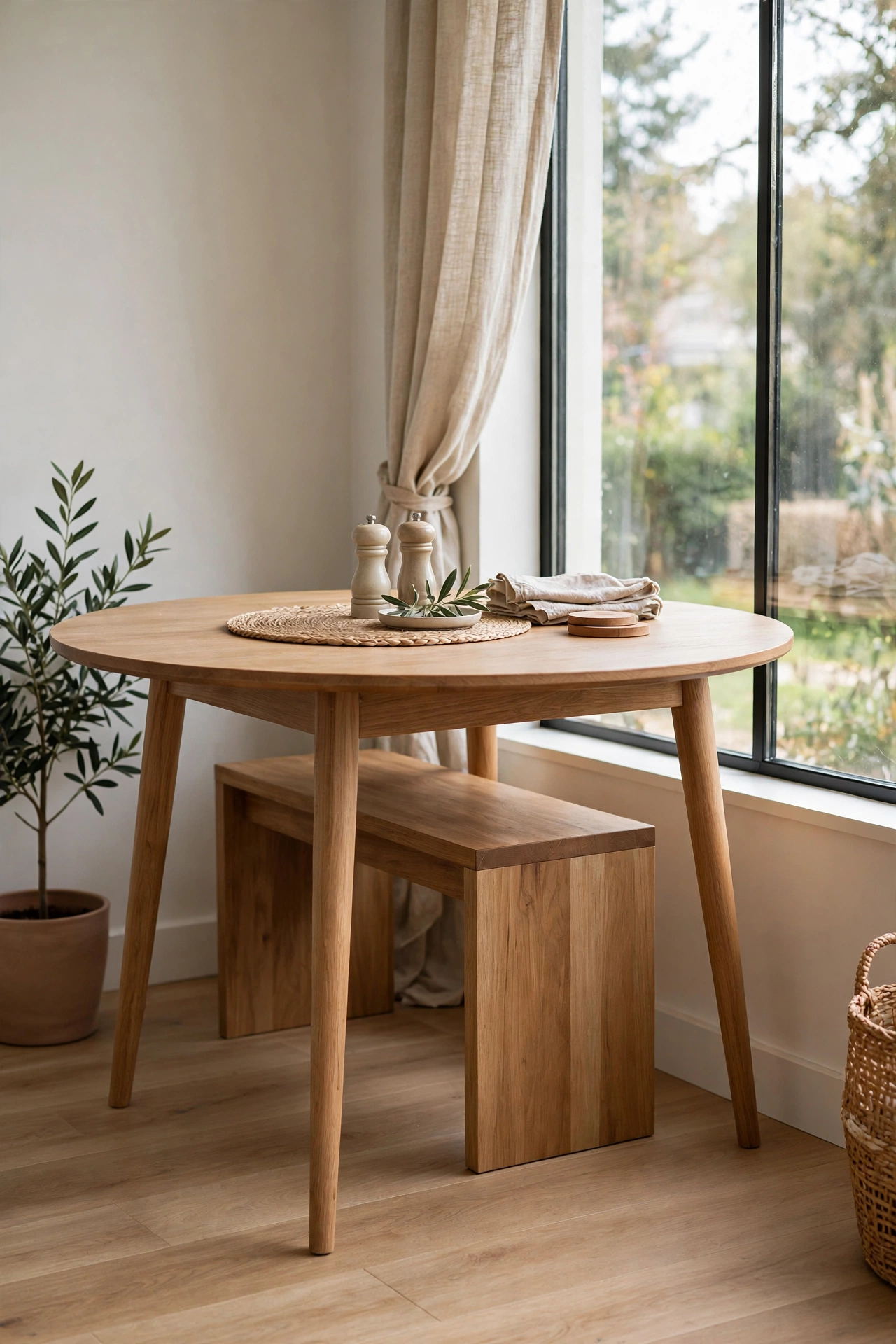
Tip: Put the bench on the window side so the clear walkway faces the doorway. Traffic flows past the room, never through the seating.
3. Hang the Pendant Low
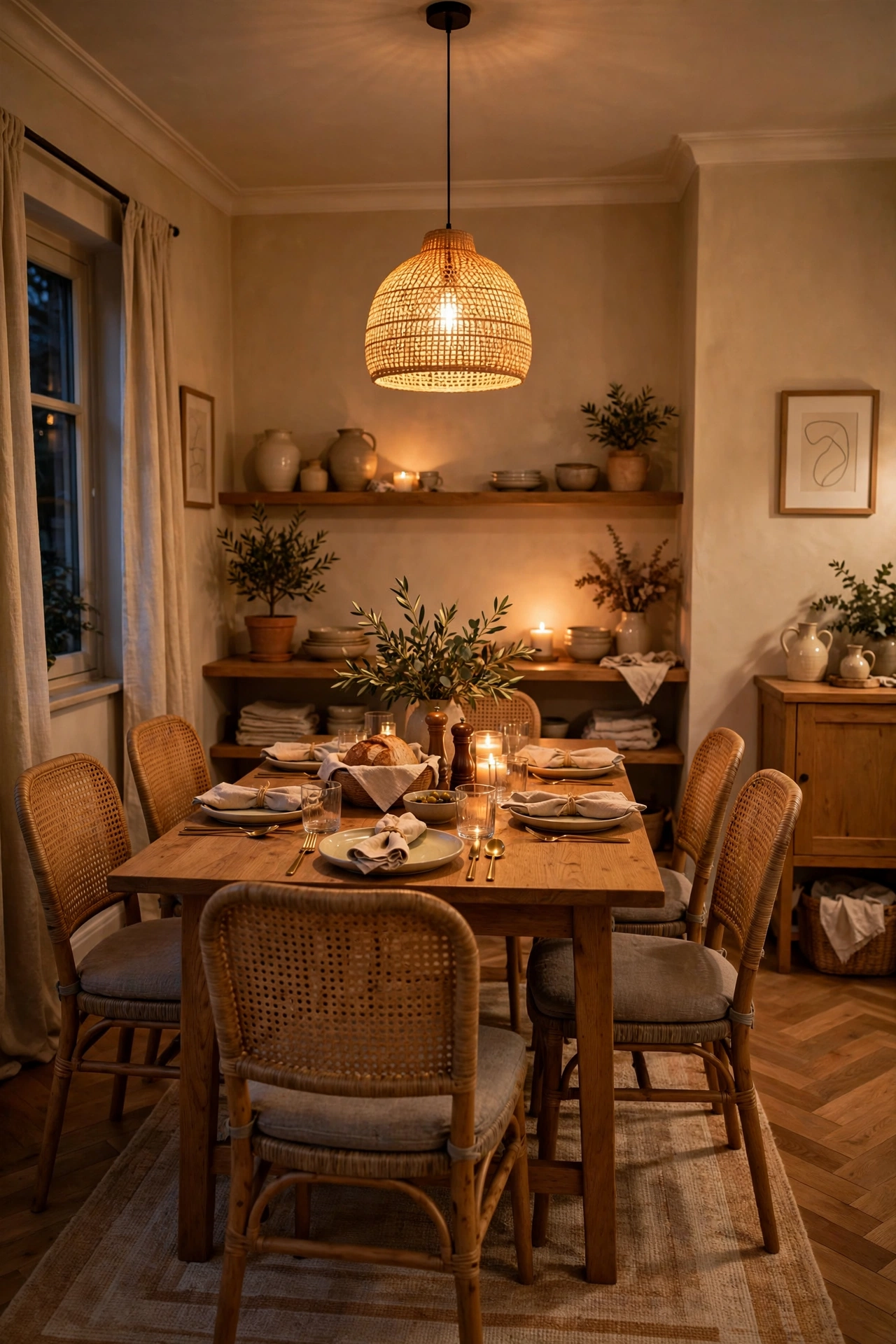
If the table is the heart of the dining room, the pendant light is its jewelry. Our ceiling had a sad flush-mount that lit the room like a dentist’s office. A wide, airy rattan pendant ($85) transformed it: light pools on the table instead of blasting the walls, which makes every dinner feel special and the small room feel intentional. Placement math: hang the bottom of the pendant 30 to 34 inches above the tabletop. I went with 32.
I installed it myself in 40 minutes: turn off the breaker (not just the switch — the breaker), disconnect three wires, connect three wires, mount the bracket. One video watched twice was enough. If your rental doesn’t allow fixture changes, a plug-in pendant with a long cord and a ceiling hook gets you 80 percent of the look with zero wiring. And put it on a dimmer ($20, fifteen minutes): bright for homework, low for dinner parties. The cheapest atmosphere upgrade that exists.
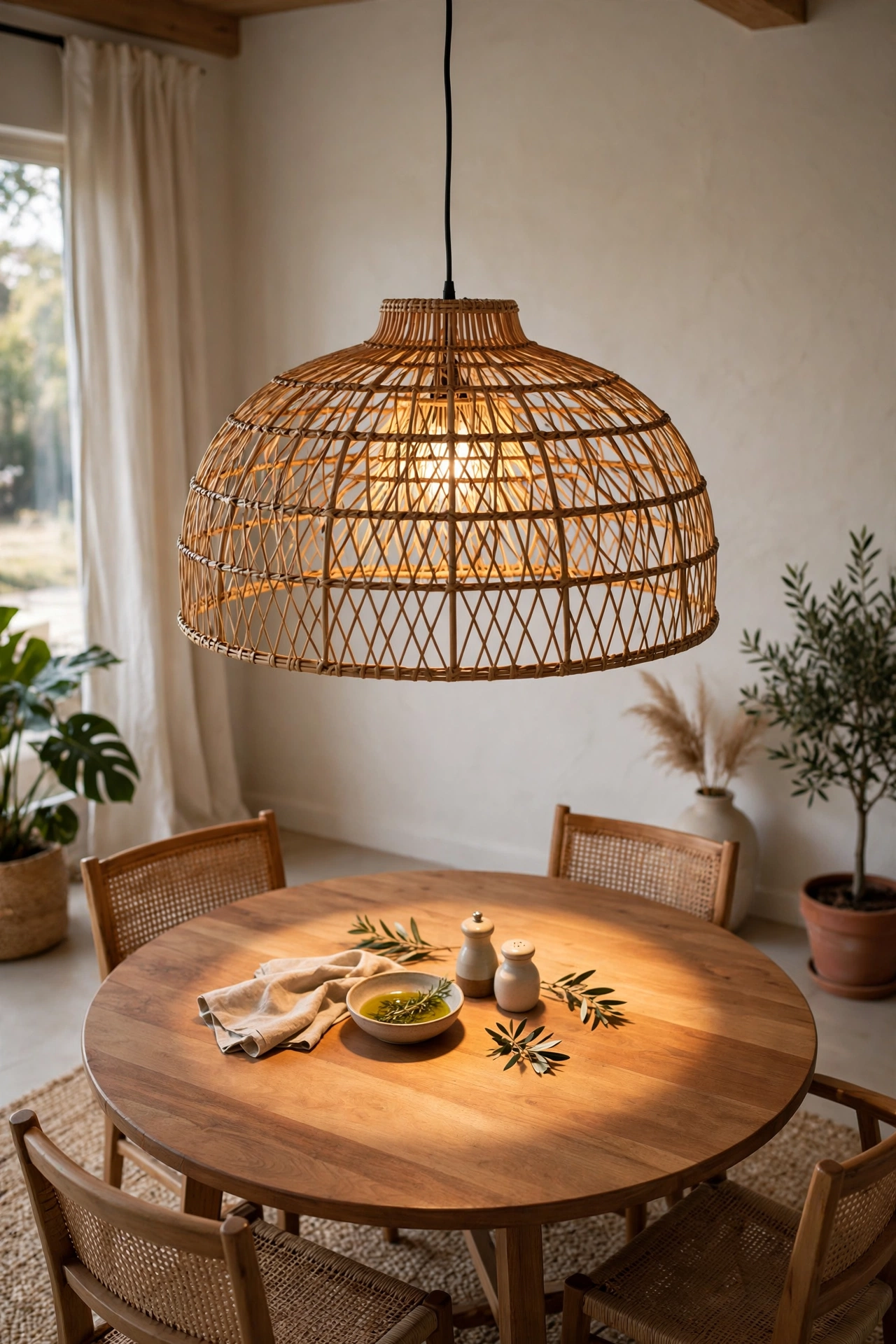
Tip: Lower than 30 inches and tall guests see the bulb; higher than 36 and the light floats disconnected. Measure from the tabletop, not the floor.
4. Go Narrow and Vertical With Storage
A dining room must store dishes, glasses, linens, and serving pieces — in our case, with no closet and 90 square feet. The answer is going narrow and going up. The sideboard is the workhorse: only 14 inches deep instead of the standard 18, which hugs the wall and keeps the walkway clear. Inside it holds everyday dishes, glassware, table linens, and serving bowls. It cost $220, and choosing the shallow depth was the difference between a room that flows and one you sidestep through.
Above the sideboard, two floating oak shelves ($40 for the pair) hold the pretty stuff — the wedding china we actually use, linen napkins, two small plants, a candle. Open shelves work in a dining room because dining items are decorative by nature. They’re 10 inches deep, mounted into studs, and they draw the eye up, making the 8-foot ceiling feel taller. My open shelf styling ideas work just as well here as in the kitchen.
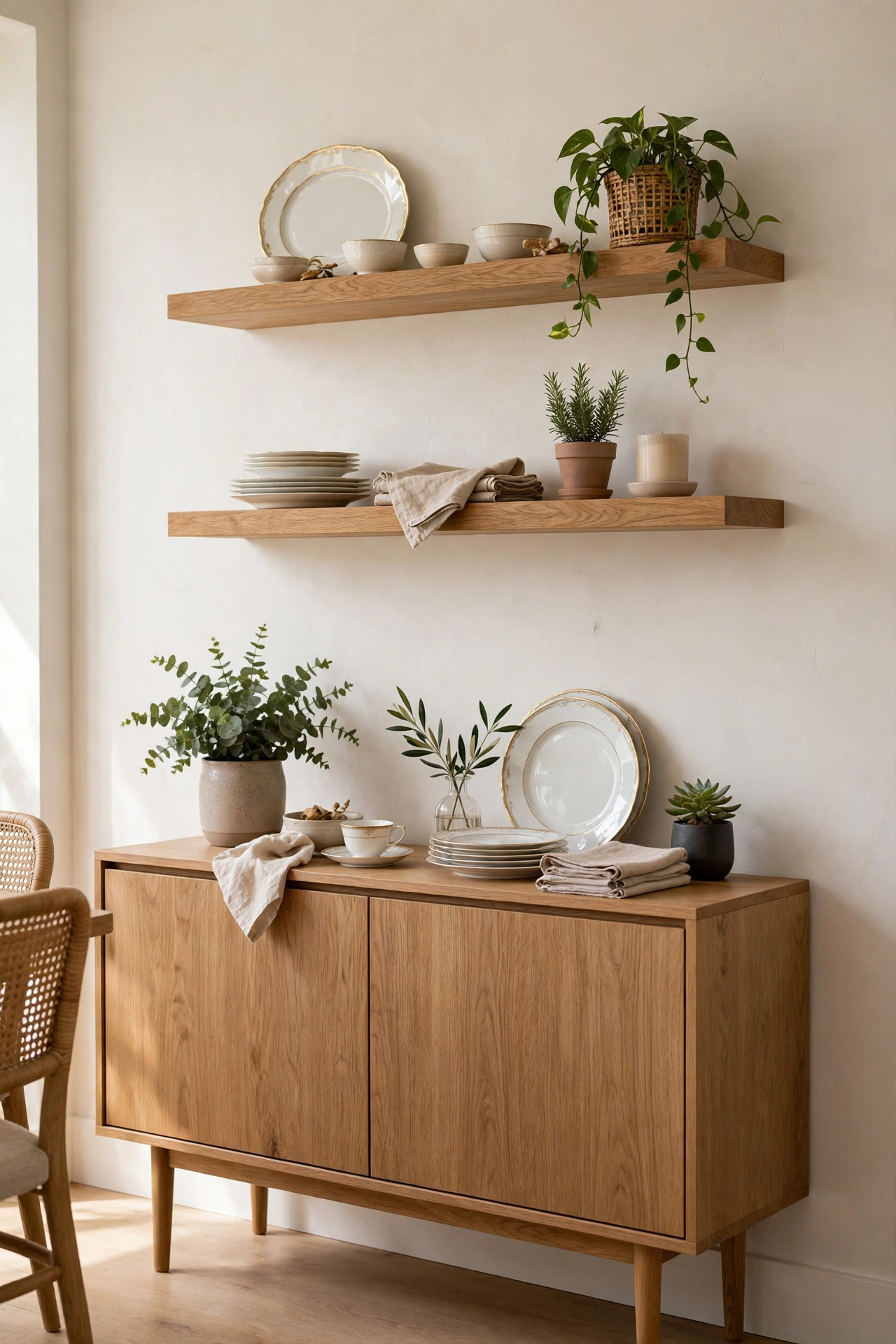
Tip: Before buying anything deep, tape its footprint on the floor and walk past it for a day. Four inches of depth is the difference between flow and sidestep.
5. Mirror the Window
One window means one direction of natural light. To double it, I hung a 36-inch round brass mirror on the wall opposite the window ($95). It catches the daylight and throws it back across the table, and in the evening it doubles the pendant glow. A mirror opposite a window is the oldest small-room trick in the book, and it works every single time.
The bar cart ($75, secondhand, brass and wood) lives in the corner by the window: coffee setup on top, less-used serving pieces below, and on wheels so it rolls away when the corner is needed for extra seating. Storage, serving station, and decor in about 4 square feet of floor.
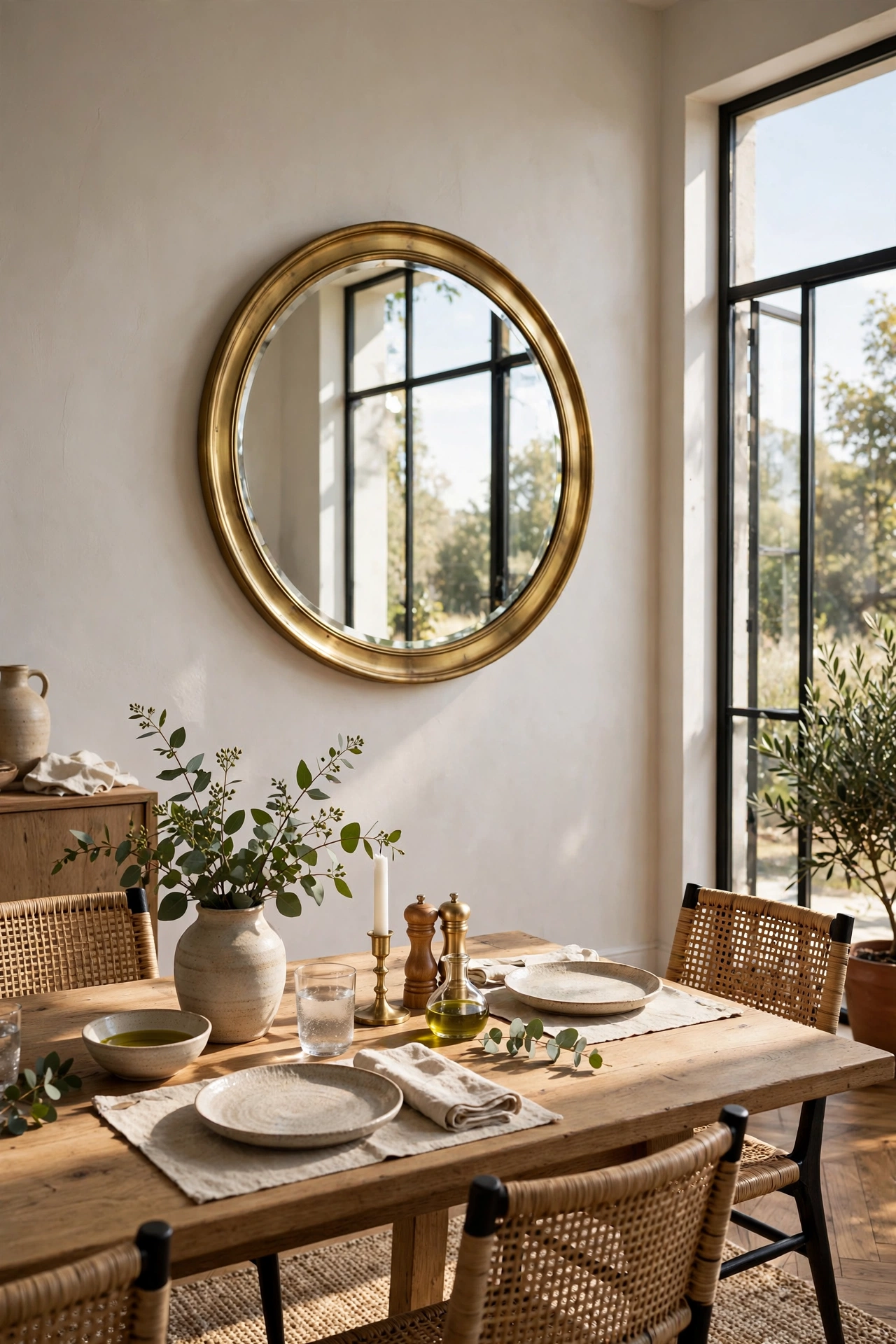
Tip: Hang the mirror at seated eye level, not standing height. It’s the diners’ view that matters, and that’s where the doubled light lands on the table.
6. Buy the Rug First
Here’s the lesson I learned the hard way: buy the rug first. I decorated this entire room, then bought a rug last, and spent three weeks trying to make a too-small rug work before admitting defeat. Don’t be me. A dining rug must fit the table AND the chairs pulled out: 24 inches of rug beyond the table edge on every side. For a 42-inch round table, that’s a rug at least 90 inches (7.5 feet) in diameter. I bought an 8-foot round flat-weave in a warm neutral pattern for $190, and it anchors the whole room.
Flat-weave is non-negotiable under a dining table. Anything with pile traps crumbs and makes chairs wobble. Low, tight, wipeable — I vacuum ours after every dinner and spot-clean monthly, and two years in it still looks new.
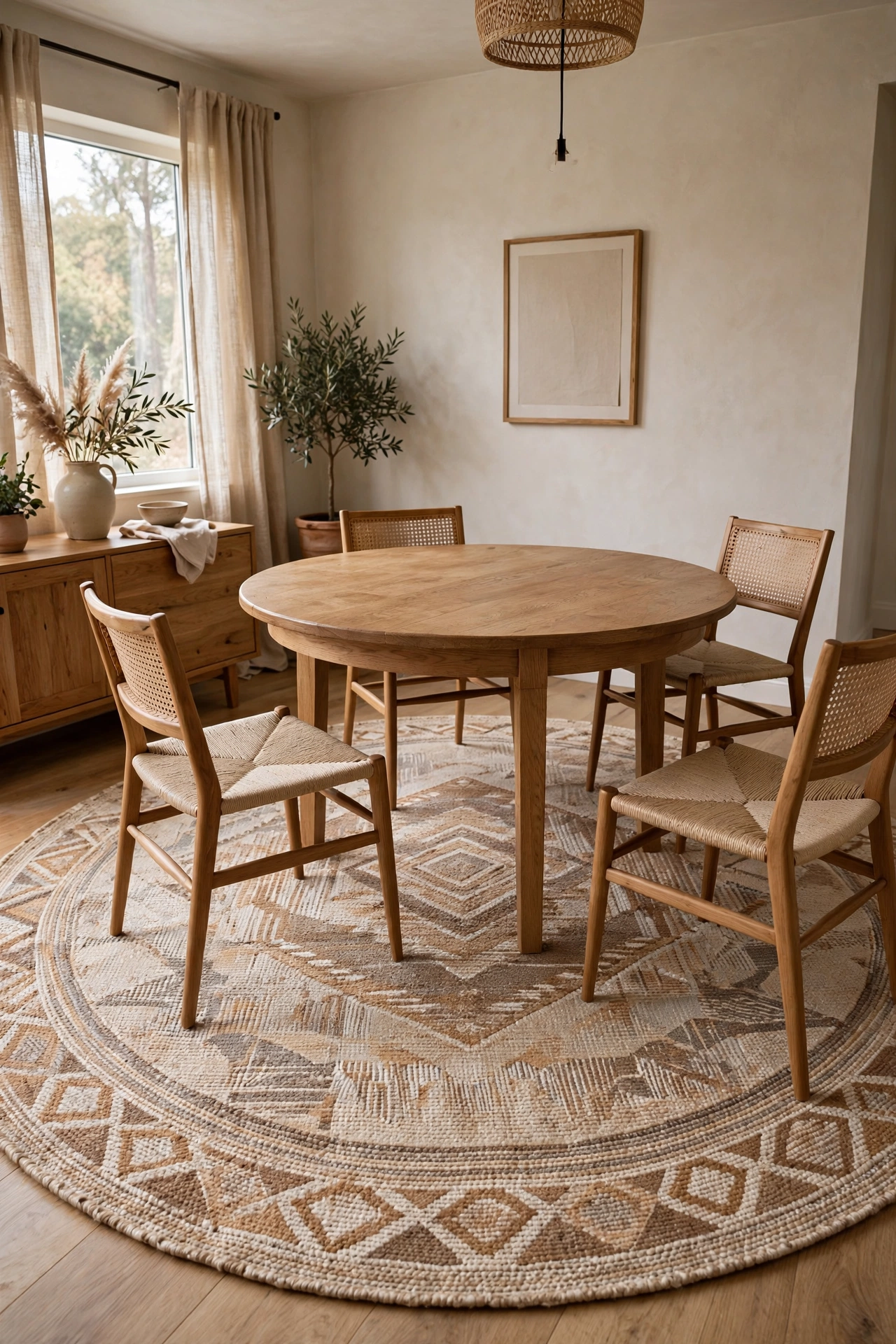
Tip: Order the rug before the table if you can. It’s the foundation everything sits on — literally and figuratively — and the hardest piece to size after the fact.
7. Keep the Walls Restrained
The walls are painted the same warm creamy white as the rest of the main floor, because visual continuity makes small rooms feel larger. One wall has a simple gallery of three framed food prints ($30 total, thrifted frames), hung in a vertical line to emphasize height. That’s the only wall decor. In a 90-square-foot room, restraint is a design choice. Table linens, candles, and small plants ($60 total) add the living layer on the table itself, where the eye actually goes.
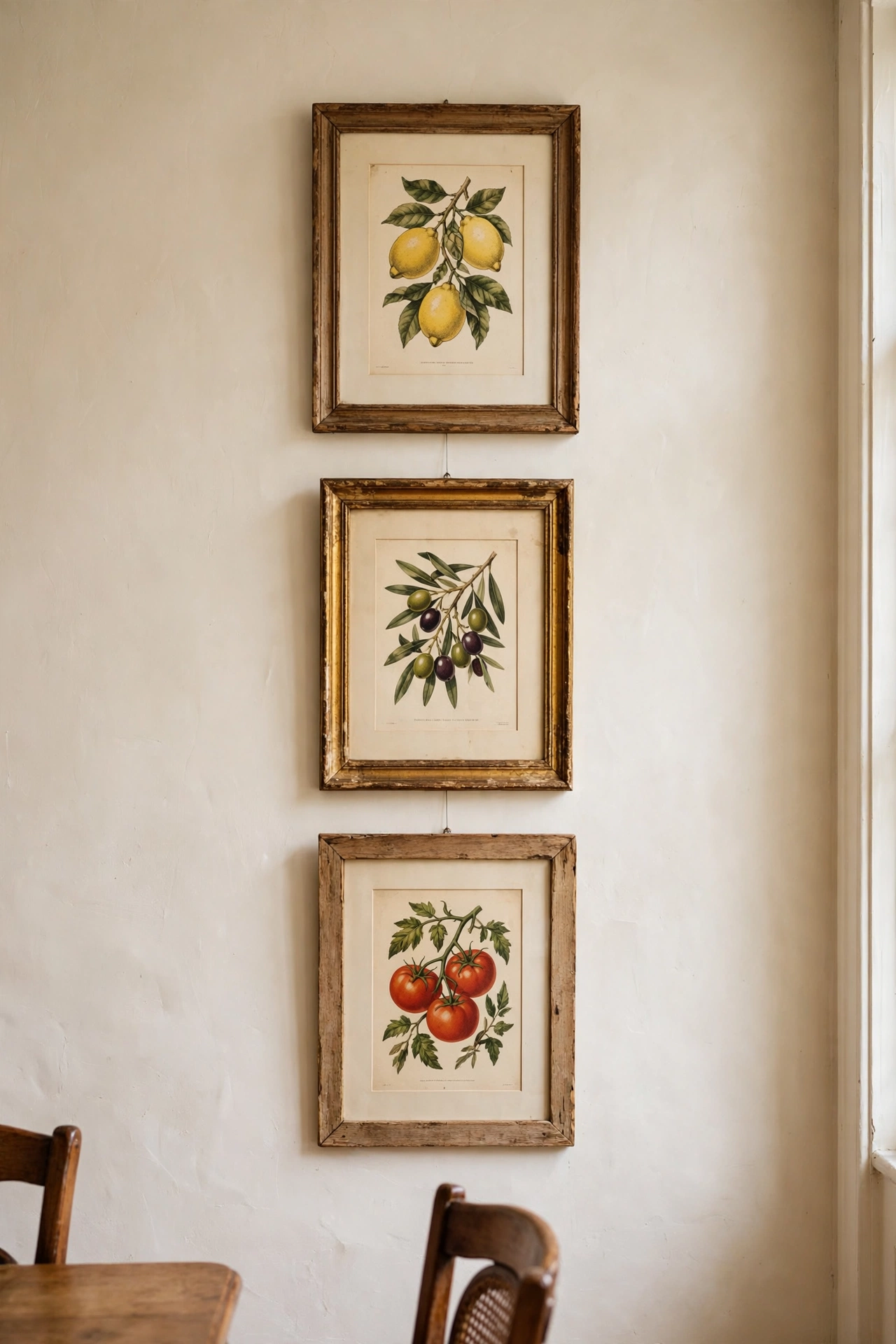
Tip: In a tiny room, hang art vertically to emphasize ceiling height, and stop at one wall. Every extra frame competes with the food and the people.
8. Follow the Full Recipe
The whole source list, because I promised: 42-inch round pedestal table secondhand $180 + $15 refinish supplies, 48-inch bench $95, two reupholstered chairs $140, rattan pendant $85, dimmer $20, 14-inch sideboard $220, two floating shelves $40, bar cart $75, 36-inch brass mirror $95, 8-foot round rug $190, three framed prints $30, linens/candles/plants $60. Total: about $1,420.
The formula is simple: a round pedestal table sized with real math, a bench that disappears, lighting hung low and put on a dimmer, storage that goes narrow and vertical, a mirror across from the window, and a rug bought first in the right size. No renovation, no knocking down walls. If your whole house needs the same low-cost treatment, my room refresh ideas under $50 extend the recipe room by room.
Tip: Host something within the first month — even just pizza night. A dining room earns its keep by being used, and the first dinner teaches you what the layout still needs.
What Matters Most in 90 Square Feet?
| Piece | Cost | Best for |
|---|---|---|
| Round pedestal table | ~$180 | Seats 6, no knee collisions |
| Backless bench | ~$95 | Disappearing extra seats |
| Pendant + dimmer | ~$105 | Atmosphere on demand |
| 14-inch sideboard | ~$220 | Storage without bulk |
| Right-size rug, bought first | ~$190 | The foundation |
| Mirror opposite window | ~$95 | Doubled light |
Frequently Asked Questions
Round or rectangle table for a small dining room?
Round, every time. No corners wasting space, and a pedestal base means no legs bumping knees. A 42-inch round seats six with a bench; a rectangle the same size seats four and feels tighter.
What size rug goes under a dining table?
The rug must fit the table plus chairs pulled out: 24 inches of rug beyond the table edge on all sides. For a 42-inch round table, that’s at least a 7.5-foot rug — I used an 8-foot round.
How high should a pendant hang above the table?
The bottom of the pendant 30 to 34 inches above the tabletop (I used 32). Lower and tall guests see the bulb; higher and the light floats disconnected from the table.
Can a bar cart work in a tiny dining room?
Perfectly. It’s storage, serving station, and decor in about 4 square feet, and because it’s on wheels it rolls out of the way when you need the corner for extra seating.
How do I add storage to a tiny dining room?
Go narrow and go vertical. A 14-inch-deep sideboard hugs the wall and holds dishes, glassware, and linens without blocking walkways. Floating shelves above it draw the eye up and display the pretty pieces. A rolling bar cart adds a serving station in about 4 square feet of floor.
What if my dining room has no window?
Mirror and lighting carry the room. Hang a mirror to bounce lamplight around, use a warm pendant on a dimmer, and keep the walls light so the space glows instead of feeling cave-like. Sheer curtains on a nearby doorway can borrow light from the next room.
Final Thoughts
People apologize for their small dining rooms, and I want that to stop. Our 9-by-10 room has hosted Thanksgiving for eight, birthday dinners, homework sessions, jigsaw puzzles that took up the table for a week, and a thousand ordinary Tuesday dinners. It has never once felt too small, because every inch was chosen on purpose. Measure the room, do the 36-inch math, and start with the rug. Then invite people over. A small dining room full of people you love is not a compromise. It is the coziest room in the house. Domino’s decorating ideas for a small dining room offer a bolder take.

