
13 Sunroom Decor Ideas


What makes a sunroom the favorite room in the house? It comes down to three things: seating that invites long mornings, natural materials that look better under sunlight, and a plan for the hours when the light turns harsh. Get those three right and a sunroom stops being a room you walk through and becomes the room you drift toward with your coffee. These sunroom decor ideas are built for real homes with warm neutral style, leaning on rattan, linen, jute, and plants for that indoor-outdoor feel.
A sunroom is different from every other room you decorate. The same glass walls that make it bright at nine in the morning can fade fabrics, overheat plants, and wash out dark colors by afternoon. Every idea below accounts for that reality, so your styling choices hold up through summer glare and still look cozy on a gray afternoon. You do not need a renovation or a designer budget. Most of these ideas work with pieces you already own, a few smart fabric swaps, and plants that enjoy the spotlight. For more inspiration from designer rooms, HGTV’s sunroom design ideas gallery shows how different styles handle the same light-filled challenge.
Key Takeaways
- Anchor the room with natural materials: rattan seating, linen textiles, and a natural fiber rug.
- Layer plants at different heights — floor pots, hanging planters, and tabletop greens — for a lush indoor-garden feel.
- Soften harsh sun with gauzy linen curtains while keeping the view open and clear.
- Create simple zones: a reading nook by the brightest window and a small breakfast corner with a bistro set.
- Add warm evening lighting so the sunroom glows after dark instead of going unused at night.
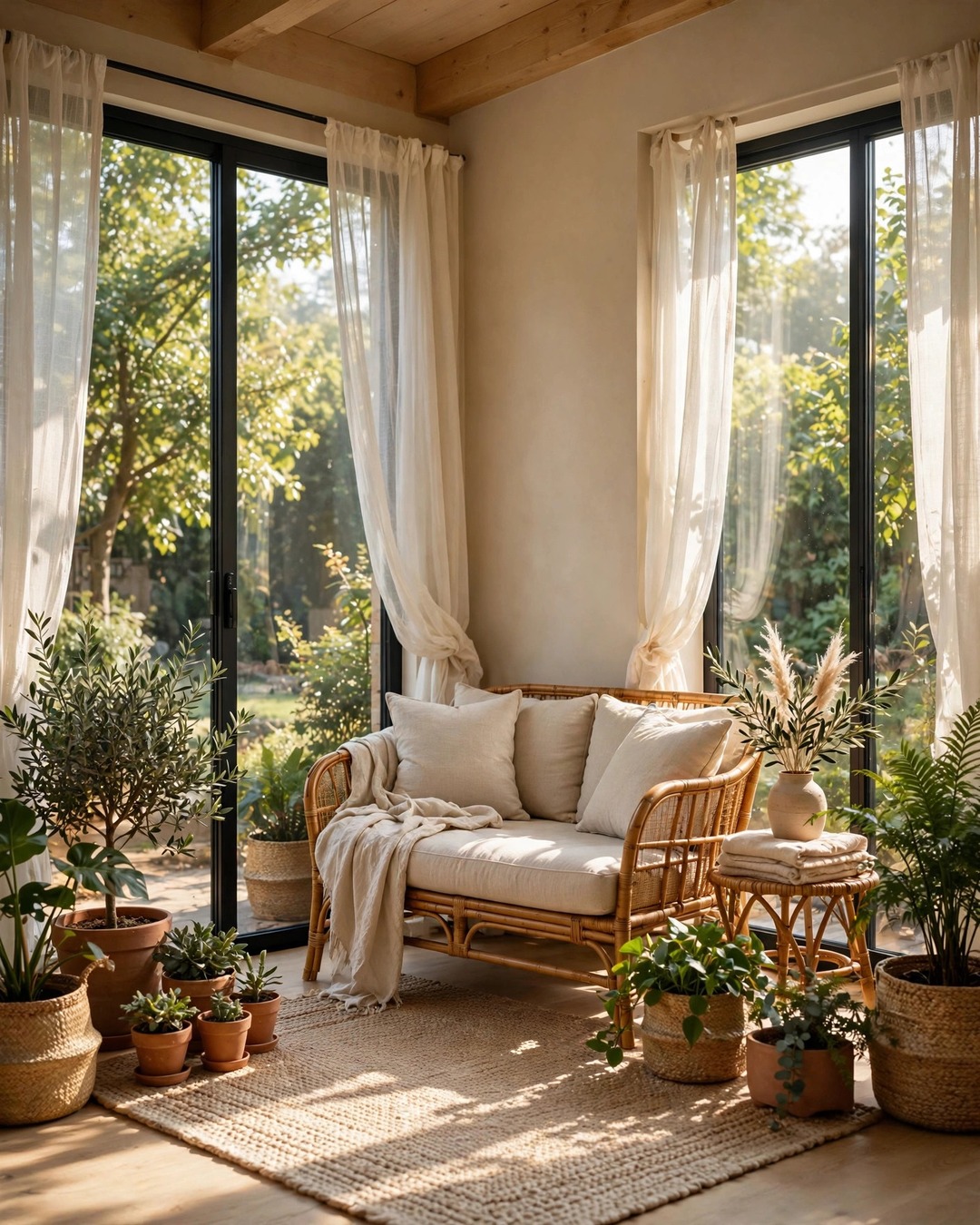
1. Start With a Rattan Anchor Set
Every sunroom needs one piece that sets the tone, and rattan does it better than anything else. A rattan loveseat or a pair of rattan armchairs tells the eye this is a relaxed, sun-washed space before you even sit down. The open weave lets light pass through instead of blocking it, so the furniture never feels heavy in a room made of windows. Look for frames with tight, even weaving and cushions in a washable beige or oatmeal fabric, since sunroom seating takes more UV exposure than any other seat in the house.
Place the anchor set where it gets morning light but avoids the harshest afternoon sun, usually facing into the room rather than backed against the glass. Morning-facing seats feel warm without baking you out of them at two in the afternoon. If you find a sturdy rattan frame secondhand, new cushion covers are all it needs to look fresh, and my thrift store decor guide covers exactly what to check before you bring wicker home.
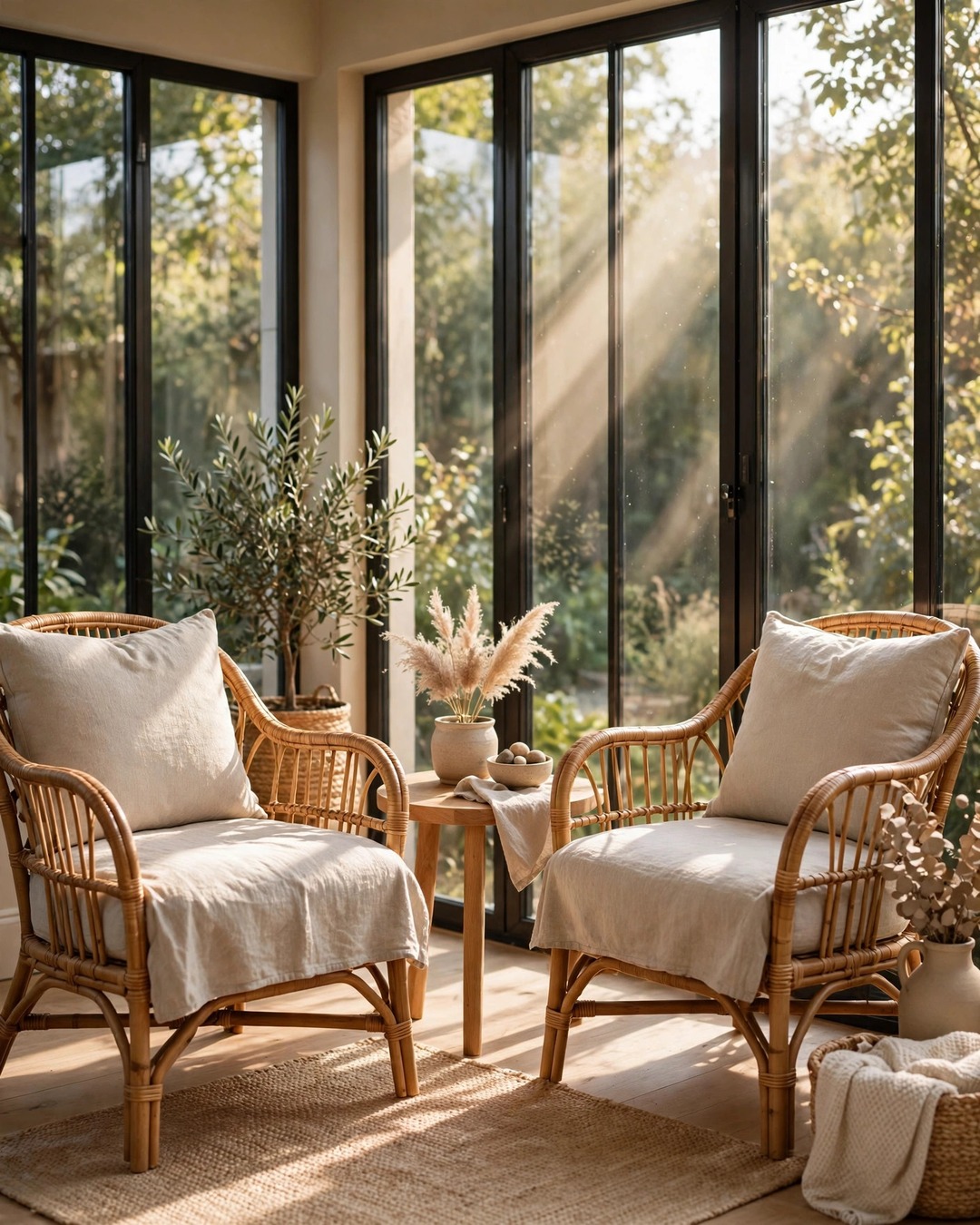
Tip: Choose cushions with removable, washable covers. Sunroom fabrics collect pollen, dust, and the occasional sunscreen smudge faster than interior rooms, and a cover you can toss in the wash keeps the whole set looking new.
2. Layer Linen Textiles That Catch the Light
Linen is the sunroom’s best textile because of what it does in direct light: it glows. A linen throw draped over a chair arm, linen cushion covers, or a simple linen table runner all catch sunlight and soften it at the same time. Stick to a tight palette of beige, ivory, cream, and soft taupe so the layers read as calm rather than busy. The slight texture of linen keeps an all-neutral scheme from feeling flat.
Washable linen-blend covers are worth seeking out for the same reason they are worth it everywhere else in a sun-filled room. Rotate cushion covers seasonally and keep one spare set on hand, so the room always looks fresh without buying new pillows every spring. A linen table runner down the center of a sunroom table or console adds softness even when the table itself is bare.
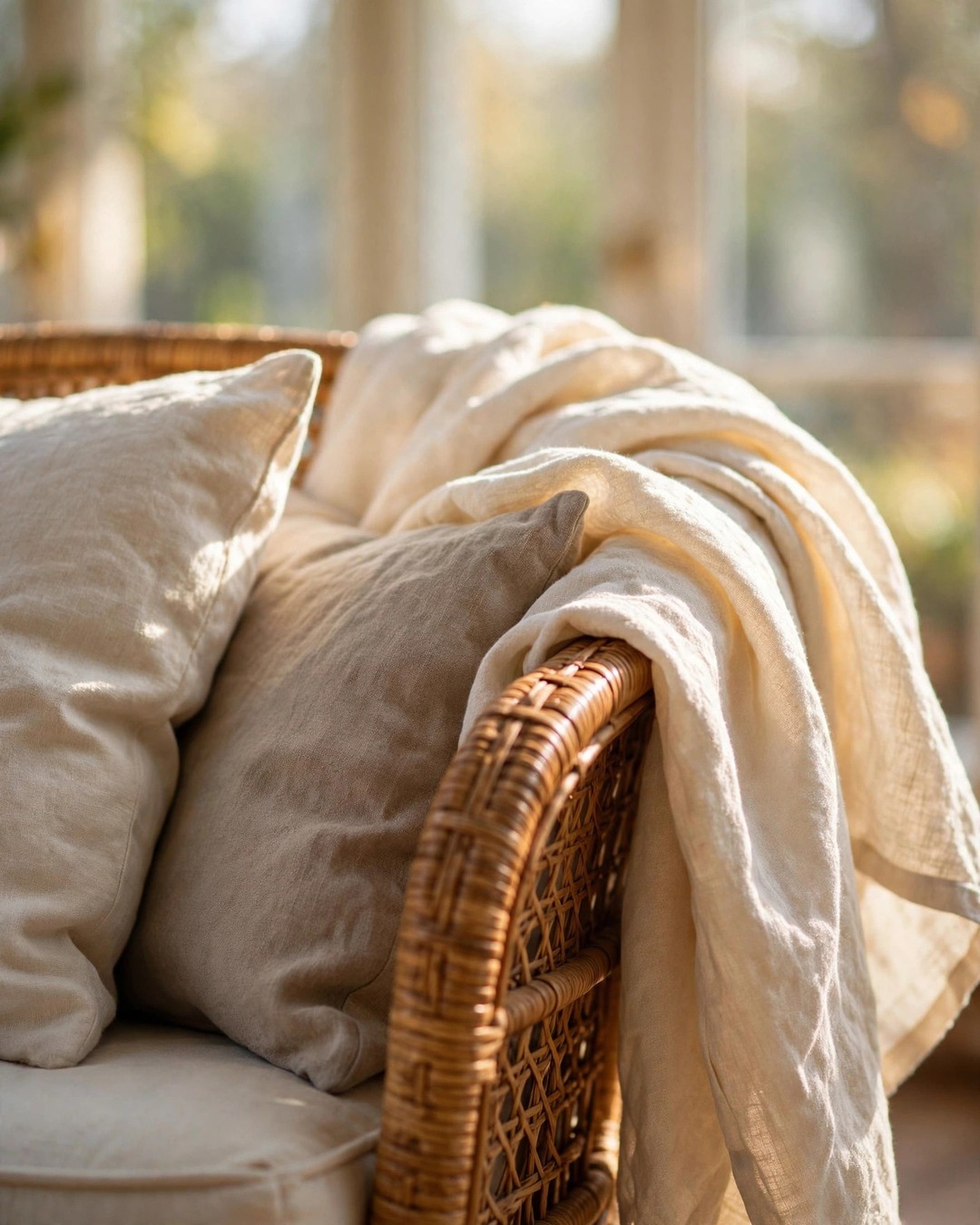
Tip: Avoid dark or very saturated cushion covers in a sunroom. They show fading fast under daily sun, while naturals and creams fade so gradually you will hardly notice.
3. Build a Layered Plant Corner
A sunroom is the one room where you can stop worrying about whether plants get enough light and start thinking about height and grouping. Cluster plants in one generous corner instead of scattering single pots around the room. A tall bird of paradise or fiddle leaf fig anchors the arrangement, with trailing pothos on a plant stand and a few medium pots at different heights to build a layered look. The grouping reads like a little indoor garden and gives the corner real presence.
Choose pots in clay, terracotta, or woven seagrass to keep the beige-and-natural palette intact. A large tray or boot mat under the grouping protects floors and makes watering day simple. If your sunroom bakes in afternoon sun, keep the most delicate plants a few feet back from the glass and let sun-lovers like succulents and snake plants take the front row.
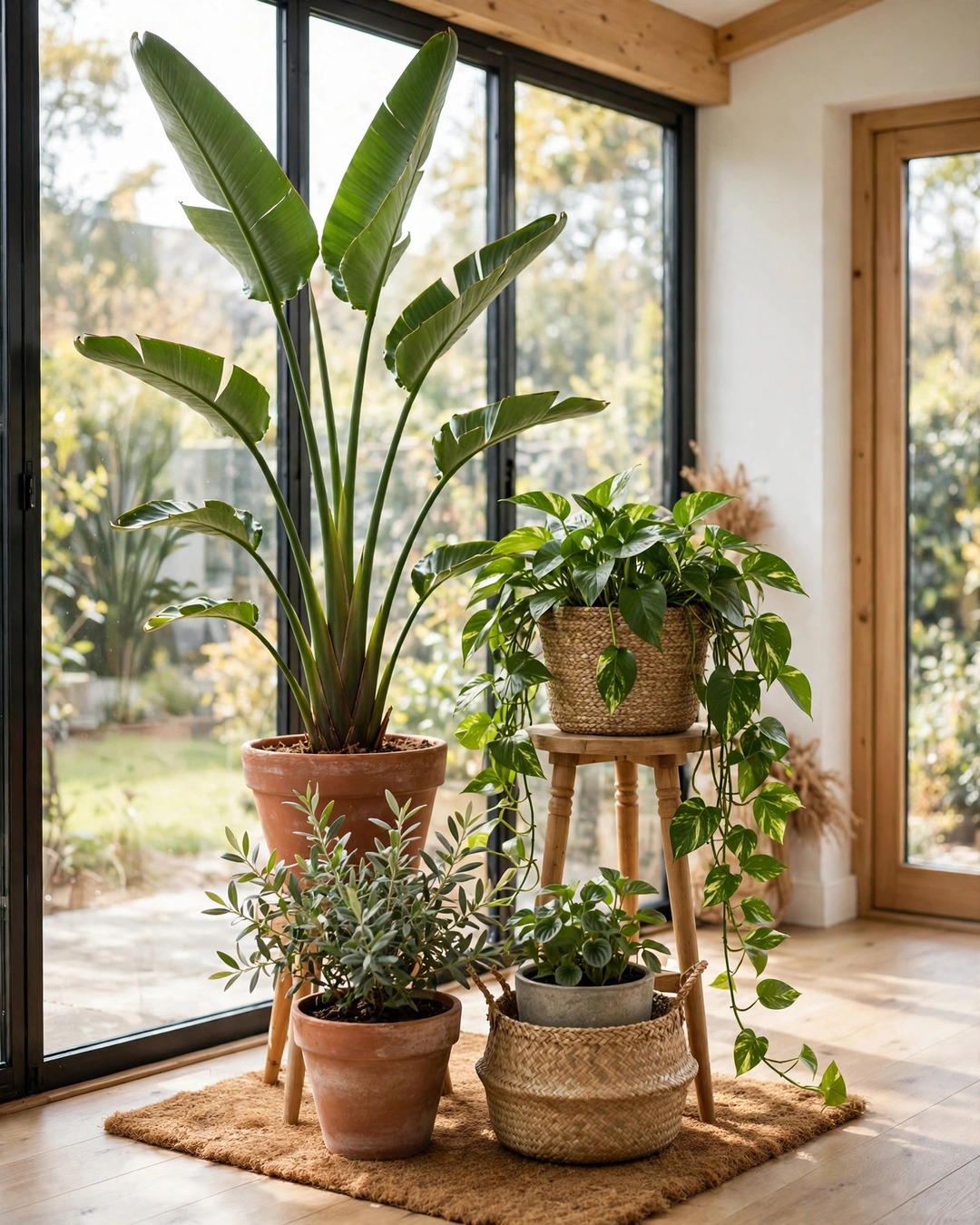
Tip: Mix heights on purpose. Put the tallest plant in back, medium pots on a low bench or crates, and one trailing plant on a stand. Three levels of greenery make the corner feel designed rather than collected.
4. Create a Reading Nook by the Brightest Window
Give your sunroom a job and it will get used every day. A reading nook needs only three things: a comfortable chair with good back support, a small surface for a book and a drink, and light that falls over your shoulder. Place the chair at a slight angle to the window so you get brightness without glare on the page. A floor lamp with a warm bulb extends the nook’s hours past sunset, which matters because the whole point is daily use.
Add a soft throw and a cushion with some structure, since a reading chair gets hours of daily use. A narrow bookshelf or a stack of books on the side table keeps the corner feeling intentional rather than like a chair that wandered in from another room. Keep the palette consistent with the rest of the sunroom so the nook feels like part of the room, not an add-on.
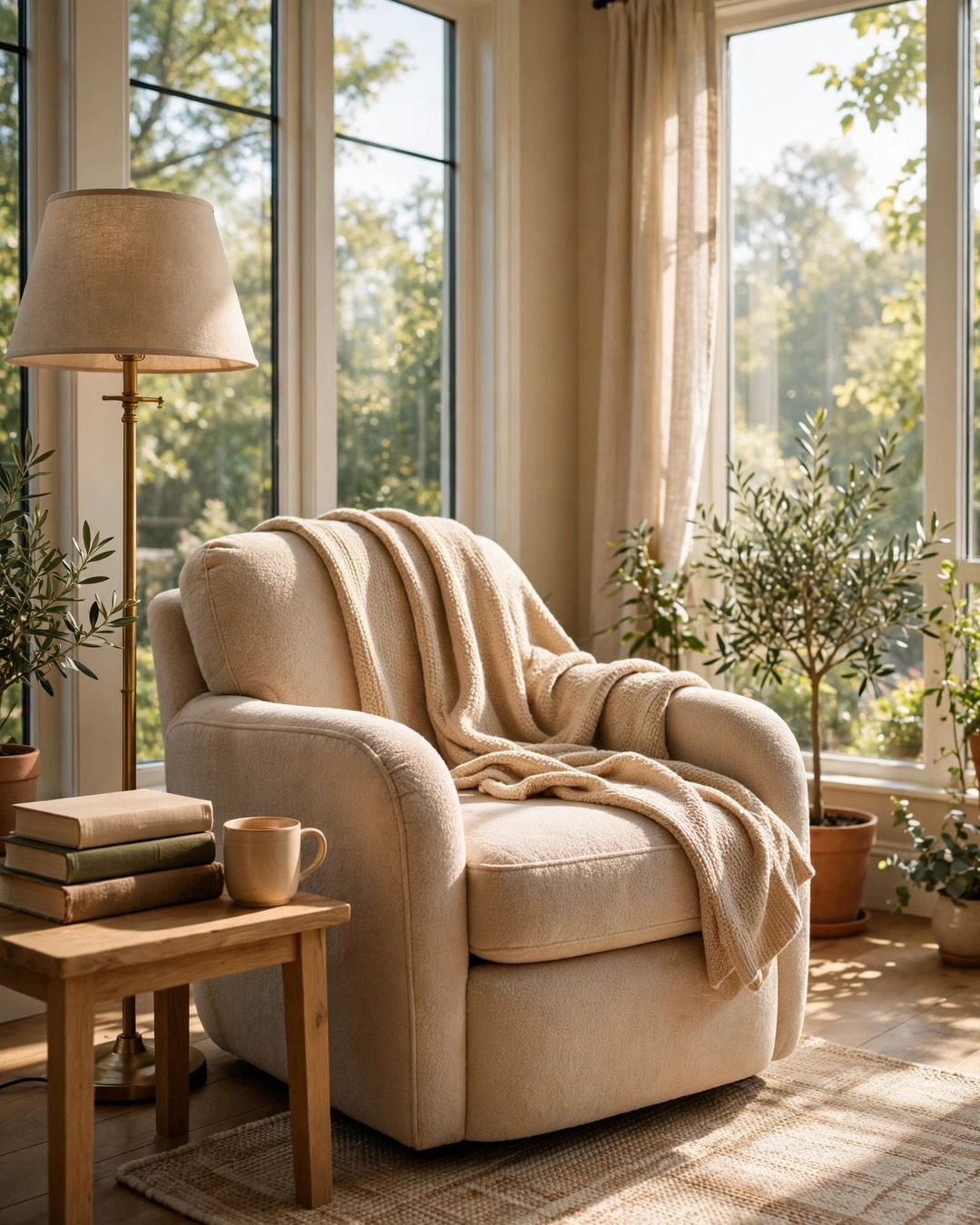
Tip: Angle the chair so you face partly into the room and partly toward the window. You get the view, the light, and a sense of being tucked into the space all at once.
5. Add a Breakfast Corner With a Bistro Set
Morning light is the sunroom’s best feature, so give it a morning job. A small round bistro table with two chairs turns the brightest corner into a breakfast spot that rivals any cafe. Round shapes fit awkward sunroom corners well because there are no sharp edges to bump in a room where you are always moving around plant stands and chair legs. Keep the styling light: a linen runner, a small vase, and two cushions.
This works even in a sunroom that mainly serves as a sitting room. The bistro set takes up little floor space and gives guests somewhere to land with a drink during the day. My cozy dining corner for slow mornings walks through the same small-space formula in more detail, from table size to cushion choices that make a tiny corner feel like a destination.
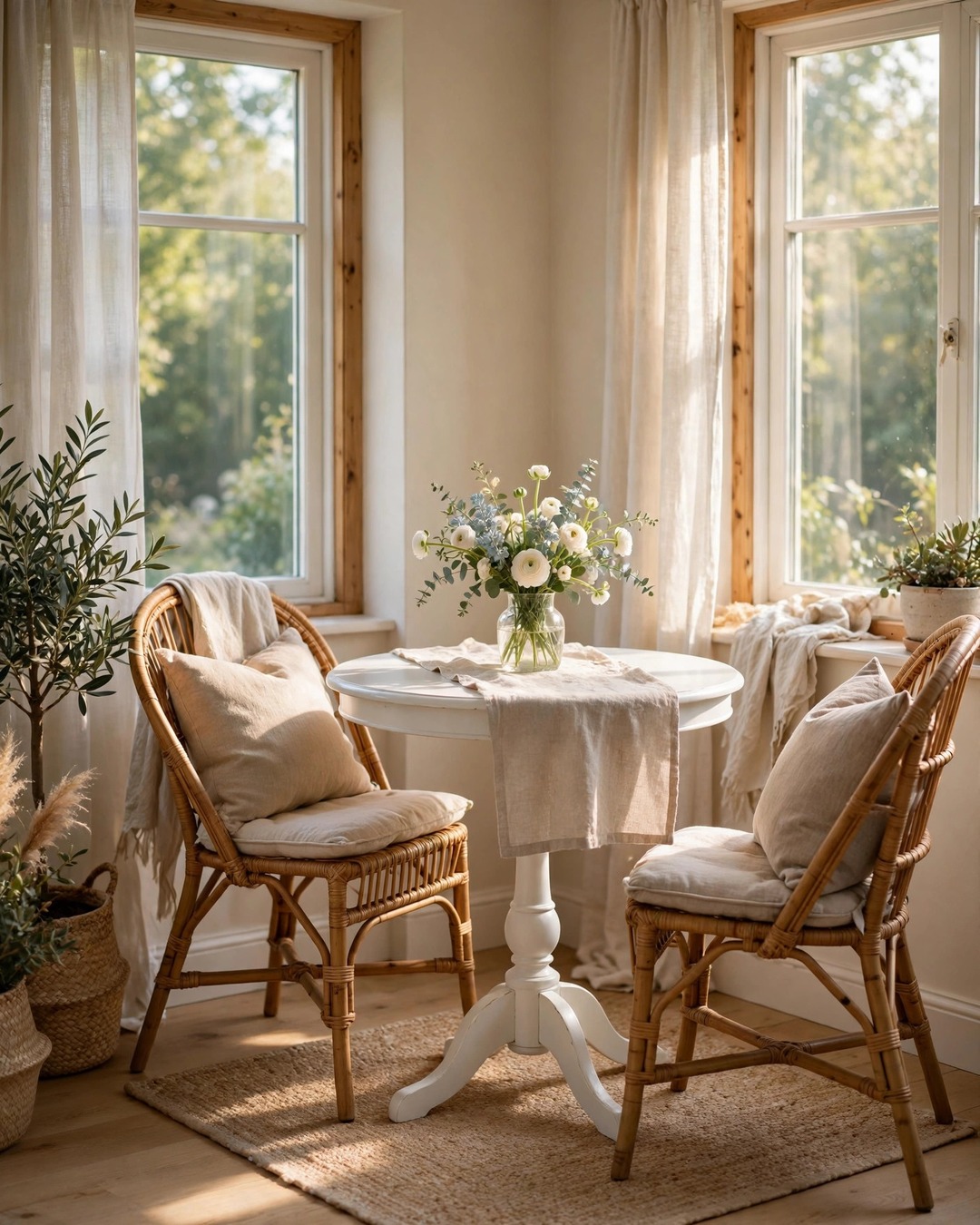
Tip: A pedestal-base bistro table beats a four-legged one in a tight sunroom corner. You can push it closer to the window and still slide chairs in easily.
6. Hang a Gallery Wall on the One Solid Wall
Most sunrooms have one wall with little or no glass, and it is begging for art. A gallery wall gives the room a visual anchor that glass cannot provide, and it makes the sunroom feel connected to the rest of the house instead of floating apart from it. Choose frames in warm wood or thin black metal, and keep the artwork itself light: botanical prints, simple line drawings, or landscape sketches that echo the view outside.
Hang the gallery where it gets indirect light rather than direct afternoon sun, which protects the prints and keeps colors true longer. Start the arrangement at eye level from your main seating spot and build outward. My guide to hanging a gallery wall like a pro covers spacing and layout templates so the wall looks planned instead of random.
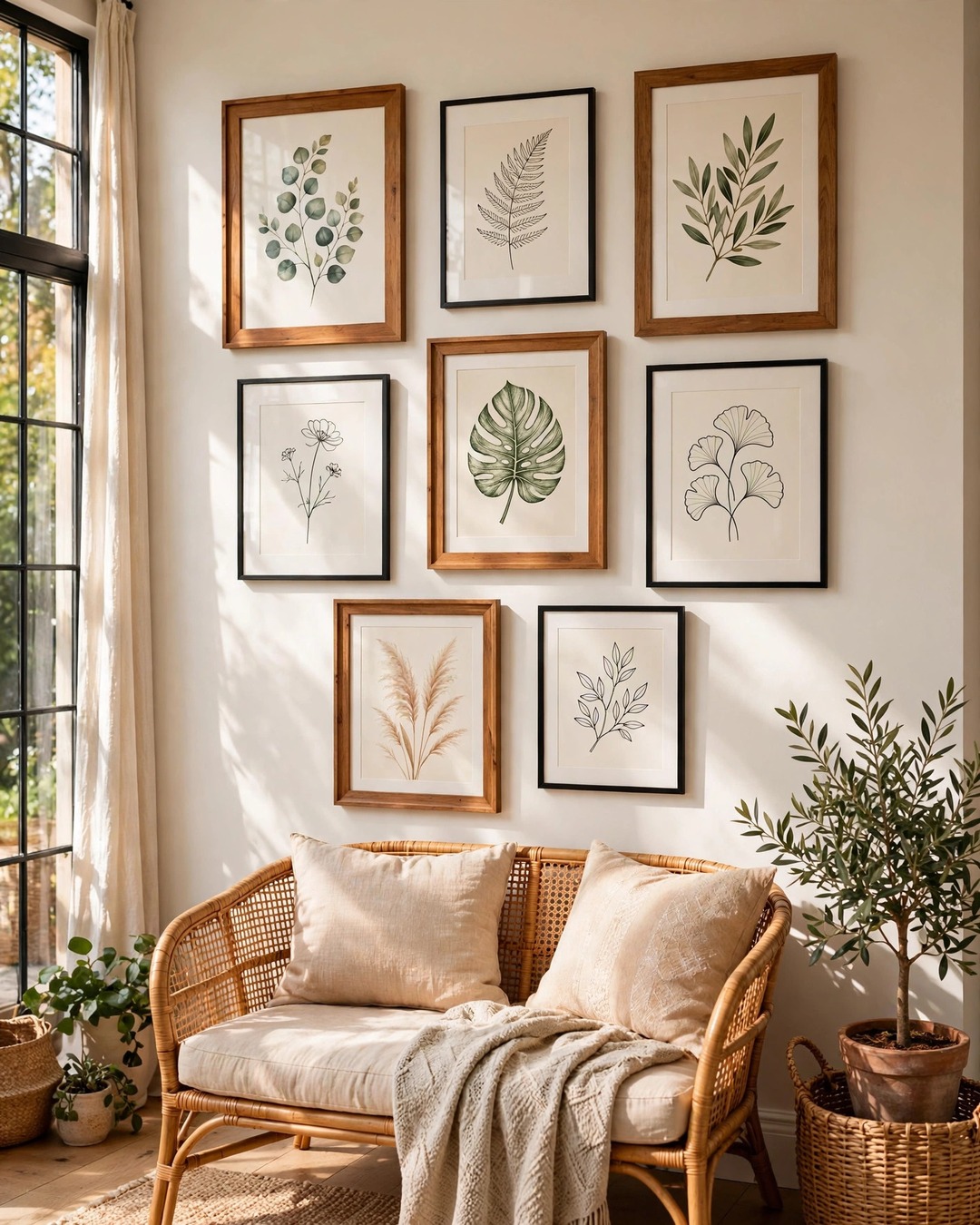
Tip: Use UV-protective glass or acrylic on framed prints in a sunroom. It costs a little more up front and adds years to the life of the artwork.
7. Ground the Room With a Natural Fiber Rug
Sunroom floors are usually hard surfaces like tile, stone, or sealed concrete, chosen because they handle moisture and sun. A natural fiber rug warms all of that up underfoot. Jute, sisal, or seagrass rugs hold up well in bright rooms, and their sandy tones blend right into a warm neutral palette. The texture under your feet makes the sunroom feel like a real living space rather than a glass box.
Size the rug to fit under the front legs of your main seating pieces at minimum. In a long sunroom, two smaller rugs can define separate zones, one for lounging and one for the breakfast corner. Shake a jute rug outside regularly instead of vacuuming it hard, since aggressive vacuuming can pull the fibers loose.
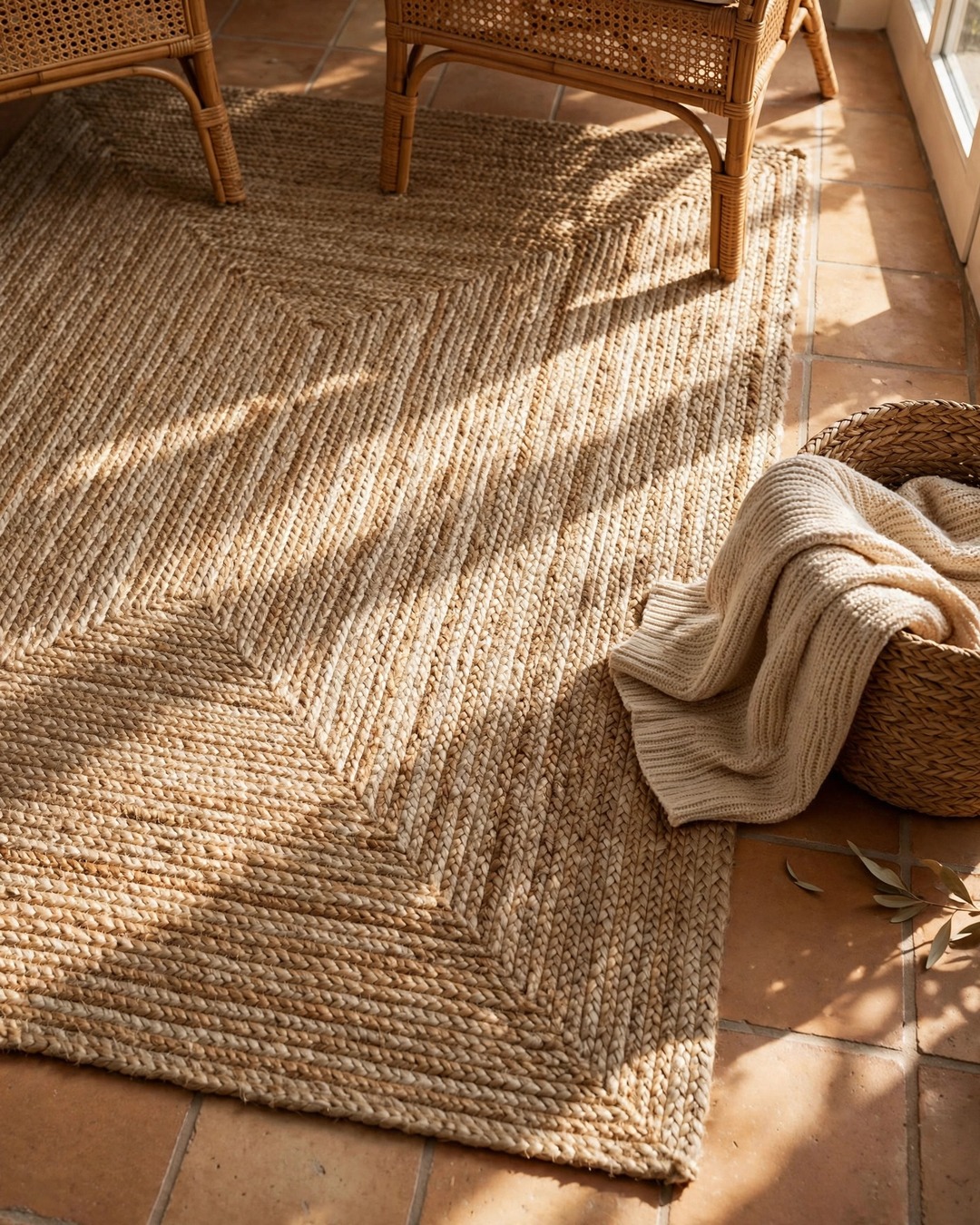
Tip: A thin rug pad under a natural fiber rug stops it from sliding on tile and adds a little cushion. It also protects the rug backing from moisture on hard floors.
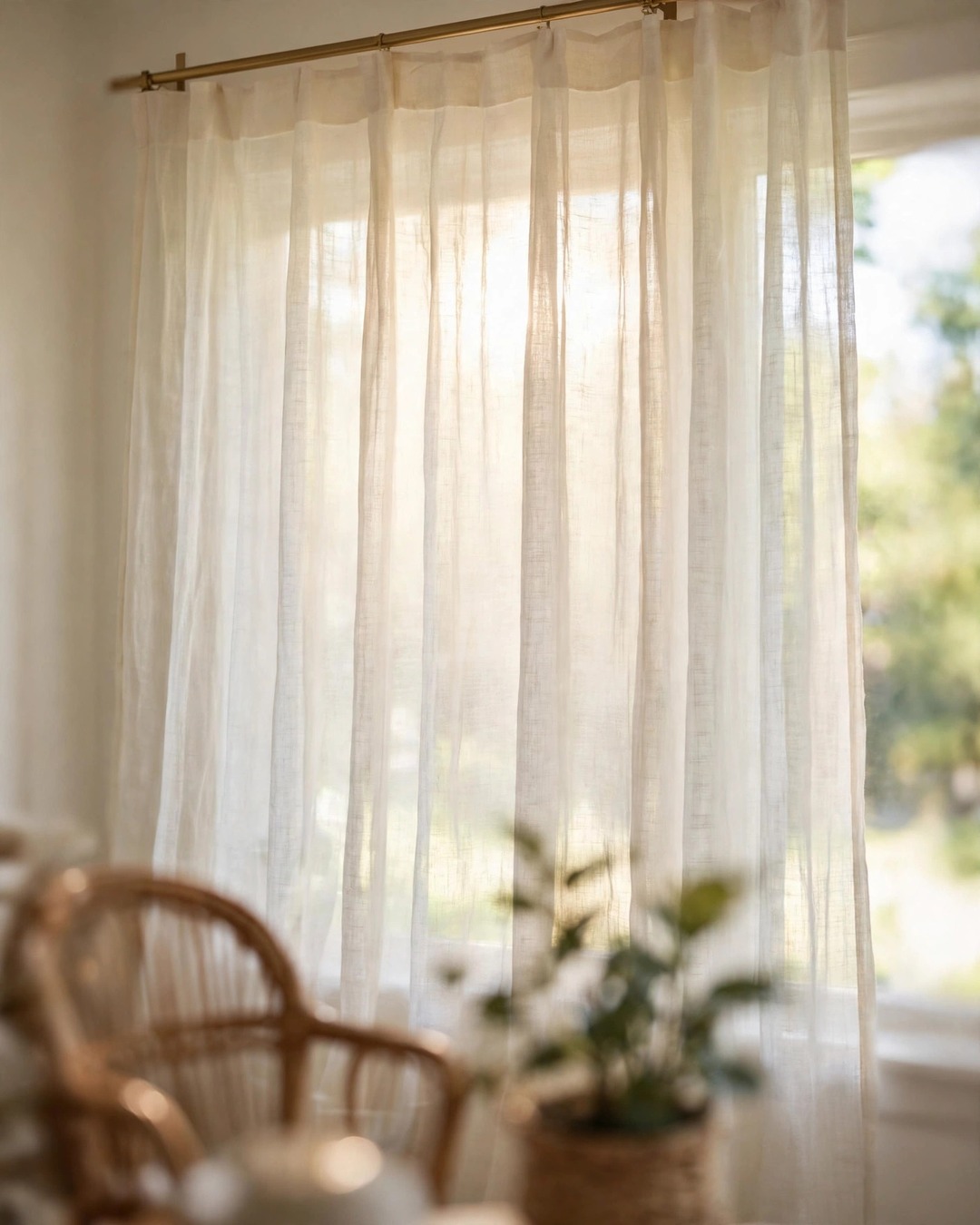
8. Soften Glare With Gauzy Linen Curtains
The same sunlight that makes a sunroom wonderful is also its biggest styling problem. Gauzy linen curtains solve it without turning the room into a cave. They diffuse harsh midday light into a soft glow, cut glare on book pages and laptop screens, and give you privacy in the evening when interior lights make the glass walls see-through. Hang them high and wide so they frame the windows instead of covering them.
Keep the curtains light in both color and weight. Sheer ivory or oatmeal linen lets you see the garden through a soft filter even when they are drawn. Mount the rod near the ceiling and let the panels fall just to the floor, which makes low sunroom ceilings feel taller. In rooms with crank windows or doors that open inward, use tiebacks to keep the fabric clear of moving hardware.
Tip: Choose curtain panels you can wash at home. Sunroom curtains collect dust and pollen, and dry-clean-only fabric in a glass room becomes an expensive chore.
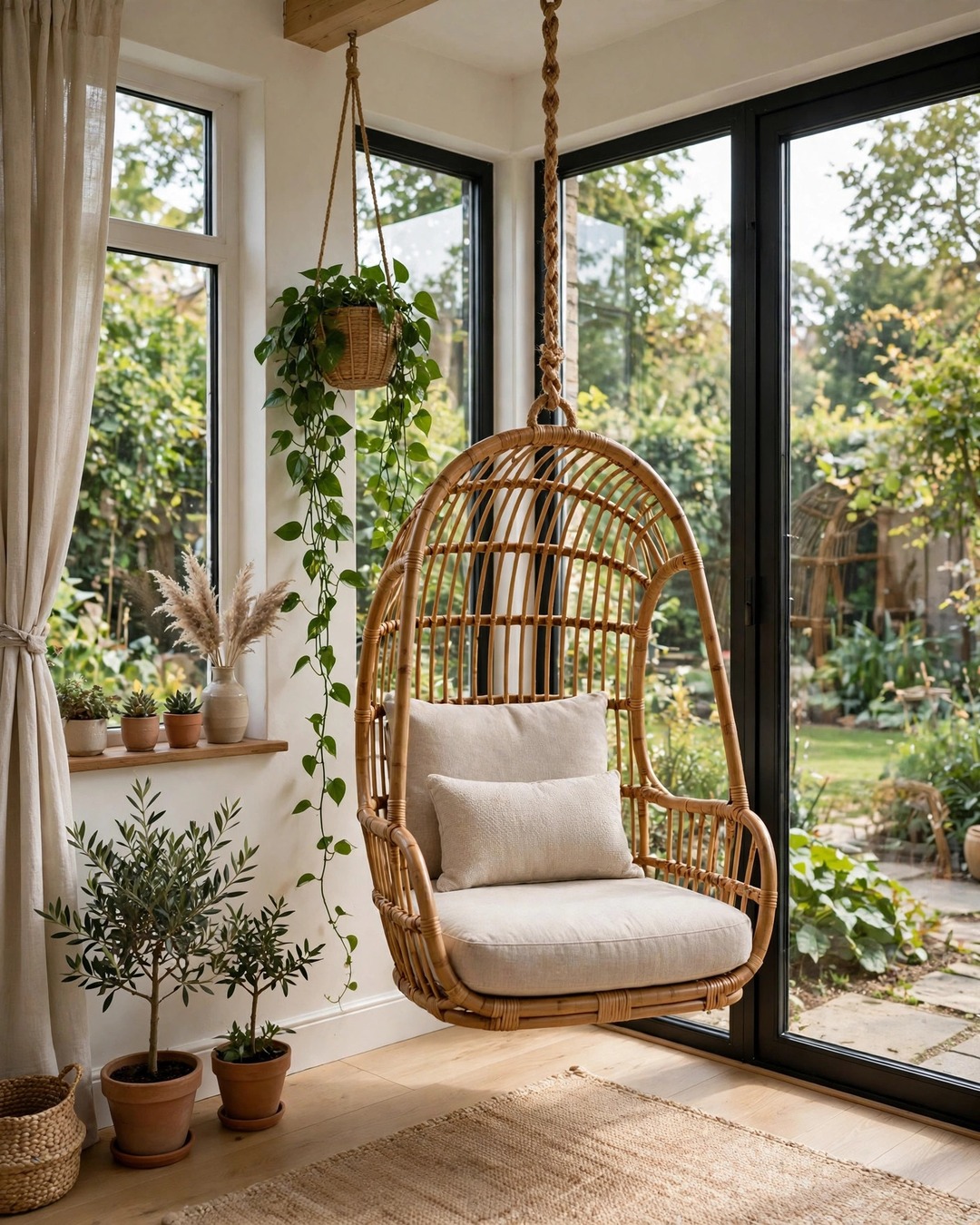
9. Hang a Rattan Swing Chair
A hanging rattan chair is the sunroom’s signature piece. It adds the indoor-outdoor feel instantly, it swings gently, and it takes up less visual space than a second armchair because of its open profile. Tuck it into a corner near the windows so the sitter gets the view and the breeze from an open window. Style it with one seat cushion and a small lumbar pillow rather than stuffing it full, since overstuffed hanging chairs look bulky and sway awkwardly.
Before you hang it, check what your ceiling can hold. A ceiling joist or beam is the safe anchor; a simple drywall ceiling is not. Freestanding hanging chair frames are a good alternative when the ceiling is not suitable, and they let you move the chair with the seasons. BHG’s sunroom decorating ideas include a cozy hanging rattan chair setup that shows how little space one really needs.
Tip: Give the chair at least two feet of clearance on all sides so it can swing without knocking into plants, walls, or other furniture.
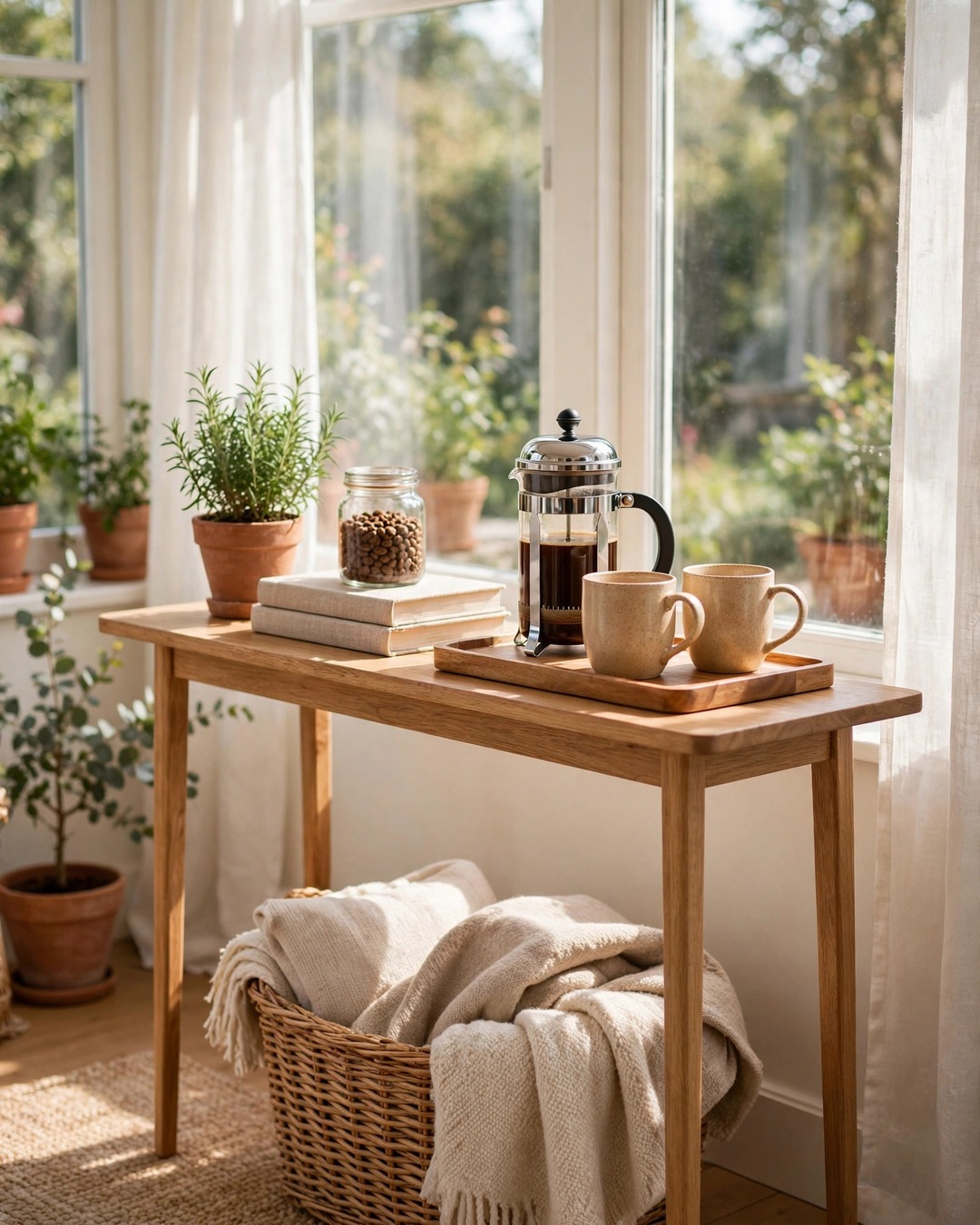
10. Style a Morning Coffee Console
A slim console table against the solid wall or behind the loveseat becomes the sunroom’s morning station. Style it the way you would a tiny cafe counter: a tray with two mugs, a small carafe or French press, a jar of beans, and a stack of two or three books. The console gives the room a lived-in center and keeps the coffee ritual out of the kitchen on slow mornings.
Keep the styling simple and low so the console never blocks the light or the view. A small potted herb or a bud vase with a single stem adds life without clutter. Below the console, tuck a woven basket for throws or magazines. Everything on the surface should earn its place, because a sunroom console sits in bright light all day and clutter shows.
Tip: A console with open shelves underneath is better than drawers in a sunroom. You can see everything at a glance, and baskets on the shelves add texture.
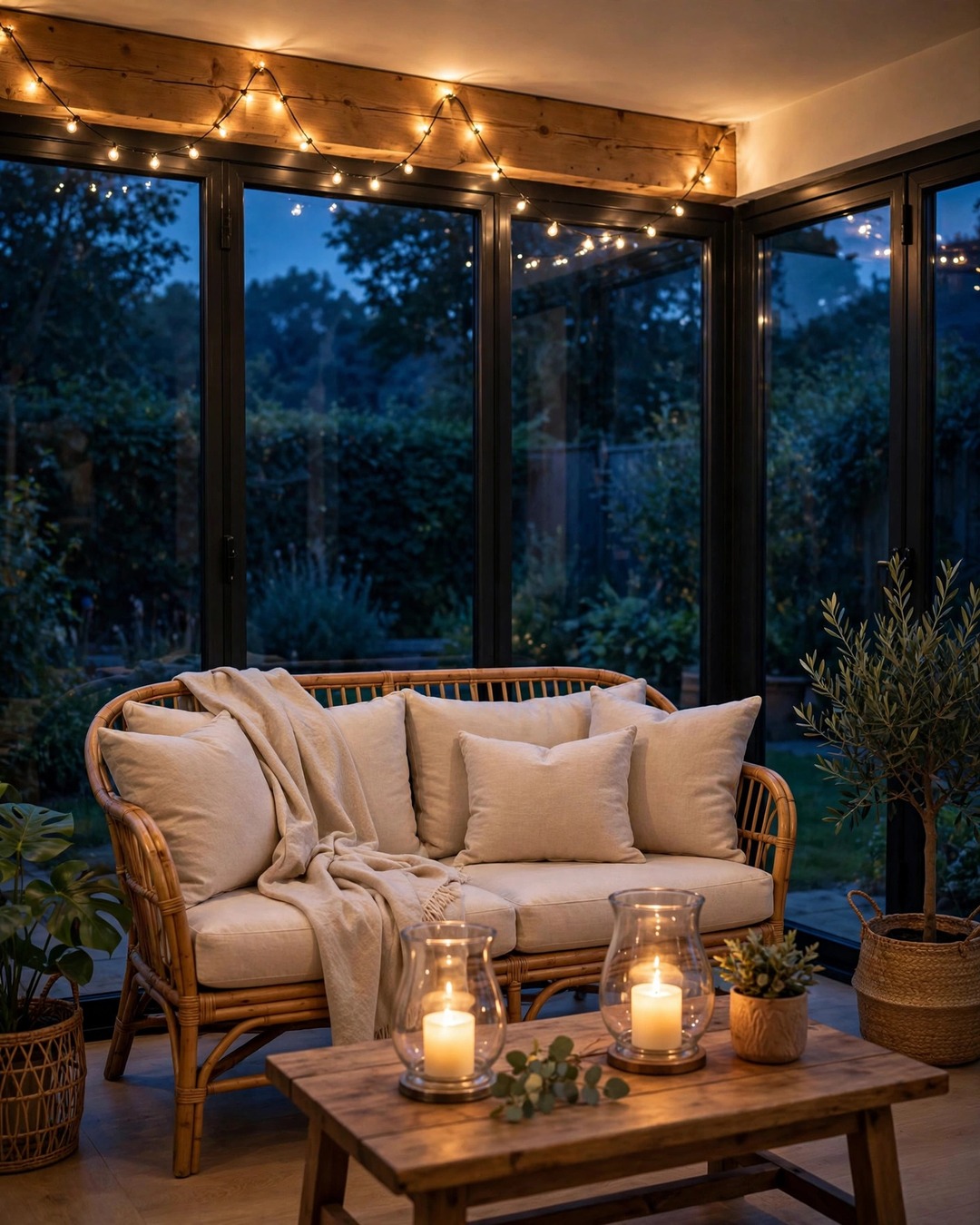
11. Layer Evening Lighting for After-Dark Glow
A sunroom should not go dark when the sun goes down. String lights draped along a beam or the curtain rod give the room a warm glow that makes evening use feel natural. Add a table lantern or two on the console and a floor lamp near the reading nook, and the sunroom becomes the coziest room in the house after sunset. Keep every bulb warm white, since cool bulbs make a glass room feel like an office at night.
Battery-operated or solar string lights are the easiest option because sunrooms rarely have outlets exactly where you want them. Set them on a timer so the room lights itself at dusk. A few flameless candles in glass hurricanes on the coffee table finish the evening setup without any fire worry near all that linen.
Tip: Put the string lights on a separate timer from your main lamps. The soft glow coming on a little before the brighter lamps creates a gentle transition into evening.
12. Refresh a Secondhand Wicker Find
Sunroom style and thrift stores were made for each other. Solid wicker and rattan pieces show up secondhand all the time because they are sturdy and people replace them for style reasons, not because they break. A quick clean, a coat of spray paint in warm white or natural tone, and new cushion covers can turn a tired wicker chair into the best seat in the sunroom for very little money.
Check the frame carefully before you buy: squeeze the joints, look for broken or unraveling strands, and sit in it if you can. Surface wear is fine and easy to fix, but a wobbly frame is not worth the trouble. My thrift store decor guide walks through the full checklist for judging secondhand wicker, wood, and upholstery before you bring anything home.
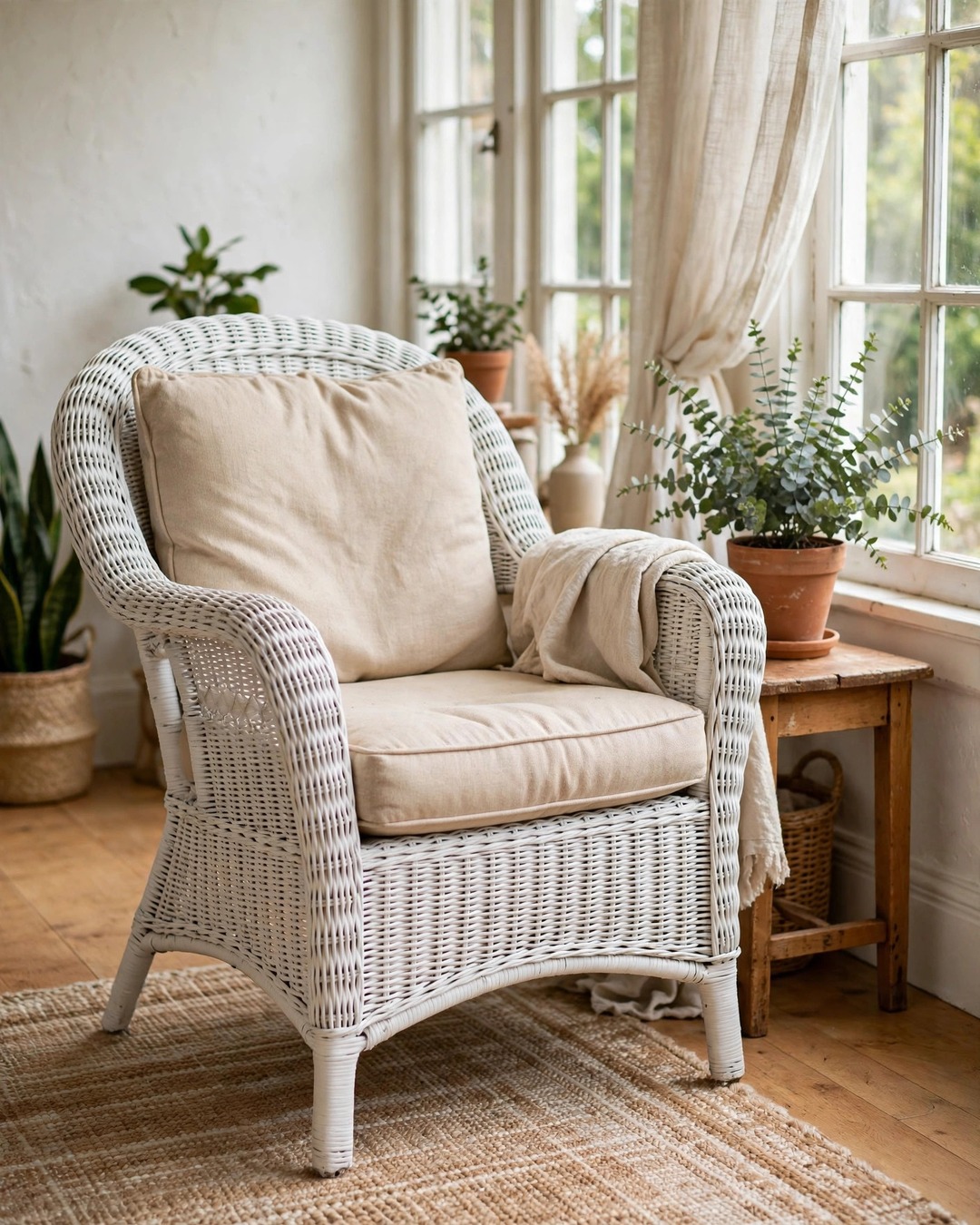
Tip: Spray paint wicker outdoors on a calm day and use thin coats. Thick coats clog the weave and look lumpy; three light coats give a smooth, even finish.
13. Frame the View and Keep It Clear
The view is the whole reason the sunroom exists, so let it be the star. Arrange your main seating to face the best window view, even if that breaks the usual face-each-other layout. A loveseat angled toward the garden with a chair beside it still works for conversation while giving everyone the view. Then resist the urge to fill every windowsill and corner, because a sunroom crowded with decor blocks the one thing no other room can offer.
Leave at least one stretch of windows completely clear of furniture and tall plants. That clear sightline makes the room feel bigger and keeps the connection to the outdoors open. Style the sills you do use with restraint: one low plant, one small object, and empty space beside them. My warm minimalist living room guide uses the same less-but-better approach for light-filled rooms, and it translates directly to sunroom styling.
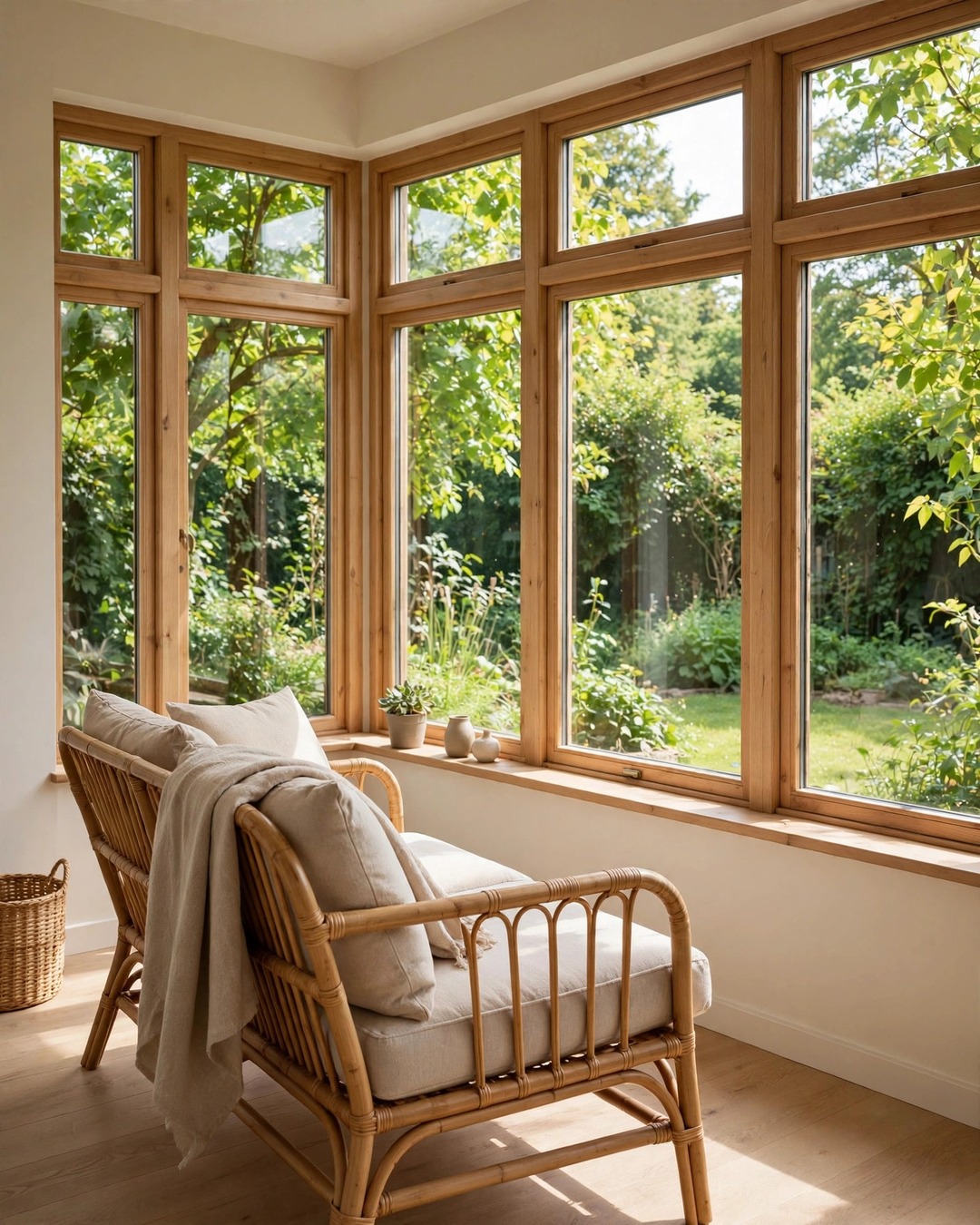
Tip: Stand in the doorway and look at the sunroom the way a guest sees it. If your eye stops at clutter before it reaches the windows, edit one thing out.
Sun Orientation Guide
Where your sunroom’s windows face changes everything about how the room feels and what belongs in it. Use this guide to match your styling to your light.
| Windows Face | Light Personality | Best For | Watch Out For |
|---|---|---|---|
| East | Bright gentle mornings, cooler afternoons | Breakfast corner, reading nook, most houseplants | Room can feel dim by late afternoon, so plan evening lighting |
| South | Strong sun most of the day | Sun-loving plants, winter warmth, drying herbs | Fabric fading and afternoon overheating, use shades and UV-resistant textiles |
| West | Hot intense late-day sun | Evening lounging with the sunset view | Glare and heat peak at dinner time, curtains are close to essential |
| North | Soft even light all day, never harsh | Art and books, delicate fabrics, low-light plants | Room runs cooler, add warm textiles and a lamp for coziness |
What is the best furniture for a sunroom?
Rattan, wicker, and teak hold up best because they are built for light and temperature swings. Choose pieces with removable, washable cushion covers in light neutrals, and look for indoor-outdoor grade fabrics if your sunroom gets strong afternoon sun. Upholstered indoor-only furniture can work on the shaded side of the room, but keep it away from direct sun to slow fading.
How do I keep my sunroom from getting too hot?
Start with light control: gauzy curtains, shades, or blinds cut the worst of the midday heat. Ventilation matters just as much, so open windows or a ceiling fan keeps air moving on hot days. Outdoor-grade fabrics and natural materials like rattan handle the heat better than synthetics, and pulling delicate plants a few feet back from the glass protects them from scorching.
Can I use regular indoor furniture in a sunroom?
Yes, with two conditions. Keep indoor furniture out of direct daily sun, or accept that fabrics will fade faster than they would inside. Wood pieces do fine as long as the room does not swing between very humid and very dry, which can crack finishes over time. For the sunniest spots in the room, stick with rattan, wicker, or outdoor-rated pieces.
What colors work best in a sunroom?
Warm neutrals like beige, ivory, oatmeal, and soft taupe are the safest choice because they fade gracefully and never fight with the green view outside. One deeper accent, such as terracotta or warm brown, keeps the palette from feeling washed out. Bright colors work too, but expect them to fade faster under daily sun, so use them in small, replaceable doses like pillow covers.
How do I decorate a small sunroom?
Give the room one clear job instead of trying to fit everything in. A reading nook or a breakfast corner needs only a chair, a small table, and a plant. Choose furniture with an open profile, like rattan, so the room does not feel crowded, and hang the swing chair or shelves on the walls instead of filling the floor. One clear window view makes a small sunroom feel twice its size.
Do houseplants really do well in sunrooms?
Most do, but a sunroom can be too much of a good thing. South and west facing rooms can scorch delicate leaves, so give ferns and calatheas a spot a few feet back from the glass and let succulents, snake plants, and bird of paradise take the sunny front row. Group plants together so they shade each other slightly, and check soil moisture more often than you would indoors, since sunroom pots dry out fast.
Final Thoughts
A sunroom does not need much to become the best seat in the house. Start with comfortable rattan seating, soften the light with linen, group your plants into one happy corner, and give the room a morning job worth waking up for. Handle the practical side, curtains for glare, washable covers, plants matched to your sun exposure, and the styling takes care of itself. The brightest room in your home should also be the most lived-in one, and these 13 ideas get you there without a renovation.


