
15 Coffee Table Styling Ideas

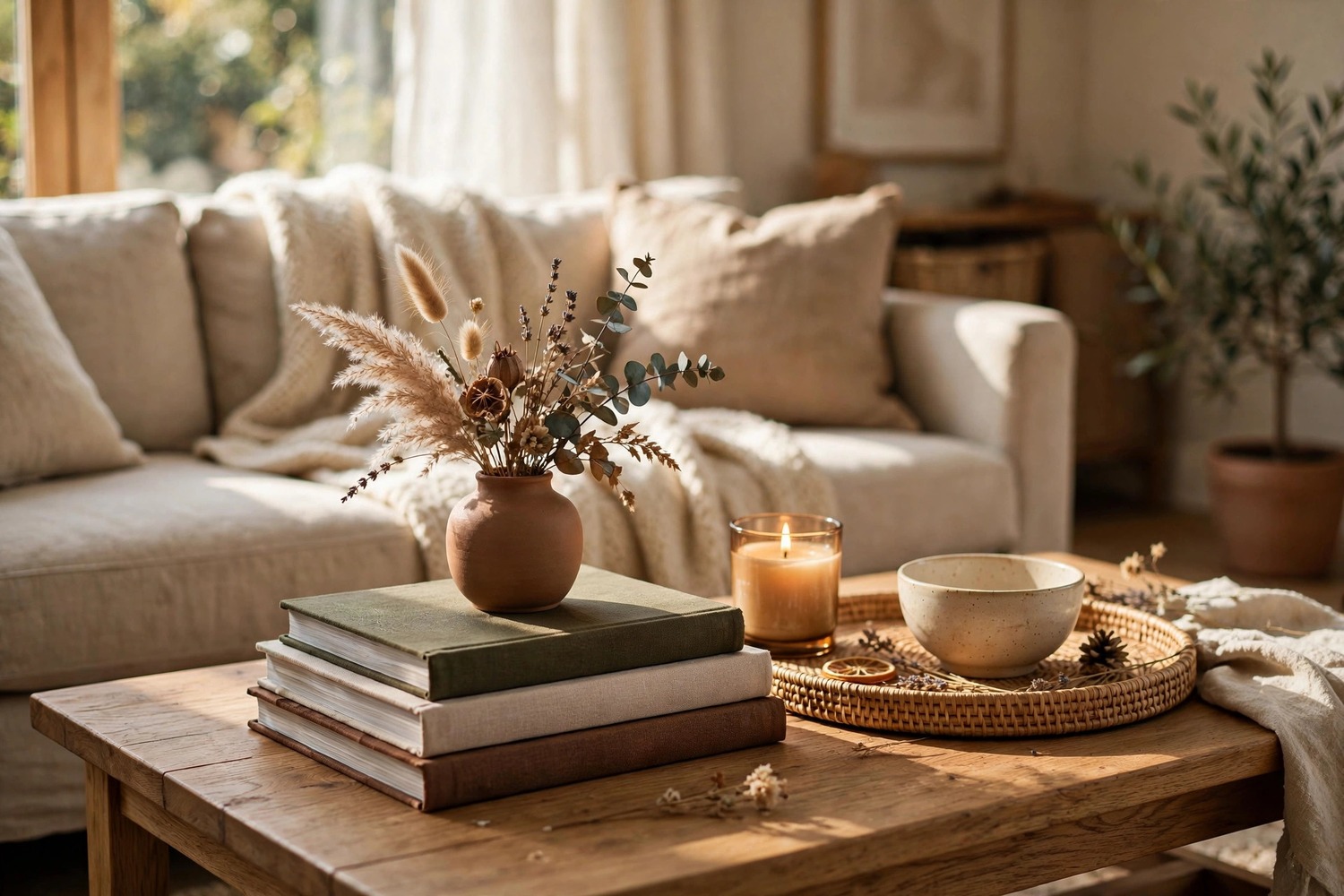
These coffee table styling ideas answer one simple question: how do you make the center of your living room look finished without losing a single inch of real-life function? A styled coffee table is a small collection of items that share a color story, vary in height, and leave breathing room for your mug, the remote, and whatever you are reading right now.
You do not need designer pieces or a big shopping trip. Most beautiful coffee tables use the same handful of ingredients: a tray to gather things, a stack of books, a candle, something living like a small plant, and one object with personality. The difference between cluttered and curated is arrangement, not price. These 15 coffee table styling ideas walk through the formulas designers reach for again and again, from tray layouts and height rules to seasonal swaps that take minutes.
Key Takeaways
- Start with a tray as your anchor, then style in odd numbers using the rule of three.
- Build height variation with stacked books, candles at three heights, and one sculptural object.
- Stick to a three-color story so the whole vignette feels pulled together, not random.
- Style only half the table and leave the rest empty — breathing room is part of the look.
- Refresh with one seasonal swap and run a five-minute reset every week to keep it sharp.
1. Start With a Tray as Your Anchor
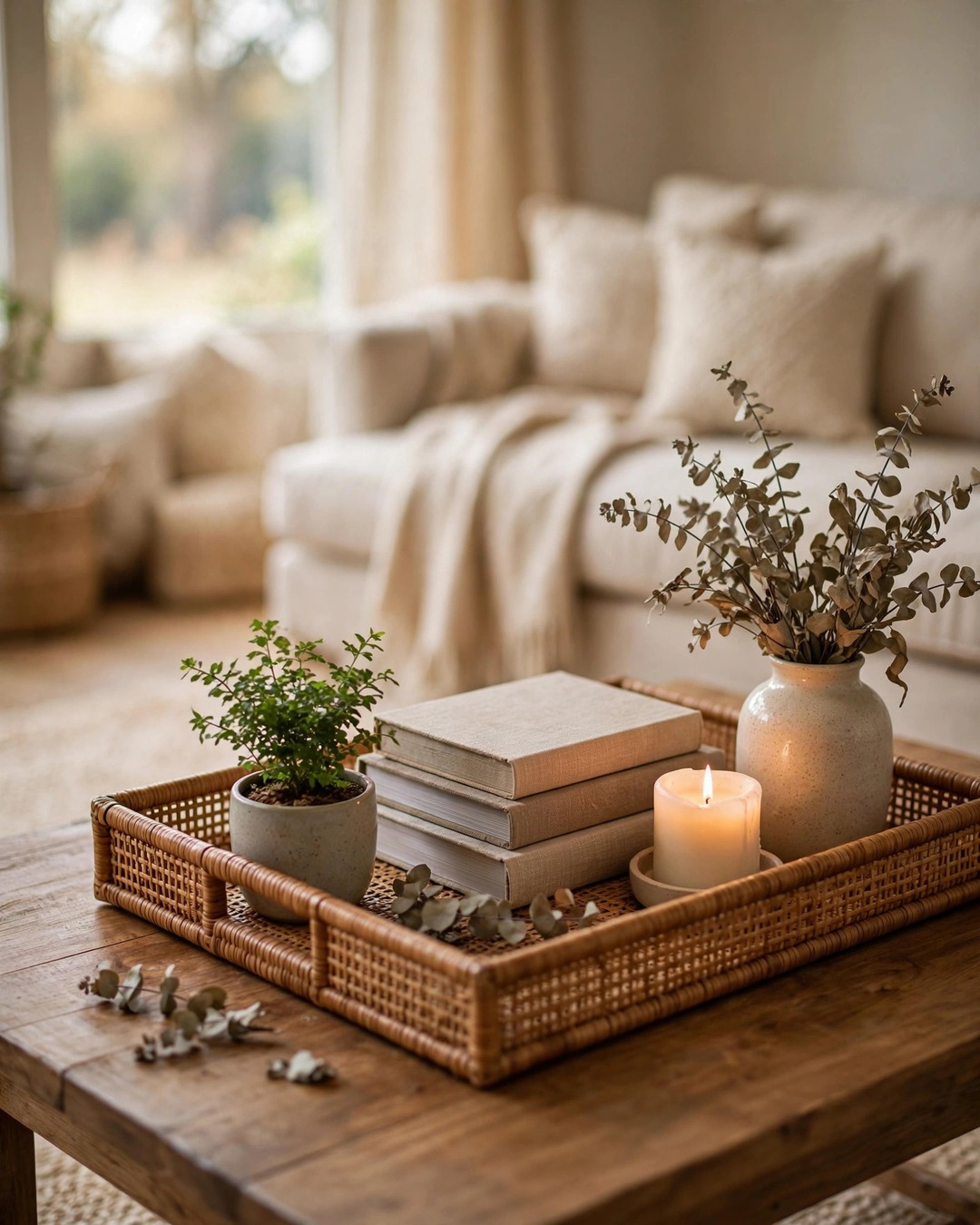
If you try only one idea from this list, make it the tray. A tray turns a scattered handful of objects into one deliberate arrangement. It draws a visual boundary on the tabletop, which makes everything inside it read as curated instead of cluttered. It also solves the most practical problem of coffee table styling: when you need the surface for snacks, a board game, or laptop work, you lift one tray instead of relocating six separate items.
Choose a tray that covers about one-third of your table’s surface. Rattan and woven trays add warmth and texture that suit cozy rooms, while a dark wood or black metal tray gives a more tailored look. Round trays soften the hard lines of a square or rectangular table, and rectangular trays add structure to a round table. The tray becomes the stage, and everything placed inside it inherits the feeling of being arranged on purpose.
Designers treat the tray as a miniature room, and this guide to easy coffee table styling shows how a tray can pull even a busy table together by gathering loose items into one composed vignette. Keep the tallest object near the center or back of the tray and the smallest pieces toward the edges, so the arrangement looks full but never crowded.
2. Stack Two Large Books for Instant Height
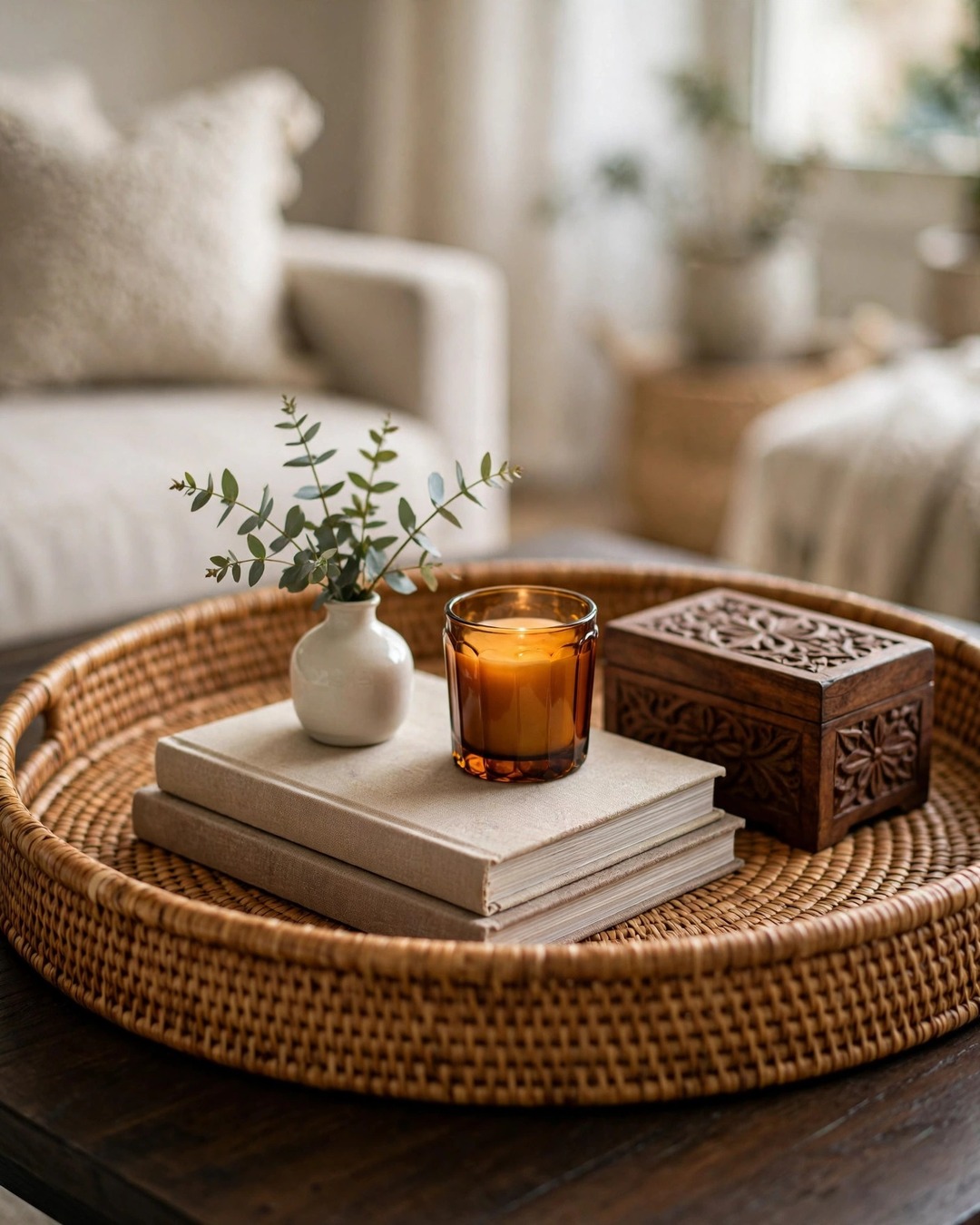
Coffee table books do double duty. They add instant height to your arrangement, and their covers bring in color and texture with no extra shopping. Stack two or three books with the largest on the bottom and the smallest on top, then set a small object like a candle, a bud vase, or a decorative box on the very top of the pile. The stack becomes a pedestal, and the little object on top becomes the jewel.
Choose books you actually want to open: a photography book, a travel book, or a design book with a cover that fits your palette. If the spines clash with your room, turn the books spine-in so the pages face out for a soft neutral look. One stack is enough for a small table. A large rectangular table can hold two stacks, one at each end, with a lower arrangement in the middle.
3. Cluster Candles in Three Heights
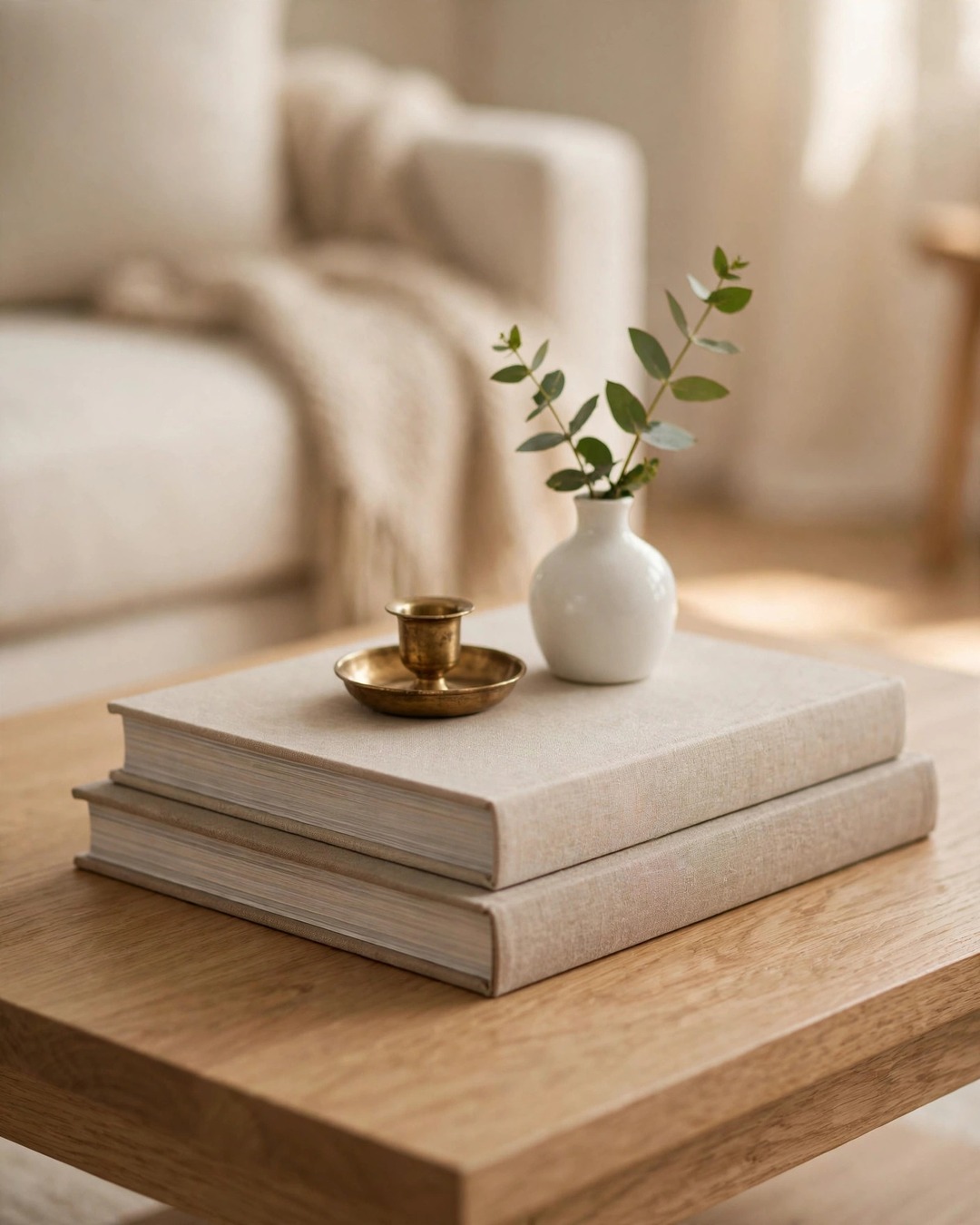
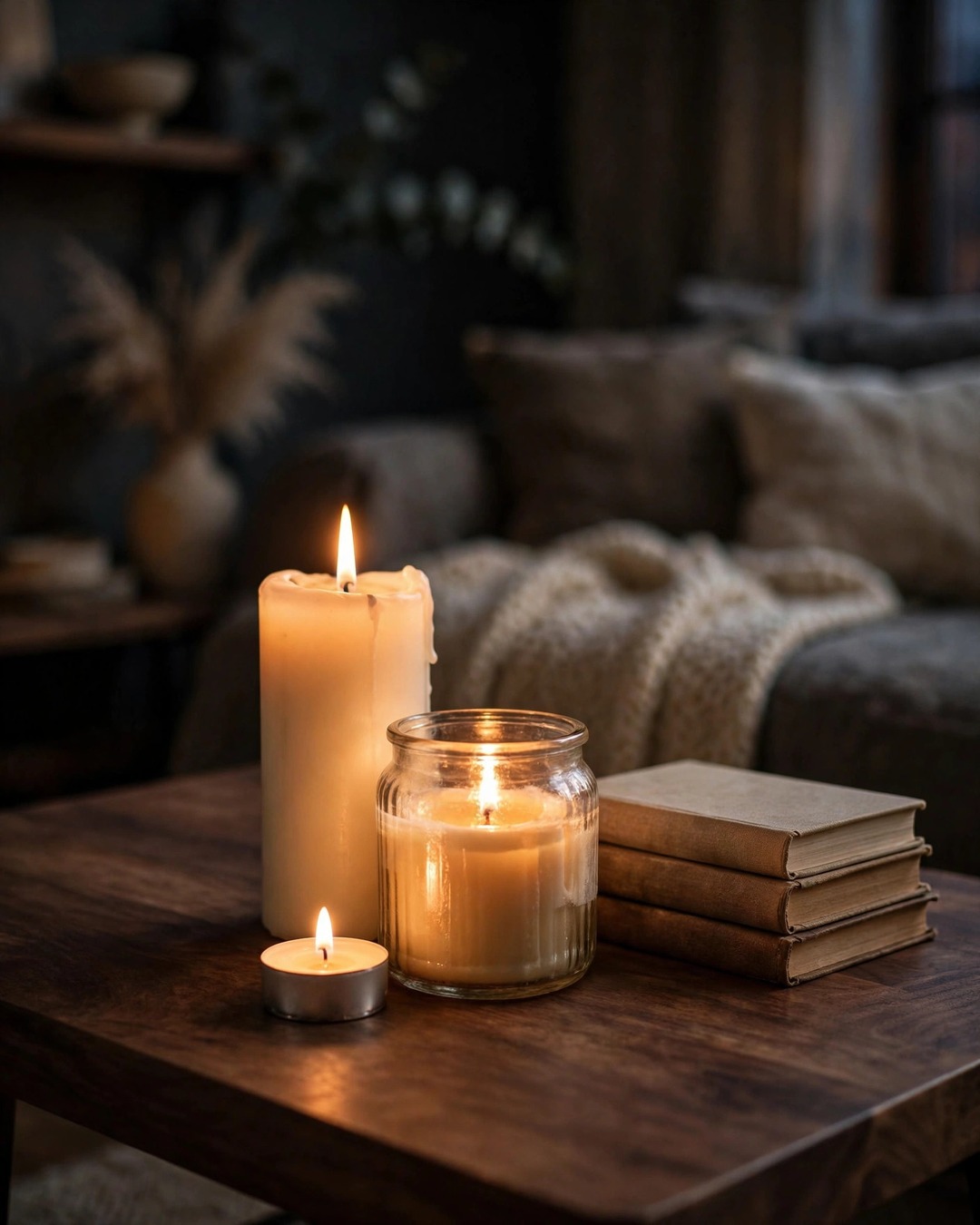
Candlelight is the fastest way to make a living room feel inviting after dark, and a cluster of candles looks richer than a single lonely one. Group three candles in three different heights: a tall pillar, a medium jar candle or taper, and a small tea light or votive. The stepped heights create a little skyline that catches light and shadow beautifully.
Keep the candles close together rather than spread across the table. A tight cluster reads as one object, while candles scattered everywhere read as clutter. Use real candles only where you will sit with them, and swap in battery-operated candles with a warm glow for everyday background light. If you choose scented candles, pick one subtle scent for the living room so it does not compete with cooking smells from the kitchen.
4. Add Something Living to Every Vignette
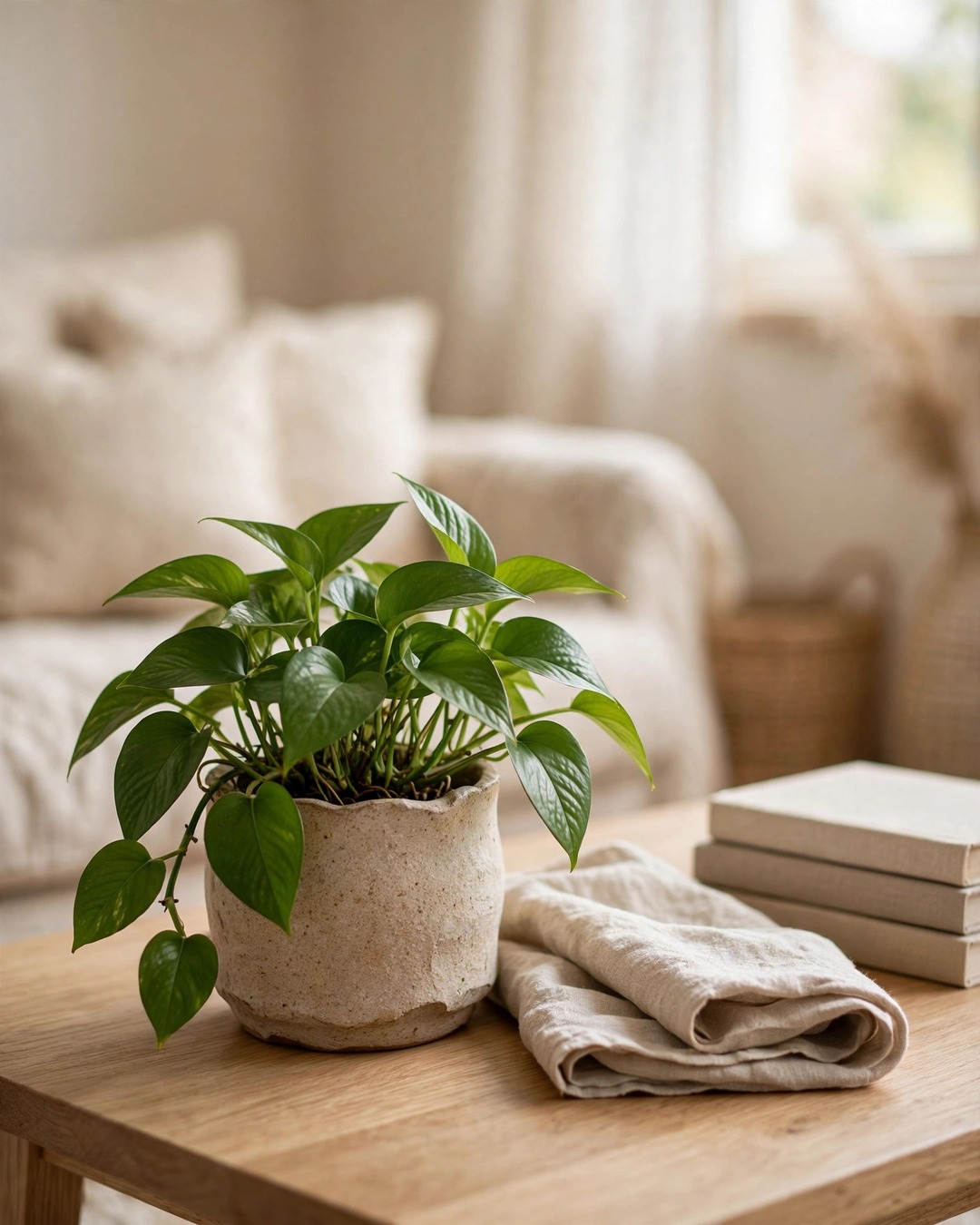
Every styled coffee table needs one living thing. A small potted plant, a glass vase of eucalyptus stems, or a bowl of fresh greenery softens the hard edges of books and trays and makes the whole arrangement feel alive. Even a single sprig in a bud vase is enough to change the mood of a table.
Low-maintenance plants work best here. A small pothos, a succulent, or an air plant in a stone bowl survives the warm dry air of a living room with very little attention. If real plants are not your thing, dried stems like eucalyptus, pampas grass, or wheat last for months and never need watering. Rotate the greenery with the seasons: fresh blooms in spring, dried grasses in fall, and a sprig of evergreen tucked into a vase in winter.
5. Let One Sculptural Object Steal the Show
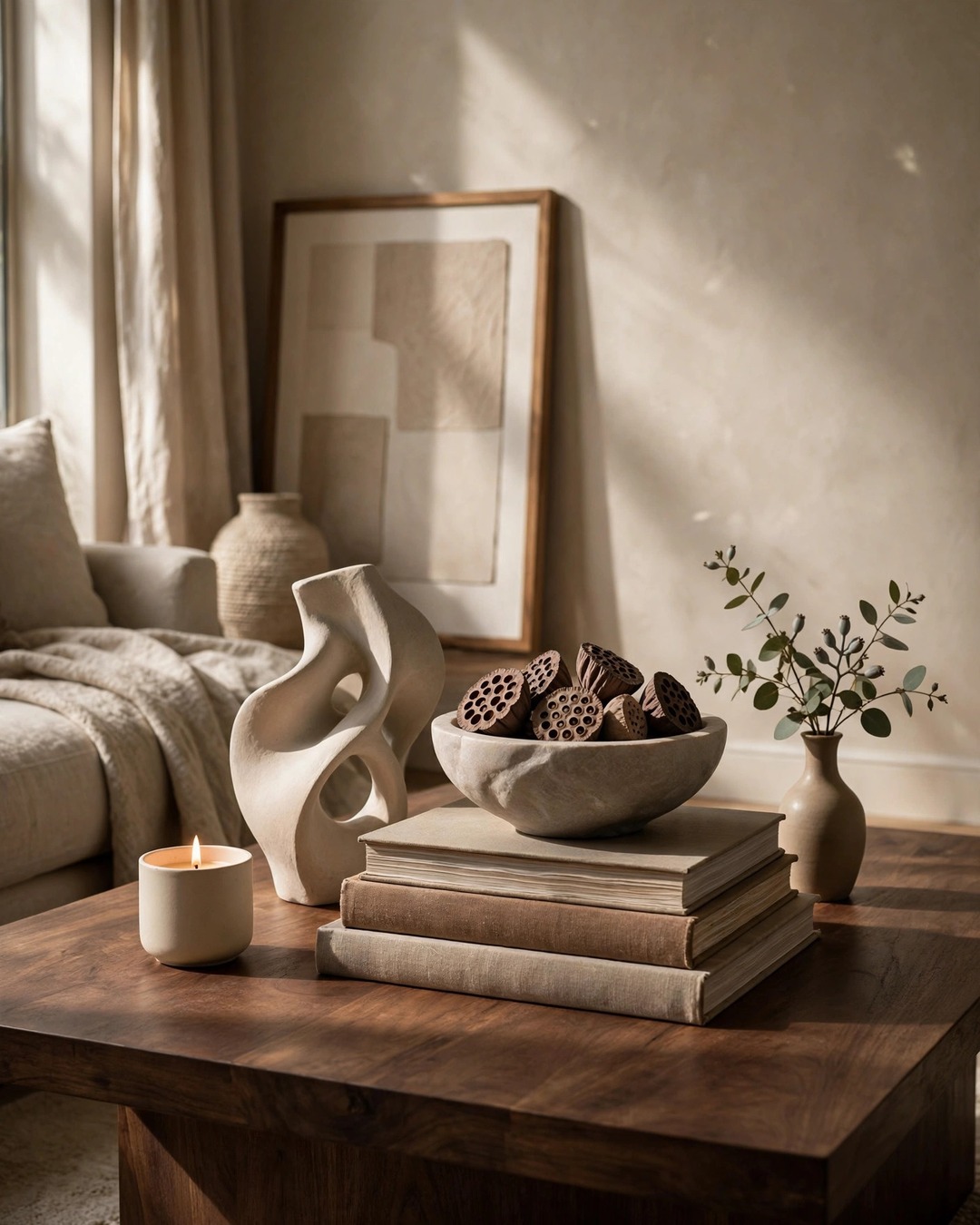
Every great vignette has a hero piece, and a coffee table is no exception. Choose one sculptural object with an interesting shape: a stone bowl, a ceramic knot, a draped wooden bead garland, a small abstract figure, or a carved box. This is the piece guests notice first, so give it the tallest or most central spot in your arrangement.
One statement object is enough. When every item shouts for attention, the table looks noisy, so let the hero piece do the talking and keep the supporting pieces quiet and simple. Designers love objects that start conversations, and as this designer take on coffee table styling from The Spruce points out, a funky bowl filled with something personal, a vintage find, or an object gathered from nature all make better heroes than the same overused decor everyone has seen a hundred times before.
6. Style in Odd Numbers With the Rule of Three
Designers lean on the rule of three because odd numbers look more natural to the eye than even ones. On a coffee table, that means grouping three objects of different heights: a tall vase, a medium candle, and a small decorative box, for example. The trio reads as one composition instead of three lonely items sitting apart.
To use the rule of three well, vary more than height. Mix shapes (round, square, organic), mix materials (glass, wood, ceramic), and keep the color palette tight so the group feels related. Place the tallest item slightly off-center, then step the other two down in height. On a long table you can repeat the idea: one trio gathered on a tray at one end, and a second small grouping or intentional empty space at the other.
7. Budget Coffee Table Styling Ideas That Still Look Luxe
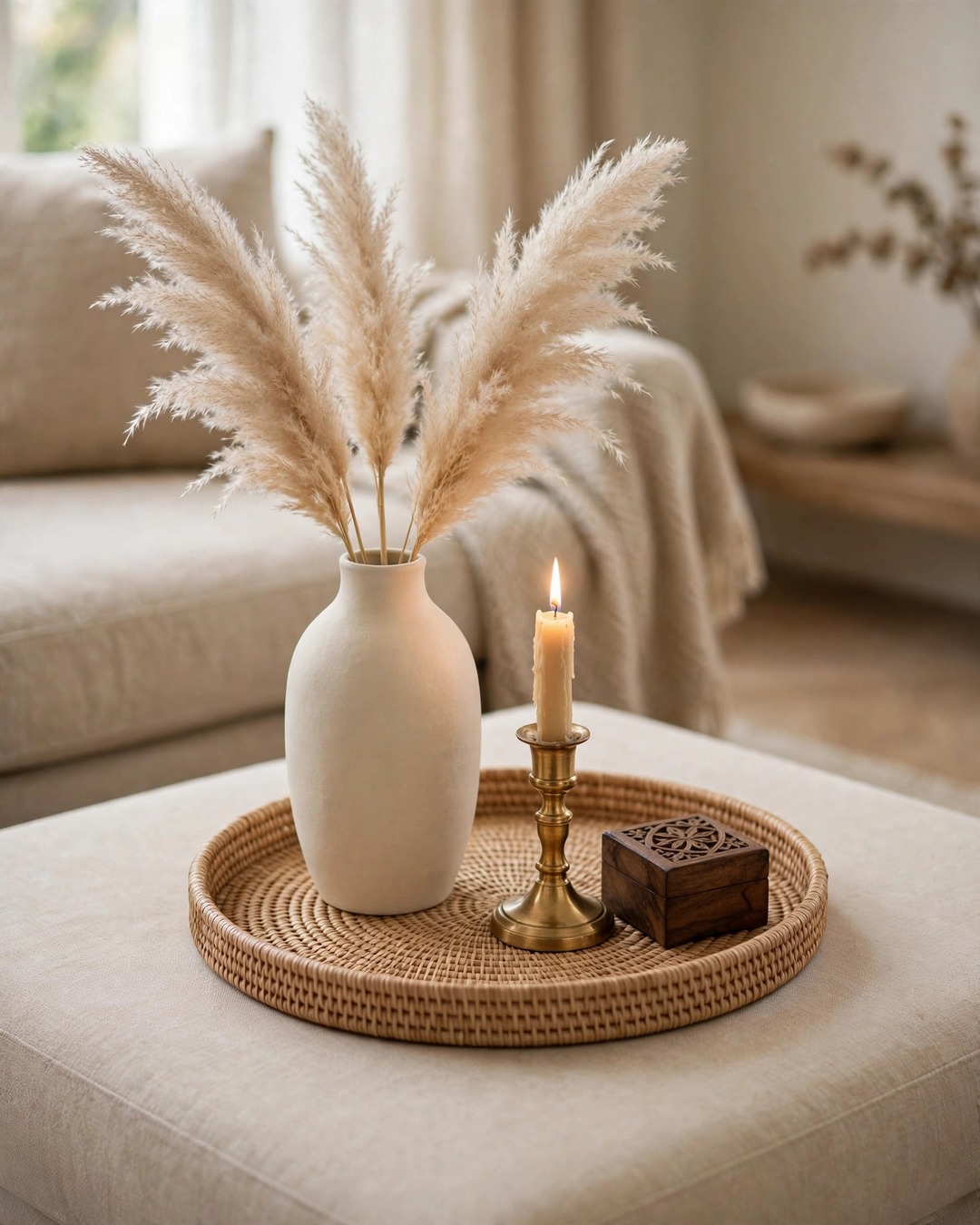
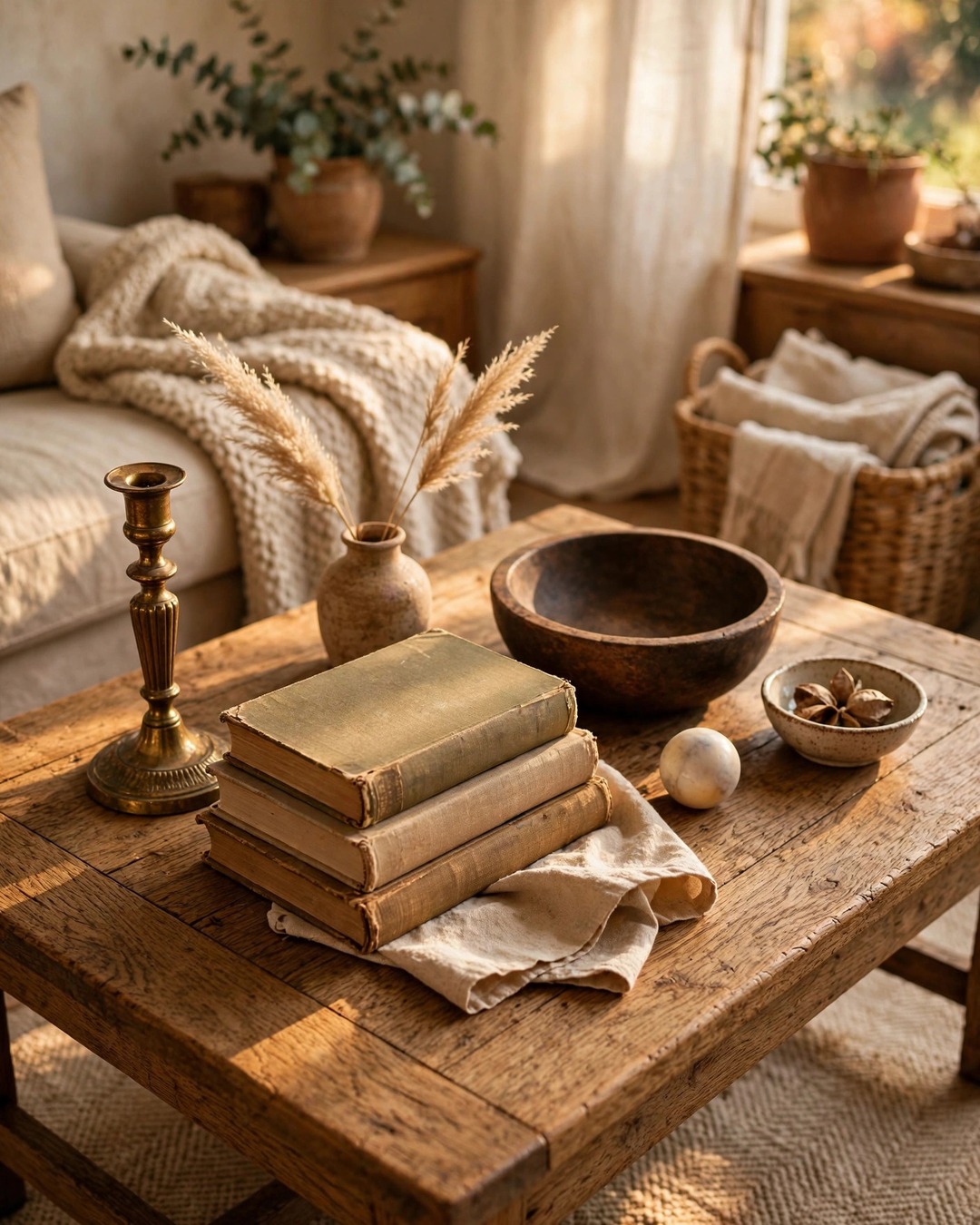
Luxury styling is about restraint and repetition, not price tags, so these coffee table styling ideas work beautifully on a thrift-store budget. Hunt for heavy, interesting shapes: a marble sample, a brass candlestick, a wooden bowl, a stone sphere. Secondhand shops are full of these because people donate solid, well-made objects that simply did not fit their last room.
Our thrift store decor guide covers how to spot the good pieces: look for real materials like wood, brass, stone, and glass rather than lightweight plastic, and trust your eye over brand names. Then edit hard. Three thrifted objects in the same color family look far more expensive than twelve random finds. Let the money you save go toward one thing worth buying new, like a great candle or a bunch of fresh stems.
8. Keep to a Three-Color Story
The fastest way to make a tabletop look designed is to limit the palette. Pick three colors: a main neutral, a secondary tone, and one small accent. Warm white, warm wood, and soft brass is a classic combination. Charcoal, natural linen, and deep green is another. When every object belongs to the same three colors, the table looks calm and cohesive even if the pieces are completely different shapes.
This rule also keeps you honest while shopping. If an object does not match your three colors, it does not come home, no matter how pretty it is on the shelf. The same three-color thinking ties your coffee table to the rest of the room, which is exactly how warm minimalist living rooms stay serene on a budget: fewer colors, repeated often, in natural textures.
9. Round Coffee Table Styling Ideas: Think in Triangles
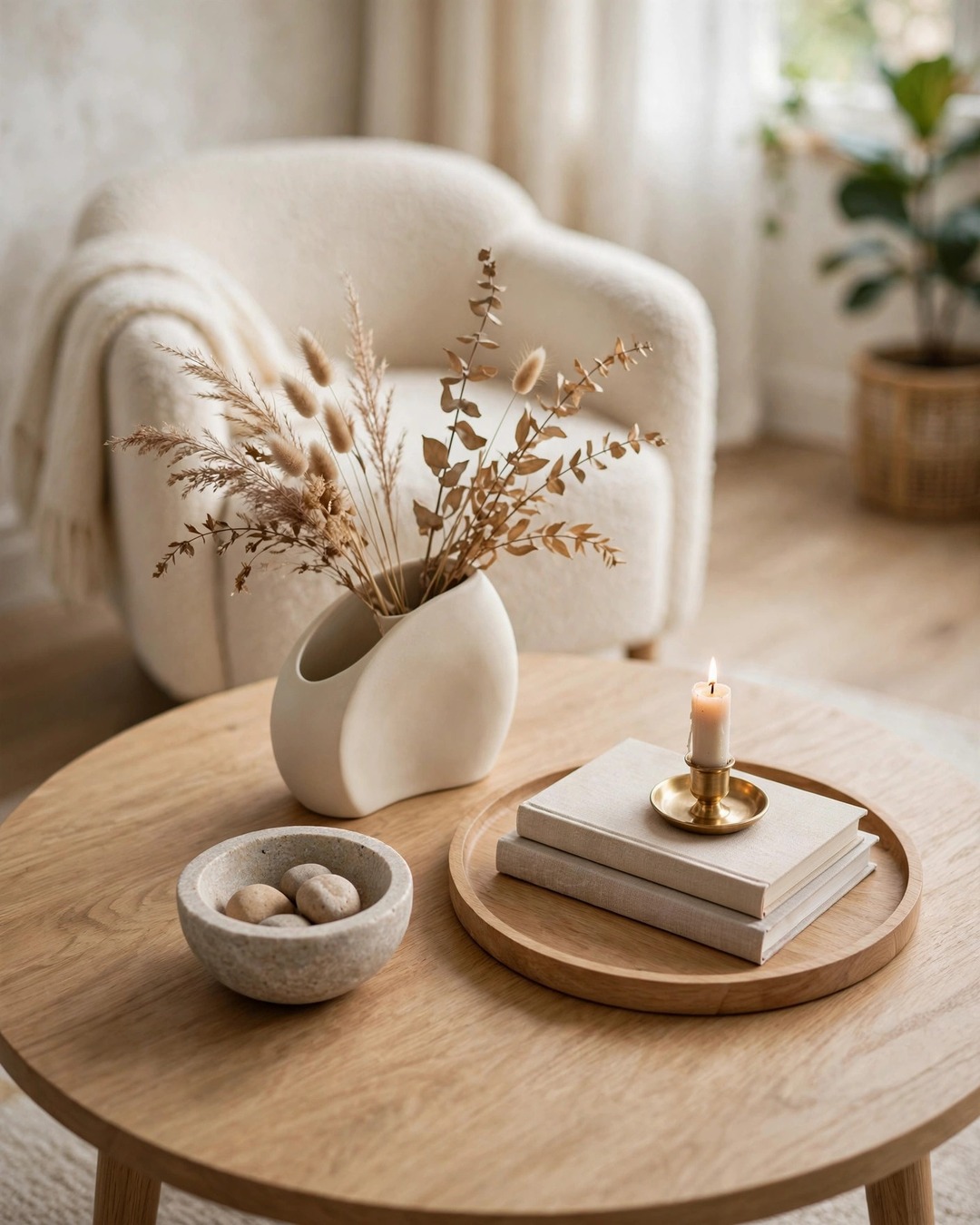
Round tables need a different layout than rectangular ones. Instead of lining objects up in a row, arrange three groupings in a loose triangle on the surface. Each corner of the triangle holds one small cluster: maybe books in one spot, a candle cluster in another, and a vase with stems in the third. The triangle keeps the eye moving around the circle instead of sliding off the edges.
Use soft, rounded shapes to echo the table. A round tray, a bowl, a curved vase, and stacked books with rounded spines all sit comfortably on a round top. Avoid tall, narrow objects that look tippy on a curve, and keep the overall height low so conversation flows across the table. A round table styled in a triangle feels full from every seat, which is exactly what you want in a conversational seating arrangement.
10. Style Half the Table and Leave the Rest Empty
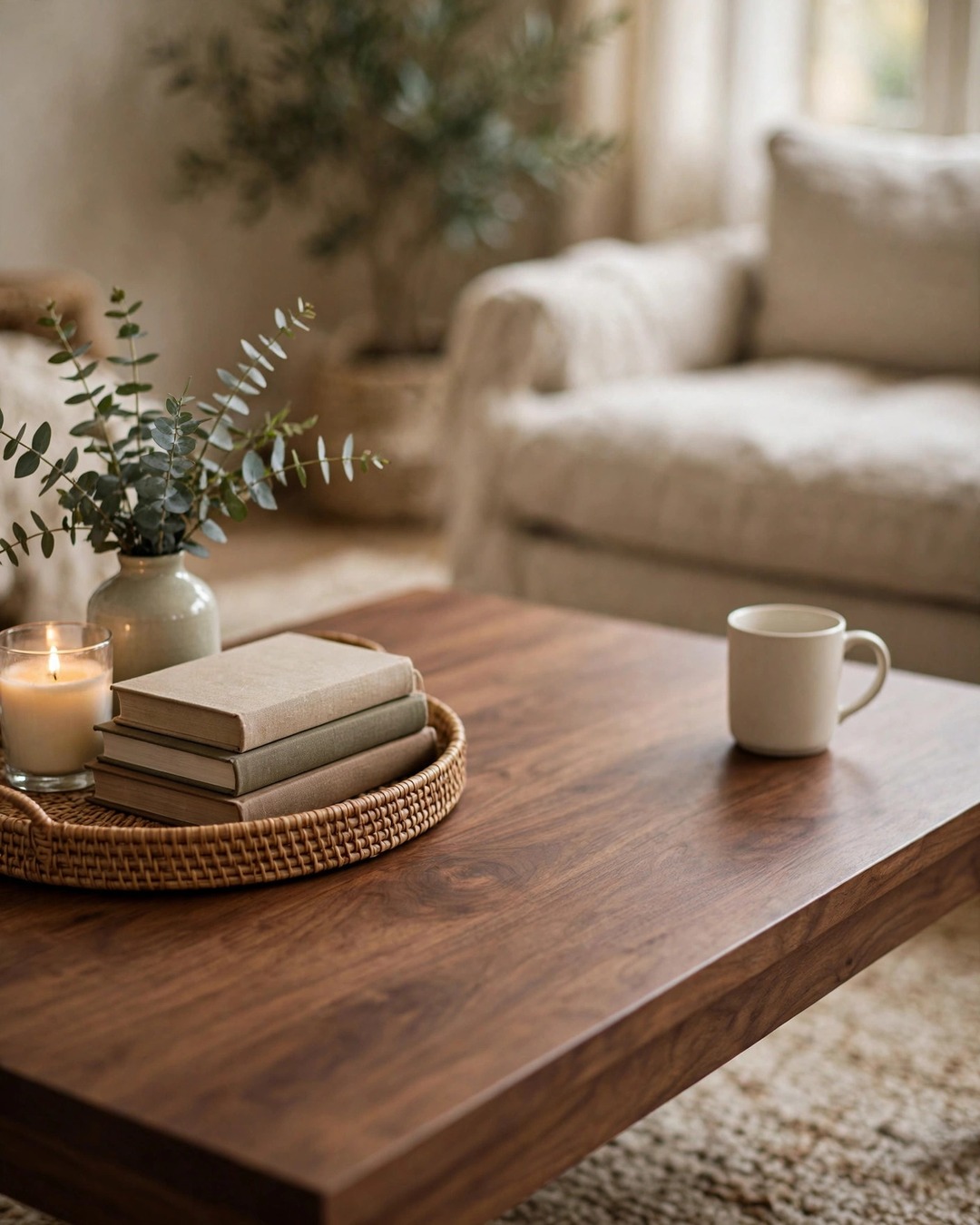
Empty space is a styling tool, not a failure. On a rectangular table, concentrate your arrangement on one half or one end and leave the other half clear. The blank half gives the eye somewhere to rest and leaves room for drinks, snacks, or feet up after a long day. A table that is styled edge to edge looks like a display shelf; a table with breathing room looks like a home.
This trick works especially well in small living rooms, where every surface has to earn its keep. Try the tray-plus-books cluster on the left third of the table and leave the right two-thirds open. The styled side carries the visual weight, and the open side carries real life. If you ever feel the table looks unfinished, add one low object like a small bowl rather than filling the whole empty half.
11. Corral the Everyday Items You Cannot Avoid
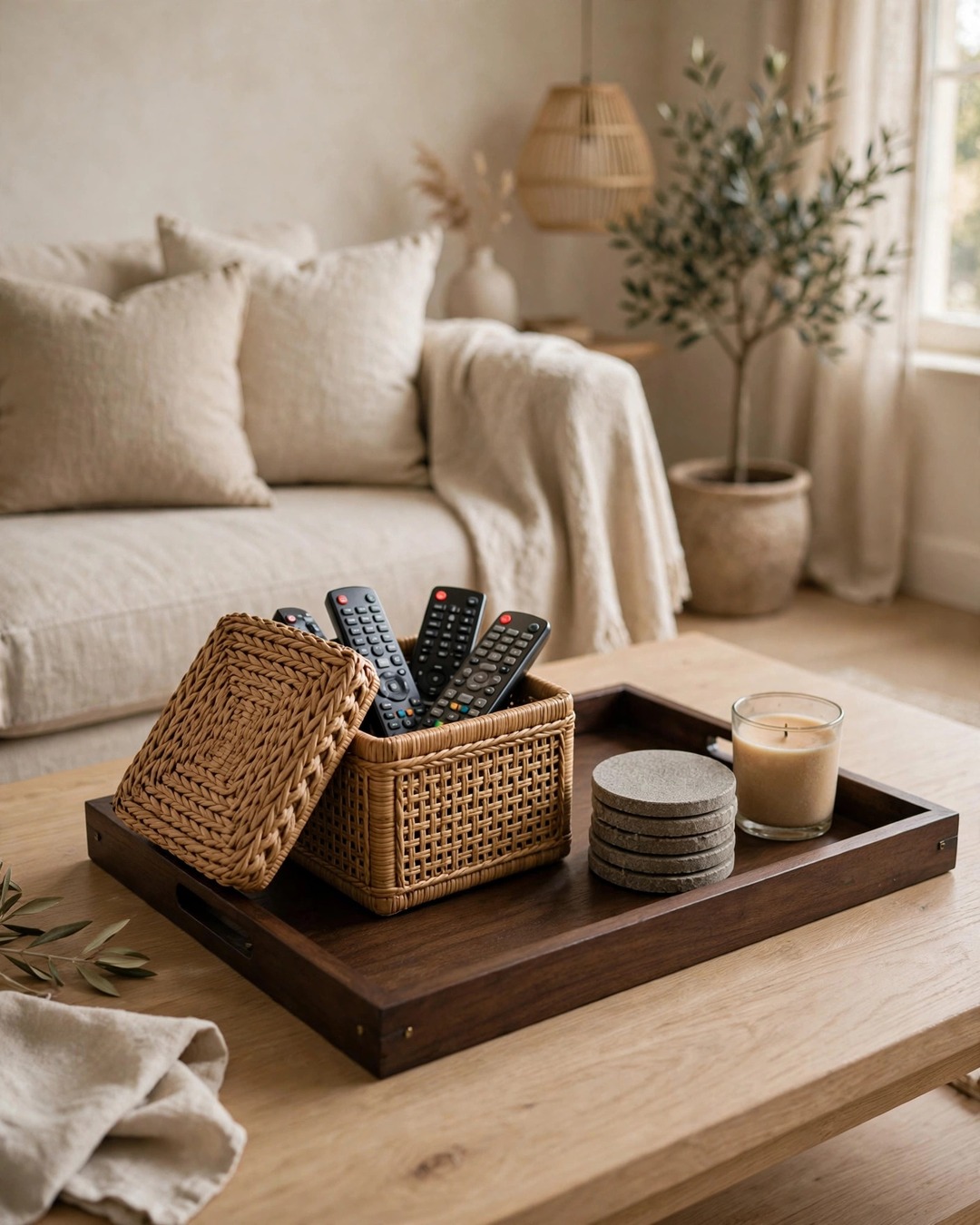
Remotes, coasters, reading glasses, and the ever-present phone charger are part of real life, and hiding them entirely is not realistic. The styling move is to give them a beautiful home instead. A lidded box swallows the remotes and chargers. A small stack of coasters becomes decor when they are stone, leather, or woven instead of cardboard.
Place the box or coaster stack inside your tray so it reads as part of the arrangement rather than clutter that wandered in. A lidded box in wood or woven texture does double duty: it keeps the messy items out of sight and adds another natural material to your palette. Renters especially benefit from this trick, since clever storage beats permanent changes, as seen in this renter-friendly living room tour full of no-damage ideas.
12. Layer a Runner or Folded Cloth Under the Display
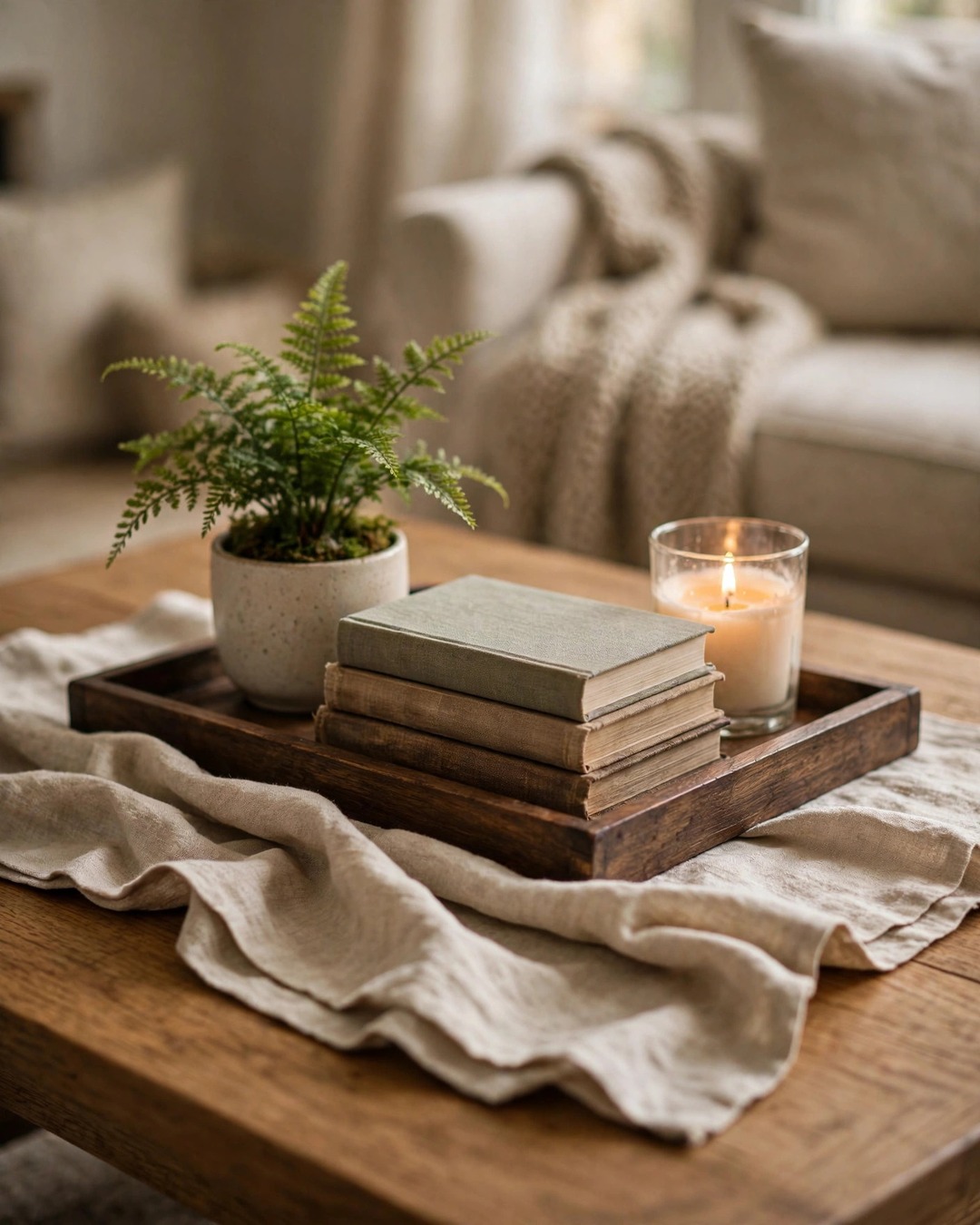
A thin layer of fabric under your vignette adds softness that hard tabletops lack. Fold a linen runner, a vintage scarf, or a piece of washed cotton into a long rectangle and lay it under your tray and books. The fabric edge peeking out underneath adds a textile layer that makes the whole arrangement feel collected and warm.
Choose fabric in one of your three palette colors so it blends in rather than introducing a new pattern. A natural linen runner works in almost every room, while a subtle stripe or tone-on-tone weave adds quiet interest. This layer also protects the tabletop from scratches and rings, which matters if your table is wood and you set down mugs all day. Swap the cloth with the seasons for an easy refresh: gauzy linen in summer, a heavier weave in winter.
13. Go Oversized on a Big Table
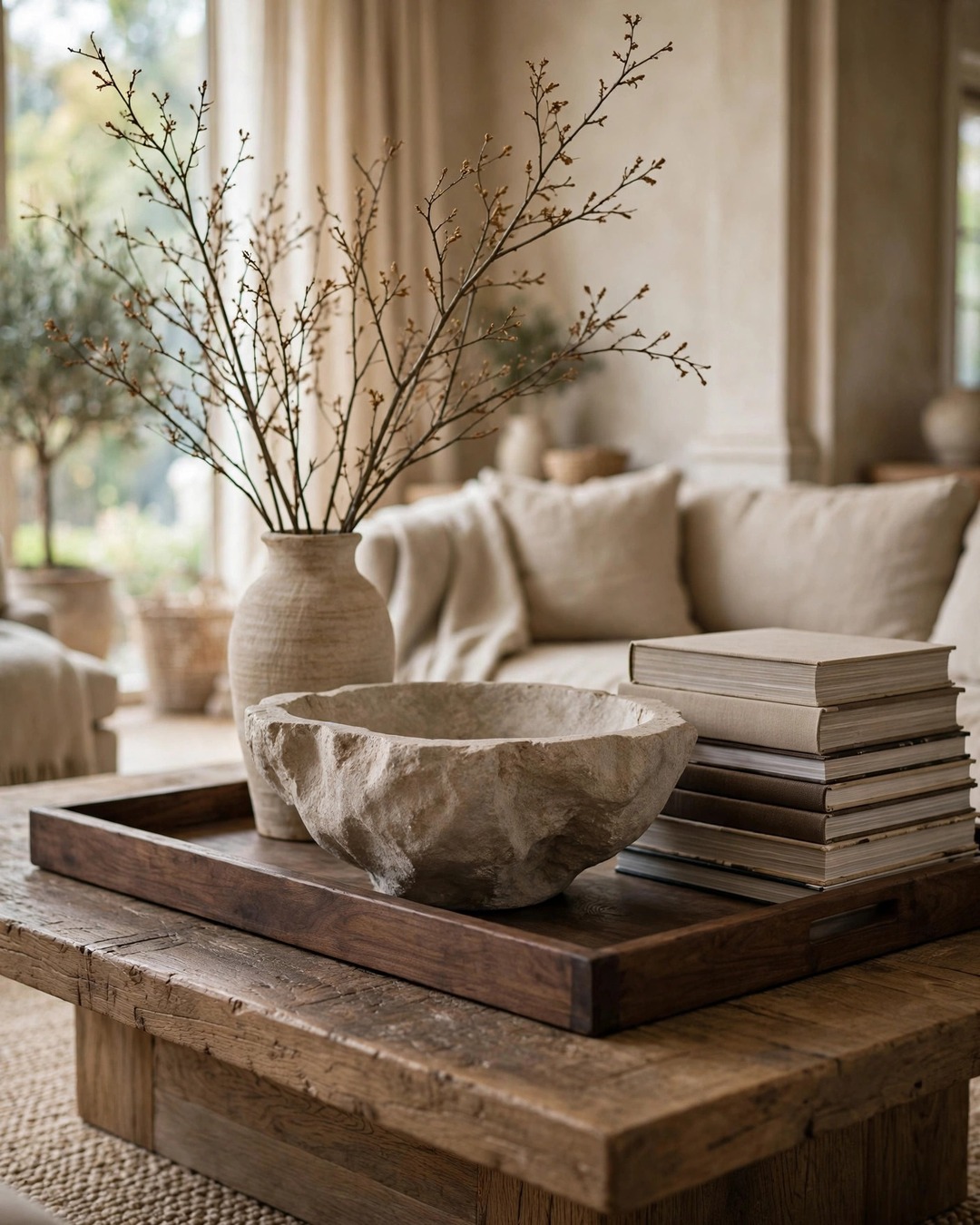
Small objects disappear on a large table. If your coffee table is generous, scale everything up: a large tray instead of a small one, a big bowl instead of a tiny dish, a tall floor-style vase with branches instead of a bud vase. One oversized object makes a stronger statement than six small ones scattered across the surface.
A good rule is that your main arrangement should fill about one-third to one-half of the tabletop. On an oversized table, that might mean a tray nearly two feet wide holding books, candles, and a sculptural bowl all at once. Tall branches in a large vase draw the eye up and make the whole seating area feel grander. Keep the remaining open space truly open rather than dotting it with tiny trinkets that look lost.

14. Rotate One Seasonal Swap Four Times a Year
You do not need to restyle the whole table when the seasons change. Keep your base arrangement (tray, books, hero object) in place all year and swap one element per season. Spring gets fresh tulips or budding branches. Summer gets a bowl of lemons or a airy grass arrangement. Fall gets dried wheat, mini pumpkins, or amber glass. Winter gets evergreen sprigs, pinecones, or a cluster of white candles.
This single-swap system keeps styling fresh without a storage closet full of decor. The seasonal item sits where your greenery usually goes, so the change takes about two minutes. For more seasonal inspiration, browse these fall living room decor ideas and borrow one element, like dried grasses or warm-toned candles, for your coffee table rotation.
15. Run the Five-Minute Reset Every Week
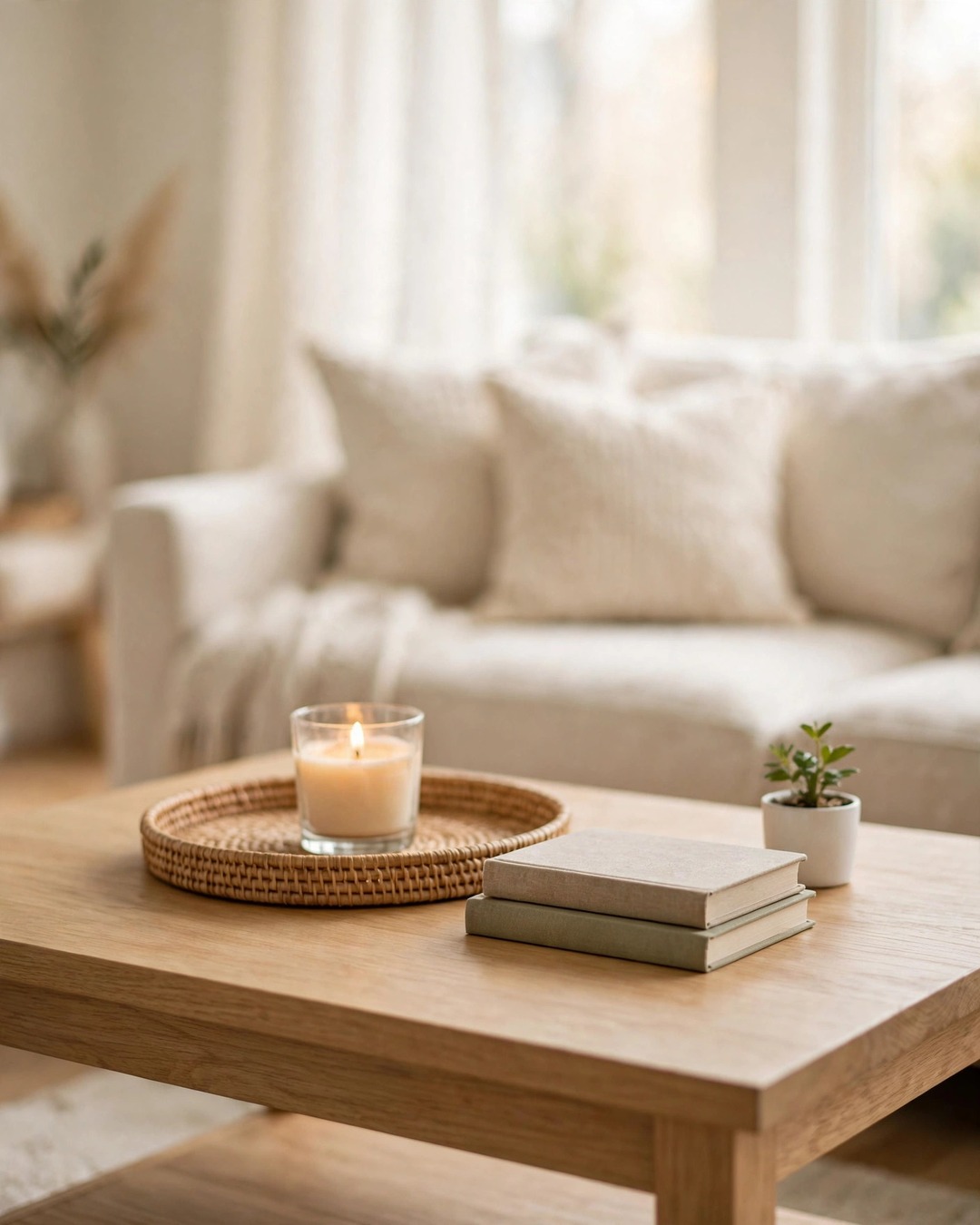
Even the best-styled table drifts into clutter by Friday. A weekly five-minute reset keeps it looking intentional with almost no effort. Once a week, take everything off the table, wipe the surface, and put the arrangement back piece by piece. You will immediately notice the mug that migrated, the mail that landed, and the candle that burned down.
The reset is also your editing moment. If an object has sat there untouched for a month, swap it for something else or leave the space empty. Coffee table styling is a living arrangement, not a museum installation. A quick Sunday reset means the table always looks its best when the week starts, and it takes less time than brewing a pot of coffee.
Coffee Table Styling Formula by Table Size
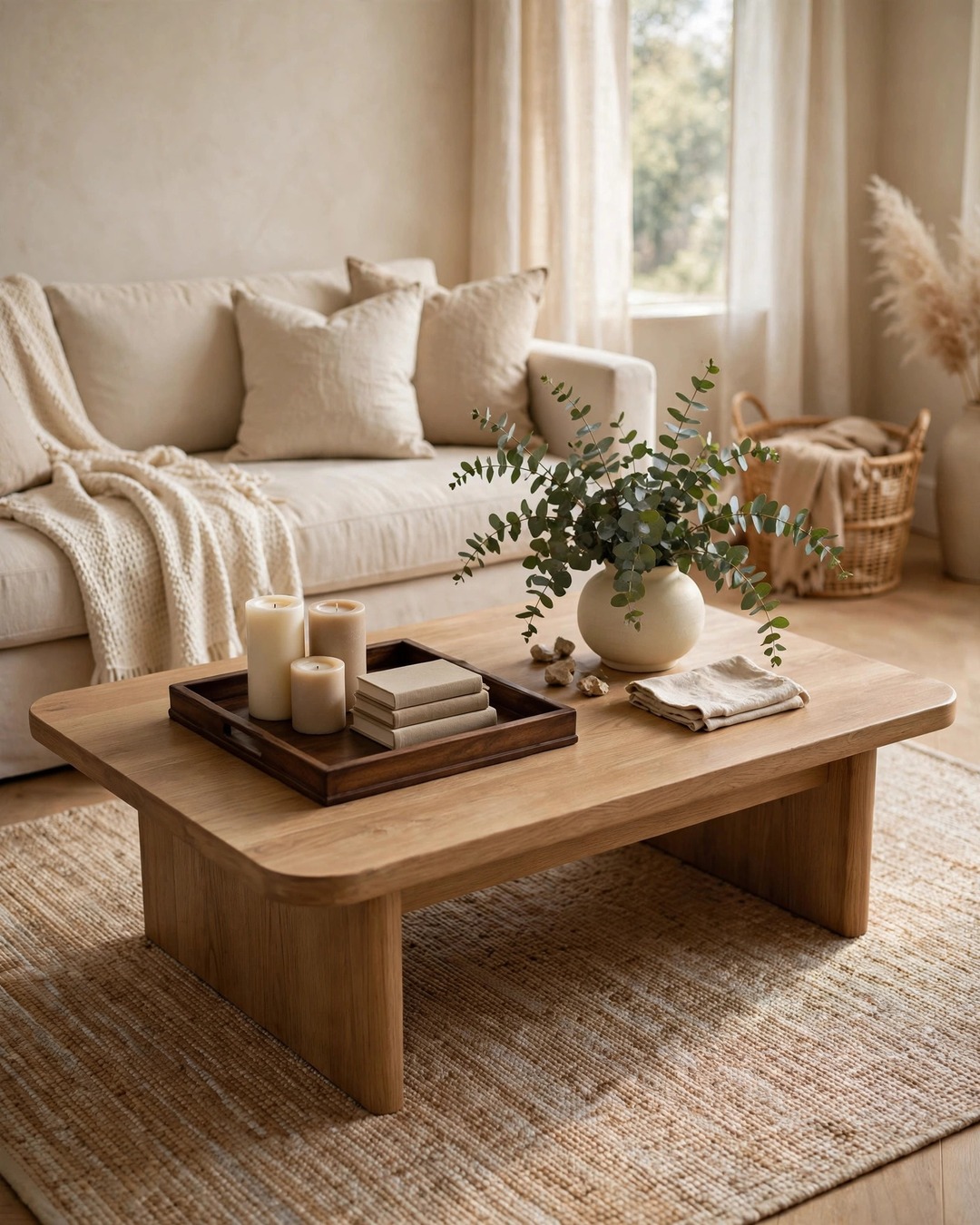
Use this quick guide to size your arrangement to your table. Match the tray, the number of groupings, and the tallest height to your table’s dimensions for a balanced look every time.
| Table size | Tray size | Groupings | Tallest object |
|---|---|---|---|
| Small (under 30 in wide) | One small tray, about 12 in | One cluster of 3 items | Under 12 in, nothing blocks the TV |
| Medium (30 to 48 in wide) | One tray, 14 to 18 in | Tray cluster plus one side accent | 12 to 16 in, a low vase with stems |
| Large (over 48 in wide) | Oversized tray, 20 in or more | Two or three clusters across the surface | Up to 20 in, branches welcome |
| Round (any diameter) | Round tray, about half the diameter | Three small clusters in a triangle | Low and soft, keep sightlines open |
How do I style a coffee table I actually use every day?
Build your styling around a tray. Keep your decor inside the tray and leave the rest of the table open for daily life. When you need the full surface, lift the tray onto a side table or shelf, use the table, then set the tray back. Choose sturdy, wipeable pieces and skip anything so fragile or precious that daily use makes you nervous.
What size tray works best on a coffee table?
Aim for a tray that covers about one-third of your tabletop: roughly 12 inches for a small table, 14 to 18 inches for a medium table, and 20 inches or more for an oversized table. The tray should be big enough to hold a small cluster of items but small enough to lift with one hand when you need the table clear.
How many items should I put on a coffee table?
Fewer than you think. One well-composed cluster of three to five items usually beats a crowded surface. If the table feels empty, the issue is usually scale rather than quantity: one larger tray or one bigger hero object fills visual space better than adding more small pieces.
How do I style a round coffee table differently from a rectangular one?
On a round table, arrange three small clusters in a loose triangle rather than lining things up in a row, and favor round and curved shapes that echo the table. Keep the overall height low so sightlines stay open across the circle. On a rectangular table, anchor one end with a tray and let the eye travel down the length.
Can I style a coffee table on a tight budget?
Yes. Thrift stores are full of heavy, well-made objects in wood, brass, stone, and glass that look far more expensive than they are. Pair three secondhand finds in one color family with things you already own, like books and a plant cutting, and finish with one affordable new candle. Restraint is what reads as luxury, not the price of the objects.
How often should I change my coffee table styling?
Do a five-minute reset weekly to clear drift and wipe the surface, and rotate one seasonal element four times a year. A full restyle is only needed when your taste or your room changes. If an object has sat untouched for a month, swap it out or leave the space empty rather than buying something new.
Final Thoughts
Coffee table styling is not about owning the right objects. It is about giving the objects you own a little structure: a tray to gather them, books to lift them, candles to warm them, something living to soften them, and one piece with personality to finish the story. Start with the tray, add the books, and build from there. The table in your living room is already the right table. It just needed these 15 coffee table styling ideas to show it off.


