
15 Organic Modern Living Room Ideas


Organic modern is the style that finally made minimalism feel warm. It keeps the calm, uncluttered lines of modern design but builds everything from materials that feel like they came from the earth: curved boucle, travertine with its soft pits, solid oak with grain you can see, clay and linen and wool. The result is a living room that looks polished but never cold, the kind of space where you can actually imagine putting your feet up.
The viral RoomGlow pin that inspired this list says it all: a luxury living room with an olive tree, sculptural furniture, and soft natural light pouring in. That image works because every piece in it has an organic shape or a natural material. Nothing is glossy, nothing is sharp, and the tree makes the whole room feel alive.
These 15 ideas walk you through the style from the ground up: the sofa, the stone, the wood, the light, and the greenery that ties it together. Work through them in order and you will build the look layer by layer, without buying anything you do not need. If you love the warm-neutral palette but want a more budget-focused take, my warm minimalist living room ideas on a budget cover similar ground for less.
1. Anchor the Room With a Curved Boucle Sofa
The curved boucle sofa is the unofficial mascot of organic modern design, and it earns the title. The rounded silhouette softens every straight line in the room, while the nubby boucle fabric adds the kind of texture that makes people want to touch the sofa before they sit on it. A curved two- or three-seater in ivory or oatmeal instantly sets the organic modern tone.
Placement matters as much as the shape. Float a curved sofa slightly away from the wall if you can, even by a foot, so the curve reads from every angle. Angle it toward your main window or your coffee table rather than lining it up parallel to the walls. The curve wants to be part of a conversation arrangement, not pushed flat against drywall.
When choosing boucle, look for a tight, even weave in a natural fiber blend. Loosely woven boucle can snag on jewelry and pet claws, while a tighter weave wears much better in a room that gets daily use. Stick to warm whites and oat tones rather than bright white, which can look stark against the earthy materials elsewhere in the room.
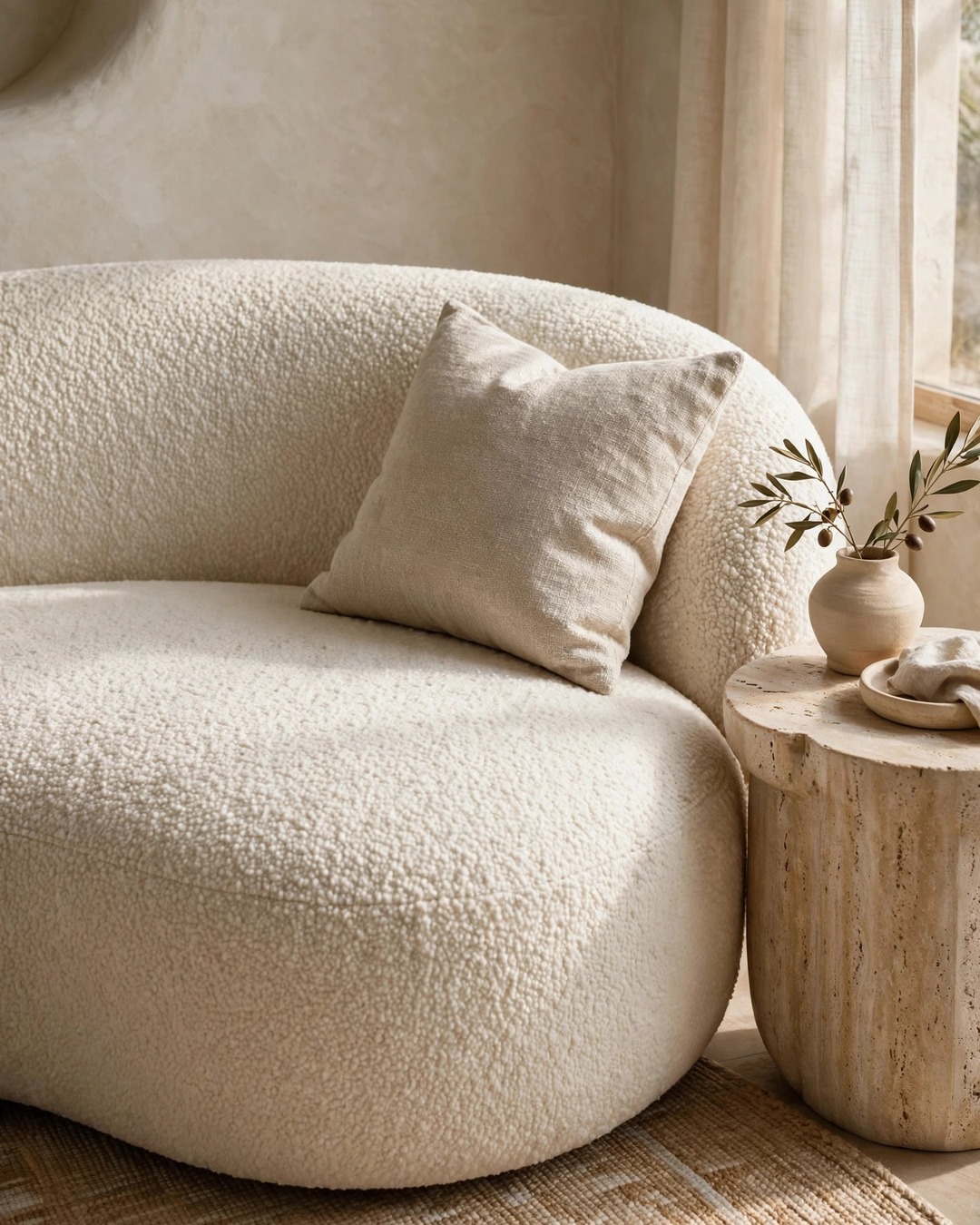
Tip: If a full curved sofa is beyond reach, a curved boucle loveseat or a pair of curved boucle chairs gives you the same sculptural effect for less, and designers note that mixing one curved piece with straighter furniture creates the contrast this style loves.
2. Choose a Sculptural Travertine Coffee Table
Travertine is the stone of organic modern living rooms. Its pitted, weathered surface carries thousands of years of natural history in it, and no two pieces look alike. A travertine coffee table, whether a solid block, a fluted drum, or a slab top on a curved base, brings weight and permanence to the center of the room.
The honest, unfinished look is the point, so do not hunt for perfectly smooth, filled travertine. The small holes and color variations are what make the stone feel organic rather than polished. A honed finish, matte rather than glossy, keeps the table reading as natural and lets it sit comfortably next to linen and wool.
Style the top with restraint: one handmade ceramic bowl, a small stack of art or design books, and a single candle or stem in a low vase. The stone itself is the decoration, so give it room to be seen. Designers who champion this look suggest raw-meets-refined pairings, like smooth stone next to nubby wool, which is exactly what a travertine table beside a boucle sofa achieves.

Tip: Travertine stains, so use coasters and wipe spills quickly. A matte stone sealer, reapplied once a year, protects the surface without adding shine.
3. Let an Olive Tree Be the Living Focal Point
Every great organic modern living room has one living sculpture, and the olive tree is the classic choice. Its silvery-green leaves and twisting trunk add height, movement, and a soft gray-green tone that no other houseplant quite matches. Place it in a corner where it can rise above the furniture line and catch the window light.
Choose a tree sized for your room: a five- to six-foot tree suits a standard living room, giving you presence without overwhelming the seating. Plant it in a handmade clay or ceramic pot rather than plastic, since the pot is part of the look. A slightly tapered, earth-toned planter lets the trunk’s shape take center stage.
Olive trees want bright light and a little neglect between waterings, which makes them honest, low-fuss companions for a sunlit living room. If your room runs dark, a high-quality faux olive tree gives you the same silhouette and silver-green tone with zero maintenance. Either way, one statement tree beats five small plants scattered around, because the style is about calm, not clutter.

Tip: Rotate the pot a quarter turn every few weeks so the tree grows evenly toward the light instead of leaning one way.
4. Bring In Solid Oak With Visible Grain
Oak is the wood that anchors organic modern design. Its open, visible grain reads as honest and warm, and in a light or natural finish it keeps the room feeling airy. A solid oak media console, a pair of oak side tables, or an oak-framed daybed brings the outdoors in without darkening the palette.
Look for pieces where the grain is the decoration: quarter-sawn boards, live edges, or simple joinery that shows the maker’s hand. Flat, plastic-coated oak-look veneer defeats the purpose. If you are furnishing on a budget, solid oak is one of the best thrift-store finds in existence, and my thrift store decor guide has a whole section on spotting real wood under old finishes.
Keep oak finishes light to medium: natural, whitewashed, or a clear matte oil. Dark espresso stains push the room toward traditional, while gray washes can read as cold. The goal is wood that looks like it was cut yesterday, not stained to match something else.
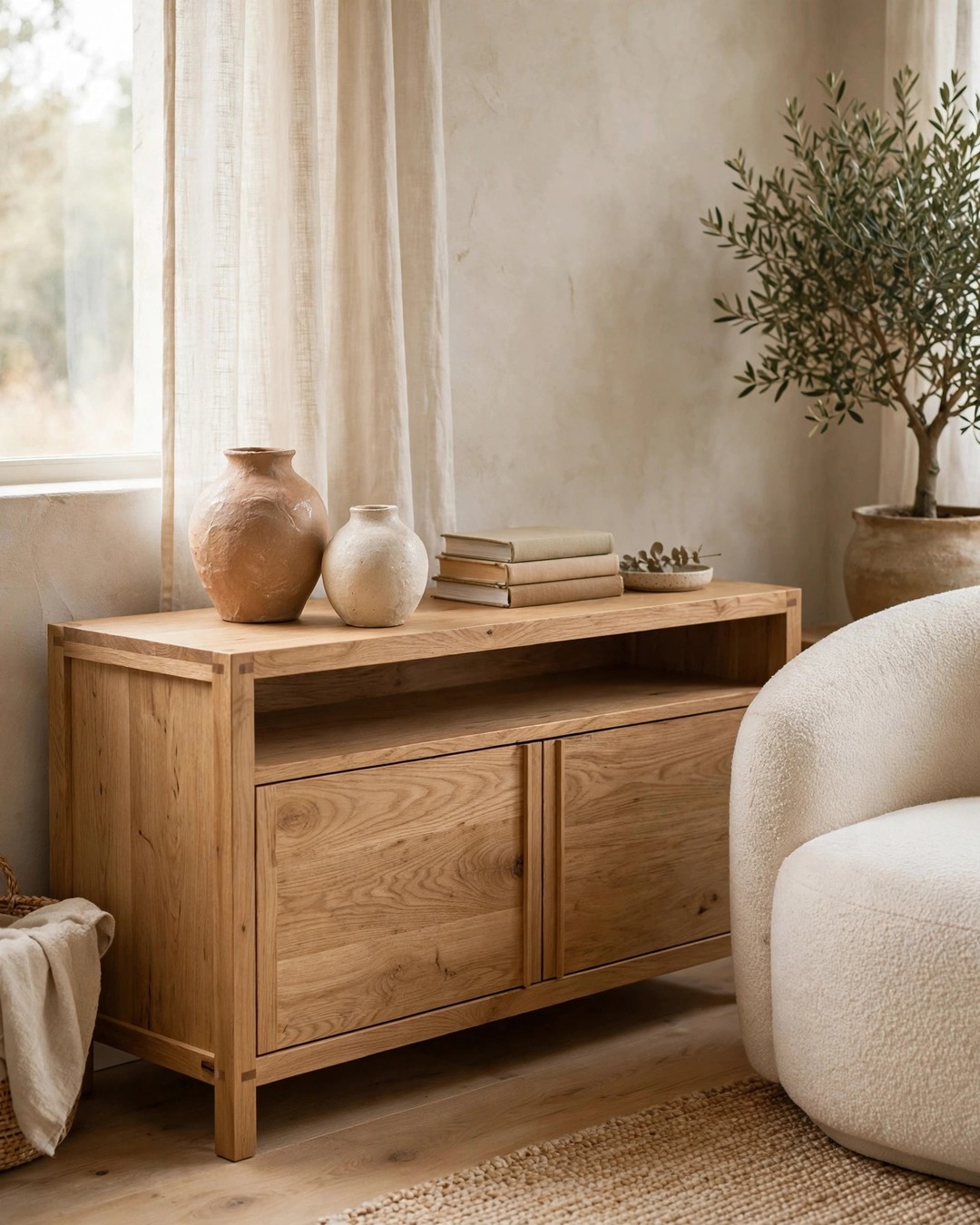
Tip: Feed solid oak once a year with a natural oil or wax made for furniture. It deepens the grain, protects the surface, and takes about twenty minutes.
5. Ground the Space With a Low-Pile Wool Rug
The rug sets the floor tone for everything above it, and in an organic modern room it should feel like undyed nature underfoot. A low-pile wool rug in ivory, oatmeal, or soft greige gives the seating area a calm foundation without competing with the furniture’s shapes. Low pile matters: it keeps the room’s lines clean and makes the rug easy to keep.
Size the rug generously. The front legs of the sofa and the accent chairs should all sit on it, with at least a foot of rug extending beyond the furniture on the open sides. A rug that is too small is the most common mistake in this style, because it breaks the grounded, unified feeling the whole look depends on.
For pattern, stay quiet: a subtle hand-knotted texture, a faint border, or a soft Moroccan-style lattice in tone-on-tone wool. Busy, high-contrast patterns fight the serene mood. If you want layering, place a smaller jute rug under the wool one for a whisper of extra texture at the edges.

Tip: A thick felt rug pad underneath adds cushion and keeps a low-pile rug from sliding, and it makes even a modest wool rug feel luxurious underfoot.
6. Try Limewash Walls for Soft Movement
Flat paint can look dead in a neutral room, which is where limewash comes in. This traditional mineral paint goes on in overlapping, cloudlike strokes that leave the wall with soft tonal movement, like plaster that has aged for a century. In warm white, clay, or mushroom tones, it gives an organic modern room its quiet depth.
Limewash suits one or two walls best: the main sofa wall or the wall behind the shelving. Painting all four walls in limewash can make the room feel busy, while a single feature wall reads as texture rather than pattern. The mottled finish also forgives imperfect walls, which is a gift in older homes.
Application is forgiving, which makes this a realistic weekend project. The paint is applied in loose, crisscross strokes with a large block brush, and the variation is the point, so there are no cut-in lines to stress over. Work in natural light so you can see the movement developing, and let each wall dry fully before judging the final tone, since limewash dries lighter than it looks wet.

Tip: Order a sample pot first and paint a large test board. Limewash shifts with light more than regular paint, so check it morning and evening before committing to a wall.
7. Hang a Woven or Paper Pendant Light
Overhead lighting sets the room’s mood after dark, and in an organic modern living room the fixture itself should be made of something natural. A woven rattan or seagrass pendant, a sculptural paper lantern, or a linen drum shade casts a warm, diffused glow that flatters every material in the room.
Hang the pendant low over the coffee table or in the center of the seating area, roughly 30 to 36 inches above the table surface. The low hang makes the light feel like part of the furniture arrangement rather than a ceiling afterthought, and the woven texture throws beautiful patterned shadows on the ceiling at night.
Scale the pendant generously. A shade that feels slightly too big in the store will look exactly right once it is hanging in the room, while a small pendant disappears against a tall ceiling. If your ceiling is low, a flush-mount woven fixture gives you the same natural texture without stealing headroom.
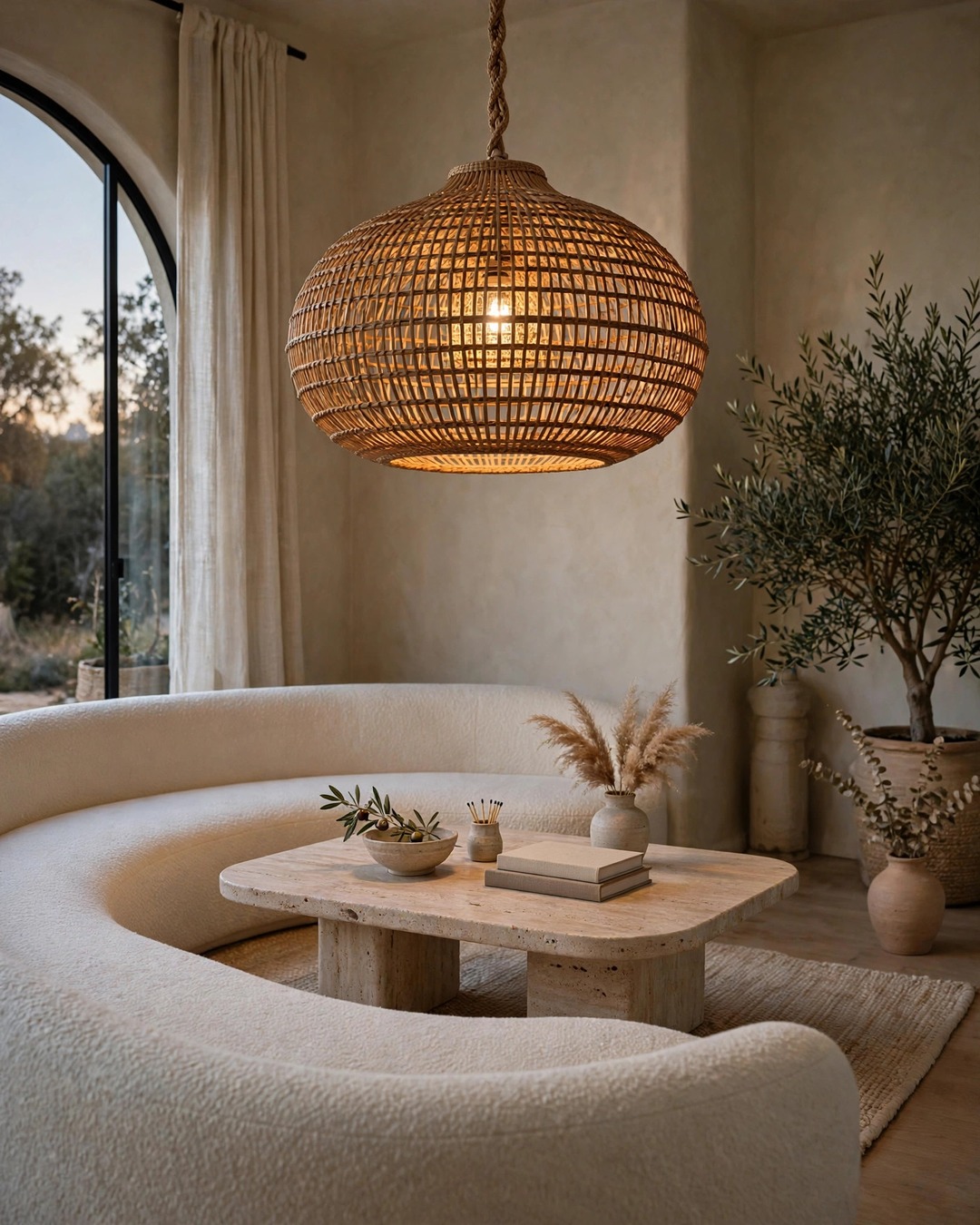
Tip: Use a warm 2700K bulb in any natural-fiber shade. Cool bulbs fight the warm materials and make rattan and paper look gray.
8. Layer Honed Stone Accents
Stone does not have to stop at the coffee table. Small honed-stone accents scattered through the room keep the organic modern palette grounded at every level: a marble tray on the console, an onyx bookend on the shelf, a travertine candle holder on the side table, a smooth river stone as a paperweight.
The key word is honed, meaning matte and soft to the touch rather than polished to a shine. Polished marble belongs to a different style; honed stone has the quiet, ancient quality that fits here. Mix stones freely: creamy travertine, gray-veined marble, dark soapstone. They all share the same earthy origin, so they harmonize naturally.
Keep the shapes organic too. Bowls, rounded vases, and irregularly edged trays suit the style better than sharp cubes and perfect spheres. One or two larger stone pieces per surface is enough. Stone is heavy visually, and a little goes a long way in a calm room.

Tip: Honed stone shows water rings, so treat stone trays and coasters as the sacrificial layer: let them catch the marks so the furniture underneath stays clean.
9. Add a Rounded Accent Chair
One great accent chair does more for an organic modern living room than a whole set of matching furniture. Look for rounded, enveloping shapes: a tub chair, a barrel chair, a curved swivel chair in boucle, sheepskin, or washed linen. The chair should look like it was shaped by hand rather than cut by machine.
Place it at an angle to the sofa to create a conversational triangle with the coffee table. The slight rotation breaks up the boxy geometry of the room and gives the chair its own moment. A small round side table and a floor lamp beside it turn the chair into a secondary reading spot without any extra planning.
Contrast the chair’s material against the sofa for the raw-meets-refined mix this style is known for. If the sofa is boucle, try the chair in smooth leather or washed linen. If the sofa is linen, a sheepskin-covered chair adds the plush contrast. Different but related is the goal, never identical.

Tip: A swivel base is the practical luxury here. It lets the chair turn toward the conversation, the window, or the television without dragging legs across the rug.
10. Style With Handmade Ceramics
Machine-perfect decor has no place in organic modern design. Handmade ceramics, with their slightly uneven rims, visible throwing rings, and matte glazes, bring the human touch the style needs. A few well-chosen pieces do more than a shelf full of identical store-bought vases.
Build a small collection in a tight earthy palette: warm white, sand, clay, soft gray, olive. Group pieces in odd numbers on open shelves, the console, and the coffee table: a tall vase, a medium bowl, and a small cup make a natural trio. The slight irregularities catch the light differently on each piece, which is exactly the quiet visual interest the room wants.
Shop for ceramics where the maker is visible: local pottery studios, craft markets, and small online shops run by individual potters. These pieces carry the fingerprints of the person who made them, and that authenticity is something mass-produced decor can never copy. Apartment Therapy’s designer guide to the organic modern look specifically calls out earthy ceramics as a key way to bring the outdoors in.
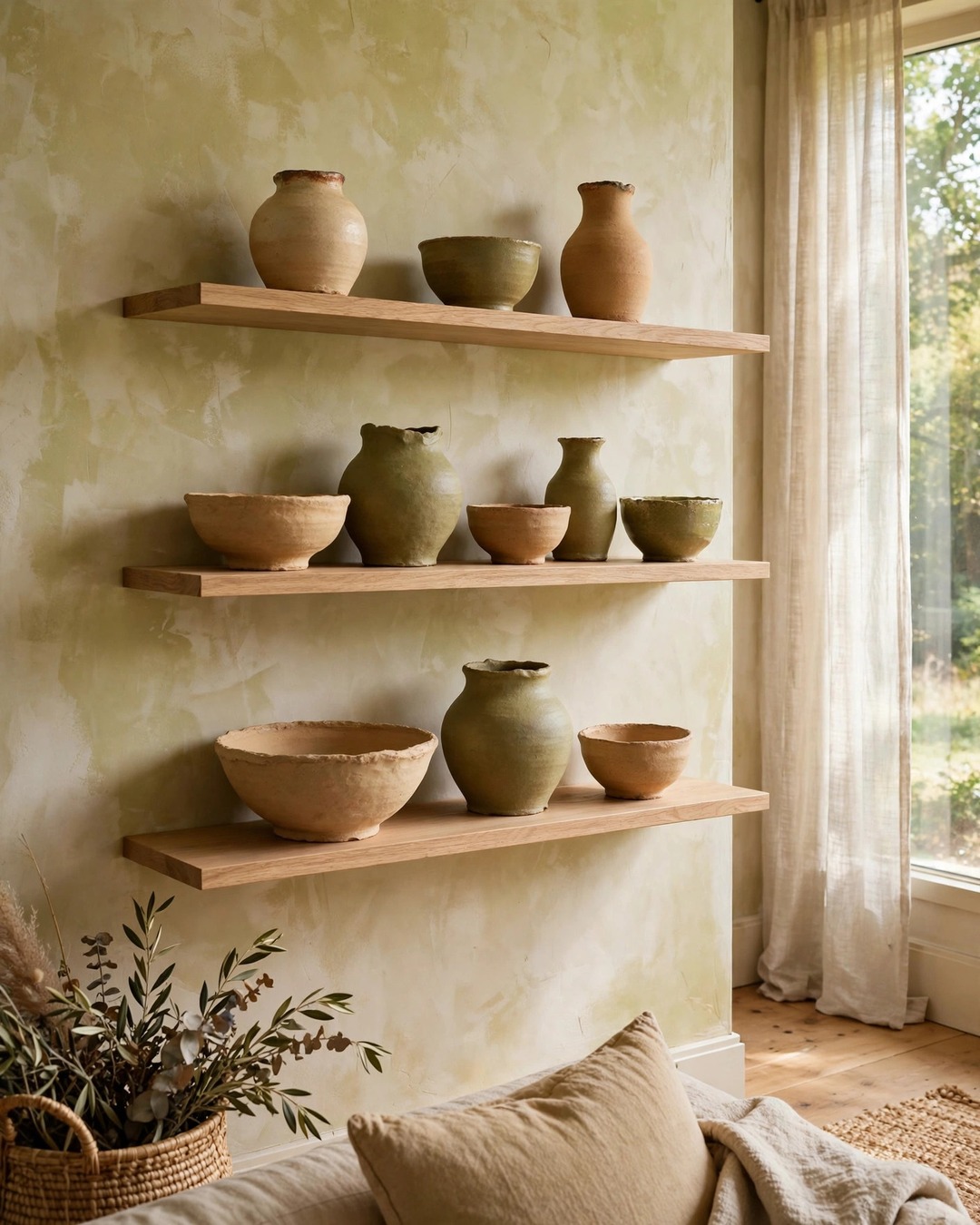
Tip: Leave one handmade piece empty. A beautiful empty vessel is a confident styling choice, and it gives you a place to drop in seasonal stems whenever you like.
11. Keep Furniture Low and Grounded
Organic modern rooms sit low. Low-profile sofas, platform-style seating, and coffee tables that hover just above the rug create a grounded, lounge-like feeling that makes the room seem calmer and more spacious. High, leggy furniture breaks this spell by lifting everything into the air.
The trick is consistency across the main pieces. If the sofa sits low, the coffee table and the accent chairs should follow suit, with seat heights in a similar range. When everything shares one low horizon line, the room reads as one continuous, restful plane instead of a collection of mismatched heights.
Low furniture also shows off more wall, which makes ceilings feel taller and rooms feel larger. This is why the style works so well in apartments: you get the visual calm of minimalism without the emptiness, because the low pieces still fill the floor plan generously. My renter-friendly living room tour shows how low, grounded pieces can define a whole seating area without a single wall anchor.
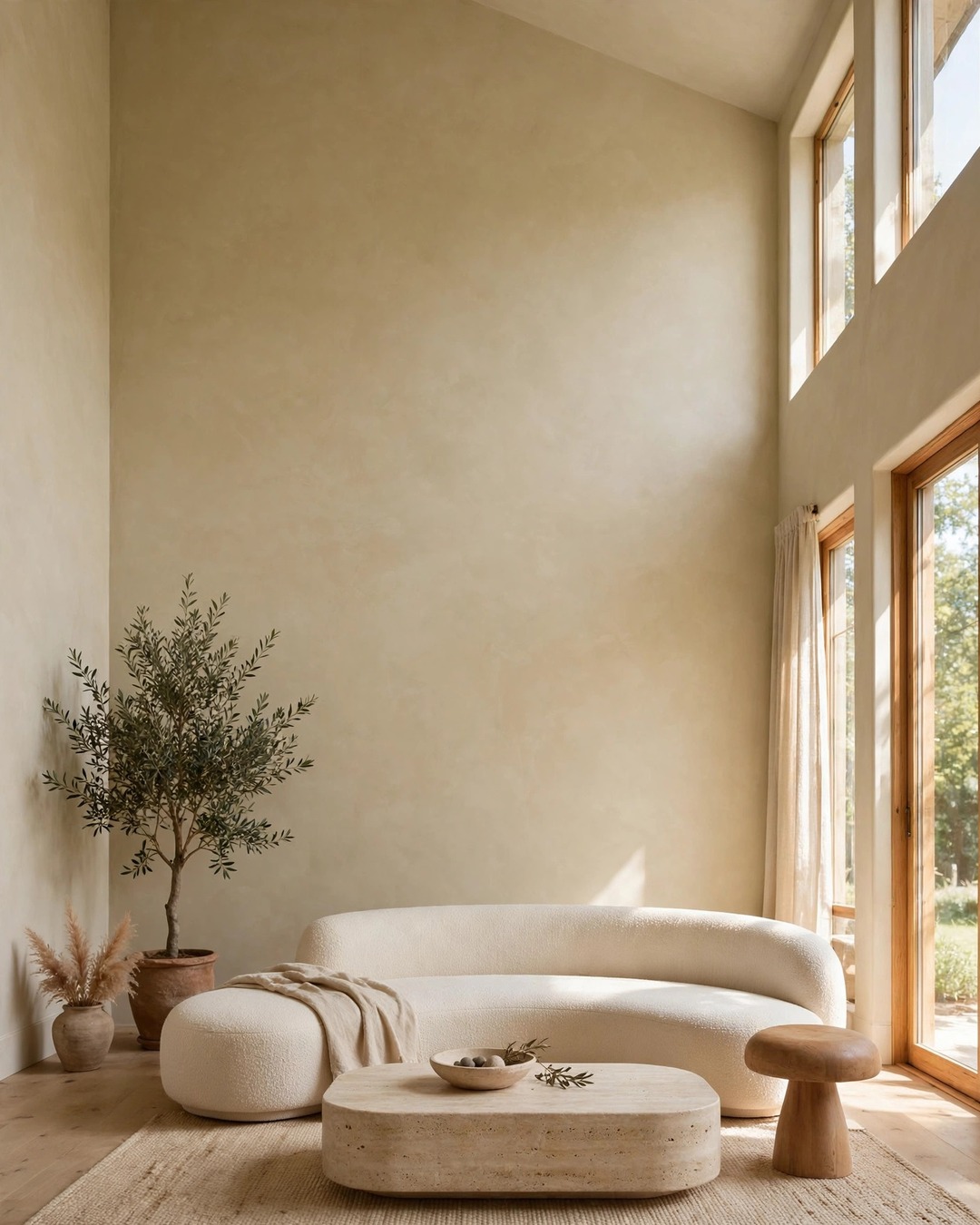
Tip: If your current sofa is tall, cheat the look downward: choose a low coffee table and low side tables, and keep wall art hung a few inches lower than usual to bring the eye line down.
12. Add an Organic-Shaped Side Table
Side tables are where organic modern design gets playful. Instead of a square box, choose a mushroom-shaped stool, a freeform burl-wood cube, a blob-like ceramic side table, or a small live-edge stump. These sculptural pieces work as side tables by day and as little works of art always.
Place one beside the accent chair and one at the far end of the sofa, at slightly different heights. The asymmetry keeps the arrangement from looking like a furniture set, and the unusual shapes give guests something to notice and touch. A mushroom stool in solid wood or travertine is the hardest-working version: side table, extra seat, and footrest in one.
Materials can be bolder here than on the big pieces. Burl wood, with its wild swirling grain, or a deeply pitted travertine reads as jewelry against the calm sofa and rug. Because the table is small, the drama stays contained and never overwhelms the room.

Tip: Check the height before you buy. A side table should sit within two inches of your chair arm, higher or lower, so a lamp or a cup feels naturally within reach.
13. Dress Windows in Natural Flax Linen
Window treatments can make or break an organic modern room, and natural flax linen is the fabric that gets it right. Its slubby, imperfect weave filters daylight into a soft, golden glow, and the slight wrinkles are part of the charm. Hang full-length panels in an undyed flax or oatmeal tone.
Mount the rod close to the ceiling and extend it well past the window frame on both sides. This makes the window look larger and lets the linen stack off the glass during the day, so you get maximum natural light. Light is the lifeblood of this style: organic modern rooms are meant to be bright, with the sun doing most of the decorating.
Skip heavy blackout linings and stiff interlinings. A single layer of medium-weight linen, or a linen sheer layered behind a slightly heavier linen panel, gives you privacy options without killing the light. Designers of this style often replace heavy window treatments with the sheerest natural coverings, or even leave windows nearly bare where privacy allows.
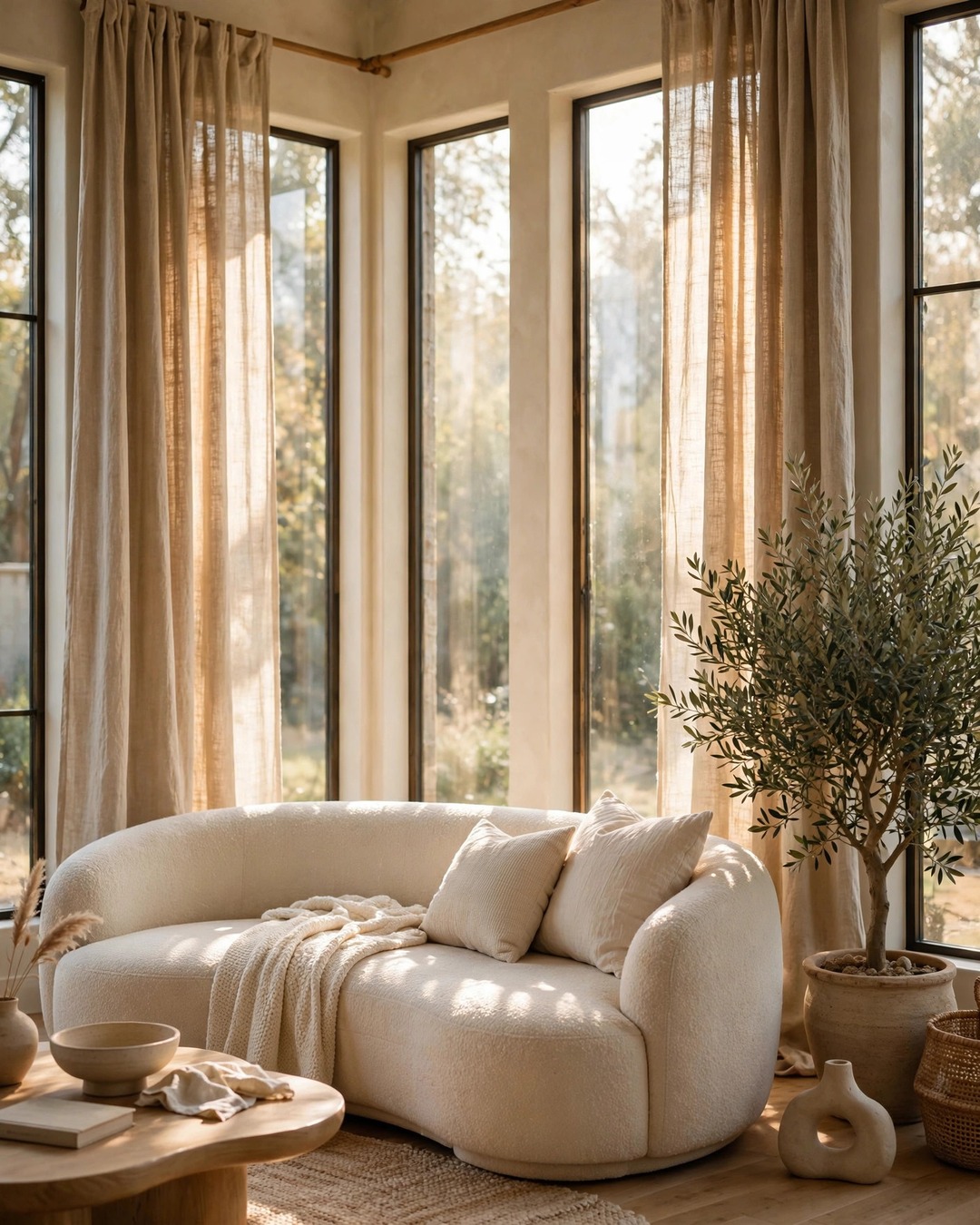
Tip: Wash linen panels before hanging if the maker allows it. The first wash softens the fabric and sets in the relaxed, lived-in drape this style wants.
14. Weave In Rattan and Jute Details
Rattan and jute are the warm, honey-toned fibers that keep an organic modern room from drifting into all-white blandness. A rattan armchair, a jute pouf, woven storage baskets, or a cane-front cabinet adds golden warmth and handwoven texture at a fraction of the cost of stone or solid wood.
Distribute woven pieces around the room rather than grouping them. A basket beside the sofa for throws, a jute rug layered under the coffee table zone, a rattan tray on the console: spread out like this, the warmth feels ambient, like sunlight that settled into the furniture. Clustered together, woven pieces can tip the room toward beach-house casual.
Mix the weaves for richness. Tight cane webbing, chunky jute braid, open rattan pole work, and fine seagrass twist all read as the same material family but catch light differently. That variety within one palette is the quiet complexity that makes organic modern rooms so satisfying to look at.
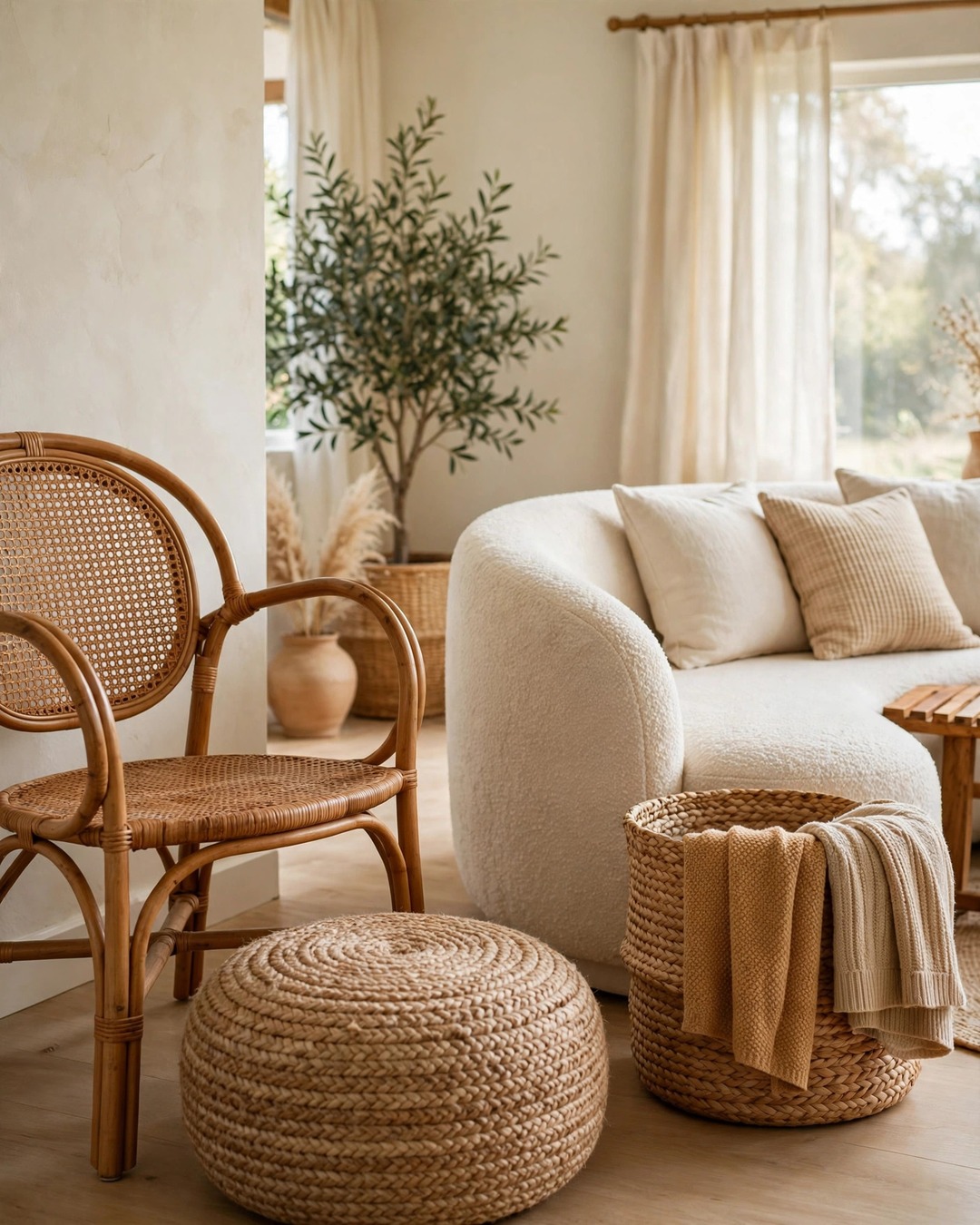
Tip: Keep woven pieces out of direct, all-day sun. Natural fibers bleach and dry out over time, so rotate baskets and move the rattan chair a few feet if one corner gets harsh afternoon light.
15. Finish With One Dark Accent
An all-light room can float away without one dark note to hold it down. A single dark accent, a black metal floor lamp, a deep bronze bowl, a charcoal throw pillow, or a dark walnut picture frame, gives the eye a place to rest and makes every light material around it look richer by contrast.
The rule is one accent, repeated once or twice at most. A black arc lamp beside the reading chair and a small black vase on the shelf is plenty. Any more and the dark notes start competing with the calm palette instead of grounding it. Think of the dark accent as punctuation: a period at the end of a sentence, not a second sentence.
Matte finishes suit this role best. Matte black metal, aged bronze, or dark stained wood absorbs light quietly, while glossy black can look sharp and out of place among all the soft, natural surfaces. The dark piece should feel like a shadow the room cast naturally, not a graphic statement.

Tip: If you are nervous about black, start with dark bronze or oil-rubbed finishes. They give you the grounding contrast with a softer, more forgiving edge.
Organic Modern Materials Guide
Organic modern is a materials-first style, so it helps to know what each material does in the room. Use this guide when you are shopping or thrifting: pick one hero material per surface, mix raw with refined, and let the natural variation be the decoration. West Magnolia Charm’s organic modern living room guide walks through the same material-first approach with real room examples.
| Material | Best use in the room | What it adds |
|---|---|---|
| Boucle | Sofa, accent chairs, ottomans | Nubby softness and sculptural texture |
| Travertine | Coffee table, side tables, trays | Weight, age, and natural pitting |
| Solid oak | Console, shelving, side tables | Warmth and visible honest grain |
| Limewash | Feature wall behind the sofa | Soft tonal movement, plaster-like depth |
| Wool | Low-pile rug, throws | Quiet warmth underfoot, natural insulation |
| Rattan and jute | Pendant light, baskets, pouf | Golden woven warmth and hand texture |
| Handmade ceramic | Vases, bowls, candle holders | Human touch and one-of-a-kind variation |
Frequently Asked Questions
What is organic modern style in simple terms?
Organic modern blends the clean, uncluttered lines of modern design with natural materials and soft, nature-inspired shapes. Think of it as minimalism that learned to relax: neutral colors, curved furniture, real wood and stone, handmade ceramics, and at least one living plant. The room should feel calm and polished but also touchable and alive.
How is organic modern different from Scandinavian style?
The two share a love of light woods and neutral palettes, but organic modern leans warmer and more sculptural. Scandinavian rooms tend toward pale woods, crisp whites, and straight functional lines, while organic modern brings in stone like travertine, curved silhouettes, limewash walls, and earthy textures like rattan and clay. If Scandinavian is a clear winter morning, organic modern is a warm afternoon in a stone farmhouse.
What colors work in an organic modern living room?
Stay in the warm-neutral family: ivory, oatmeal, sand, mushroom, warm gray, and soft clay tones. Add depth with earthy accents like olive green, terracotta, and cognac, used sparingly in pillows, ceramics, or art. Keep one dark accent, such as matte black or dark bronze, to ground the palette. The overall effect should feel like colors you could find on a walk through nature.
Can I get the organic modern look on a budget?
Yes, because the style rewards a few good materials rather than a lot of stuff. Start with textiles and small pieces: a jute rug, woven baskets, linen curtains, and handmade-look ceramics from thrift stores or craft markets. My room refresh under $50 guide shows how far small swaps can go, and secondhand solid wood and stone pieces are some of the best values in thrift stores.
Do I need real plants for organic modern style?
A living plant helps enormously, since nature is the heart of the style, but it does not have to be fussy. An olive tree, a fiddle-leaf fig, or even a sturdy snake plant in a handmade clay pot gives you the living focal point the room wants. If your light is poor or your schedule is packed, a convincing faux olive tree delivers the same silhouette and silvery-green tone with no watering at all.
How do I keep an organic modern room from looking empty?
The style is calm, not bare. Layer at least three natural textures in the seating area, boucle against oak against wool, and let the materials’ variation be the decoration. Add wall interest with limewash, a large piece of earthy abstract art, or open shelving styled with ceramics. If a corner still feels empty, a floor plant or a sculptural floor lamp fills it without adding clutter. My gallery wall hanging guide can help if you want curated art on the walls.
Final Thoughts
Organic modern works because it asks so little of you and gives so much back. Choose materials that come from the earth, keep the shapes soft and the palette warm, let one olive tree do the talking, and leave enough breathing room for everything to be seen. Start with the sofa and the rug, add stone and wood, hang one woven pendant, and finish with that single dark accent. The room will feel calm on a busy morning and quietly luxurious on a slow evening, which is exactly what a living room should do.


