
15 Cozy Apartment Decor Ideas

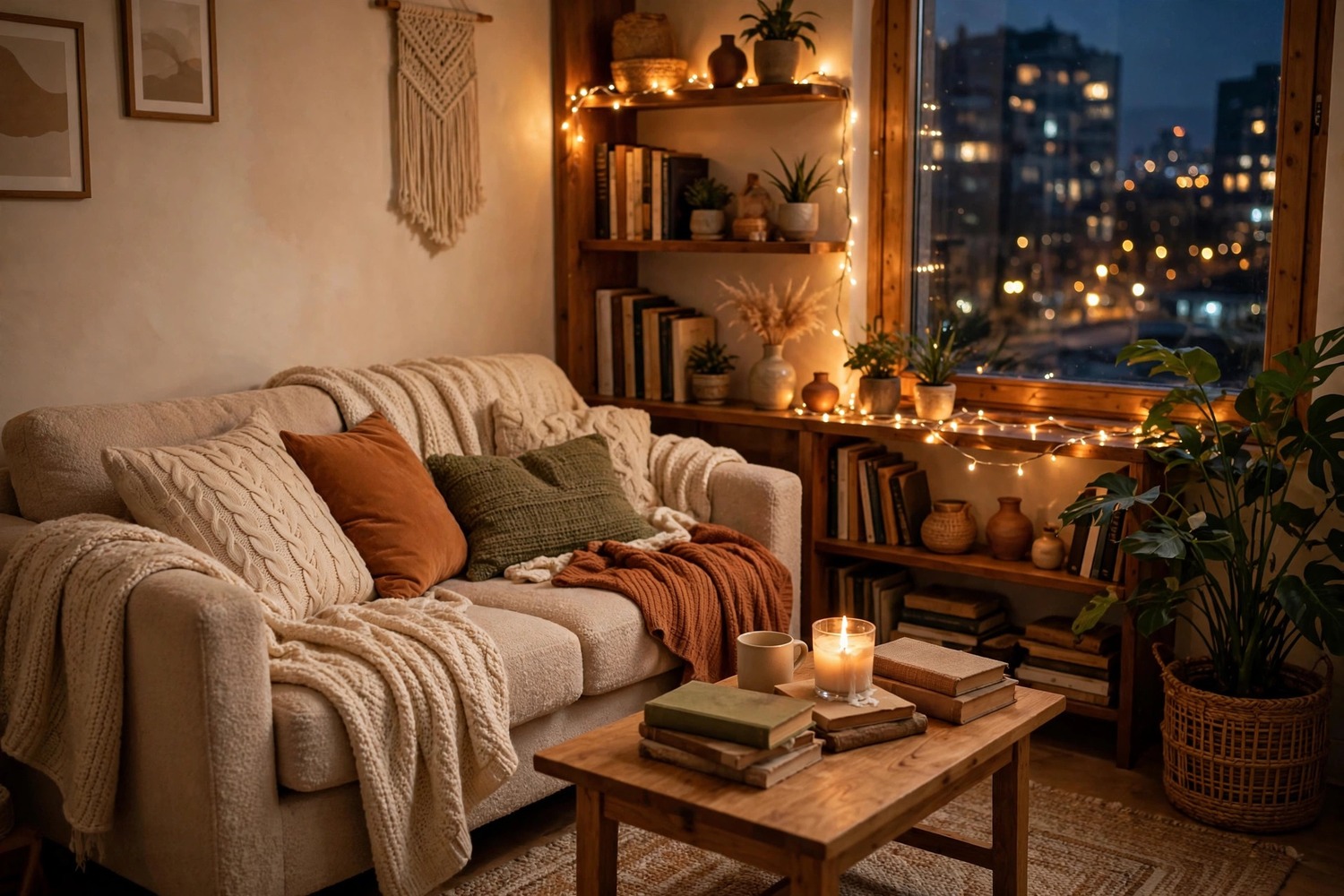
A small apartment does not need a renovation to feel warm and personal. The best cozy apartment decor ideas work around the two limits every renter knows: you cannot change much, and you do not have much room. So the wins come from soft things, smart things, and things you can take with you when the lease ends. Layered rugs, warm lamps, curtains hung the right way, mirrors, plants, and furniture that does two jobs will turn a plain white box into a place that feels like yours.
Every idea below is renter-friendly, which means no drilling into questionable walls, no permanent paint jobs, and no goodbye to your security deposit. They are also budget-friendly, because most of them lean on textiles and thrifted finds rather than big furniture purchases. Whether you live in a studio, a one-bedroom, or a railroad apartment with more doors than windows, start with the idea that matches your biggest frustration and build from there.
Key Takeaways
- Zone small spaces with layered rugs and open bookshelves instead of walls or dividers.
- Layer warm light at three levels — a single ceiling light never makes a rental feel cozy.
- Go vertical with tall freestanding shelves and choose hero pieces that do double duty.
- Use renter-friendly tricks: peel-and-stick wallpaper, damage-free art strips, and curtains hung high and wide.
- Hide clutter in closed storage and keep the whole place calm with a short weekly reset.
1. Zone a Studio With Layered Rugs
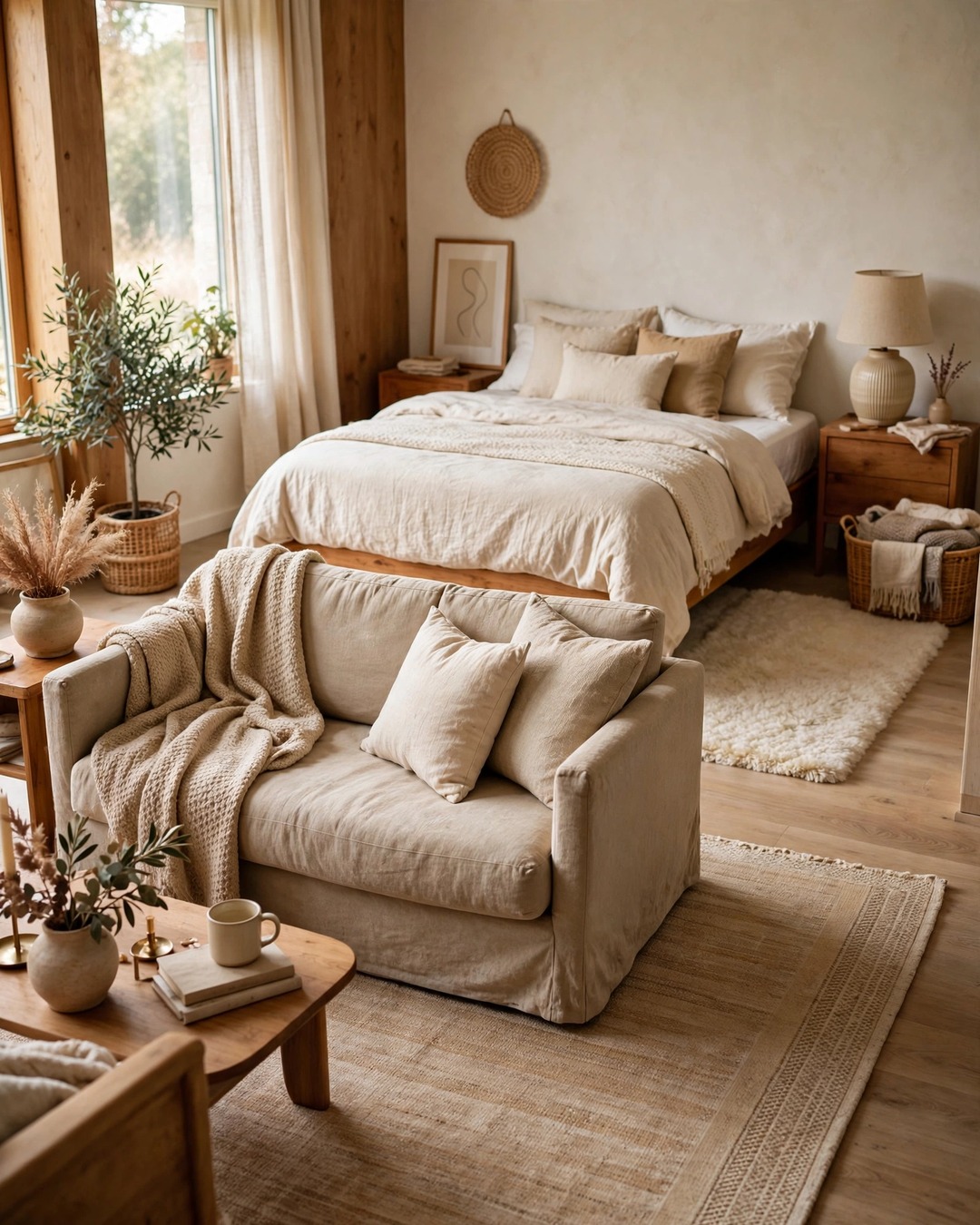
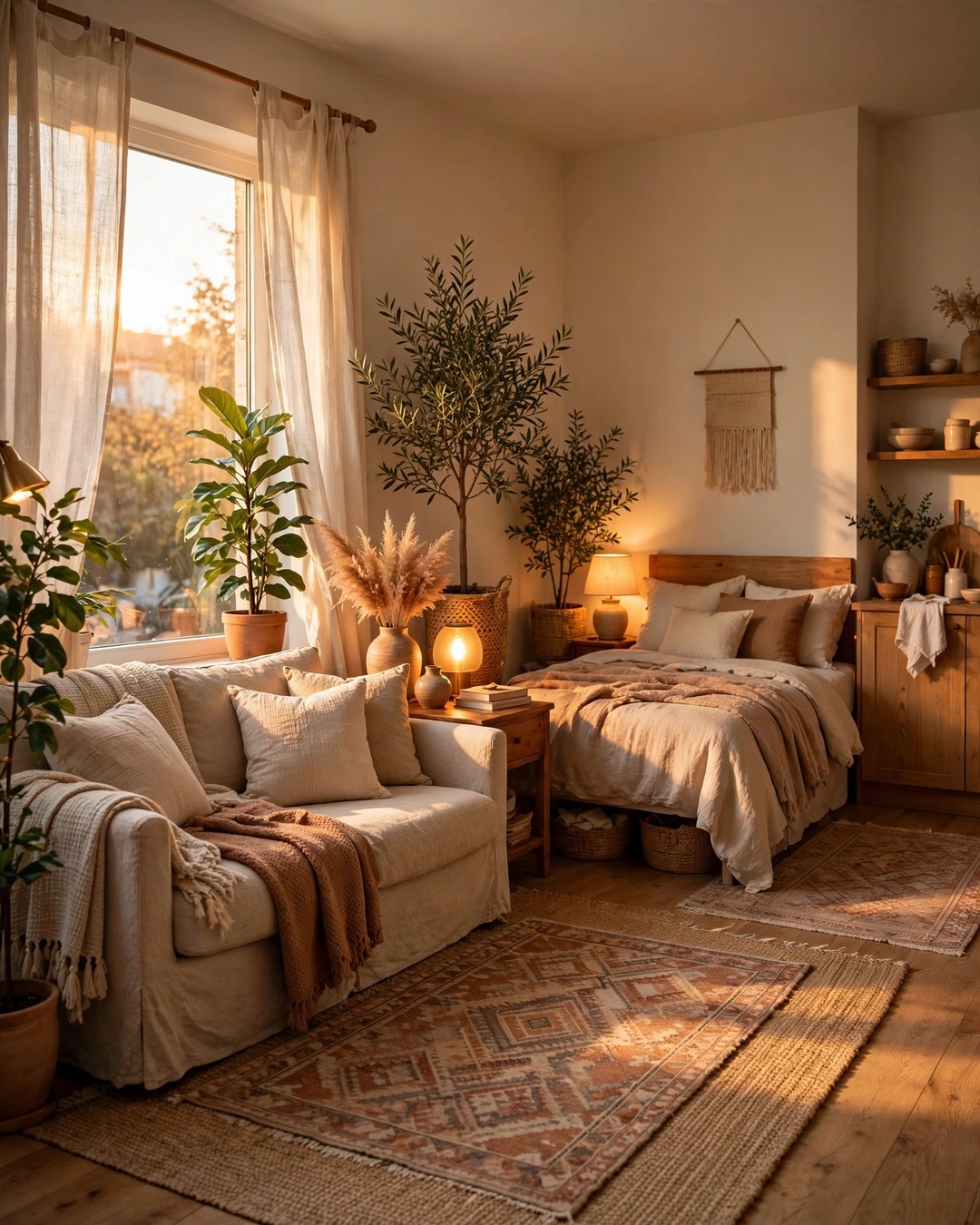
In a studio, the biggest problem is that everything happens in one room, so the room never feels like it has rooms. Rugs fix that without a single wall. Place one rug under the seating area and a second, different rug under or beside the bed, and your brain immediately reads them as two separate spaces. The floor plan has not changed, but the feeling of the apartment has.
Layering is the trick that keeps it cozy instead of flat. Start with a large, affordable flatweave as the base, then float a smaller, softer rug on top where your feet land: beside the bed, in front of the sofa, under the reading chair. The overlapping edges add the lived-in texture that makes rentals feel decorated instead of staged. Keep the two zones in the same color family so they relate to each other rather than competing, and let the bed-zone rug be the warmer of the two so the sleeping area reads as the calmest corner.
Rugs also solve two classic apartment complaints for free: cold floors and thin walls. A thick rug under the living area softens footsteps for the neighbors below, and a runner in the hallway muffles the echo that makes small apartments sound hollow. When you move, every rug rolls up and comes with you, which makes them one of the best investments a renter can make.
2. Hang Curtains High and Wide to Fake Tall Windows
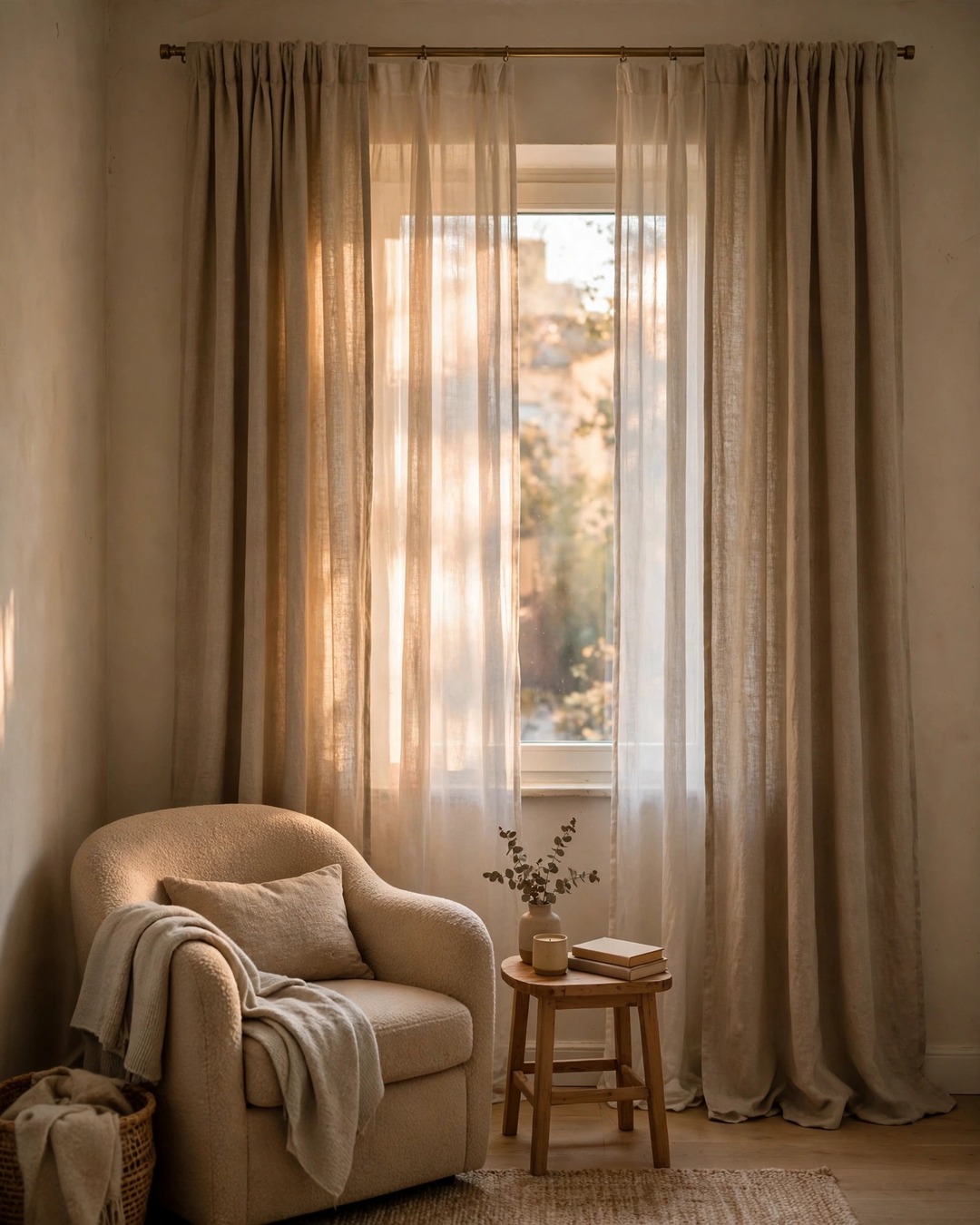
Apartments rarely come with grand windows, but curtains can fake them. Mount the rod four to six inches above the window frame and extend it eight to twelve inches past the frame on each side, then hang curtains long enough to just kiss the floor. The window suddenly reads taller and wider, the ceiling feels higher, and the whole room gains the kind of drama that short, tight curtains never deliver.
Renters have more options here than they think. If you cannot drill, a tension rod inside the frame works for lightweight panels, and adhesive curtain rod brackets hold surprisingly well on smooth walls and come off cleanly. For a softer look, choose linen or cotton in a tone close to the wall color; matching the walls makes the room feel bigger, while a deeper tone in the same family adds warmth. Sheers under heavier panels give you daylight privacy and evening coziness in one window.
One more trick: never let curtains stop at the sill. Short curtains chop the wall in half and make windows look smaller than they are. Floor-length panels, even inexpensive ones, draw the eye up and down the full height of the wall, which is the cheapest ceiling-height illusion in decorating.
3. Layer Warm Light at Three Levels
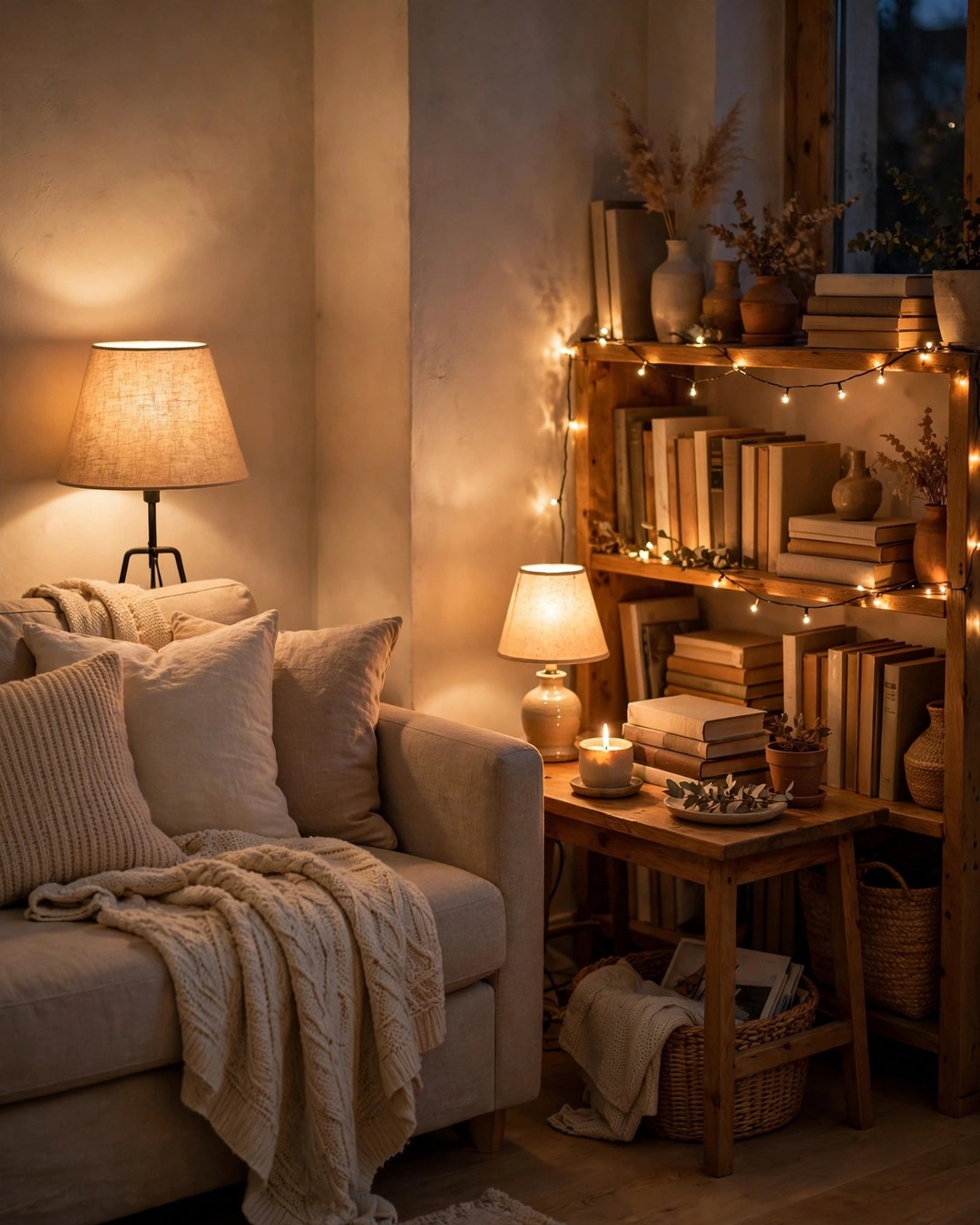
Most apartments come with one overhead light per room, and it is usually too bright, too white, and too honest. Cozy rooms are never lit from a single source. Build three levels instead: something low and warm (a table lamp or a cluster of candles on the coffee table), something at eye level (a floor lamp with a fabric shade beside the sofa or reading chair), and the overhead either dimmed or simply off in the evening.
Swap every bulb you can reach to warm white, around 2700K. The difference between that and the daylight bulbs many rentals ship with is instant: skin looks better, wood looks richer, and the whole room drops its shoulders. Plug-in dimmers, which slide onto any lamp cord with no wiring, let you turn a bright reading lamp into a soft evening glow. String lights with warm bulbs, draped along a shelf or around a mirror, add the kind of sparkle that makes a small apartment feel magical after dark.
Keep one bright, honest light for tasks like cooking or getting ready, but treat it as a tool you switch on and off, not the room’s personality. Our renter-friendly living room tour shows how layered lamps and warm bulbs can make a leased space feel permanently homey without touching a single fixture.
4. Bounce Light Around With Mirrors
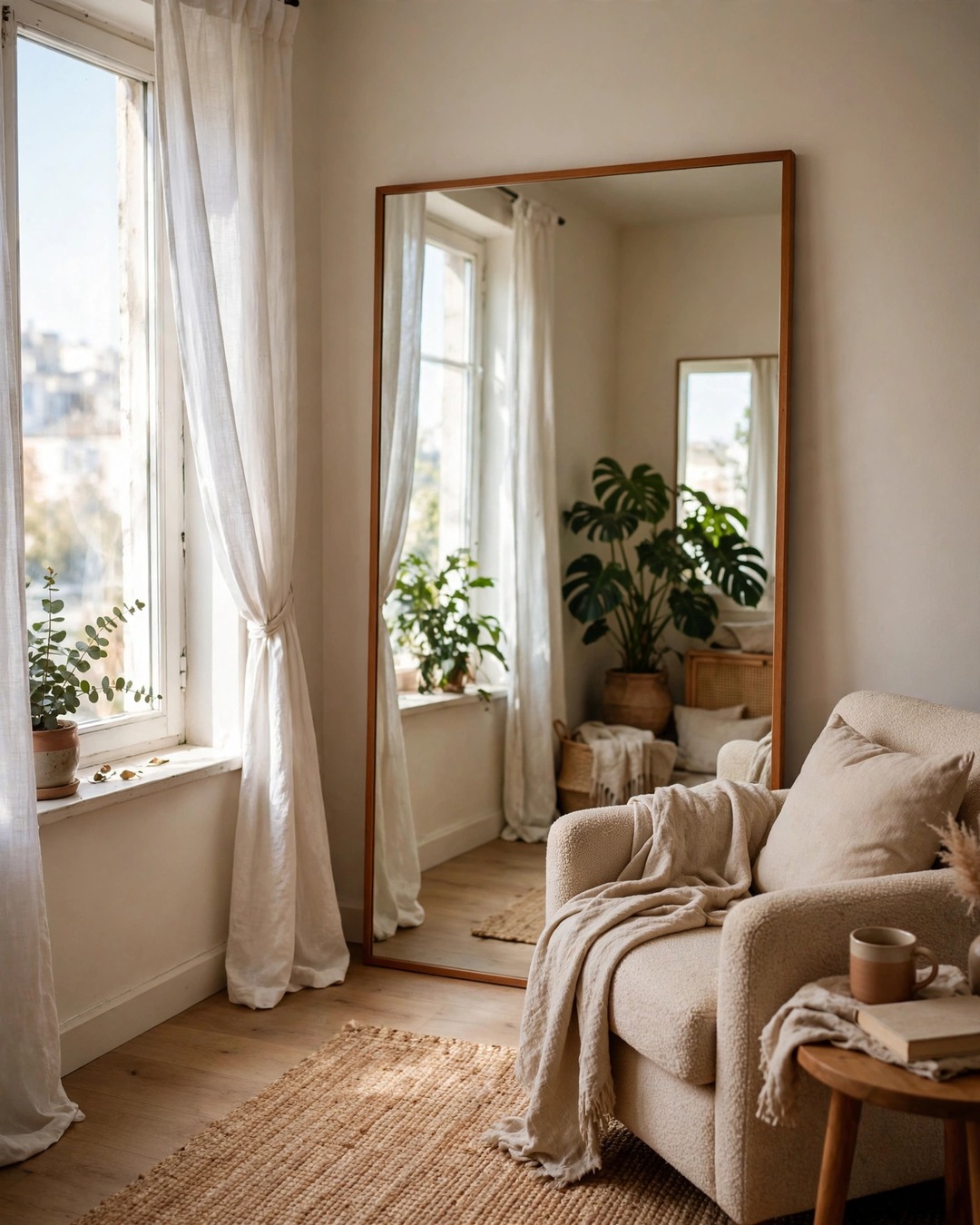
A well-placed mirror is the closest thing to a bigger window. Hang a large mirror opposite or beside a window and it throws daylight deep into the room, doubling the brightness of a small apartment for free. At night it bounces lamplight back, so one lamp does the work of two. Dark corners that used to disappear suddenly feel like part of the room.
Leaning mirrors are a renter’s best friend. A full-length mirror leaned against the wall behind a chair or beside a dresser needs no hardware at all, and the slight tilt catches more light than a flat-hung one. Smaller mirrors grouped in a loose cluster over a console or desk work the same way on a smaller scale. Choose thin, simple frames in wood or black so the mirror reads as a window rather than a decoration competing for attention.
Be strategic about what the mirror reflects. Aim it at something pretty (the window, a plant, a styled shelf) rather than at clutter or the front door. A mirror that reflects a calm view doubles the calm; a mirror that reflects a messy kitchen doubles the mess.
5. Pick One Multifunctional Hero Piece
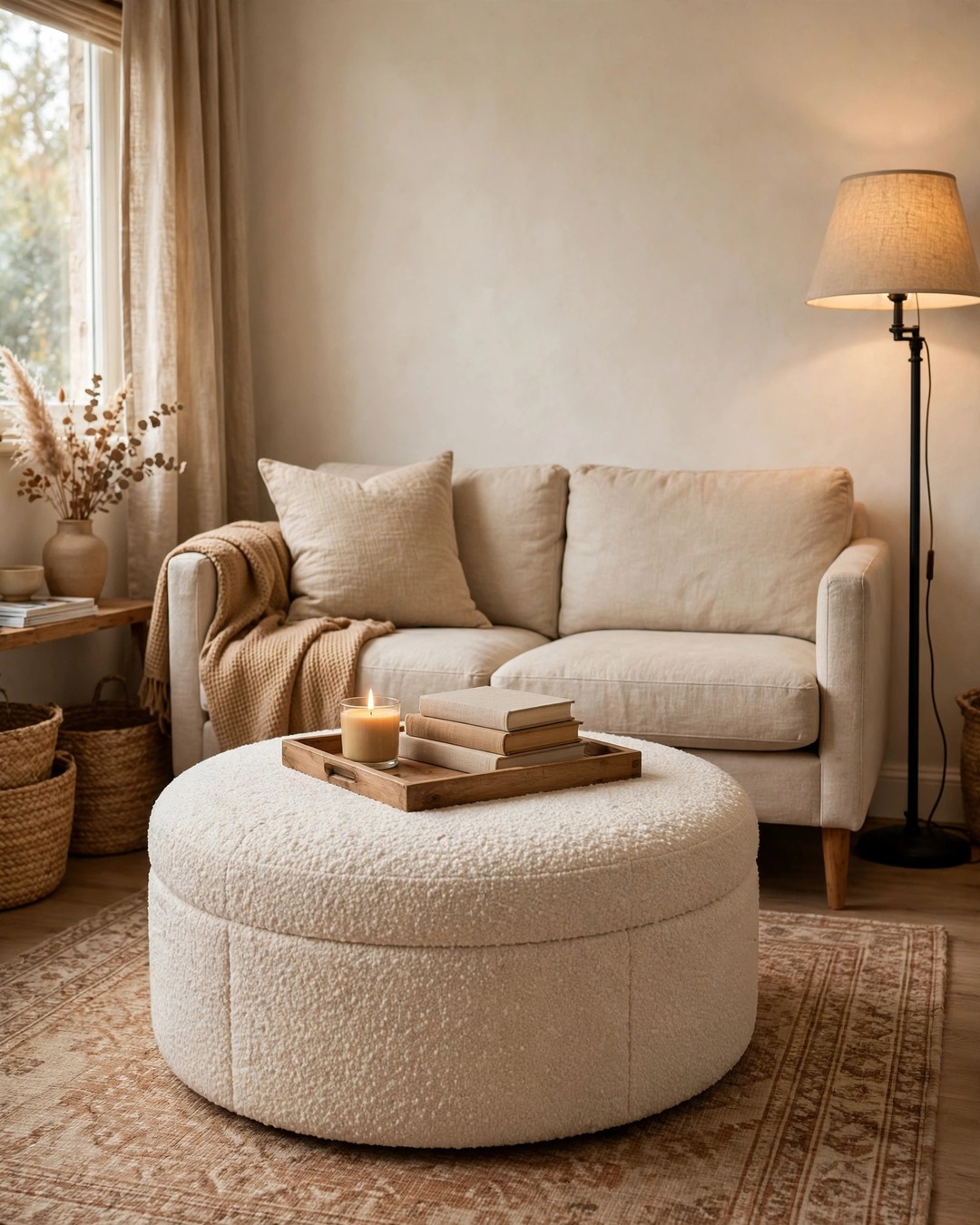
In a small apartment, every piece of furniture should earn its floor space twice. The hero piece is the one item that does the most double duty: a storage ottoman that is a coffee table, a footrest, and a blanket chest. A daybed that is a sofa by day and a guest bed by night. A drop-leaf table that seats two daily and six when friends come over.
Choose the hero based on how you actually live, not how you wish you lived. If you work from home, a console table that becomes a desk beats a decorative sideboard. If you host movie nights, a deep, comfortable sleeper sofa beats a stylish but stiff loveseat. Measure twice before buying: in a small apartment, two inches too wide is the difference between a walkway and a wall.
Let the hero piece set the tone for the room. A warm wood storage bench, a boucle ottoman, or a rattan daybed introduces the texture and color story everything else can echo. When one hardworking piece carries the room, you need fewer things overall, which is the real secret to a small space that feels calm instead of crowded.
6. Add Plants at Three Heights
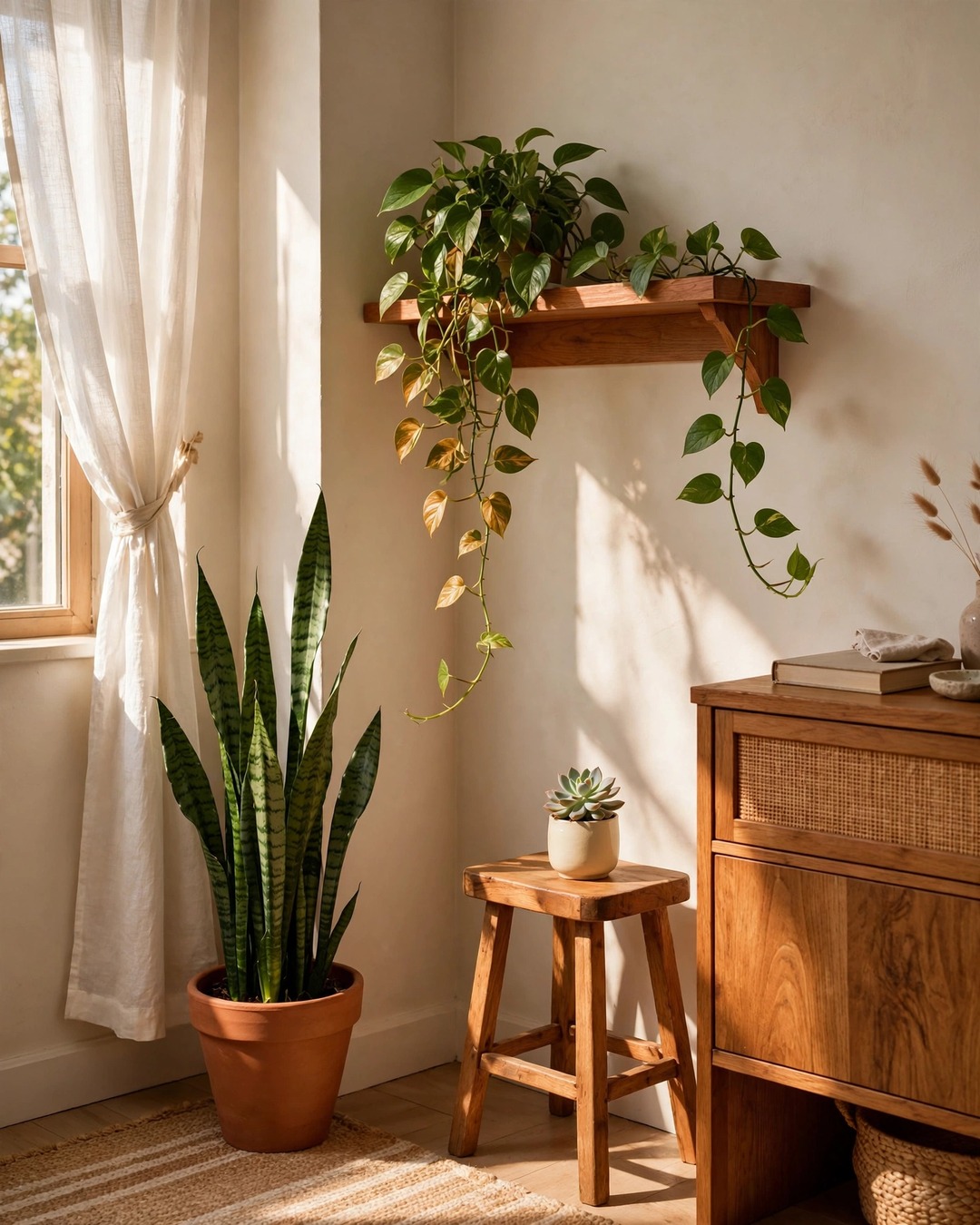
Plants are the fastest way to make a rental feel alive, and small apartments are secretly good homes for them because every plant sits close to a window. The trick is placing them at three heights: something tall on the floor (a fiddle-leaf fig, a bird of paradise, or a tall snake plant), something trailing from a shelf or hanging planter, and something small on a table or windowsill. The three levels pull the eye up and make the ceiling feel higher.
Pick forgiving varieties if you are new to plants. Pothos, snake plants, ZZ plants, and philodendrons tolerate low light and irregular watering, which covers most apartment realities. Group plants in odd numbers and in pots that share a material, like all terracotta or all cream ceramic, so the collection reads as intentional rather than accidental.
No good light? No problem. A high-quality faux plant in a real pot, placed where guests see it from across the room, delivers the shape and color with zero care. And if your lease or lifestyle makes real plants a stretch, even a vase of fresh eucalyptus or grocery-store flowers on the table changes the whole mood of a room for a few dollars.
7. Go Vertical With Freestanding Shelves
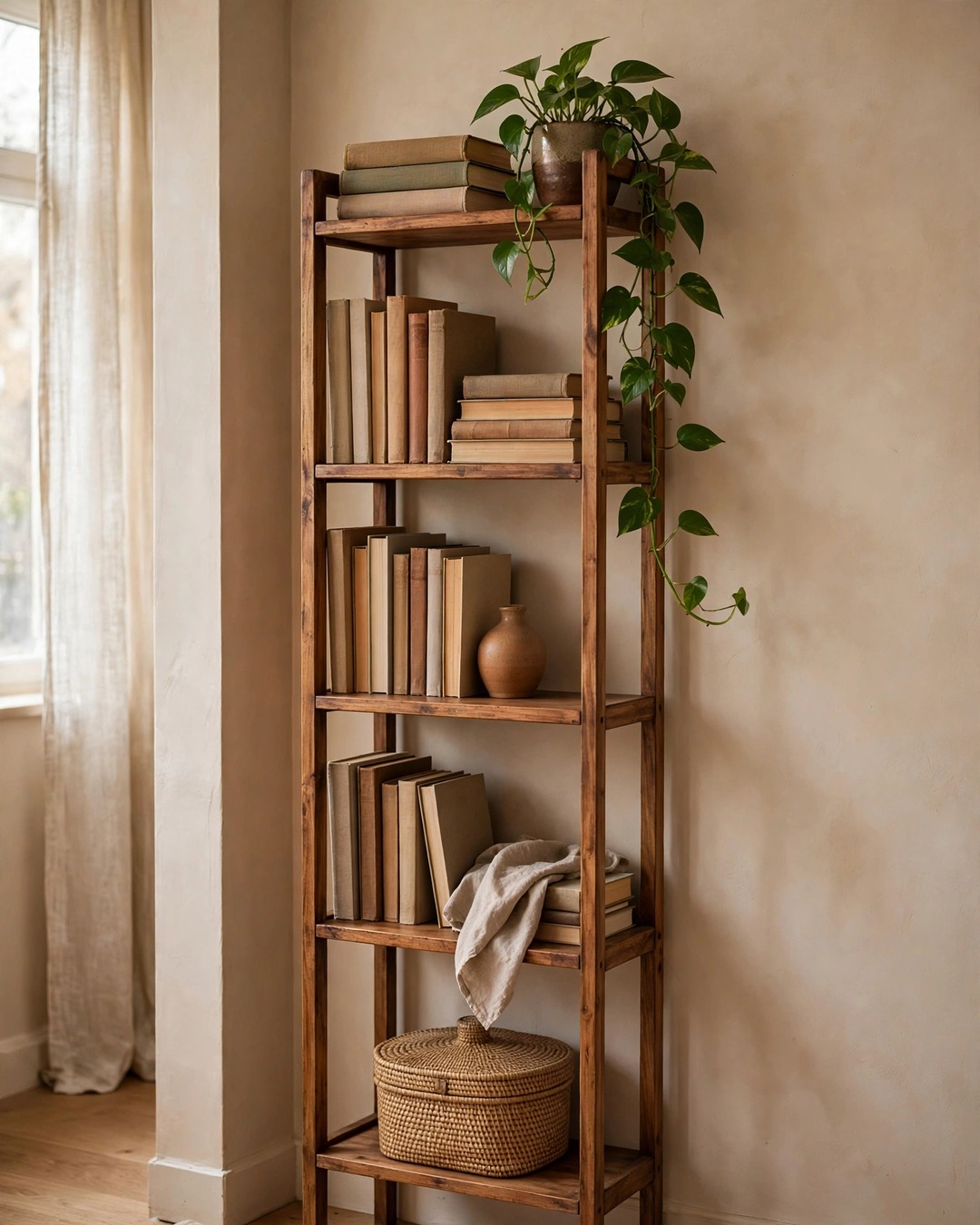
Small apartments run out of floor long before they run out of wall, so the storage has to go up. A tall, narrow bookshelf uses two square feet of floor and gives you six feet of display and storage. Freestanding units need no drilling, move with you, and instantly make a room feel taller by drawing the eye upward.
Style open shelves the way you would a small gallery: books, a plant trailing off one shelf, a basket on the bottom for the ugly-but-necessary stuff, and breathing room between objects. The bottom shelf is prime real estate for closed storage, so use lidded baskets or fabric bins there to hide chargers, paperwork, and cleaning supplies. Leave some shelves partly empty; a crammed shelf reads as clutter, while a shelf with space reads as curated.
Anchor tall shelves so they cannot tip, especially in homes with kids or pets. Freestanding anti-tip straps that use adhesive pads, or simply wedging the unit between furniture, keep things safe without putting holes in the wall.
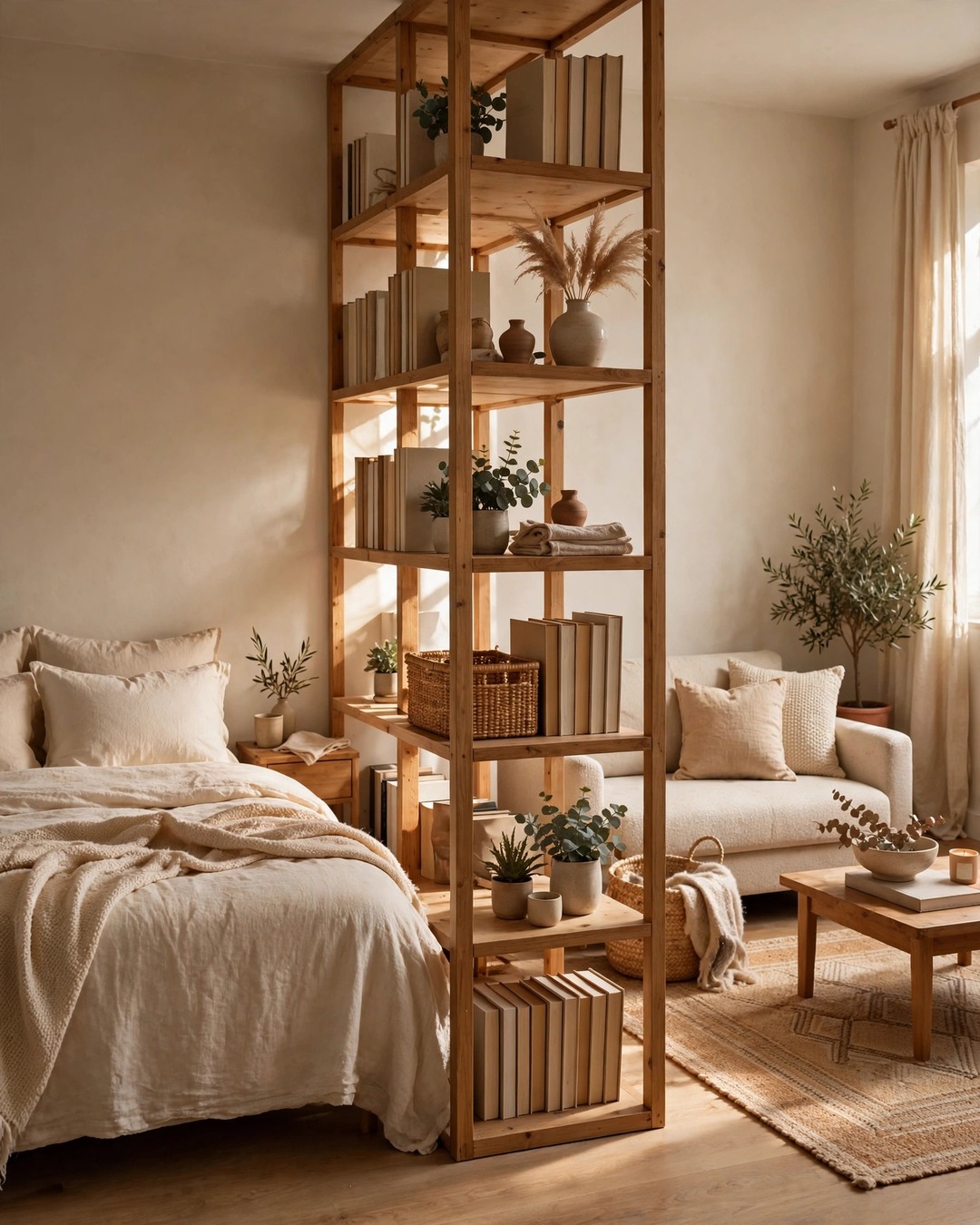
8. Divide a Studio With an Open Bookshelf
A studio needs a bedroom that feels separate from the living room, and an open bookshelf is the classic renter’s room divider. Unlike a curtain or a folding screen, it gives you separation plus storage, and because it is open on both sides, light still flows through so neither zone feels boxed in. This is one of the most borrowed ideas from Apartment Therapy’s studio decorating guide, where bookshelf walls show up again and again in real small-space homes.
Place the shelf perpendicular to the wall, not flat against it, to create a real sense of two rooms. Keep the side facing the bed calm and minimal, since it is the last thing you see at night, and let the living-room side hold books, plants, and prettier objects. A low, wide unit preserves sightlines and light; a tall one gives more privacy. Either way, style both sides, because in a studio every piece of furniture has two audiences.
If a bookshelf feels too heavy, a clothing rack with a curated row of garments, a tall plant in a big pot, or a folding screen does the same job with a lighter footprint. The goal is a visual pause between zones, not a wall.
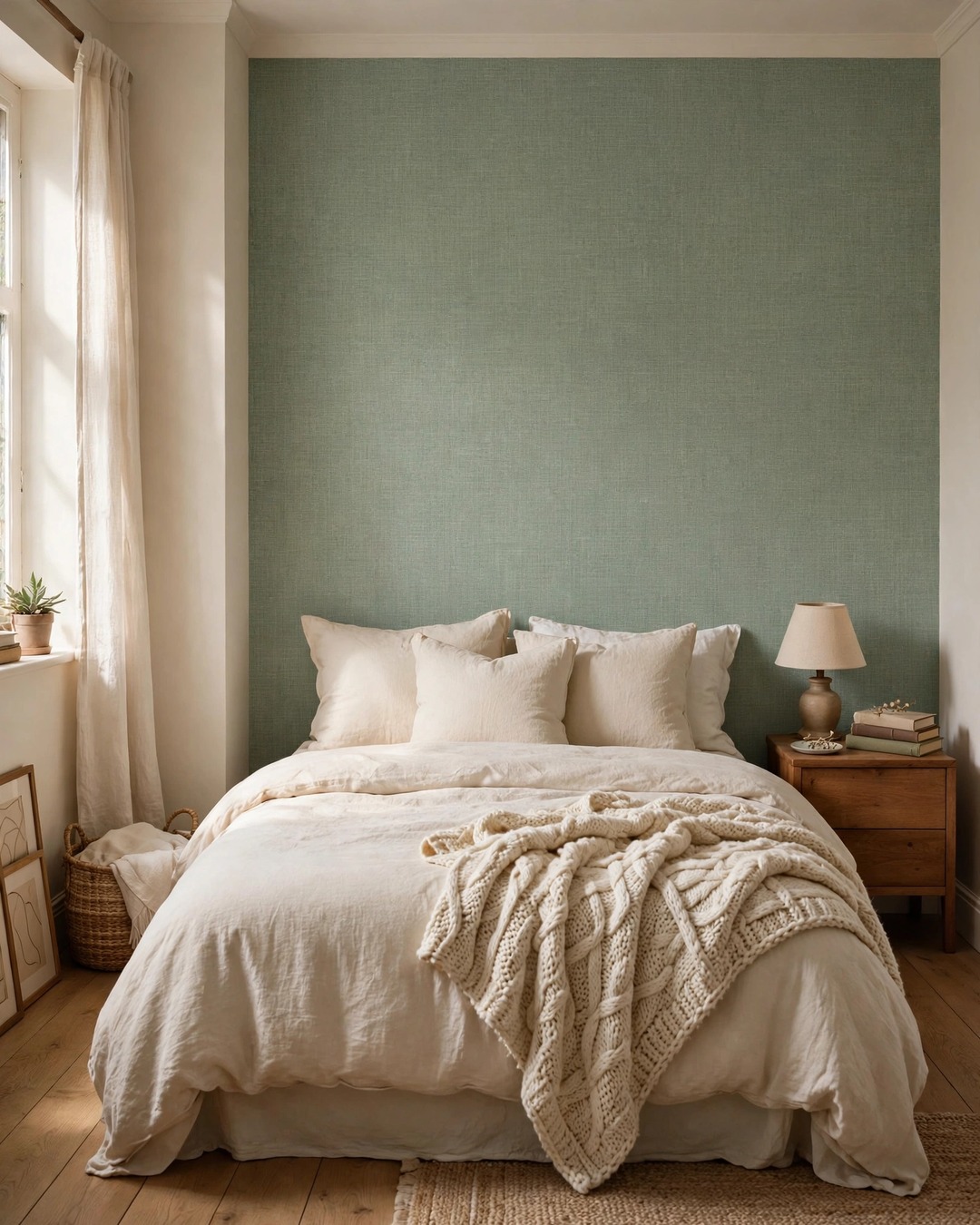
9. Try Peel-and-Stick Wallpaper on One Wall
Plain white rental walls are the number one reason apartments feel temporary, and peel-and-stick wallpaper is the number one fix. One accent wall behind the bed, the sofa, or in the entryway adds the pattern and personality that paint would, then peels off cleanly when the lease ends. Modern removable papers come in grasscloth textures, subtle stripes, and bold prints, so there is a version for every taste.
Start small if you are nervous: a single wall, or even just the wall inside a bookshelf or behind open shelving, gives you the effect with minimal commitment and cost. Watch a quick installation video first, work with a smoothing tool to chase out air bubbles, and order a sample to test how the pattern looks in your actual light before committing to full rolls. As Apartment Therapy’s rental decorating roundup notes, temporary wallpaper has become a renter staple precisely because the removal is as easy as the application.
Not ready for wallpaper? Large-scale wall decals, a fabric wall hanging on a tension rod, or a big leaning framed textile all add the same warmth with even less commitment. The principle is the same: give at least one wall something to say.
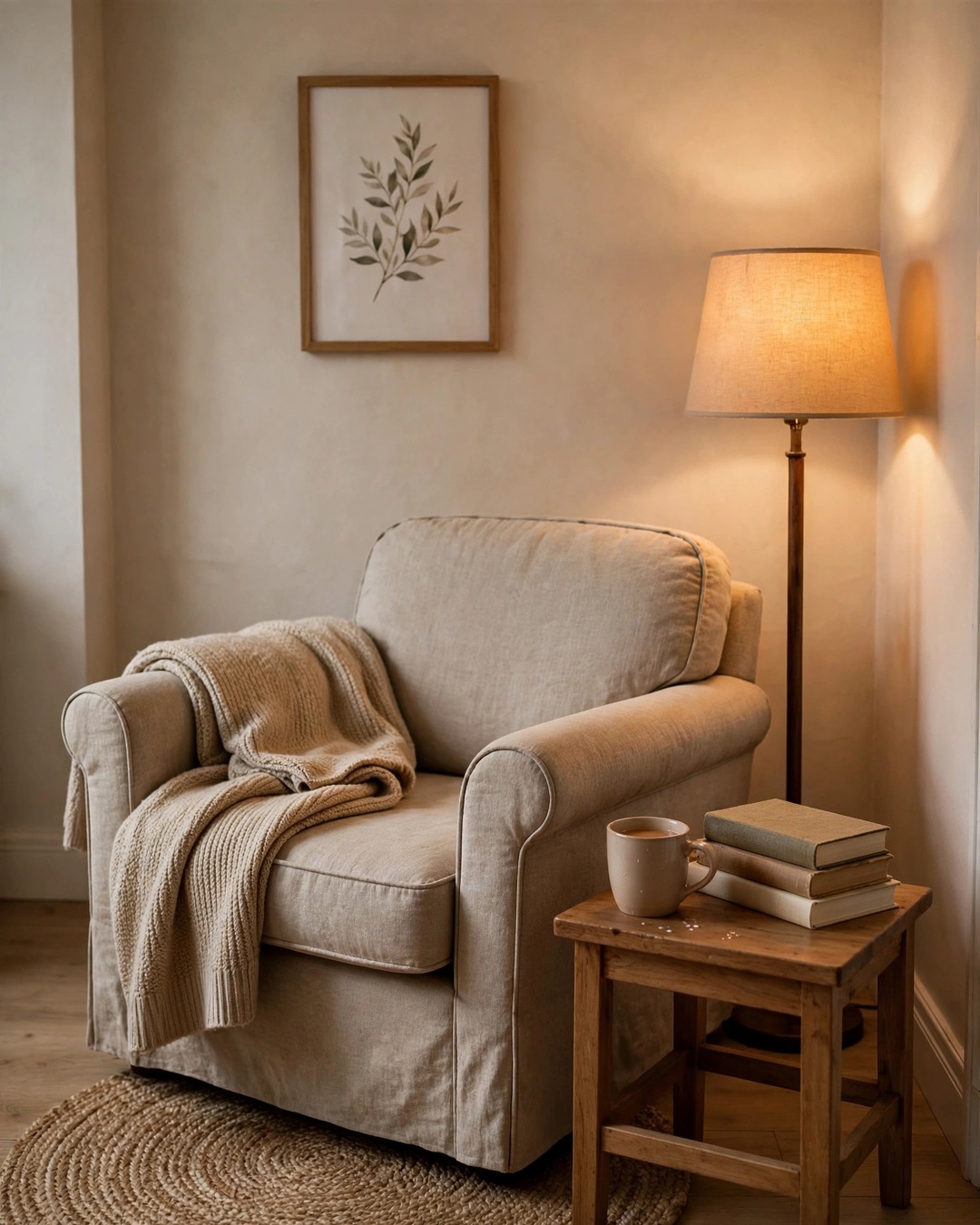
10. Cozy Apartment Decor Ideas That Carve Out a Nook
Every apartment has a dead corner: the awkward spot by the window, the wide hallway, the space beside the bed that fits nothing standard. Turn it into a nook and it becomes the most loved seat in the house. All you need is a comfortable chair (or a floor cushion and a pile of pillows), a small side table, a lamp, and a throw blanket. That is a reading nook, a coffee spot, and a phone-call hideaway in about nine square feet.
The coziness comes from enclosure. Pull the chair slightly away from the wall, add a small rug underneath to define the footprint, and hang one piece of art or a small shelf above it so the corner feels finished rather than leftover. A floor lamp with a warm shade makes the nook glow in the evening and signals that this spot is for slowing down.
Nooks also solve the work-from-home problem in studios. A nook with a small desk or a lap desk becomes an office that you can mentally leave at the end of the day, which matters when your home is also your workplace. Close the laptop, fold the throw over the chair, and the office disappears back into a reading corner.
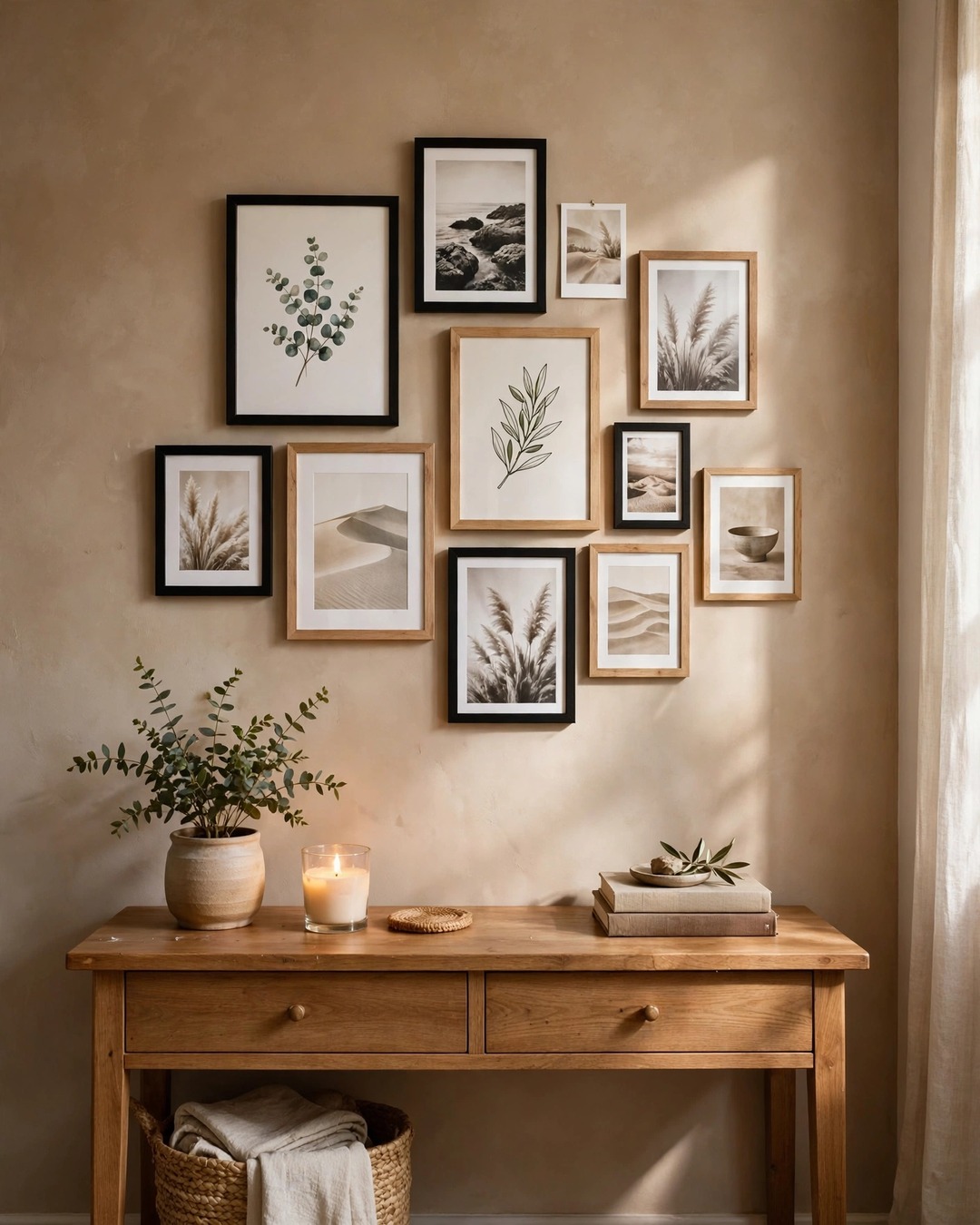
11. Hang Art With Damage-Free Strips
Bare walls make a rental feel like a waiting room, but many leases forbid nails. Damage-free hanging strips and hooks have changed the math: they hold surprising weight, come off cleanly with a pull tab, and let you build a real gallery wall with zero holes. Follow the weight ratings, press firmly for thirty seconds, and wait the full recommended time before hanging.
Plan the arrangement on the floor first. Lay the frames out, snap a photo, then transfer the layout to the wall with painter’s tape as a guide. A gallery wall looks best with a mix of sizes anchored by one larger piece, and frames in two finishes at most (black plus natural wood is a classic pairing). Keep the center of the arrangement at eye level, around 57 inches from the floor, the way galleries hang.
Leaning art is the even easier option. A large frame leaned on a dresser, a console, or a mantel needs no hardware and looks intentionally relaxed. Rotate the leaned pieces seasonally for a refresh that costs nothing and takes five minutes.
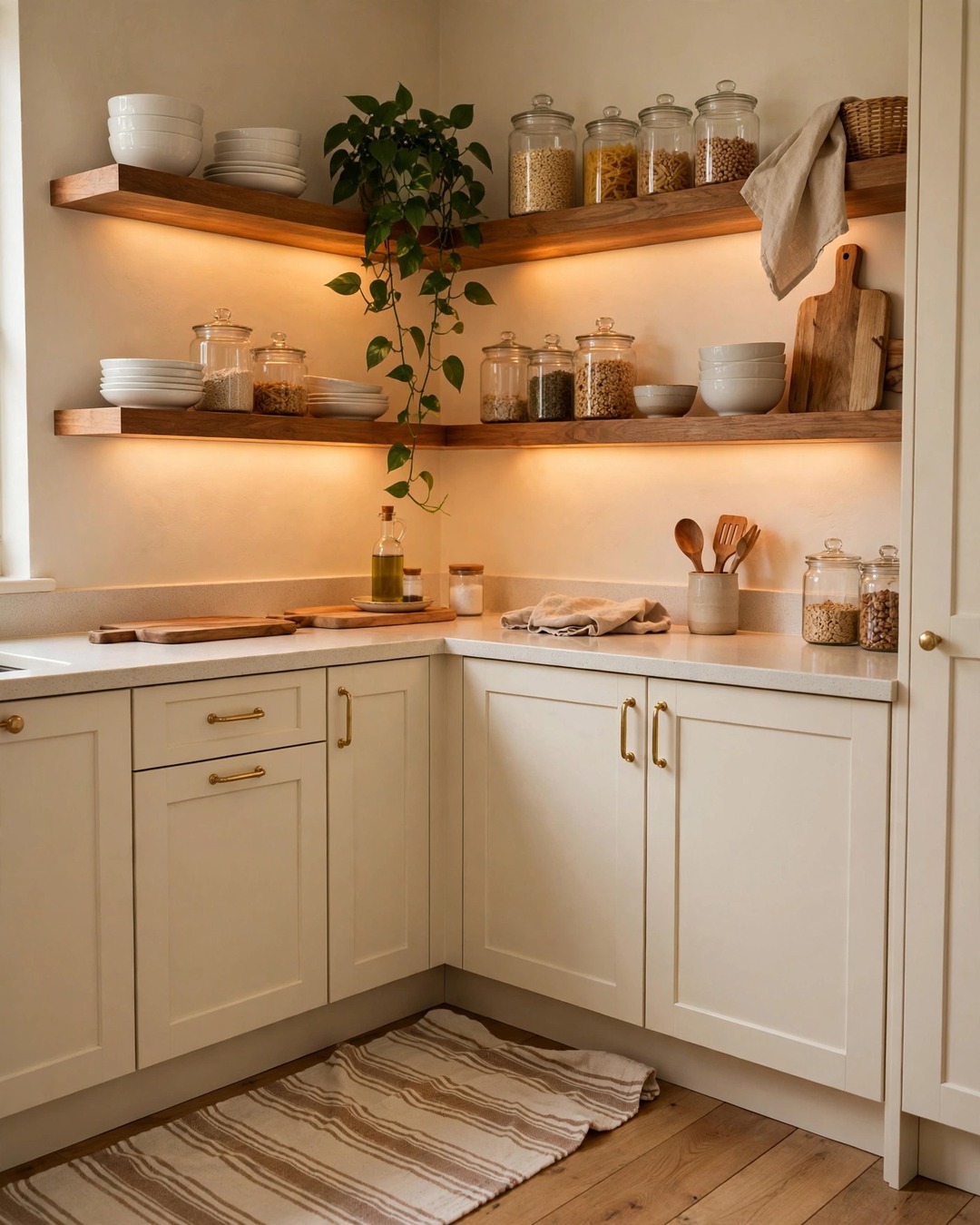
12. Warm Up the Kitchen With a Runner and Styled Shelves
Rental kitchens tend to be the least loved room: beige cabinets, basic hardware, fluorescent light. You cannot renovate, but you can warm it up. A washable runner down the galley instantly adds color and softness underfoot, and it is the first thing that makes the kitchen feel like part of the home instead of a utility zone.
Then style what is visible. If you have open shelving or glass-front cabinets, arrange everyday dishes, a small plant, and a wooden cutting board so the practical becomes decorative. Take the doors off one upper cabinet (save the screws and hinges in a labeled bag) for instant open shelving that costs nothing. A stick-on LED puck light under the cabinets adds the warm task lighting rentals never include.
Finish with the details guests actually notice: a nice hand soap at the sink, a small mat in front of it, and one piece of art on the wall. Kitchens earn coziness the same way every other room does, through textiles, warm light, and something living.
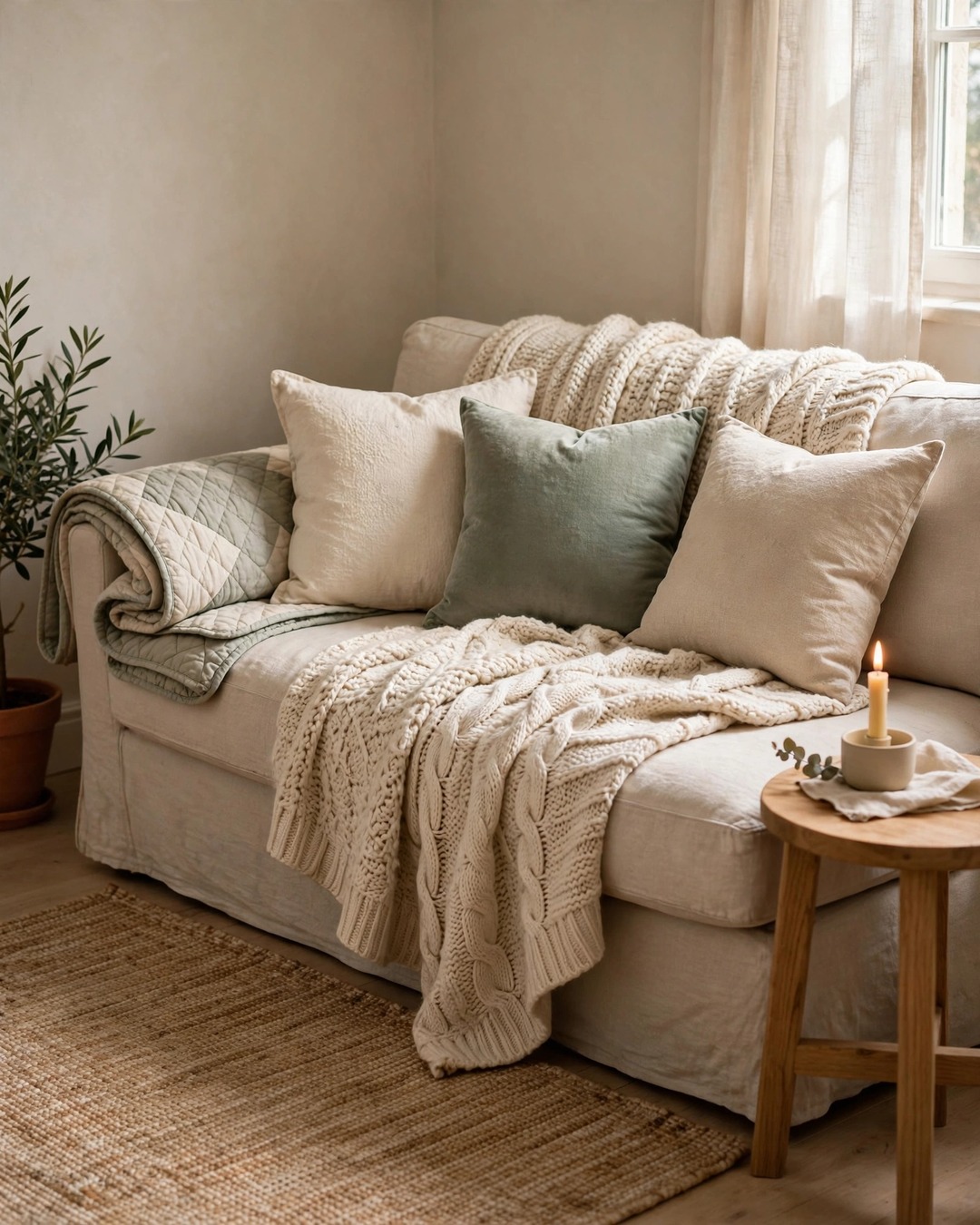
13. Layer Textiles Until It Feels Like Home
When you cannot change the walls, floors, or fixtures, textiles do the decorating. Throws, pillows, bedding, and curtains are the renter’s paint, and layering them is what separates a furnished apartment from a cozy one. Start with a calm base (neutral bedding, a simple sofa cover if the couch is tired) and add warmth in layers: a chunky knit throw, pillows in two or three textures, a soft rug underfoot.
Mix textures more than colors. Linen, knit, velvet, and woven cotton in the same warm neutral family create depth without visual noise, which matters in a small space where everything is visible at once. Two pillow sizes (a larger square behind a smaller lumbar) look more designed than a row of identical squares. And do not forget the bed: a layered bed with a quilt, a throw folded across the foot, and real pillows instead of the sad flat ones reads as intentional from the doorway.
Textiles are also the cheapest seasonal refresh in decorating. Swap the throw and pillow covers twice a year, lighter weaves for warm months and heavier knits for cold ones, and the whole apartment gets a new mood for the price of a few covers. Everything folds into a box on moving day.
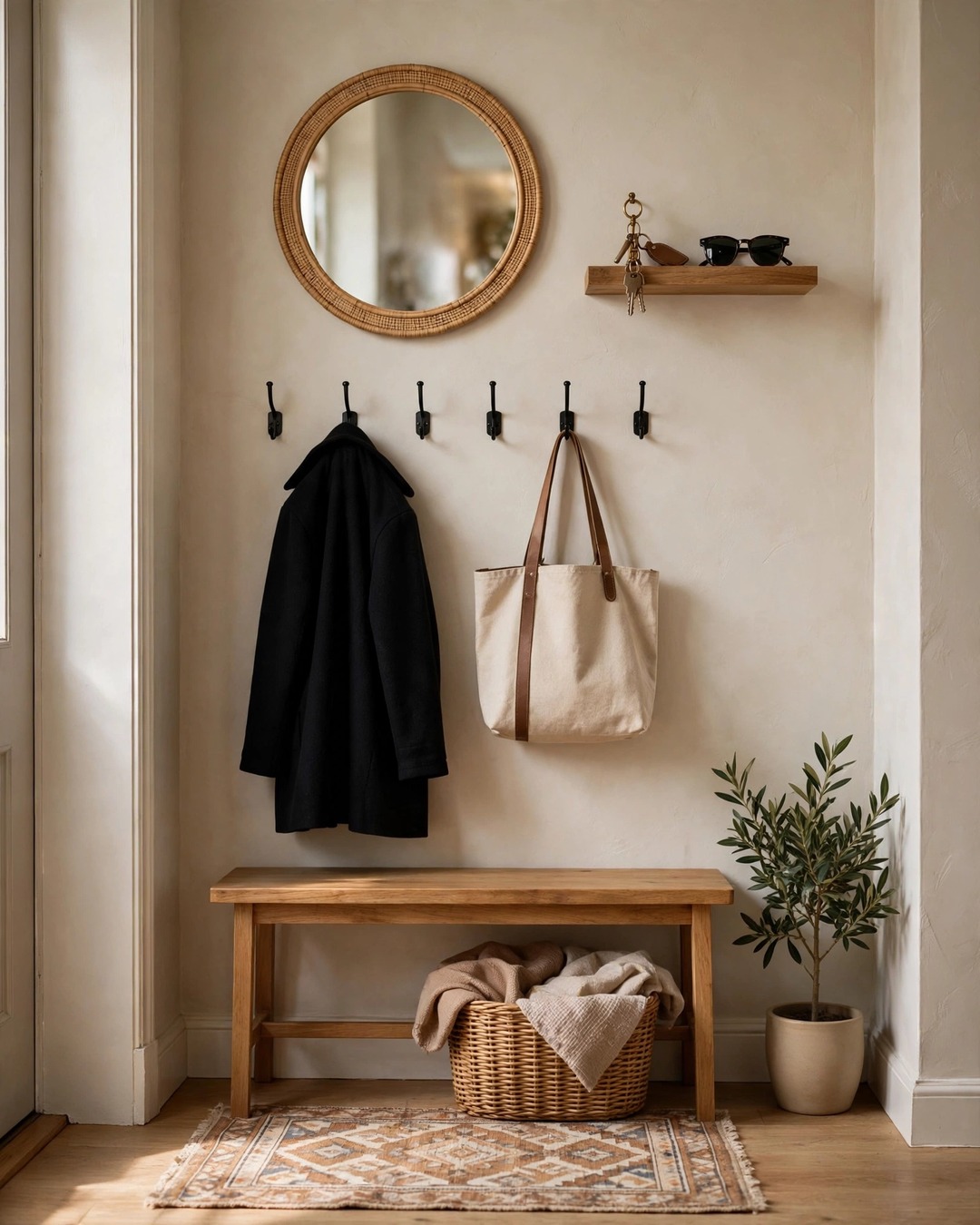
14. Give the Entryway a Proper Welcome
The entryway is the first and last thing you see every day, and in apartments it is often a blank stretch of wall by the door. Even a tiny one deserves intention: a small rug to catch shoes and define the zone, a row of adhesive hooks for coats and bags, and a narrow bench or stool that holds a basket underneath. Suddenly coming home feels like arriving somewhere.
Vertical thinking saves the smallest entries. A wall-mounted shelf with hooks below it holds keys, sunglasses, and mail in six inches of depth. A mirror by the door does its usual light-bouncing work and gives you a last check before heading out. A lidded basket corrals the shoes that otherwise migrate across the whole apartment.
For more small-entry ideas that work in rentals, our small entryway guide covers layouts for the narrowest foyers. And if your budget is tight, our thrift store decor guide is the best place to hunt for the solid wood bench or vintage mirror that makes an entry feel established rather than improvised.
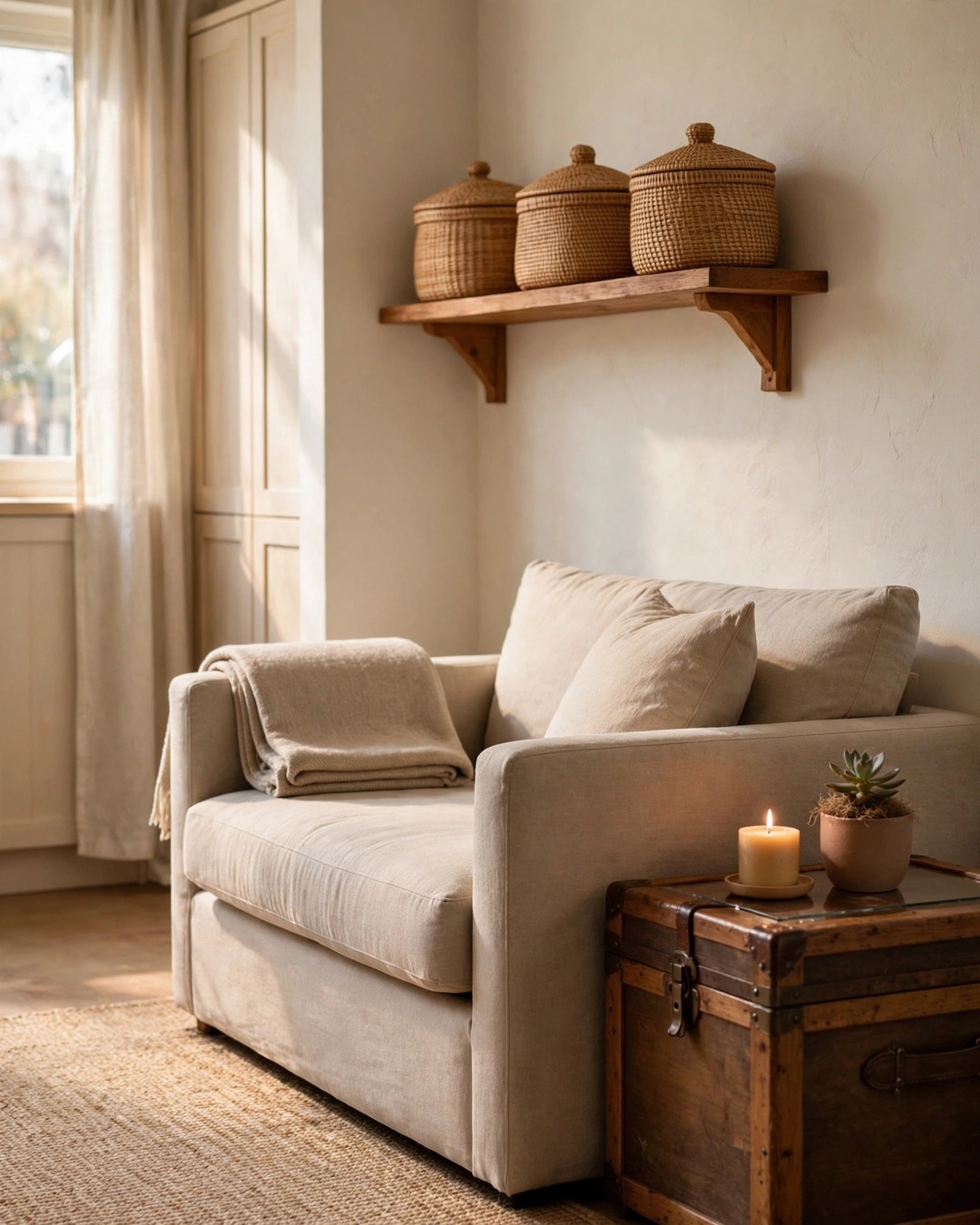
15. Hide the Clutter and Reset Weekly
Small apartments show every stray object, so storage has to be closed, not just organized. The rule is simple: everything needs a lidded home. Baskets with lids on shelves, boxes under the bed, an ottoman that swallows blankets, a trunk that doubles as a coffee table. Open storage looks tidy only in photos; in real life, closed storage is what keeps a small space calm.
Under-bed space is the most underused square footage in any apartment. Low rolling boxes hold off-season clothes, extra linens, and the gift wrap you use twice a year. In the living area, one large basket per person collects the daily drift of chargers, mail, and random objects, and emptying it takes two minutes. For bedroom calm that carries into the rest of the apartment, the same hide-it principles in our small bedroom guide apply room by room.
Then protect it all with a weekly reset. Once a week, walk the apartment with a basket, return everything to its lidded home, and wipe the surfaces. Fifteen minutes keeps the cozy from sliding into clutter, and a small apartment that resets weekly always feels bigger than one that does not.
Cozy Apartment Decor Ideas for Every Renter Rule
Most rental limits have a cozy workaround. Use this guide to match the rule you are stuck with to the renter-friendly swap that solves it, so you can decorate with confidence instead of worrying about the lease.
| The rental limit | The cozy workaround | Move-out effort |
|---|---|---|
| No painting allowed | Peel-and-stick wallpaper on one accent wall, or a large textile hung from a tension rod | Peels off clean; patch-test first |
| No drilling or nails | Damage-free hanging strips for art, adhesive hooks for curtains and coats, leaning mirrors and frames | Pull tabs release with no marks |
| Can’t change light fixtures | Plug-in floor and table lamps, adhesive LED strips, plug-in dimmers on existing lamp cords | Unplug and pack; nothing to rewire |
| Ugly floors or counters | Large area rugs over floors, washable runners in kitchen and hall, contact paper on dated counters | Roll up rugs; contact paper peels away |
Frequently Asked Questions
How can I make a rental apartment feel cozy without painting?
Lean on the removable layers: peel-and-stick wallpaper on one wall, curtains hung high and wide, layered rugs, warm 2700K lighting, and plenty of textiles. Together they add the color, texture, and warmth that paint normally provides, and everything comes down cleanly on moving day. One patterned accent, like the wallpaper or a bold rug, usually does more than a dozen small accessories.
What is the best way to divide a studio apartment?
An open bookshelf placed perpendicular to the wall is the most useful divider because it adds storage while separating the sleeping and living zones, and light still passes through. Rugs under each zone reinforce the separation on the floor. If you want something lighter, try a folding screen, a tall plant, or a curtain on a tension rod between two walls.
How do I hang things on apartment walls without damage?
Damage-free adhesive strips and hooks are the standard answer: follow the weight ratings, press firmly, and wait the full cure time before hanging. They release with a pull tab and leave no marks. For heavier pieces, lean large frames against the wall on a dresser or console instead of hanging them. Always check your lease first, since some buildings have specific rules about adhesives on certain wall finishes.
What furniture works best in a small apartment?
Pieces that do two jobs: a storage ottoman that works as a coffee table and blanket chest, a daybed that serves as sofa and guest bed, a drop-leaf table that expands for guests, and tall narrow shelving that uses wall height instead of floor space. Measure your walkways before buying, since two extra inches can block a path in a small layout. Fewer, harder-working pieces always beat more small ones.
How can I make a small apartment look bigger?
Use the classic illusions together: a large mirror opposite a window to double the light, curtains hung high and wide to fake taller windows, furniture with visible legs so the floor shows underneath, and one consistent light color palette across zones. Keep surfaces partly clear, because visual breathing room reads as square footage. Good lighting matters as much as layout; a bright corner always feels larger than a dark one.
How do I keep a small apartment from feeling cluttered?
Give everything a closed home: lidded baskets, under-bed boxes, and furniture with hidden storage, so surfaces stay mostly clear. Follow the one-in-one-out rule for decor and clothes, and run a short weekly reset where every stray item goes back to its home. In a small space, clutter has nowhere to hide, which is actually an advantage: a fifteen-minute weekly reset keeps the whole apartment calm.
Final Thoughts
A cozy apartment is not about square footage or ownership. It is about warmth you can feel: soft rugs underfoot, lamplight instead of overhead glare, curtains that make the windows feel grand, plants at every height, and furniture that works as hard as you do. These 15 cozy apartment decor ideas all share one more trait: they move with you. Decorate boldly, enjoy every corner, and when the lease ends, pack it all up and make the next place feel like home even faster.