
15 Mirror Wall Decor Ideas

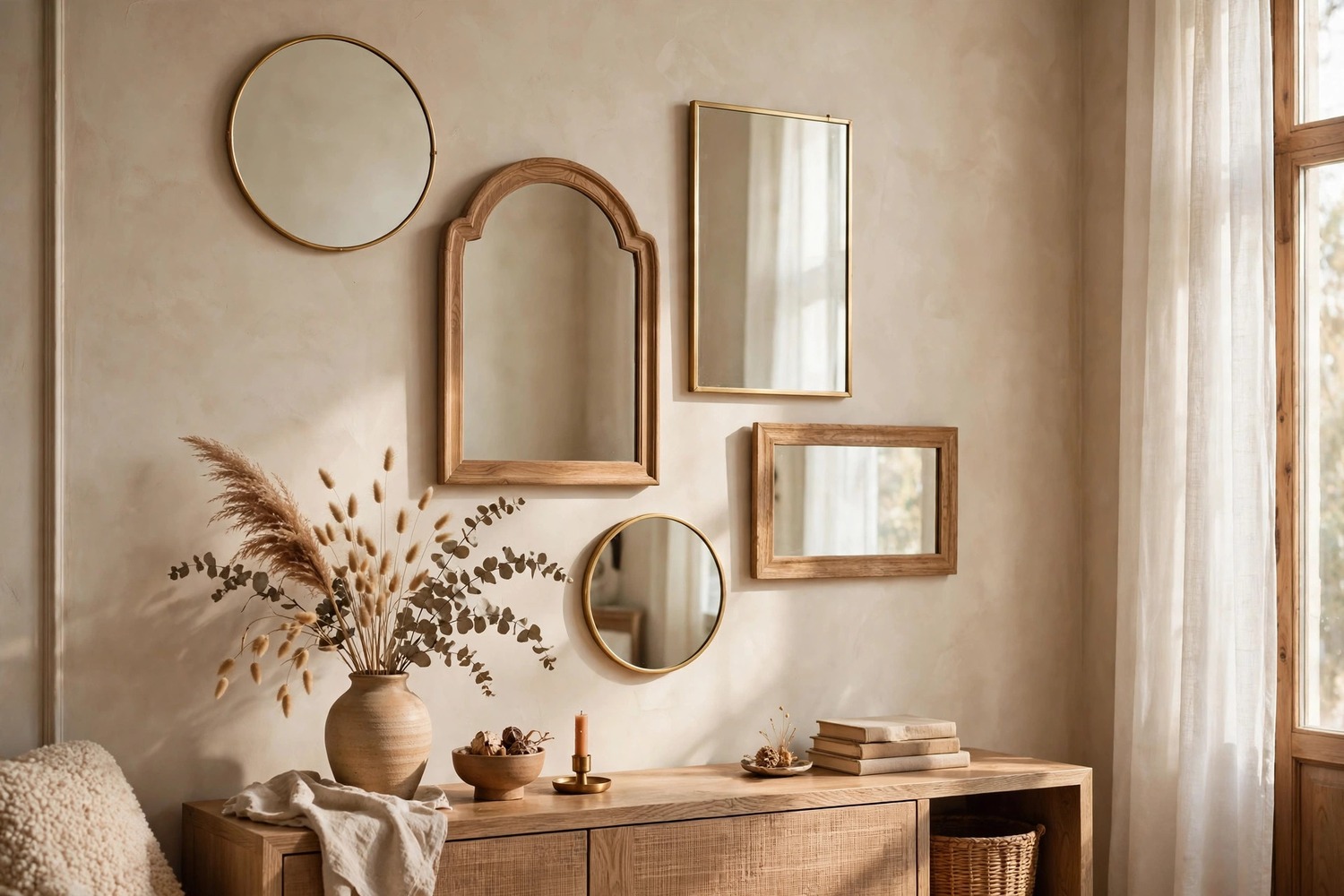
A mirror might be the hardest-working decor item you can own. It bounces light into dark corners, doubles whatever view it faces, and makes a small room feel like it gained square footage overnight. No paint, no construction, no big budget. Just glass, a wall, and a little strategy.
The secret is placement. A mirror only helps when it reflects something worth doubling: a window, a lamp, a plant, an open stretch of wall. Point it at clutter and you get twice the clutter. The 15 ideas below show exactly where mirrors earn their keep, from hexagon tile grids to leaning floor mirrors that need zero holes in the wall.
If your main goal is a roomier feel, my small bedroom ideas that make it feel bigger pair perfectly with these tricks. And if you want the placement science, Apartment Therapy’s guide to making rooms look bigger with mirrors shows how designers think about size, frame, and light sources.
Key Takeaways
- Placement is everything: a mirror should reflect something worth doubling, like a window, a lamp, or a plant — never clutter.
- A leaning arched floor mirror needs zero drilling, making it the fastest renter-friendly room makeover on this list.
- Gallery walls of mixed mirror shapes multiply light best when frames sit 2–3 inches apart at eye level.
- Small mirrors grouped together, like hexagon tiles or a sunburst, create a focal point without one big expensive piece.
- Keep the surrounding wall calm and simple so the mirrors stay the star of the arrangement.
1. Build a Hexagon Mirror Tile Grid
Hexagon mirror tiles are having a moment, and for good reason. Arranged in a honeycomb grid, they turn a plain wall into a geometric focal point that scatters light in every direction. Each tile catches a slightly different angle, so the wall shimmers as you move through the room.
Start with a cluster of seven to twelve tiles above a console table or dresser. Map the layout on the floor first with painter’s tape on the wall as your guide. Most hexagon tiles come with adhesive backing, which makes this one of the most renter-friendly mirror projects there is.
Keep the surrounding wall simple. Busy wallpaper plus a mirror grid is too much competing pattern. A calm painted wall lets the hexagons be the star. Brass or black edge trim on the tiles adds definition if the all-mirror look feels too icy.
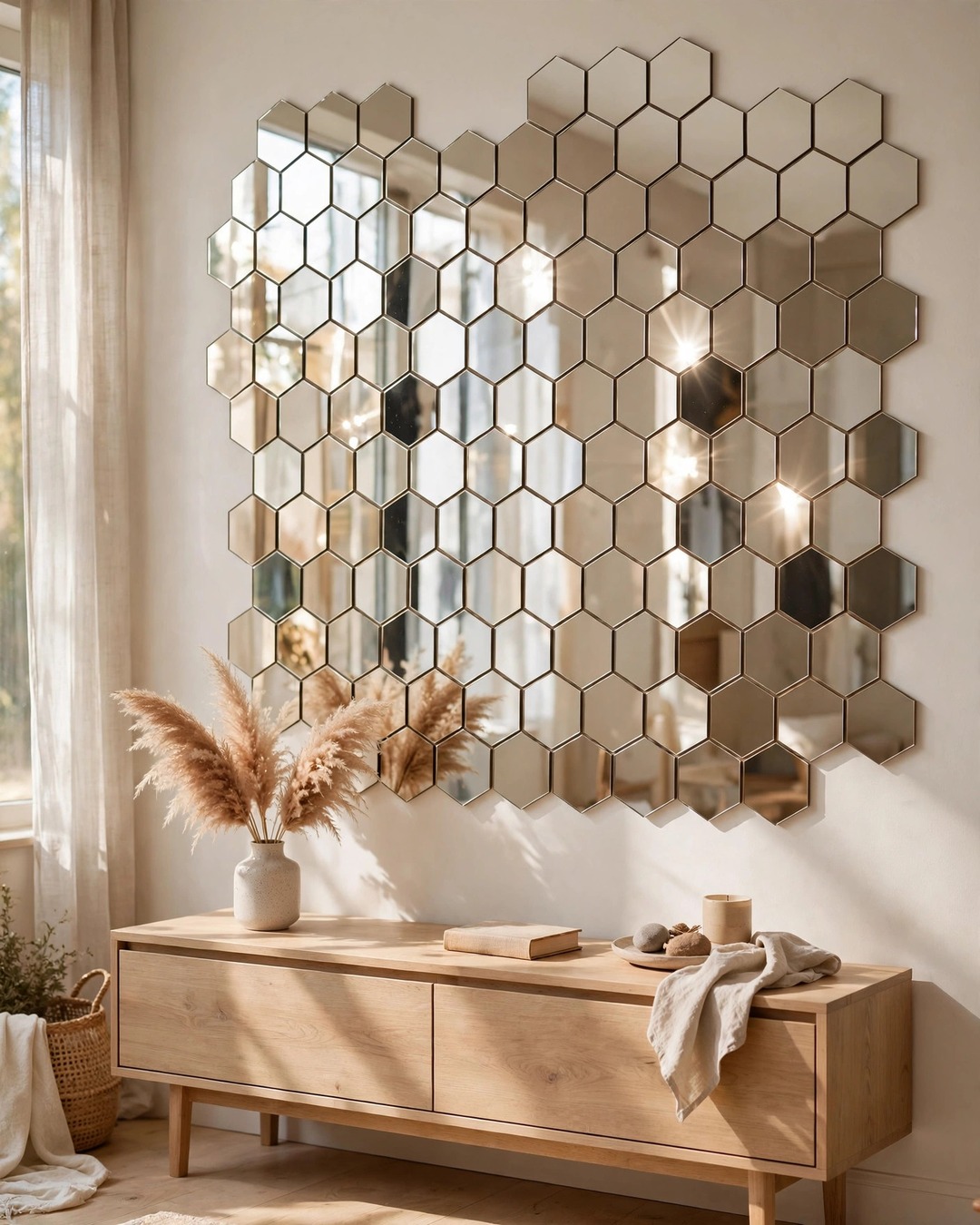
Tip: Leave a finger-width gap between tiles rather than butting them edge to edge. The thin shadow lines make the honeycomb pattern read clearly from across the room.
2. Lean an Arched Floor Mirror
An arched floor mirror is the fastest room makeover in this entire list. The arch shape softens all the straight lines of a boxy room, and leaning it against the wall means no drilling, no anchors, no landlord negotiations. It works in bedrooms, living rooms, and entryways alike.
Choose a mirror at least two-thirds the height of your wall for real impact. A small leaning mirror looks like an afterthought; a tall one reads as intentional architecture. Place it where it catches a window or a lamp, and it will throw that light deep into the room.
Angle the top slightly away from the wall and make sure the base sits firmly on the floor. In homes with kids or pets, add discreet furniture straps or museum putty at the top for peace of mind. My renter-friendly living room tour uses this exact trick to open up a tight seating area.
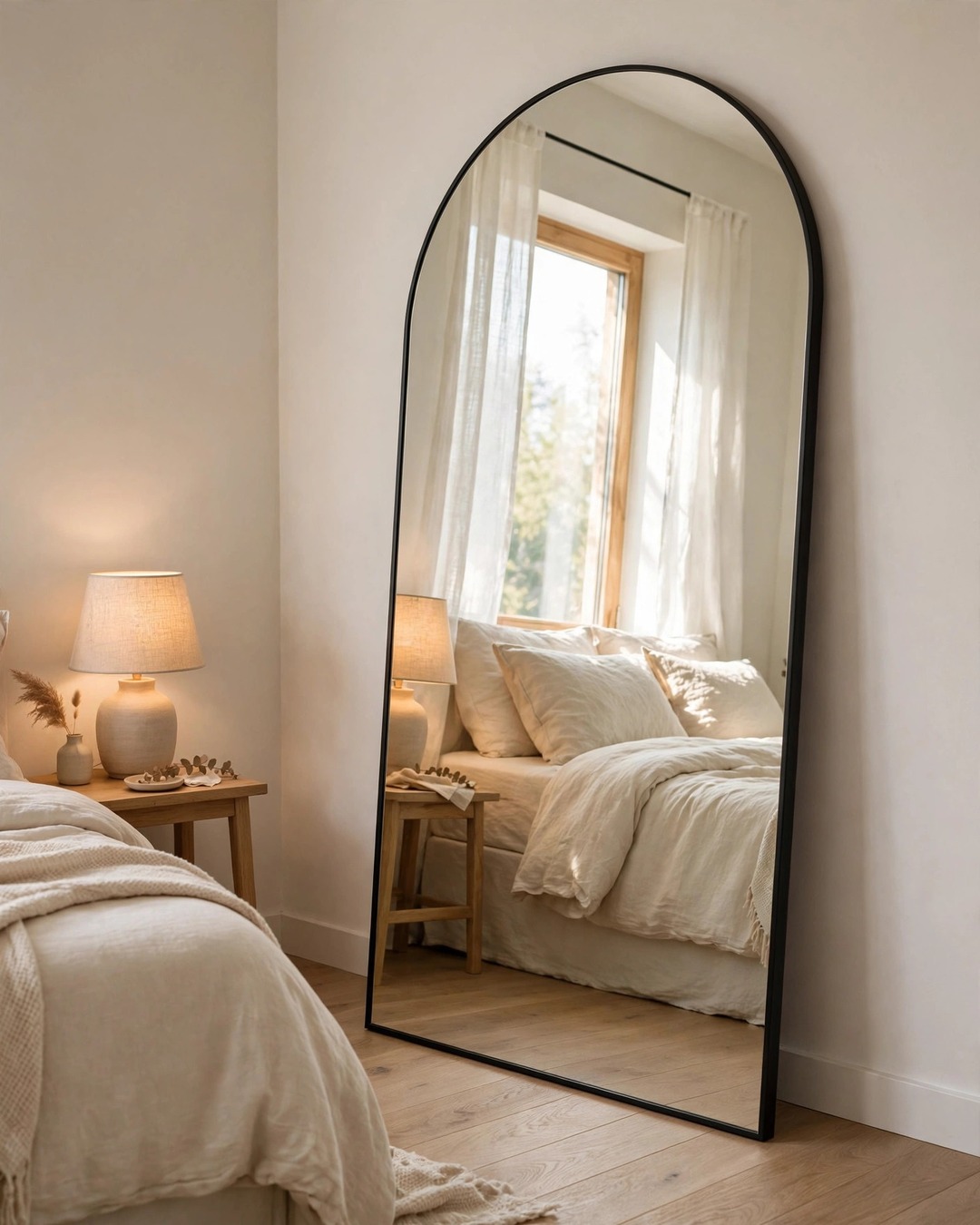
Tip: A thin black or brass frame keeps a leaning mirror from looking like it is waiting to be hung. The frame gives it finished, furniture-like presence.
3. Create a Mirror Gallery Wall
Instead of art, hang a gallery wall made entirely of mirrors. Mix rounds, arches, rectangles, and one statement shape like a sunburst. The variety keeps it from feeling like a showroom, and every piece multiplies the light from your windows.
Treat it like any gallery wall: start with the largest piece slightly off-center, then build outward with smaller mirrors. Keep two to three inches between frames and hold a consistent center line around eye level. My gallery wall hanging guide walks through the paper-template method that makes this foolproof.
Unify the collection with a common thread: all brass frames, all black frames, or all wood tones. Mixed shapes plus matching finishes looks curated. Mixed shapes plus mixed finishes looks chaotic.
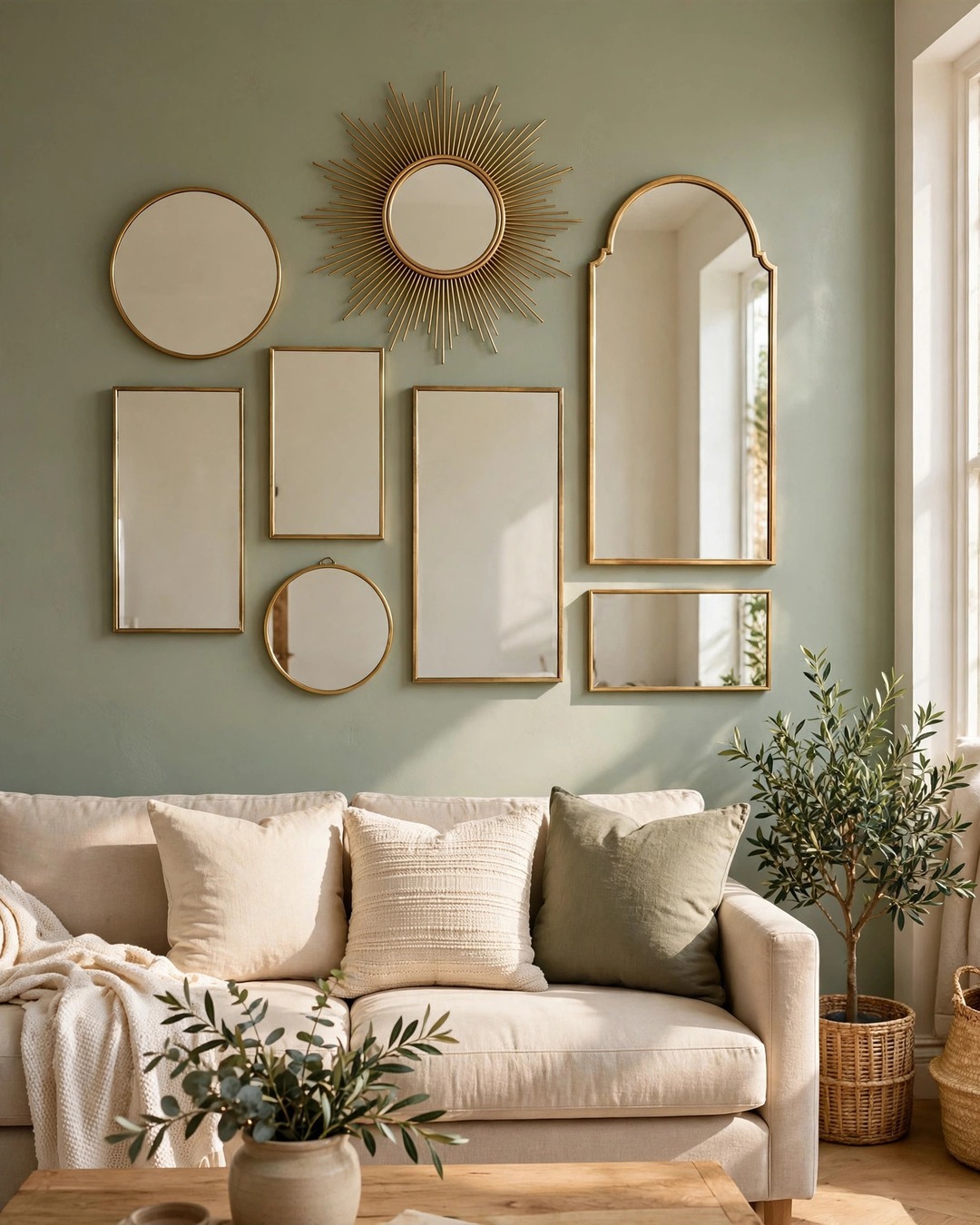
Tip: Include one non-mirror element, like a small shelf with a plant or a woven wall hanging. It gives the eye a resting place and keeps the wall from feeling like a funhouse.
4. Double Your Entryway Light
Entryways are often the darkest spot in a home, and a mirror is the cheapest lighting upgrade you will ever make. Hang a mirror on the wall opposite the front door or perpendicular to it, and every bit of daylight from the doorway gets bounced deeper into the hall.
A round mirror above a narrow console is the classic formula. It gives you a last-check spot before leaving and visually widens a tight entry. If your entry is truly tiny, a tall narrow mirror on the side wall does the same job without stealing floor space.
Style the console below with restraint: a small tray for keys, one plant, one candle. The mirror will double whatever sits beneath it, so three calm objects beat seven busy ones.
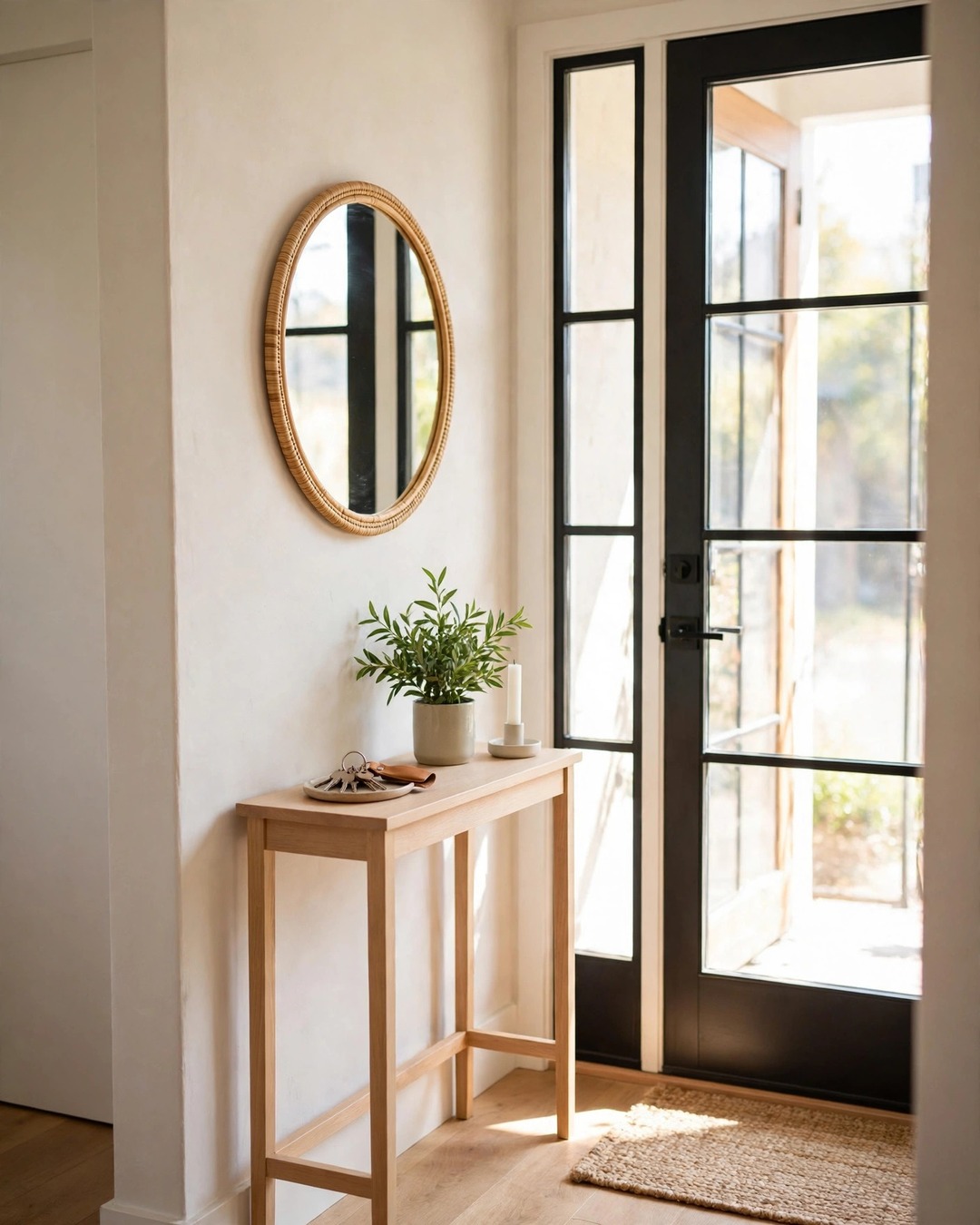
Tip: If your entry has zero natural light, place the mirror to face your brightest lamp or ceiling fixture. It becomes a second light source for free.
5. Style a Mirrored Tray
You do not need a wall-sized mirror to get the effect. A mirrored tray on a coffee table, ottoman, or dresser catches lamplight and candlelight and throws it back up into the room. It also corrals small objects into one tidy vignette.
Build the tray in odd numbers: three or five objects in varied heights. A candle, a small plant, and a stack of two books is a complete composition. The mirror surface underneath doubles each item, so the arrangement looks twice as full as it is.
This works beautifully on dark furniture. A mirrored tray on a walnut coffee table or black dresser creates contrast and keeps heavy pieces from feeling like visual anchors dragging the room down.
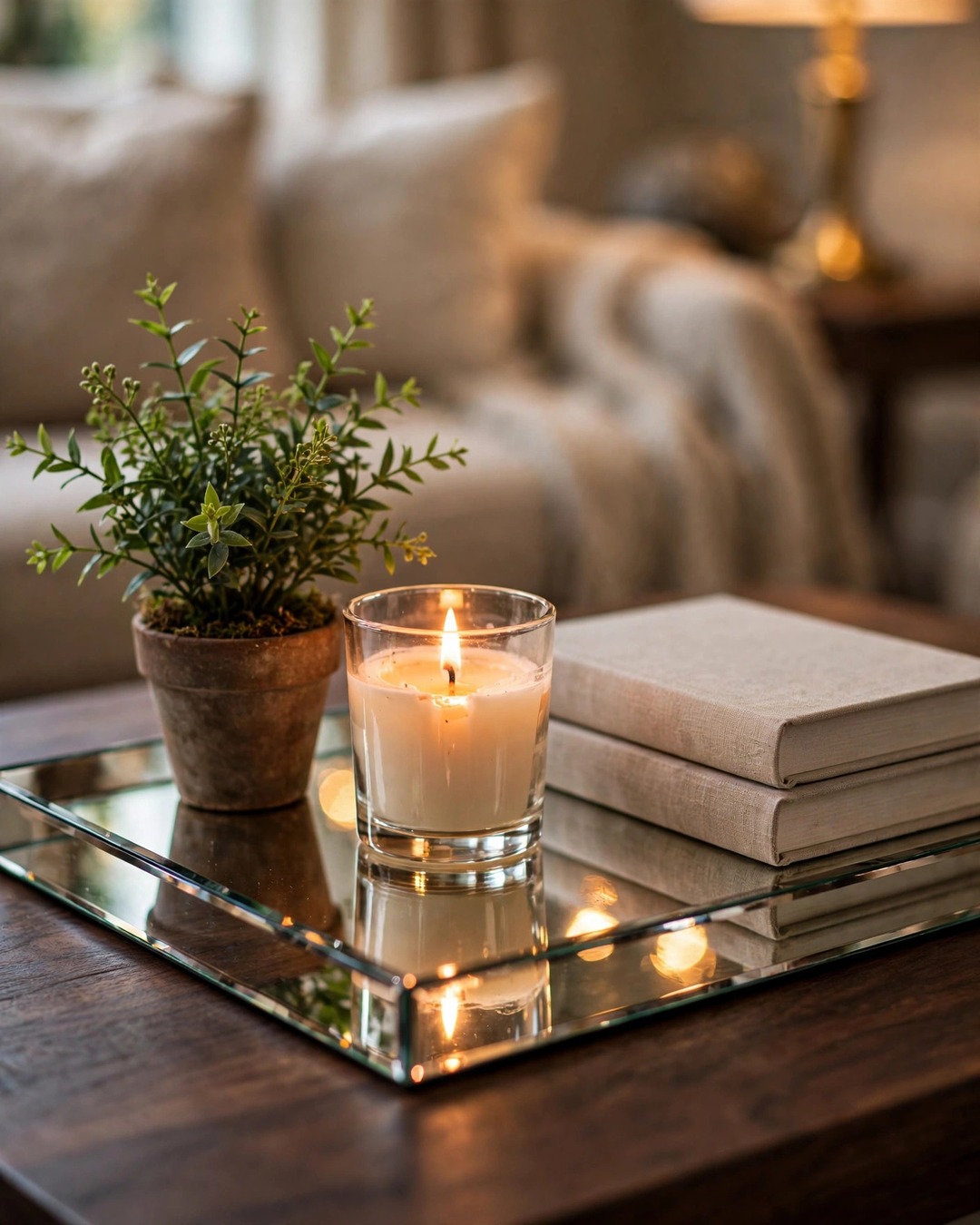
Tip: Wipe the tray with glass cleaner when you dust. A smudged mirror tray reads as dirty, not reflective.
6. Hang a Round Mirror Over a Console
The round mirror over a console table is a designer staple because the geometry just works. The circle breaks up all the rectangles in a room, the console grounds it, and the pairing fits anywhere: entryways, living rooms, dining areas, bedrooms.
Size the mirror to roughly two-thirds the width of the console. Hang it so the bottom of the mirror sits six to ten inches above the tabletop. That gap is the sweet spot: close enough to feel connected, high enough to style objects beneath it.
What the mirror reflects matters more than the mirror itself. Position the console where the mirror catches a window, a piece of art on the opposite wall, or a great light fixture. A round mirror reflecting a blank wall is a missed opportunity.
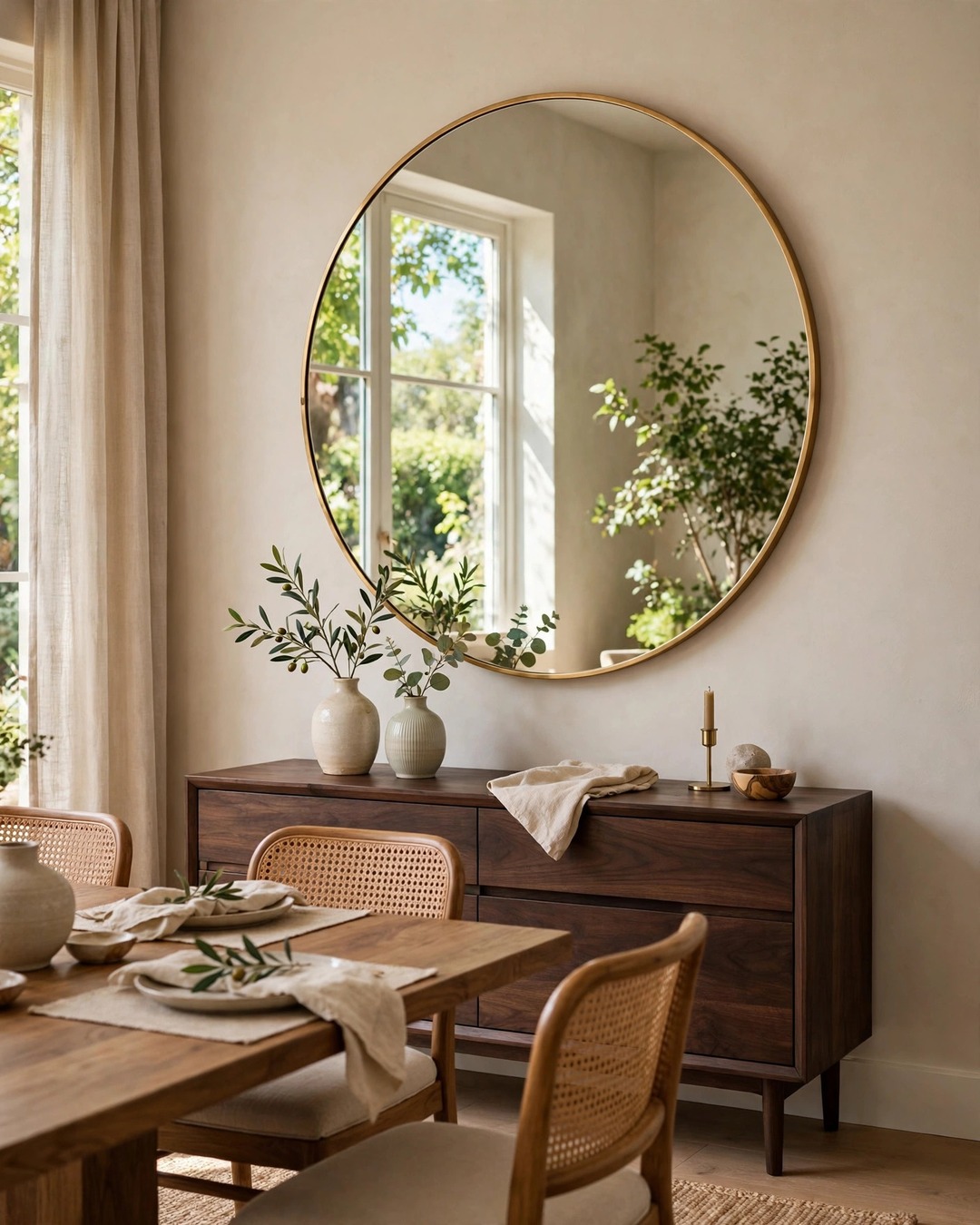
Tip: A round mirror with a chunky wood frame warms up modern rooms; a thin brass frame sharpens traditional ones. The frame sets the tone.
7. Put a Full-Length Mirror on a Wardrobe Door
Bedrooms in small homes rarely have spare wall space, but wardrobe doors are sitting there unused. Mounting a full-length mirror on a closet or wardrobe door gives you a dressing mirror and a room-expanding reflector in zero additional square footage.
Choose a lightweight mirror and mount it with hardware rated for the door’s material. Sliding doors work too: mount one panel’s mirror and let it glide. In a small bedroom, this single addition can make the room feel noticeably deeper, especially when it faces a window.
If drilling into furniture feels risky, over-the-door hooks made for mirrors hold securely and remove cleanly. Just check the door still closes fully with the added depth.
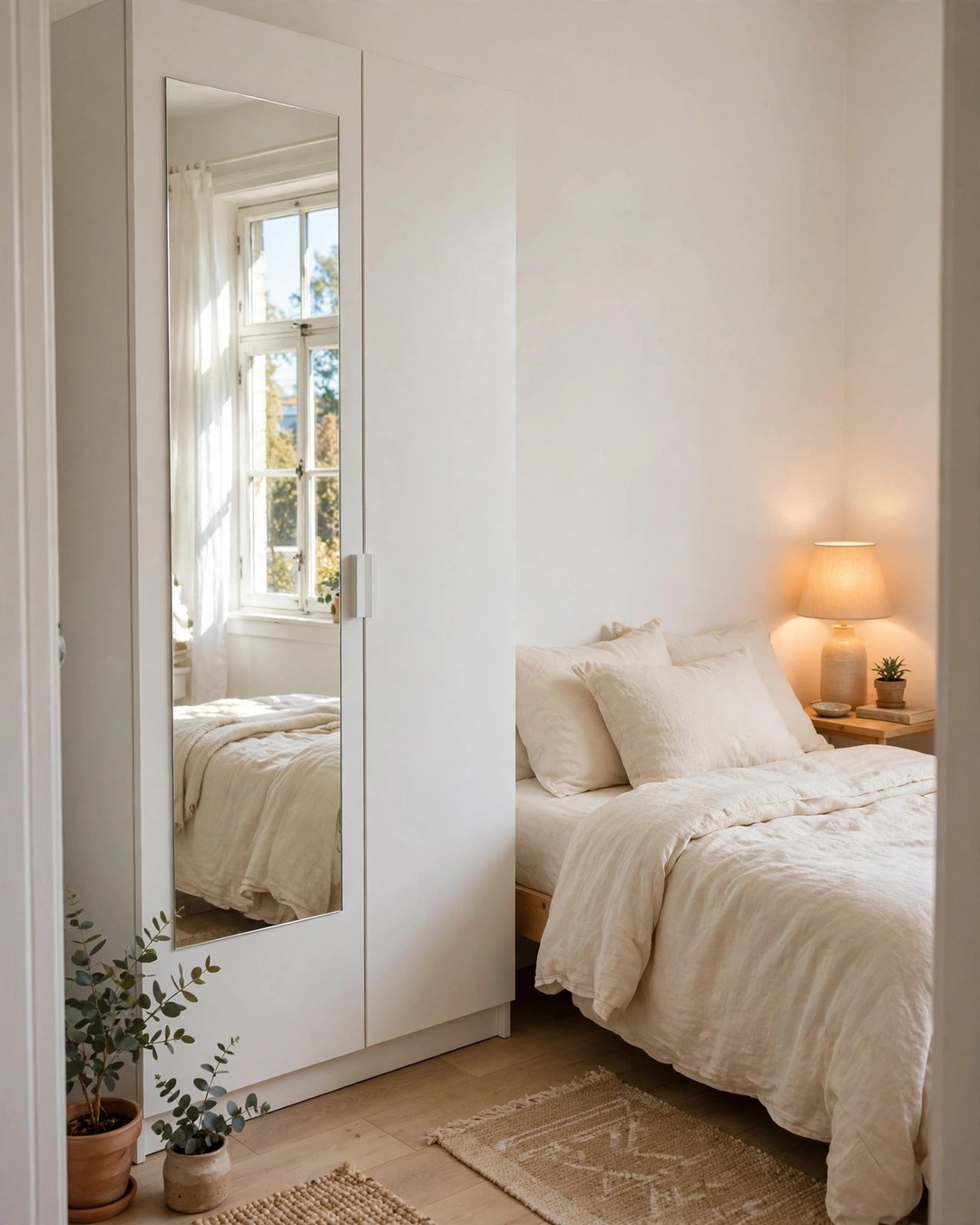
Tip: Keep the floor area in front of a wardrobe mirror clear. The reflection needs an open foreground to create that sense of extended space.
8. Let a Sunburst Mirror Be the Art
A sunburst mirror does not need a supporting cast. Its radiating spokes catch light from every angle and throw it around the room, and the sculptural shape holds a wall on its own. Hang it where you would hang a large piece of art: over a mantel, above a bed, or centered on a dining room wall.
Scale is everything here. A sunburst smaller than 24 inches across gets lost; aim for 30 inches or more on a main wall. Metallic finishes in gold or brass warm up the reflection, while silver and black keep it crisp and modern.
Because the shape is so bold, keep everything around it quiet. One sunburst plus simple furniture beats a sunburst competing with patterned curtains and a busy rug. Apartment Therapy’s Small/Cool designer rooms show how a single strong mirror can anchor an entire small space.
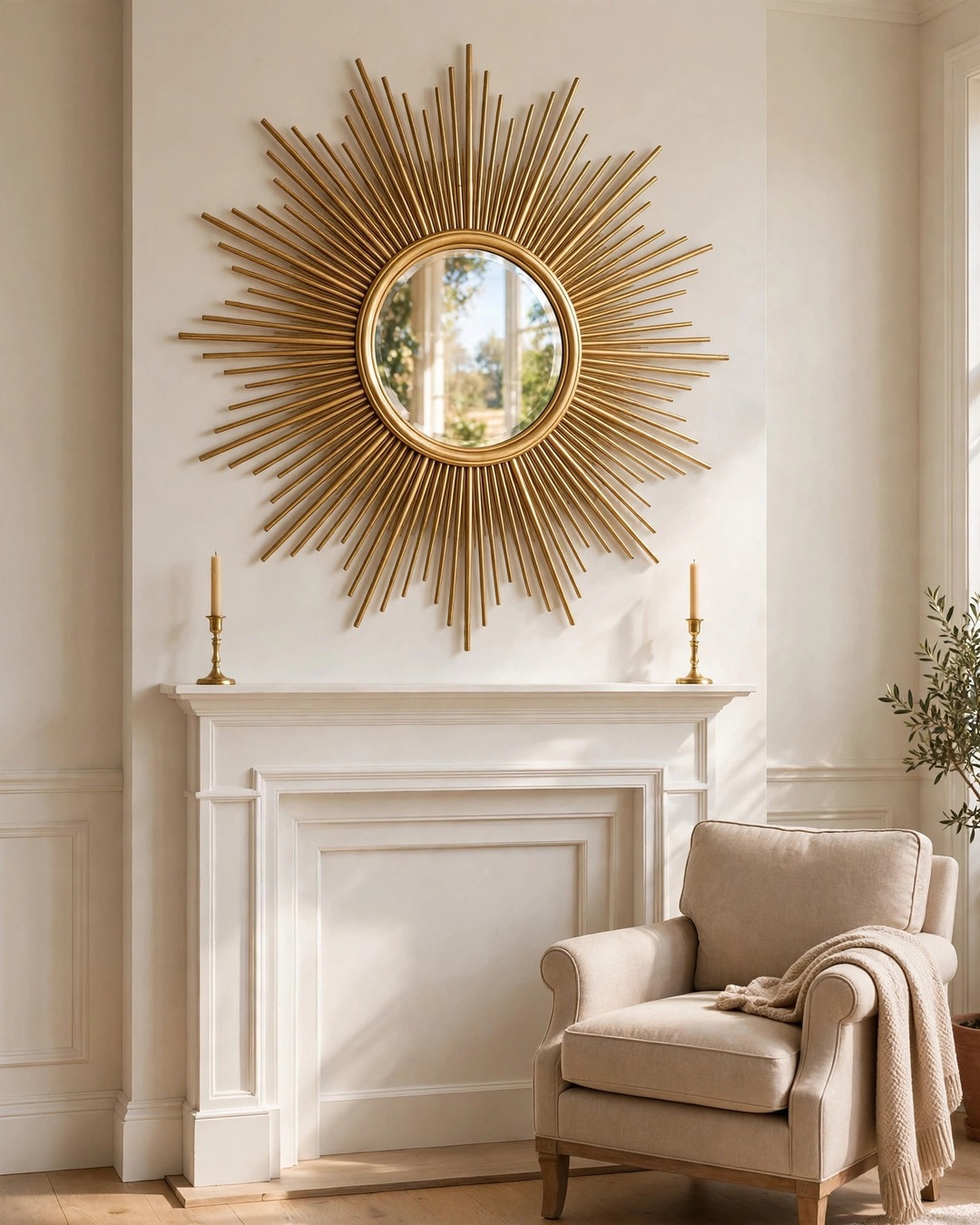
Tip: Center a sunburst at eye level, about 57 to 60 inches from floor to center. Too high and it reflects only ceiling; too low and it fights the furniture below.
9. Set a Mirror Behind Candles or a Lamp
This is the oldest lighting trick in the book, and it still works. Place a mirror directly behind a table lamp, a cluster of candles, or a lantern, and the reflection doubles the glow. At night the effect is dramatic: one lamp reads as two, and the whole corner feels wrapped in warmth.
A round or arched tabletop mirror on a nightstand behind a lamp is the easiest version. On a mantel, lean a medium mirror behind candlesticks of varying heights. The flicker multiplied in glass is pure atmosphere with zero wiring.
This trick shines in rooms with only one overhead light. Instead of adding fixtures, add reflection. It costs less, needs no electrician, and you can rearrange it in seconds.
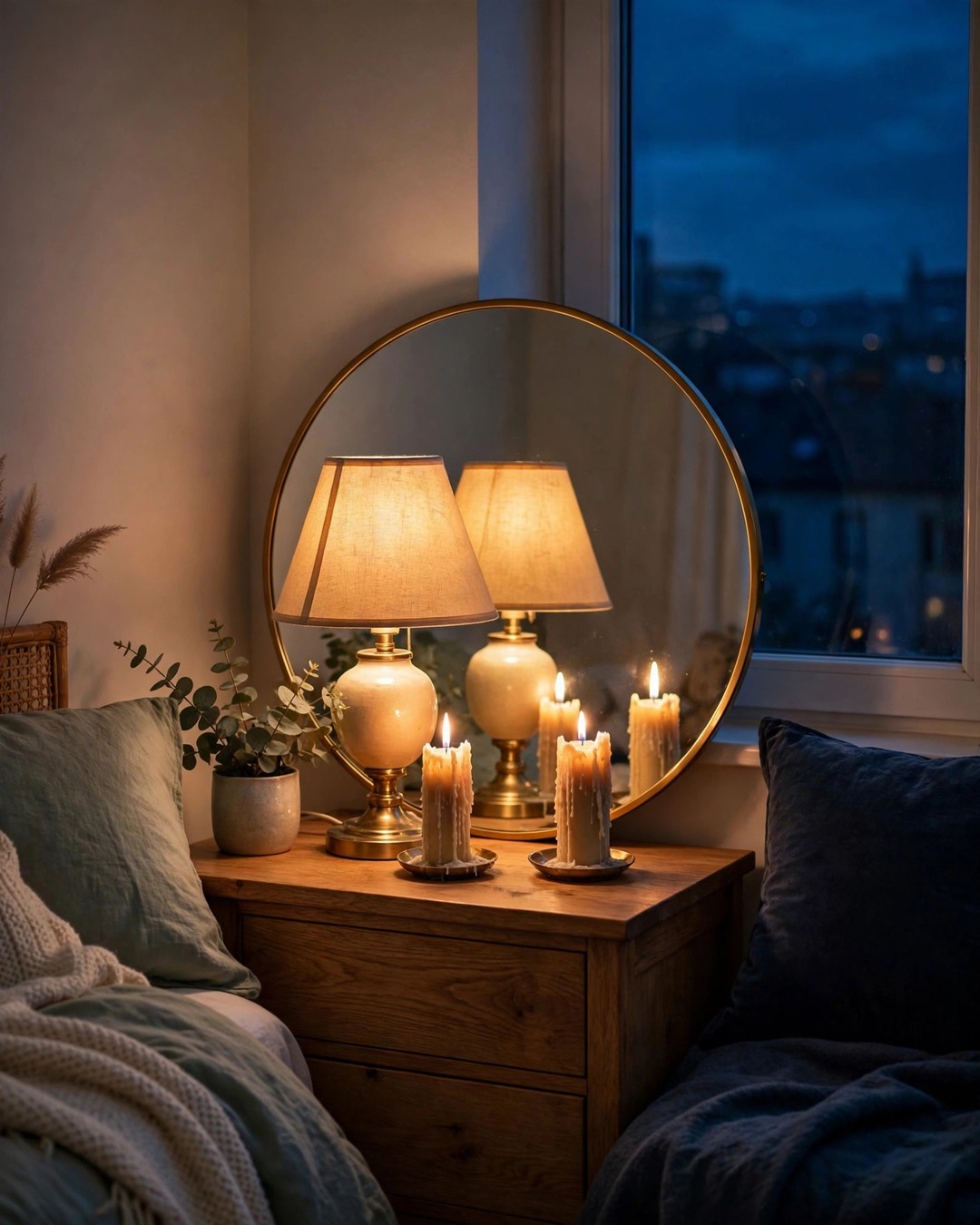
Tip: Use unscented candles or LED pillars behind mirrors you will not watch closely. Reflected flames look magical but deserve the same caution as real ones.
10. Try a Mirrored Kitchen Backsplash
Small kitchens swallow light, and a mirrored backsplash gives it back. Installed between the counters and upper cabinets, mirror bounces under-cabinet and window light across the whole work zone. The kitchen feels wider, brighter, and more open without moving a single wall.
Antiqued or lightly smoked mirror is the practical choice here. It hides water spots and cooking splatter far better than a perfect polished surface, and the aged finish adds character that plain mirror lacks. Sealed edges matter in a wet zone, so this is one mirror project worth having installed properly.
Keep the rest of the kitchen calm. A mirrored backsplash plus bold cabinet color plus patterned floor is sensory overload. Let the reflection be the statement.
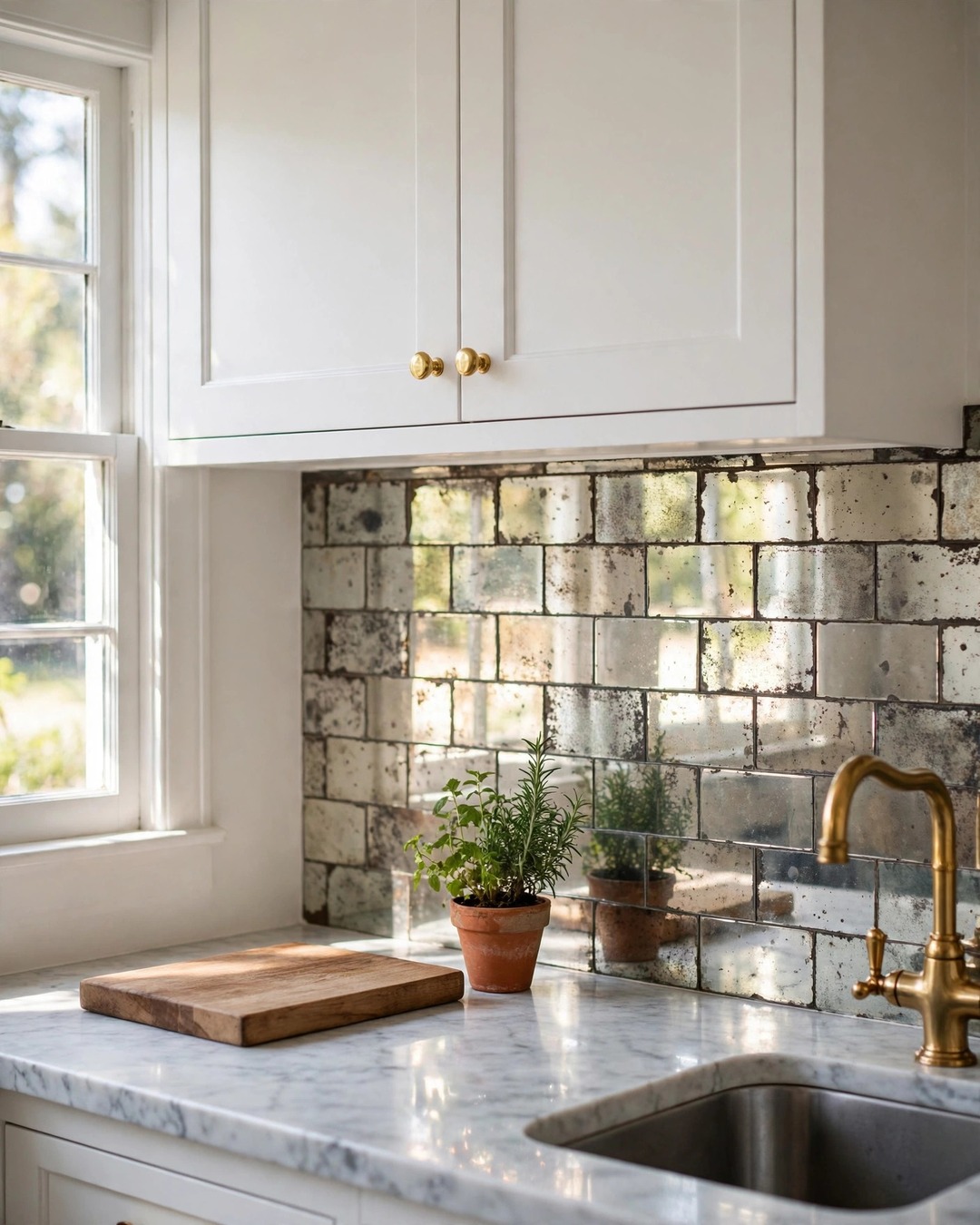
Tip: If a full mirrored backsplash feels like too much, mirror just the section behind the range or sink. You get the light bounce where you work most.
11. Warm Things Up With an Antique-Style Mirror
Not every mirror needs to be crisp and modern. An antique-style mirror with a softly foxed, mottled surface adds warmth and age to a room while still reflecting light. It suits traditional, farmhouse, and vintage-inspired spaces where a perfect mirror would feel cold.
The mottled finish is also forgiving. It hides dust, fingerprints, and imperfect reflections, which makes it ideal for busy family rooms and entryways. You get the glow without the maintenance of polished glass.
Pair antique mirrors with wood, linen, and warm metals. The aged glass loves natural texture. A foxed mirror above a rustic wood console is one of those combinations that always looks collected rather than decorated.
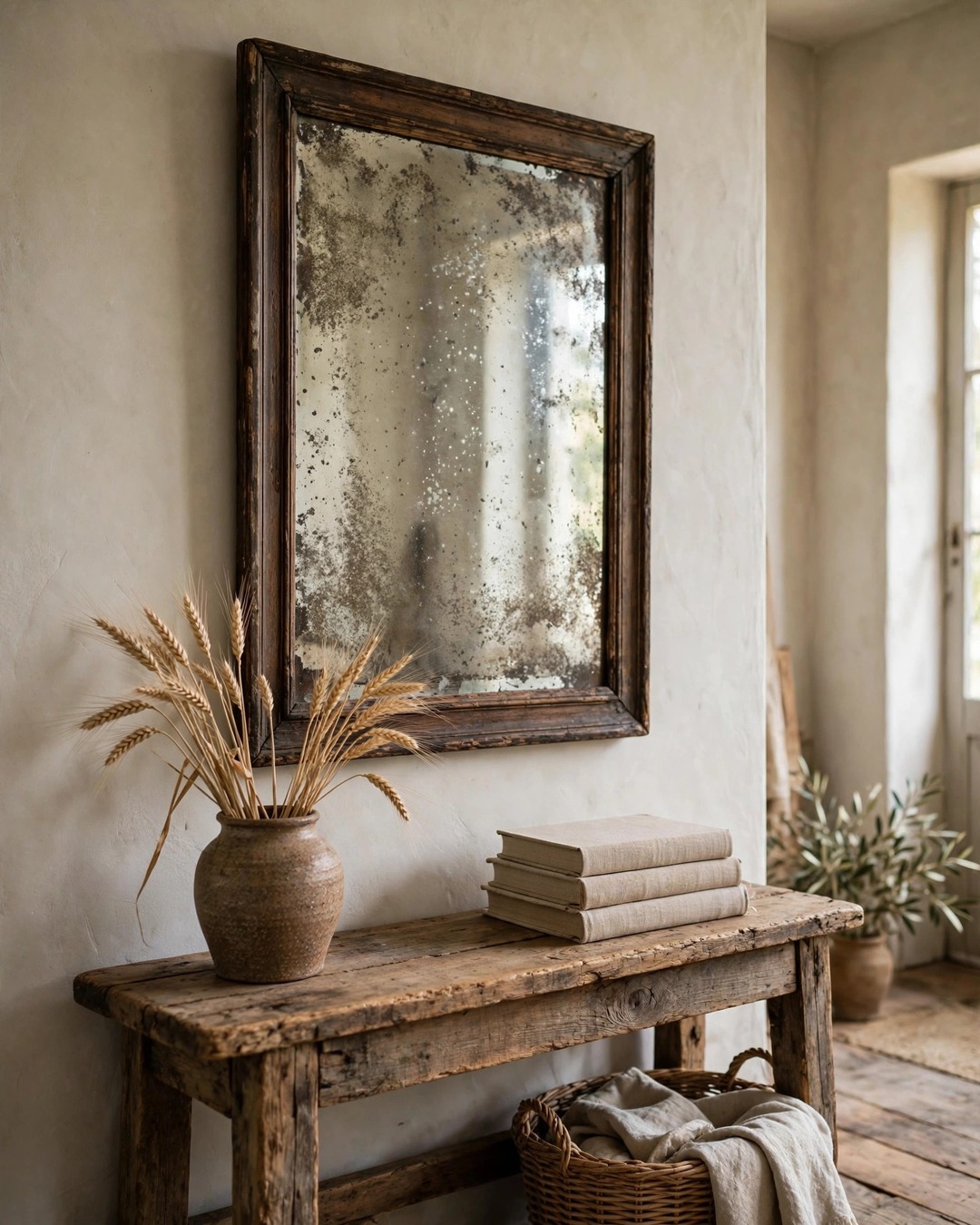
Tip: True antique mirrors are fragile and pricey. New mirrors with an antiqued finish give the same look and survive daily life much better.
12. Brighten a Dark Hallway
Hallways are the forgotten rooms of the house: narrow, windowless, and usually lit by a single sad fixture. A mirror is the fastest fix. Hang one large mirror, or a row of matching smaller ones, along the longest wall and the tunnel effect disappears.
Mirror the wall you see second, not first. When you enter a hall, the far wall gets your first glance; mirroring the side wall stretches the space sideways instead of just bouncing your own reflection back at you. Designers use this side-wall trick specifically to kill the bowling-alley feeling.
In a very narrow hall, keep frames slim and finishes light. A chunky dark frame in a tight hallway eats the width you just gained. Frameless or thin-metal frames nearly disappear, leaving only the light.
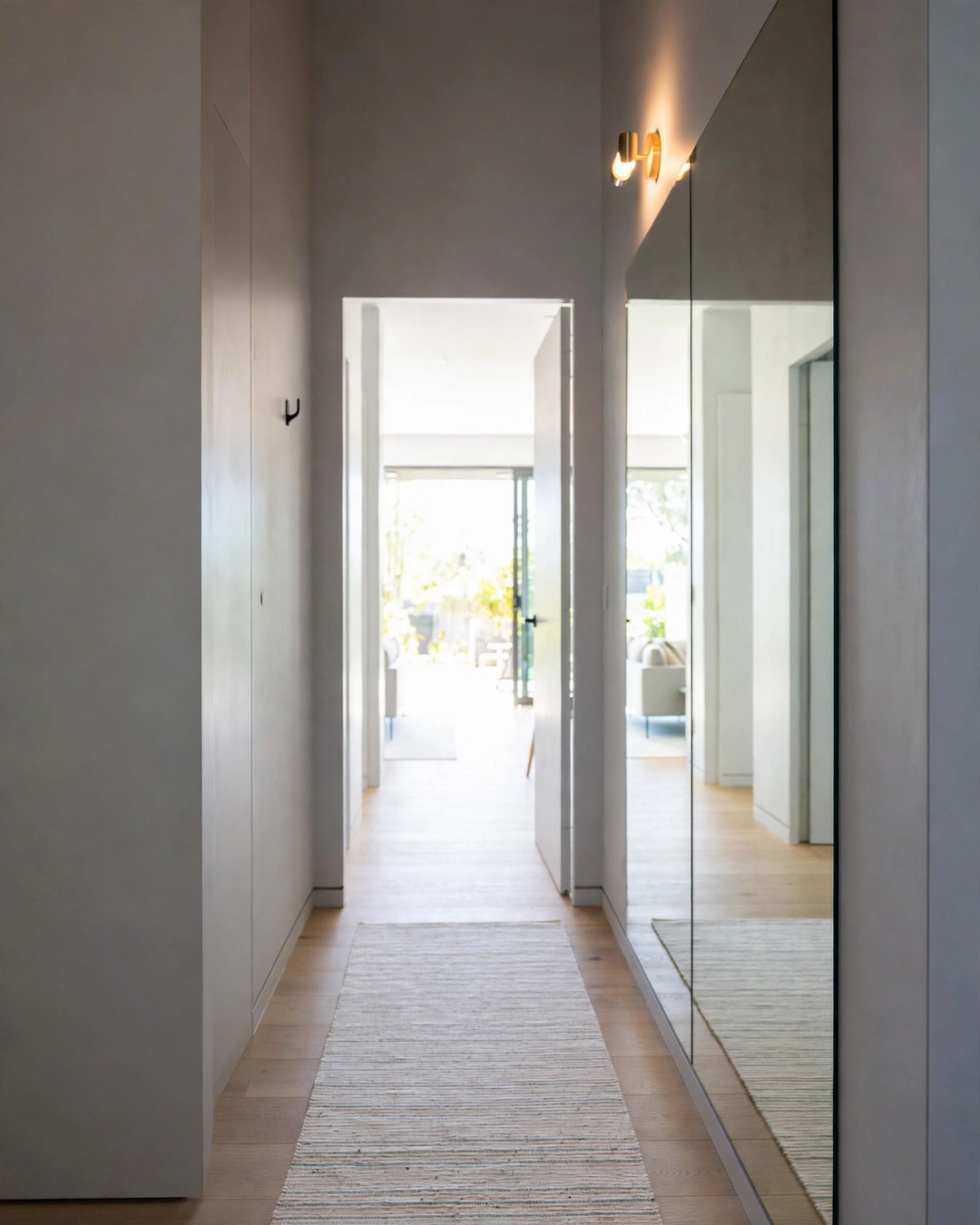
Tip: Add a slim picture light or a plug-in sconce above the hallway mirror. Light plus reflection is the combination that truly transforms a dark passage.
13. Tuck a Mirror Behind Your Plants
A plant in front of a mirror becomes two plants, and a whole jungle if the angles are right. Tuck a medium mirror behind a cluster of houseplants and the greenery doubles instantly. The reflection also bounces extra light onto the leaves, which real plants appreciate.
This works on windowsills, plant stands, and bookshelf tops. A round mirror propped behind three or four pots turns a modest collection into a lush display. It is one of the cheapest ways to make a plant corner look intentional and full.
Choose simple pots when using this trick. The mirror doubles every pattern, so a row of wildly patterned planters becomes visual noise in stereo. Solid colors and natural textures multiply beautifully.
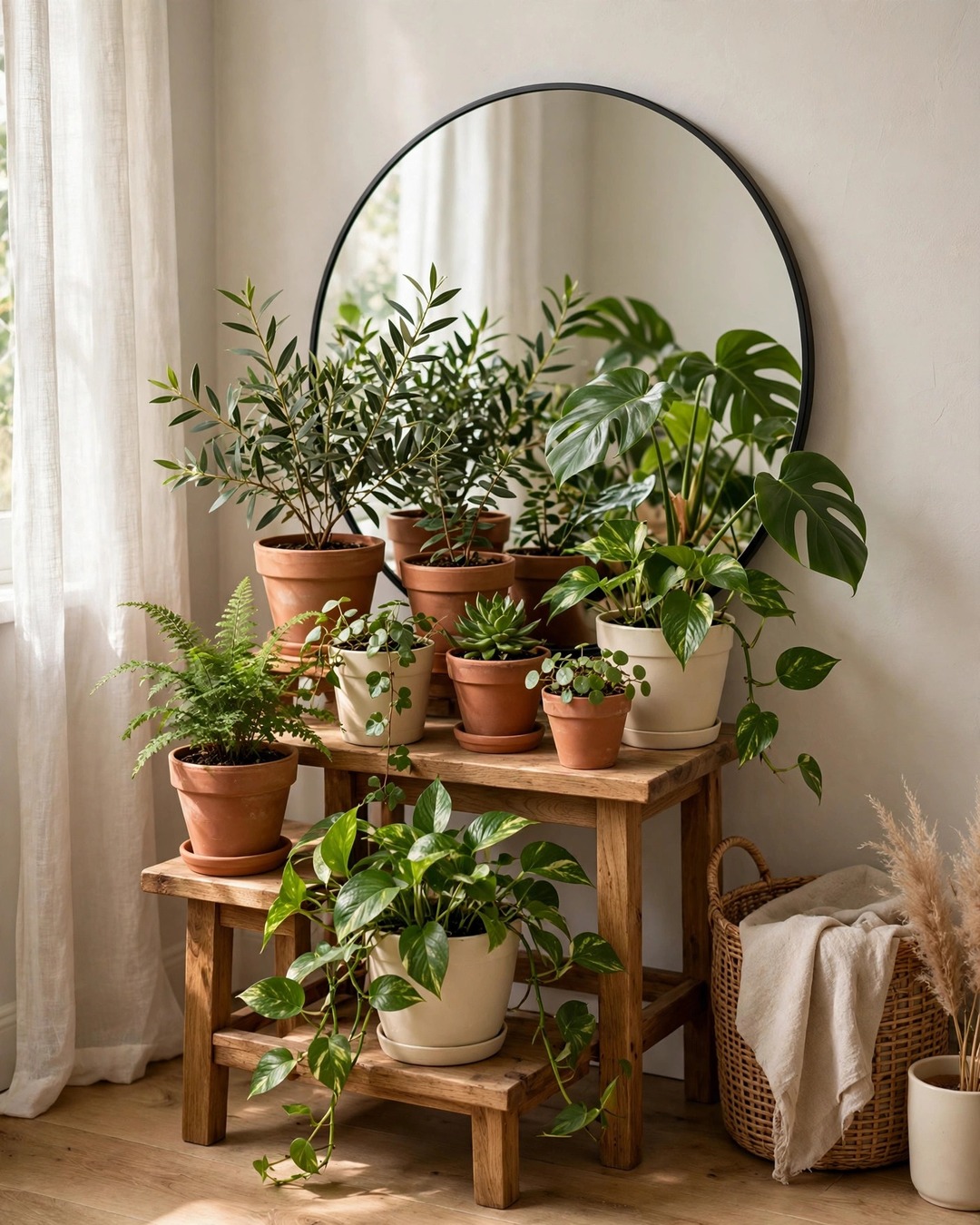
Tip: Wipe both the mirror and the leaves when you water. Dust dulls the doubling effect faster than you would expect.
14. Add Mirrored Furniture
When wall space is gone, put the mirror in the furniture. A mirrored side table, nightstand, or console reflects its surroundings and visually dissolves, making a small room feel less furnished than it is. It is the closest thing to invisible furniture.
One mirrored piece per room is the right dose. A mirrored nightstand beside an upholstered bed, or a mirrored drink table next to a sofa, adds sparkle without tipping into glitz. Two or three mirrored pieces in one room start to feel like a boutique hotel lobby.
Mirrored furniture loves small, dark rooms most. In a studio apartment, a mirrored console against the wall gives you a surface that barely registers visually. My studio apartment decor tips lean on exactly these kinds of visually light pieces to keep one room from feeling crowded.
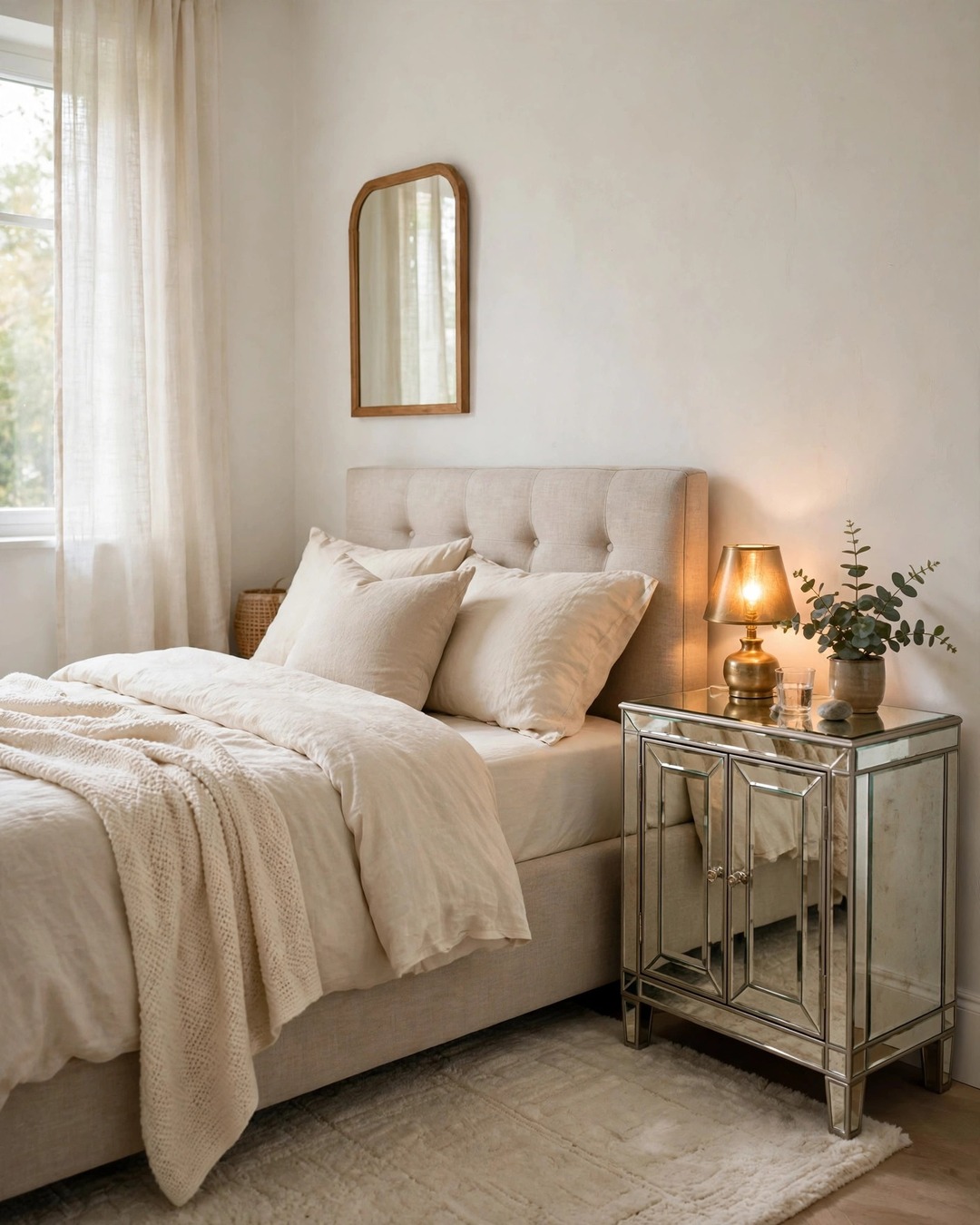
Tip: Coasters are non-negotiable on mirrored tabletops. Rings and water spots show immediately on glass and ruin the disappearing act.
15. Go Big With a Mirrored Wall Section
For the committed, mirror an entire wall section: floor to ceiling, wall to wall, behind a dining table or a bed. Custom-cut mirror panels make a small room feel truly twice its size, and the effect is more architectural than decorative. It reads as a design decision, not a trick.
Keep the mirrored wall to one per room, and choose the wall with the best thing to reflect. A dining wall facing windows becomes a wall of sky and greenery. A bedroom wall facing art doubles your favorite piece. Never mirror the wall facing clutter, a TV, or a messy desk.
Panel seams are part of the look, so plan them deliberately. Evenly spaced vertical panels read as modern paneling; a grid of square panels feels more classic. Have panels cut and installed by a glass shop rather than DIYing large sheets.
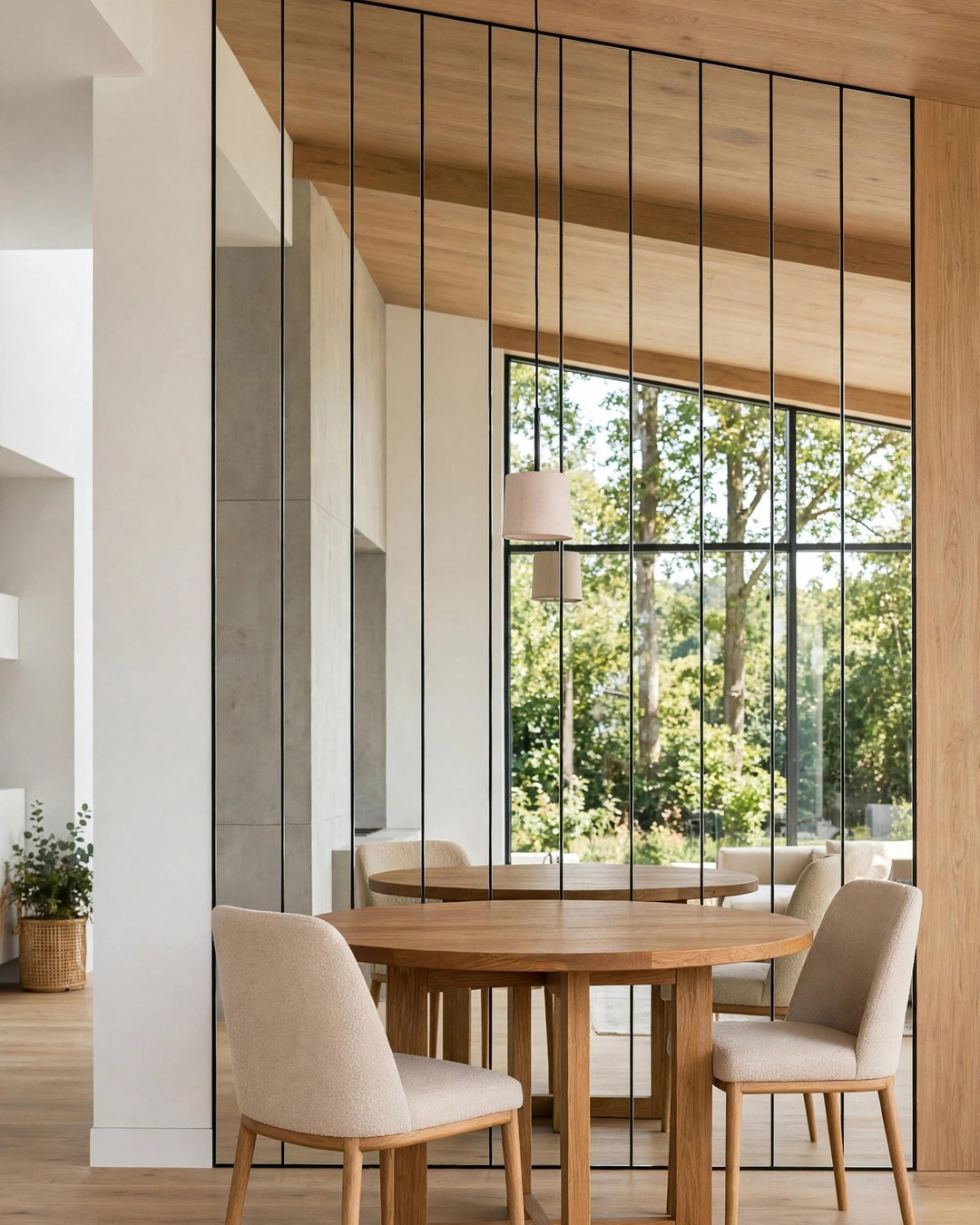
Tip: If a full mirrored wall feels like too much commitment, start with three tall panels side by side. You get most of the expansion effect with a fraction of the permanence.
Mirror Style and Placement Guide
| Mirror style | Best room | What it does |
|---|---|---|
| Hexagon tile grid | Entryway, living room | Creates a geometric focal point and scatters light |
| Arched floor mirror (leaning) | Bedroom, living room | Softens boxy lines, needs no drilling |
| Round mirror over console | Entryway, dining room | Breaks up rectangles, widens tight spaces |
| Mirror behind lamp or candles | Living room, bedroom | Doubles warm light at night |
| Full-length on wardrobe door | Small bedroom | Adds a dressing mirror in zero floor space |
| Sunburst mirror | Living room, above mantel | Acts as sculptural art with glow |
| Mirrored tray | Coffee table, dresser | Brightens vignettes, corrals small objects |
| Antique-style mirror | Family room, entryway | Adds warmth with forgiving, low-glare glass |
Where should I hang a mirror to make a small room look bigger?
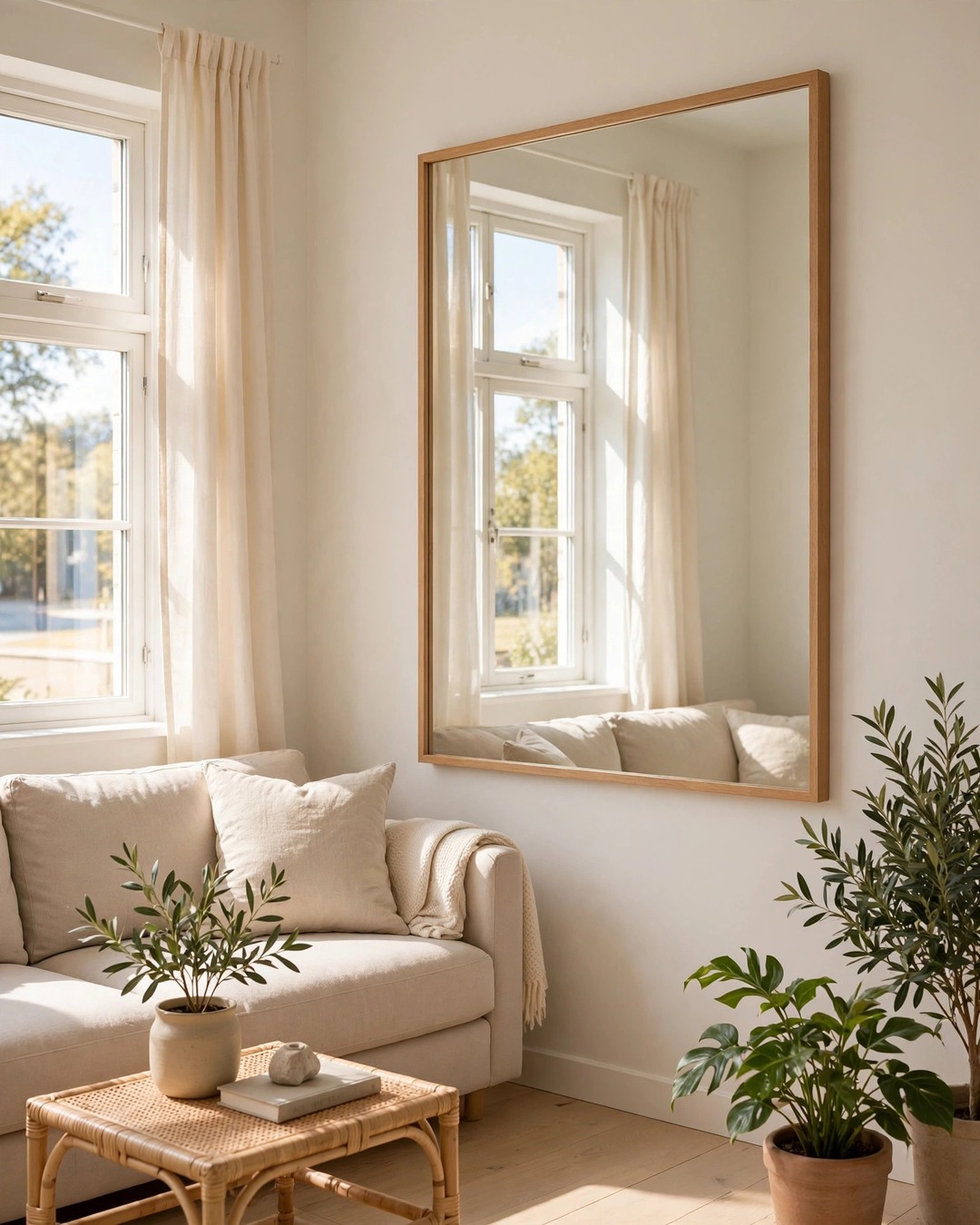
Hang it where it reflects the brightest thing in the room, usually a window. A mirror opposite or perpendicular to a window bounces daylight deep into the space and creates the illusion of a second window. For windowless rooms, face the mirror toward your brightest lamp instead.
Can renters use mirrors without drilling holes?
Yes, several ideas here need no holes at all. Lean a tall mirror against the wall, use adhesive-backed mirror tiles, or hang lightweight mirrors with removable adhesive strips rated for the weight. Over-the-door hooks made for mirrors work on wardrobe and bedroom doors.
What size mirror works best in a small space?
Bigger than you think. One large mirror expands a room far better than a cluster of tiny ones, which can chop up the reflection and make the wall look busy. As a rule, go for the largest mirror the wall and your budget allow, with a slim frame to keep it airy.
Do mirror tiles look cheap?
They can if they are plastic-looking or installed crookedly. Real glass hexagon tiles with a small gap between each piece read as intentional design, not a dorm-room fix. A defined layout, like a honeycomb grid or a neat rectangle, makes all the difference.
How do I keep mirrors from showing clutter?
A mirror doubles whatever it faces, so aim it at calm views: windows, plants, art, or open wall. Before hanging, stand where the mirror will go and look at what it will reflect. If the answer is a laundry pile or a messy desk, shift the angle or choose another wall.
Where should I avoid placing a mirror?
Skip walls facing clutter, direct views into bathrooms, or spots where it will bounce harsh glare into seating. Also avoid placing two large mirrors directly opposite each other unless you want an infinity effect; the endless reflection can feel unsettling rather than spacious.
Final Thoughts
Mirrors are the rare decor move that is both beautiful and practical. Start with one idea that solves your biggest problem: darkness, tightness, or a boring wall. Live with it for a week and notice how the room feels at different times of day. Chances are you will start seeing mirror opportunities everywhere, and your small space will feel a little less small every time.