
15 Walk-In Closet Organization Ideas

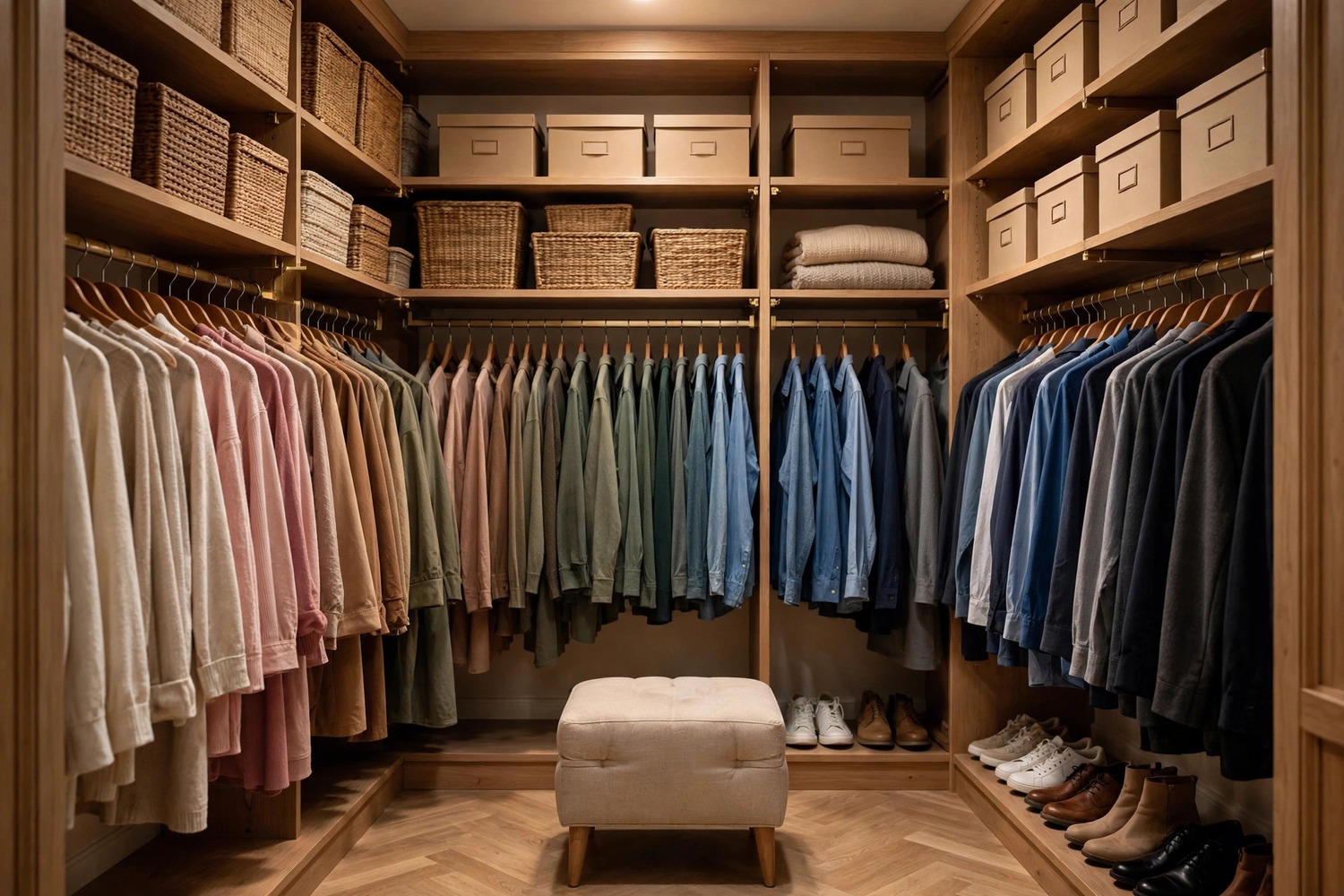
A walk-in closet should make getting dressed feel easy, not like digging through a small cave of forgotten clothes. But most walk-in closets fail at the basics: one long rod, one high shelf, and a floor that slowly disappears under shoes and laundry. The good news is that you do not need a custom closet company or a renovation to fix it. You need a plan for where everything lives.
These 15 walk-in closet organization ideas focus on practical systems, not just pretty pictures. You will learn how to double your hanging space, keep folded clothes from toppling, display shoes so you actually wear them, and add the small boutique touches – matching hangers, warm lighting, a mirror – that make the whole space feel calm and intentional. Work through them in order and your closet will start working like the organized dressing room you keep saving on Pinterest.
Key Takeaways
- Declutter before organizing anything — systems built around clothes you never wear waste every step after.
- Matching slim hangers plus a second hanging rod instantly double your hanging space.
- Divide the closet into zones and give every category a labeled home with dividers and matching bins.
- Use the full height: top shelves for off-season storage, door backs for accessories.
- Light it like a small store, add a mirror and a seat, then protect it all with a ten-minute weekly reset.
1. Declutter Before You Organize a Single Thing
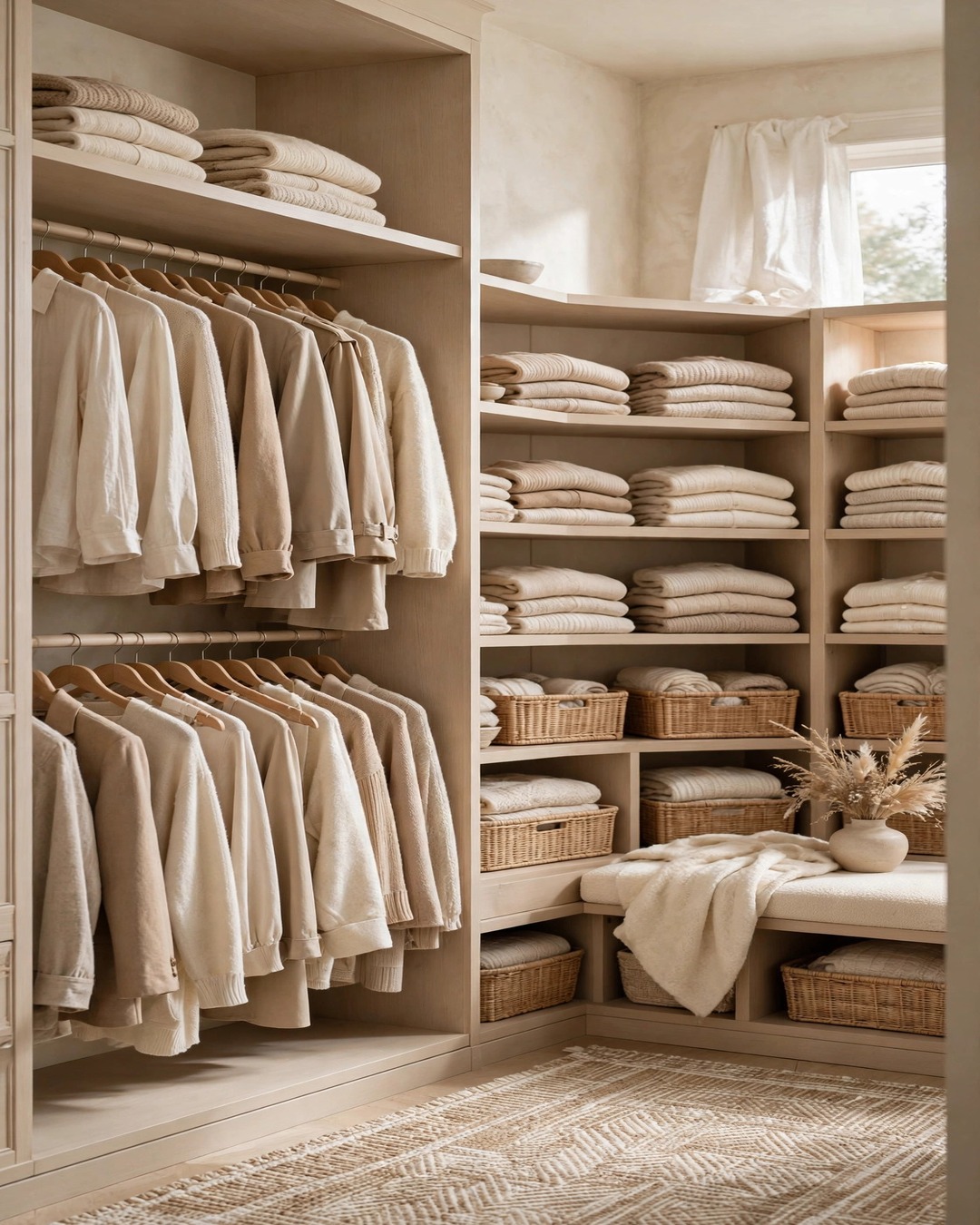
Every organizing system fails when it is built on too much stuff. Before you buy bins, hangers, or a single shelf, take everything out of the closet. Yes, everything. Sort it into three groups: keep, donate, and relocate to somewhere else in the house. The relocate pile is the secret weapon – it catches the beach towels, the wrapping paper, and the random electronics that wandered into your closet and started eating your space.
Be honest with the keep pile. If you have not worn it in a year, if it does not fit, or if you keep it out of guilt, it is costing you closet space every single day. An organized closet starts with fewer decisions, not more containers. Our studio apartment decor tips use the same principle for tiny spaces: every item needs a reason to be there, or it goes.
Once the piles are sorted, clean the empty closet – wipe the shelves, vacuum the floor, and check the lighting. Starting with a clean, empty space makes the next fourteen ideas dramatically easier, because you are placing clothes into a fresh system instead of squeezing them around old clutter.
2. Switch to Matching Slim Hangers
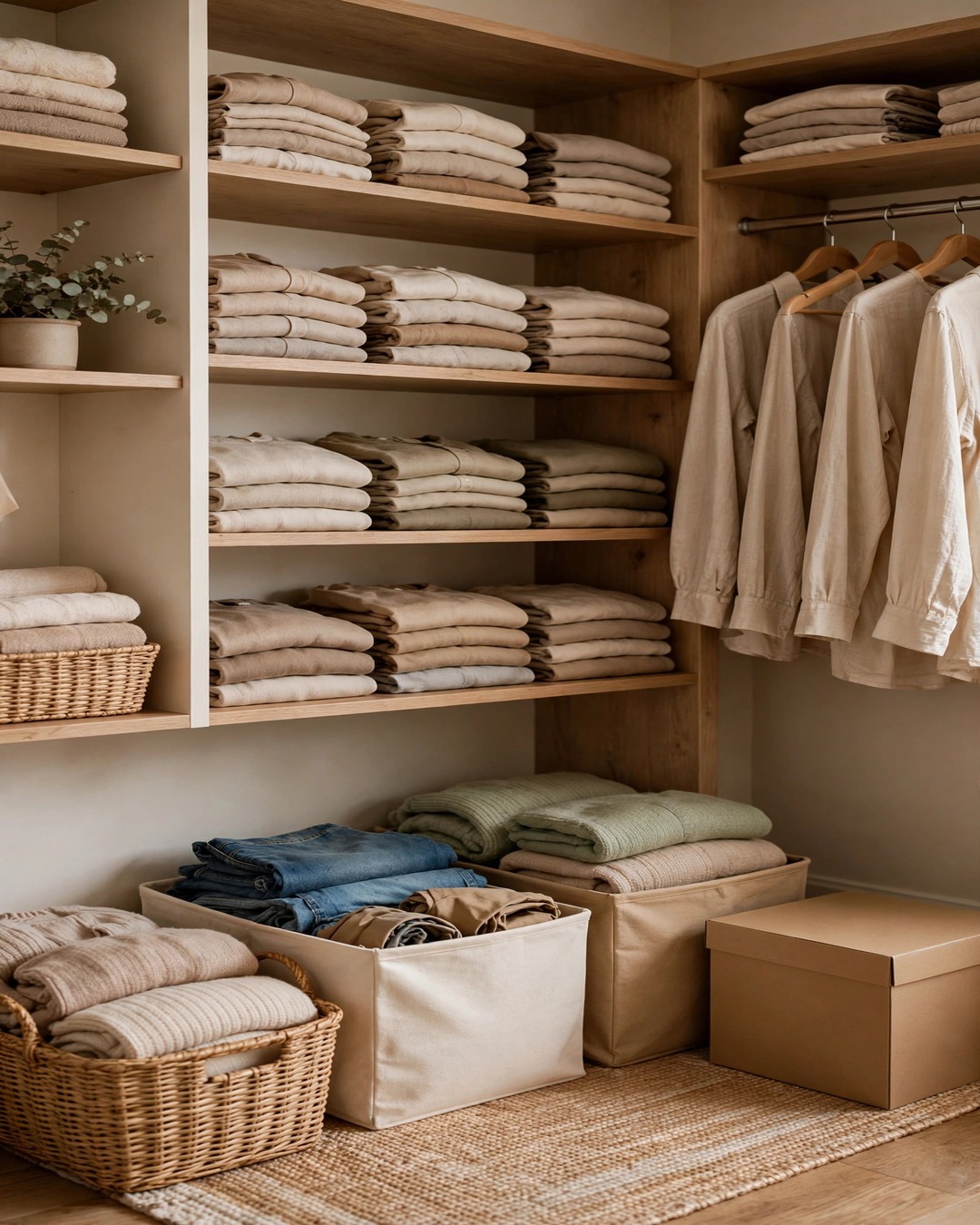
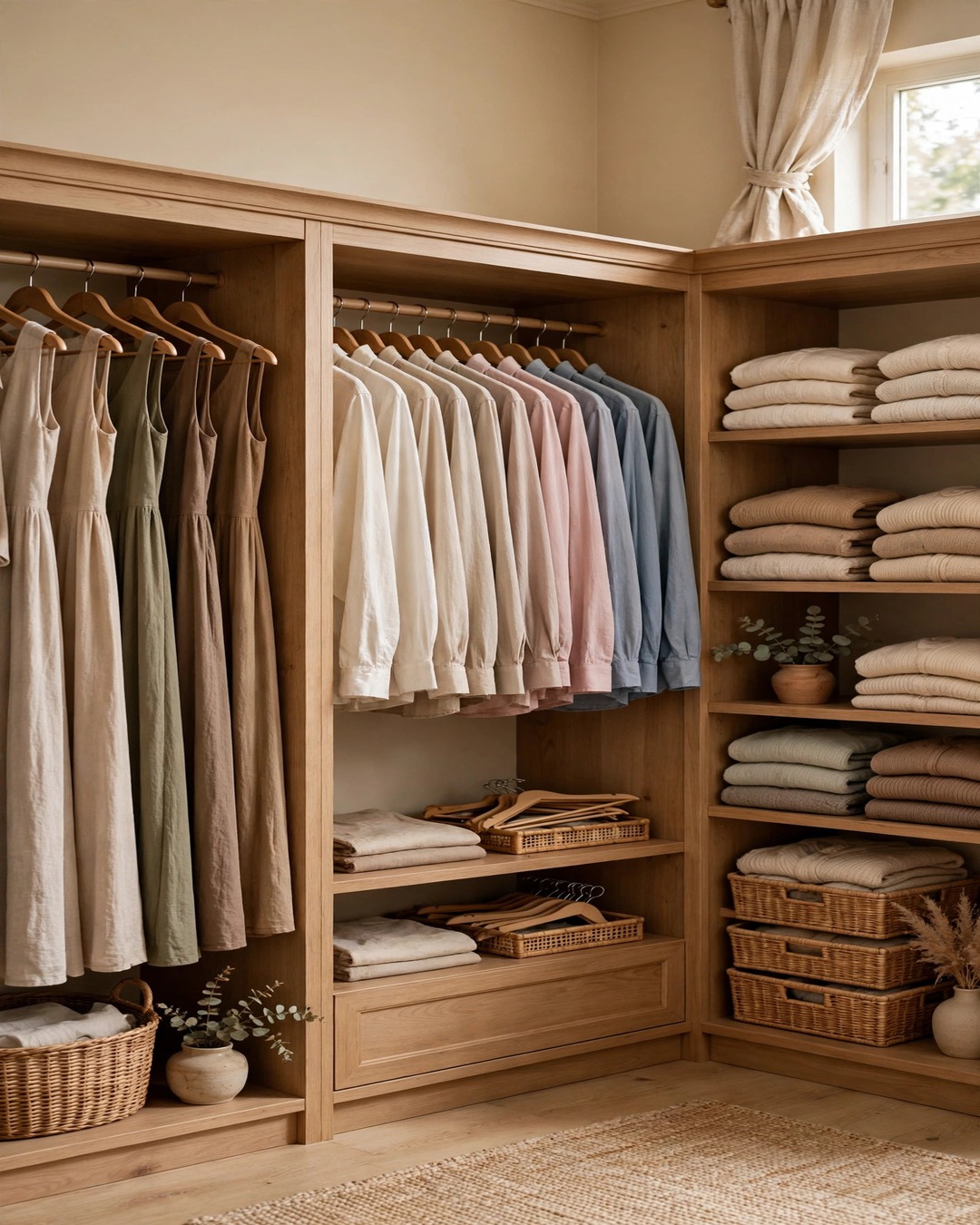
This is the fastest visual upgrade in closet organizing. A row of mixed hangers – wire, plastic, hotel freebies – makes even tidy clothes look chaotic. Slim velvet or wooden hangers in one color instantly make the closet look boutique-like, and the slim profile means you can fit noticeably more garments on the same rod.
Velvet hangers grip clothes so they do not slide off, which keeps shoulders smooth and the row looking neat. For heavy coats and blazers, keep a few sturdy wooden hangers mixed in so nothing bends or stretches. Our thrift store decor guide has tips for finding matching baskets and containers secondhand, and the same thrift stores often have bags of matching hangers for very little.
3. Double Your Hanging Space With a Second Rod
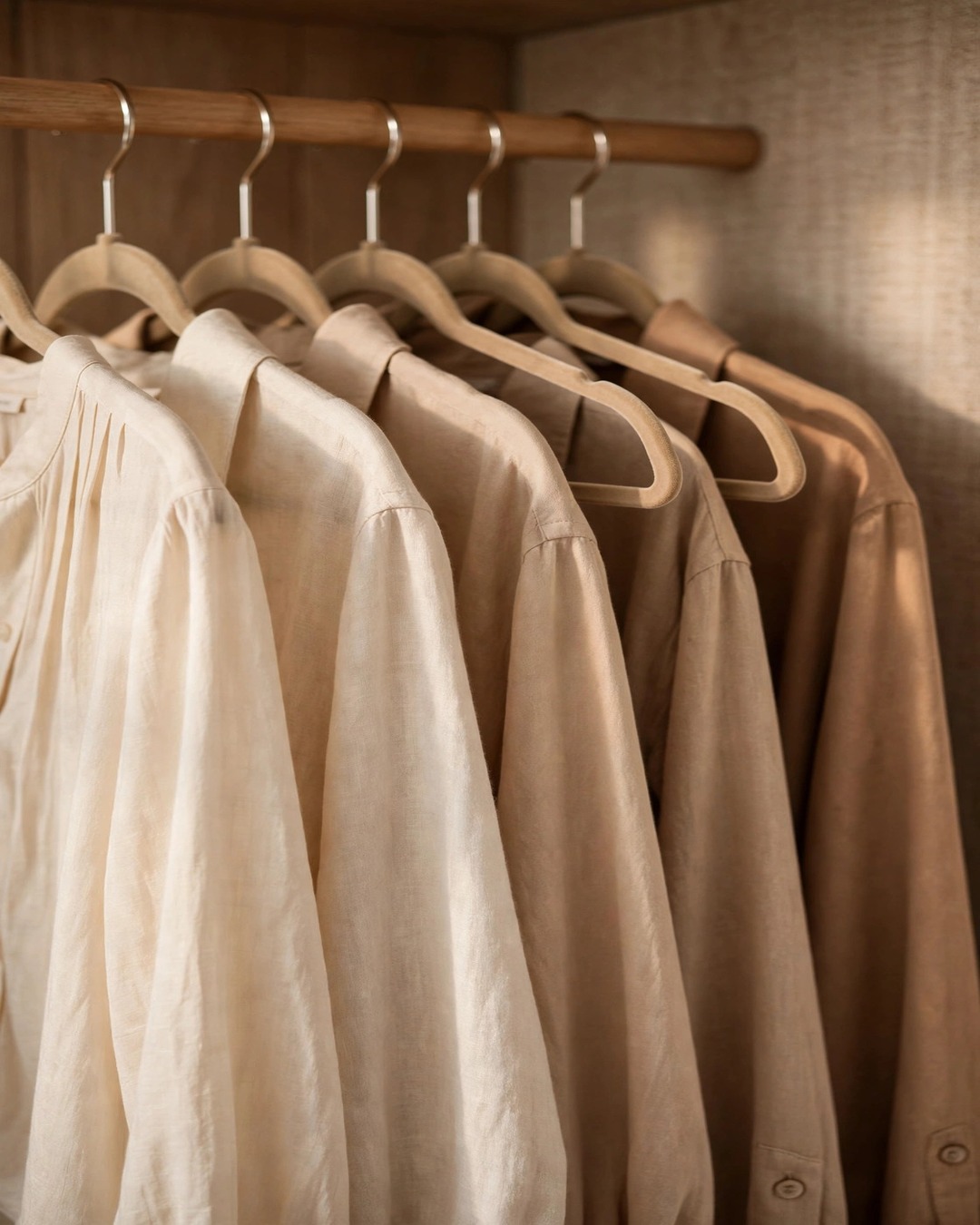
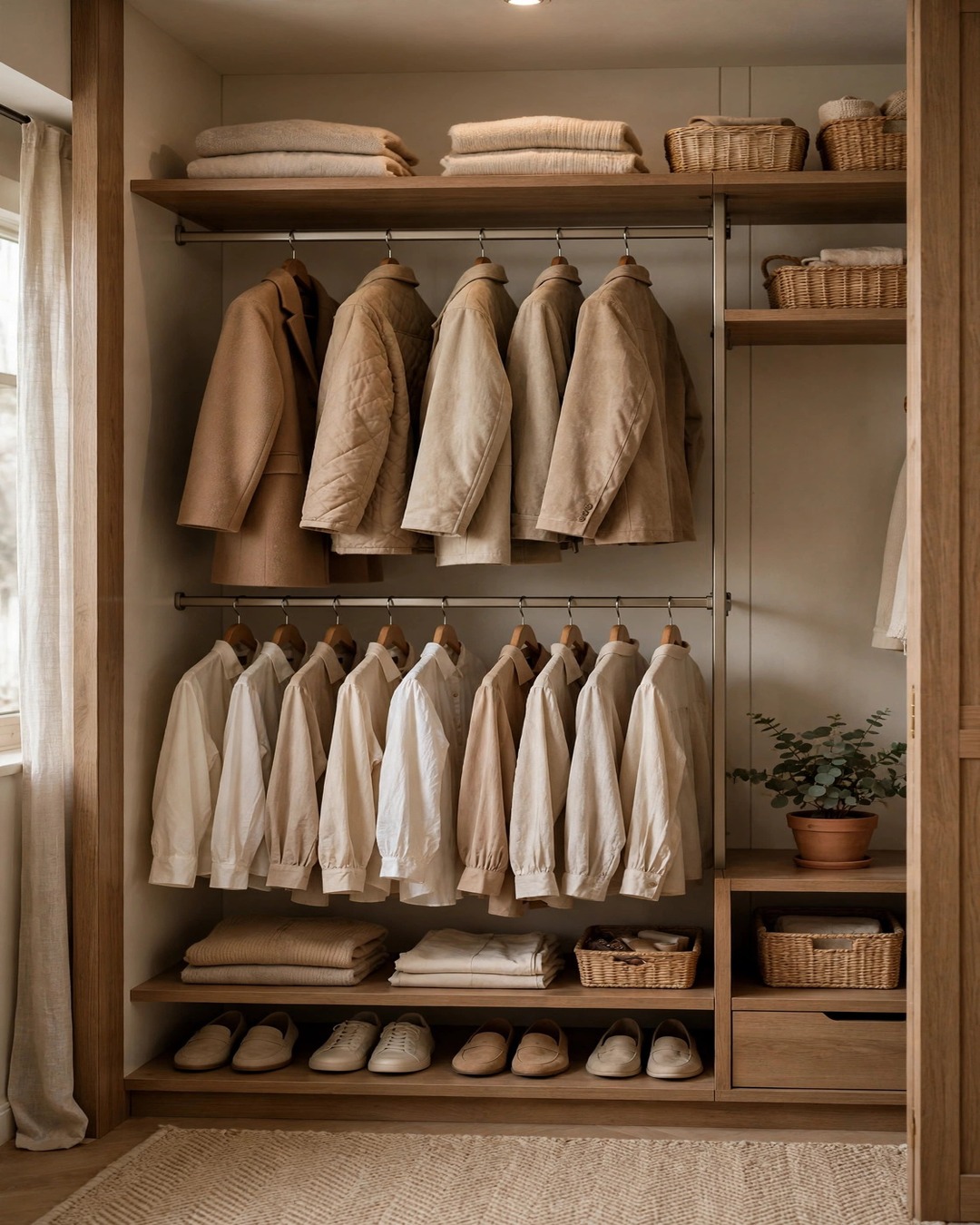
Most closets waste the vertical space under the main rod. Shirts, blouses, folded pants, and skirts only need about half the height of a standard closet. Adding a second hanging rod below the first – either a tension rod or one hung from the shelf above with chains – instantly doubles the hanging capacity for shorter garments.
Keep long items like dresses and coats on a separate single-height section so they hang freely without pooling on the floor. This one change, which costs very little and takes under an hour, is the single most effective way to stop clothes from getting crammed together. Homes and Gardens recommends separating short and long garments and measuring your actual hanging needs before buying anything, in their guide to creating the perfect walk-in closet.
4. Divide the Closet Into Zones
An organized closet is really just a closet where everything has an address. Divide yours into zones based on how you get dressed: work clothes, casual clothes, evening outfits, workout gear, and accessories. When every category has its own section, you stop hunting through the whole closet every morning and you can see at a glance what needs restocking or decluttering.
Arrange zones in the order you use them. Daily wear goes at eye level and within easy reach. Occasion pieces and seasonal items go higher or toward the ends. Shoes live near the bottom of their zone so you can pull a full outfit from one area. Within each zone, arrange clothes by color from light to dark – it looks beautiful and it makes finding a specific piece almost instant.
5. Style Open Shelves With Dividers and Matching Bins
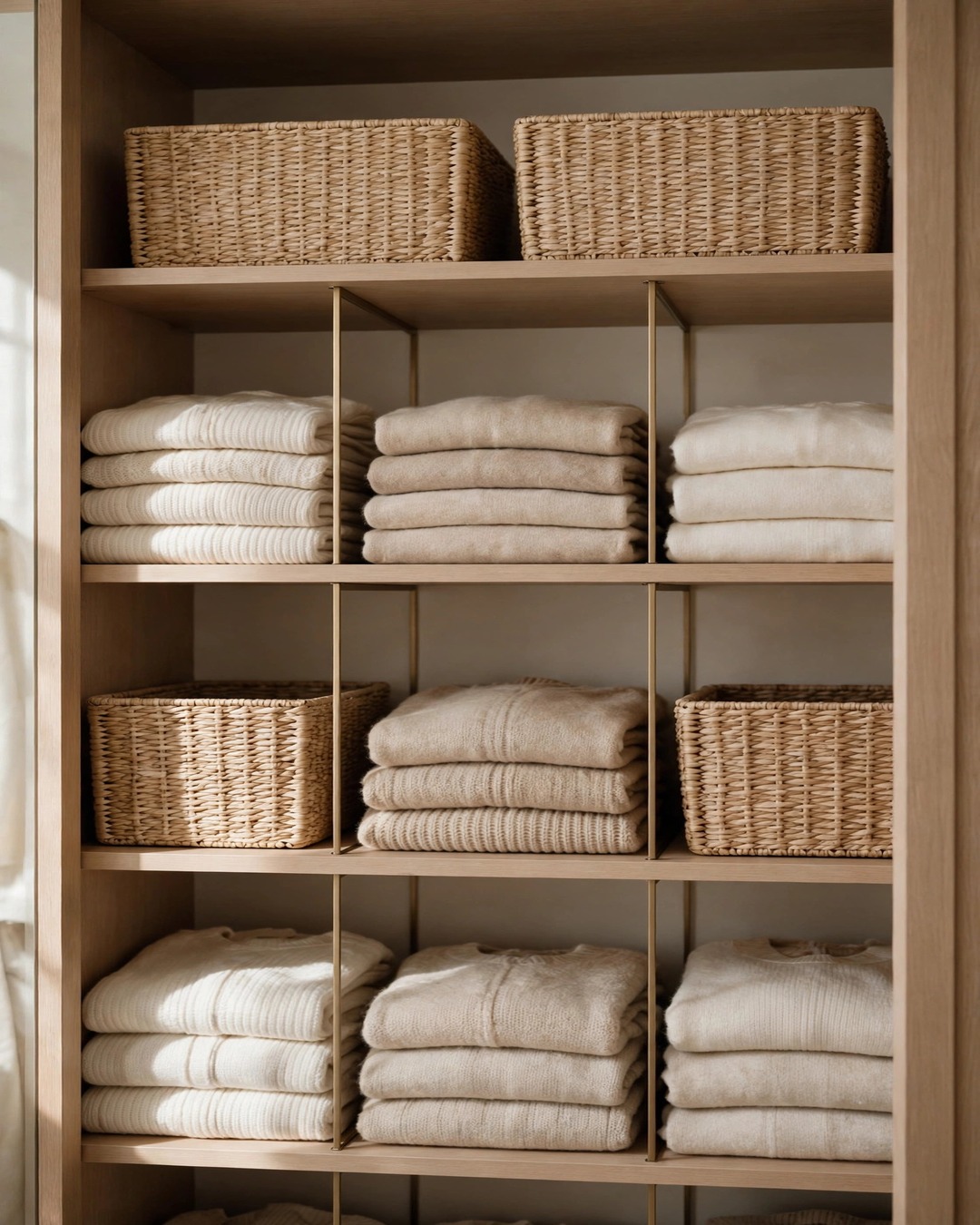
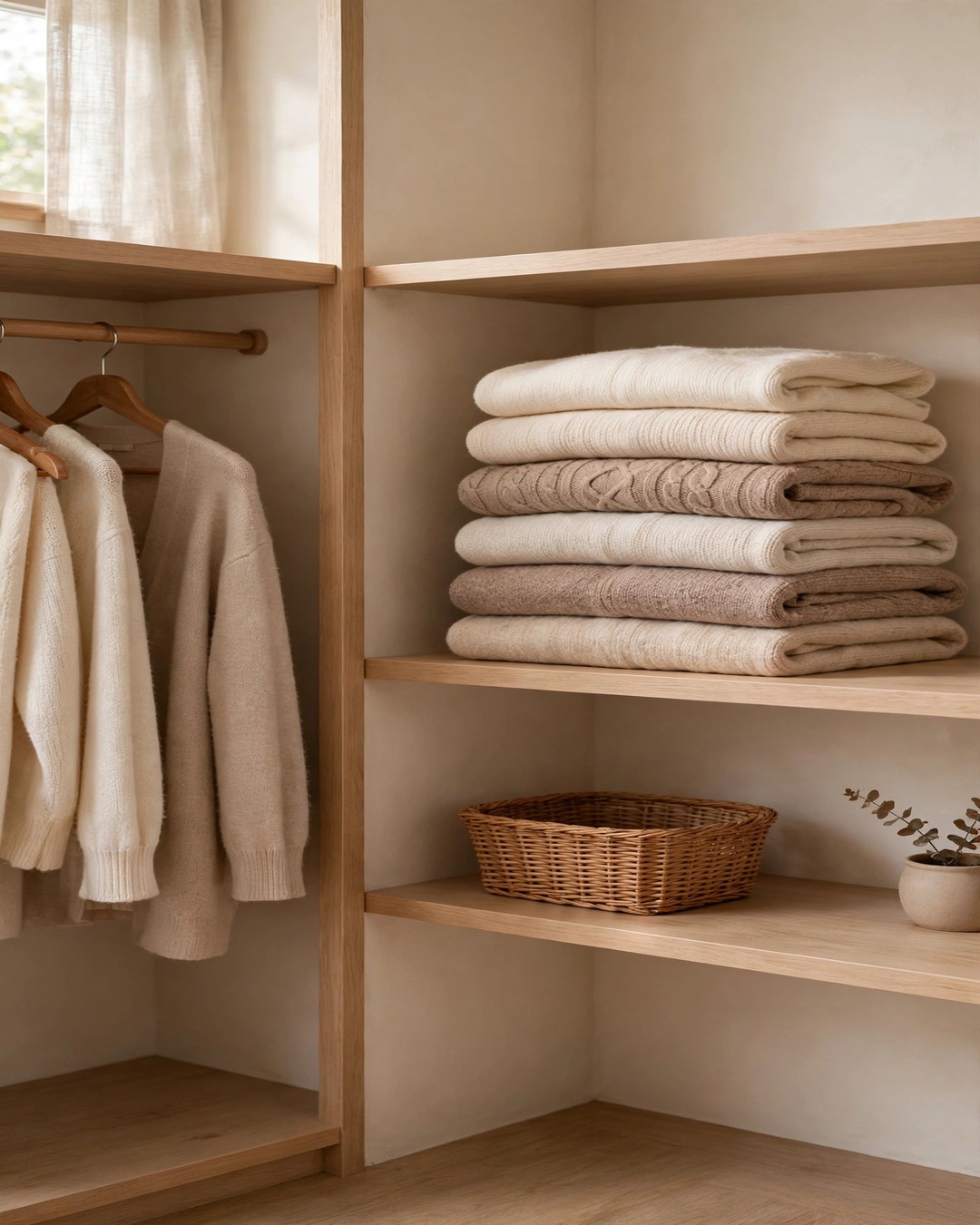
Open shelves are wonderful for folded clothes and terrible at staying neat without help. Shelf dividers – simple vertical panels that clip or stand on the shelf – keep stacks of sweaters and t-shirts from toppling into each other. They turn one long shelf into a row of tidy cubbies, and they cost very little.
For items you do not want on display, use matching bins or baskets in one material and color. Label-free is fine if the bins are opaque and the contents are obvious, but a small label on bins that hold off-season or rarely used items saves future-you a lot of digging. Mixing one or two pretty baskets with practical bins keeps the shelves looking styled instead of storage-unit plain.
6. Give Every Drawer a Divider System
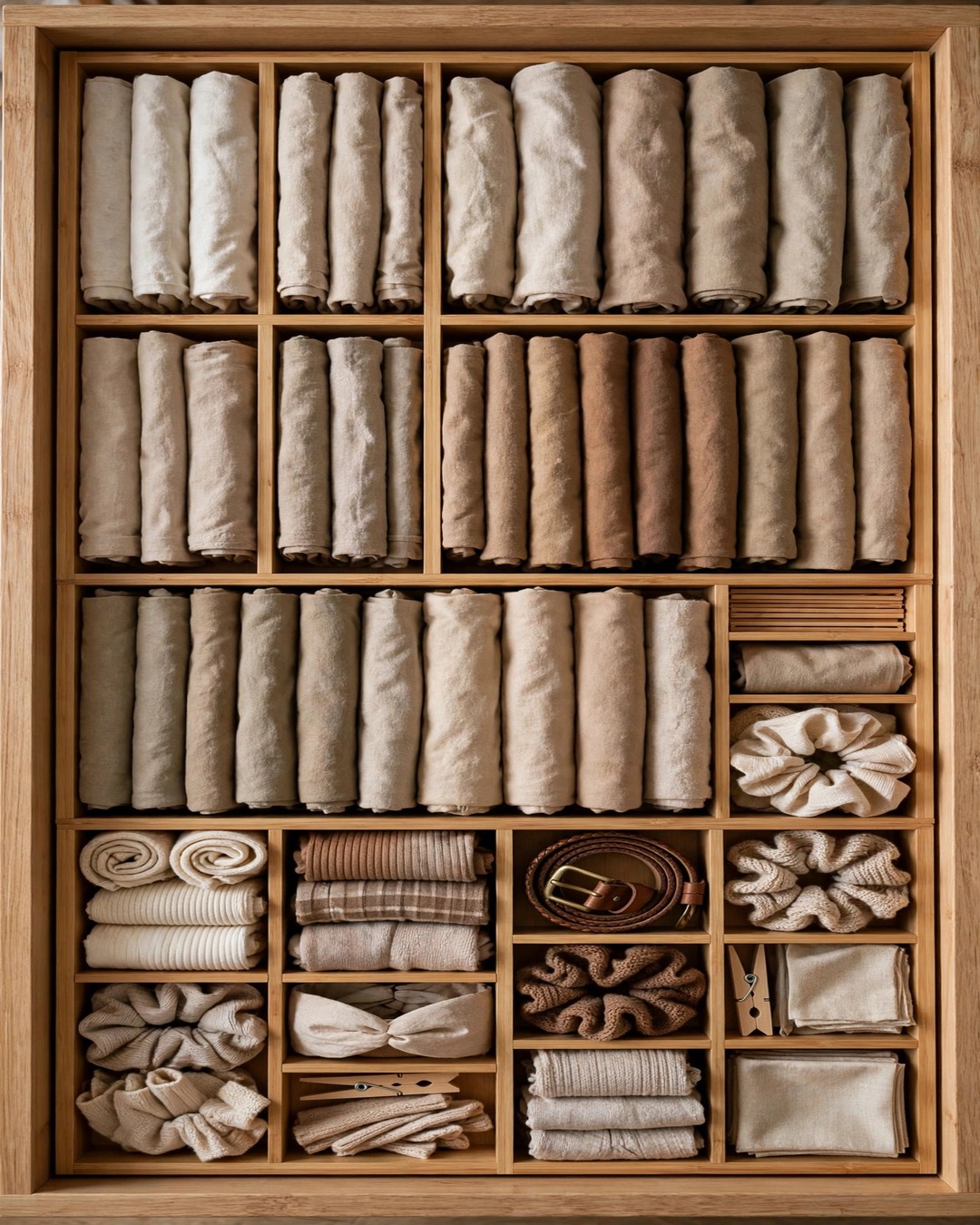
Drawers without dividers become junk drawers within a week. Drawer dividers – adjustable bamboo grids, honeycomb inserts, or simple boxes – give every small item a home: underwear, socks, belts, sunglasses, and jewelry each get their own compartment. File-folding clothes (folding them so they stand upright like files) lets you see everything in the drawer at once instead of only the top layer.
If your closet has no built-in drawers, a small rolling drawer unit or a set of stacked fabric drawers works just as well inside a walk-in. Keep one shallow drawer or tray near the mirror for the things you grab while getting ready – watch, everyday jewelry, hair ties – so you are not crossing the closet ten times each morning.
7. Display Shoes Like a Boutique
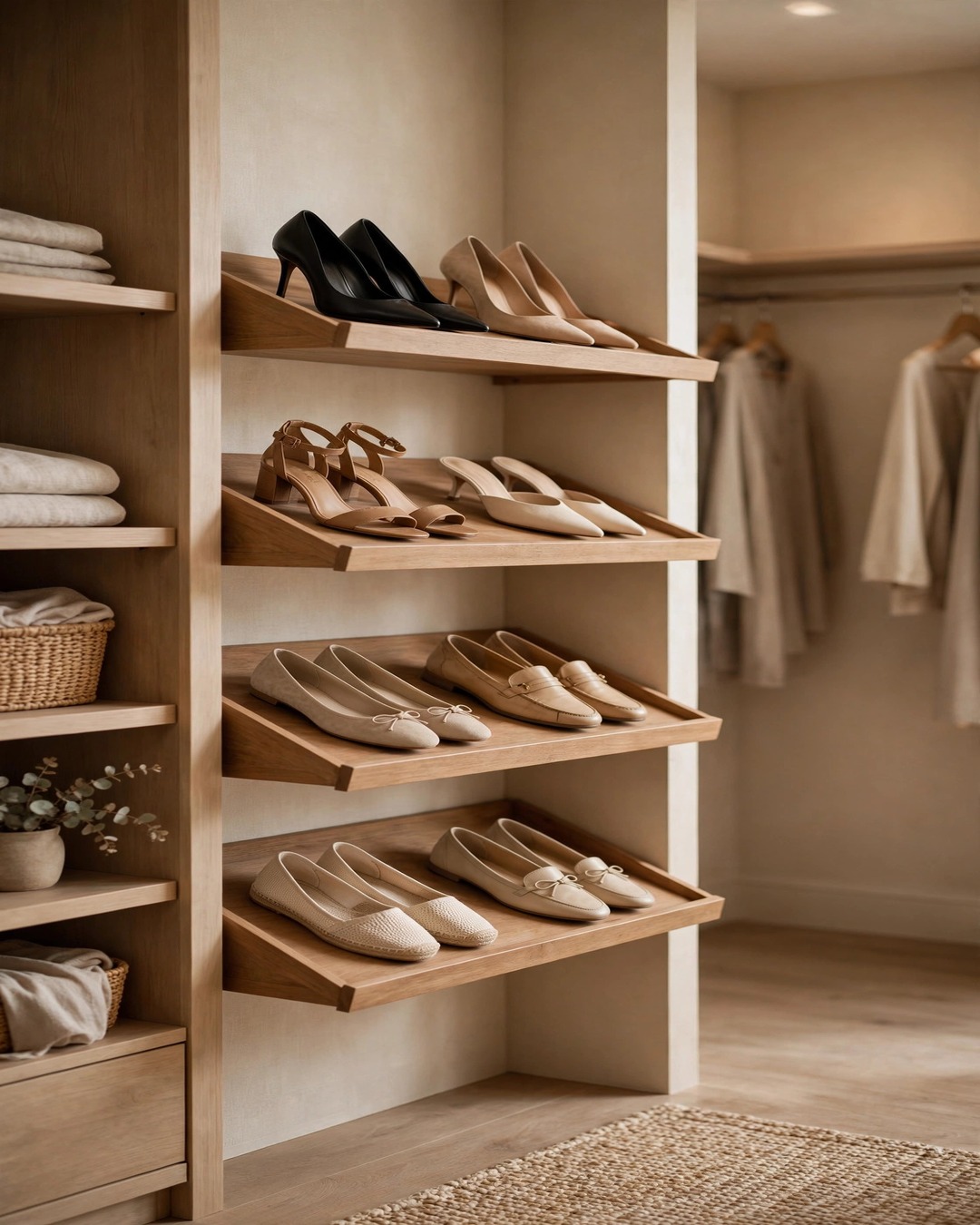
Shoes piled on the closet floor are hard to see, easy to damage, and impossible to keep in pairs. Give them real estate: slanted shelves, cubbies, or a tiered rack where every pair faces forward. When you can see all your shoes at a glance, you actually wear more of them instead of rotating the same three pairs.
Match the shoe storage to the shoes. Heels display beautifully on slanted shelves, while flats and sneakers sit better on flat cubbies. Keep daily-wear shoes at the easiest height and occasion shoes higher up. For a small entryway overflow, our small entryway guide covers shoe storage ideas that keep the most-worn pairs by the door so they never clog the closet in the first place.
8. Put Accessories on the Wall, Not in a Drawer Pile
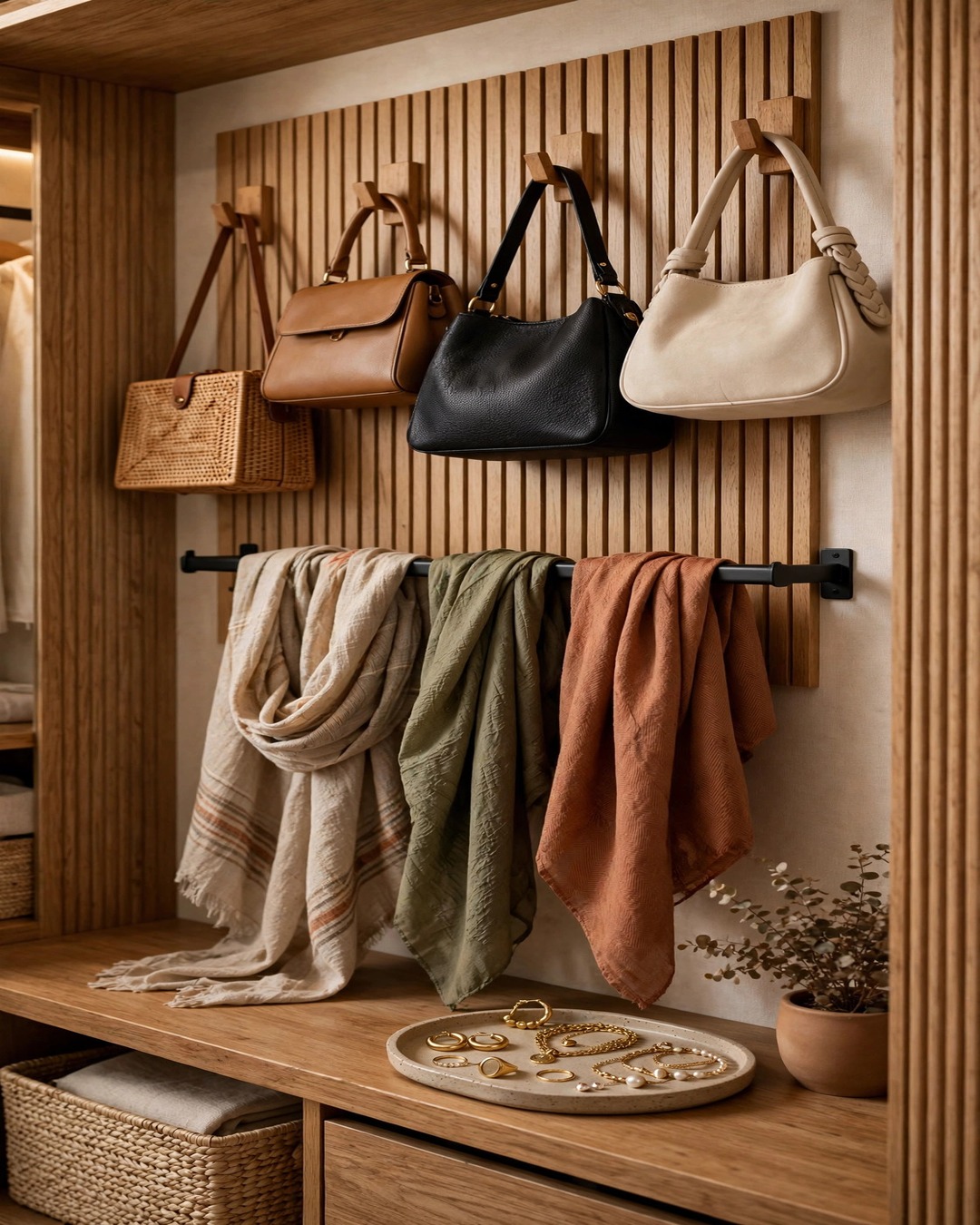
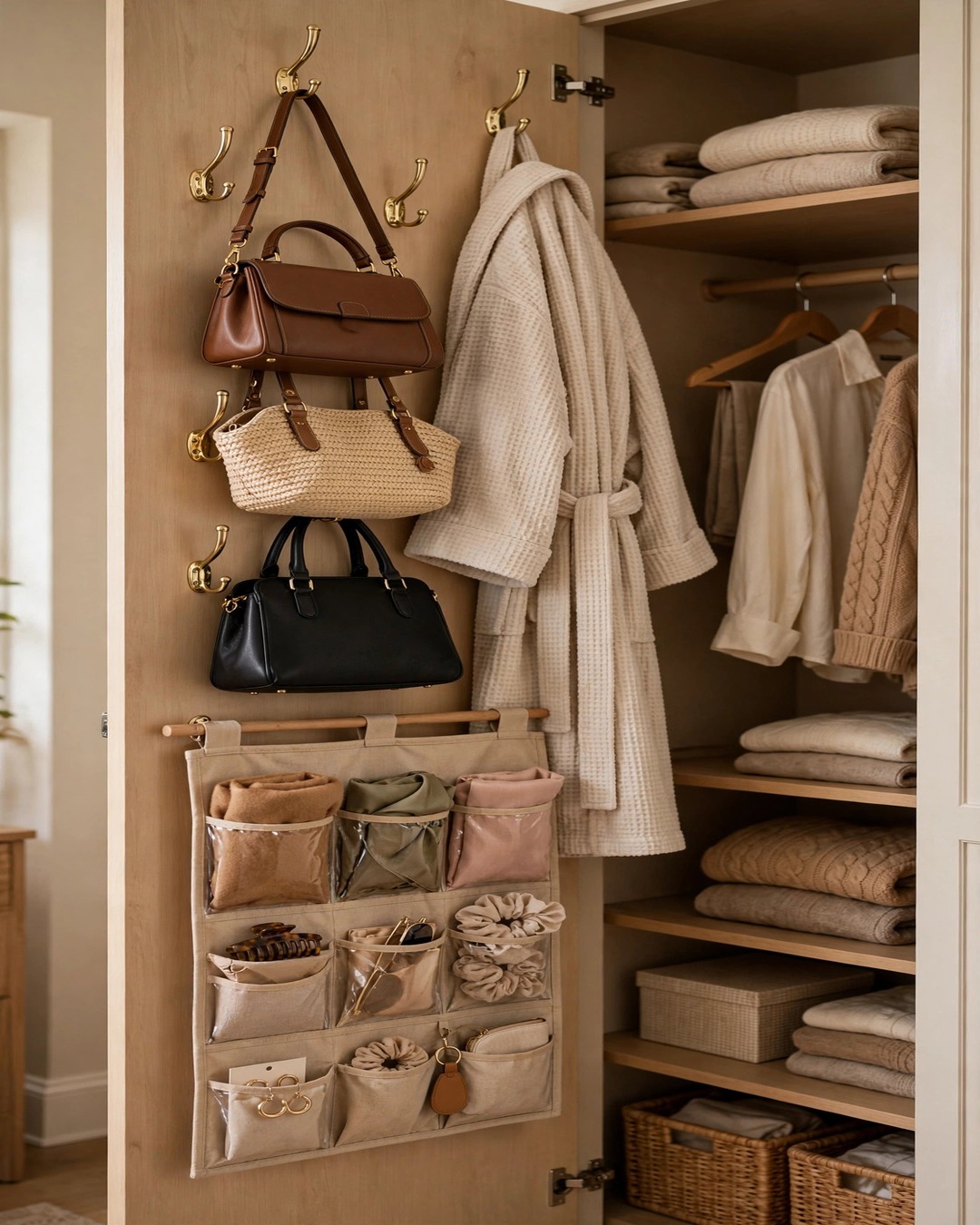
Bags, scarves, hats, and belts disappear into drawers and die there. A wall of hooks, a pegboard, or a mounted scarf rack turns accessories into display and keeps them visible. Hang handbags on sturdy hooks – one bag per hook so they keep their shape – and loop scarves over a multi-arm hanger or a towel bar mounted at eye level.
Jewelry deserves a shallow tray or a small wall-mounted organizer near the mirror, not a tangled heap. Hats can go on wall hooks or a simple hat rack, which also doubles as decor. When accessories are visible, getting dressed becomes faster and your outfits get more interesting, because you remember what you own.
9. Use the Full Height – Top to Bottom
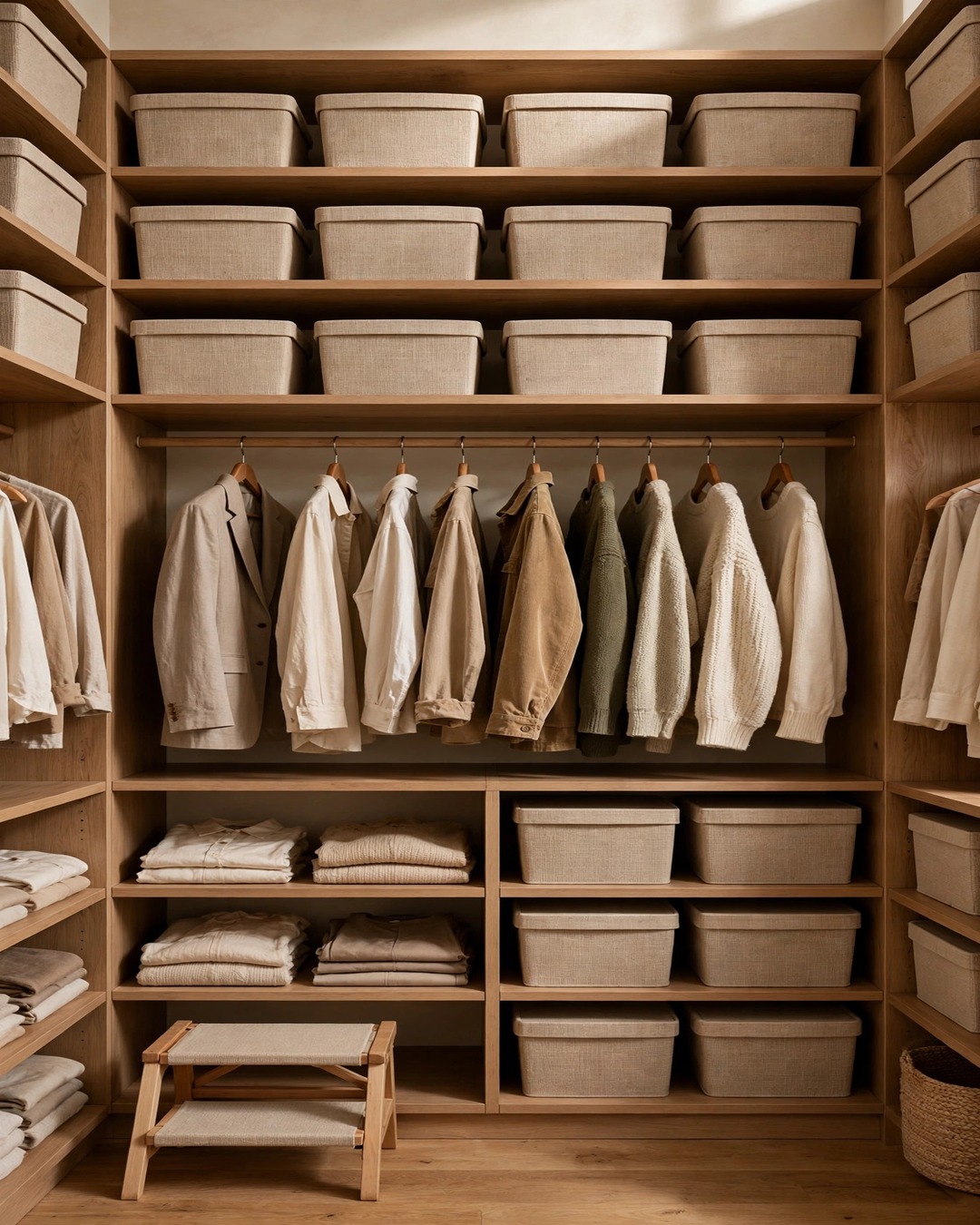
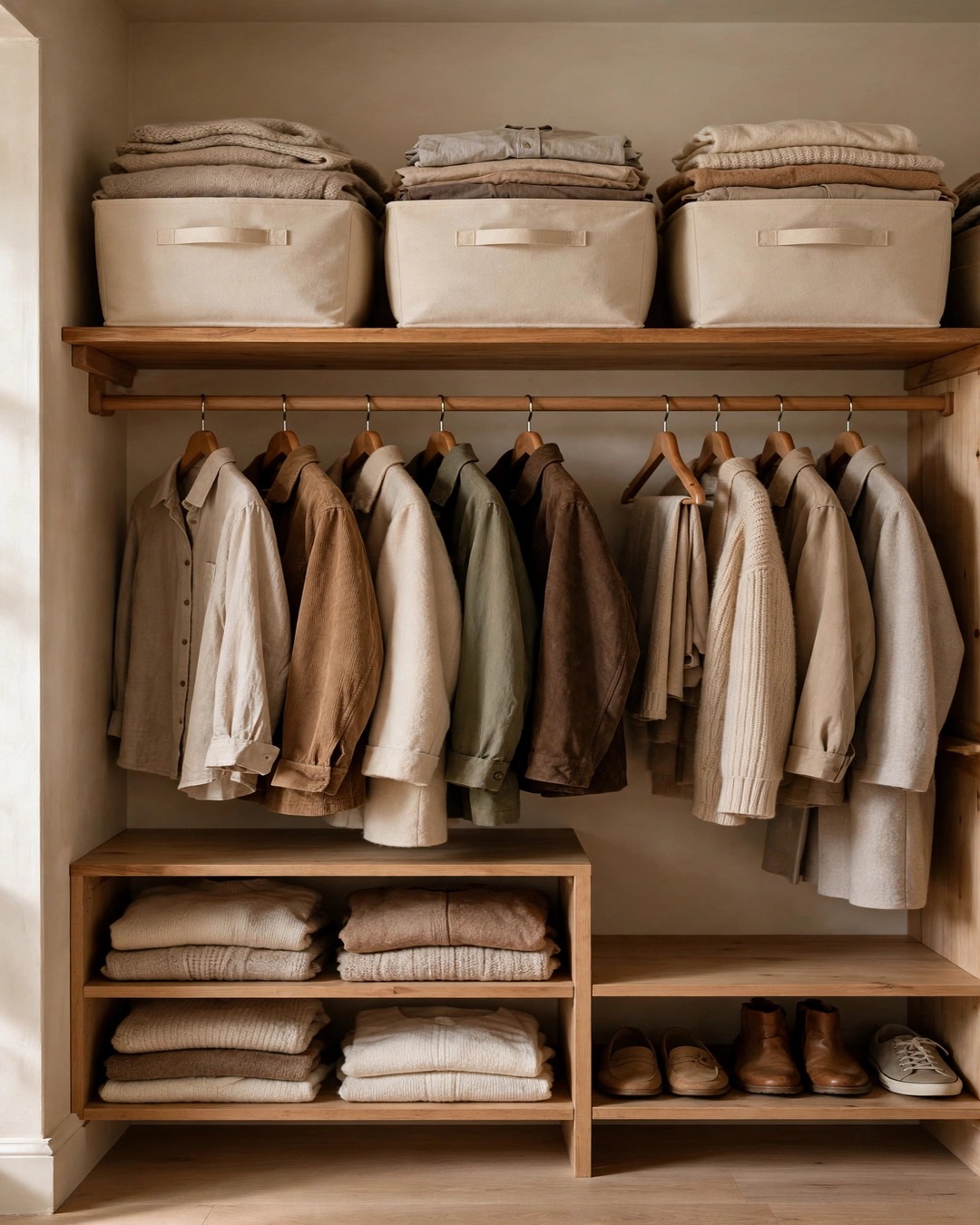
The top shelf of most walk-in closets is a dead zone where random boxes go to be forgotten. Reclaim it with matching lidded bins for out-of-season clothes, luggage, and keepsakes. A small folding step stool kept in the closet makes the top shelf truly usable instead of decorative, which frees up prime eye-level space for what you wear now.
Below the hanging clothes, do not let the floor become a void. Low cubbies, rolling bins, or a row of shoe shelves use the bottom foot of the closet that most people waste. Our small bedroom guide applies the same vertical thinking to tight rooms: when floor space is limited, the walls and the space above your head are where the storage hides.
10. Add a Freestanding Rack for Outfit Planning
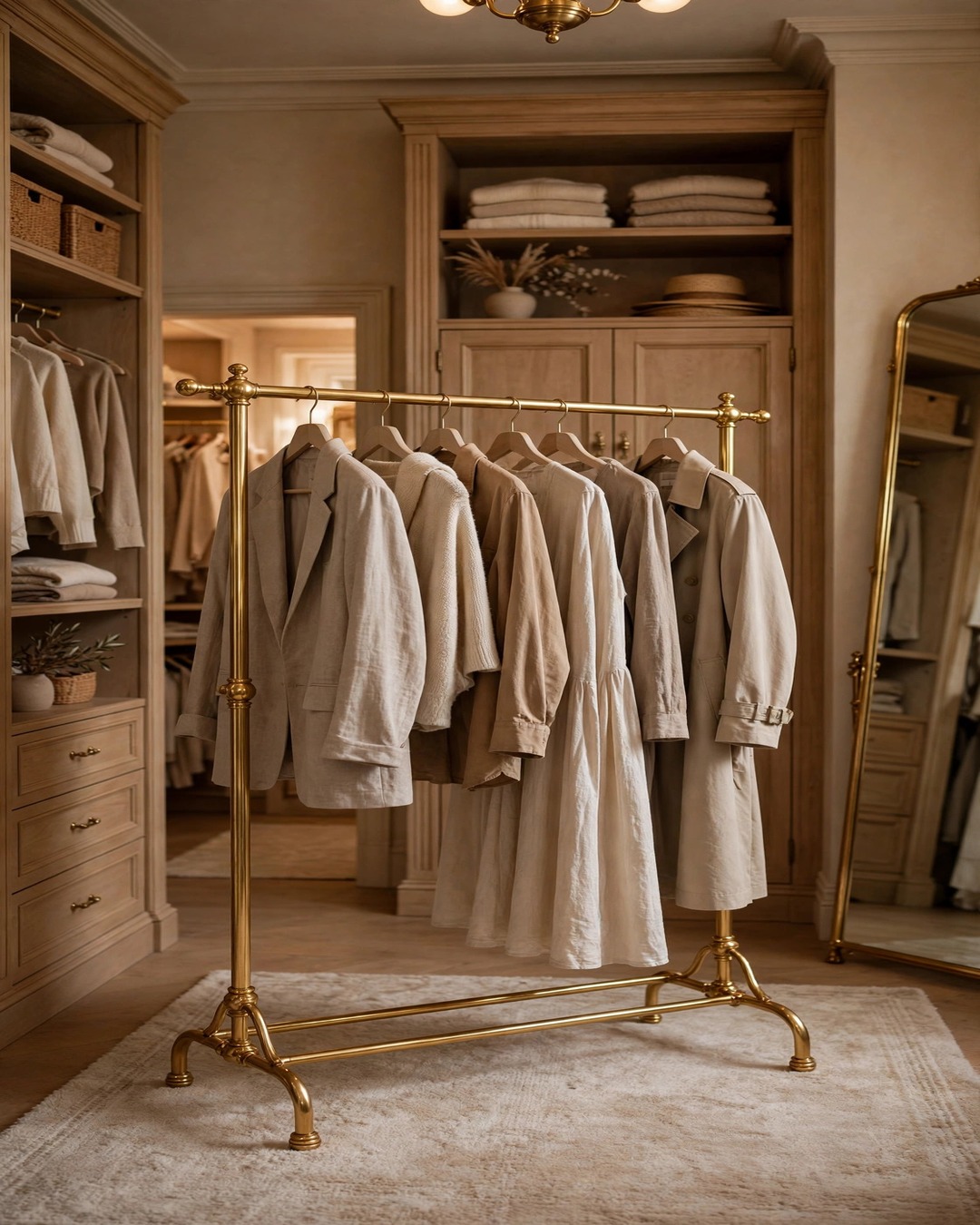
A single boutique-style clothing rack inside the walk-in closet is the difference between a storage room and a dressing room. Use it to stage tomorrow’s outfit, plan a week’s worth of work clothes, or hold new purchases until you find them a permanent home. It keeps the “chairdrobe” habit contained in one pretty spot instead of spreading across the bedroom.
Choose a sturdy rack in a finish that matches your closet – gold, black, or wood – and keep it curated rather than crammed. Five to seven pieces on a rack looks intentional; fifteen looks like overflow. This is also the perfect home for the pieces you reach for most often, so your daily routine barely touches the main closet.
11. Light It Like a Store
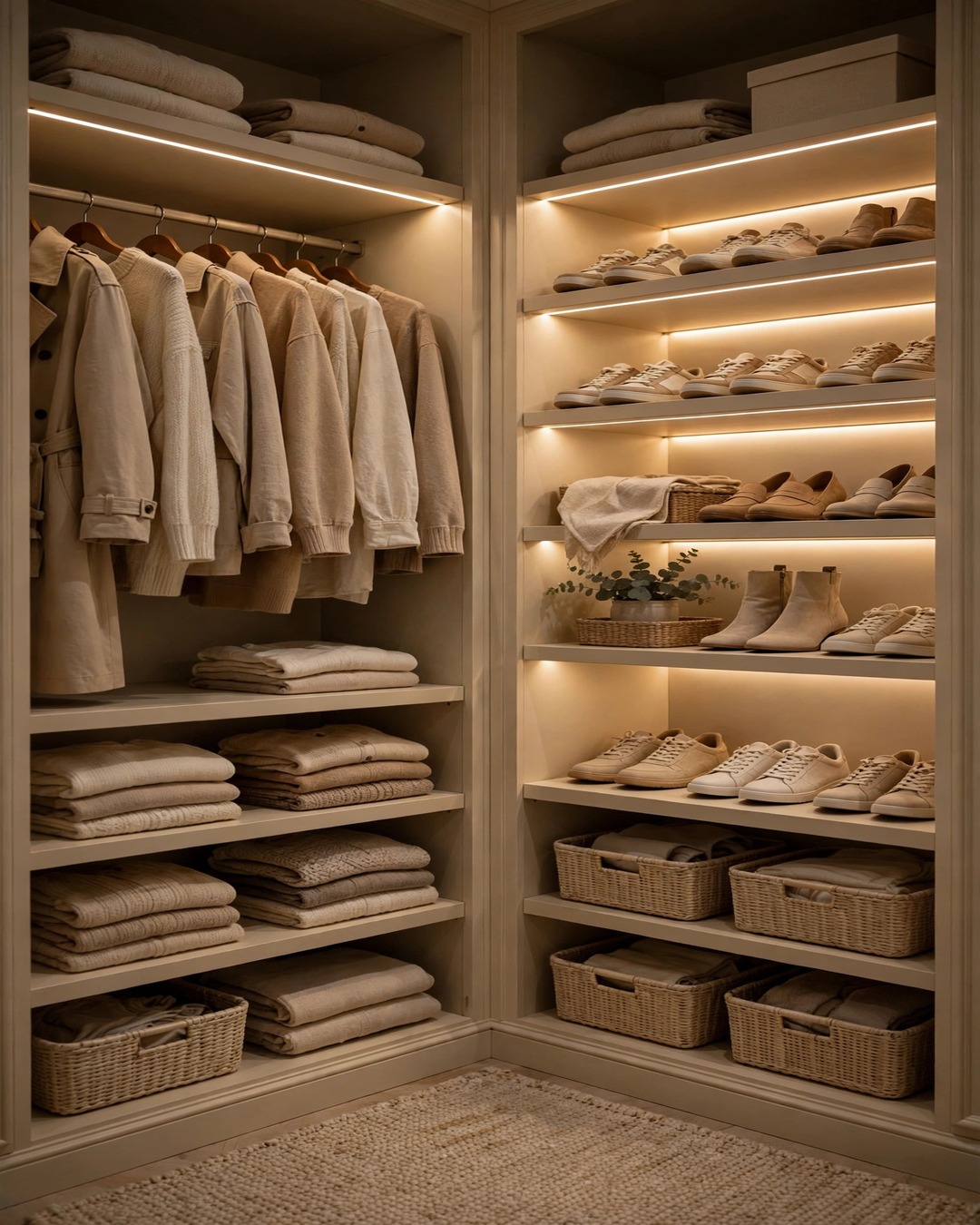
Closets are chronically under-lit, and bad lighting makes everything harder – colors look wrong, and you cannot tell navy from black. Battery-operated LED strip lights under each shelf and puck lights on dark walls cost little, need no electrician, and change the space completely. Warm white (not cool blue) keeps the cozy boutique feel.
Motion-sensor lights are the luxury touch that costs almost nothing: the closet glows when you walk in and turns itself off when you leave. If your closet has room, a small statement light – a mini chandelier or a pretty pendant – turns the walk-in into a room you enjoy being in. Lowe’s guide to designing a closet also recommends layering lighting and adding a bench or rug to make a walk-in feel like a real dressing space.
12. Add a Full-Length Mirror and Somewhere to Sit
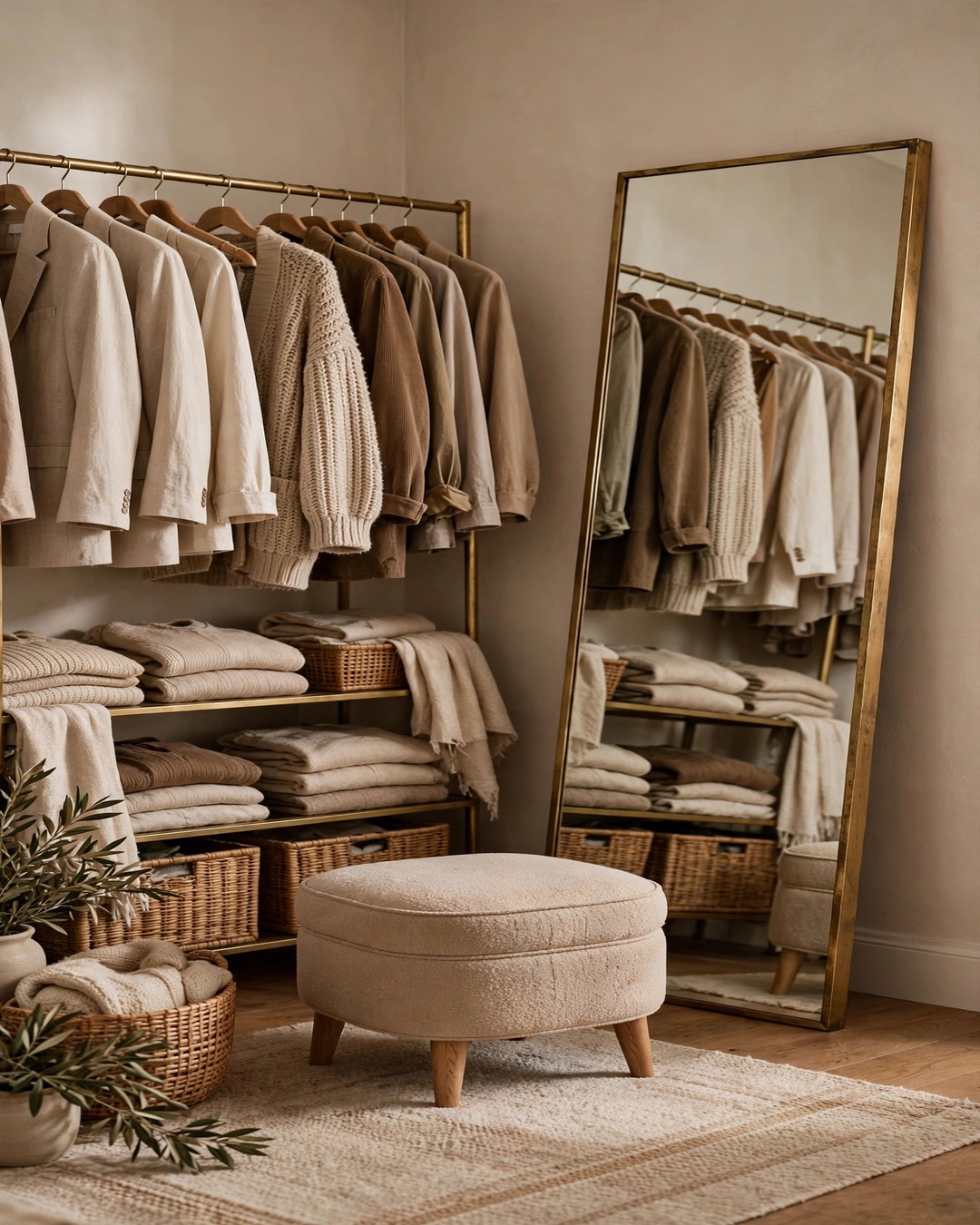
You cannot get dressed well in a room where you cannot see yourself. A full-length mirror – leaned against the wall, mounted on the door, or standing in a corner – is non-negotiable for a walk-in closet. It also bounces light around and makes a small closet feel twice its size.
Pair the mirror with somewhere to sit: a small ottoman, a storage bench, or even a sturdy pouf. A bench gives you a place to put on shoes and doubles as hidden storage for bags or off-season items. Add a soft rug underfoot and the closet stops feeling like a cupboard and starts feeling like a private dressing room.
13. Use the Back of the Door
The inside of the closet door is free real estate most people ignore. Over-the-door hooks hold tomorrow’s outfit, robes, or bags. A hanging fabric organizer with clear or labeled pockets swallows accessories, scarves, and small items that would otherwise clutter shelves.
If the closet has no door – many walk-ins are open – mount the same hooks and organizers on the nearest stretch of wall or the side of a shelving unit. The principle is the same: vertical surfaces that are not holding rods or shelves should be holding something, not standing empty.
14. Rotate Seasonally, Store Smart
A closet that holds all four seasons at once is a closet at half capacity. Twice a year, rotate: pack away the heavy coats and boots when warm weather arrives, and swap them back when it cools down. Store the off-season clothes in labeled bins on the top shelf or under the bed, clean and folded, so they come back fresh.
This rotation is also your built-in declutter reminder. When you handle every seasonal piece twice a year, you naturally notice what you never wore and what is worn out. Donate or repair as you rotate, and the closet stays at a size your system can actually handle.
15. Build a Ten-Minute Reset Routine
The most organized closet in the world still needs maintenance. The trick is making it tiny: a ten-minute reset, once or twice a week, keeps the system from sliding back into chaos. Hang up what belongs on hangers, re-fold the stacks that toppled, return shoes to their shelves, and put one load of laundry away instead of draping it over the rack.
Keep a small empty basket in the closet as a “deal with later” bin – for the shirt missing a button, the pants that need hemming, the scarf you borrowed. Empty it once a month. Systems survive when the upkeep is small enough to actually happen, and ten minutes is small enough.
Closet Zone Map
If you only take one planning idea from this article, take this one: give every zone of your closet a job. Use this map to assign each area before you start buying organizers.
| Closet zone | What belongs there | How to keep it organized |
|---|---|---|
| Top shelf | Off-season clothes, luggage, keepsakes | Matching lidded bins; step stool kept nearby |
| Eye-level hanging | Daily wear, work clothes | Matching slim hangers; double rods for short items |
| Long-hang section | Dresses, coats, jumpsuits | Single rod with clear floor space below |
| Open shelves | Folded knits, t-shirts, jeans | Shelf dividers; file-folded stacks |
| Drawers | Underwear, socks, accessories | Divider inserts; one compartment per category |
| Floor level | Daily shoes, rolling bins | Slanted shelves or cubbies; nothing loose |
| Back of door | Tomorrow’s outfit, robes, small items | Hooks or a hanging pocket organizer |
| Center space | Outfit rack, bench, mirror | Keep clear enough to stand and turn around |
How do I organize a small walk-in closet without a renovation?
Start with the no-drill wins: matching slim hangers, a tension-rod second rail, shelf dividers, and over-the-door hooks. These four changes alone can double your usable storage without touching the walls. Divide what is left into zones by clothing type, and use the top shelf for off-season bins so prime space goes to what you wear now.
What is the one change that adds the most hanging space?
A second hanging rod for short garments. Most closets hang one rod high enough for dresses, which wastes the space below every shirt and blouse. A lower rod – hung with chains from the shelf above or a sturdy tension rod – turns that dead air into a full second row of hanging space in under an hour.
How do I keep folded clothes on shelves from toppling?
Use shelf dividers to create cubby-like sections so stacks cannot lean into each other, and keep each stack short – around five to six items. File-folding (folding clothes so they stand upright in rows) also helps, because you pull from the front without disturbing the rest of the stack.
How should I organize shoes in a walk-in closet?
Match the storage to the shoe: slanted shelves for heels you want to see, flat cubbies for sneakers and flats. Keep daily pairs at the easiest height and occasion shoes up high. Never store shoes loose on the floor – pairs separate, get dusty, and get damaged. If the closet overflows, keep the most-worn pairs by the front door instead.
How often should I declutter my closet?
Do a quick edit with every seasonal rotation – twice a year – when you are already handling every piece. Pull out anything you did not wear that season, anything damaged beyond repair, and anything that no longer fits. A small ongoing habit helps too: when something new comes in, one similar old item goes out.
How do I make a walk-in closet look boutique-like on a budget?
The boutique look comes from consistency, not cost: matching hangers, matching bins, clothes arranged by color, warm LED lighting, and a full-length mirror. Thrift stores are excellent sources for matching baskets and wooden hangers. A small rug and one styled shelf with a plant or a framed print finish the look for very little.
Final Thoughts
A walk-in closet earns its footprint when every item has a home and getting dressed takes minutes instead of a treasure hunt. You do not need a big budget or a contractor – just the sequence in this guide: declutter first, double the hanging space, zone the closet, contain the small stuff, light it well, and keep it up with a ten-minute reset. Start with the hangers and the second rod this weekend, and the rest will follow naturally. Your mornings are about to get much easier.