
15 Neutral Dining Room Decor Ideas

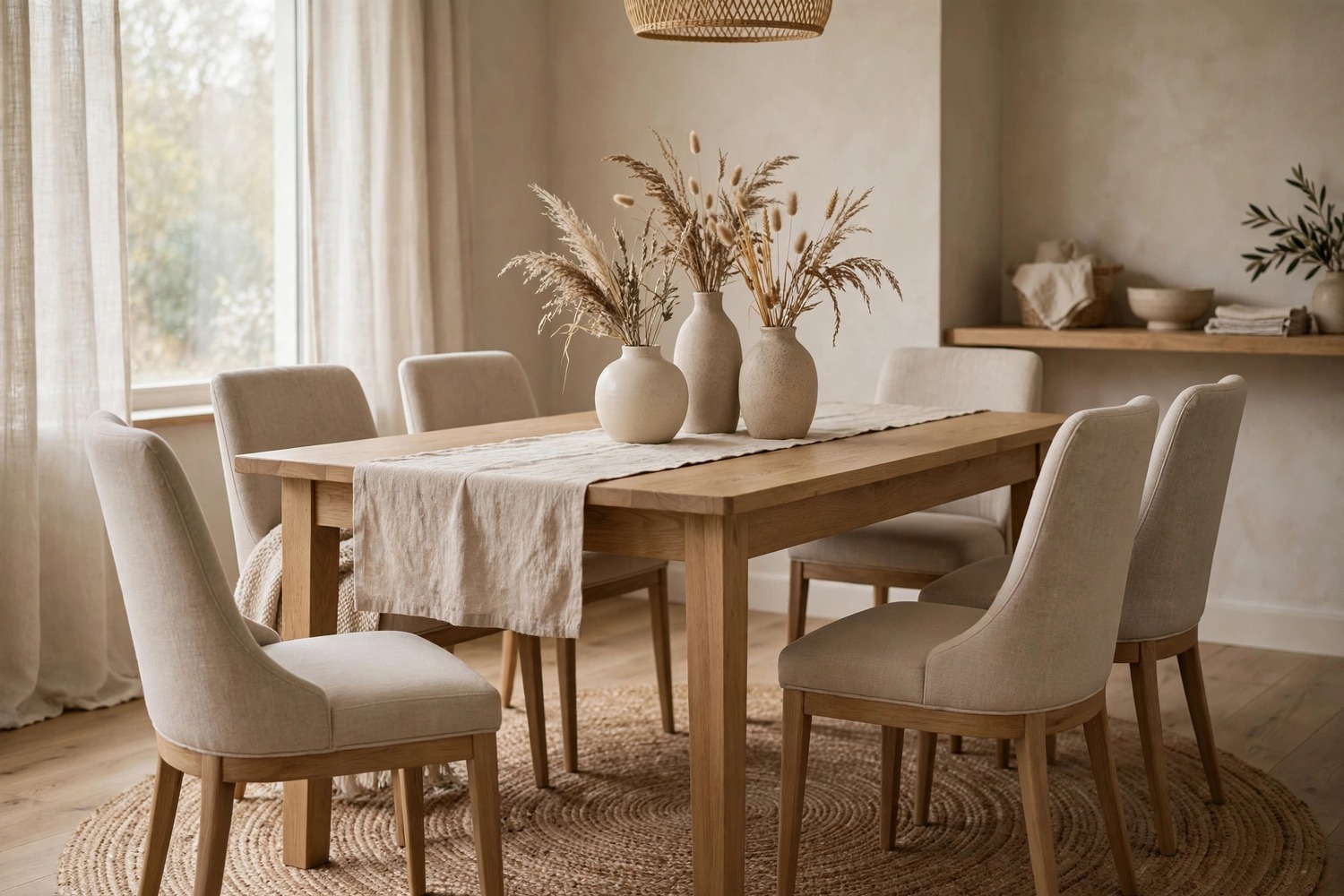
There is a reason neutral dining rooms photograph so beautifully: nothing in them shouts, so everything in them glows. Candlelight, warm wood, and linen that wrinkles the way linen should: a neutral dining room decor plan is not about playing it safe, it is about letting the room do the entertaining while you enjoy the dinner.
A warm-neutral dining room works in almost any home. Whether your dining area is a grand room with a chandelier or a table squeezed next to the kitchen, the same pieces keep showing up: a linen-covered table, wooden furniture, comfortable chairs, and light that flatters the food and the faces around it.
These 15 ideas build that room piece by piece, from the tablecloth up. Start wherever your room needs it most, and before long the dining table becomes the most-used seat in the house. If your dining space is on the small side, my small dining room tour shows how the same warm neutrals stretch in tight corners.
Key Takeaways
- Let natural materials lead: a wooden table, linen textiles, woven baskets, and dried stems instead of fresh flowers.
- Mix and match dining chairs for a collected, unfussy look that feels gathered over time.
- Hang one warm pendant low over the table and add candlelight for dinners that feel special nightly.
- Keep a runner on the table between meals so the room never looks bare or unfinished.
- Finish with calm art and one big mirror to double both the light and the sense of calm.
1. Dress the Table With a Washed Linen Tablecloth
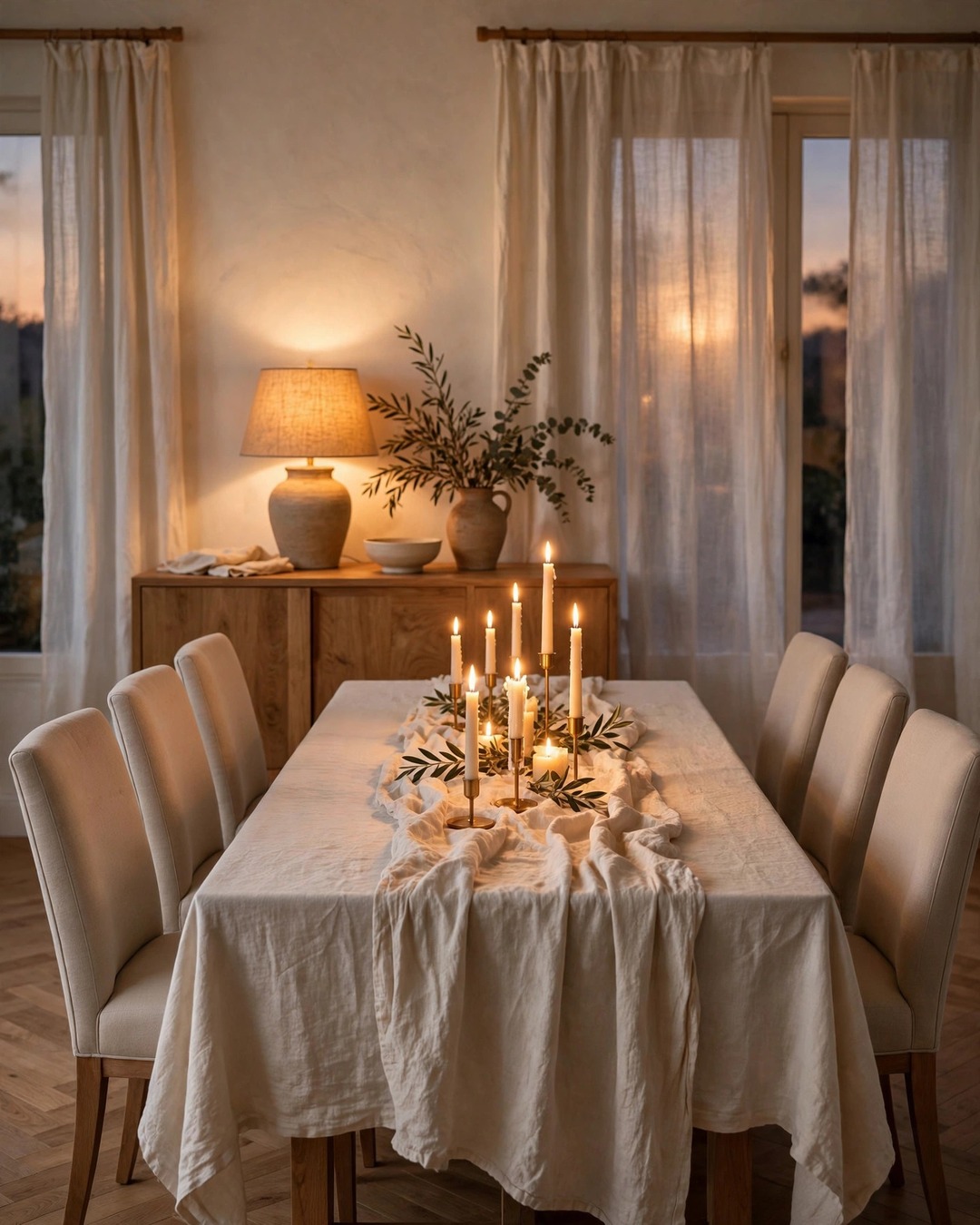
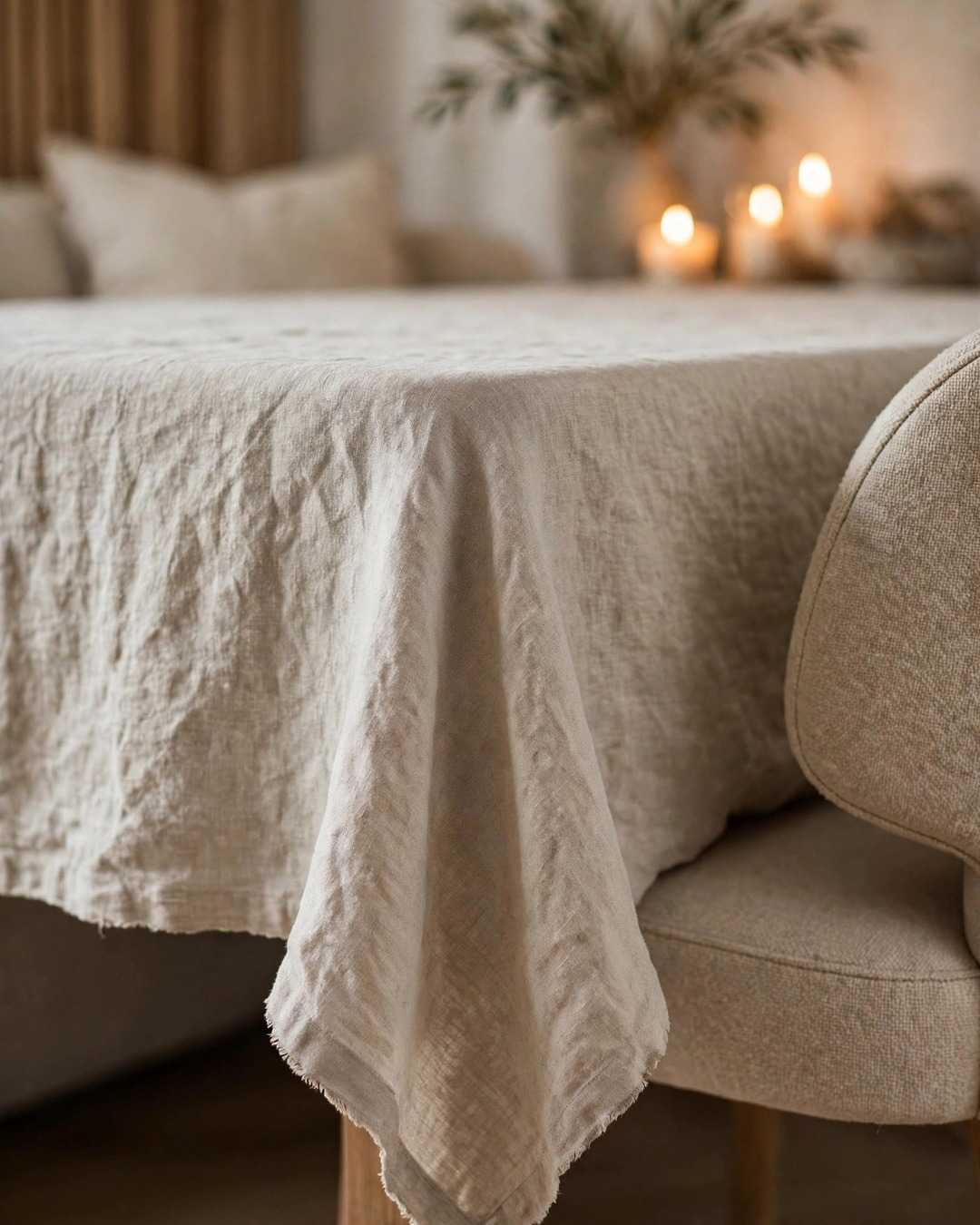
A linen tablecloth changes a dining room more than any piece of furniture can. It softens the table’s edges, quiets the clink of plates and glasses, and gives the whole room a foundation of texture. Washed linen in ivory, oat, or stone is the sweet spot, it wrinkles in a way that looks intentional, never messy.
Choose a cloth that drops eight to ten inches over the edge on each side. Shorter looks stingy, and a full floor-length drop belongs in formal rooms. For everyday life, machine-washable linen is the practical pick, and it only gets softer with every wash. Skip crisp bright white if your household is busy, warm whites hide more and feel cozier.
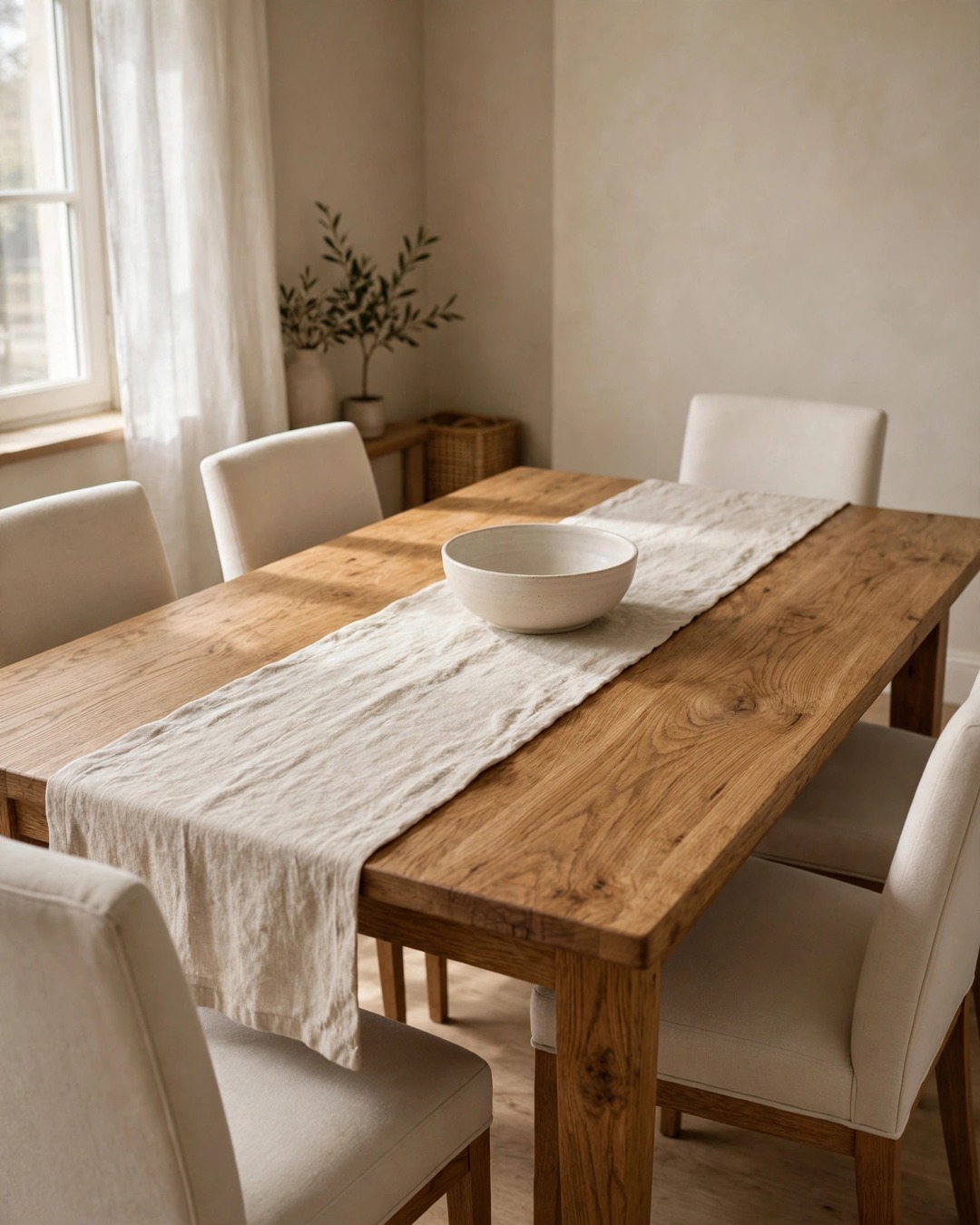
If a full cloth feels like too much, a linen runner down the center gives you the same warmth with the wood still showing on either side. Keep a second runner in a different neutral, a thin stripe, a subtle check, and rotate them through the week. It takes ten seconds and makes the table feel reset.
2. Let a Wooden Dining Table Carry the Room
In a neutral dining room, the table is the biggest piece of furniture and the most important surface, so the wood you choose sets the tone. Warm woods, oak, walnut, ash, acacia, keep the palette from drifting cool. Look for visible grain and a finish that feels hand-touched rather than glossy.
Size the table to the room, not to your guest list. A table that seats six every day is better than an eight-seater that crowds the walls. Leave at least 36 inches between the table edge and the wall so chairs can pull out without a shuffle. An extendable table handles holiday crowds without dominating everyday life.
Treat the wood like the hardworking surface it is. Felt pads under centerpieces stop scratches, and a quick wipe after meals keeps the finish bright. A wooden table that shows a little wear reads as a loved one, not a damaged one, but the wear should come from dinners, not from dragging.
3. Mix and Match Your Dining Chairs
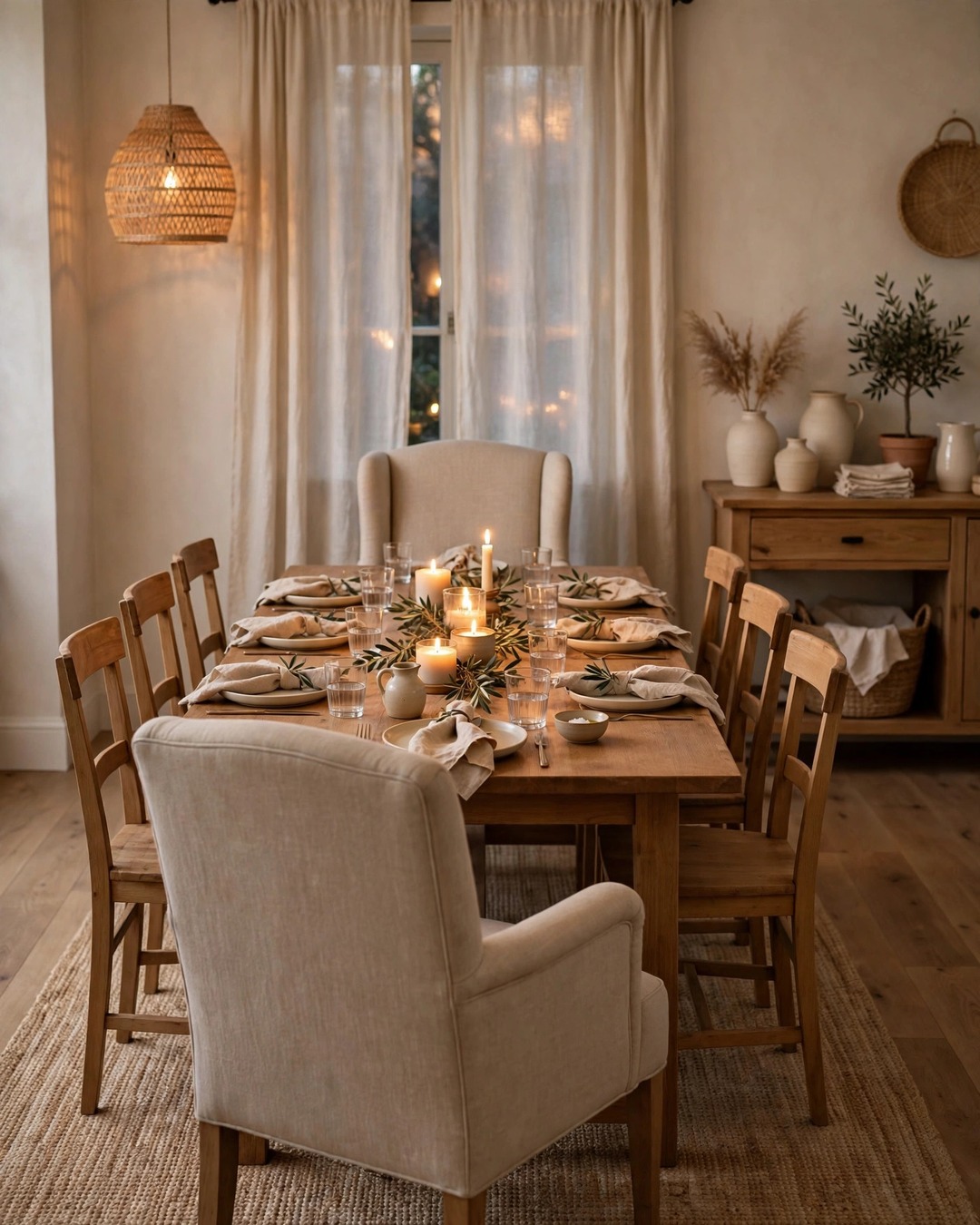
Matching chair sets had their moment, and it passed. A neutral dining room looks richer with chairs that complement rather than clone each other: upholstered host chairs at the ends, simple wooden side chairs along the sides, maybe a bench on one long edge for easy extra seating.
Keep one element consistent so the mix reads as a plan. Match the chair heights, repeat one fabric across different frames, or keep everything inside the same neutral family while the silhouettes vary. The Spruce’s designer roundup on timeless dining rooms makes the same point: collected-looking chairs feel like they evolved over time rather than arriving in one box.
Upholstered chairs earn their place at a dining table. A padded seat turns a forty-minute meal into a two-hour conversation, and linen or cotton slipcovers can be removed and washed. If you are mixing in wooden chairs too, add flat seat cushions in a natural fabric so no one gets the bare-wood seat for the whole dinner.
4. Slip a Soft Rug Under the Table
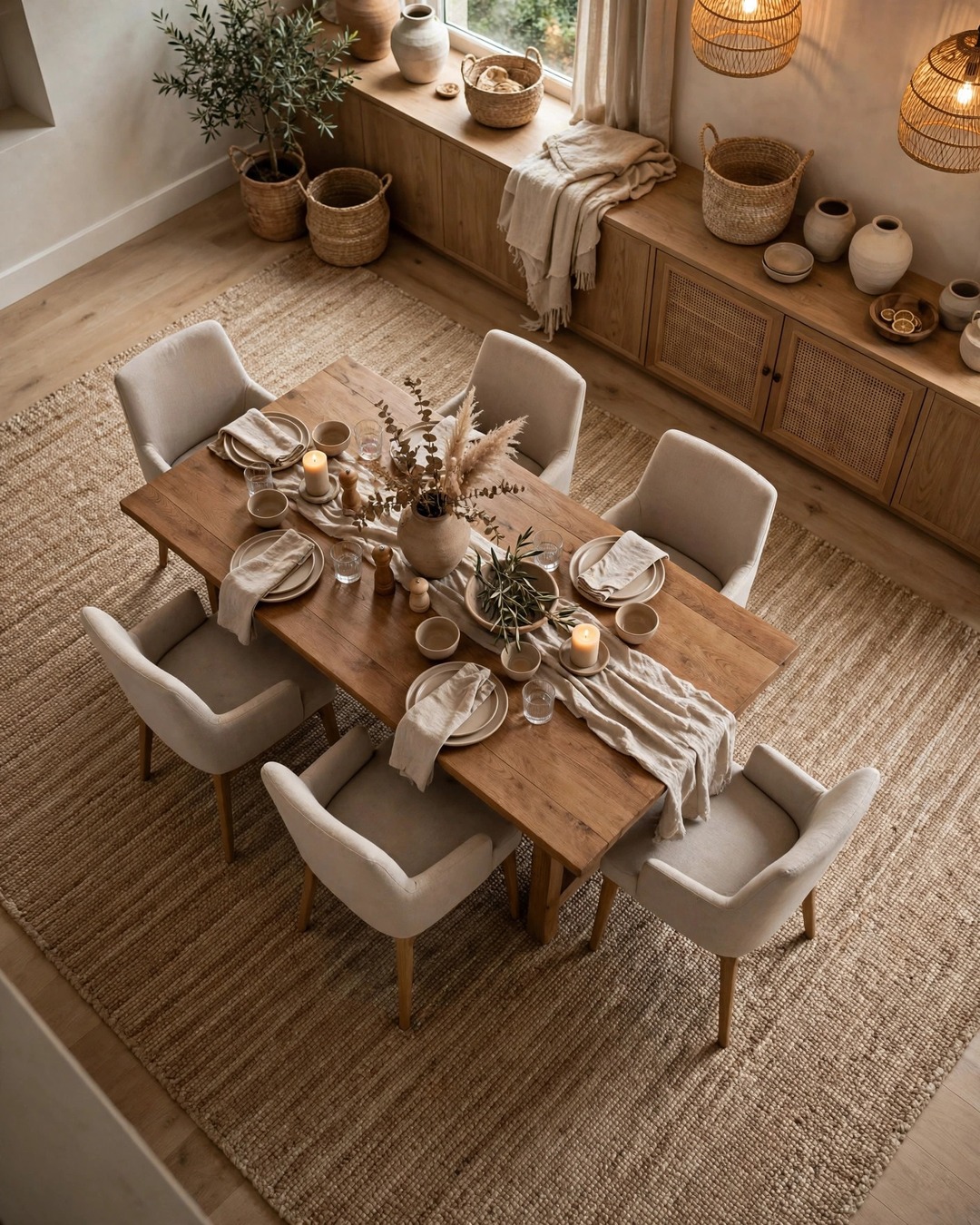
A rug under the dining table does three jobs at once: it defines the dining zone inside an open plan, it softens the scrape of chairs, and it adds the largest single patch of texture in the room. In a neutral palette, choose a low-pile flatweave in jute, wool, or cotton so chairs glide over it.
Size it generously. The rug should extend at least 24 inches past the table on all four sides so chair legs stay on the rug when people push back. A too-small rug catches chair legs and looks like an afterthought; a properly sized one makes the whole grouping feel intentional.
Pattern in a neutral dining room should whisper: a faint stripe, a tone-on-tone diamond, a subtle border. Spills are inevitable where food is served, so pick a rug that forgives, darker oatmeal weaves and indoor-outdoor flatweaves clean up far more easily than pale high-pile wool.
5. Build a Candlelight Centerpiece You Can Eat Around
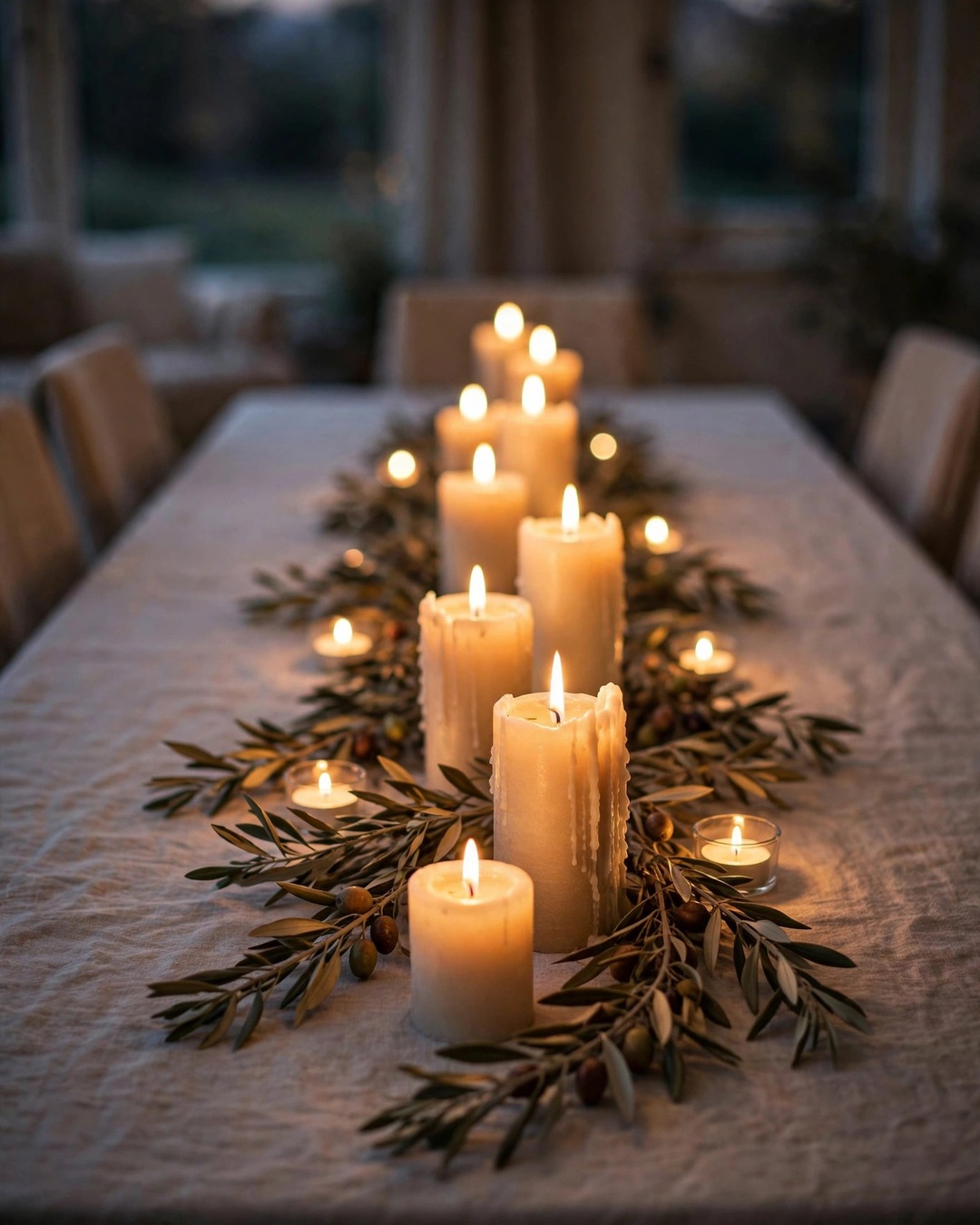
The best dining room centerpiece is one you never have to move at mealtime. Instead of a tall arrangement that blocks faces, build a low line down the table’s center: a runner of pillar candles in varied heights, a few tea lights, and something natural tucked between them, dried stems, a small bowl of nuts in the shell, a garland of olive branches.
Keep the centerpiece under twelve inches tall. Anything higher interrupts conversation, and dinner conversation is the whole point of the room. Flameless candles are convincing for everyday use, but real tapers on guest nights make the table feel like an occasion. Never place candles where a sleeve might brush them.
Set the whole arrangement on a tray or shallow bowl. The tray corrals wax drips and makes clearing the table a one-lift job. On nights when the table needs every inch, lift the tray onto the sideboard and the centerpiece survives intact, ready to come back after dessert.
6. Style a Sideboard for Serving and Storage
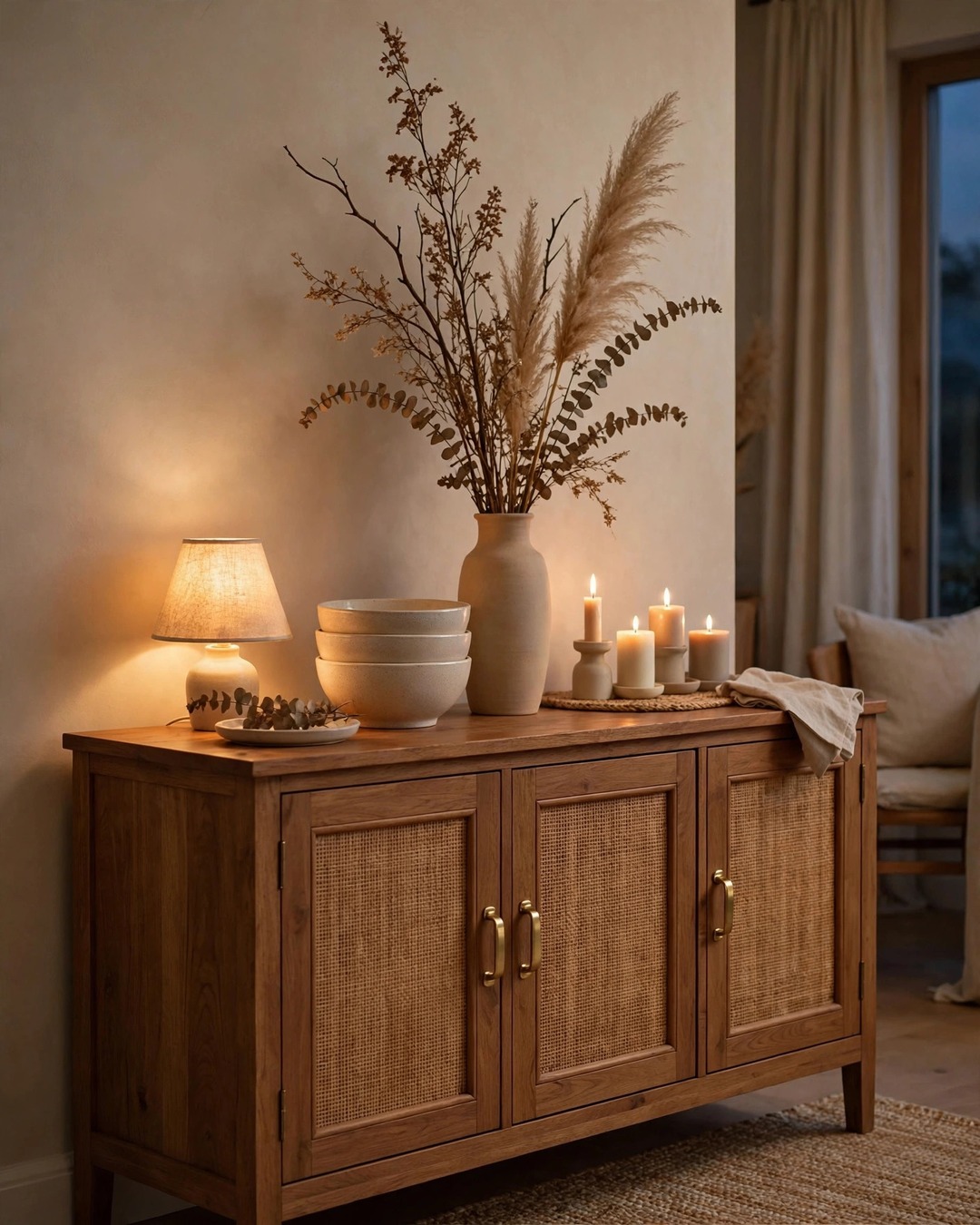
Every neutral dining room deserves a sideboard. It holds the linens, the serving dishes, and the candle supply that keep the table ritual running, and its top is the room’s second stage: a place for a lamp, a stack of bowls, and whatever the centerpiece becomes when dinner is served.
Style the top in layers. Put something tall at one end, like a lamp or a large vase of branches; something low and wide in the middle, like a stack of serving bowls or a row of candles; and leave breathing room at the other end. The piece should look ready for work, not like a museum shelf.
If your room has no sideboard, a thrifted dresser or console against the wall does the same job. My thrift store decor guide has tips for spotting solid wood pieces worth bringing home, look for dovetail drawers and real wood backs, the signs of furniture built to last.
7. Hang a Warm Pendant Low Over the Table
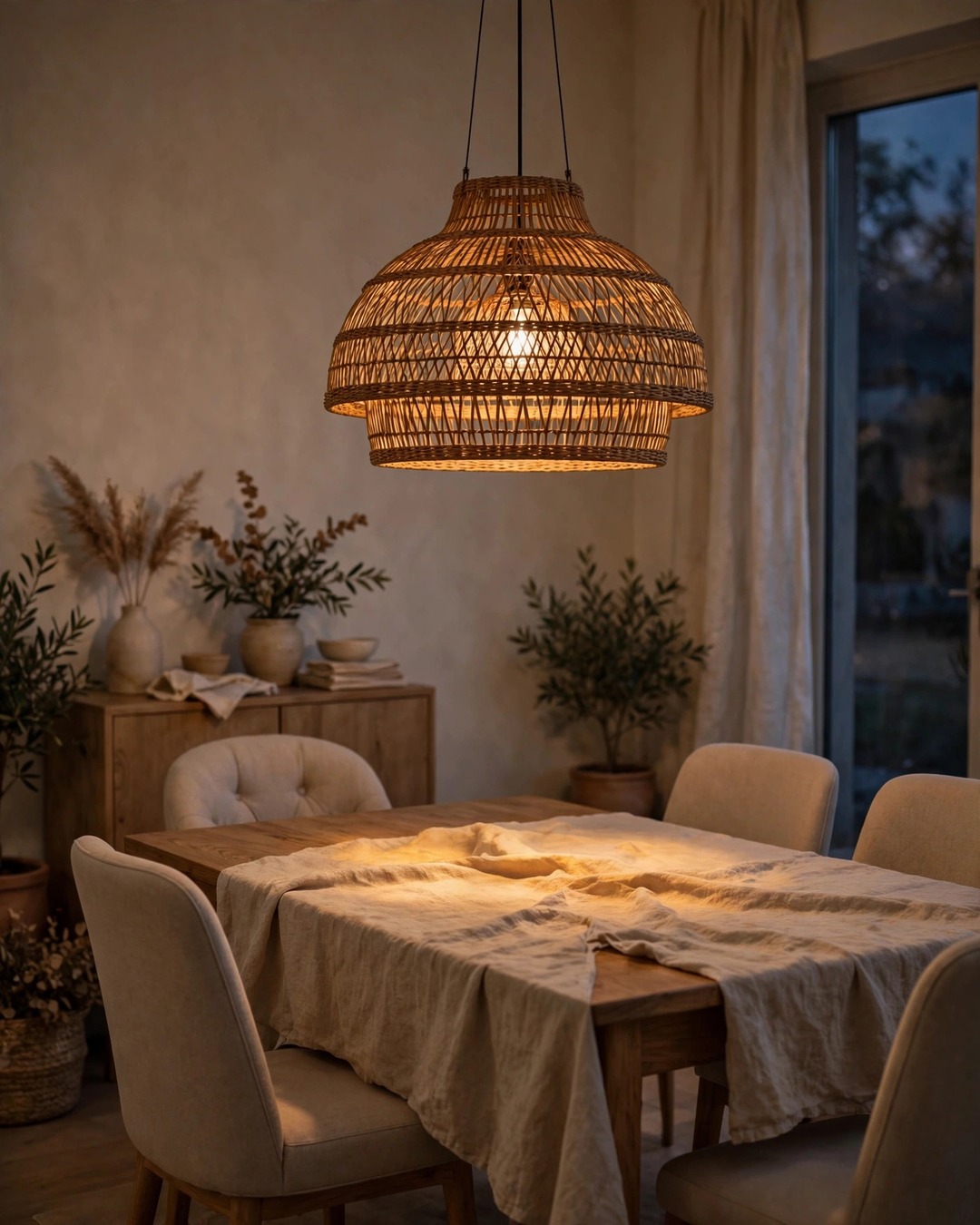
The pendant over the dining table is the room’s jewelry. It marks the table as the center of the room, and when it hangs low enough, about 30 to 36 inches above the tabletop, its light lands on faces and food instead of washing out the ceiling.
In a neutral room, the pendant’s material does the styling. Woven rattan or seagrass brings warmth, linen or paper shades soften the light, aged brass adds a quiet glow. Skip cool chrome and bare white globes, which push a warm-neutral room toward the cold side of the spectrum.
Put the pendant on a dimmer. This is the single most effective upgrade in any dining room, because dinner needs less light than homework. Bright for setup, low for the meal, and the room changes mood without moving a single chair. If your rental forbids wiring changes, plug-in pendant kits that hook over a ceiling hook give you the look without an electrician.
8. Soften the Windows With Sheer Linen Panels
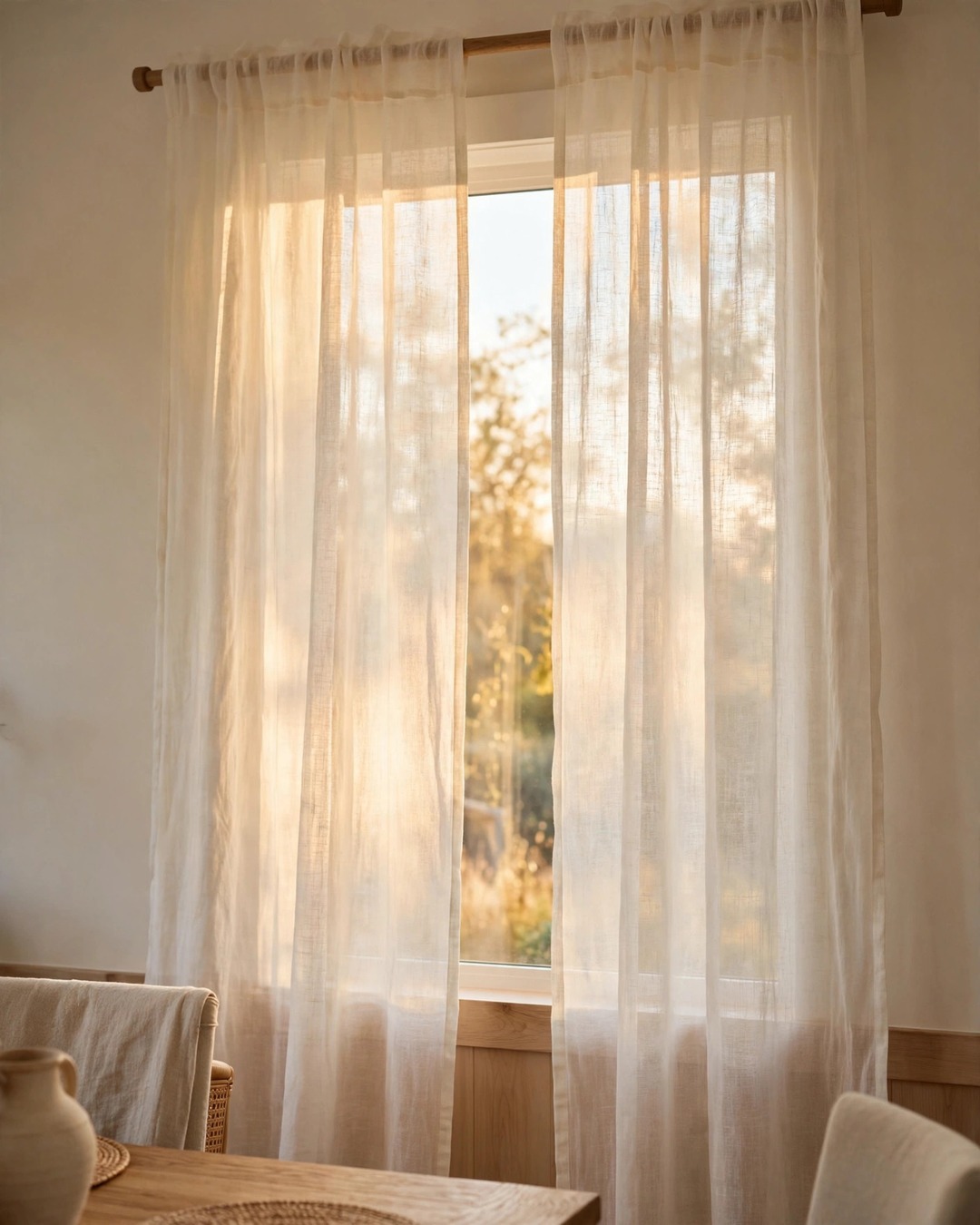
Heavy curtains make a dining room feel like a banquet hall. Sheer or semi-sheer linen panels do the opposite: they filter daylight into something golden, keep the room bright, and give evening candles a soft backdrop instead of black glass. Hang them high and wide so the window reads larger than it is.
Choose warm whites and ivories, not bright optic white, which can look bluish against beige walls. Linen’s natural slubs and wrinkles are part of the charm, press them once after washing and let them relax. If privacy matters at night, layer a simple roller shade behind the sheers for the evenings.
For a finished look without a valance, extend the curtain rod six to eight inches past the window frame on each side and let the panels stack mostly on the wall when open. The window stays bright, the walls gain softness, and the whole room feels dressed even in daylight.
9. Lean Into a Big Mirror for Double Light
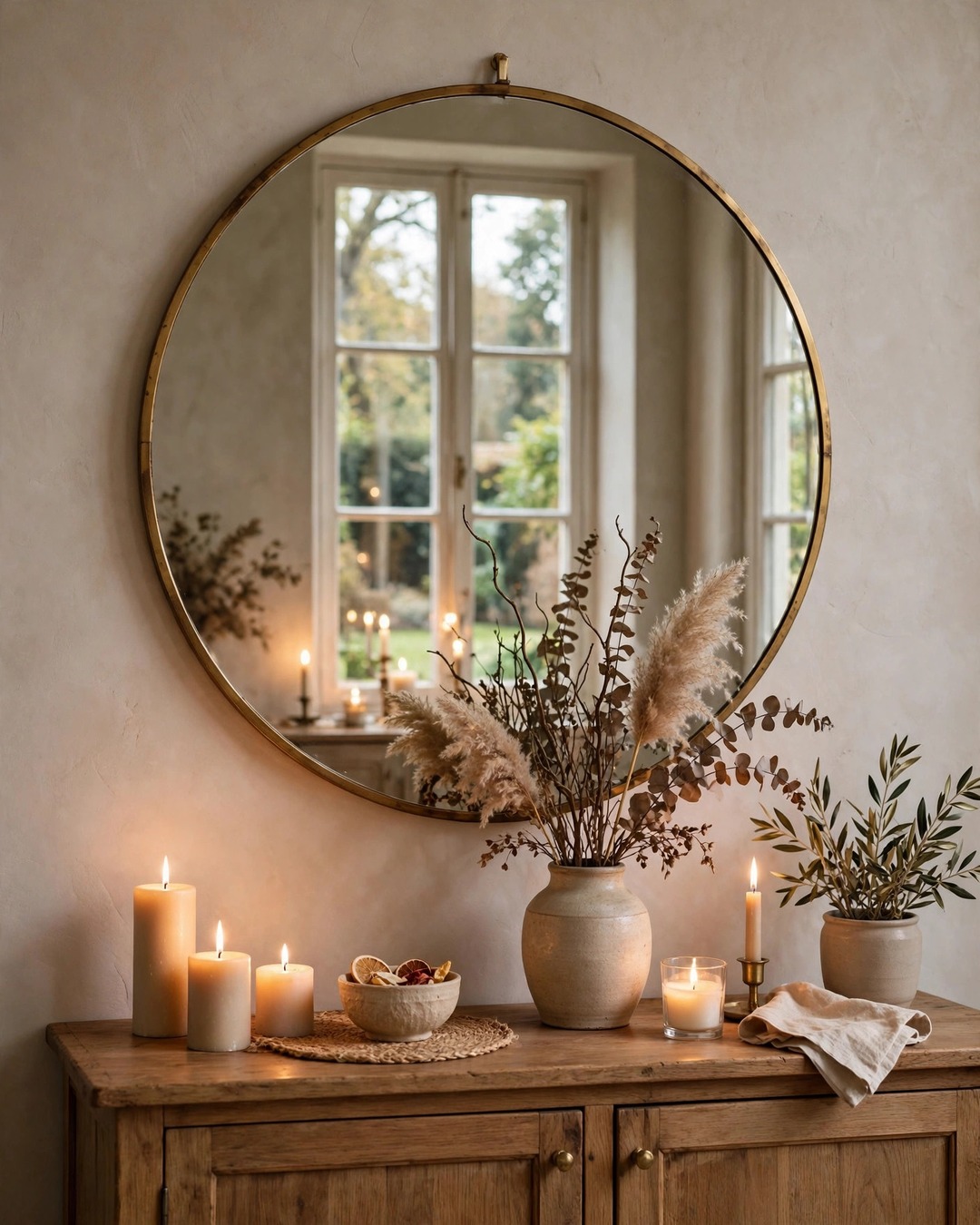
A large mirror is the oldest trick in the dining room book, and it still works. Hung where it catches the window or the pendant, it doubles the room’s light and makes a modest dining room feel twice as generous. Candlelight reflected in glass is the reason restaurants hang mirrors, the flicker multiplies.
Go big or skip it. A mirror that is at least half the width of the sideboard or table it hangs over reads as architecture; a small one reads as a decoration that got lost. Round mirrors soften rooms full of rectangles, while tall arched mirrors add height to low ceilings.
Keep the reflection worth looking at. Angle the mirror toward the pendant, the window, or the prettiest corner, not toward the kitchen mess or the hallway clutter. Clean it with a damp microfiber cloth rather than glass spray, which leaves a film that dulls candlelight.
10. Keep a Runner on the Table Between Meals
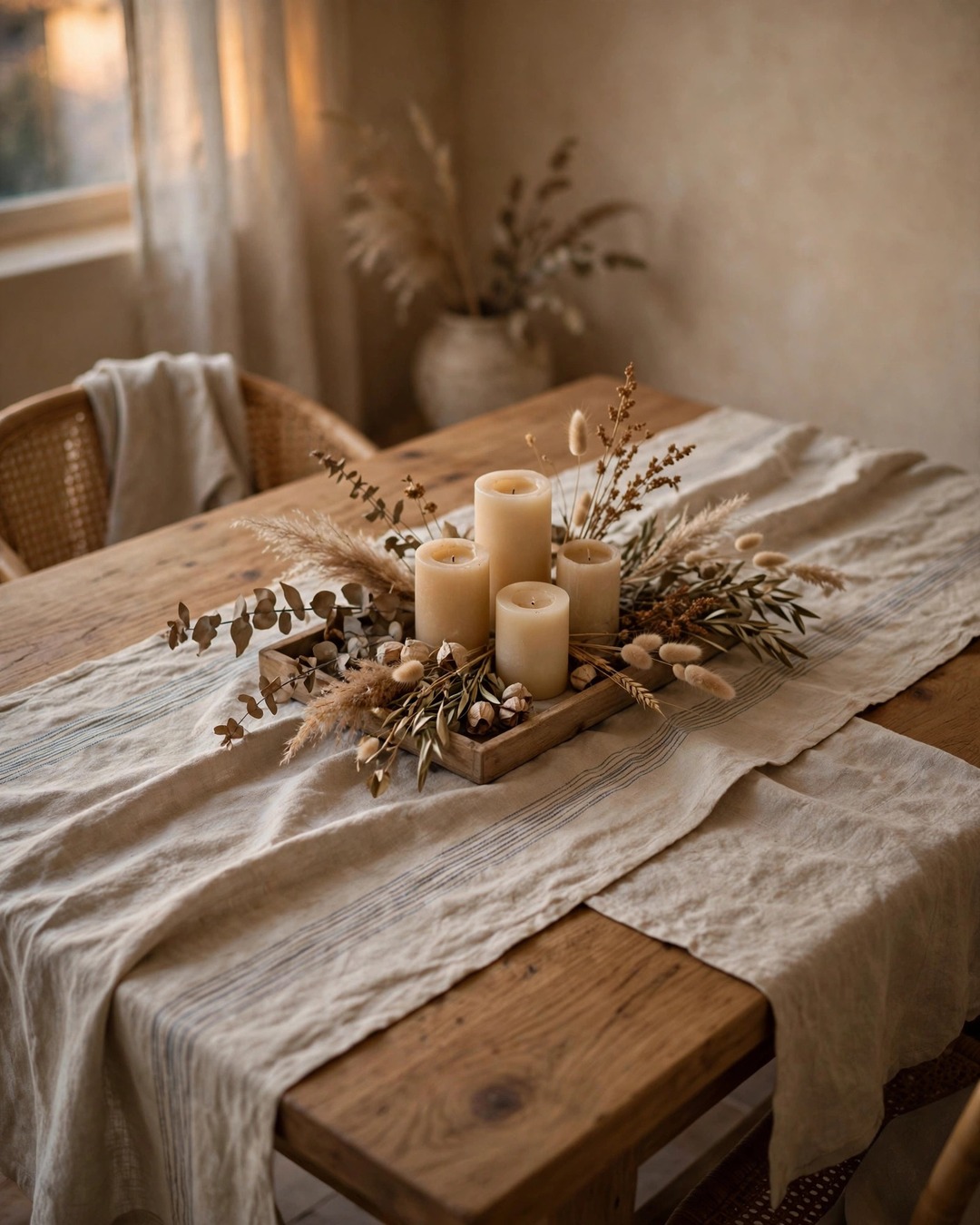
A dining table looks unfinished when it sits bare between meals, and a runner fixes that in seconds. A strip of natural linen, cotton, or gauze down the center keeps the table dressed even when nothing is happening, and protects the wood from the mail, the keys, and the homework that land there.
This is the place for subtle pattern. A thin ticking stripe, a woven check, a raw fringe edge, all of it stays inside the neutral family while giving the eye something to land on. Rotate runners with the seasons: lighter weaves in spring, heavier textures in winter.
Layer the runner under the centerpiece rather than instead of it. The candle tray sits on the runner, the runner softens the tray’s edges, and the whole table reads as styled without a single thing being fussy. When company comes, the runner stays and the place settings build on top of it.
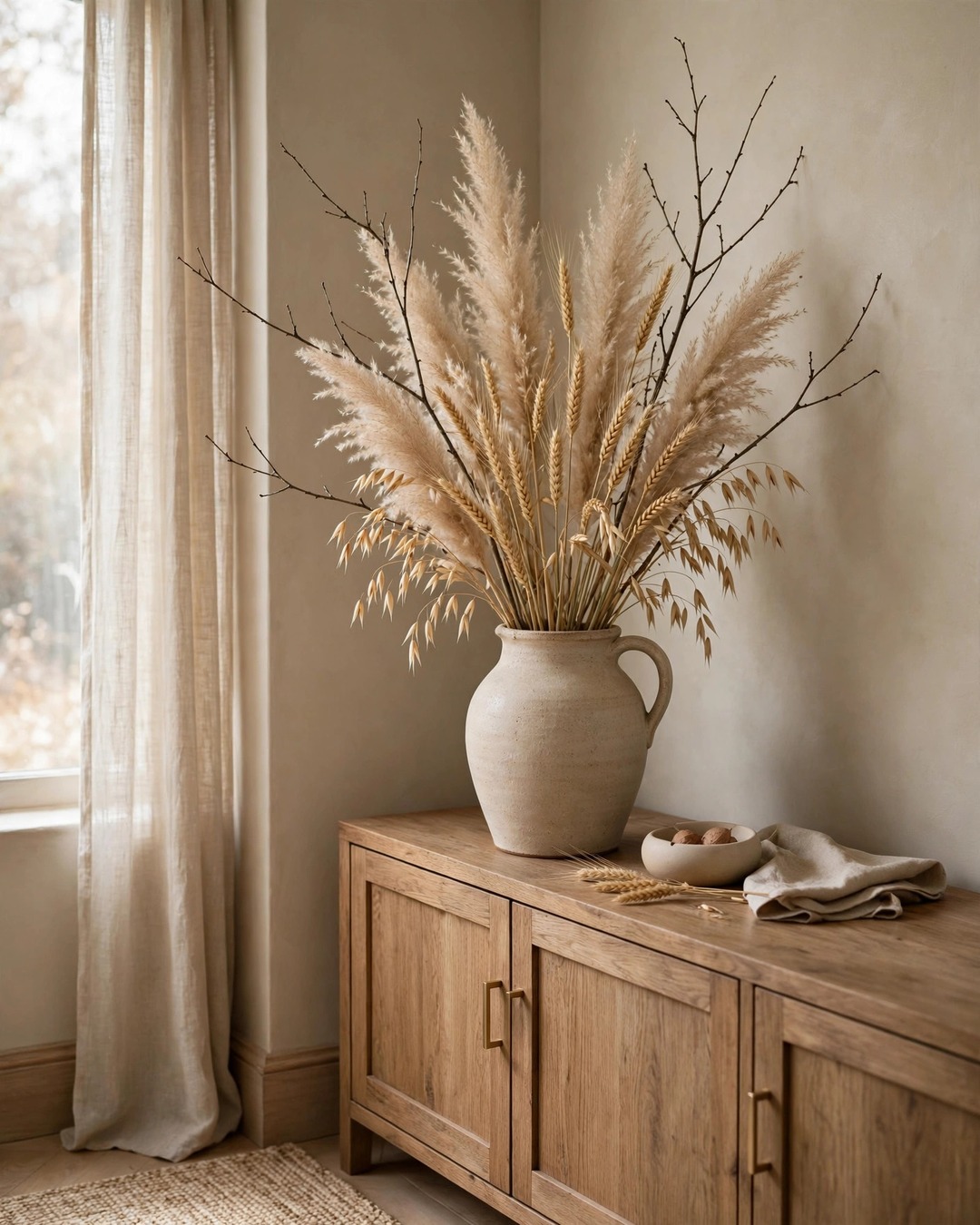
11. Arrange Dried Stems and Branches, Not Flowers
Fresh flowers are lovely, but they last a week and demand a vase that suits them. Dried stems, pampas grass, wheat, eucalyptus, bunny tails, bare branches, last for months and suit a neutral dining room’s quiet mood perfectly. Their muted tones belong in the palette instead of arguing with it.
Scale the arrangement to the table. A single tall branch in a floor vase beside the sideboard makes a statement; a low bowl of wheat sits happily as part of the centerpiece. Cut stems shorter than you think, arrangements that stay below eye level across the table never interrupt a conversation.
Refresh the look by rotating the vessel, not the stems. The same pampas grass reads differently in a ceramic jug, a glass cylinder, or a woven basket. Dust dried arrangements with a cool hairdryer now and then; they collect dust like anything else that sits still.
12. Set the Table Every Night, Not Just for Guests
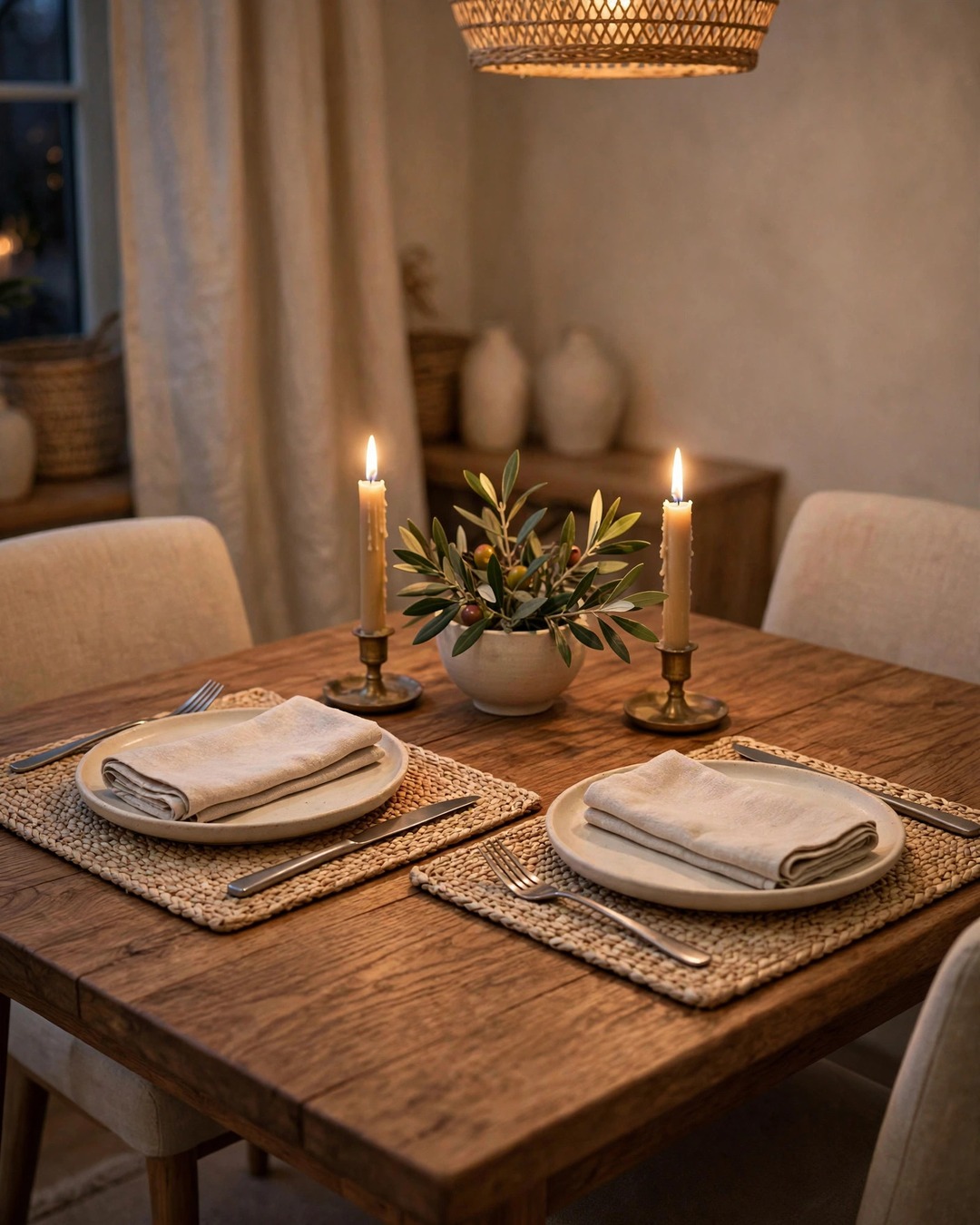
Here is the idea that changes how a dining room feels: set the table every evening, even for a Tuesday. Placemats, real plates, folded napkins, a candle lit, the full small ritual. A dressed table pulls everyone to sit down together instead of scattering with plates to other rooms.
Keep it simple enough to repeat. Woven placemats, everyday stoneware, cloth napkins in a basket by the sideboard, and two candlesticks you light at dinner and blow out after. Apartment Therapy’s guide to setting the table like a design pro is full of small methods that make the routine feel special without adding chores.
This habit is also the cheapest decor there is. A table that is set every night always looks styled, guests or no guests. My cozy dining corner for slow mornings makes the same case for breakfast, the meal is the decor, and the table is the stage.
13. Tuck Woven Baskets Into the Corners
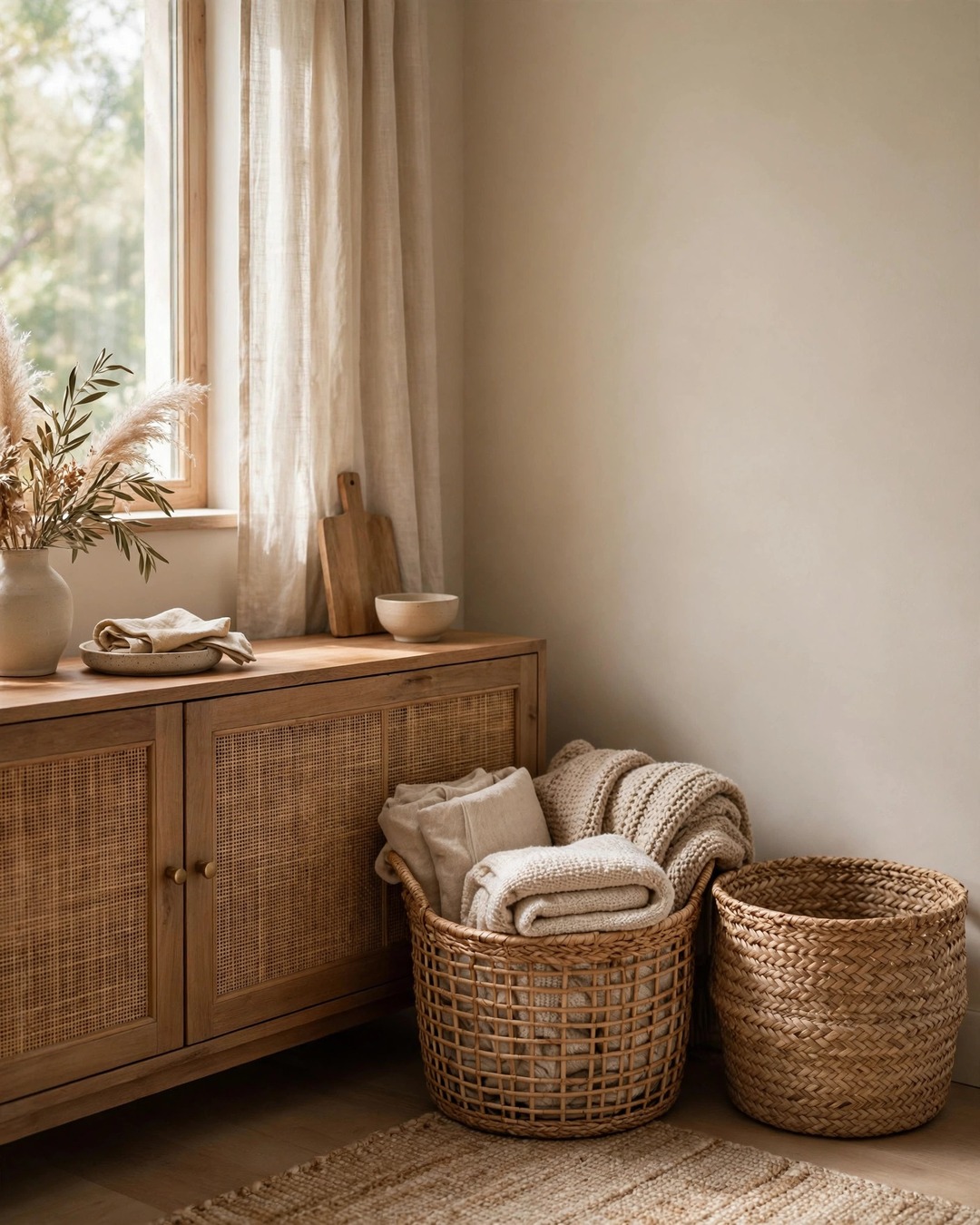
Every dining room has a corner that holds nothing, or worse, collects clutter. A large woven basket fixes both. It stores the spare throws, the board games, the picnic blanket, or the kids’ craft supplies, everything the dining room absorbs, and it does it in a texture that belongs in the room.
Choose baskets with tight weaves in seagrass, jute, or rattan. They should be sturdy enough to carry, because the best basket is one you actually move: the throw basket lives by the sideboard in winter and travels to the porch in summer. Skip shiny lacquered weaves, which fight the room’s matte softness.
Use baskets at the table too. A small bread basket lined with a linen napkin, a basket of cloth napkins by the sideboard, a lidded basket for the candle supply, these small repeats of the same material are what make a room feel pulled together instead of decorated in isolated spots.
14. Create a Small Drinks Station on a Cart
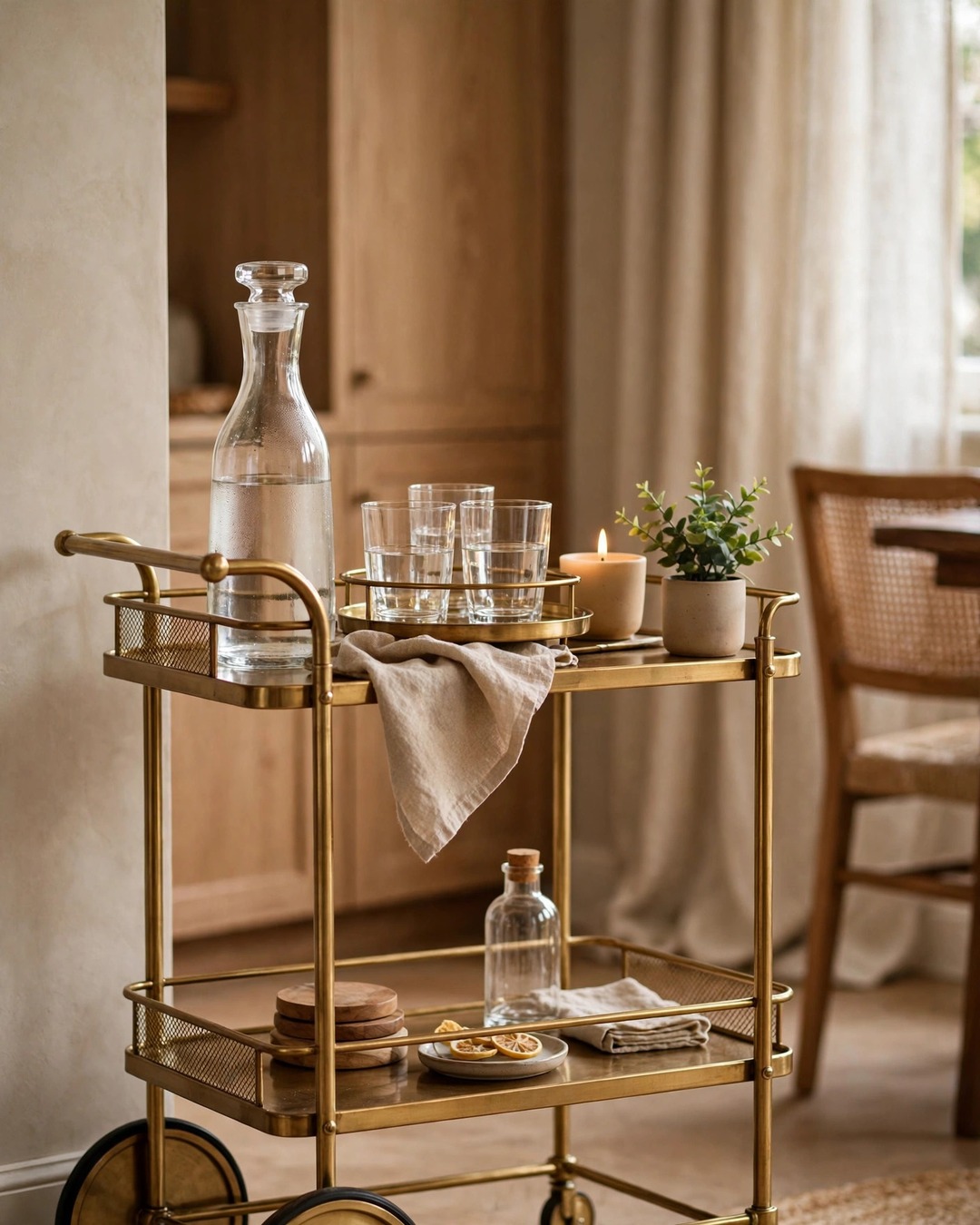
A bar cart or small side table dressed as a drinks station gives the dining room a job beyond dinner. Stock it with a carafe of water, a few glasses, and whatever the household drinks in the evening, sparkling water, lemonade, wine, and the room becomes the natural gathering spot before and after meals.
Style the cart the same way you style the sideboard: one tall element, a few medium pieces, and space to actually use it. A small tray holds the glasses, a linen cloth softens the top shelf, and a tiny plant or candle makes it look intentional rather than stocked. Brass or warm metal details tie it to the rest of the room.
Keep the cart mobile. When the table extends for guests, the cart rolls to the corner; when it is just family, it parks beside the table as a serving helper. If a full cart is too much, a single tray on the sideboard does the same job in a smaller footprint.
15. Finish With Art That Feels Calm
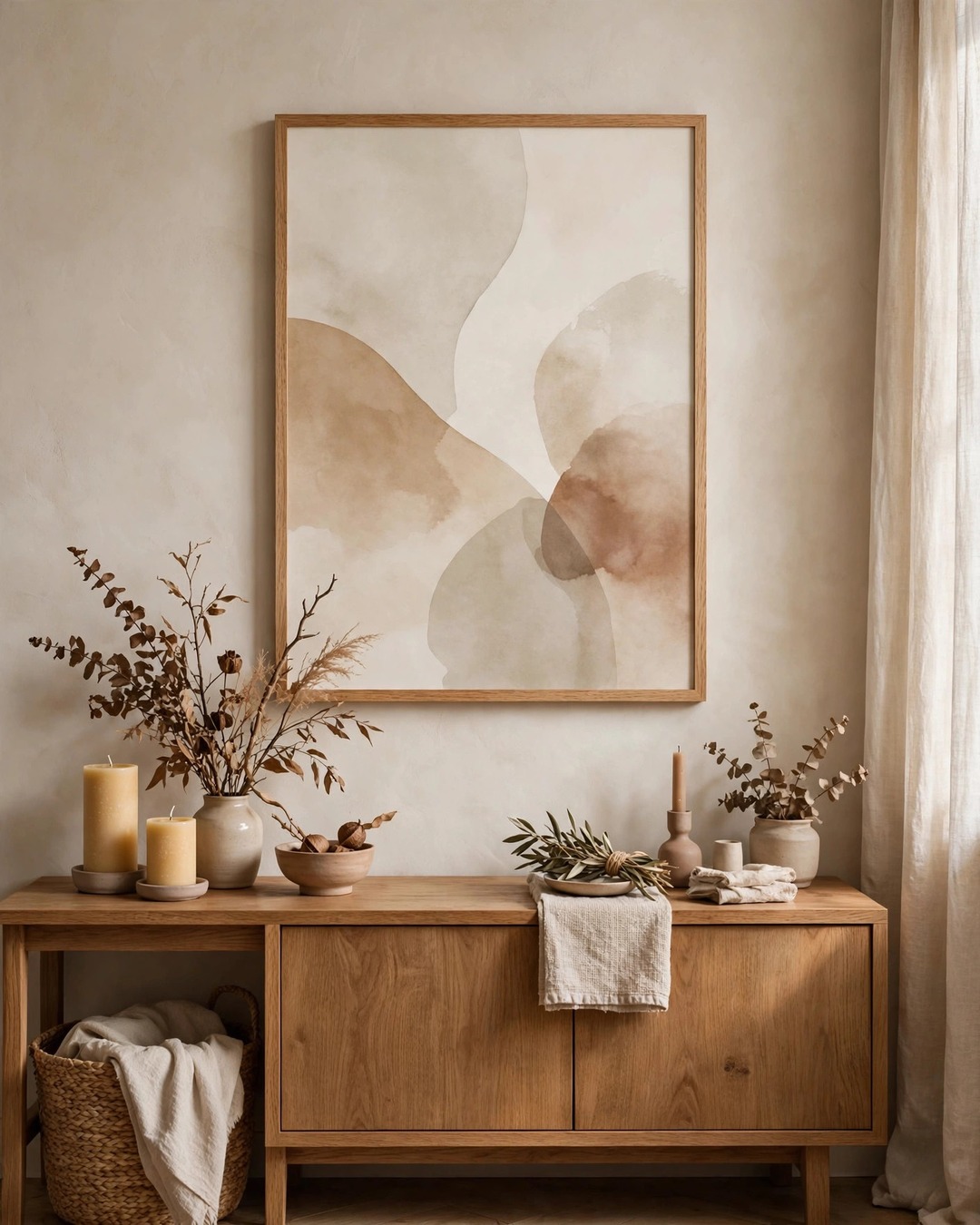
The walls of a neutral dining room need art the way a table needs a centerpiece, not loud, not busy, just present. One large calm piece over the sideboard, or a loose row of three smaller prints, gives the eye somewhere to rest while dinner conversation flows.
Subject matter matters less than mood. Abstract washes in oatmeal and clay, simple botanical prints, a soft landscape, anything that holds the room’s temperature steady. Keep frames simple and warm: natural oak, thin black, or aged brass, never ornate gold that outshines the food.
Hang art at seated eye level, which is lower than most people guess, the center of the piece about 54 to 57 inches from the floor works when everyone is sitting. My gallery wall guide walks through spacing and hanging methods step by step if you want a grouped arrangement instead of a single piece.
Which Centerpiece Fits Your Table?
Not every centerpiece suits every table. Use this guide to match one to how your table actually gets used, so the styling never has to be cleared away before dinner.
| Centerpiece style | Best for | Key pieces | Candlelight to add |
|---|---|---|---|
| Low candle runner | Nightly dinners, low fuss | Taper candles in mixed holders on a linen runner | Three tapers plus four tea lights |
| Natural bowl | Casual family tables | Shallow wooden bowl of pinecones or dried seed heads | Two pillar candles beside the bowl |
| Branch arrangement | Tall rooms, statement tables | One large vase with bare branches or eucalyptus | A pair of hurricanes at the base |
| Layered tray | Tables that work double duty | Shallow tray, small plant, clustered candles | Three votives that lift off in one piece |
| Fruit and herb line | Gatherings and holidays | Citrus, figs, or herb sprigs down the center | Unscented pillars between the fruit |
Will a neutral dining room look boring?
Only if it is all one shade and one texture. The fix is layering: three or four warm neutrals (ivory, oatmeal, sand, camel) across different materials, linen, wood, woven fiber, ceramic. The room then reads as calm rather than flat, and candlelight in the evening adds the color that daylight keeps quiet.
What wall color works best behind neutral dining furniture?
Warm whites and warm greiges are the safest choices, paint with a creamy or beige undertone rather than a gray one. Cool gray walls fight warm wood and linen, making the furniture look dirty by comparison. If you want depth, a soft clay or warm taupe on one wall adds richness without leaving the neutral family.
How do I keep light-colored dining chairs clean?
Choose washable covers and performance fabrics from the start: linen or cotton slipcovers come off and go in the machine. Treat spots the day they happen with a dab of dish soap and water, and keep a washable throw over the chairs the kids use most. Darker seat cushions in oatmeal or tan hide daily wear while the chair backs stay light.
Can I mix wood tones in a neutral dining room?
Yes, as long as the undertones agree. Oak, walnut, and pine can live together if they all lean warm; one cool gray-washed piece will look like an outsider. Repeat each wood tone at least twice, the table’s oak echoed in the mirror frame, the walnut sideboard echoed in a tray, and the mix reads as collected on purpose.
What is the best light color for a dining room?
Warm white, around 2700K, which flatters both food and faces. Cooler bulbs flatten warm neutrals and make beige walls look tired. A dimmer matters more than the fixture itself: bright light for setting the table, low warm light for the meal, and the same room serves both jobs.
How do I style a dining table I use every day?
Keep the styling liftable. A runner stays put, the centerpiece lives on a tray, and the whole arrangement moves to the sideboard in one motion when the table needs to work. That way the table looks dressed every hour of the day but never stands in the way of homework, laptops, or dinner.
Final Thoughts
A neutral dining room is not the absence of decoration, it is decoration at its most confident. Linen on the table, wood under the plates, candlelight doing the color work: these are simple pieces, but together they make a room that feels good at seven in the morning and even better at seven at night.
Pick one idea and start there. The tablecloth, the pendant dimmer, the nightly table setting, any single change shifts the room, and the rest can follow one dinner at a time. Your dining room does not need to be grand to be warm; it just needs to be used.


